Artwork
The magic parrot of the merchant talks to the vizier’s son, from a Tuti-nama (Tales of a Parrot): Tenth Night
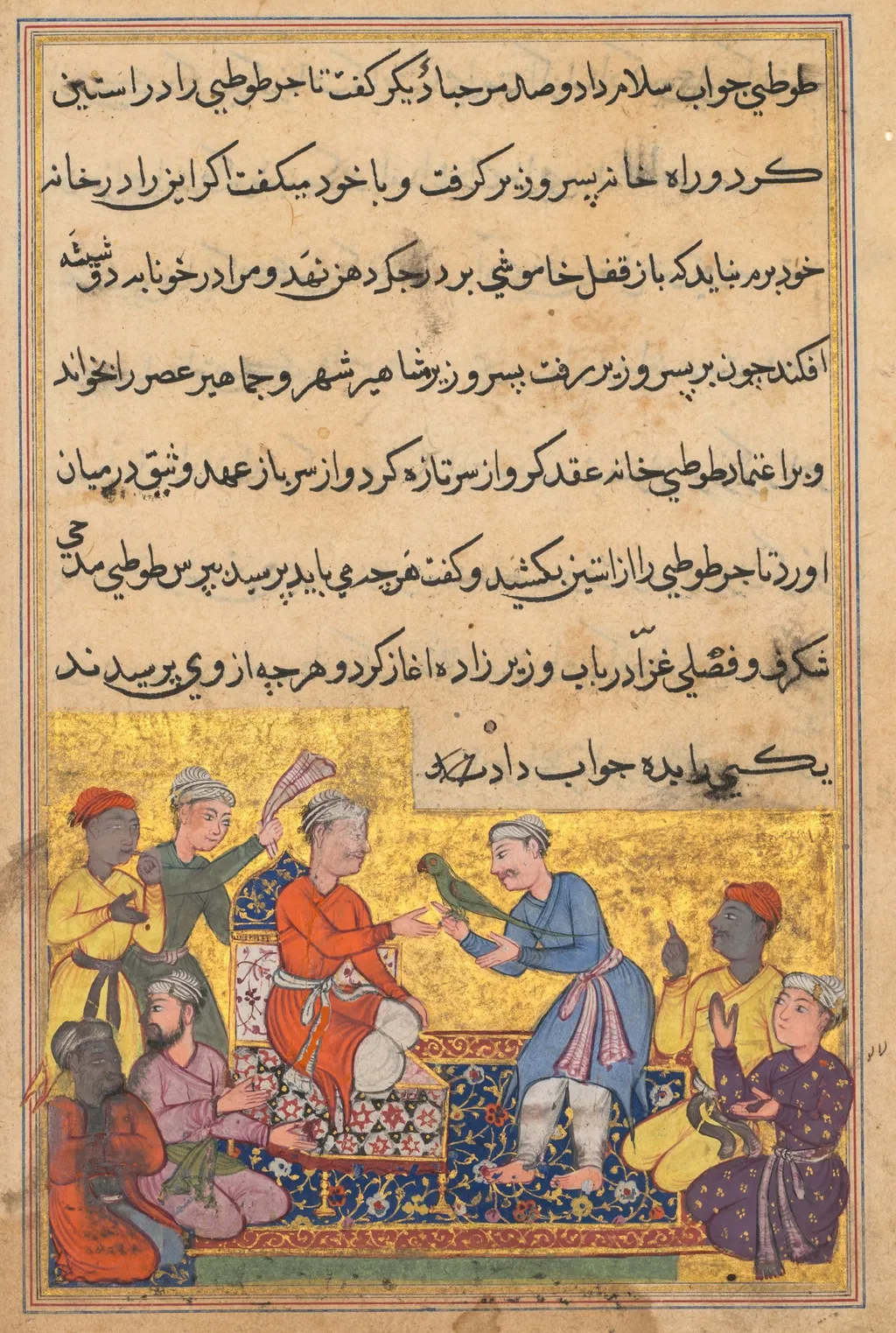
The magic parrot of the merchant talks to the vizier’s son, from a Tuti-nama (Tales of a Parrot): Tenth Night is an unspecified painting. It dates from 1560 and is held in the collection of the Cleveland Museum of Art. The work depicts a convivial gathering of seven figures seated on an intricately patterned carpet.
About this work
Overview
Central to the composition is a vivid green parrot perched on the shoulder of a man dressed in blue, who gestures toward the bird.
The work depicts a convivial gathering of seven figures seated on an intricately patterned carpet. Central to the composition is a vivid green parrot perched on the shoulder of a man dressed in blue, who gestures toward the bird. A second figure in red holds a white sphere, while the remaining participants observe, some smiling or gesturing, set against a backdrop of Arabic calligraphy and framed by a gold border.
Subject & Meaning
The painting illustrates a scene from the medieval Persian collection known as the *Tuti‑nama* (Tales of a Parrot). In the narrative, a magical parrot entertains the vizier’s son with stories, symbolizing the transmission of wisdom and amusement through a talking animal. The figures’ attentive and amused reactions underscore the parrot’s role as a storyteller.
Technique & Style
Executed in bright pigments—predominantly yellow, red, blue, and green—the image employs a flat decorative surface typical of Persian miniature painting. The patterned rug and gold border provide a luxurious setting, while the stylized figures and precise outlines reflect the manuscript tradition’s emphasis on narrative clarity over naturalistic depth.
History & Provenance
The scene originates from the tenth night of the *Tuti‑nama*, a collection of illustrated tales compiled in the Persianate world. The painting is now part of a museum collection that houses similar manuscript illustrations, indicating its preservation as a representative example of Persian narrative art.
Context
Illustrations like this were produced for elite audiences, often commissioned for royal or aristocratic libraries. The inclusion of Arabic script in the background points to the cultural milieu of the Islamic Golden Age, where literary and visual arts were closely intertwined.
Legacy
The image continues to inform contemporary understandings of Persian miniature traditions and the role of animal protagonists in literary storytelling. Its vivid coloration and narrative composition serve as reference points for scholars studying the visual culture of medieval Persia.
Artist & collection

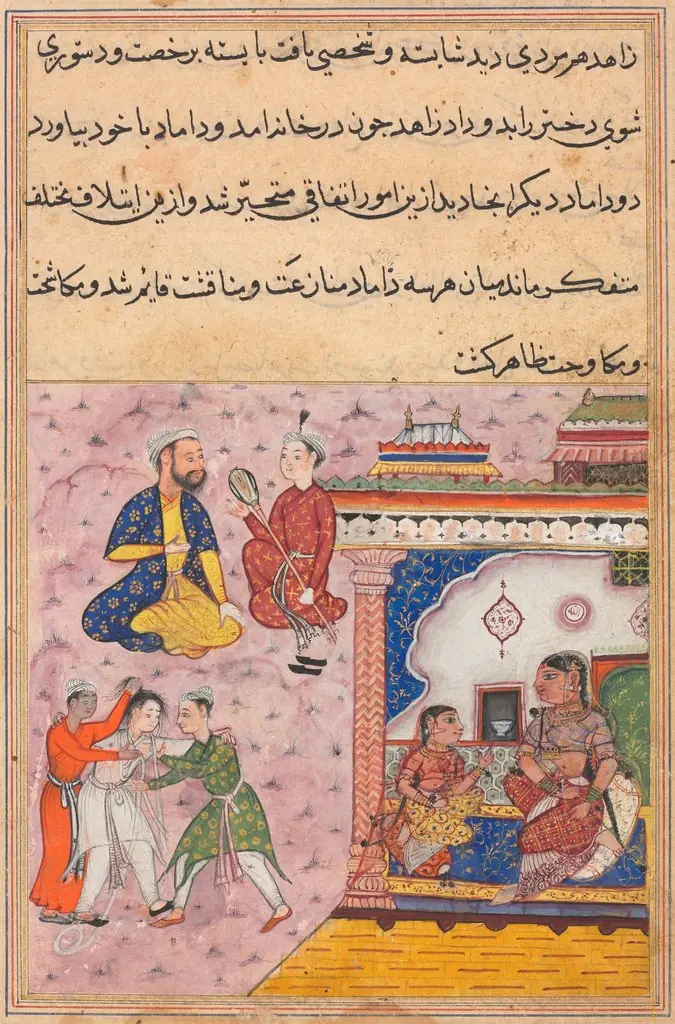 Three suitors fight amongst themselves for the hand of the devotee’s daughter, from a Tuti-nama (Tales of a Parrot): Twentieth Night
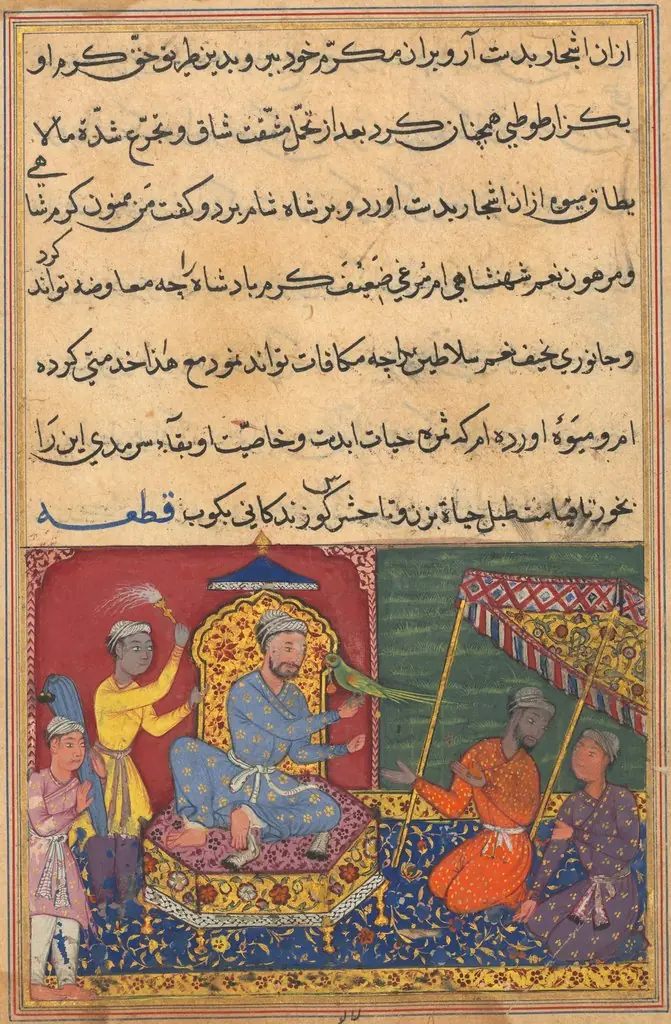 The parrot brings a fruit from the Tree of Life to the king of Syria, from a Tuti-nama (Tales of a Parrot): Ninth Night
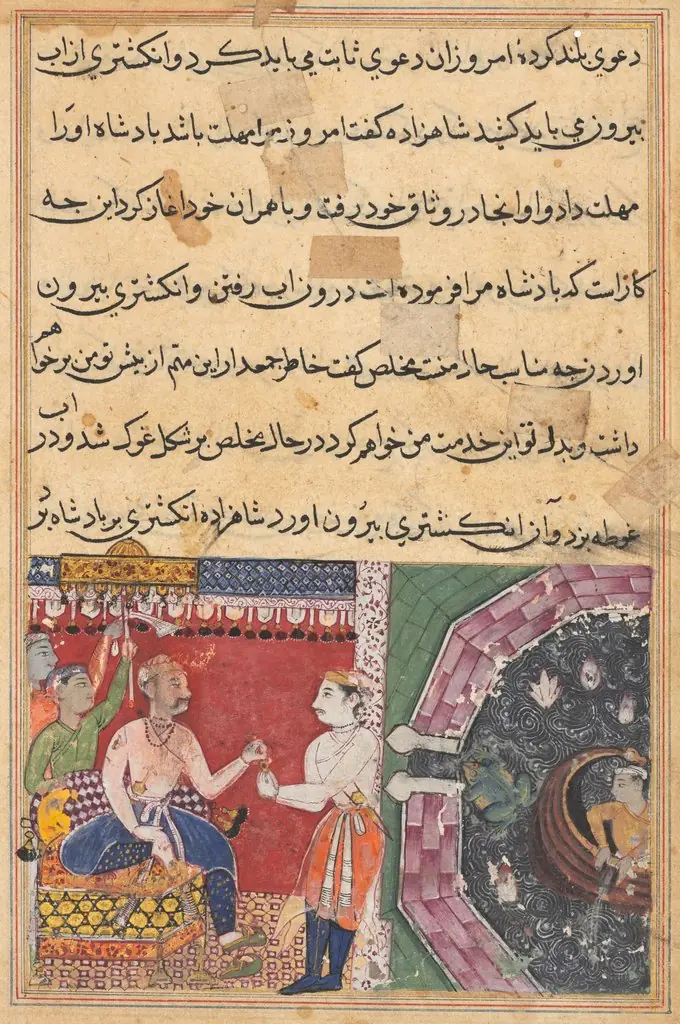 The prince, with the help of Mukhlis who changes into a frog, recovers the ring lost in the sea, and returns it to the king, from a Tuti-nama (Tales of a Parrot): Eighteenth Night
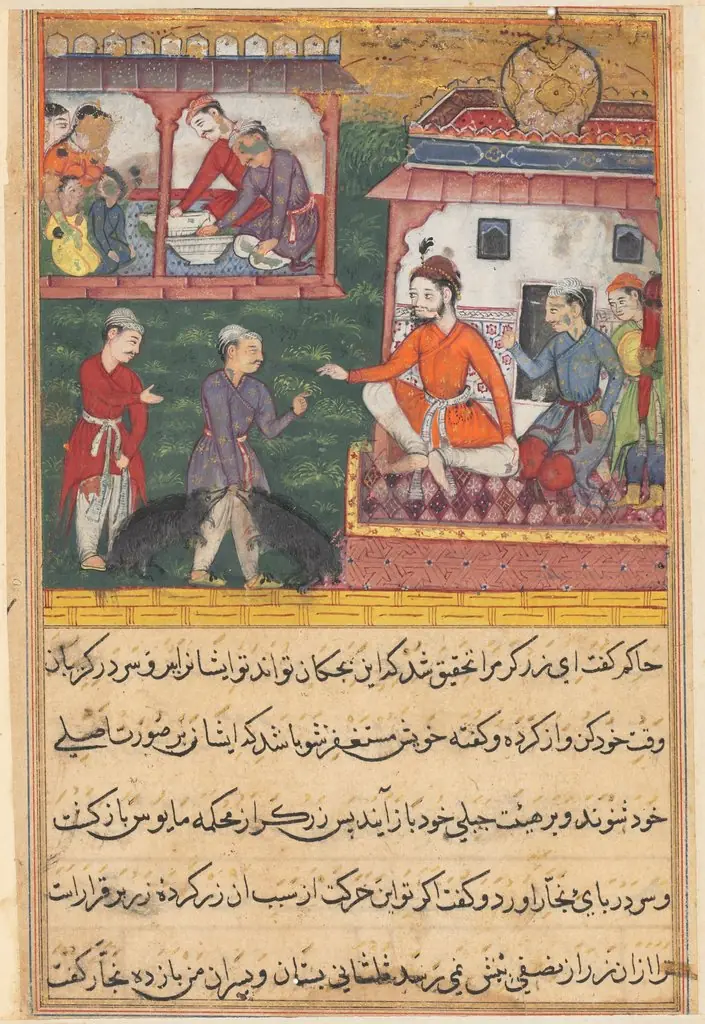 The goldsmith judged; the bear cubs trained by the carpenter as though they were his sons, from a Tuti-nama (Tales of a Parrot): Third Night
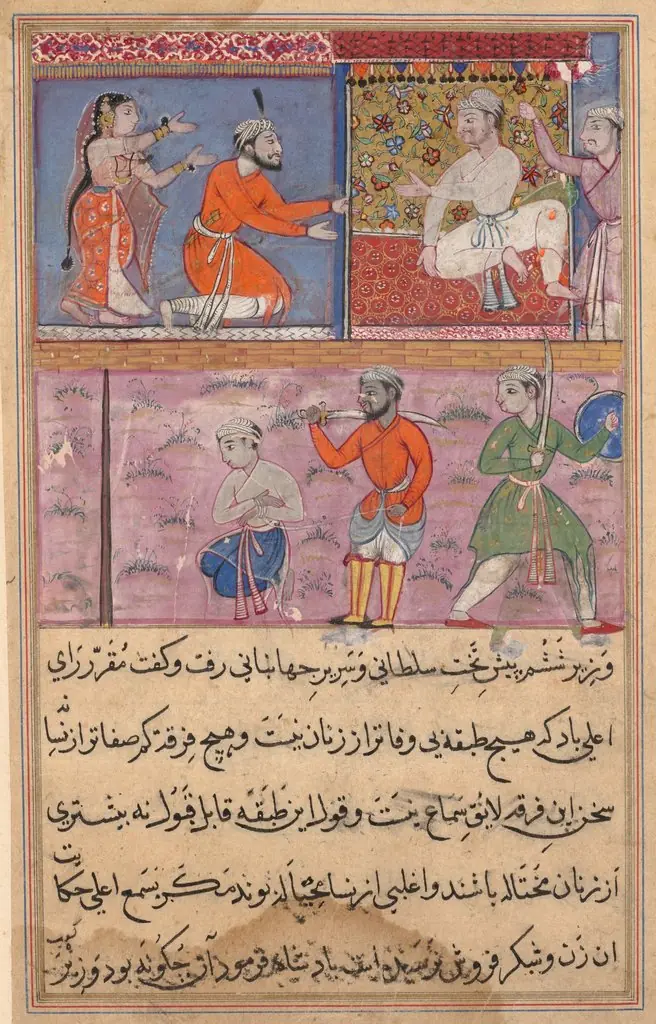 Page from Tales of a Parrot (Tuti-nama): text page
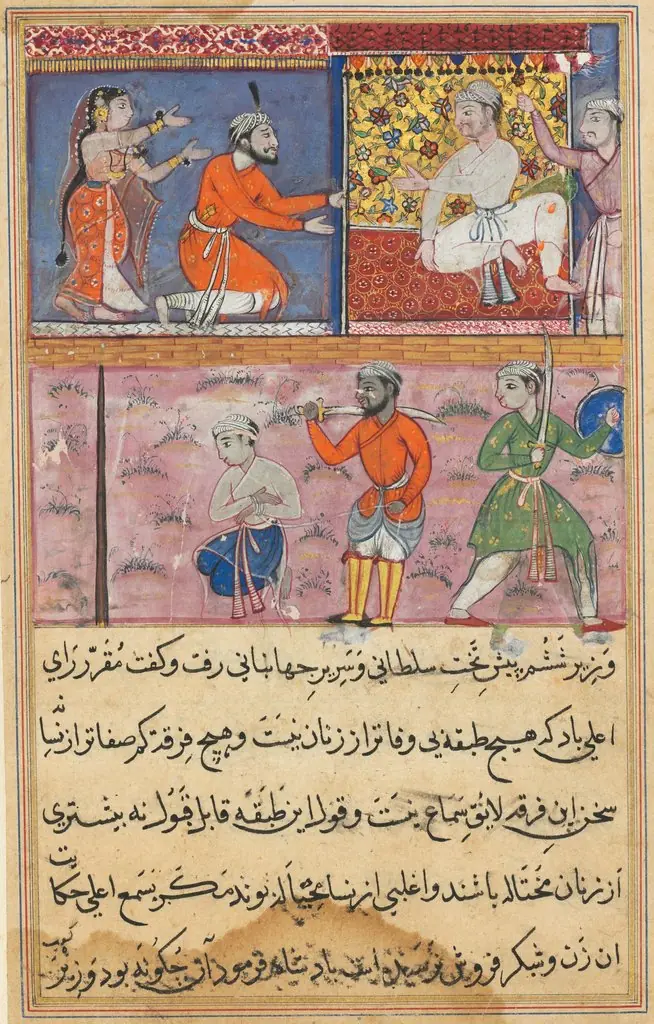 The prince sent back to the place of execution for the sixth time, from a Tuti-nama (Tales of a Parrot): Eighth Night
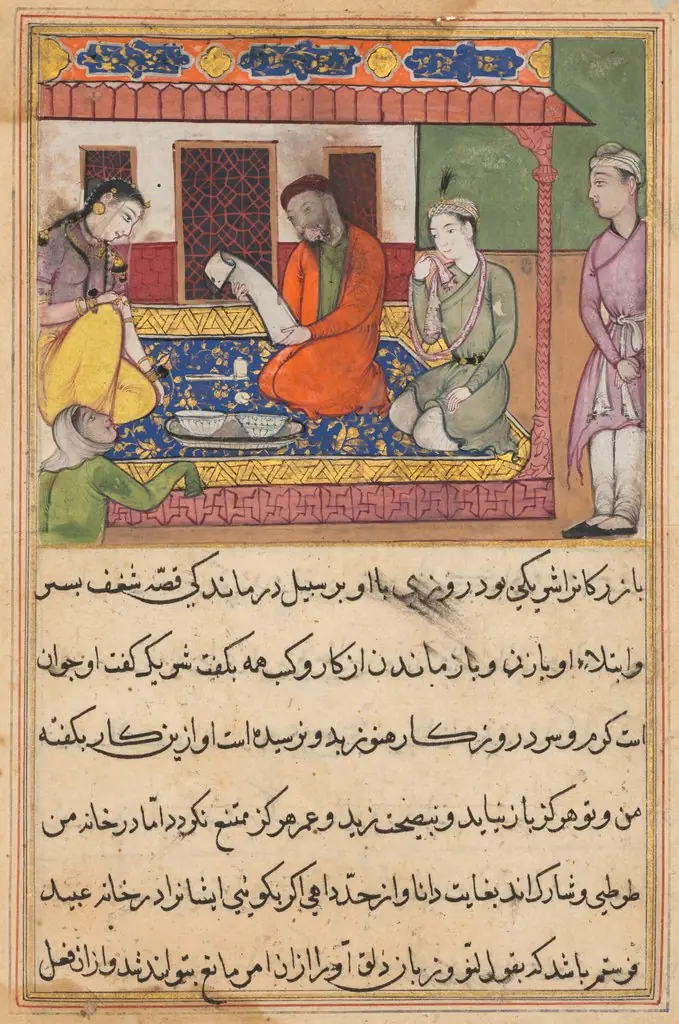 The marriage of ‘Ubaid, son of a merchant of Tirmiz, from a Tuti-nama (Tales of a Parrot): Forty-second Night
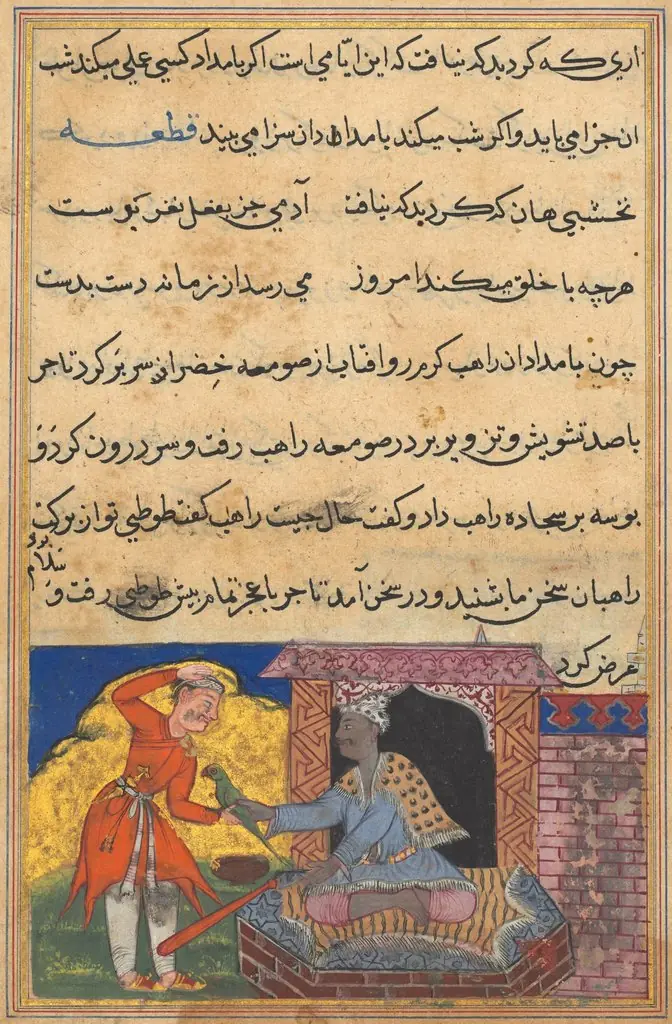 The monk returns the magic parrot to its rightful owner, the merchant, from a Tuti-nama (Tales of a Parrot): Tenth Night
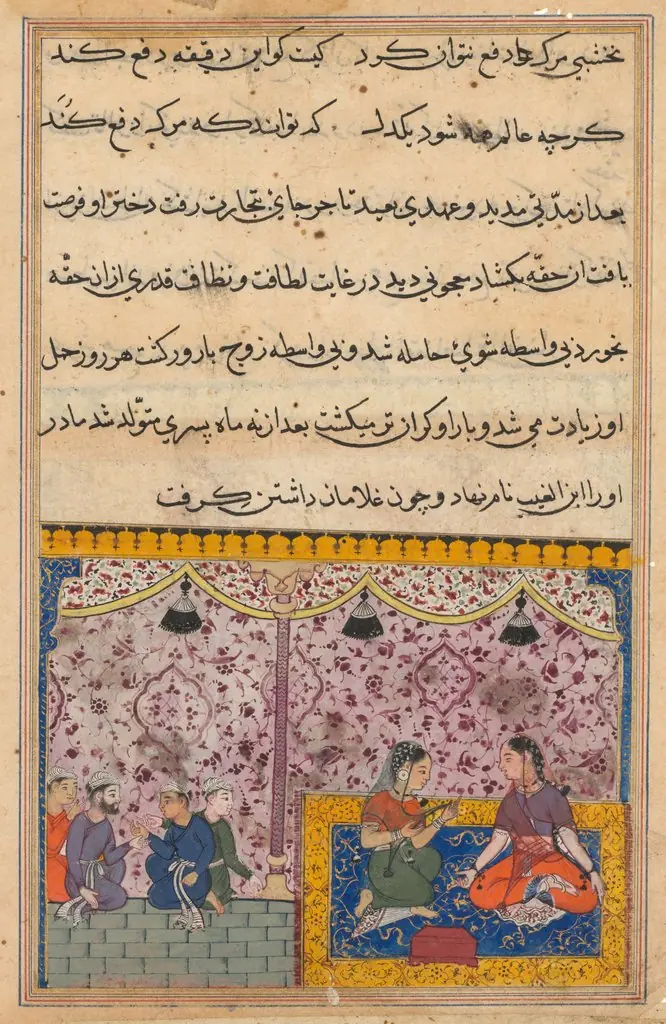 The merchant’s daughter gives birth to a son as a result of eating out of the box. The clever child recognizes the false gems from true, from a Tuti-nama (Tales of a Parrot): Twenty-third Night