Artwork
The prince, with the help of Mukhlis who changes into a frog, recovers the ring lost in the sea, and returns it to the king, from a Tuti-nama (Tales of a Parrot): Eighteenth Night
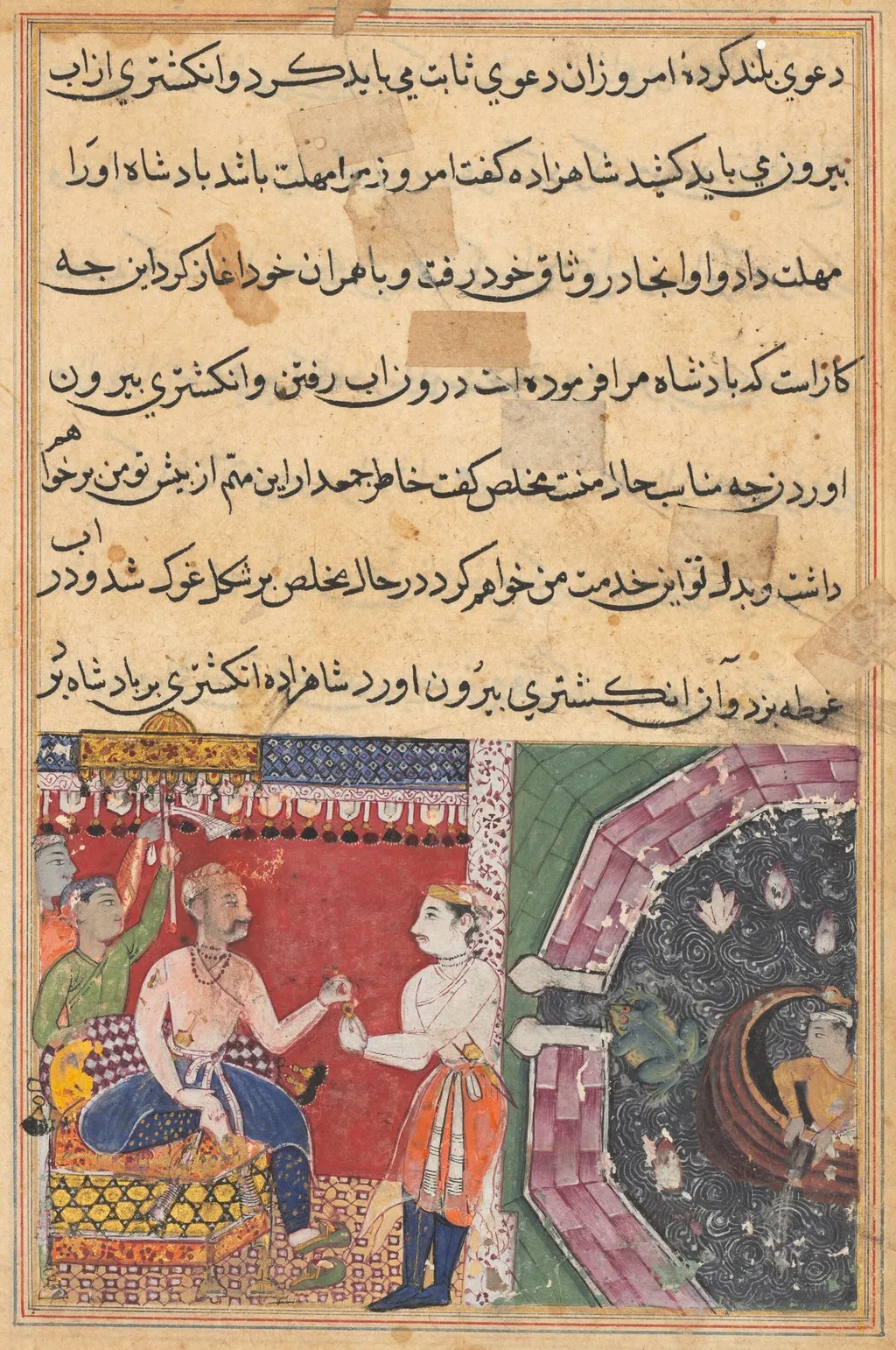
The prince, with the help of Mukhlis who changes into a frog, recovers the ring lost in the sea, and returns it to the king, from a Tuti-nama (Tales of a Parrot): Eighteenth Night is an unspecified painting. It dates from 1560 and is held in the collection of the Cleveland Museum of Art.
About this work
Overview
The work illustrates a narrative from the eighteenth night of a Persian illustrated manuscript, depicting a prince who, aided by a magical servant that transforms into a frog, retrieves a lost ring from the sea and restores it to the king. The composition is divided into two registers, each presenting a distinct episode of the tale.
Subject & Meaning
In the left register, a partially clothed prince sits on an elevated chair, clutching the recovered ring while a vividly dressed attendant stands nearby; a crowd of onlookers in patterned garments observes the exchange. The right register shifts to a watery setting where a frog‑like figure rests on a leaf, surrounded by figures gathered around a boat, emphasizing the transformative element of the story.
Technique & Style
The painter employs a clear, compartmentalized layout typical of Persian miniature storytelling, using bright reds and oranges for the servant’s costume to draw attention. Figures are rendered in stylized profile, with intricate patterning on clothing and a flattened spatial perspective that guides the eye across the two scenes.
Context
The scene derives from a Tuti‑nama, a collection of moral and fantastical tales often illustrated for elite patrons in the Safavid period. The motif of humans interacting with animal forms reflects a broader tradition in Persian literature where metamorphosis conveys moral lessons.
Artist & collection

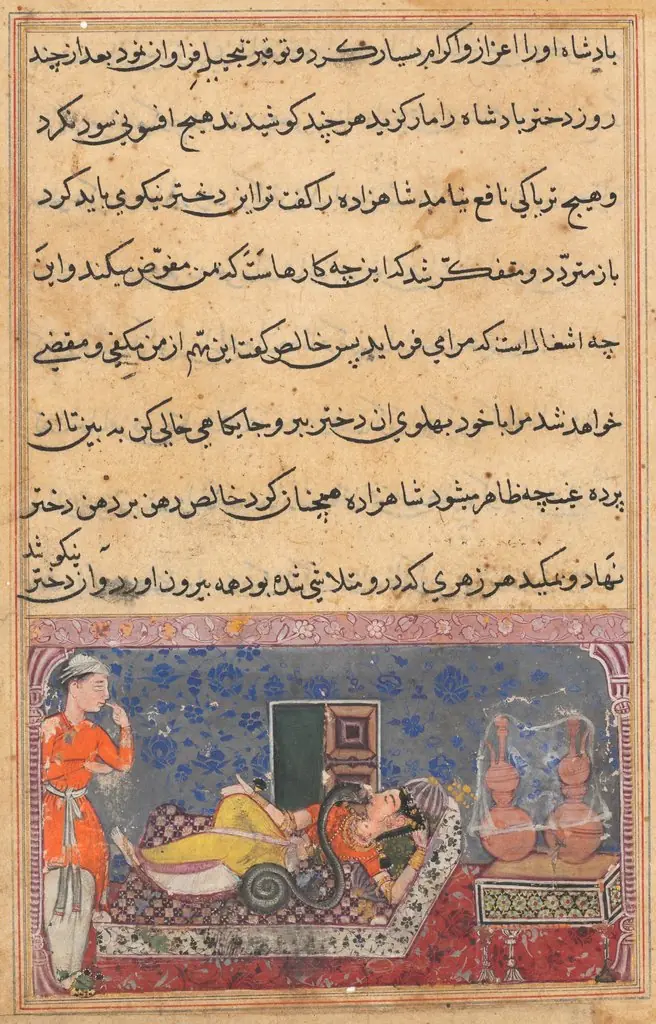 Khalis repays the prince for his kindness by changing into a snake and sucking the poison from the king’s daughter, from a Tuti-nama (Tales of a Parrot): Eighteenth Night
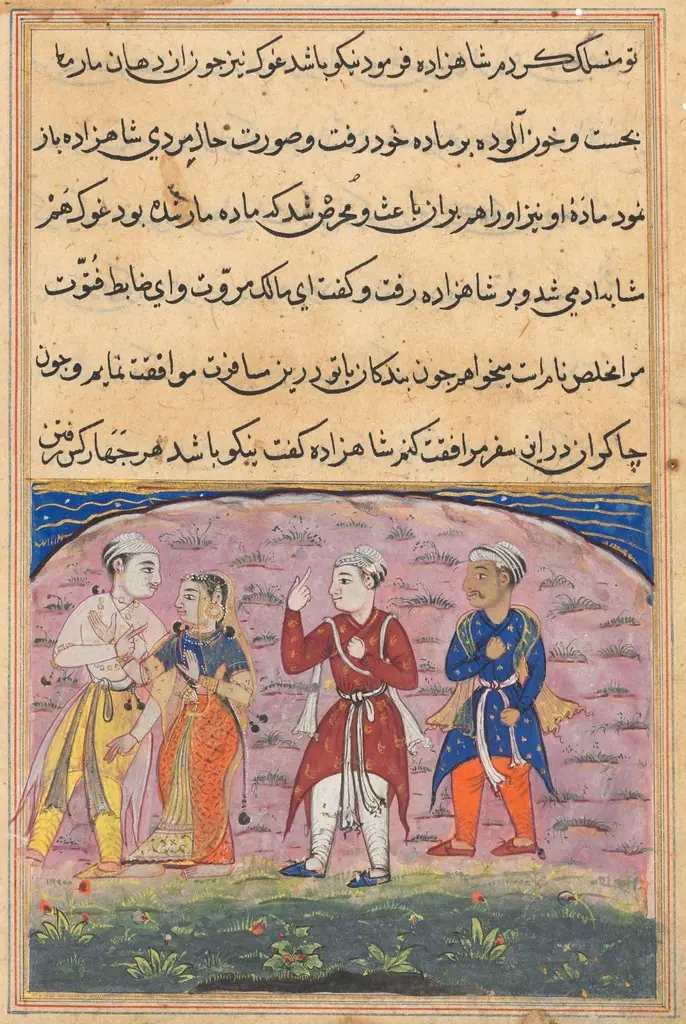 The prince and Nikfal are joined by Khalis and the Mukhlis who are the grateful snake and frog in human form, from a Tuti-nama (Tales of a Parrot): Eighteenth Night
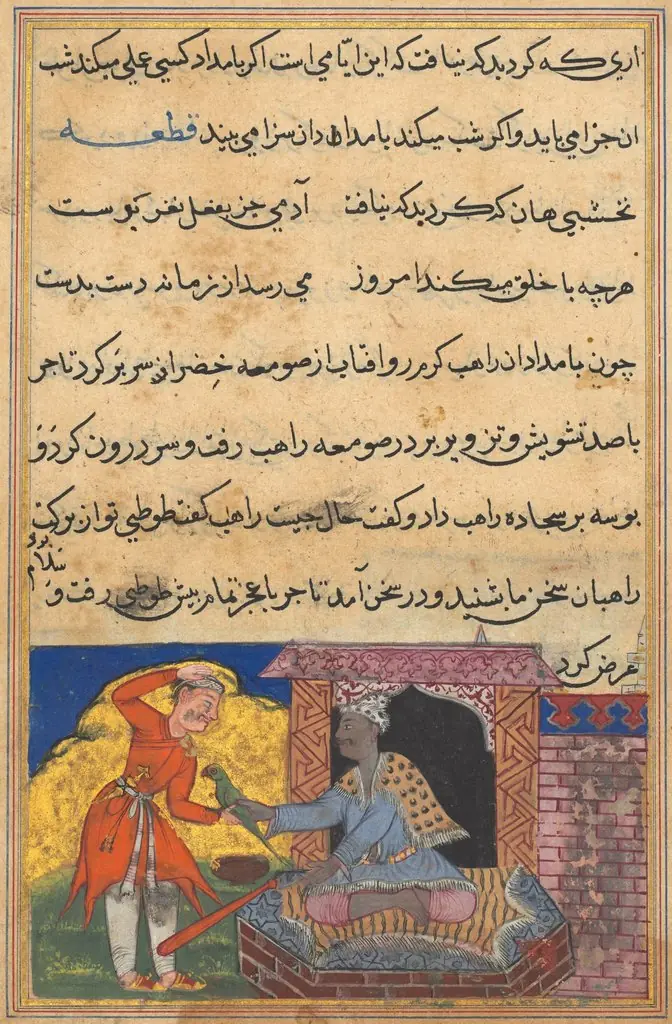 The monk returns the magic parrot to its rightful owner, the merchant, from a Tuti-nama (Tales of a Parrot): Tenth Night
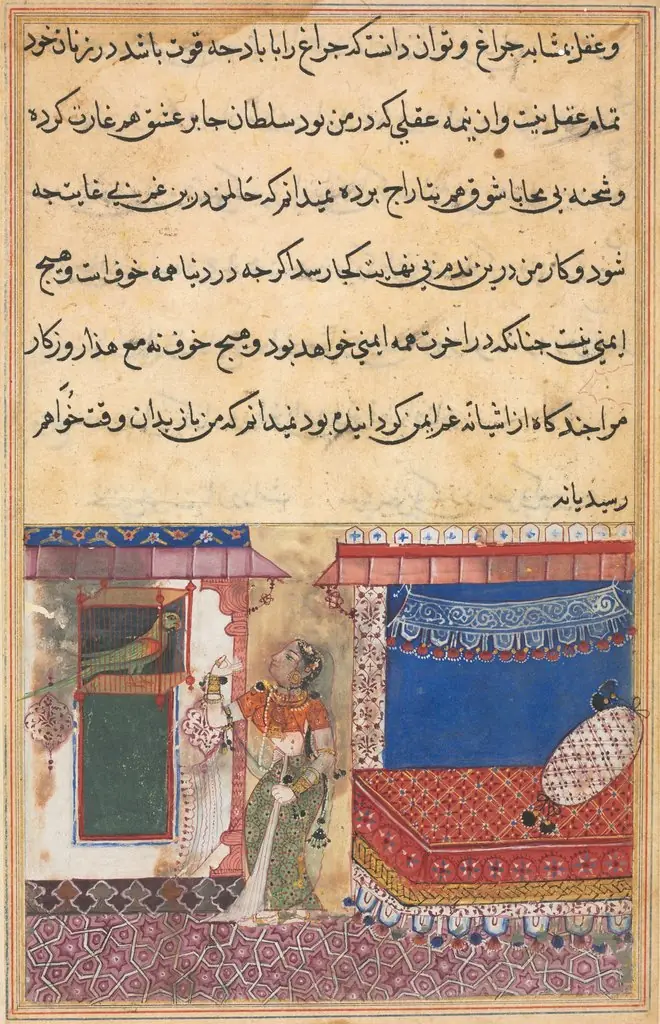 The Parrot Addresses Khujasta at the Beginning of the Eighteenth Night, from a Tuti-nama (Tales of a Parrot)
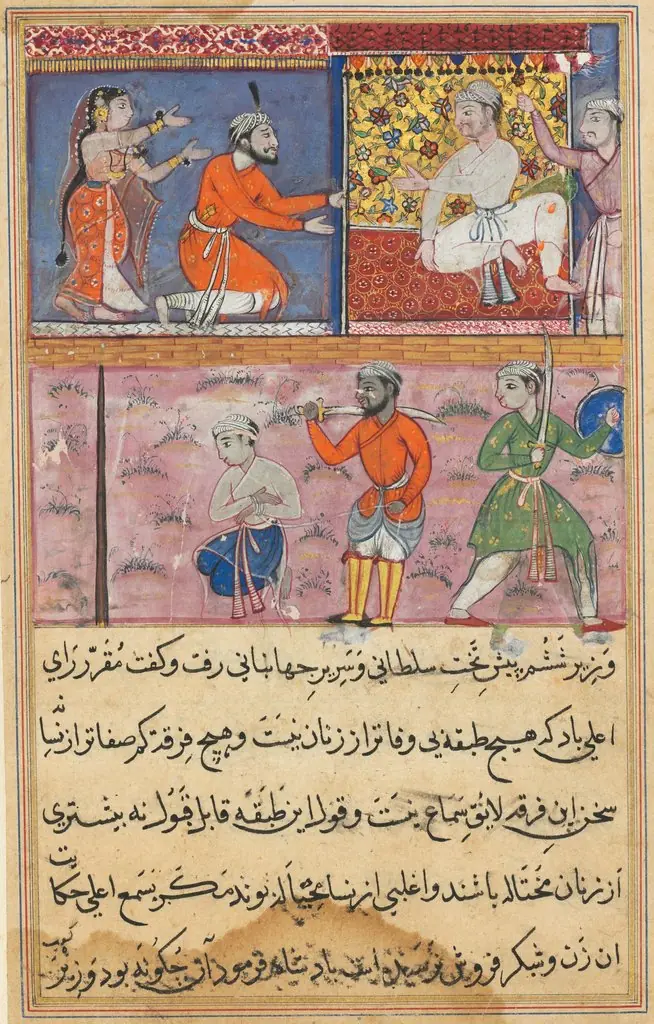 The prince sent back to the place of execution for the sixth time, from a Tuti-nama (Tales of a Parrot): Eighth Night
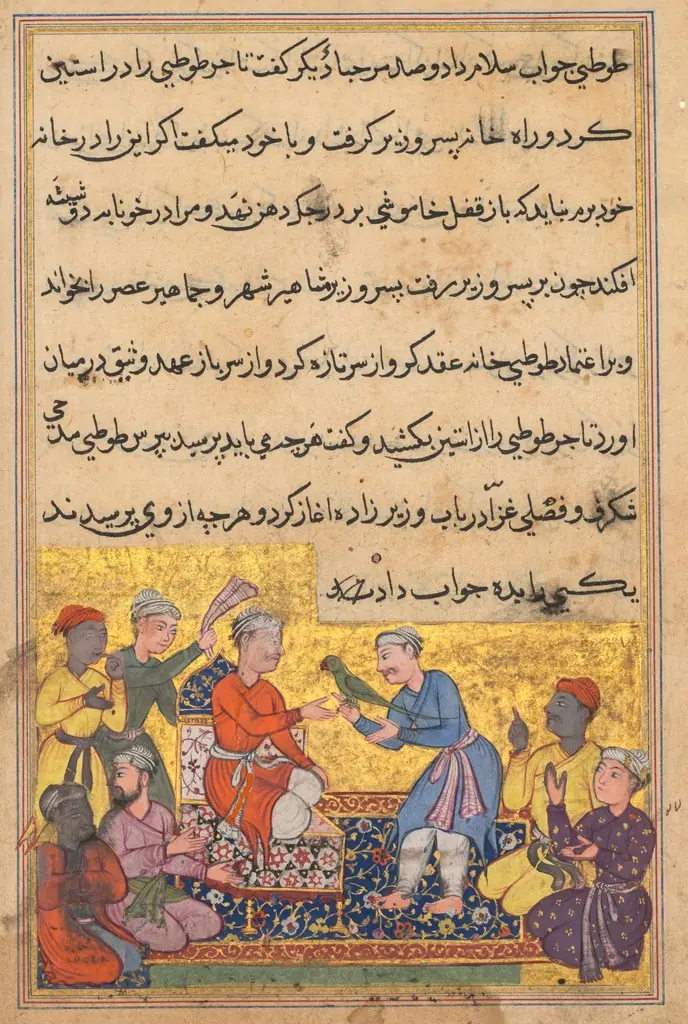 The magic parrot of the merchant talks to the vizier’s son, from a Tuti-nama (Tales of a Parrot): Tenth Night
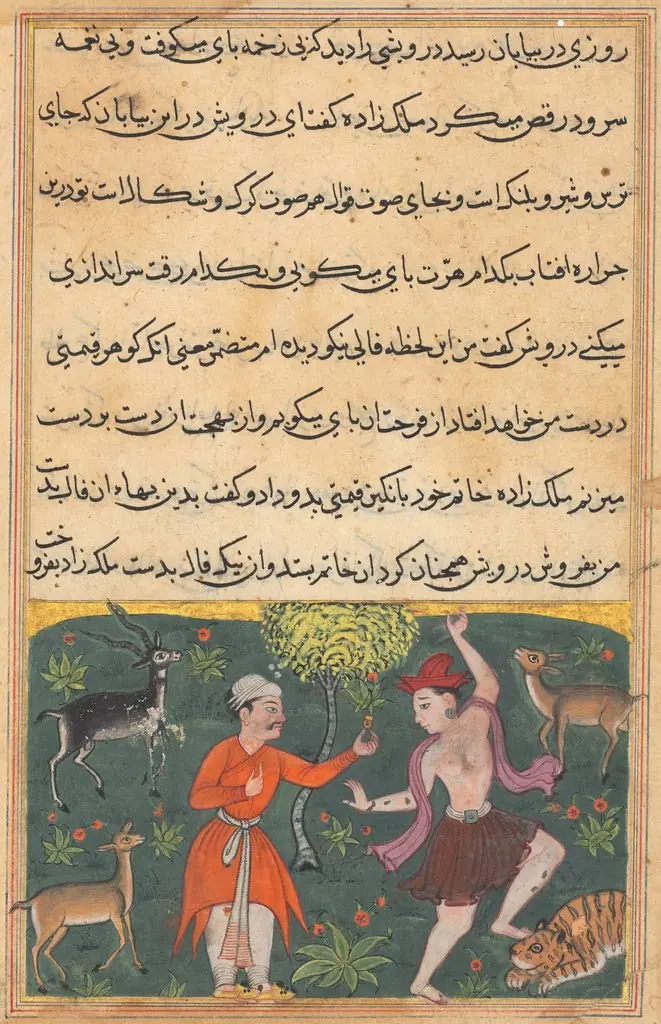 The prince meets a carefree dancing dervish whose good fortune he purchases for his ring, from a Tuti-nama (Tales of a Parrot): Eighteenth Night
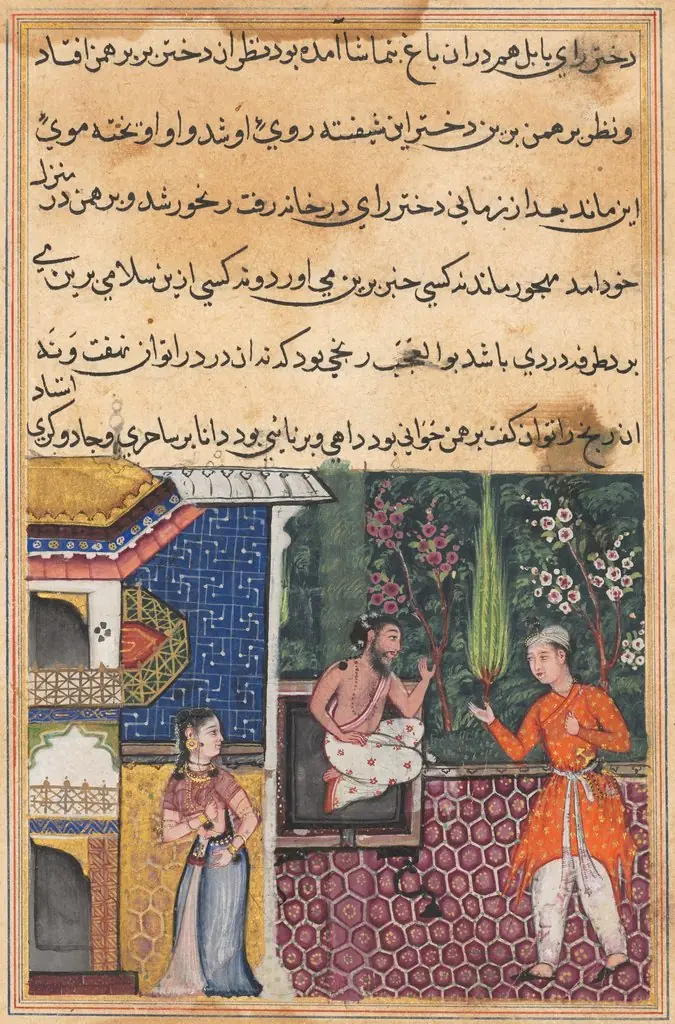 The Brahman gives an account of his falling in love with the king of Babylon’s daughter to his friend, the magician, from a Tuti-nama (Tales of a Parrot): Thirty-fifth Night
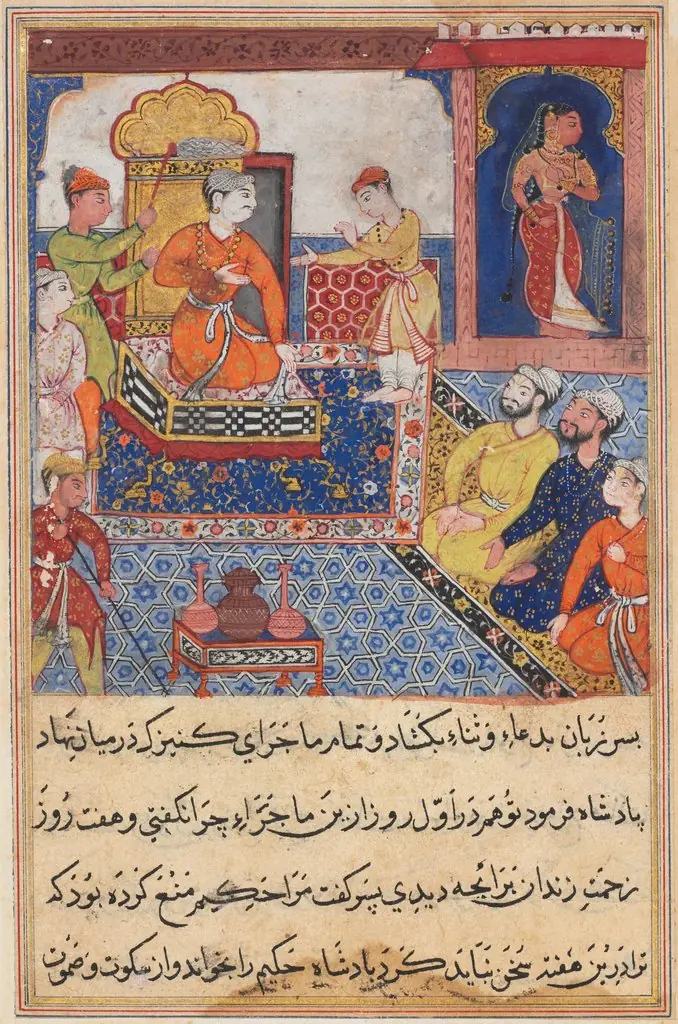 The young prince recounts his experiences to his father, the king, from a Tuti-nama (Tales of a Parrot): Eighth Night
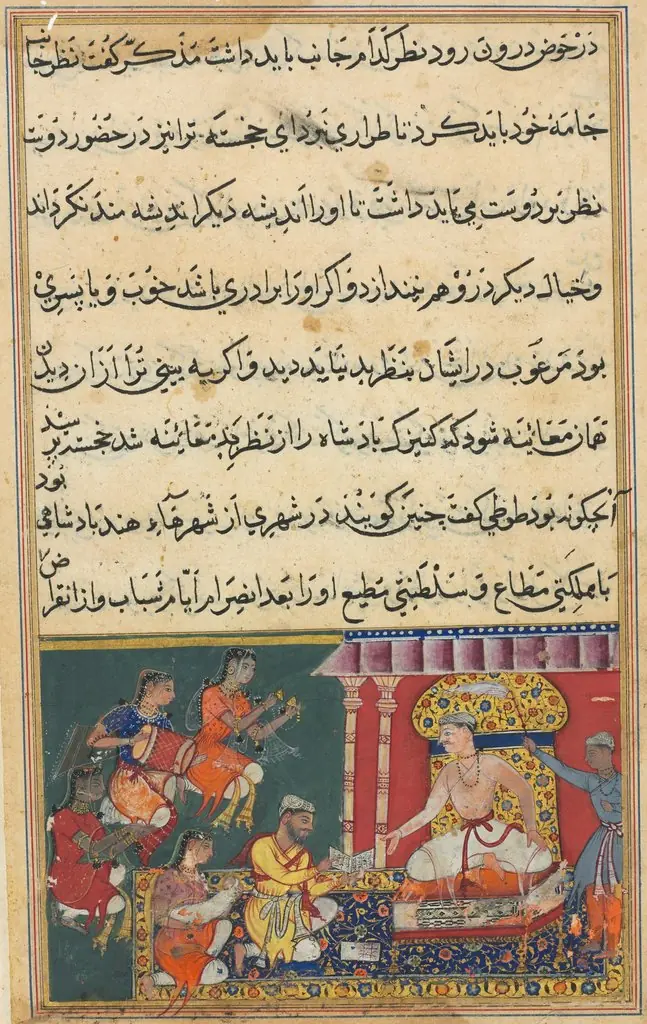 The astrologer predicts a calamity for the newly born prince in his thirteenth year, but one which he would be able to overcome, from a Tuti-nama (Tales of a Parrot): Eighth Night
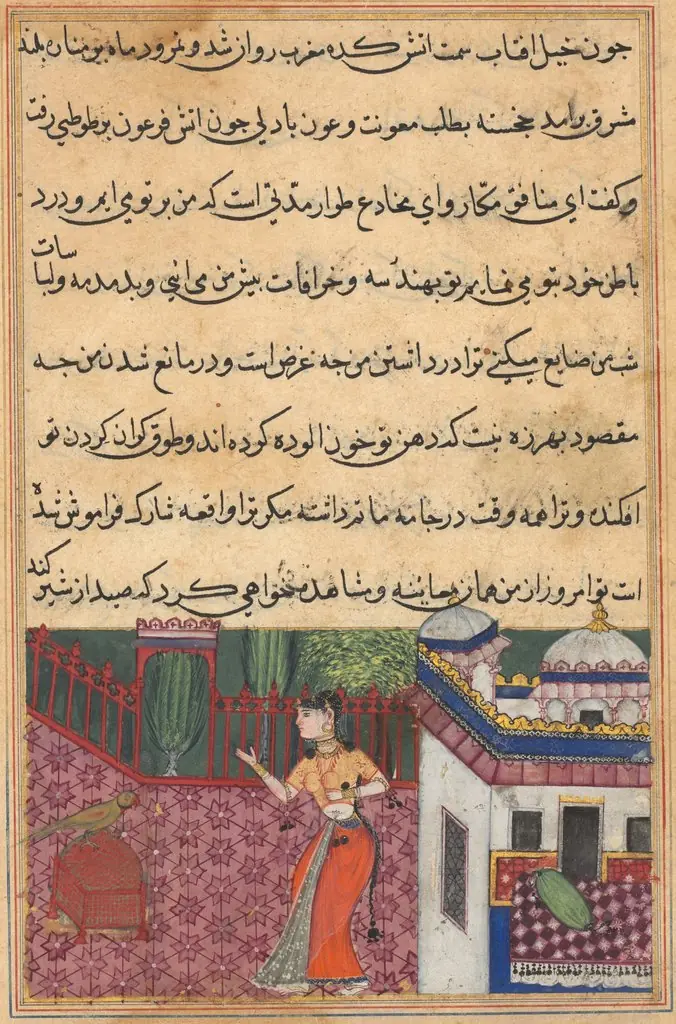 The parrot addresses Khujasta at the beginning of the thirty-third night, from a Tuti-nama (Tales of a Parrot)
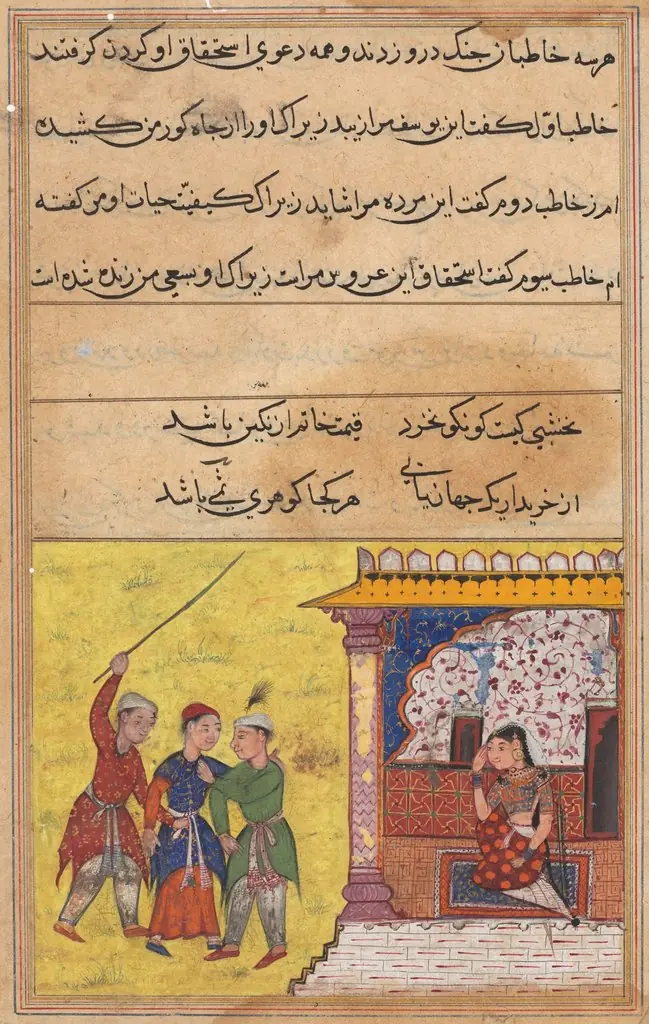 The three suitors again begin to quarrel among themselves for the hand of the devotee’s daughter, from a Tuti-nama (Tales of a Parrot): Twentieth Night
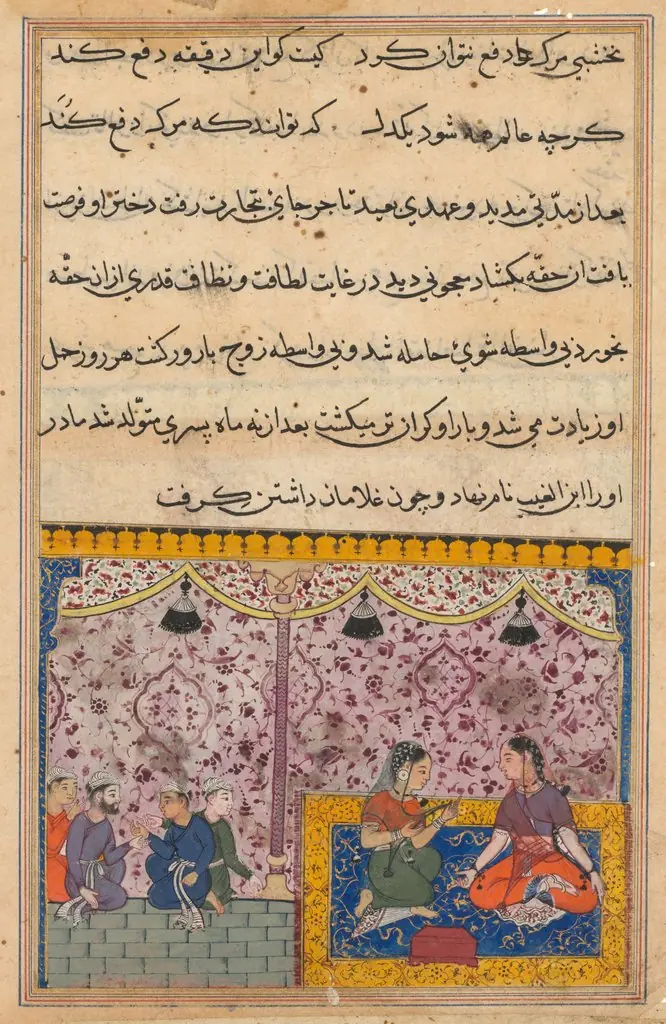 The merchant’s daughter gives birth to a son as a result of eating out of the box. The clever child recognizes the false gems from true, from a Tuti-nama (Tales of a Parrot): Twenty-third Night
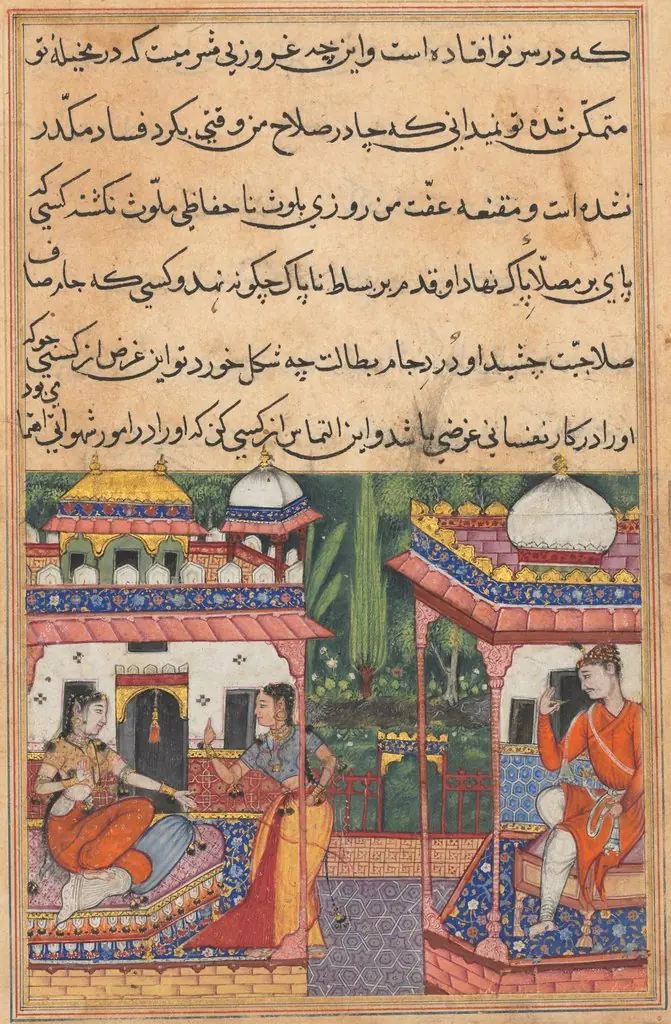 Kaiwan sends a message of love to Khurshid, wife of his brother Utarid who is away on a journey, from a Tuti-nama (Tales of a Parrot): Thirty-second Night