Artwork
The monk returns the magic parrot to its rightful owner, the merchant, from a Tuti-nama (Tales of a Parrot): Tenth Night
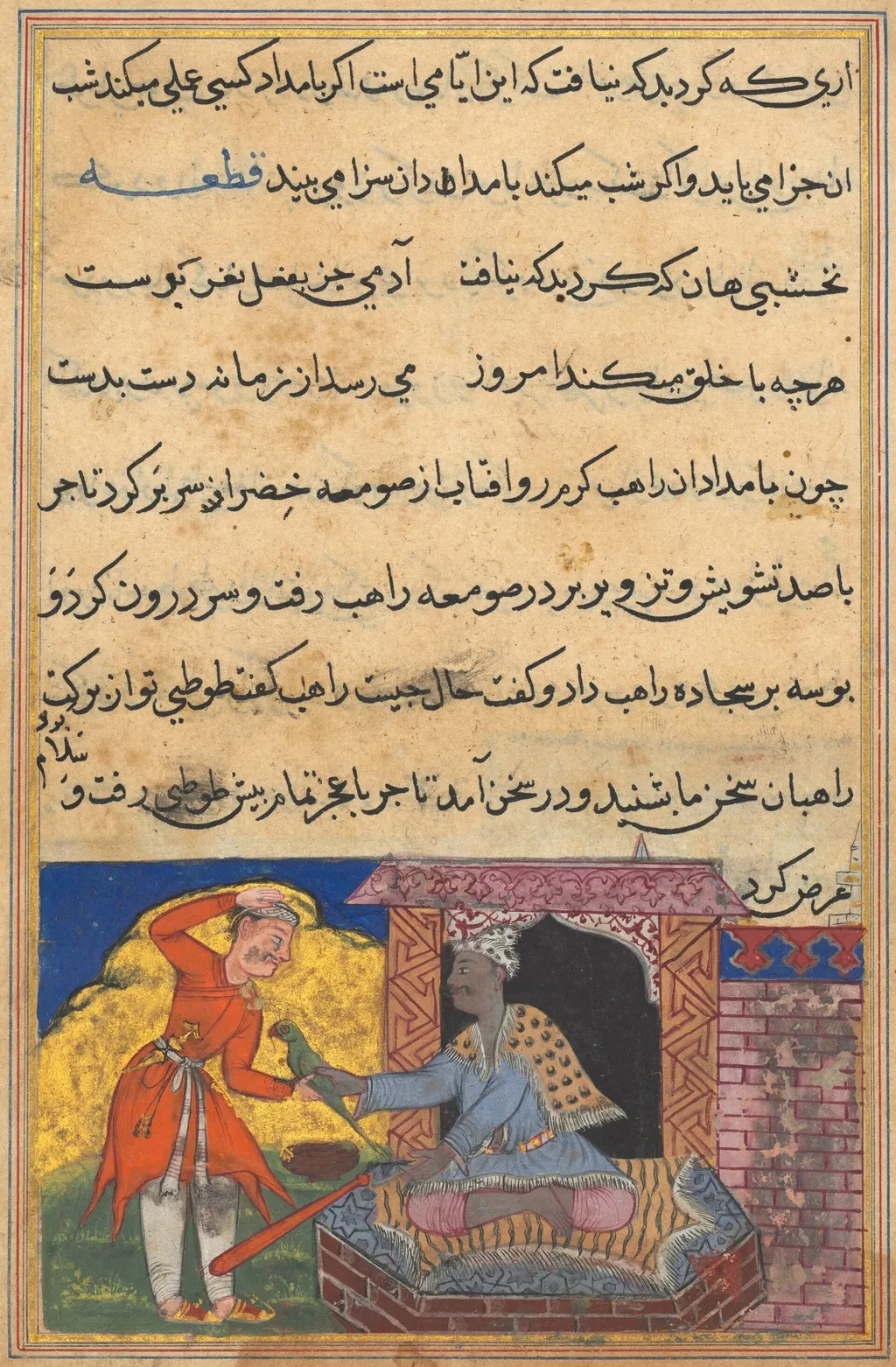
The monk returns the magic parrot to its rightful owner, the merchant, from a Tuti-nama (Tales of a Parrot): Tenth Night is an unspecified painting. It dates from 1560 and is held in the collection of the Cleveland Museum of Art. The illustration depicts a scene from the tenth night of the *Tuti‑nama* (Tales of a Parrot).
About this work
Overview
The illustration depicts a scene from the tenth night of the *Tuti‑nama* (Tales of a Parrot).
The illustration depicts a scene from the tenth night of the *Tuti‑nama* (Tales of a Parrot). Two figures are shown in a domestic interior: a man in a vivid red and gold costume holds a small, ornately detailed cage containing a parrot, while a seated figure in a blue robe and white turban extends a hand toward the cage. Arabic calligraphy fills the upper portion of the page, framing the narrative.
Subject & Meaning
The image visualises the moment when a monk returns the magical parrot to its legitimate owner, a merchant. The standing figure’s determined posture suggests the act of handing over the bird, whereas the seated merchant’s receptive gesture indicates acceptance of the return, underscoring themes of restitution and moral responsibility within the tale.
Technique & Style
Rendered in a miniature painting style, the work combines precise line work with flat areas of bright pigment. The cage is rendered with careful attention to its metal bars and red base, while the figures are outlined in fine ink. The background consists of simple geometric patterns and a red brick wall, keeping the focus on the central exchange.
Context
*Tuti‑nama* is a Persian literary work that blends prose and illustration to convey moral stories. This particular page belongs to a manuscript tradition in which narrative scenes are accompanied by Arabic script, integrating text and image for a cohesive storytelling experience.
Artist & collection

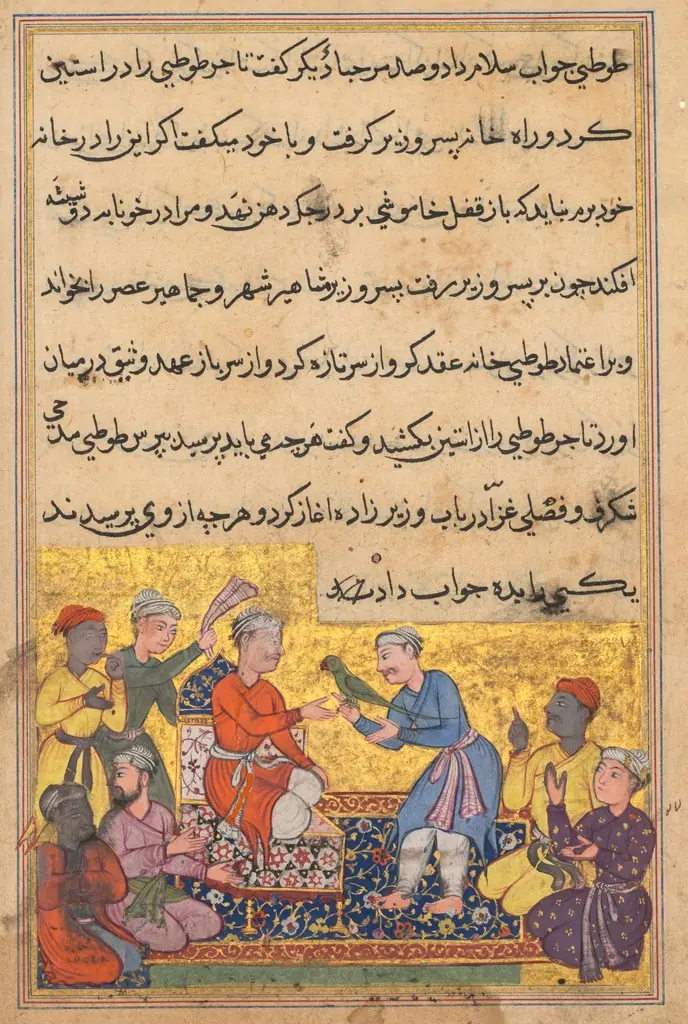 The magic parrot of the merchant talks to the vizier’s son, from a Tuti-nama (Tales of a Parrot): Tenth Night
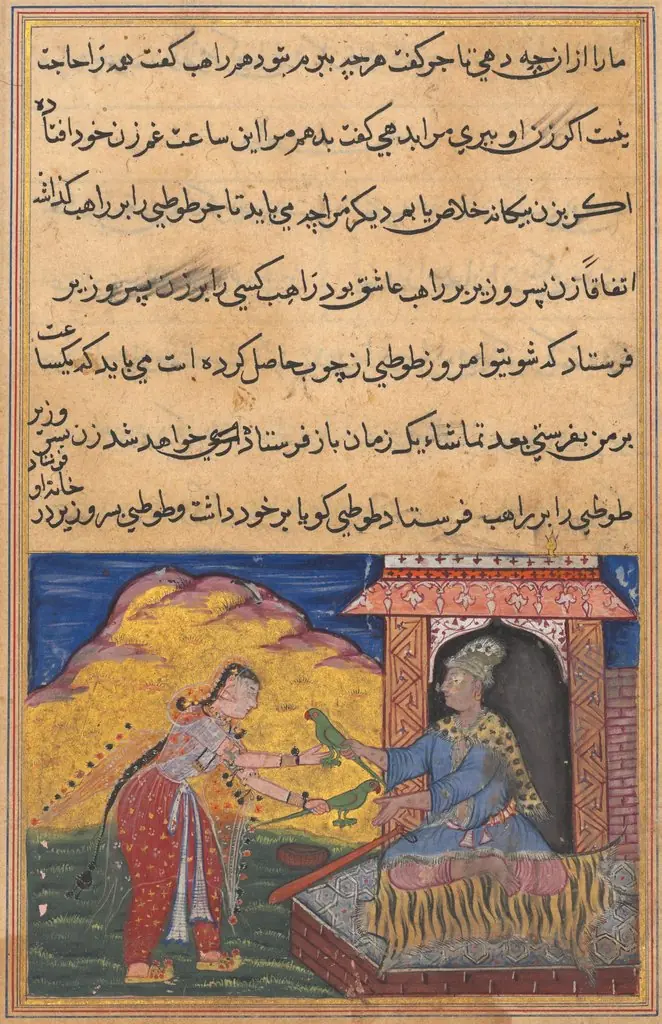 The wife of the son of the vizier brings the magic wooden parrot to her lover, the monk, who exchanges it for the replica, from a Tuti-nama (Tales of a Parrot): Tenth Night
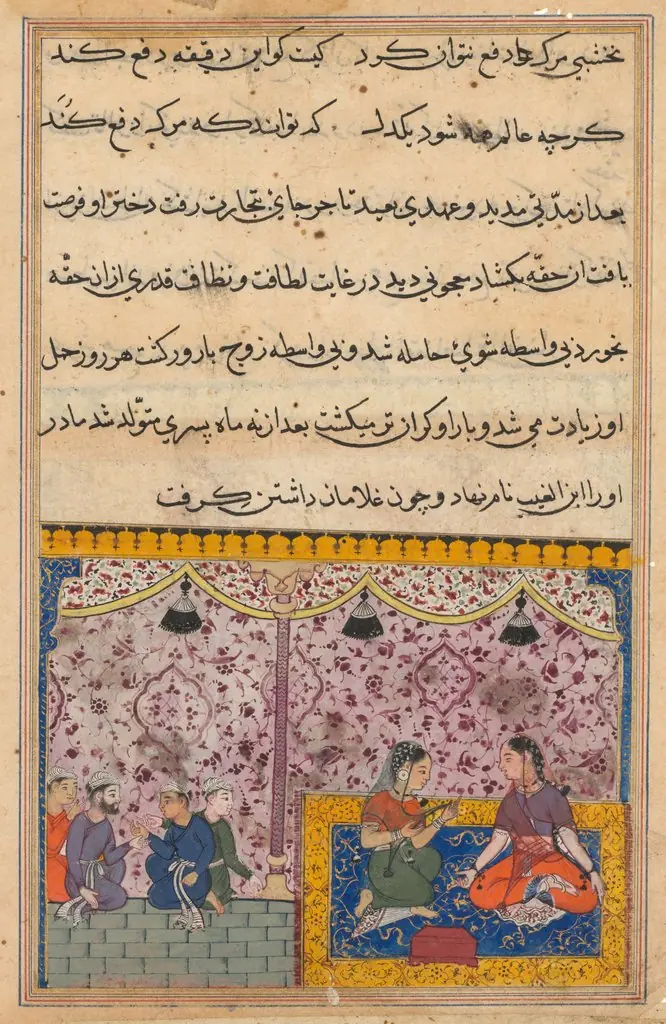 The merchant’s daughter gives birth to a son as a result of eating out of the box. The clever child recognizes the false gems from true, from a Tuti-nama (Tales of a Parrot): Twenty-third Night
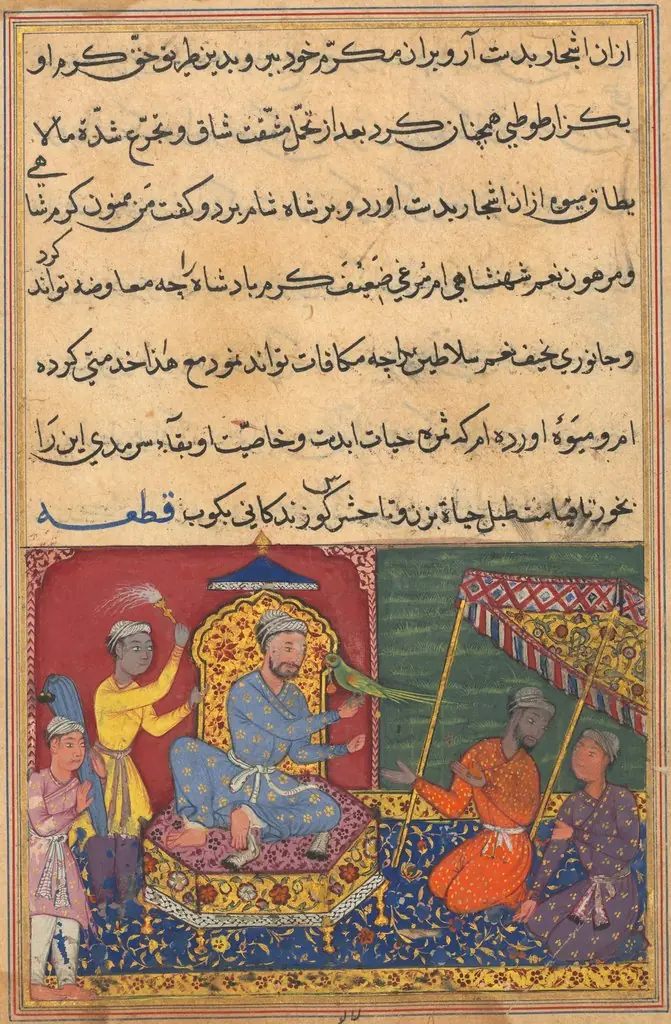 The parrot brings a fruit from the Tree of Life to the king of Syria, from a Tuti-nama (Tales of a Parrot): Ninth Night
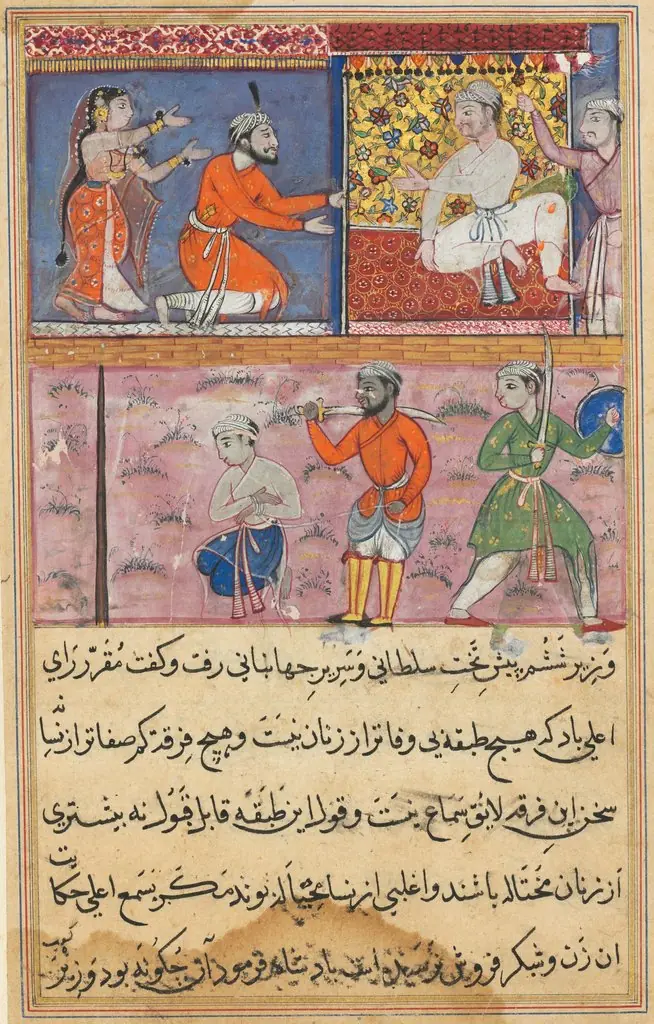 The prince sent back to the place of execution for the sixth time, from a Tuti-nama (Tales of a Parrot): Eighth Night
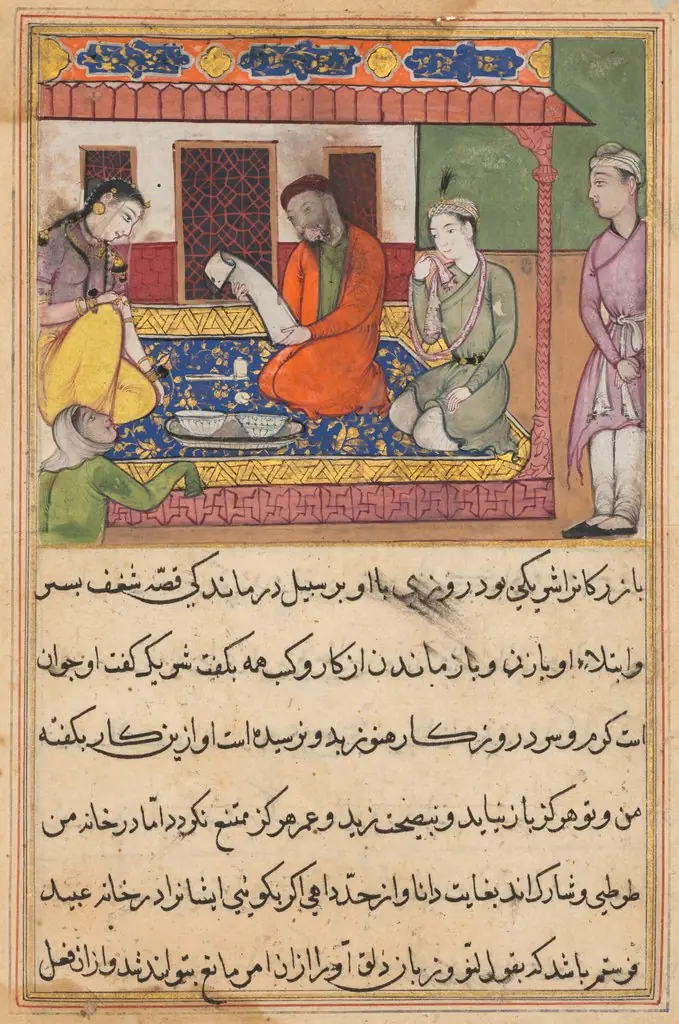 The marriage of ‘Ubaid, son of a merchant of Tirmiz, from a Tuti-nama (Tales of a Parrot): Forty-second Night
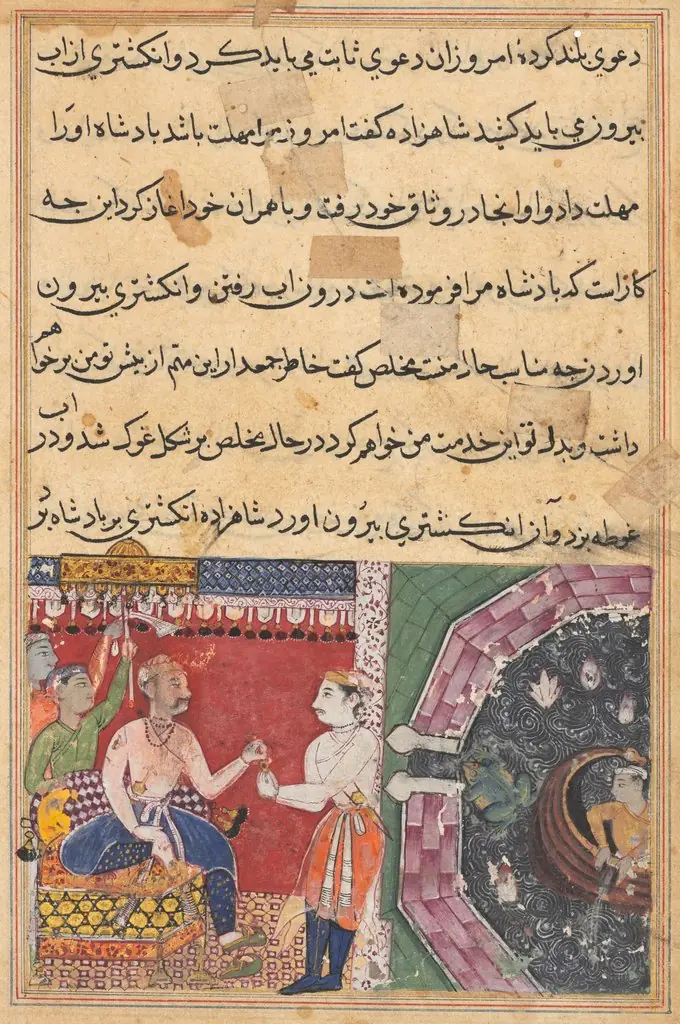 The prince, with the help of Mukhlis who changes into a frog, recovers the ring lost in the sea, and returns it to the king, from a Tuti-nama (Tales of a Parrot): Eighteenth Night
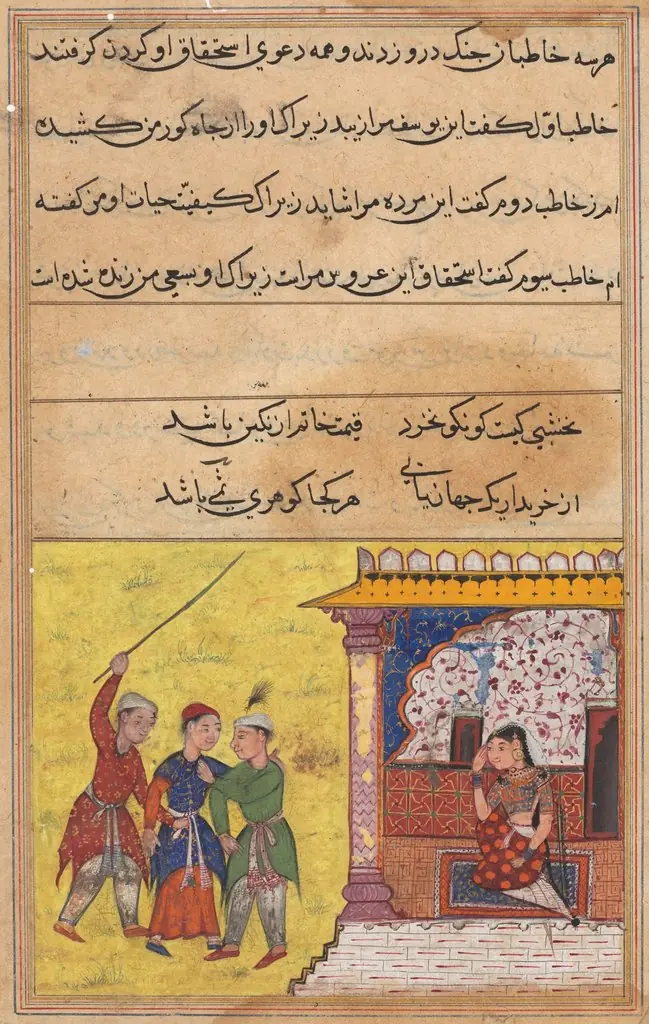 The three suitors again begin to quarrel among themselves for the hand of the devotee’s daughter, from a Tuti-nama (Tales of a Parrot): Twentieth Night
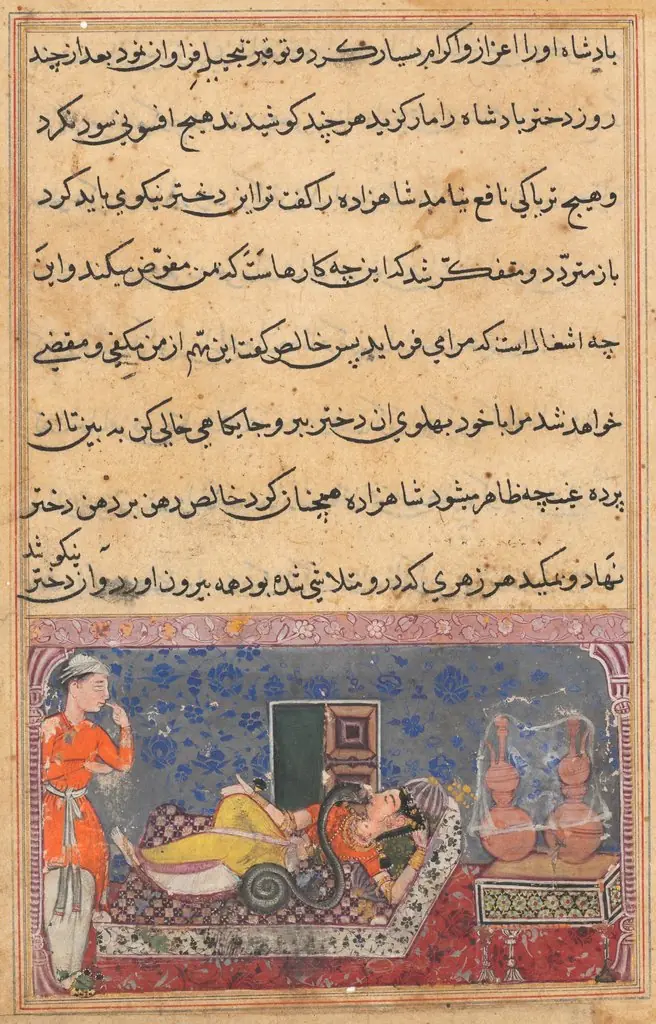 Khalis repays the prince for his kindness by changing into a snake and sucking the poison from the king’s daughter, from a Tuti-nama (Tales of a Parrot): Eighteenth Night
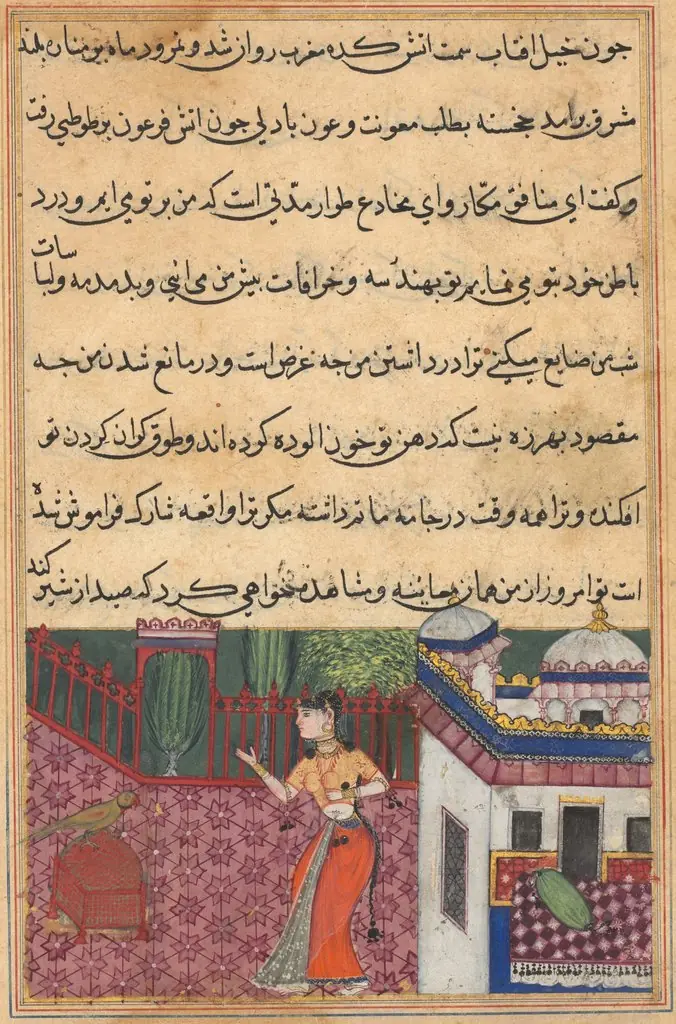 The parrot addresses Khujasta at the beginning of the thirty-third night, from a Tuti-nama (Tales of a Parrot)
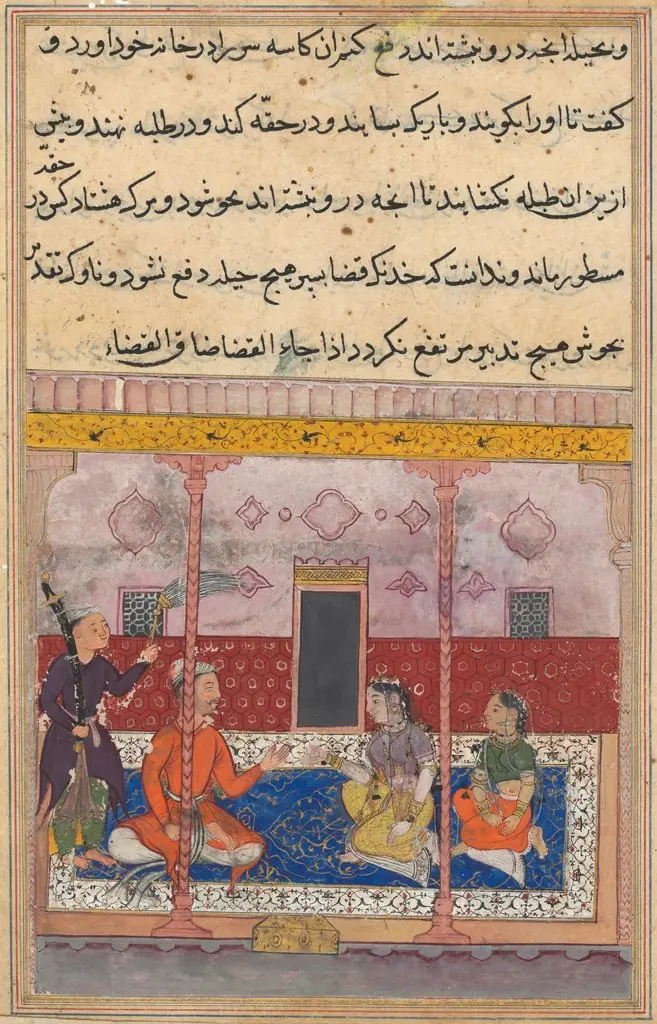 The merchant has the hateful skull ground and put into a box, from a Tuti-nama (Tales of a Parrot): Twenty-third Night
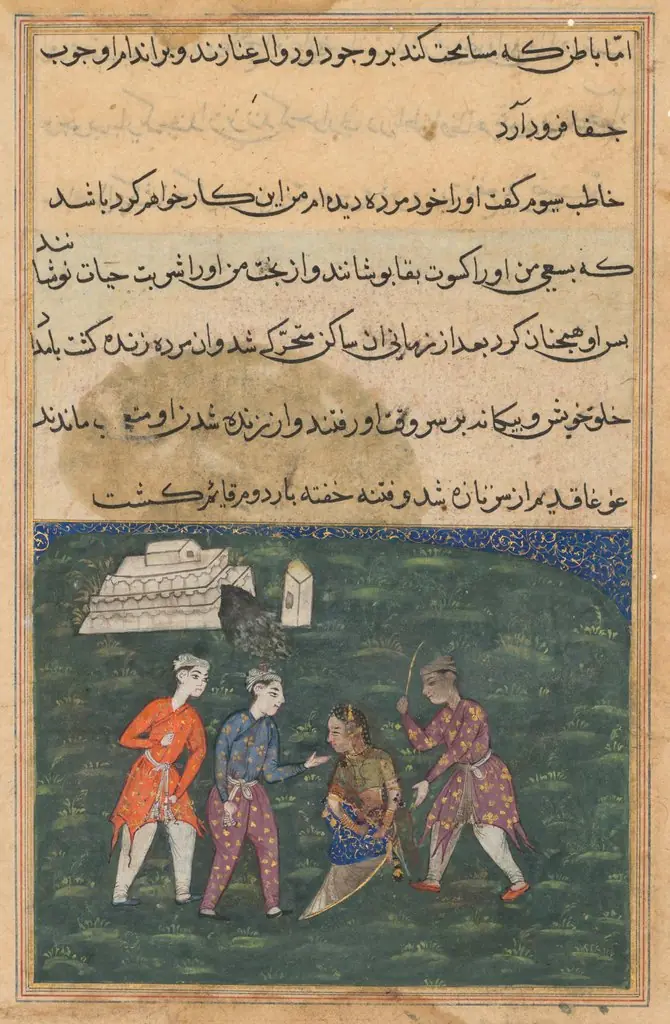 The third suitor strikes the devotee’s daughter and thus restores her to life, from a Tuti-nama (Tales of a Parrot): Twentieth Night
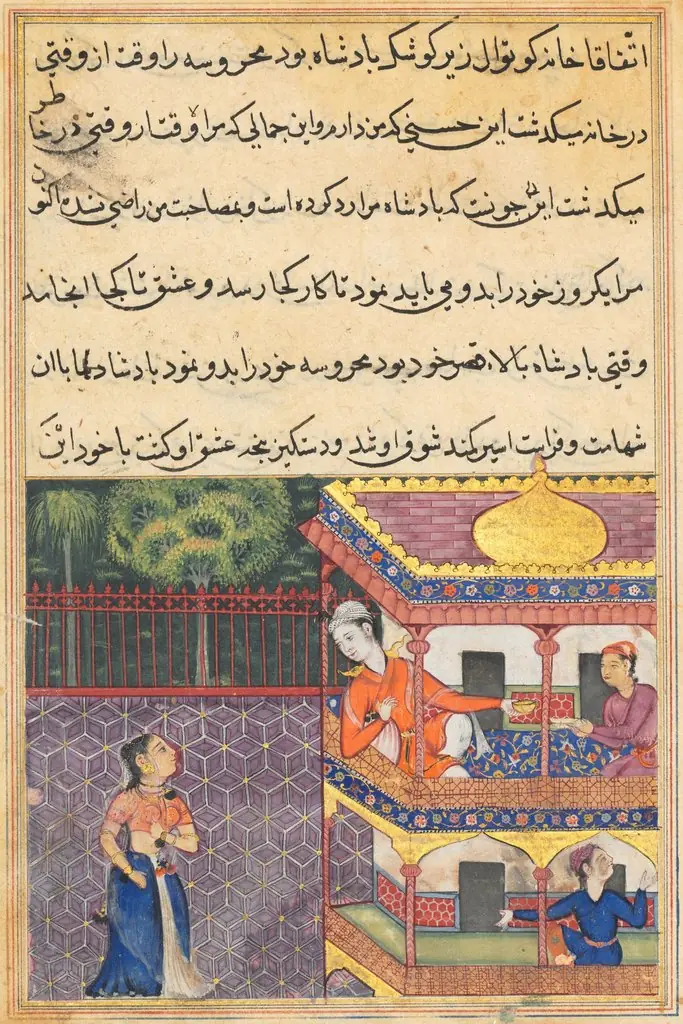 The king of Zabul sees Mahrusa from his palace balcony, from a Tuti-nama (Tales of a Parrot): Thirty-sixth Night
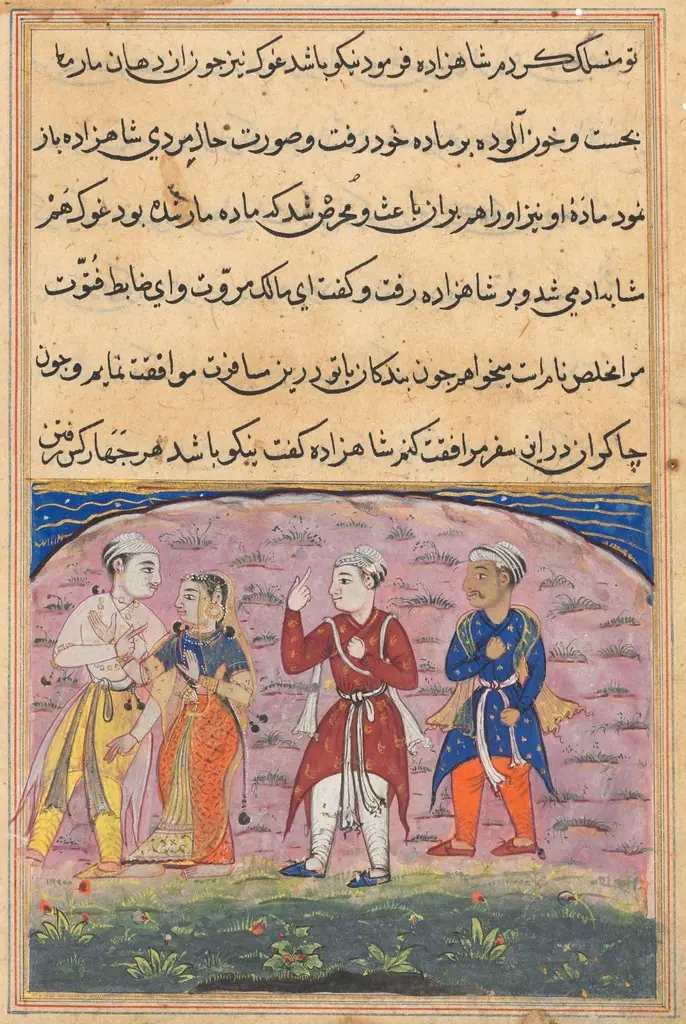 The prince and Nikfal are joined by Khalis and the Mukhlis who are the grateful snake and frog in human form, from a Tuti-nama (Tales of a Parrot): Eighteenth Night