Artwork
Virgin and Child with Saint Anne
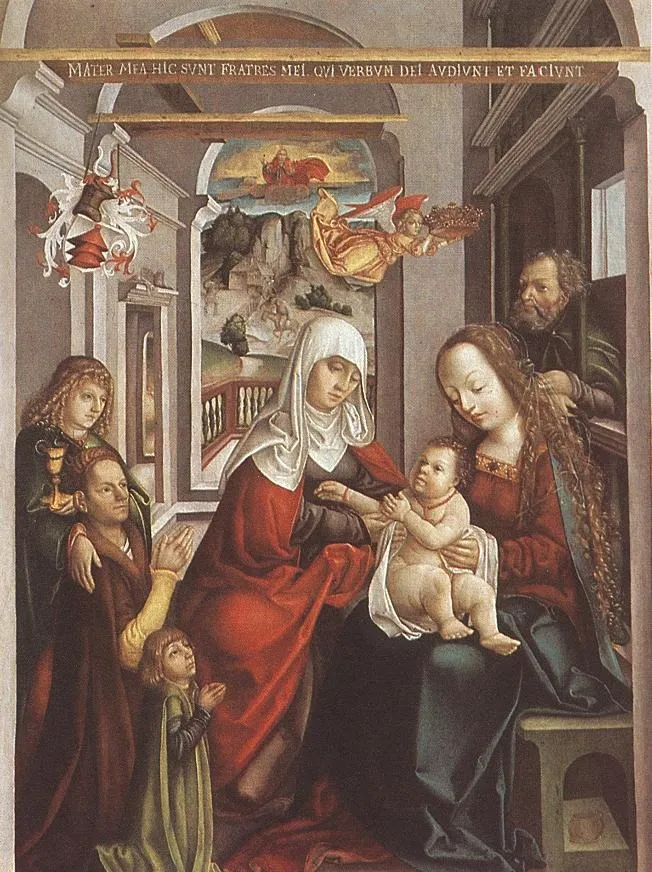
Virgin and Child with Saint Anne is an unspecified painting by the High Renaissance artist Unknown. It dates from 1520 and is held in the collection of the Hungarian National Gallery. This painting presents a quiet domestic moment featuring the Virgin Mary, her mother Saint Anne, and the infant Jesus.
About this work
Overview
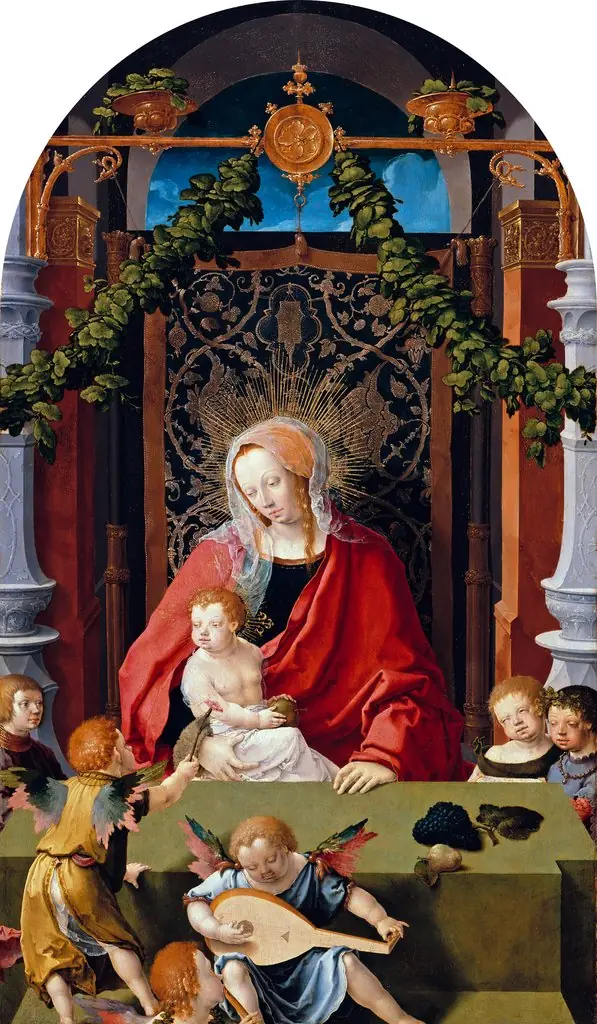
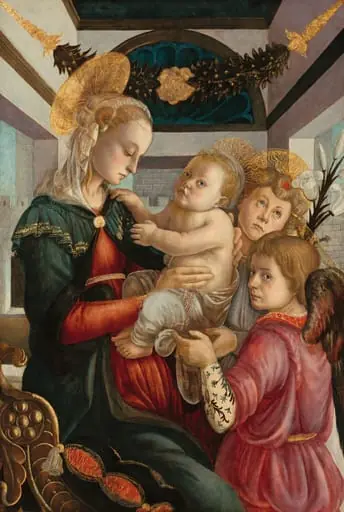
This painting presents a quiet domestic moment featuring the Virgin Mary, her mother Saint Anne, and the infant Jesus. The figures are arranged in a close, intimate grouping within a softly lit interior, framed by architectural elements like arched doorways and a distant window. The scene balances human tenderness with spiritual significance, avoiding overt grandeur in favor of quiet reverence.
Subject & Meaning
The setting, though domestic, subtly elevates the moment to a theological level, reflecting medieval and early Renaissance devotional ideals of holy kinship.
The composition centers on the generational bond between Saint Anne, the Virgin Mary, and Jesus, emphasizing familial continuity within sacred narrative. Saint Anne’s watchful gaze and Mary’s tender hold on the child suggest protection and lineage. The setting, though domestic, subtly elevates the moment to a theological level, reflecting medieval and early Renaissance devotional ideals of holy kinship.
Technique & Style
The artist employs chiaroscuro to model the figures with subtle gradations of light and shadow, lending them volume and presence. Warm, muted tones unify the interior space, while the soft illumination enhances the intimacy of the scene. The background landscape, visible through the window, is rendered with delicate brushwork, extending spatial depth without disrupting the focus on the central group.
History & Provenance
The painting’s early ownership is undocumented, but its style and technique align with late 15th-century Northern European traditions. It likely originated in a devotional context, possibly commissioned for private worship. Its preservation suggests it remained in religious or aristocratic collections, valued for its quiet piety rather than public display.
Context
Created during a period when private devotion was growing among the laity, this work reflects a shift toward personal, emotional engagement with sacred figures. The domestic setting mirrors contemporary ideals of the holy family as relatable and approachable. Such images were common in homes and chapels, serving as aids to meditation rather than public altarpieces.
Legacy
Though not widely reproduced or cited in major art historical narratives, this painting exemplifies a quiet strand of Renaissance devotional art that prioritized emotional resonance over spectacle. Its influence is seen in later works that favor intimate, domesticated sacred scenes, contributing to the broader evolution of religious imagery in Northern Europe.
Artist & collection

 Domestic Scene
 Giacomo and Cardinal Marco, investing Andrea, Abbot of San Zeno, with his Benefice
 The Nymph of Fontainebleau
 Portrait of a Woman
 Madonna and Child with Saints in the Enclosed Garden
 Venus and Minerva
 Family Group of Four on Sofa
 Wall painting from Room H of the Villa of P. Fannius Synistor at Boscoreale
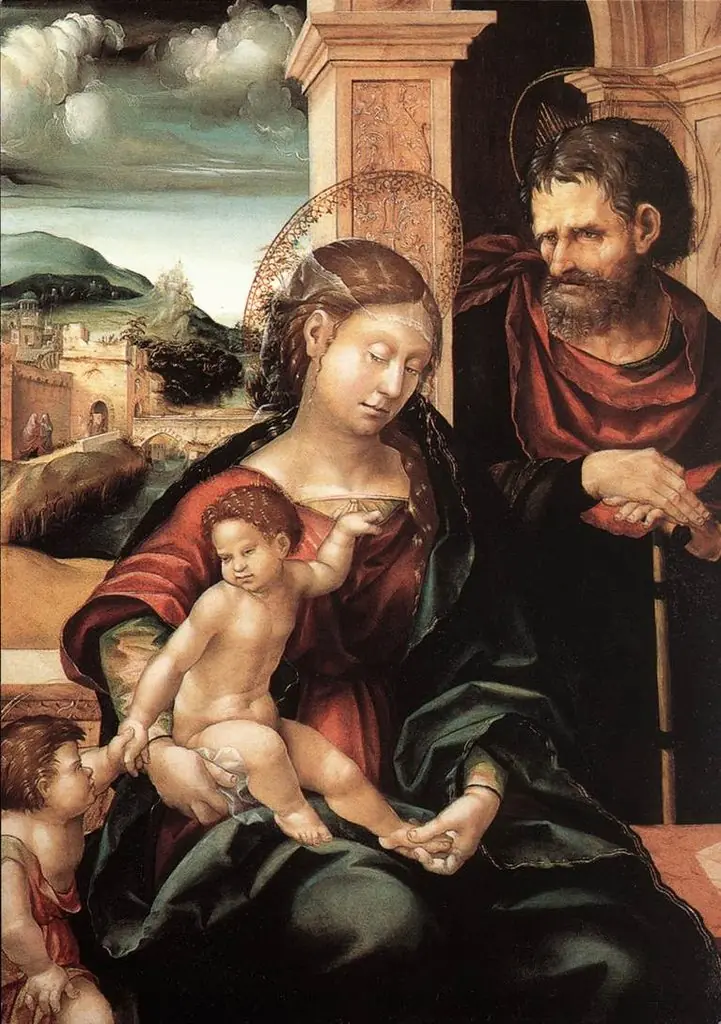 Holy Family with Child St. John
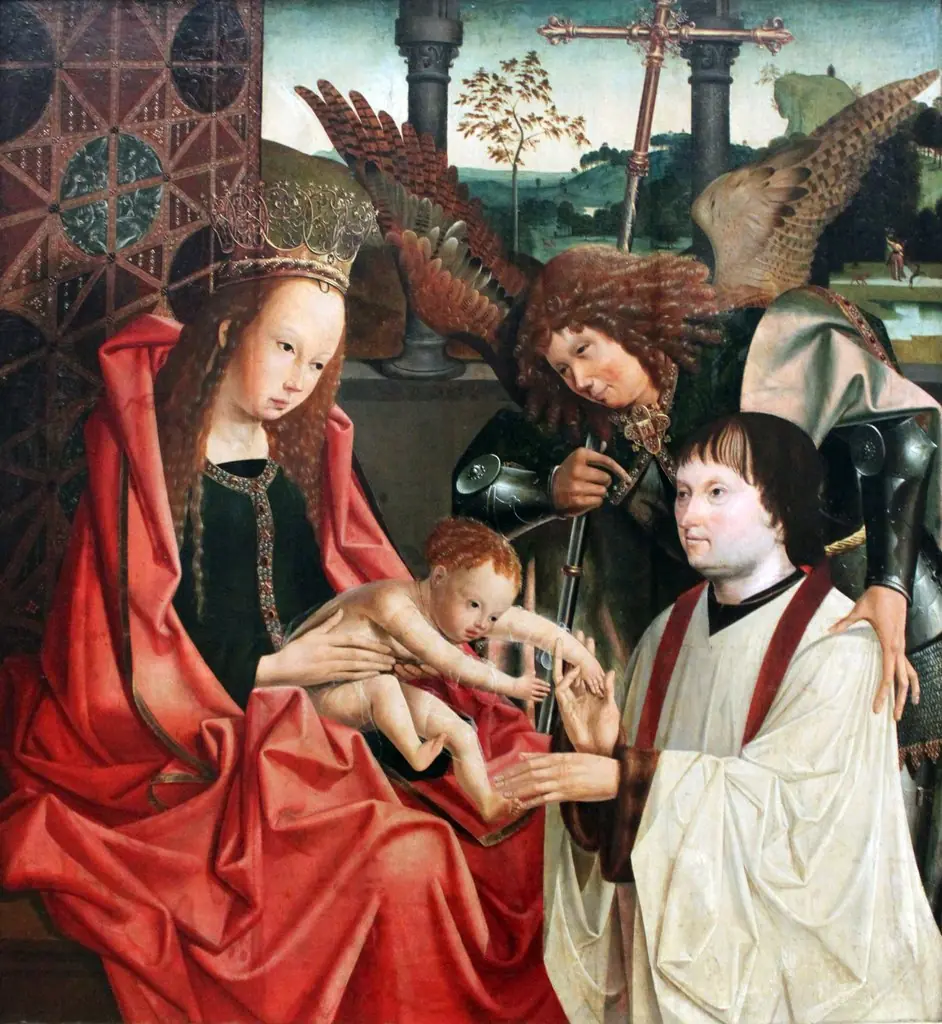 Maria with the child, the Archangel Michael and a donor
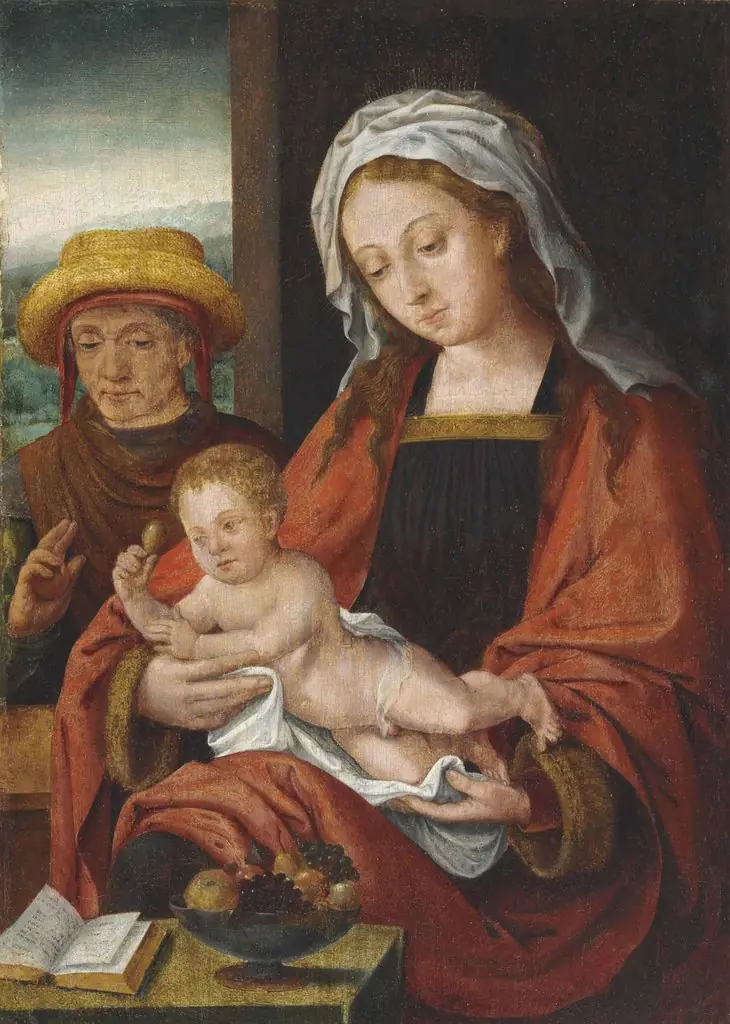 The Holy Family
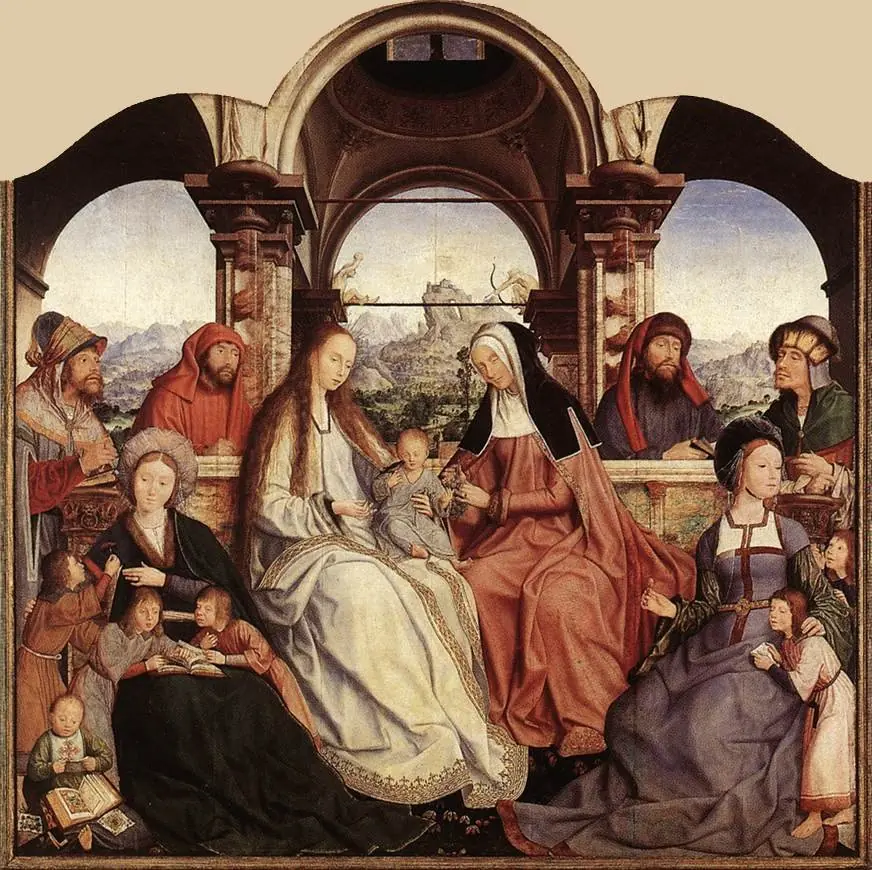 De H. Maagschap
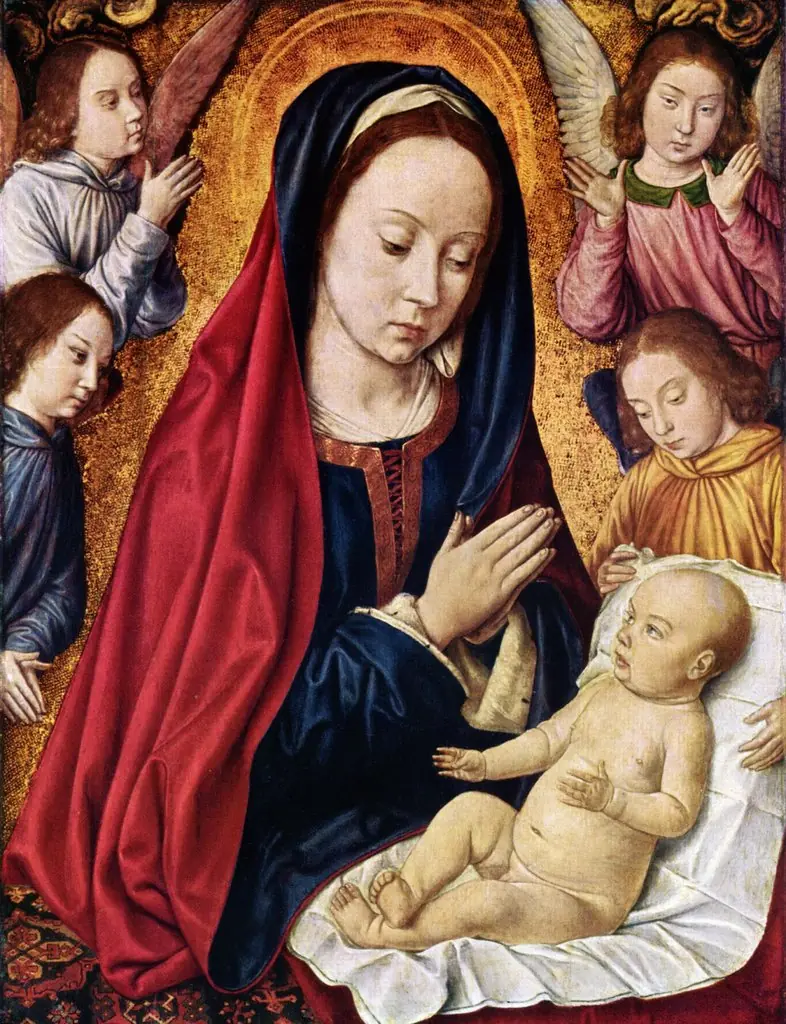 Madonna and Child
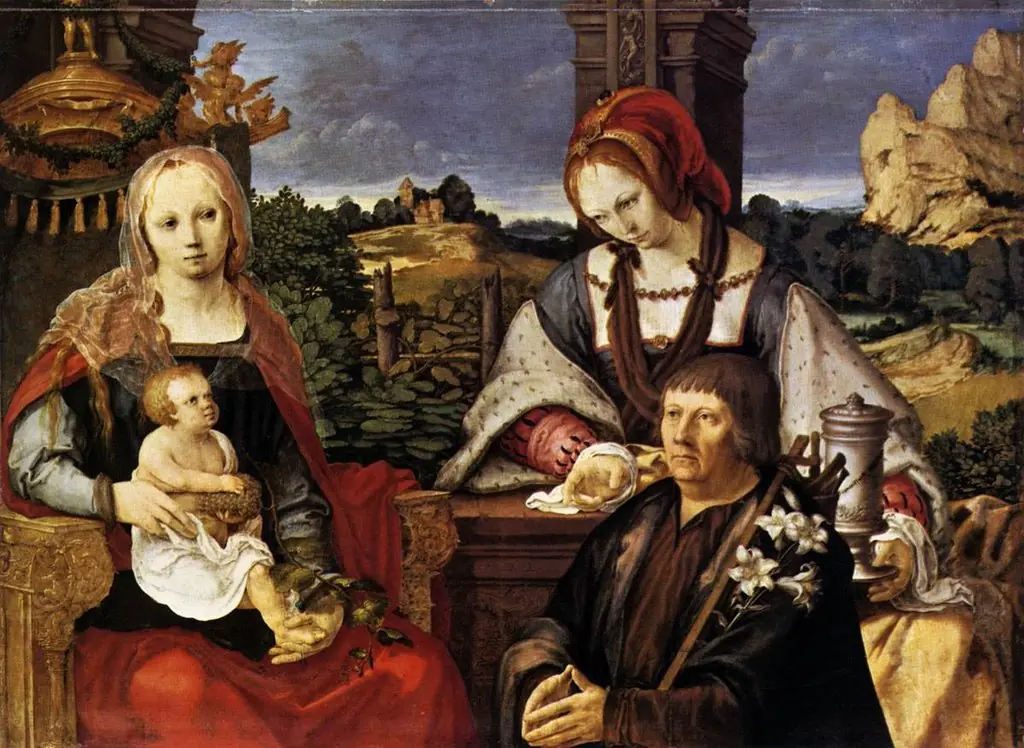 Mary with Child, St. Maria Magdalena and founder (separate outside, Inv. No. 7713)
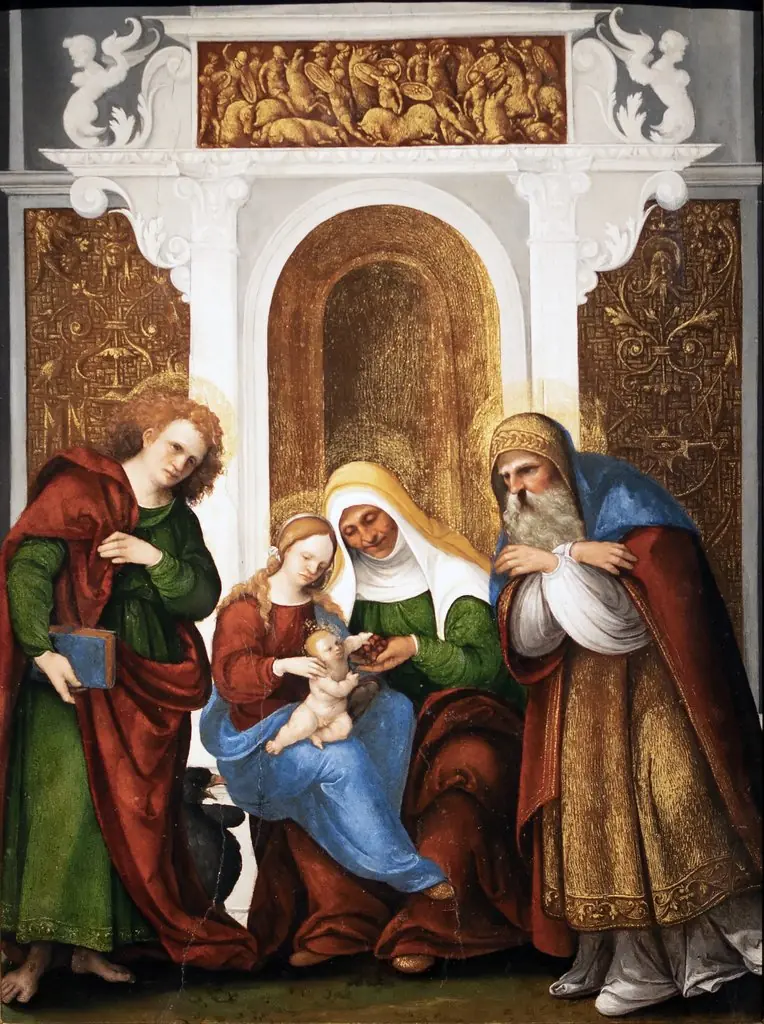 Madonna with Child and Saints
 Virgin and Child with Angels
 Madonna and Child with Angels