Artwork
Saints George and Demetrius of Thessalonica
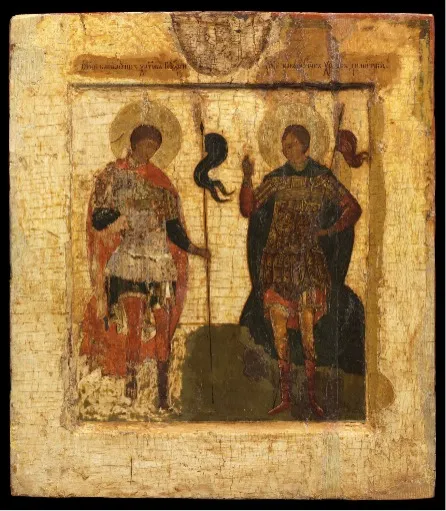
Saints George and Demetrius of Thessalonica is an unspecified painting by the Mannerist artist Unknown. It dates from 1525 and is held in the collection of the National Gallery of Ireland. This panel painting depicts two warrior saints, George and Demetrius, standing side by side before a plain background.
About this work
Overview
This panel painting depicts two warrior saints, George and Demetrius, standing side by side before a plain background. Both figures are rendered with solemn dignity, clad in richly colored garments and crowned with halos. They hold staffs topped with animal heads, oriented toward the viewer. The composition emphasizes symmetry and stillness, conveying spiritual authority rather than movement.
Subject & Meaning
The animal-headed staffs likely symbolize their dominion over wild forces or pagan powers, while the halos affirm their sanctity.
Saint George and Saint Demetrius were venerated as military saints in Eastern Christianity, often invoked for protection. Their paired representation here reflects their shared role as divine defenders. The animal-headed staffs likely symbolize their dominion over wild forces or pagan powers, while the halos affirm their sanctity. The formal stance and direct gaze suggest intercession between the earthly and the divine.
Technique & Style
The painting employs a flat, decorative approach with minimal modeling, contrary to the sfumato technique mentioned. Colors are applied in bold, unblended layers—crimson, gold, black—enhancing the figures’ presence. The background is uniformly pale, isolating the saints and focusing attention on their garments and attributes. Details are rendered with precision but without illusionistic depth.
History & Provenance
The work originates from the Byzantine or post-Byzantine tradition, likely produced in the Balkans or Anatolia between the 13th and 15th centuries. It was probably created for a church or private devotional use. Its survival suggests continued reverence for these saints in Orthodox communities. No documented provenance before modern collection records is available.
Context
In medieval Orthodox iconography, warrior saints were frequently depicted in pairs to reinforce their protective roles. This composition aligns with liturgical and hagiographic traditions that emphasized visual hierarchy and symbolic clarity over naturalism. The animal-headed staffs may reference local legends or earlier Roman military standards adapted into Christian iconography.
Legacy
Though not widely known outside regional collections, this painting exemplifies the enduring visual language of Eastern Christian saints. Its stylistic consistency with contemporaneous icons highlights the persistence of symbolic representation over naturalistic innovation. It remains a testament to the devotional priorities of medieval Orthodox communities.
Artist & collection

 Domestic Scene
 Giacomo and Cardinal Marco, investing Andrea, Abbot of San Zeno, with his Benefice
 The Nymph of Fontainebleau
 Portrait of a Woman
 Madonna and Child with Saints in the Enclosed Garden
 Venus and Minerva
 Family Group of Four on Sofa
 Wall painting from Room H of the Villa of P. Fannius Synistor at Boscoreale
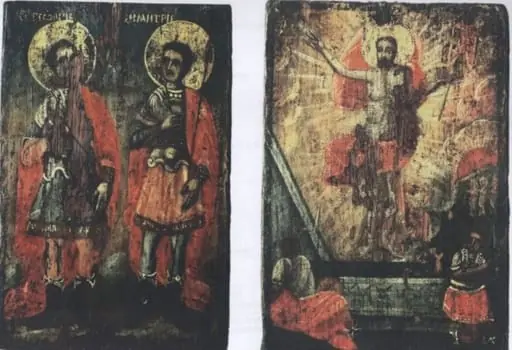 Invierea lui Iisus Hristos; Sfânții Gheorghe și Dimitrie Sfânții Gheorghe și Dimitrie
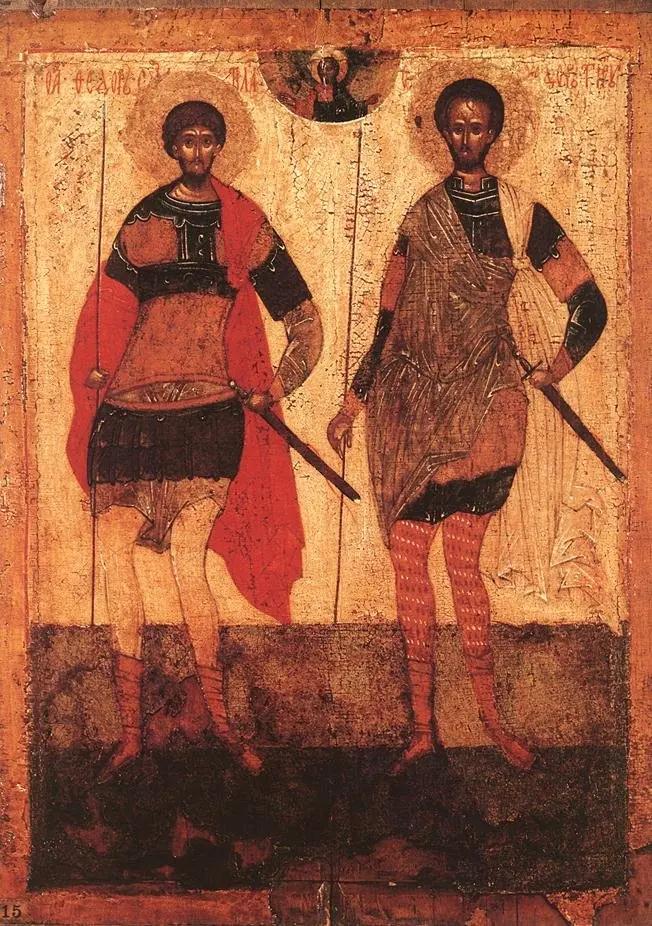 Icon: Sts Theodore Stratelates and Theodore Tyron
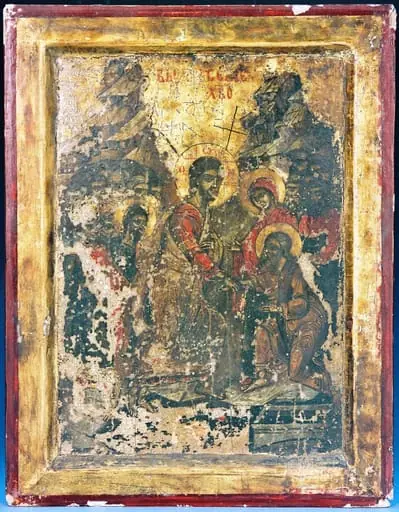 INVIEREA
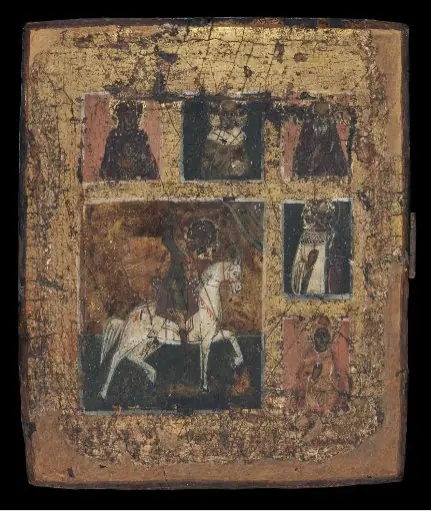 Six Saints
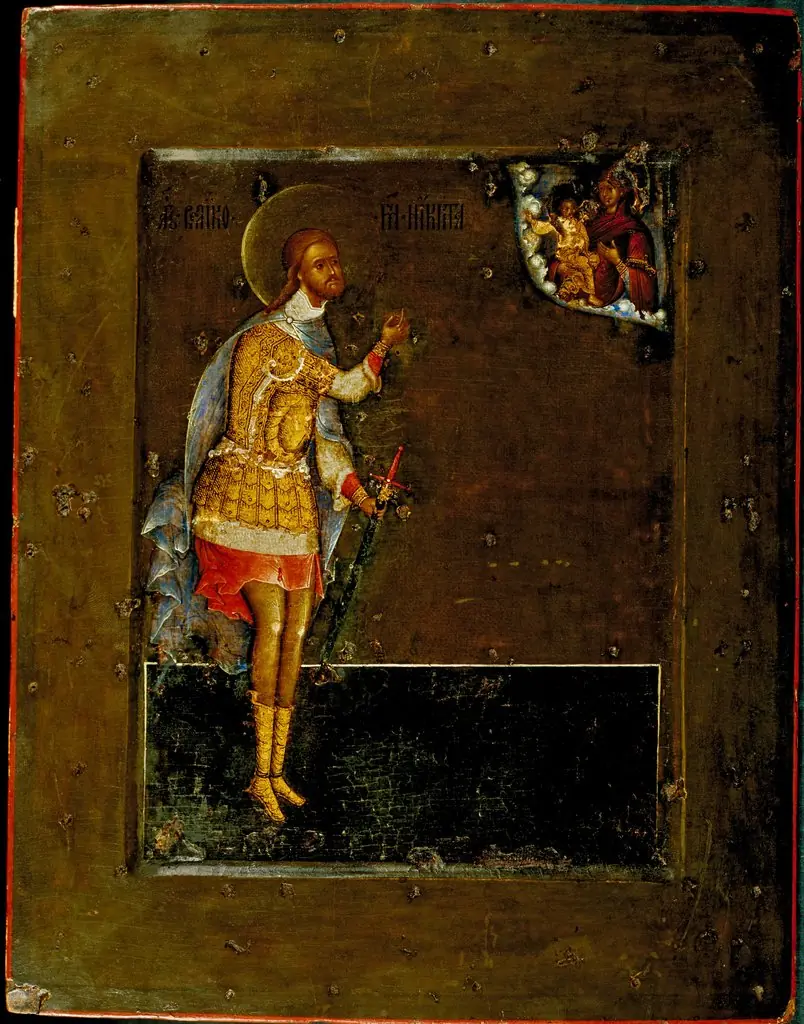 St Nicetas the Warrior
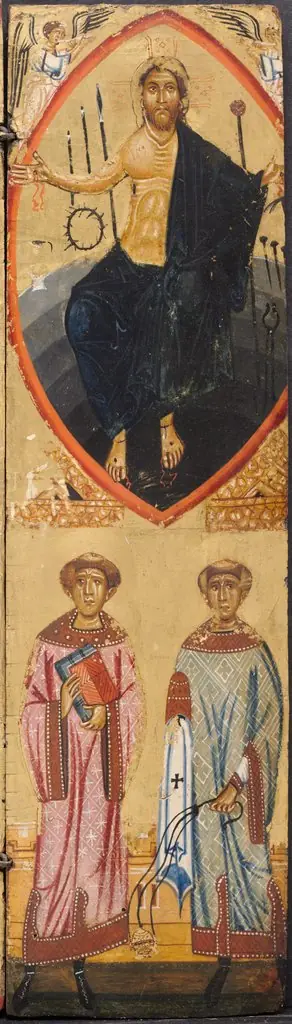 Christ in a Mandorla, with the instruments of the Passion, with St. Stephen and St. Lawrence below
 Christ in a Mandorla, with the instruments of the Passion, with St. Stephen and St. Lawrence below