Artwork
St Nicetas the Warrior
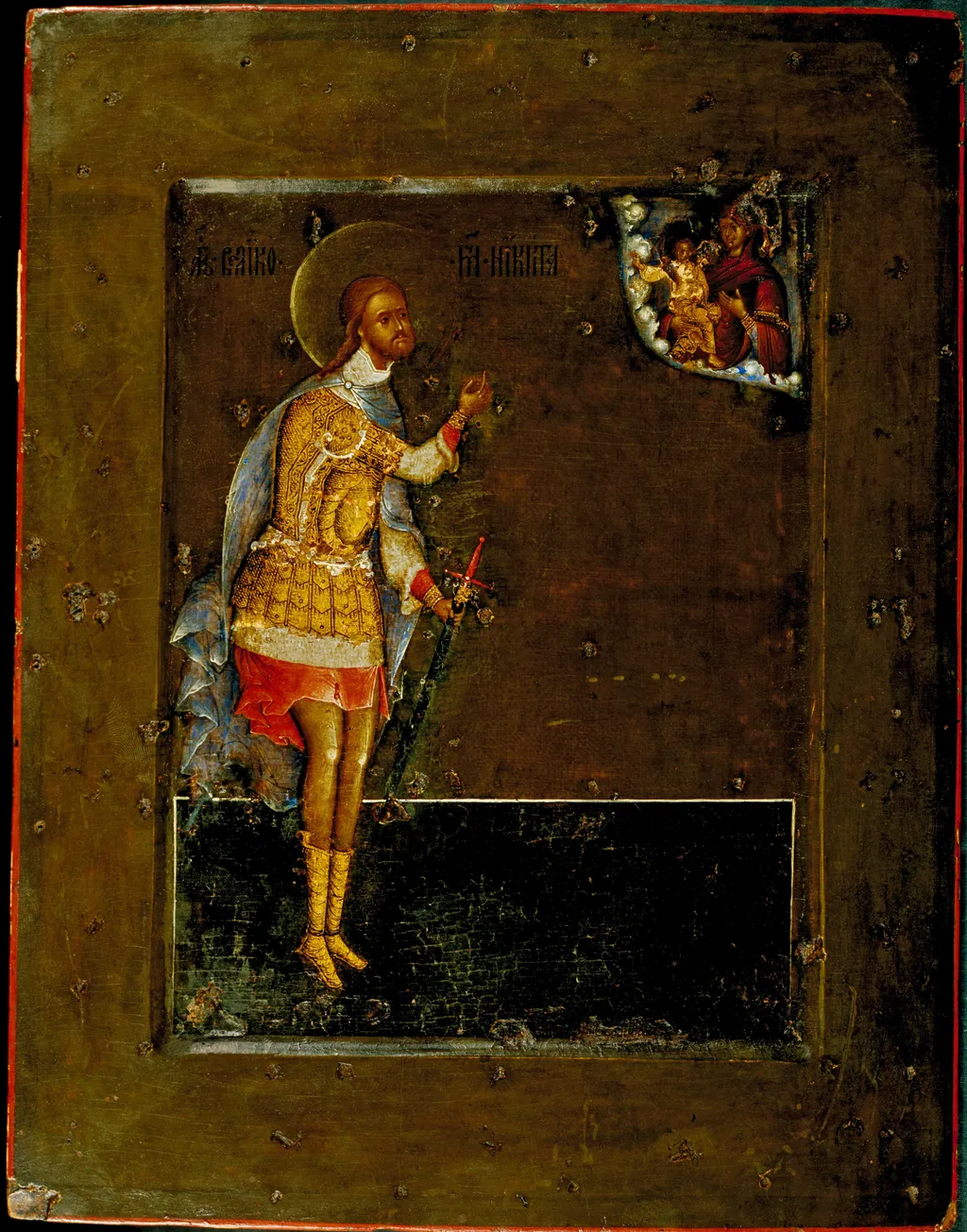
St Nicetas the Warrior is a tempera painting by the Byzantine icon painting artist Procope Tchirine. It dates from 1597 and is held in the collection of the Tretyakov Gallery.
About this work
Overview
St Nicetas the Warrior is a tempera painting created by Procope Tchirine in 1597, currently housed at the Tretyakov Gallery.
Subject & Meaning
The painting portrays a haloed figure in armor, identified as St Nicetas, dressed in distinctive attire including a yellow tunic, red shorts, and a blue cape.
The painting portrays a haloed figure in armor, identified as St Nicetas, dressed in distinctive attire including a yellow tunic, red shorts, and a blue cape. He holds a sword in his right hand and faces right. A secondary, smaller scene in the upper right corner depicts a woman with a baby, potentially alluding to a biblical or saintly narrative, though its direct relation to St Nicetas is not explicitly clear.
Technique & Style
Executed in tempera, the painting reflects the artist's use of this traditional medium, characterized by its opaque, fast-drying properties. The composition and color palette, including the vibrant yellows, reds, and blues, are typical of the stylistic conventions of late 16th-century religious and portrait painting.
History & Provenance
Created in 1597 by Procope Tchirine, the painting's history prior to its acquisition by the Tretyakov Gallery is not detailed in the provided information. It is known to be part of the gallery's collection.
Context
The painting situates itself within the tradition of depicting saints in armor, common in religious art, symbolizing the struggle between good and evil. The inclusion of a halo emphasizes the subject's sanctity despite his martial appearance.
Legacy
While specific details on the painting's impact or influence are not provided, as a work by Procope Tchirine, it contributes to the understanding of 16th-century artistic practices and the representation of religious figures in that era.
Artist & collection

 Pyhä Bonifatius
 Sfântul Mitropolit Alexei; Icoană ferecată
 Saint Bartholomew
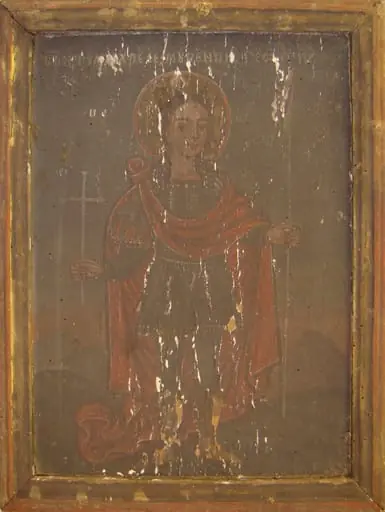 Sf. Gheorghe
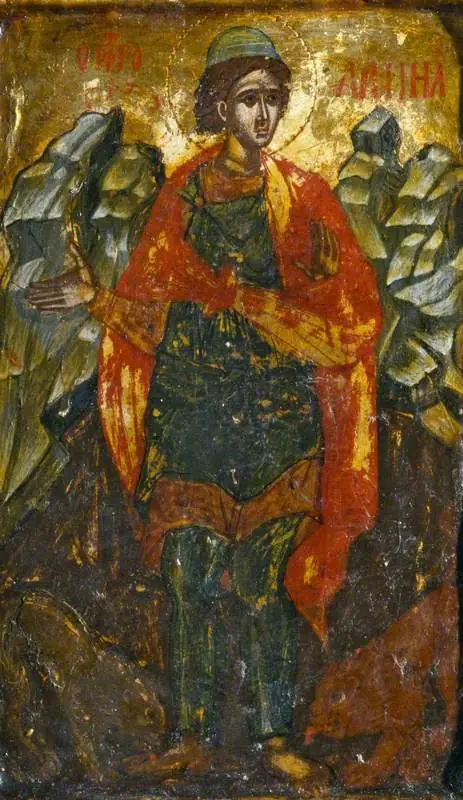 Daniel in the Lion's Den (one side of a two-sided panel)
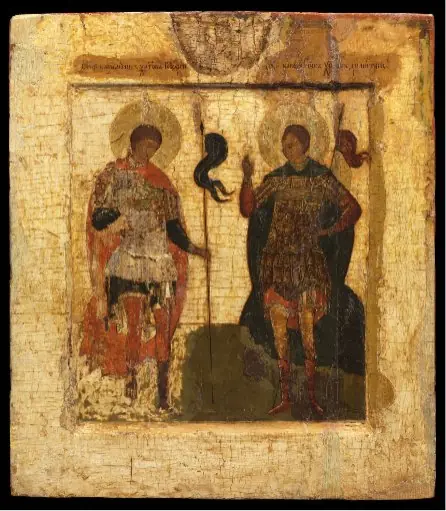 Saints George and Demetrius of Thessalonica
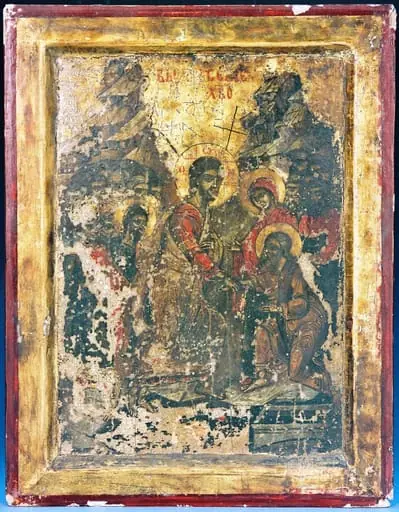 INVIEREA
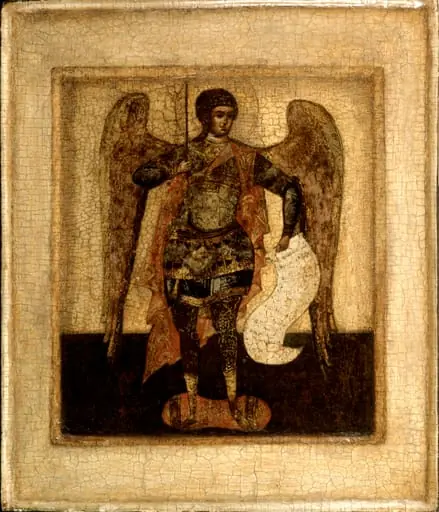 Arkkienkeli Mikael, venäläinen ikoni
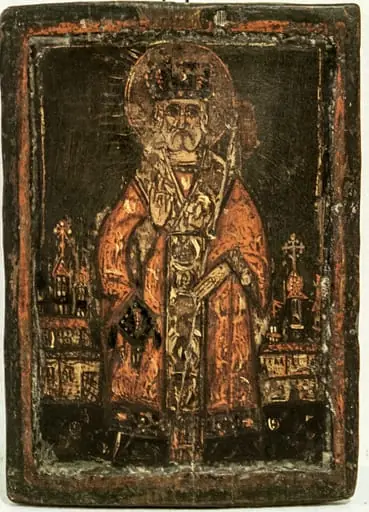 Icoana îl reprezintă pe sfântul Haralambie într-o manieră ușor naivă. Sfântul este redat în ipostaza de mare ierarh, din semiprofil, binecuvântînd cu mâna dreaptă iar în stânga ținînd o carte deschisă pe care estevizibilă inscripție cu caractere chirilice. Înveșmântat cu sacos de culoare roșu cărămiziu, decorat cu linii transversale realizate prin îndepărtarea culorii. Epitrahilul, de culoare deschisă, cu chenar dublu, decorat cu cruci și linii De mâna dreaptă poartă atârnată EPIGONATUL sau BEDERNITA – un veșmânt în formă de romb. Acesta simbolizează sabia spirituală, adică cuvântul lui Dumnezeu cu care trebuie sa fie înarmat arhiereul,. Chipul este bine realizat, expresiv, privirea vie. Barba scurtă și părul sunt cărunte, proporțiile respectate. În jurul capului- aureolă iradiantă, mărginită de o linie dublă trasată cu un instrument. În jumătatea inferioară, în planul doi, se profilează arhitectura unei incinte mănăstirești , cu biserici cu turle înalte, acoperiș roșu și cruci treflate. Fond de culoare închisă, icoana prezintă deteriorări ale stratului pictural. Chenar alb subțire.Rama, pictată cu roșu la interior, negru brun la exterior.
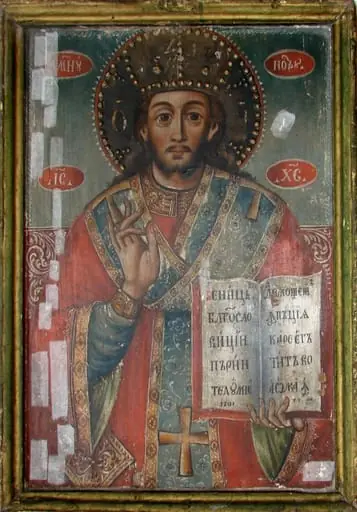 Iisus Hristos Mare Arhiereu și Învățător
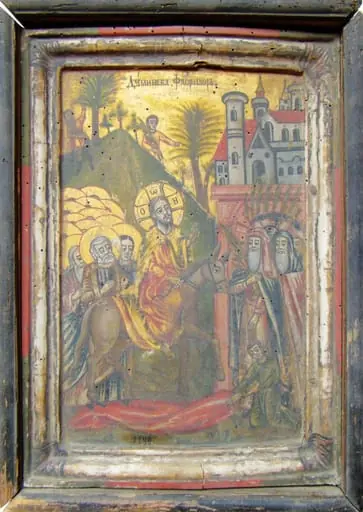 Duminica Floriilor
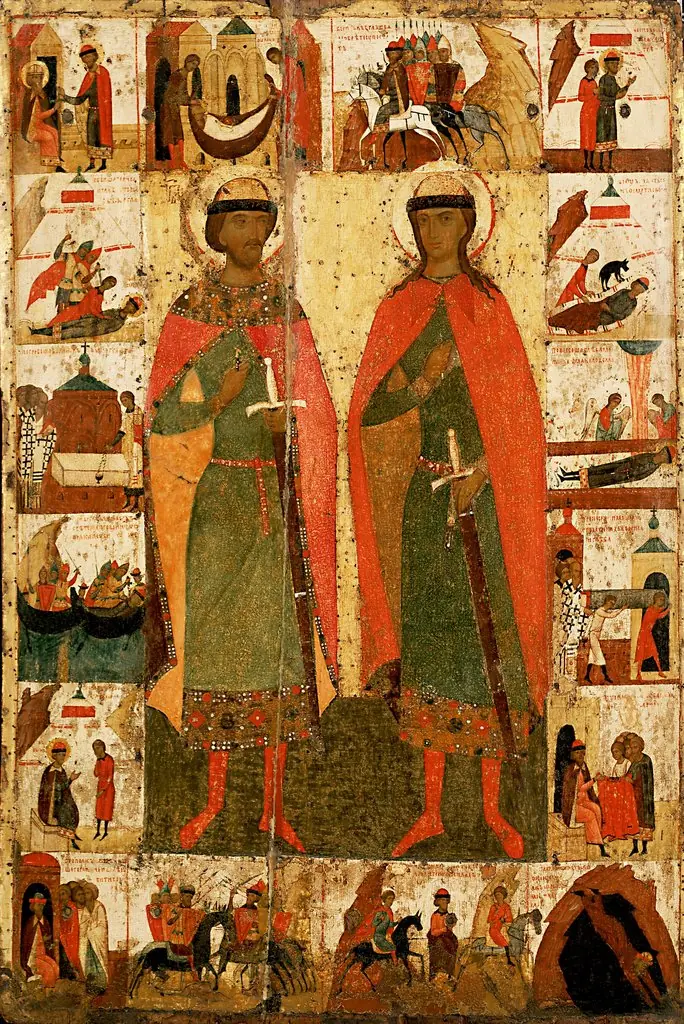 Boris and Gleb with Scenes from Their Lives