Artwork
INVIEREA
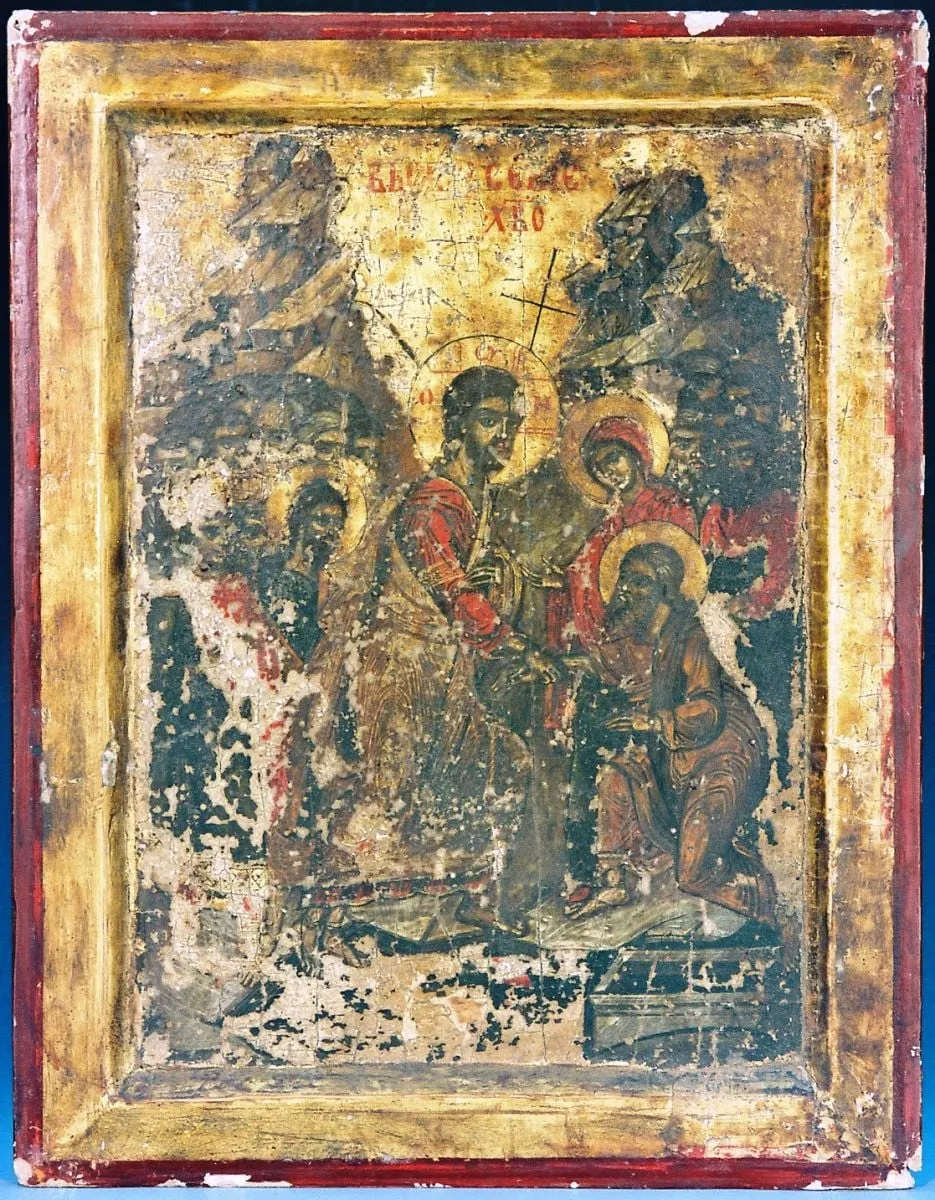
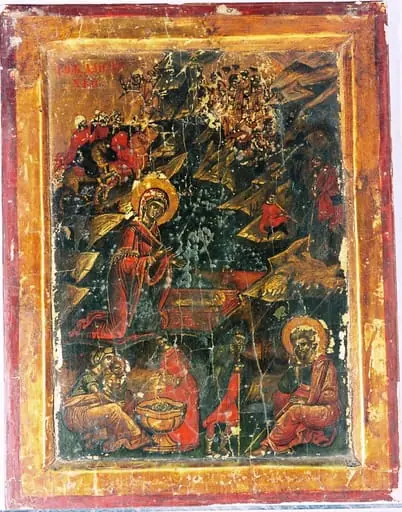
INVIEREA is a drawing by Unknown. It dates from 1850 and is held in the collection of the National Museum of Art of Romania. This painted panel depicts three sacred figures against a faded golden background, typical of early Byzantine religious art.
About this work
Overview
The central figure, larger than the others, is distinguished by a halo bearing a cross and a red robe, suggesting a divine or saintly status.
This painted panel depicts three sacred figures against a faded golden background, typical of early Byzantine religious art. The central figure, larger than the others, is distinguished by a halo bearing a cross and a red robe, suggesting a divine or saintly status. Two smaller attendant figures flank them, each with halos and robes in red and blue. The surface shows extensive wear, with paint cracking and pigments dulled over time, obscuring finer details.
Subject & Meaning
The composition follows a standard iconographic arrangement of a central holy figure flanked by two attendants, likely saints or angels. The presence of halos and the cross within the central halo indicate Christian devotion. The Greek inscription at the top may identify the central figure, though its legibility is compromised. The hierarchical scale and formal posture reflect theological emphasis on spiritual authority rather than naturalistic representation.
Technique & Style
The work employs tempera or encaustic on wood, common in early medieval icons. The figures are rendered with simplified forms and minimal modeling, prioritizing symbolic clarity over realism. The golden background, though faded, originally served to evoke divine light. Surface deterioration has obscured brushwork and fine lines, but the underlying style aligns with Constantinopolitan traditions of the period, emphasizing frontal solemnity and spiritual presence.
History & Provenance
The painting’s condition suggests it was once displayed in a religious setting, possibly a church or private chapel, where exposure to smoke, handling, and environmental changes led to its current state of wear. Its survival indicates it was valued enough to be preserved despite damage. Exact origins are undocumented, but stylistic features point to production in the Byzantine Empire or a region under its cultural influence during the medieval era.
Context
Created during a period when religious imagery was central to worship and doctrine, this panel reflects the liturgical function of icons in Eastern Christianity. Such images were not merely decorative but served as focal points for prayer and veneration. The use of gold, standardized poses, and Greek inscriptions aligns with broader Byzantine practices, reinforcing theological narratives through visual convention rather than individual expression.
Legacy
Though heavily degraded, the painting remains a tangible link to medieval devotional practices. Its survival offers insight into how religious art was produced, used, and preserved across centuries. While later periods favored more naturalistic styles, this work exemplifies the enduring influence of Byzantine iconography on Eastern Orthodox traditions and the aesthetic principles of sacred representation in Christian art.
Artist & collection

 Domestic Scene
 Giacomo and Cardinal Marco, investing Andrea, Abbot of San Zeno, with his Benefice
 The Nymph of Fontainebleau
 Portrait of a Woman
 Madonna and Child with Saints in the Enclosed Garden
 Venus and Minerva
 Family Group of Four on Sofa
 Wall painting from Room H of the Villa of P. Fannius Synistor at Boscoreale
 Prezentarea la templu
 Botezul lui Iisus
 SCHIMBAREA LA FATA
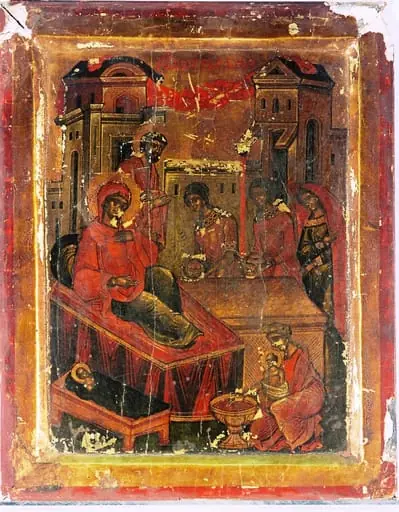 NASTEREA MAICII DOMNULUI
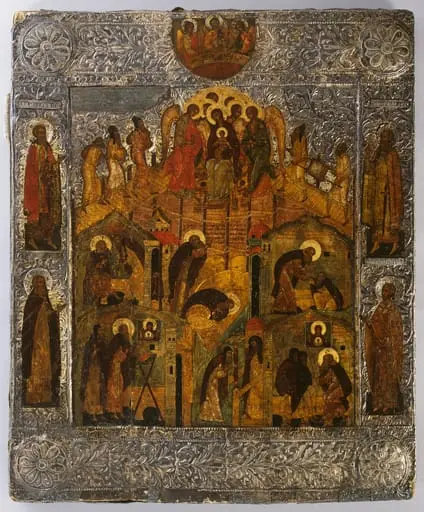 Neitsyt Marian ilmestyminen pyhittäjä Aleksanteri Syväriläiselle kirkon perustuksella
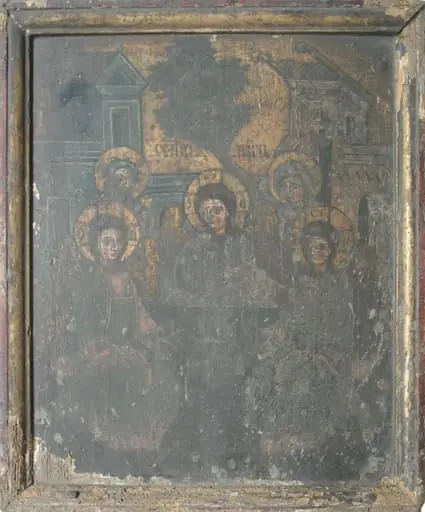 Cina de la Mamvri
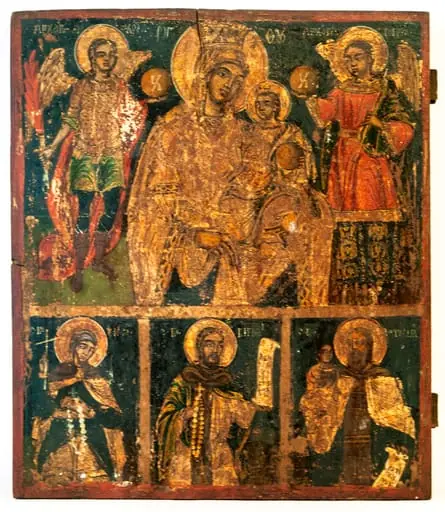 Icoașat
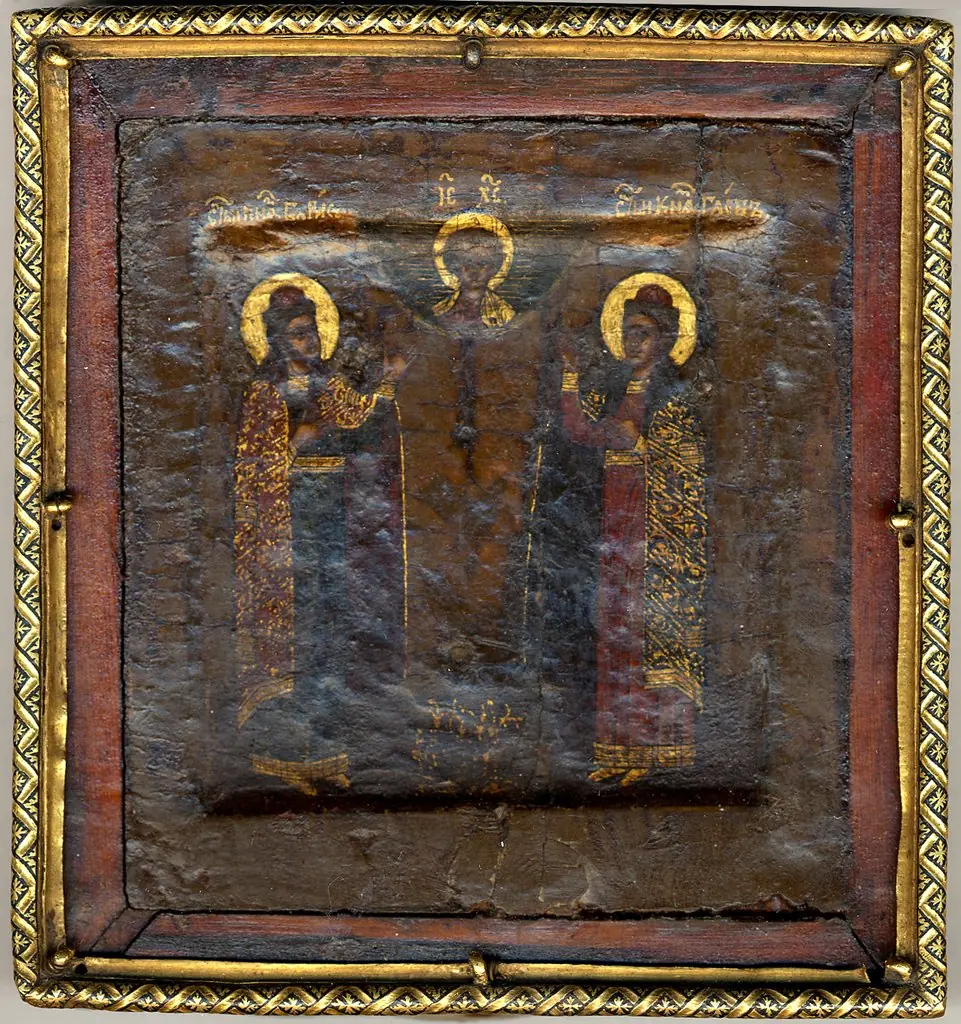 The Christ Child with Saints Boris and Gleb
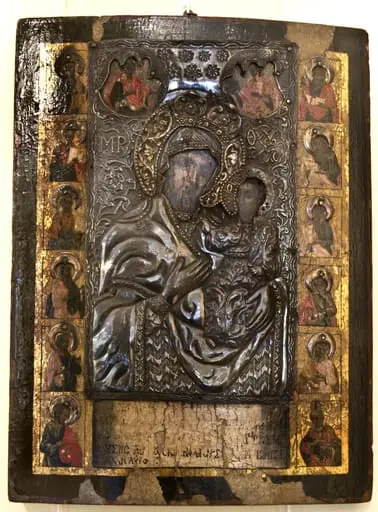 Maica Domnului cu Pruncul; Icoană ferecată
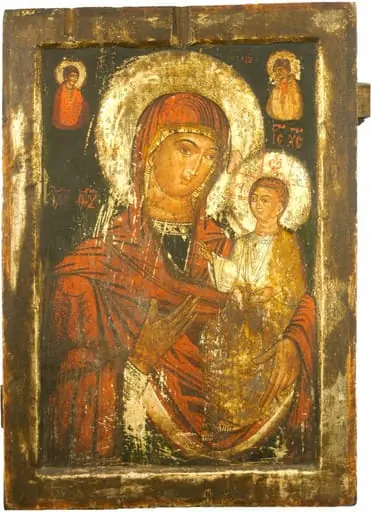 Maica Domnului cu Pruncul
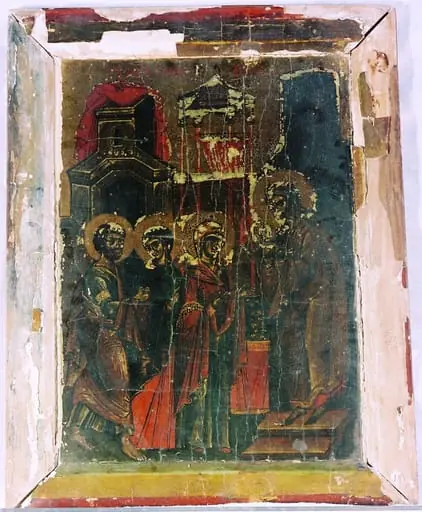
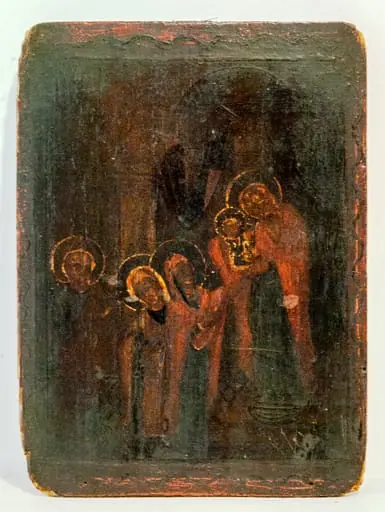 Tema icoanei este "Întâmpinarea Domnului", prăznuită pe 2 februarie. Scena este zugrăvită după canoanele picturii bizantine: Templul este redat schematic printr-o coloană și un baldachin, aflate în planul doi. În prim plan, Dreptul Simion, cu părul și barba albe, primește Pruncul înfășat de la Maica Sa, privindu-l cu cutremurare. Fecioara Maria privește către ei, având mâna întinsă. În urmă vine dreptul Iosif. Între ei se află proorocița Ana, fiica lui Fanuel, care l-a slujit pe Dumnezeu în templu din tinerețe. Toți sunt reprezentați cu aureole realizate dintr-o linie albă subțire. La Isus se observă încă nimbul cruciger. Culorile sunt calde, predomină roșul(maphorionul Mariei, mantia lui Simion, și veșmântul proorociței, chenarul marginal), fondul nuanțe de calde de brun. Pictura este foarte murdară, nu se observă bine detaliile. Chenarul este ornamentat cu o linie vălurită de culoare albastră.
 NASTEREA LUI IISUS