Artwork
Profile Bust of a Roman Emperor Facing Right (one of 29 painted panels from a frieze)
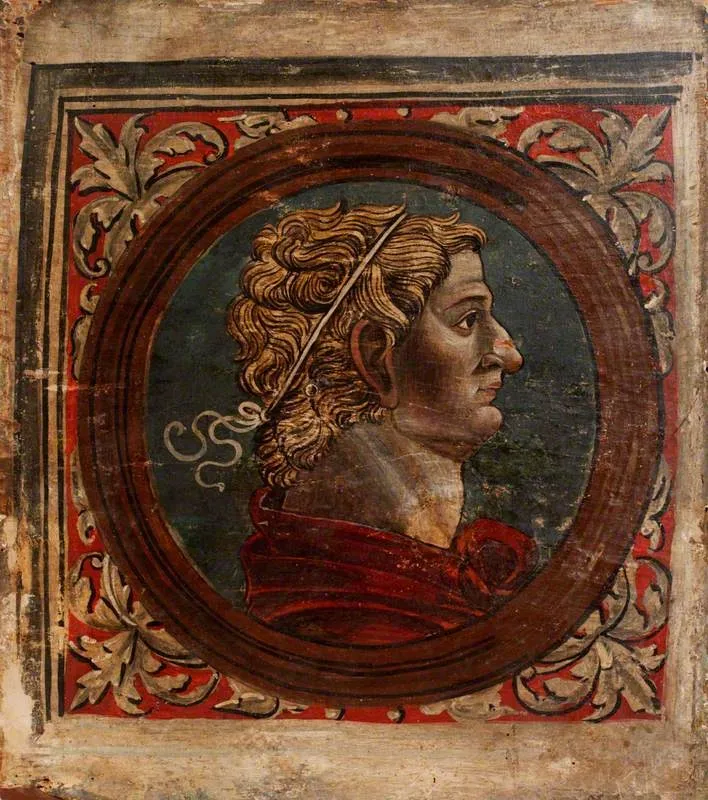
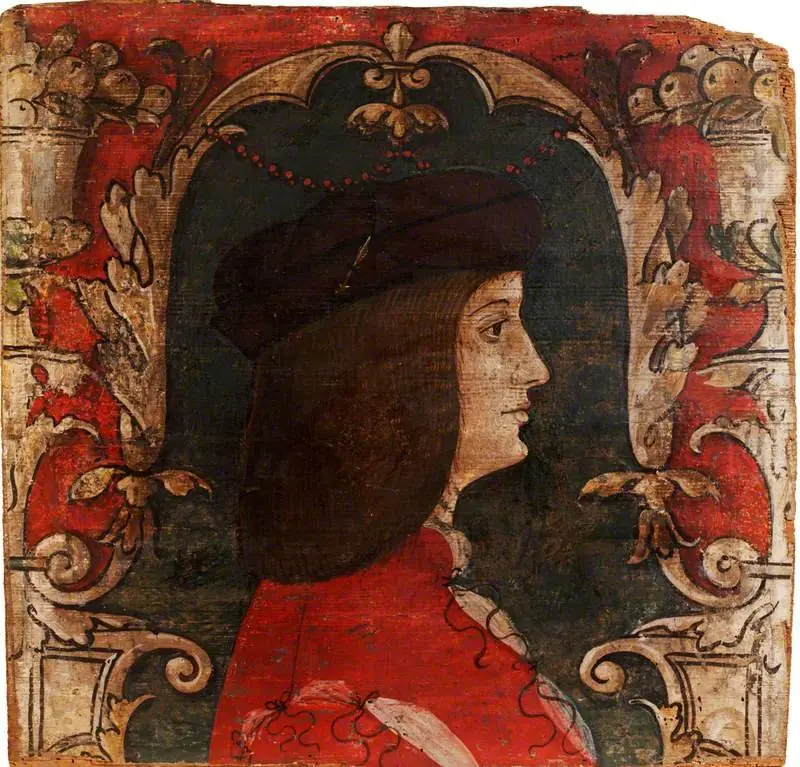
Profile Bust of a Roman Emperor Facing Right (one of 29 painted panels from a frieze) is an unspecified painting by the High Renaissance artist Unknown. It dates from 1500 and is held in the collection of the Victoria and Albert Museum. This painted panel is one of twenty-nine fragments from a larger decorative frieze depicting Roman imperial figures.
About this work
Overview
The work belongs to a series likely intended for architectural display, possibly in a public or elite domestic setting.
This painted panel is one of twenty-nine fragments from a larger decorative frieze depicting Roman imperial figures. It shows a male profile in right-facing orientation, rendered with attention to detail in hair, drapery, and color. The work belongs to a series likely intended for architectural display, possibly in a public or elite domestic setting. It is now held in the collection of the Victoria and Albert Museum.
Subject & Meaning
The figure is believed to represent a Roman emperor, identified by the regal attire and solemn demeanor. The red robe and single rose on the chest may symbolize authority or divine favor, though the exact iconography remains uncertain. The profile view follows classical conventions emphasizing dignity and permanence, typical of imperial portraiture meant to convey legitimacy and gravitas.
Technique & Style
The panel employs tempera or encaustic on a wooden support, with layered pigments to achieve depth in the golden curls and rich red fabric. The background is a dark green field, framed by a brown circular motif that isolates the figure. Brushwork is precise, with minimal modeling, reflecting a stylized approach common in late antique decorative art rather than naturalistic portraiture.
History & Provenance
The frieze was likely created in the late Roman or early Byzantine period, possibly in the eastern Mediterranean. The panels were discovered in the 19th century, though their original context remains unclear. They entered the Victoria and Albert Museum’s collection through acquisition or donation, and have since been studied as rare surviving examples of painted imperial imagery from antiquity.
Context
These panels formed part of a continuous decorative band, possibly adorning a palace, basilica, or villa. The repetition of profile busts suggests a programmatic presentation of imperial lineage or authority. Such friezes were common in late antiquity as visual affirmations of power, blending Hellenistic traditions with emerging Christian and Byzantine aesthetics.
Legacy
The panel contributes to understanding how Roman imperial imagery persisted beyond the empire’s political decline. Its survival among other fragments offers insight into the continuity of visual language in early medieval art. Though not widely known, it remains a key reference for scholars studying the transition from classical to medieval portraiture.
Artist & collection

 Domestic Scene
 Giacomo and Cardinal Marco, investing Andrea, Abbot of San Zeno, with his Benefice
 The Nymph of Fontainebleau
 Portrait of a Woman
 Madonna and Child with Saints in the Enclosed Garden
 Venus and Minerva
 Family Group of Four on Sofa
 Wall painting from Room H of the Villa of P. Fannius Synistor at Boscoreale
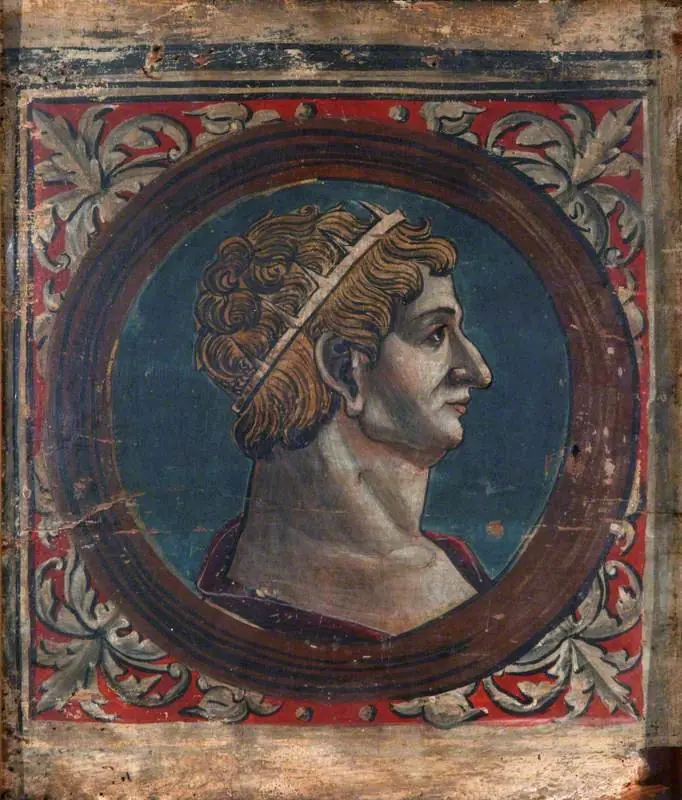 Profile Bust of a Roman Emperor Facing Right (one of 29 painted panels from a frieze)
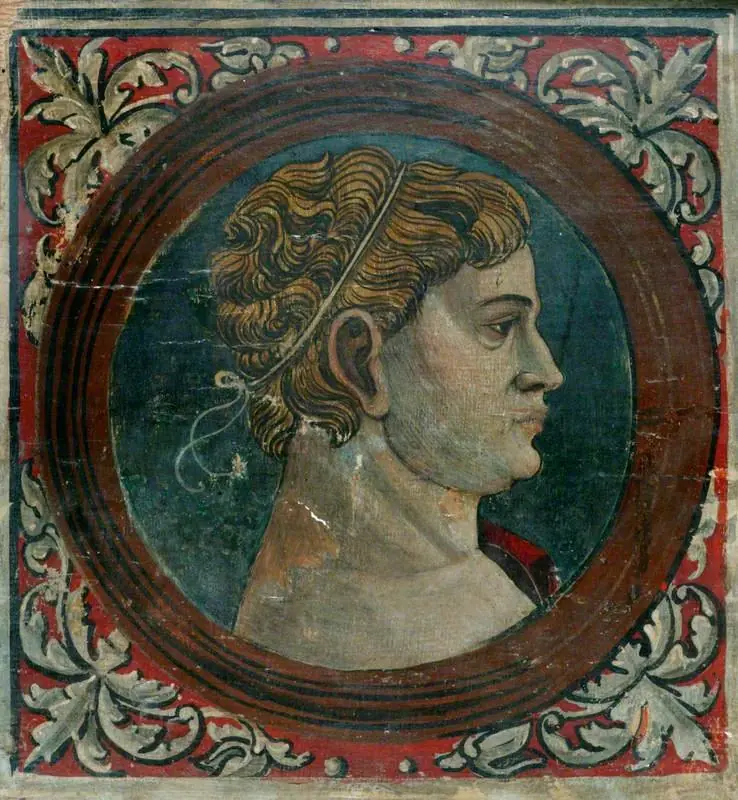 Profile Bust of a Roman Emperor Facing Right (one of 29 painted panels from a frieze)
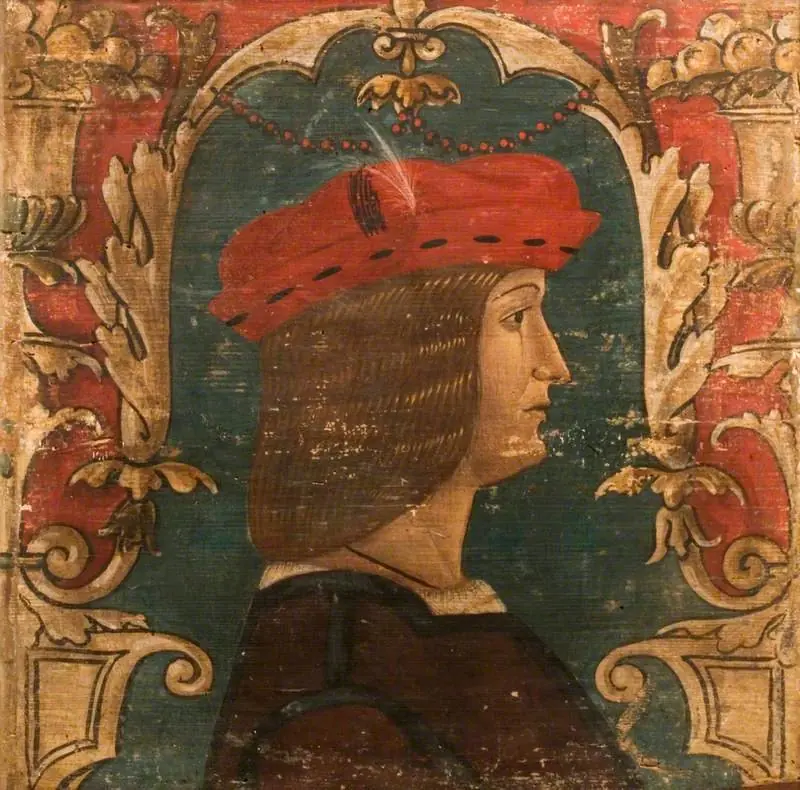 Profile Bust of a Man Facing Right (one of 29 painted panels from a frieze)
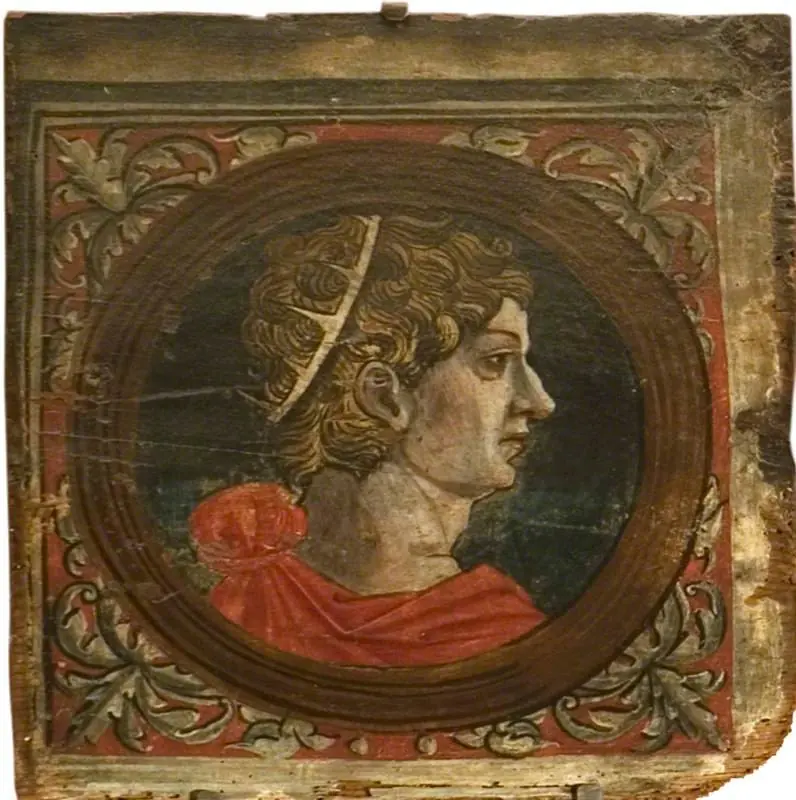 Profile Bust of a Roman Emperor Facing Right (one of 29 painted panels from a frieze)
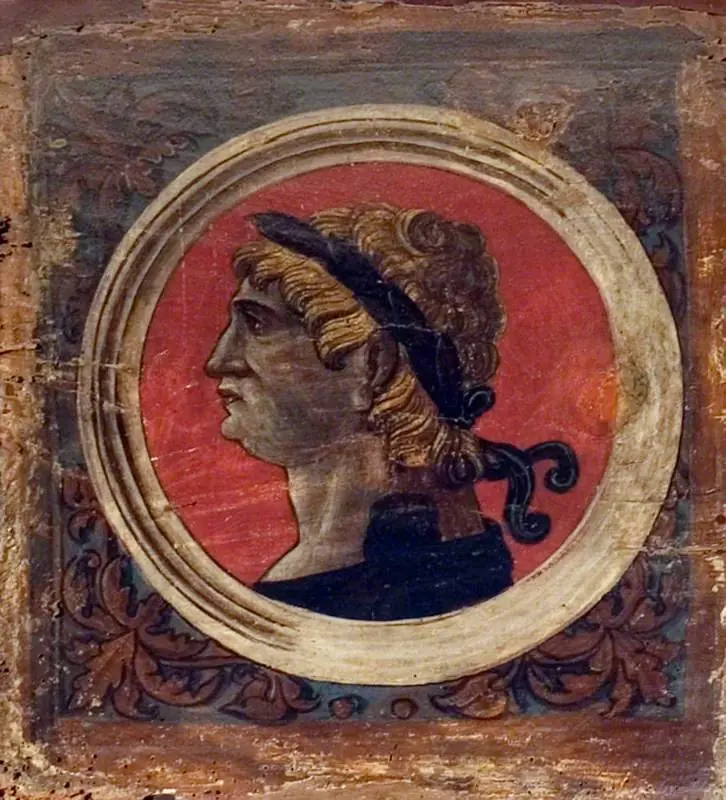 Laureated Bust of a Roman Emperor Facing Left (one of 29 painted panels from a frieze)
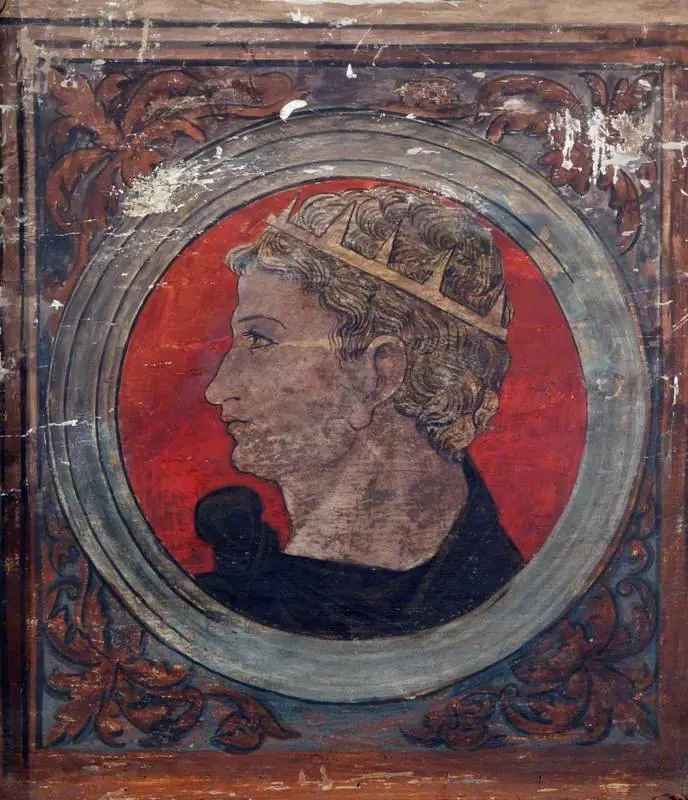 Profile Bust of a Roman Emperor Facing Left (one of 29 painted panels from a frieze)
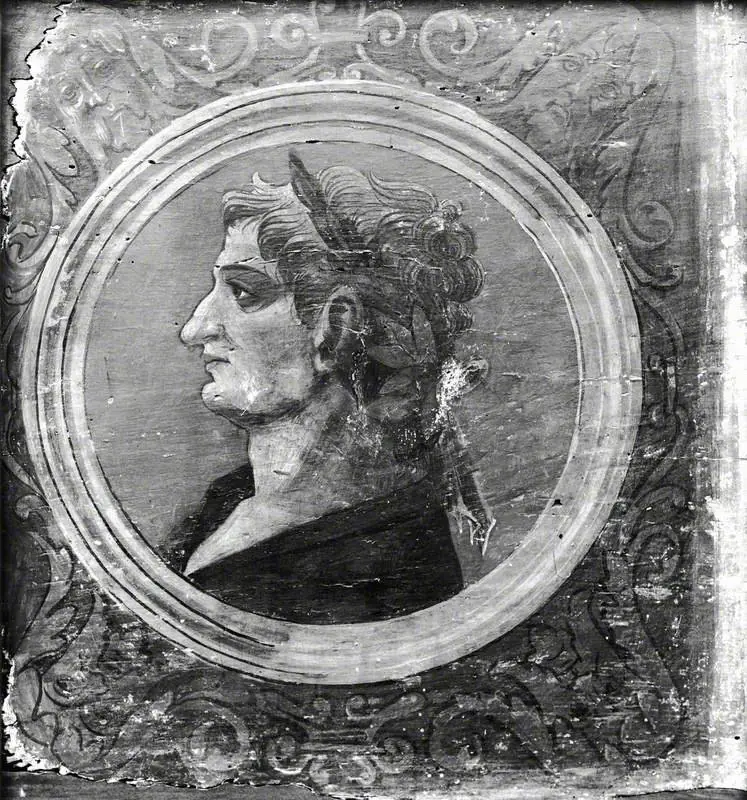 Profile Bust of a Roman Emperor Facing Left (one of 29 painted panels from a frieze)
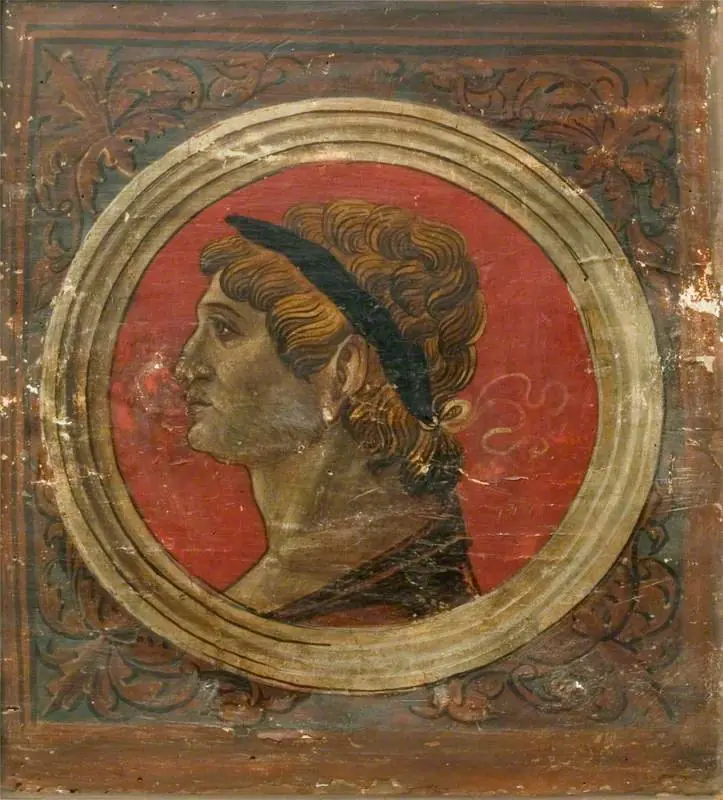 Laureated Bust of a Roman Emperor Facing Left (one of 29 painted panels from a frieze)
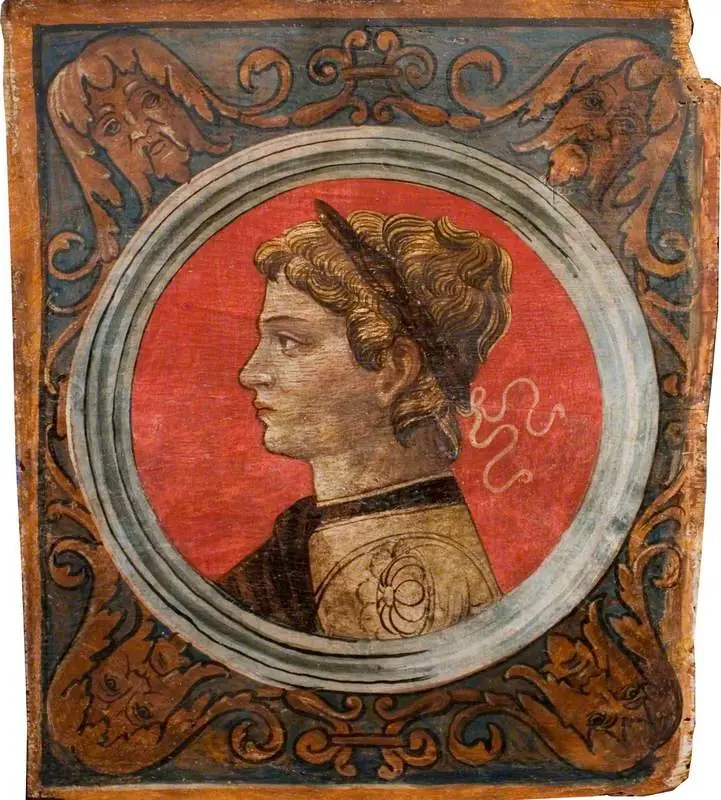 Laureated Bust of a Roman Emperor Facing Left (one of 29 painted panels from a frieze)
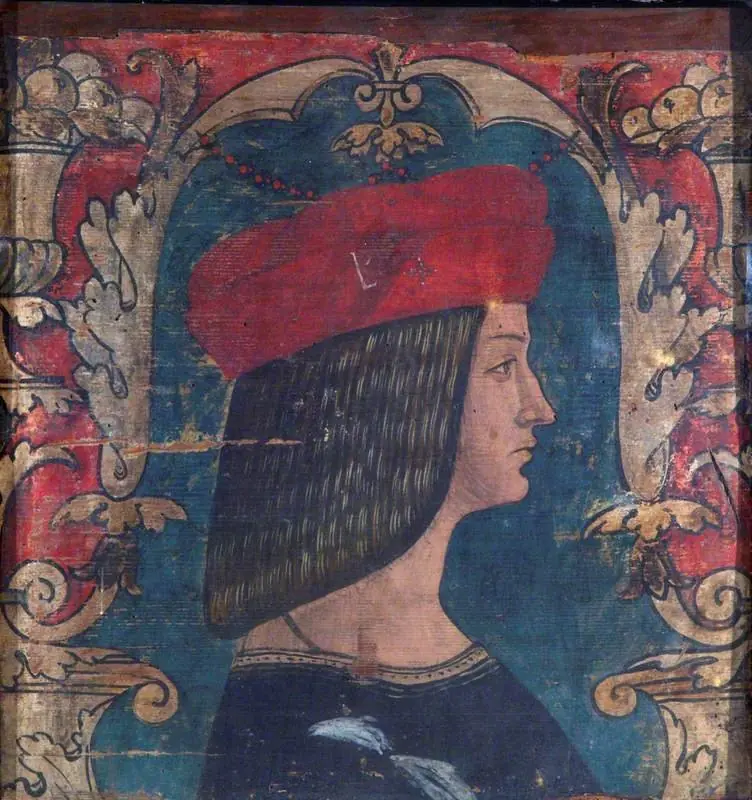 Profile Bust of a Man Facing Right (one of 29 painted panels from a frieze)
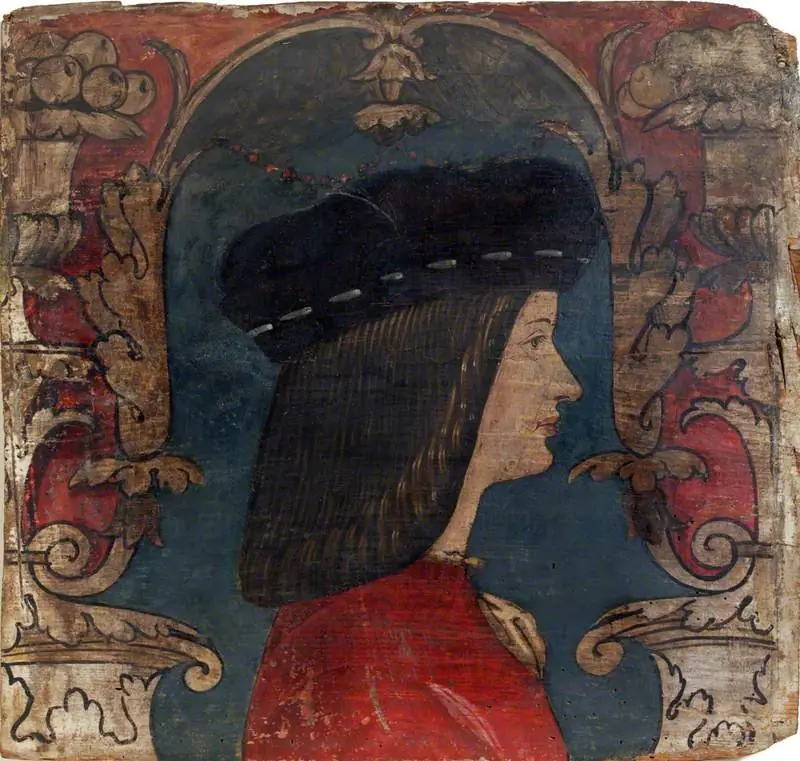 Profile Bust of a Man Facing Right (one of 29 painted panels from a frieze)
 Profile Bust of a Man Facing Right (one of 29 painted panels from a frieze)