Artwork
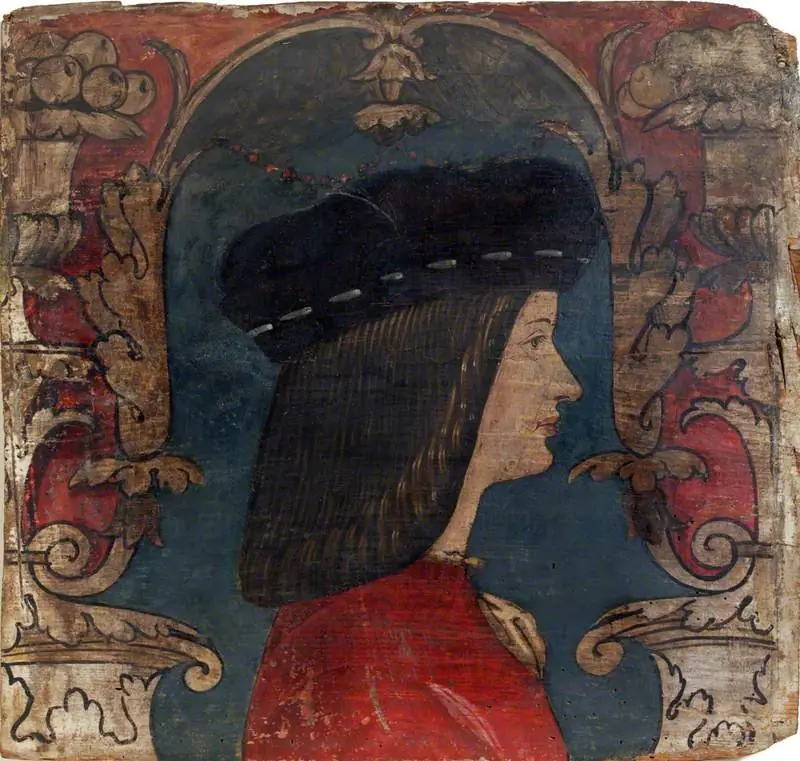
Laureated Bust of a Roman Emperor Facing Left (one of 29 painted panels from a frieze)
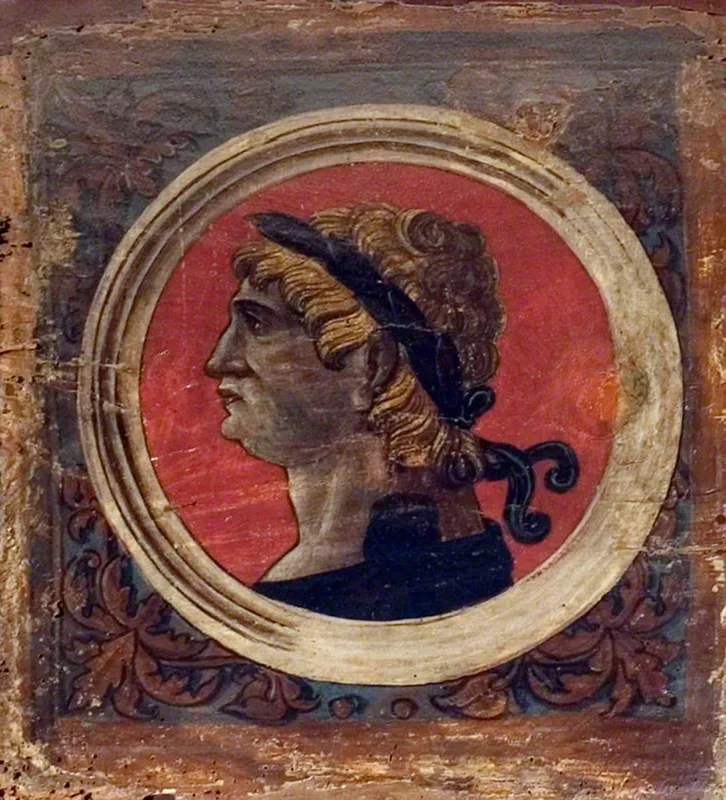
Laureated Bust of a Roman Emperor Facing Left (one of 29 painted panels from a frieze) is an unspecified painting by the High Renaissance artist Unknown. It dates from 1500 and is held in the collection of the Victoria and Albert Museum. The work is a painted circular portrait depicting a male figure from the shoulders up against a red field.
About this work
Overview
The work is a painted circular portrait depicting a male figure from the shoulders up against a red field. The subject looks to his left, crowned with a laurel wreath and a black ribbon. His hair is rendered as light‑colored curls, and he wears a dark tunic. A white circular frame encloses the image, and a decorative border of foliage surrounds the composition.
Subject & Meaning
The figure is identified as a Roman emperor, indicated by the laurel wreath—a traditional symbol of victory and imperial authority. The black ribbon may reference a specific honor or ceremonial dress. By presenting the ruler in profile with classical attributes, the image emphasizes his status and the continuity of Roman imperial iconography.
Technique & Style
Executed in paint on a panel, the portrait employs a limited palette of reds, blacks, and whites, with careful modeling of hair and facial features. The circular format and surrounding ornamental foliage echo the decorative conventions of Roman imperial portraiture, while the flat background and stylized rendering suggest a later, possibly Renaissance, reinterpretation of classical motifs.
History & Provenance
The piece forms one of twenty‑nine painted panels that originally composed a larger frieze. Its exact origin and date are not recorded in the provided facts, but the inclusion among a series of panels indicates it was part of a decorative program, likely commissioned for a public or elite setting.
Context
In Roman visual culture, portraiture served both political and commemorative functions, reinforcing the emperor’s legitimacy. The use of a laurel wreath aligns the subject with triumphal imagery, while the decorative border reflects a later aesthetic layering that integrates classical subjects into more elaborate ornamental schemes.
Artist & collection

 Domestic Scene
 Giacomo and Cardinal Marco, investing Andrea, Abbot of San Zeno, with his Benefice
 The Nymph of Fontainebleau
 Portrait of a Woman
 Madonna and Child with Saints in the Enclosed Garden
 Venus and Minerva
 Family Group of Four on Sofa
 Wall painting from Room H of the Villa of P. Fannius Synistor at Boscoreale
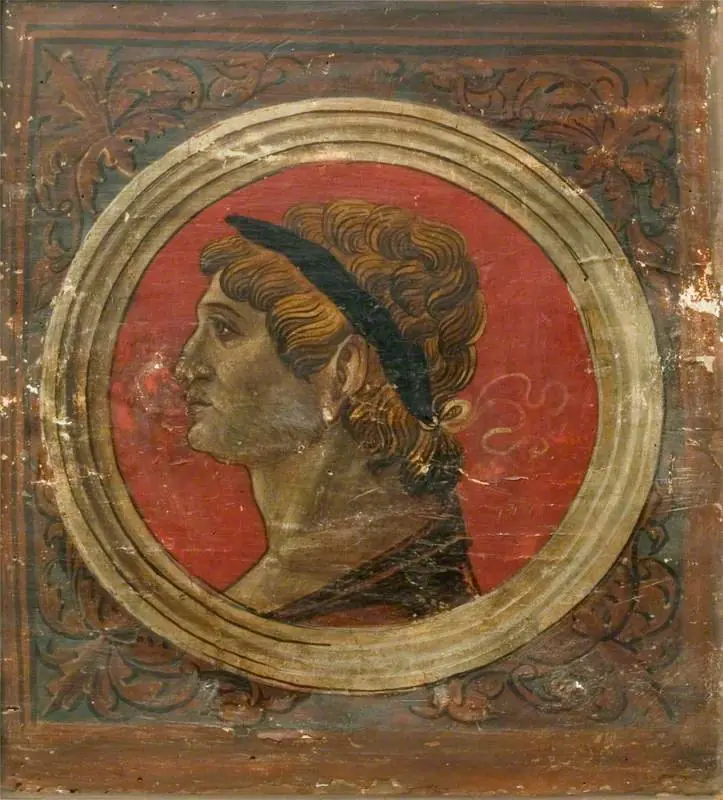 Laureated Bust of a Roman Emperor Facing Left (one of 29 painted panels from a frieze)
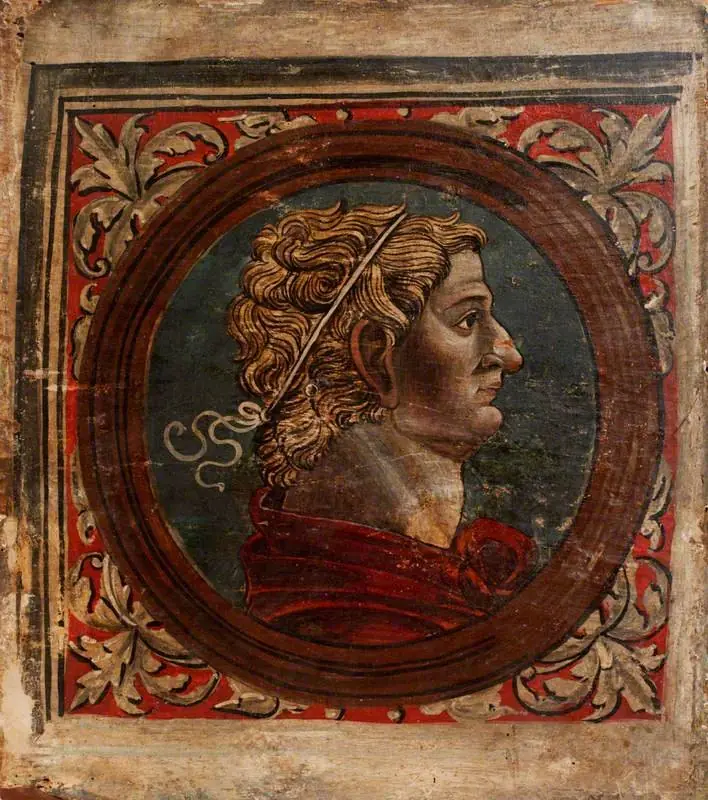 Profile Bust of a Roman Emperor Facing Right (one of 29 painted panels from a frieze)
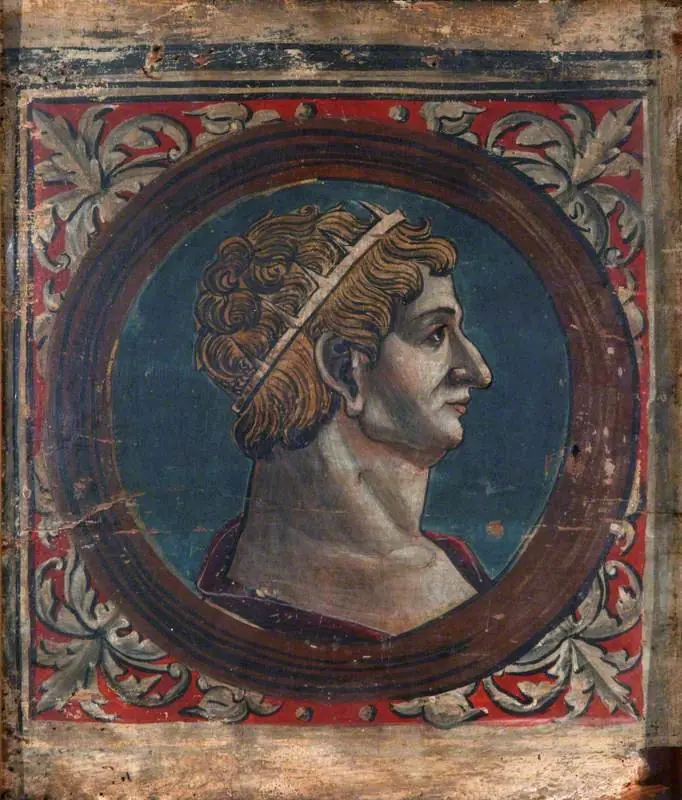 Profile Bust of a Roman Emperor Facing Right (one of 29 painted panels from a frieze)
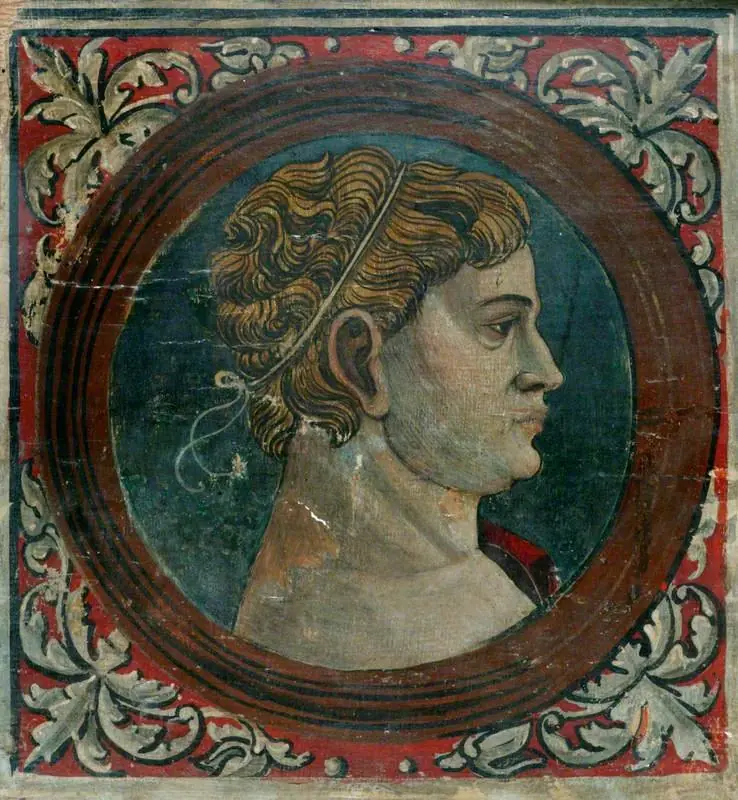 Profile Bust of a Roman Emperor Facing Right (one of 29 painted panels from a frieze)
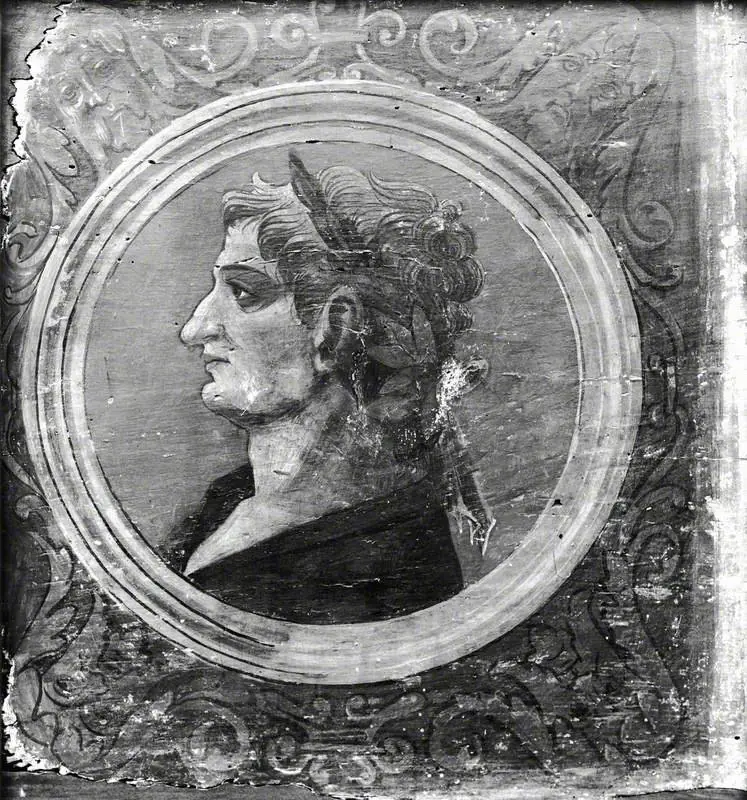 Profile Bust of a Roman Emperor Facing Left (one of 29 painted panels from a frieze)
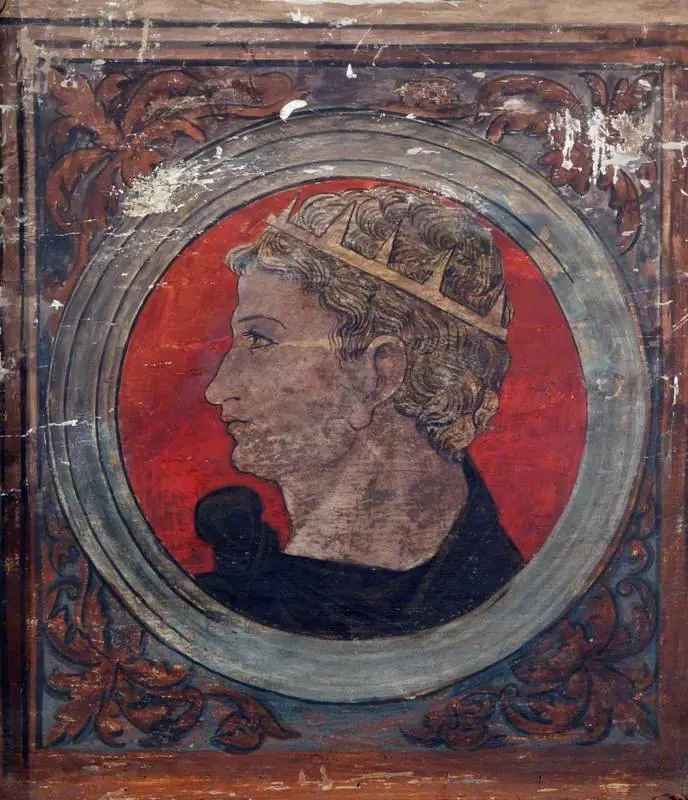 Profile Bust of a Roman Emperor Facing Left (one of 29 painted panels from a frieze)
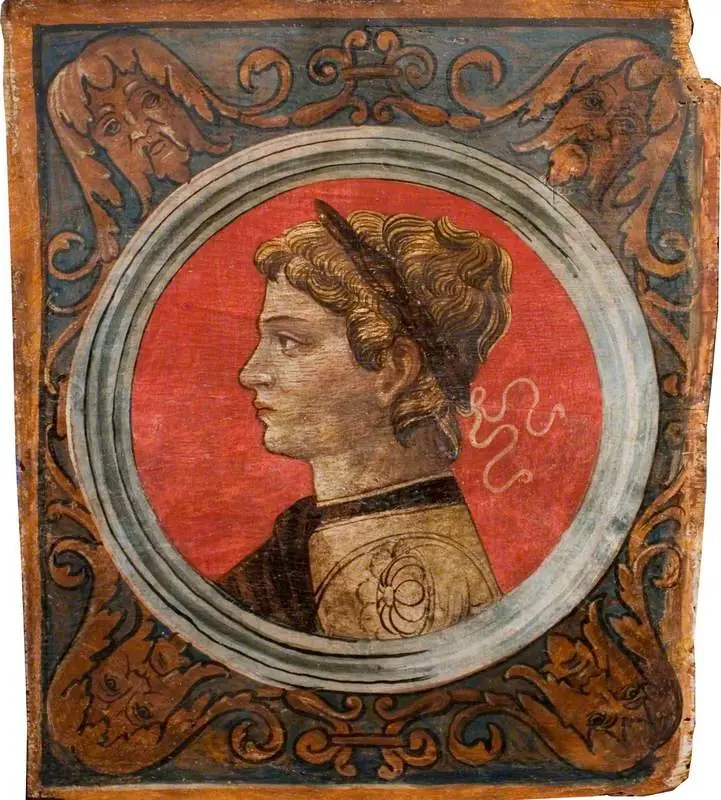 Laureated Bust of a Roman Emperor Facing Left (one of 29 painted panels from a frieze)
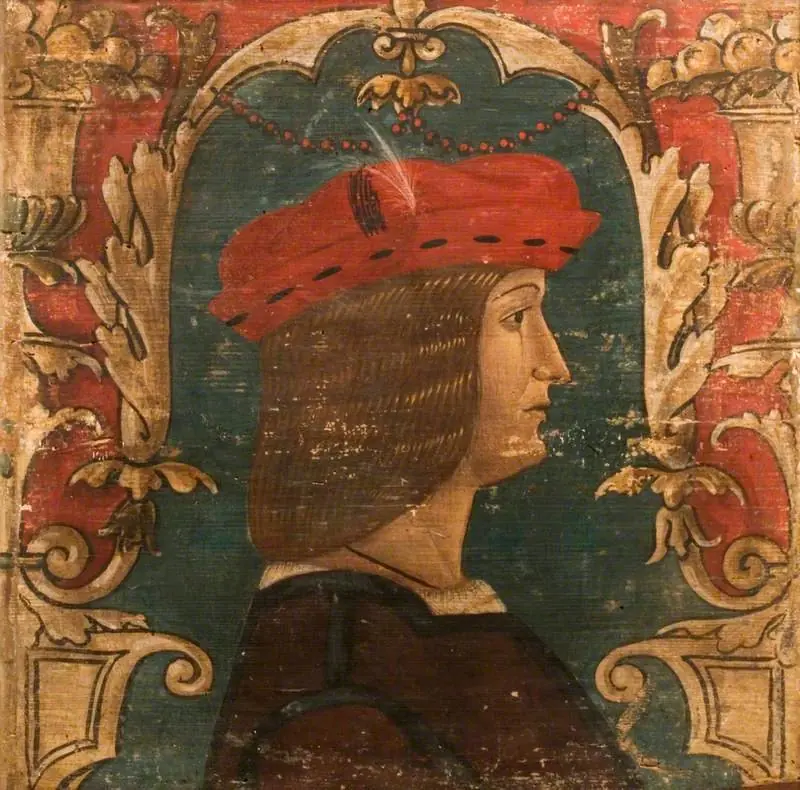 Profile Bust of a Man Facing Right (one of 29 painted panels from a frieze)
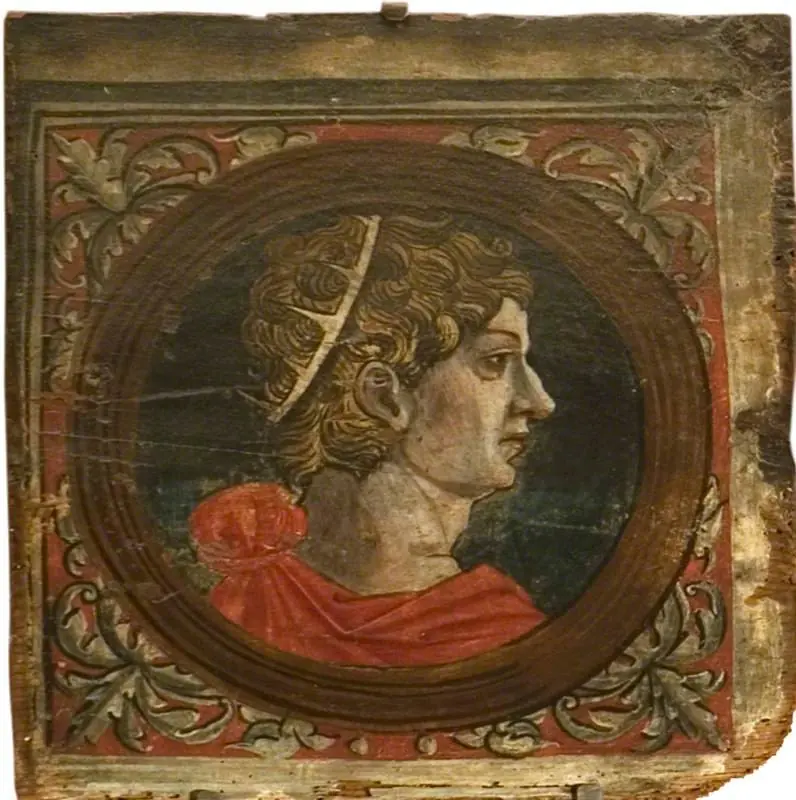 Profile Bust of a Roman Emperor Facing Right (one of 29 painted panels from a frieze)
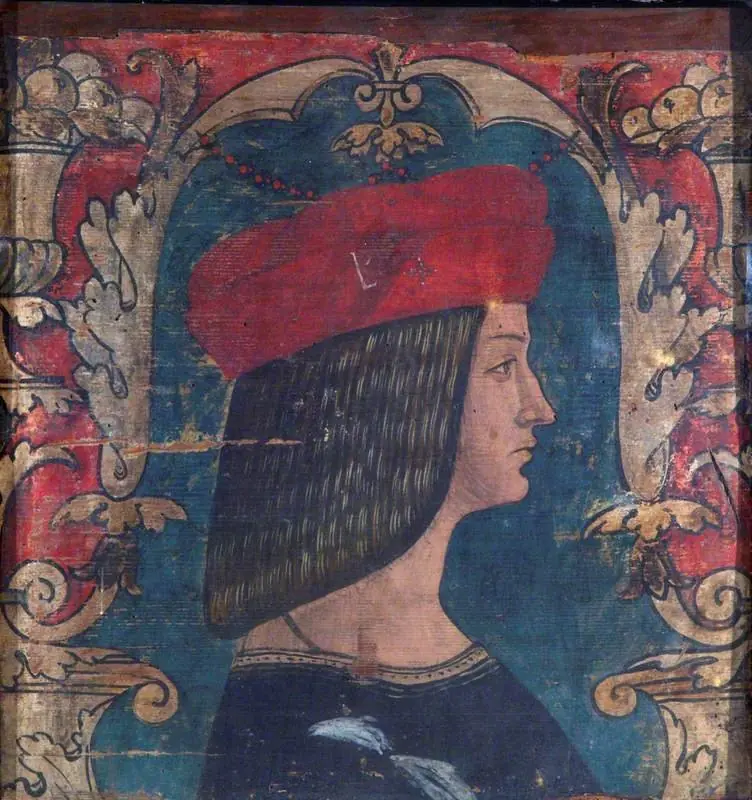 Profile Bust of a Man Facing Right (one of 29 painted panels from a frieze)
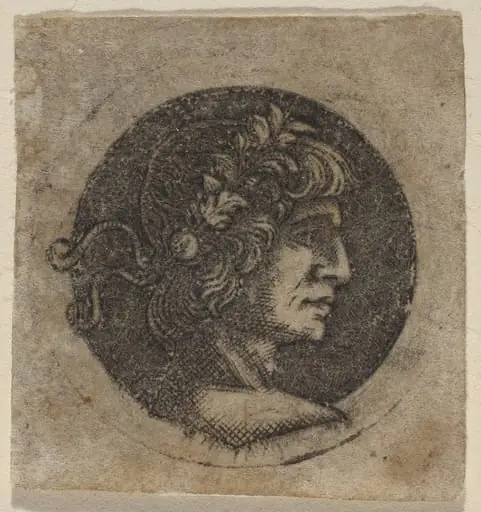 Head of a Roman Emperor
 Profile Bust of a Man Facing Right (one of 29 painted panels from a frieze)