Artwork
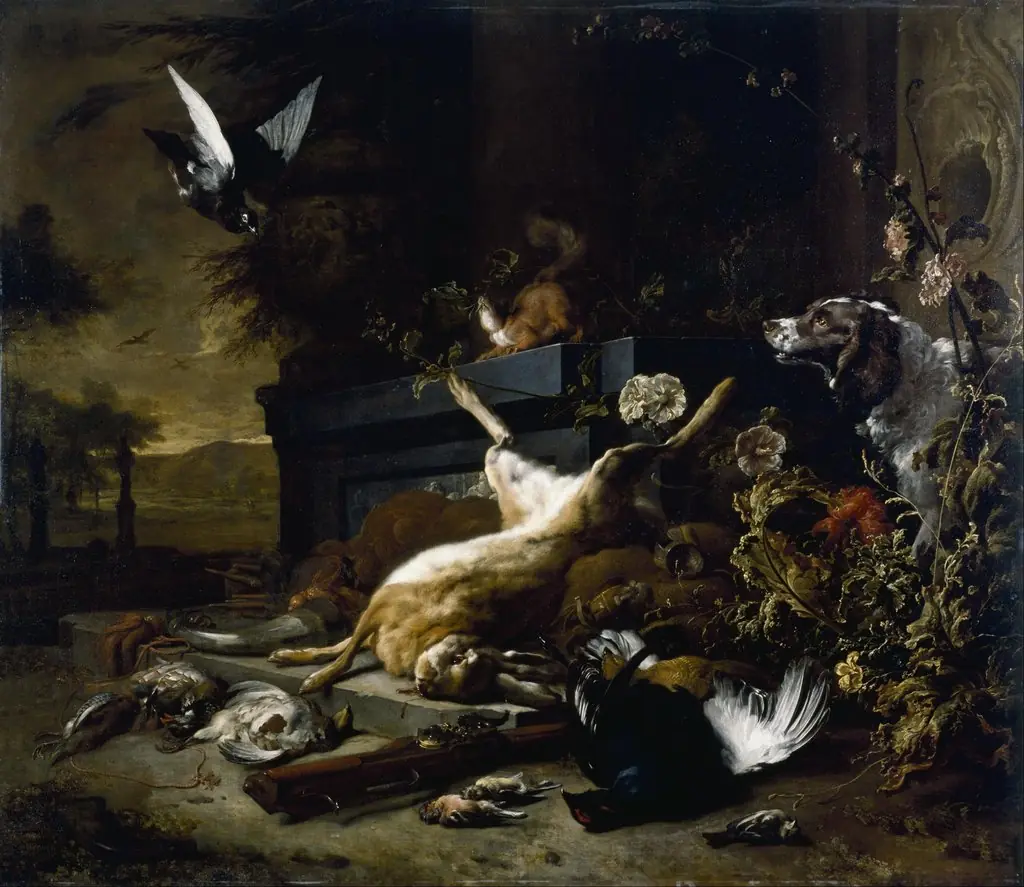
Hunting still life with a hare, two partridges and other birds
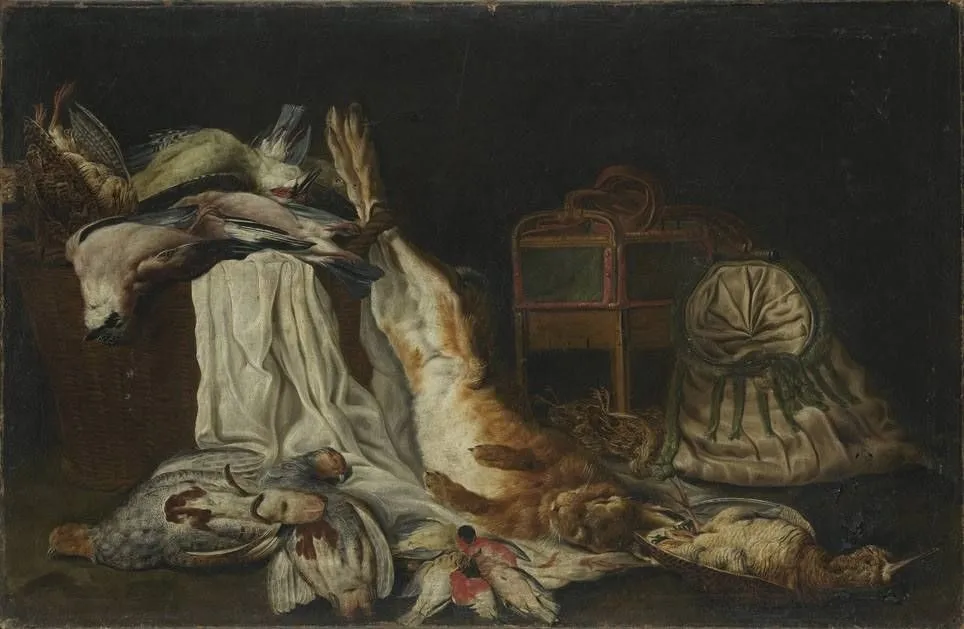
Hunting still life with a hare, two partridges and other birds is an oil painting by the Dutch Golden Age artist Franz Michael Sigismund von Burgau the Elder. It dates from 1715 and is held in the collection of the Bavarian State Painting Collections.
About this work
Overview
Created in 1715, this oil painting by Franz Michael Sigismund von Burgau the Elder presents a meticulously arranged hunting tableau. The work resides in Munich’s Alte Pinakothek, where it exemplifies the early‑18th‑century German still‑life tradition that foregrounds the materiality of game and the quiet drama of its aftermath.
Subject & Meaning
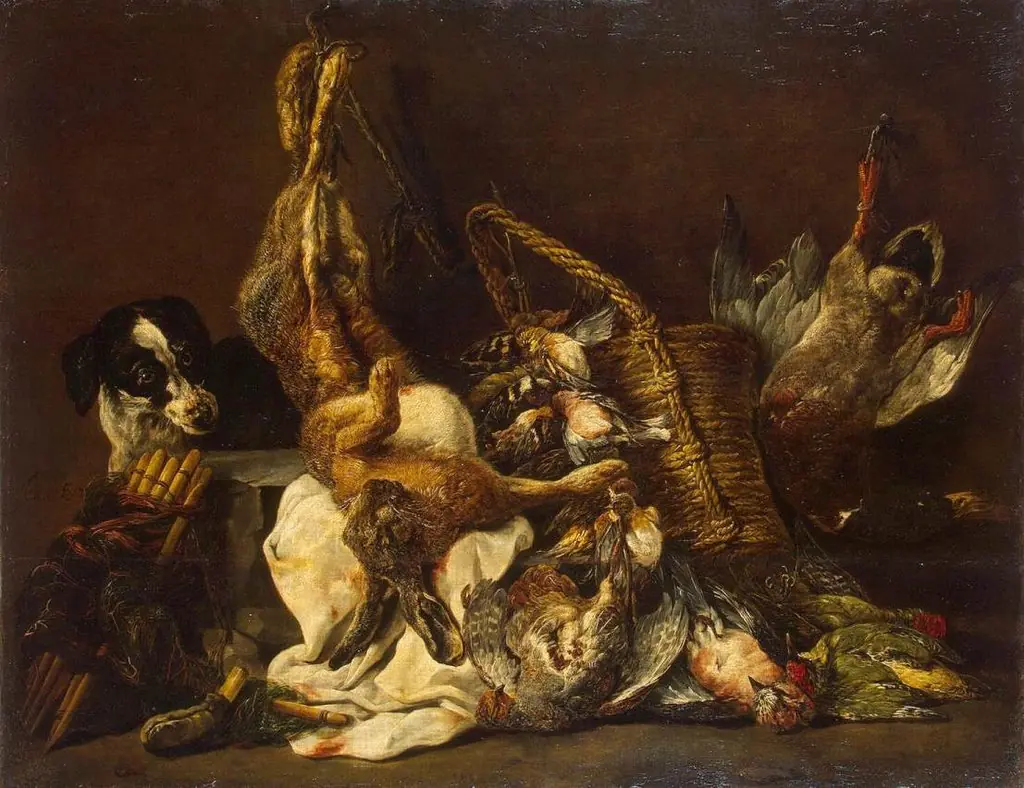
The composition gathers a hare, two partridges and several other birds, all rendered as lifeless specimens spread across a plain surface. The central hare, its fur still appearing soft, and the ruffled plumage of the birds suggest a moment after the hunt, inviting contemplation of mortality, abundance, and the ritual of the hunt in aristocratic culture.
Technique & Style
Burgau employs a pronounced chiaroscuro, allowing the illuminated feathers and fur to emerge from a deep, almost black background. The careful modulation of light captures the texture of each animal, while the subtle reflections on the white cloth and the taut drawstring of a nearby bag enhance the illusion of three‑dimensionality.
History & Provenance
The painting was executed in 1715, during the artist’s mature period, and later entered the collection of the Alte Pinakothek. Its acquisition reflects the museum’s commitment to representing German baroque still‑life painting, preserving a work that illustrates the period’s technical skill and thematic concerns.
Context
In the early 1700s, German still‑life painters often depicted hunting spoils as symbols of wealth and power. Burgau’s work aligns with this tradition, yet its restrained palette and focus on realistic detail distinguish it from more allegorical counterparts, positioning it within a broader European interest in naturalistic representation.
Artist & collection
Artist
Franz Michael Sigismund von Burgau the Elder
Franz Michael Sigismund von Burgau the Elder (1678–1754) was an artist, born in Linz.

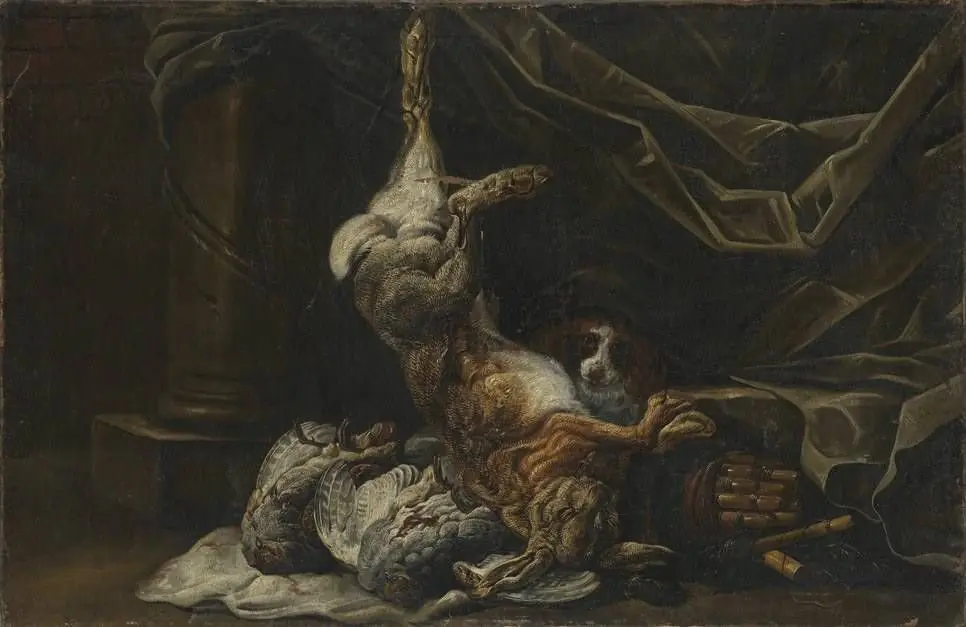 Hunting still life with a hare and two partridges
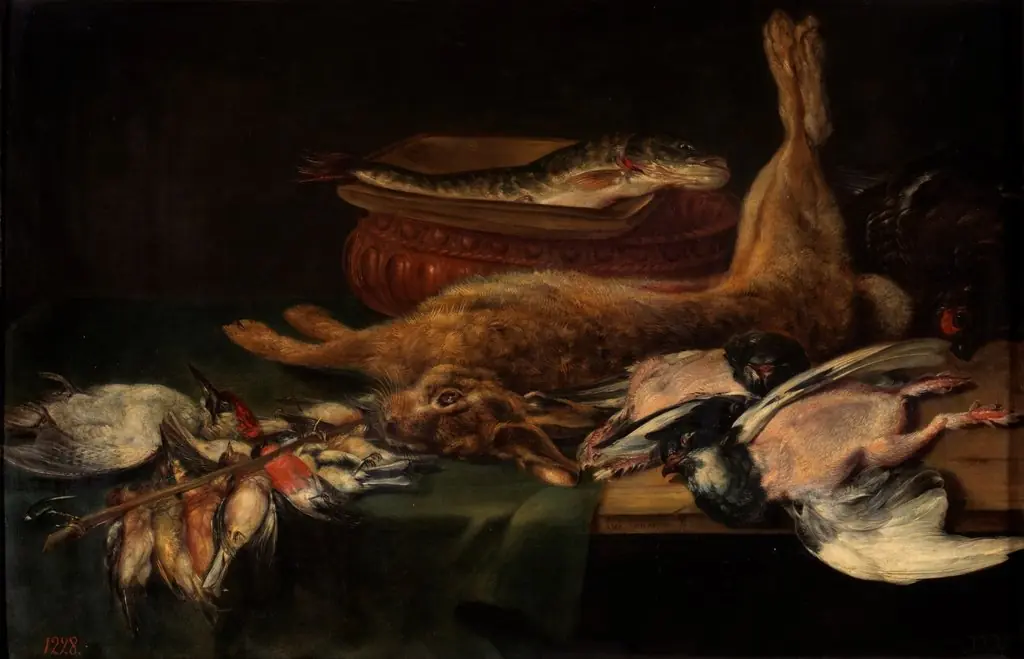 Still life with a hare, dead birds and fish
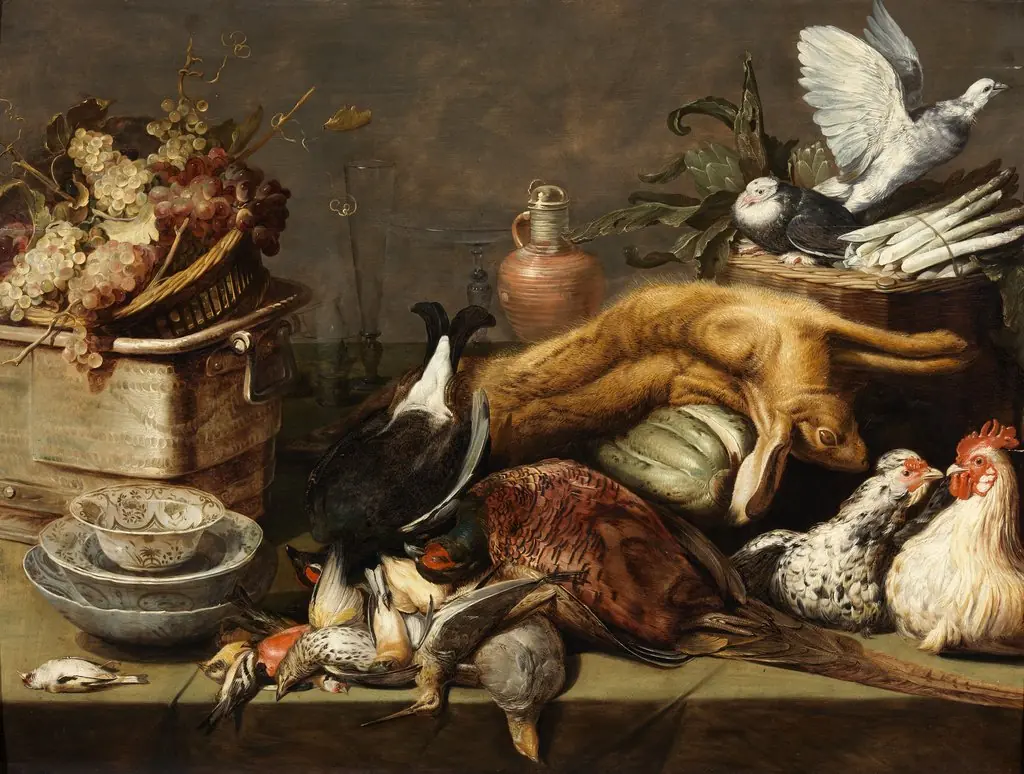 A Still Life with Dead Birds and a Hare
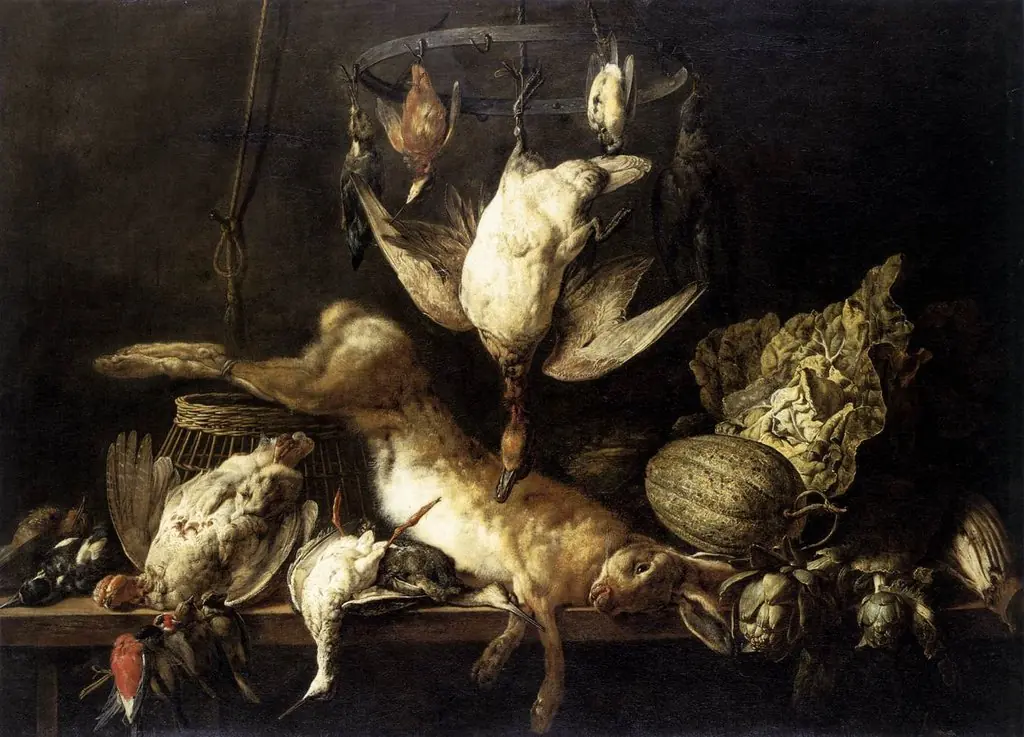 Still-Life with Hare and Birds on a Ring
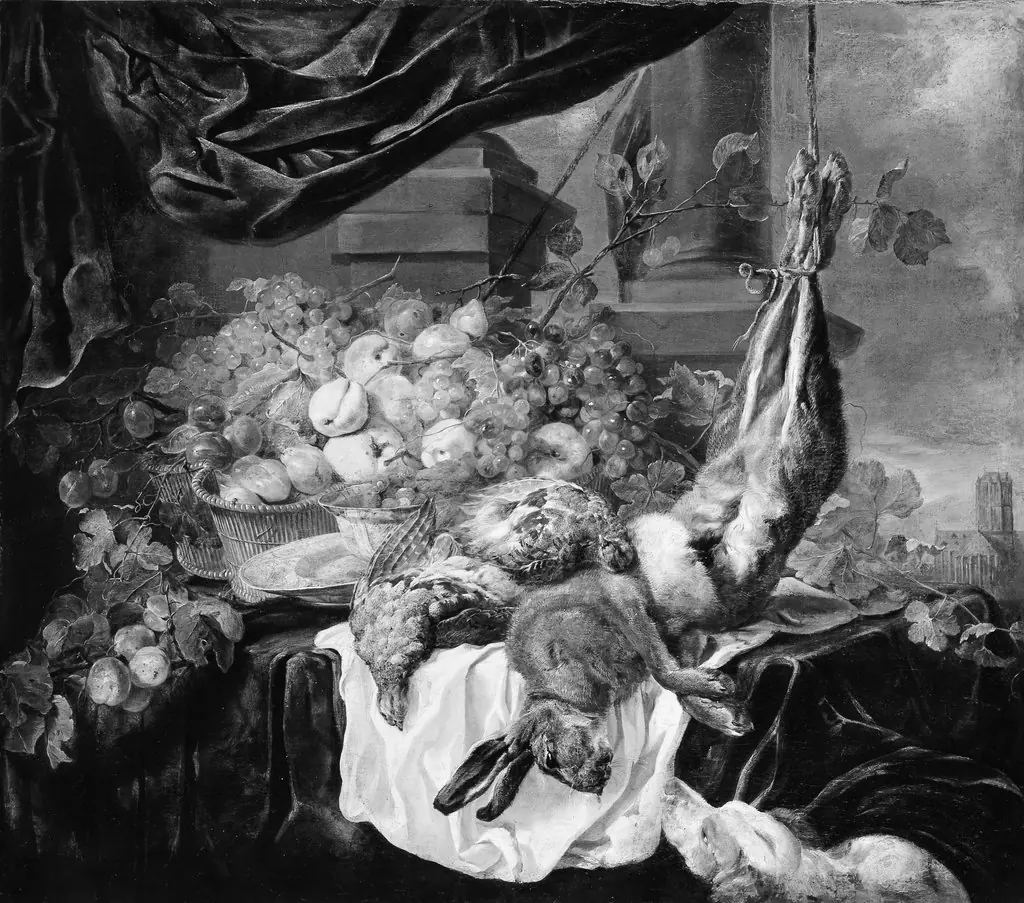 A Hare, Partridges, and Fruit
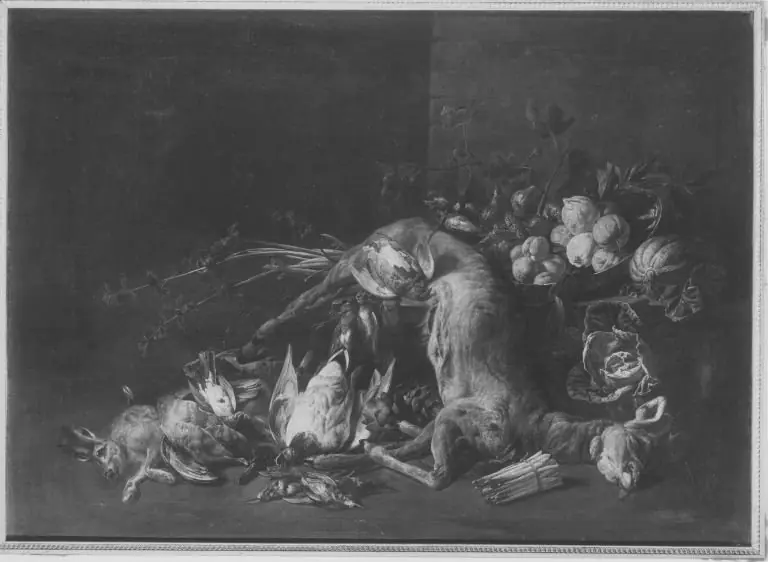 Hunting still life
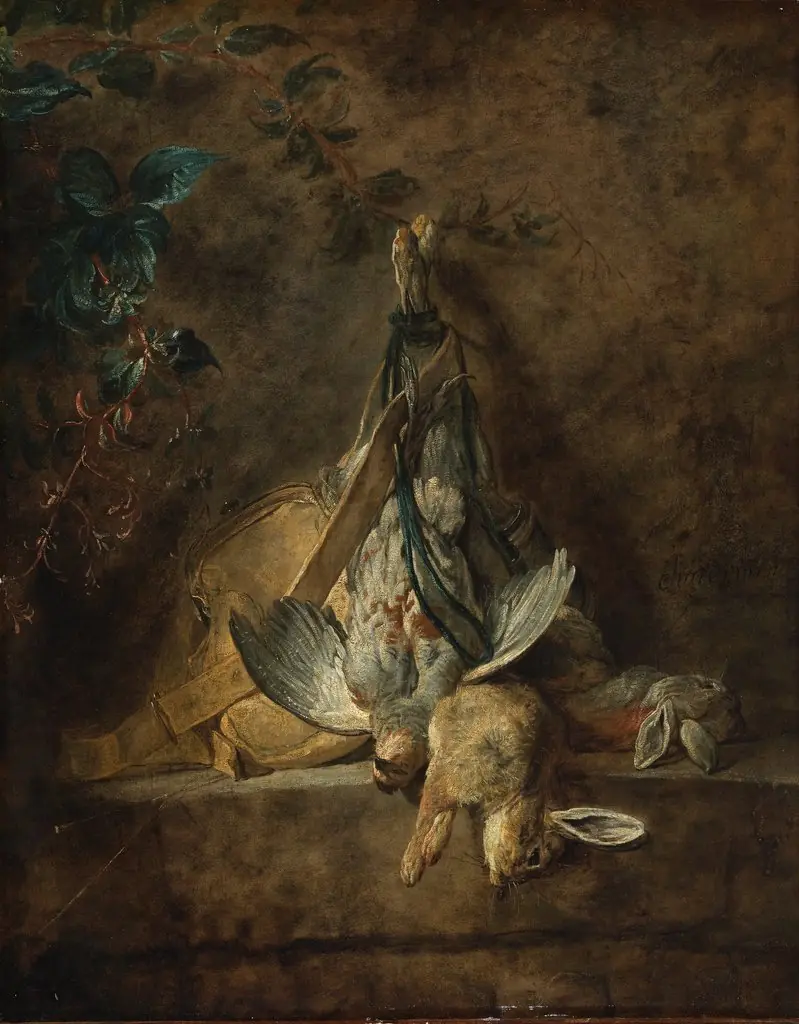 A Still Life: Two Rabbits, a Grey Partridge, Game Bag and a Powder Flask
 Still Life of Game including a Hare, Black Grouse and Partridge, a Spaniel looking on with a Pigeon in Flight