Artwork
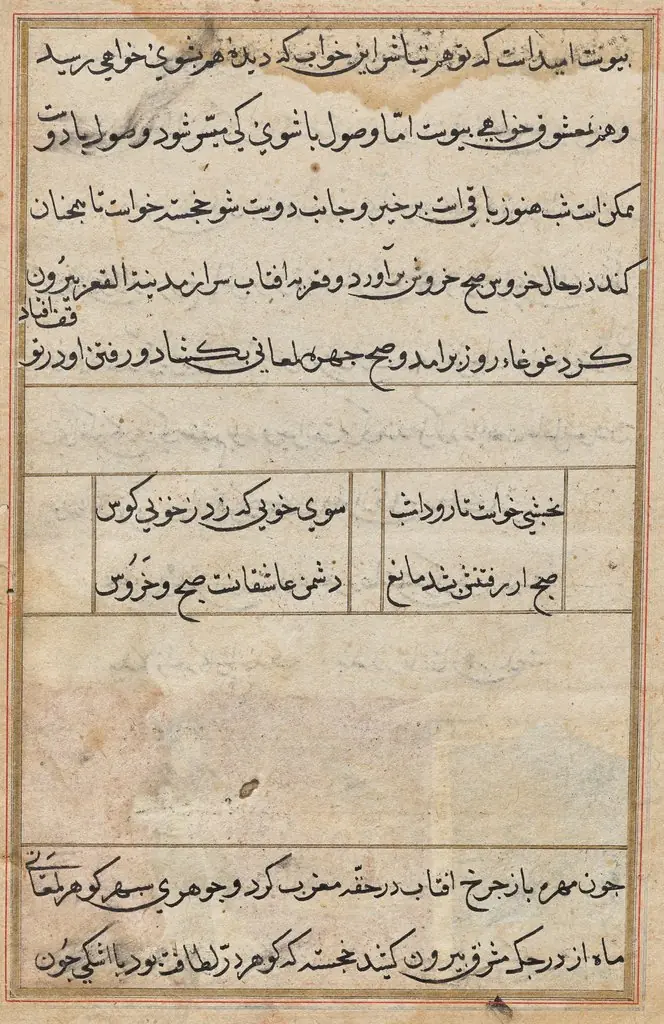
Page from Tales of a Parrot (Tuti-nama): text page
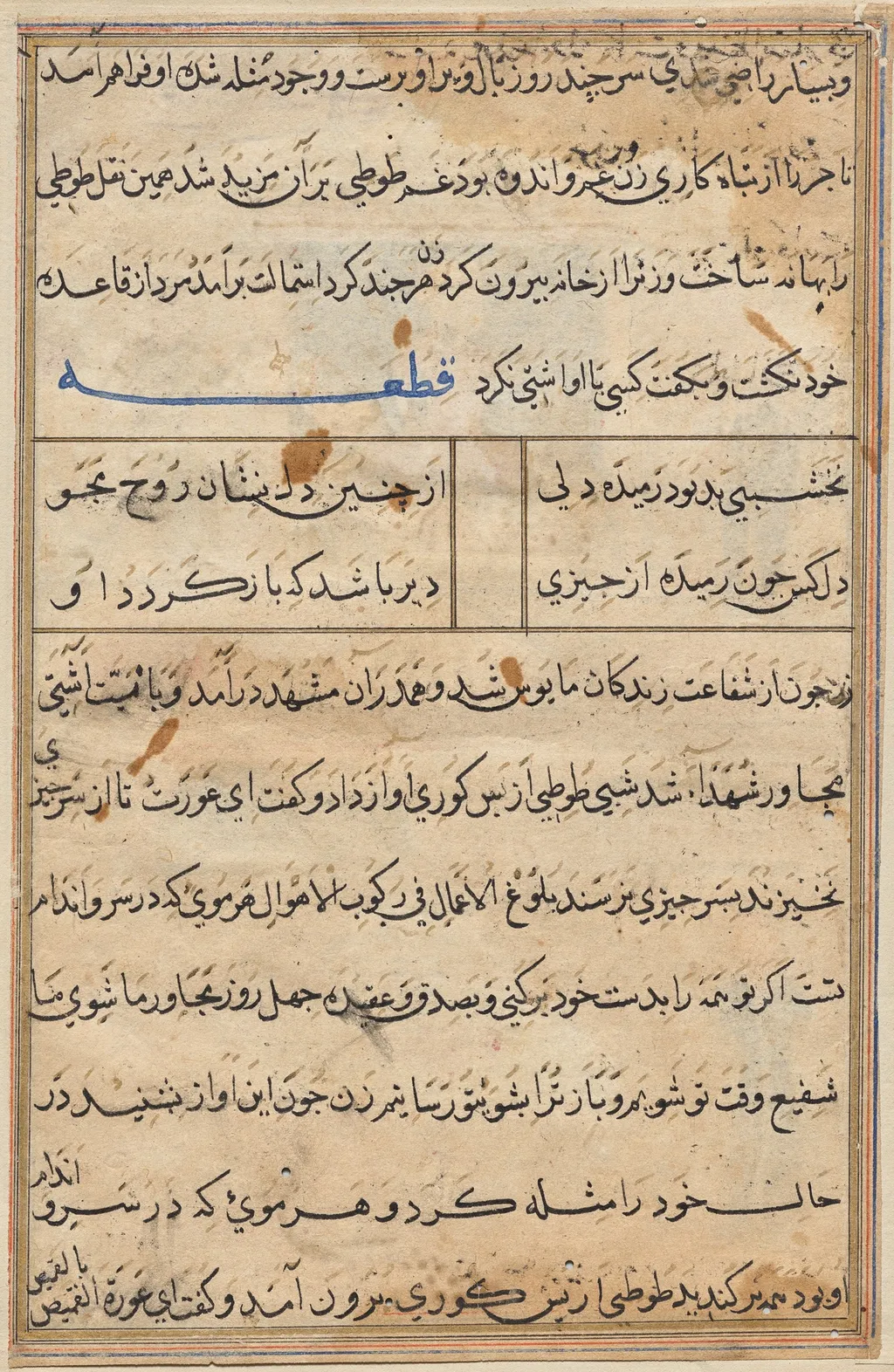
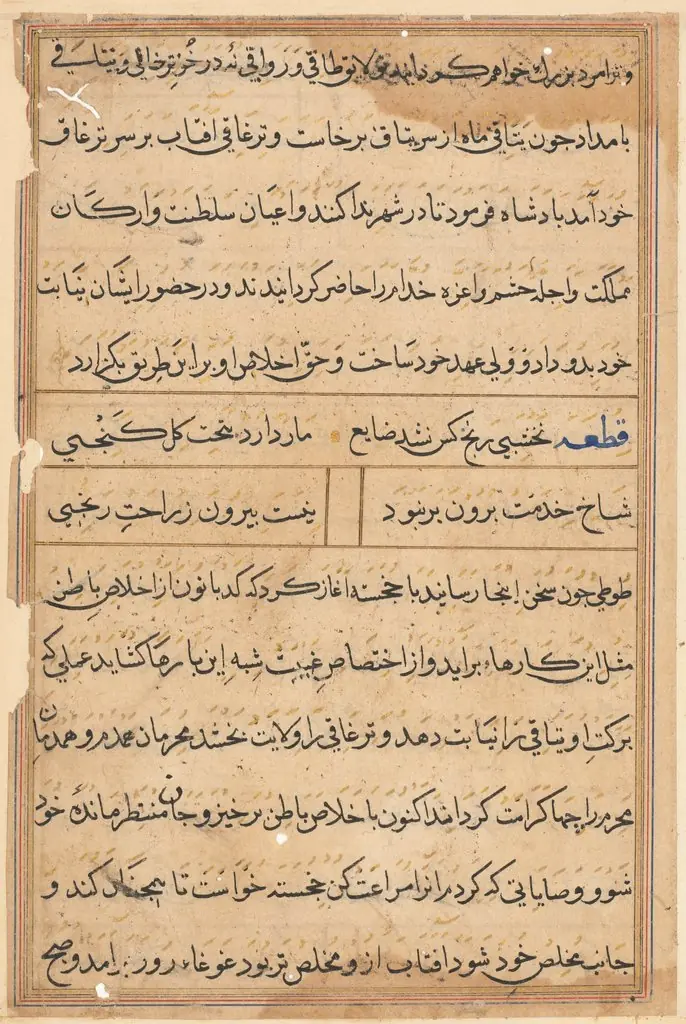
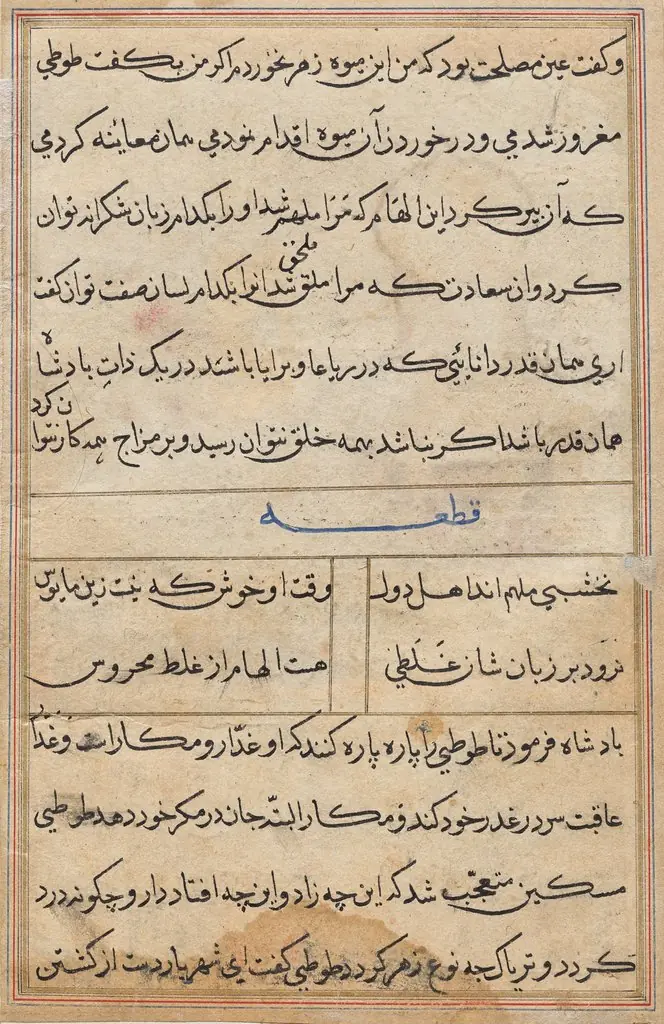
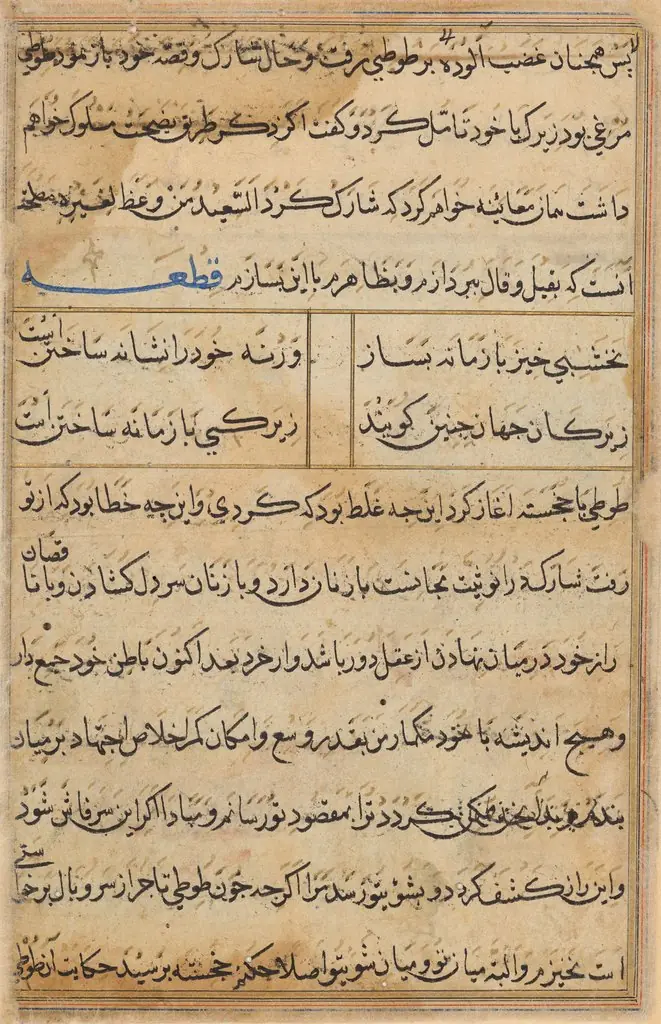
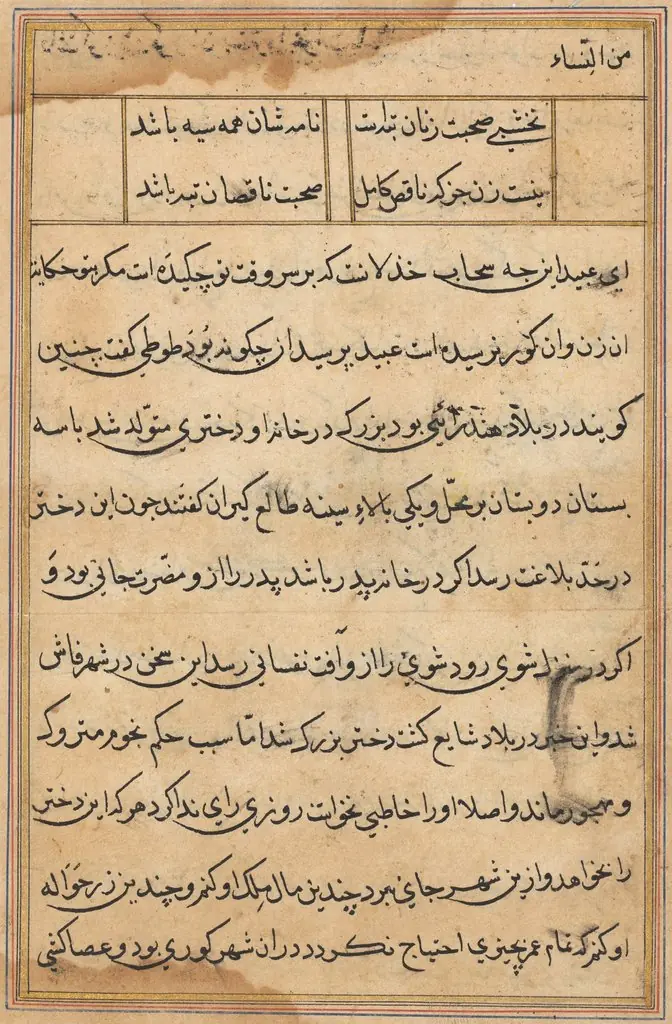
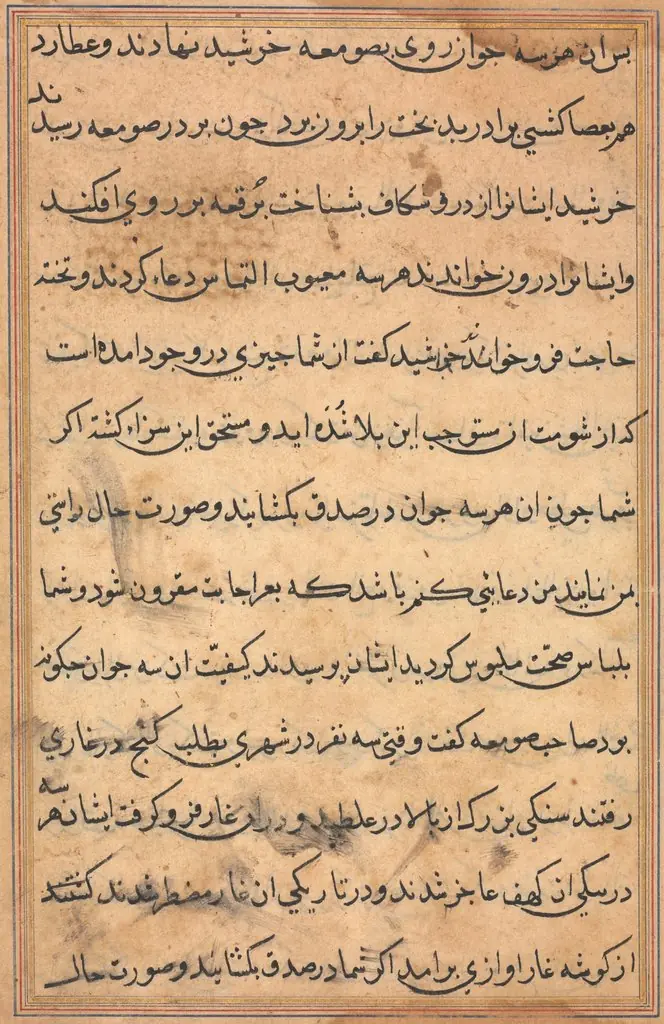
Page from Tales of a Parrot (Tuti-nama): text page is an unspecified painting. It dates from 1560 and is held in the collection of the Cleveland Museum of Art. The work is a single page from the illustrated manuscript known as *Tales of a Parrot* (Tuti‑nama).
About this work
Overview
The work is a single page from the illustrated manuscript known as *Tales of a Parrot* (Tuti‑nama). Rendered as a painted sheet, it features black ink text on a light beige surface, bordered by a narrow inner line and a broader outer frame. Certain words are accentuated with blue ink, while the paper shows age‑related brown stains.
Subject & Meaning
The page contains a passage written in an unidentified script, suggesting a narrative or poetic excerpt from the larger collection of stories. The highlighted blue sections likely indicate emphasis or a change in voice within the text, a common practice in manuscript tradition to guide the reader’s attention.
Technique & Style
Executed in the manner of manuscript illumination, the artist employed ink on paper, combining monochrome black lettering with selective blue highlights. The flowing hand of the script reflects a practiced calligraphic style, while the modest decorative borders frame the text without extensive ornamentation, characteristic of utilitarian yet aesthetically considered book art.
History & Provenance
The page is part of the *Tuti‑nama* manuscript tradition, a genre of illustrated Persian or Central Asian tales. It entered the collection of the Cleveland Museum of Art, where it is conserved as an example of historical book painting. The museum’s records trace its acquisition to the mid‑20th century, though earlier ownership details remain undocumented.
Context
Manuscript illumination like this page served both literary and visual functions in societies where books were valuable cultural objects. The use of blue ink for emphasis aligns with regional practices of the period, where pigments such as indigo or lapis lazuli were applied sparingly to denote importance within the text.
Artist & collection

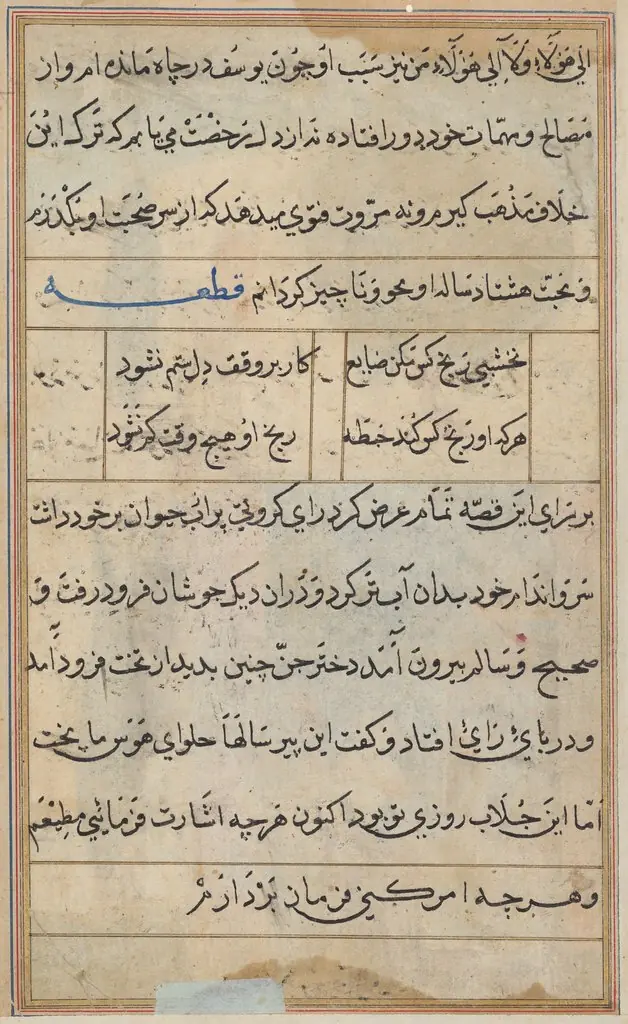 Page from Tales of a Parrot (Tuti-nama): text page
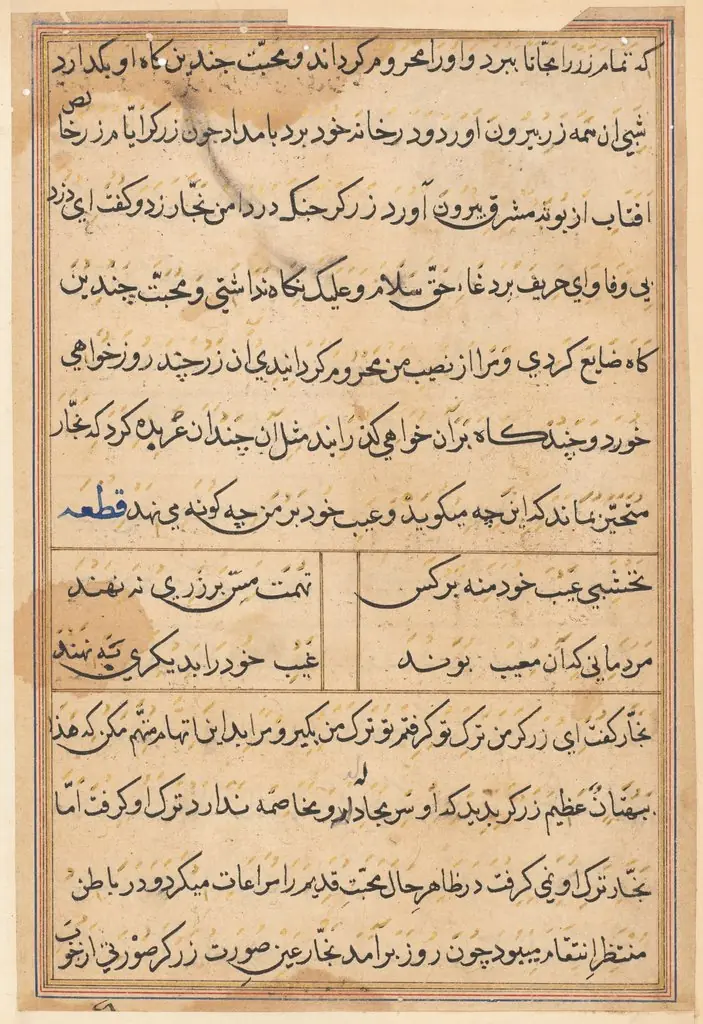 Page from Tales of a Parrot (Tuti-nama): text page
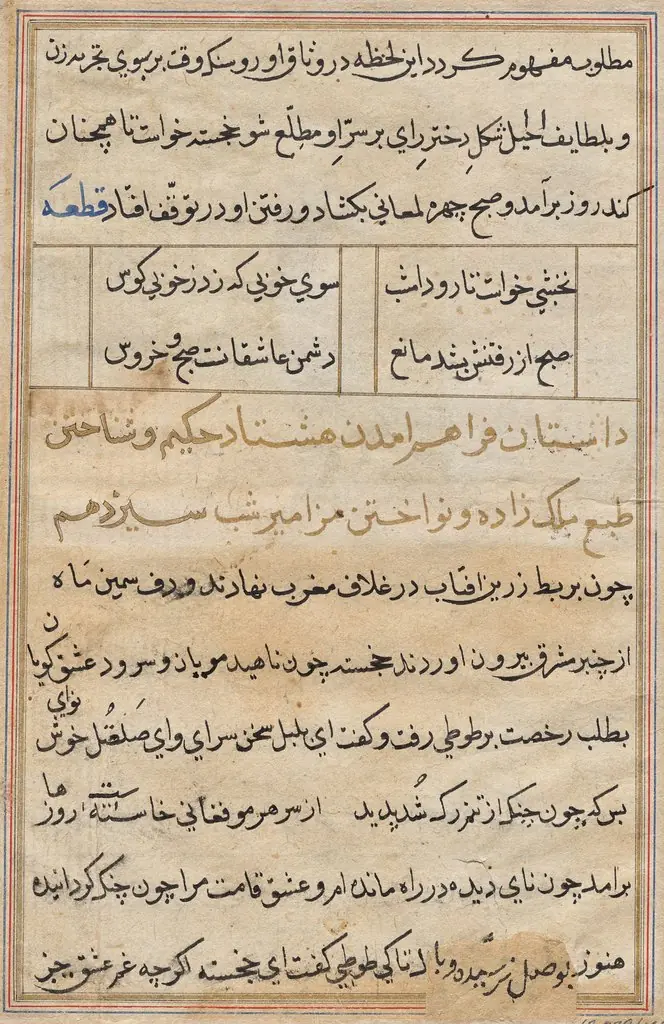 Page from Tales of a Parrot (Tuti-nama): text page
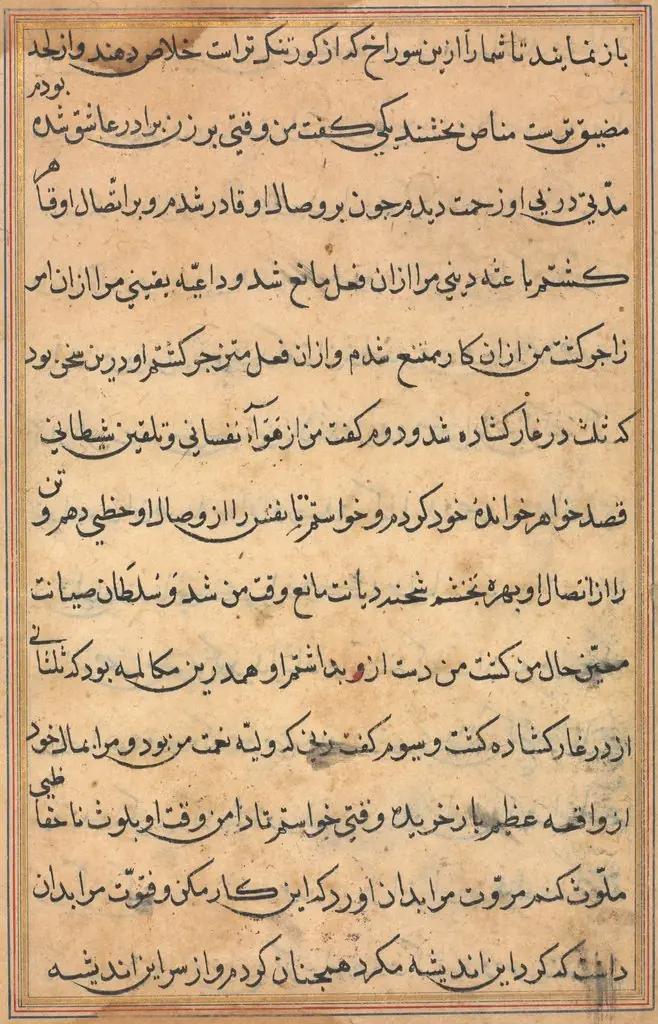 Page from Tales of a Parrot (Tuti-nama): text page
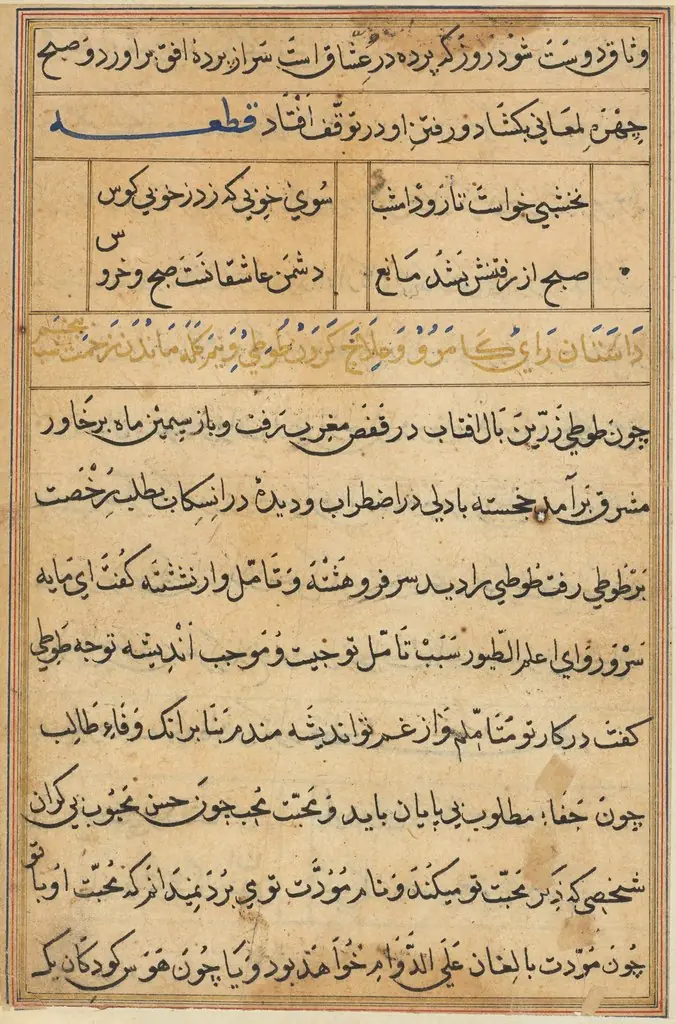 Page from Tales of a Parrot (Tuti-nama): text page
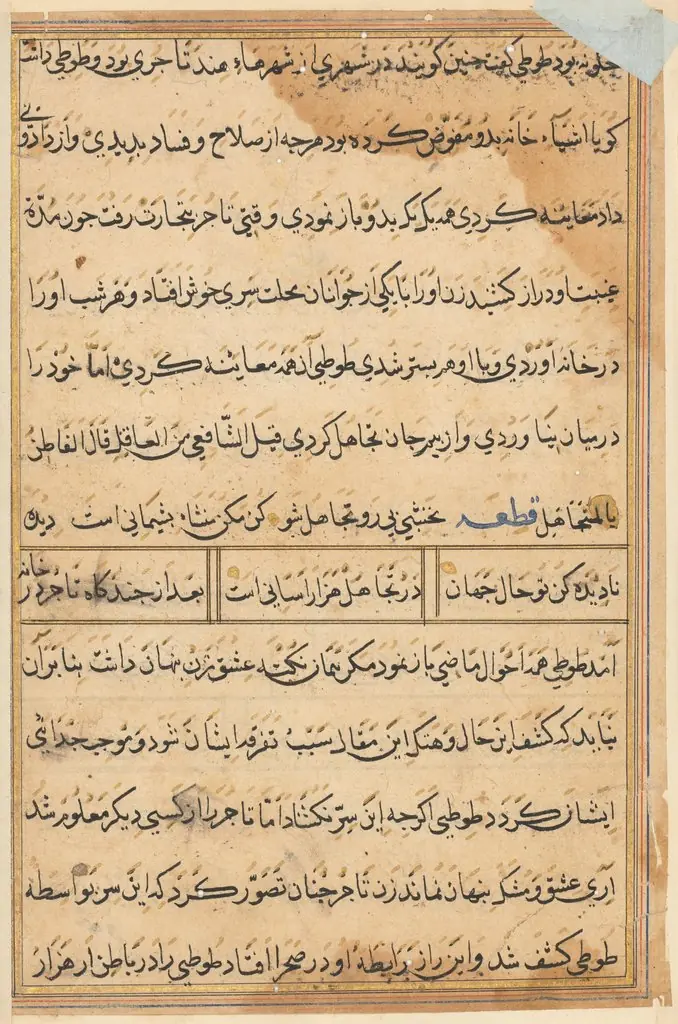 Page from Tales of a Parrot (Tuti-nama): text page
 Page from Tales of a Parrot (Tuti-nama): text page