Artwork
Page from Tales of a Parrot (Tuti-nama): text page
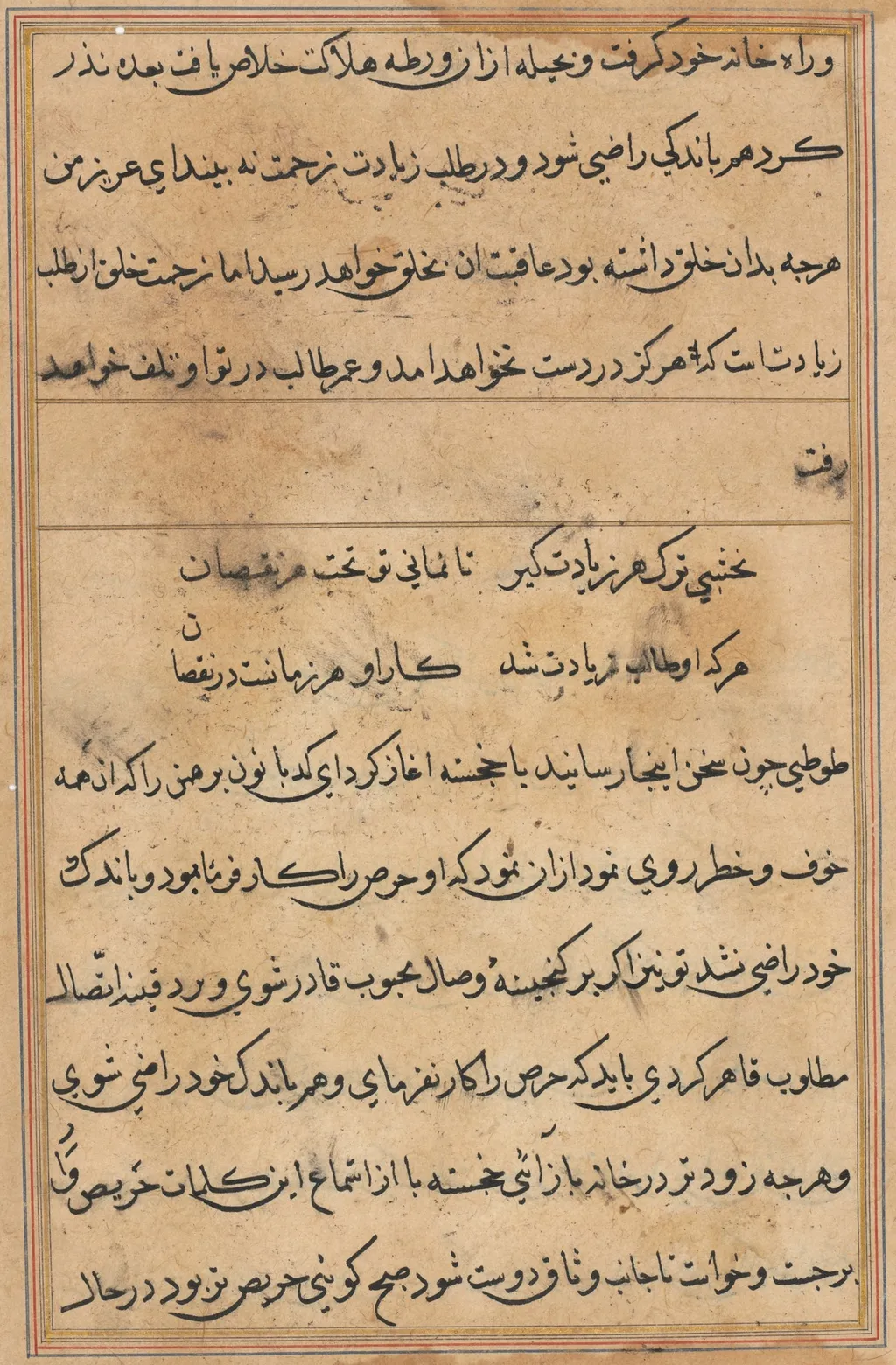
Page from Tales of a Parrot (Tuti-nama): text page is an unspecified painting. It dates from 1560 and is held in the collection of the Cleveland Museum of Art. This object is a single illustrated page from the Persian manuscript *Tales of a Parrot* (Tuti‑nama).
About this work
Overview
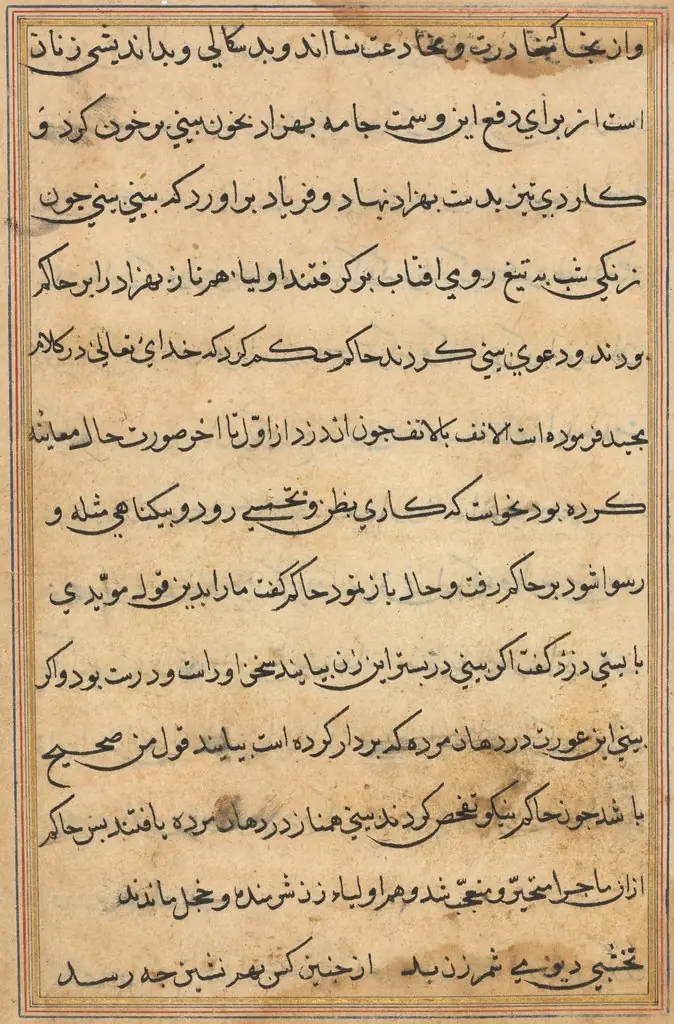
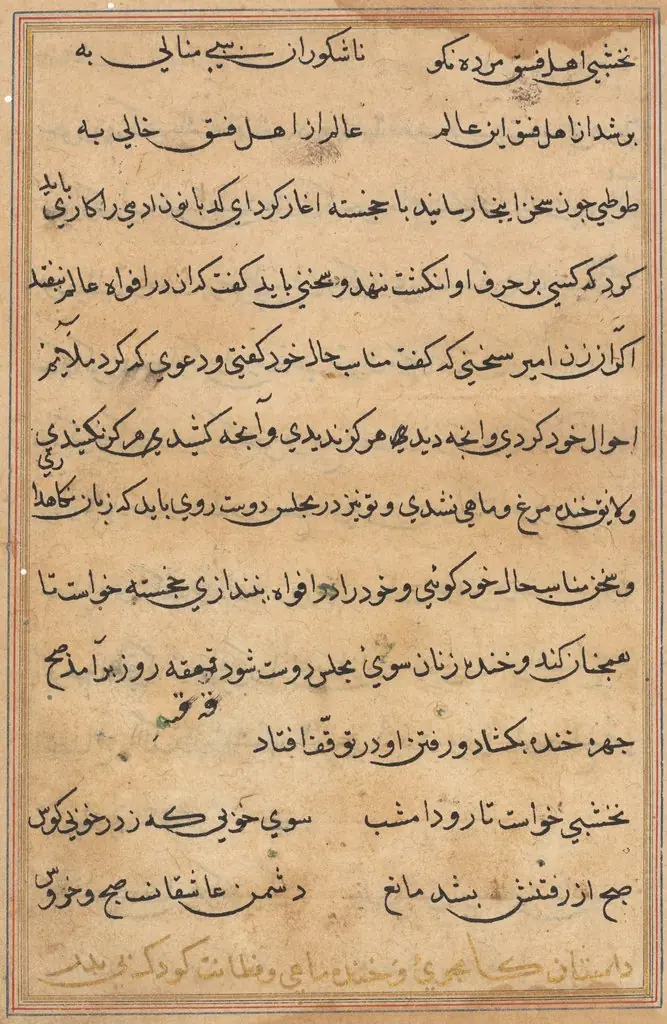
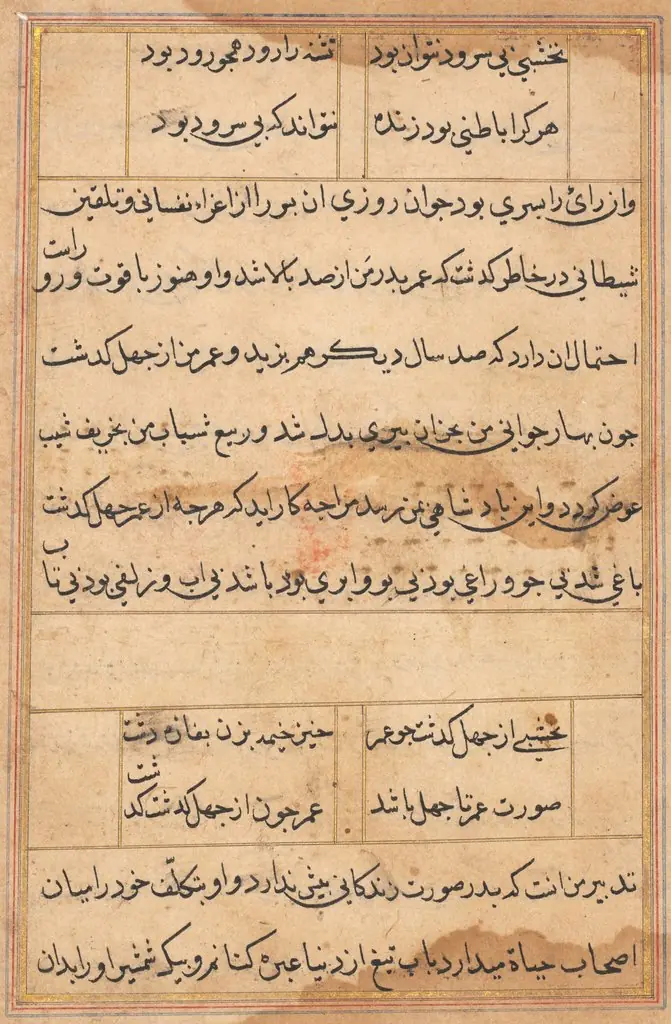
This object is a single illustrated page from the Persian manuscript *Tales of a Parrot* (Tuti‑nama). Executed as a painted sheet, it consists of black ink calligraphy set against a light beige substrate, framed by a thin red border. The paper shows signs of age, including speckling and marginal wear, indicating its historic nature.
Subject & Meaning
The page contains a portion of the narrative *Tales of a Parrot*, a collection of moral stories traditionally addressed to a young royal audience. In this instance the text was composed for Prince Salim, suggesting a didactic purpose: the careful, measured script invites deliberate, contemplative reading, reinforcing the instructional tone of the work.
Technique & Style
The calligraphic text is rendered in flowing black ink, with occasional emphasis achieved through slightly larger or bolder characters. The red border, applied in a fine line, delineates the composition without overwhelming the script. The paper’s pale tone and subtle texture provide a neutral backdrop that highlights the ink work, characteristic of Persian manuscript aesthetics of the period.
History & Provenance
The sheet originates from a manuscript created for Prince Salim, a member of the Safavid court, though the precise date of production is not recorded. It entered the collection of the Cleveland Museum of Art, where it is currently conserved and displayed as part of the museum’s Persian art holdings.
Context
*Tales of a Parrot* belongs to a broader tradition of illustrated Persian literature that combined poetic storytelling with moral instruction. Such manuscripts were often commissioned by royalty to educate heirs, and the meticulous hand of the scribe reflects the courtly emphasis on elegance and pedagogy in literary production.
Artist & collection

 Page from Tales of a Parrot (Tuti-nama): text page
 Page from Tales of a Parrot (Tuti-nama): text page
 Page from Tales of a Parrot (Tuti-nama): text page
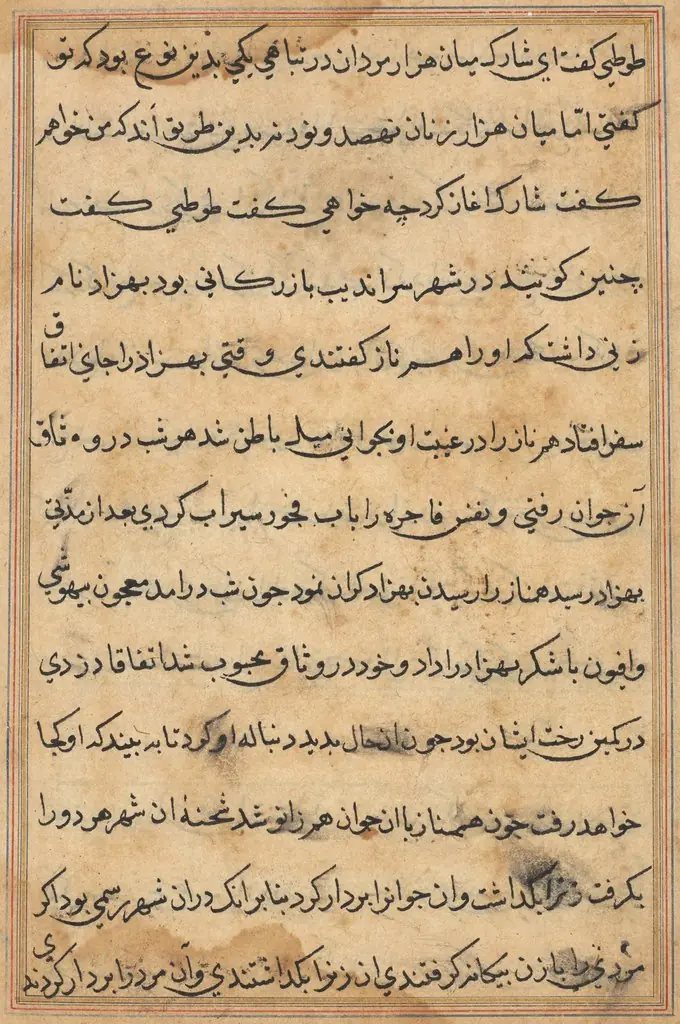 Page from Tales of a Parrot (Tuti-nama): text page
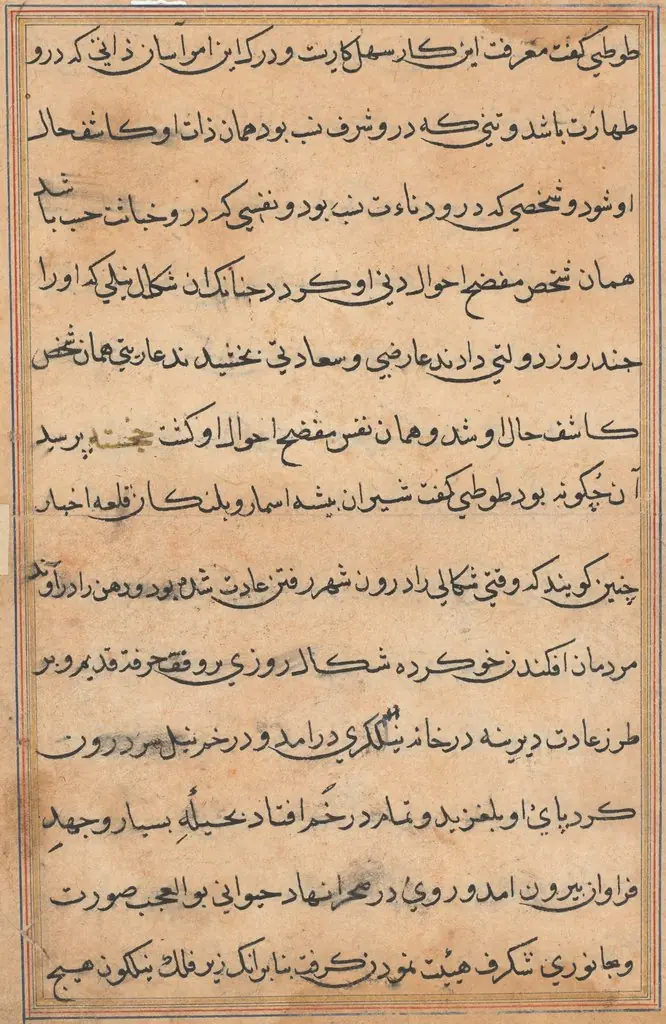 Page from Tales of a Parrot (Tuti-nama): text page
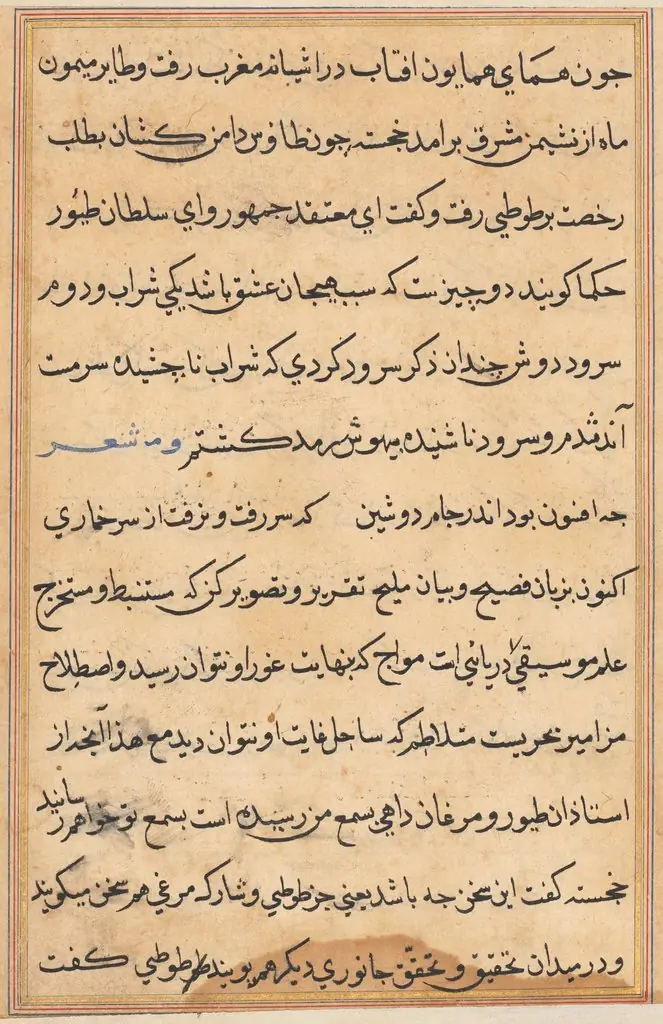 Page from Tales of a Parrot (Tuti-nama): text page
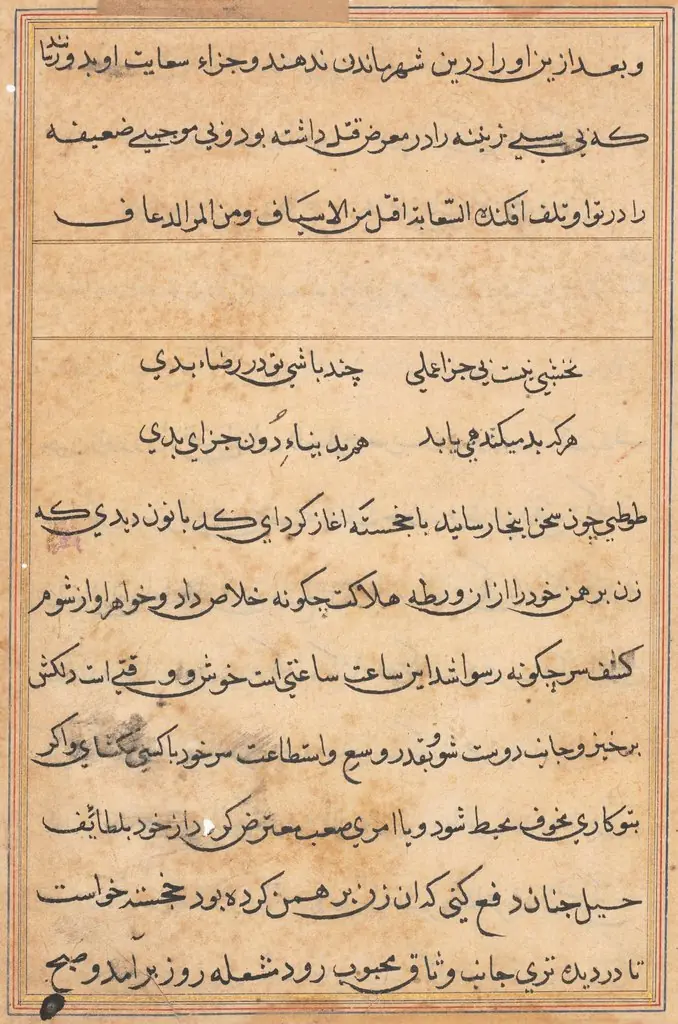 Page from Tales of a Parrot (Tuti-nama): text page
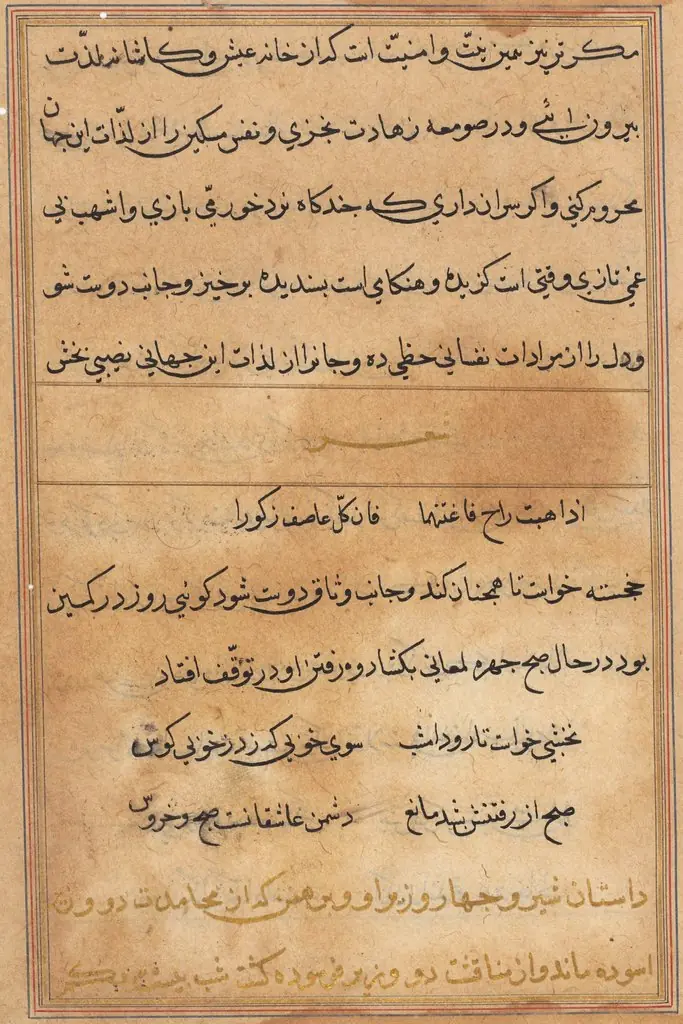 Page from Tales of a Parrot (Tuti-nama): text page
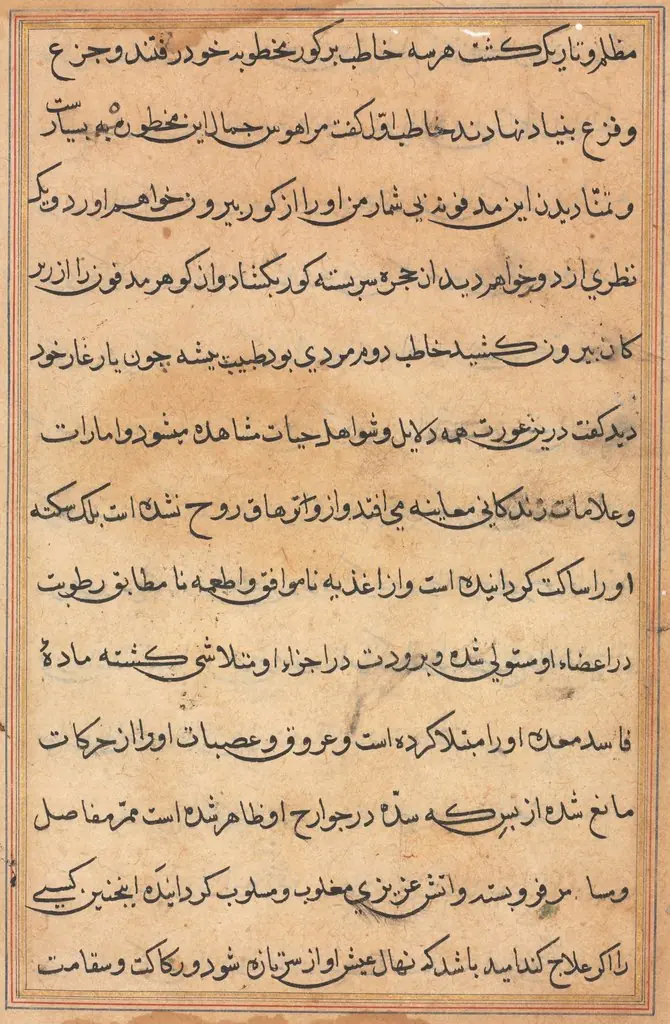 Page from Tales of a Parrot (Tuti-nama): text page
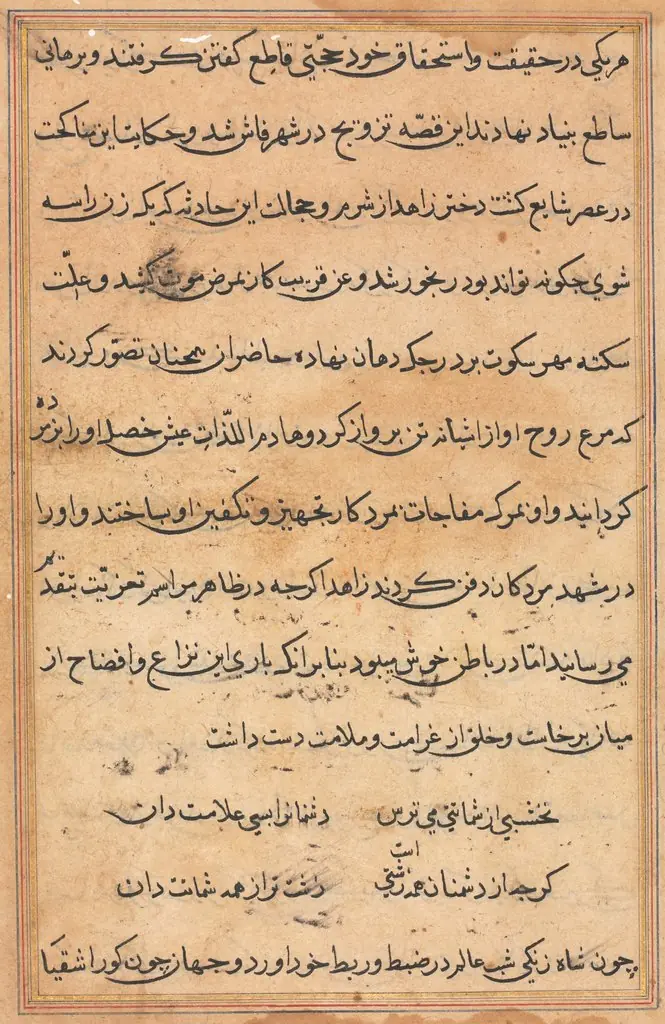 Page from Tales of a Parrot (Tuti-nama): text page
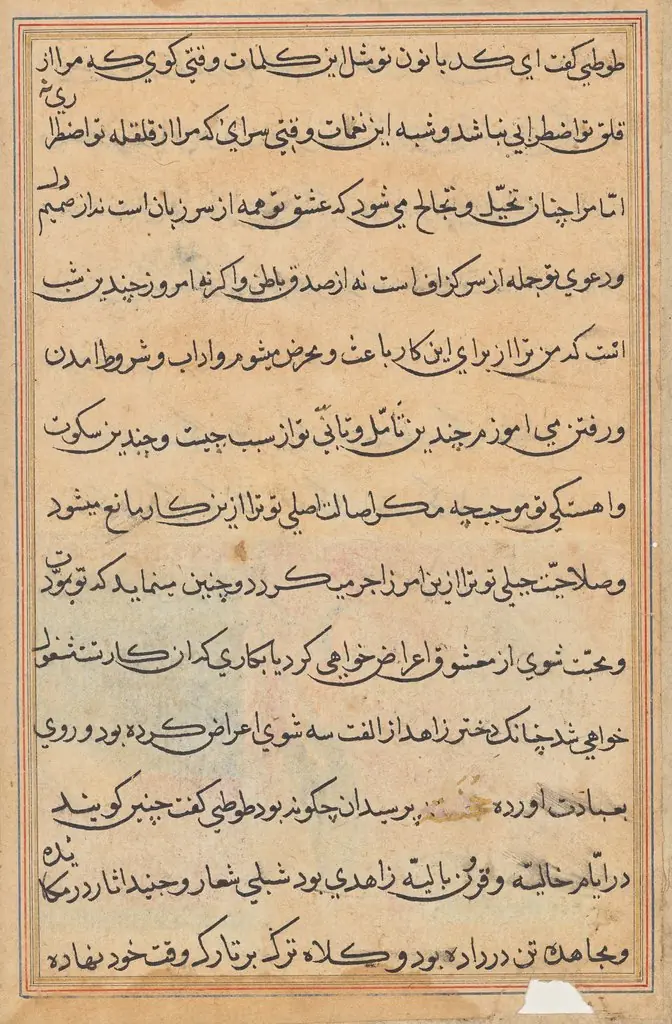 Page from Tales of a Parrot (Tuti-nama): text page