Artwork
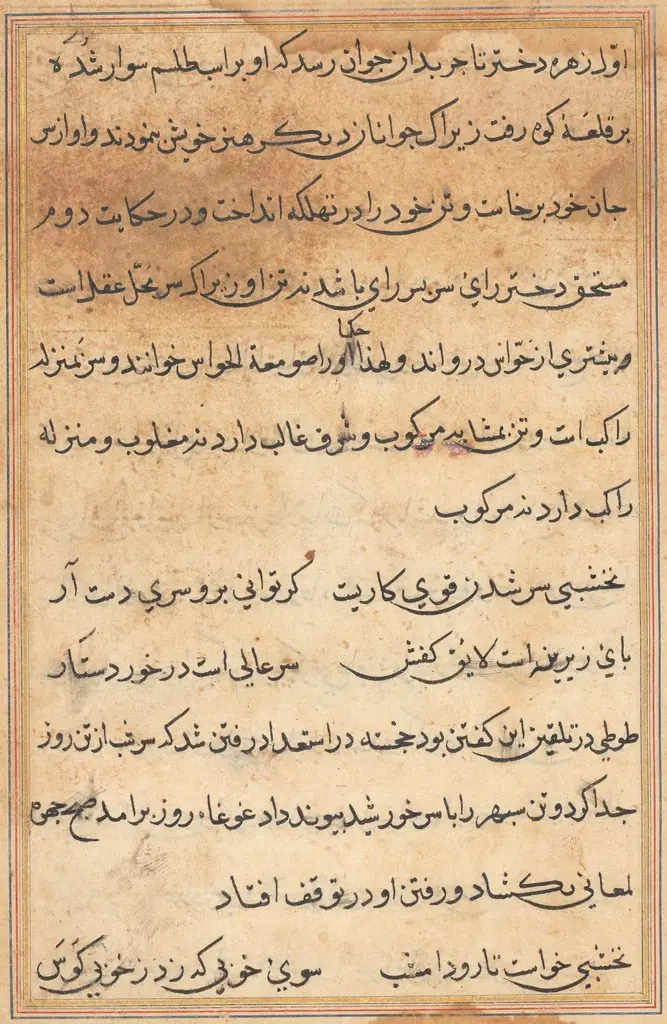
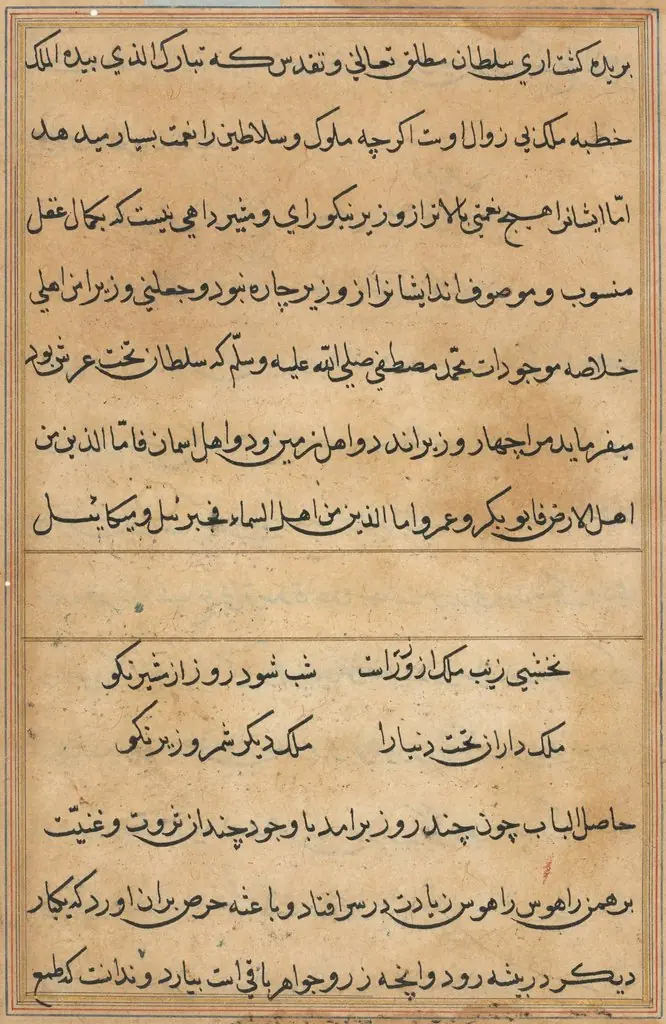
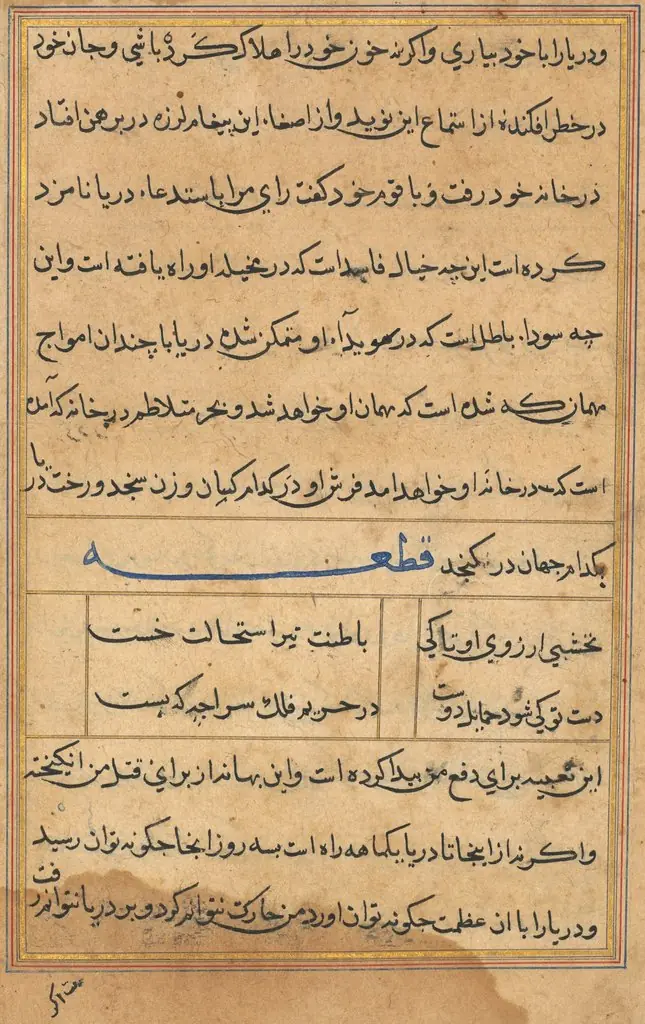
Page from Tales of a Parrot (Tuti-nama): text page
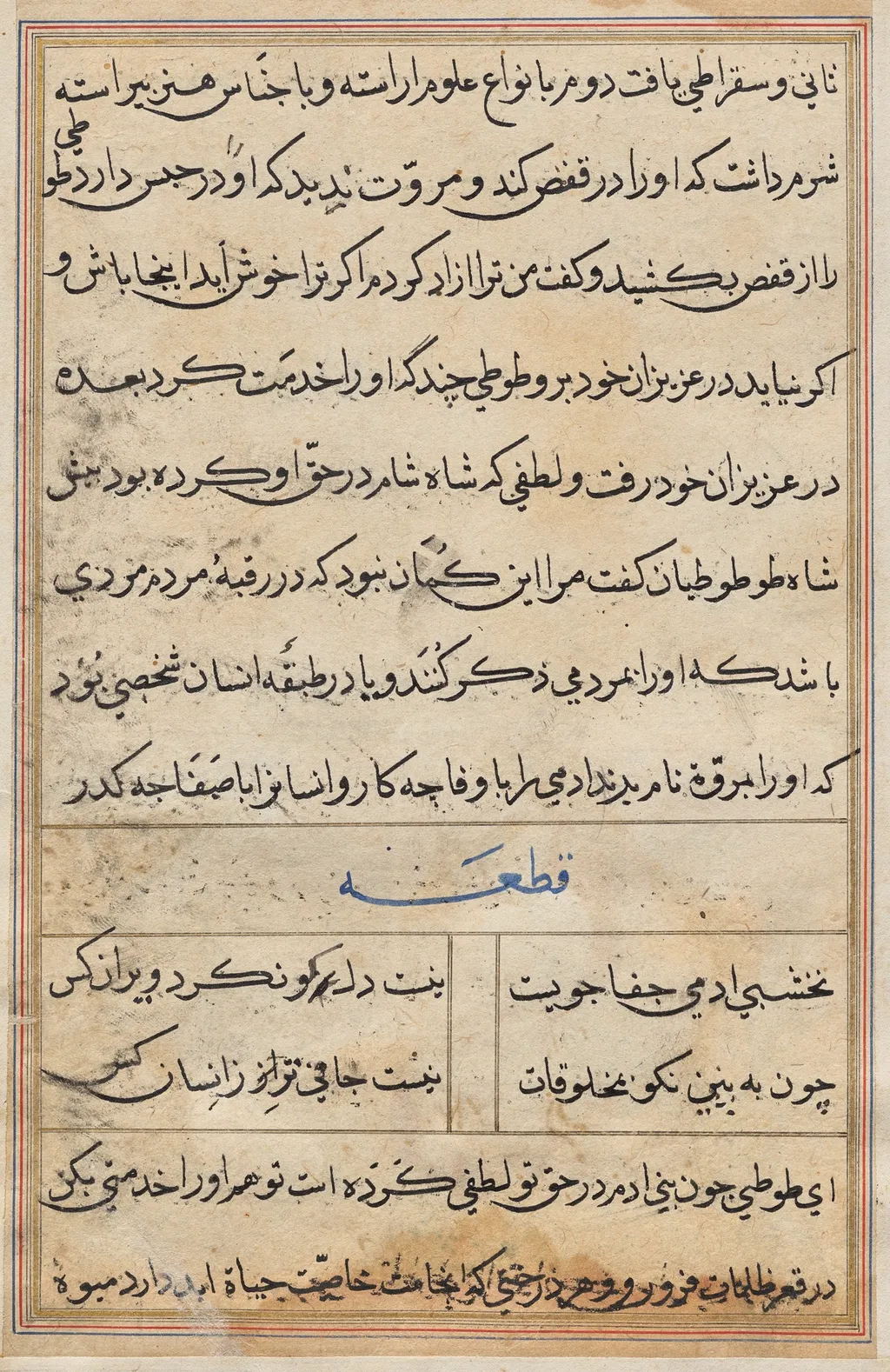
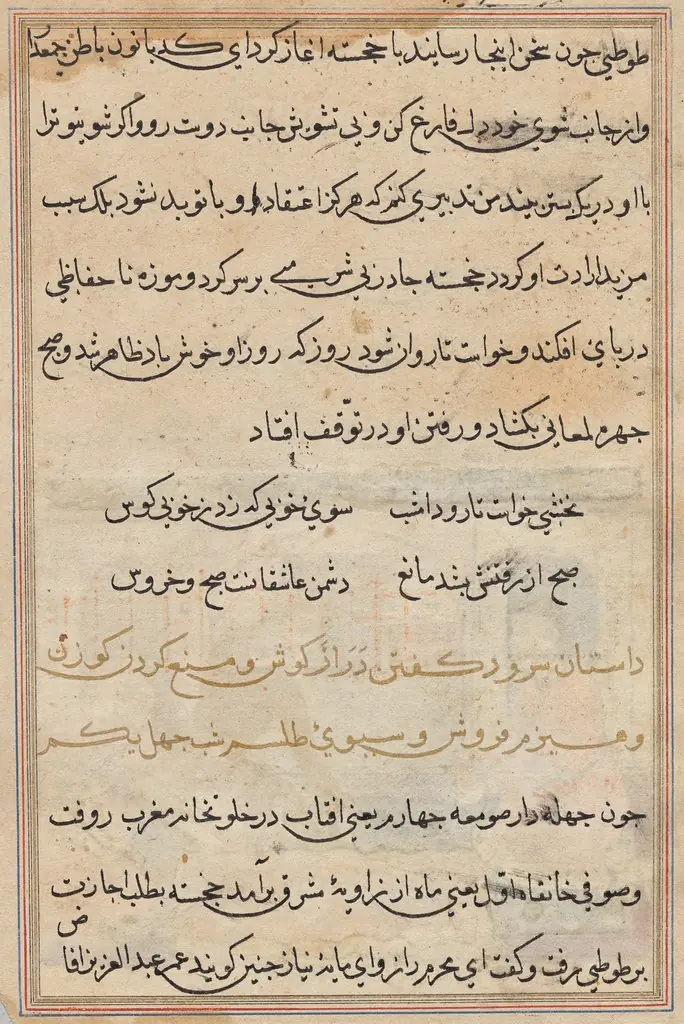
Page from Tales of a Parrot (Tuti-nama): text page is an unspecified painting. It dates from 1560 and is held in the collection of the Cleveland Museum of Art. This object is a single folio from the Persian illustrated manuscript known as *Tales of a Parrot* (Tuti‑nama).
About this work
Overview
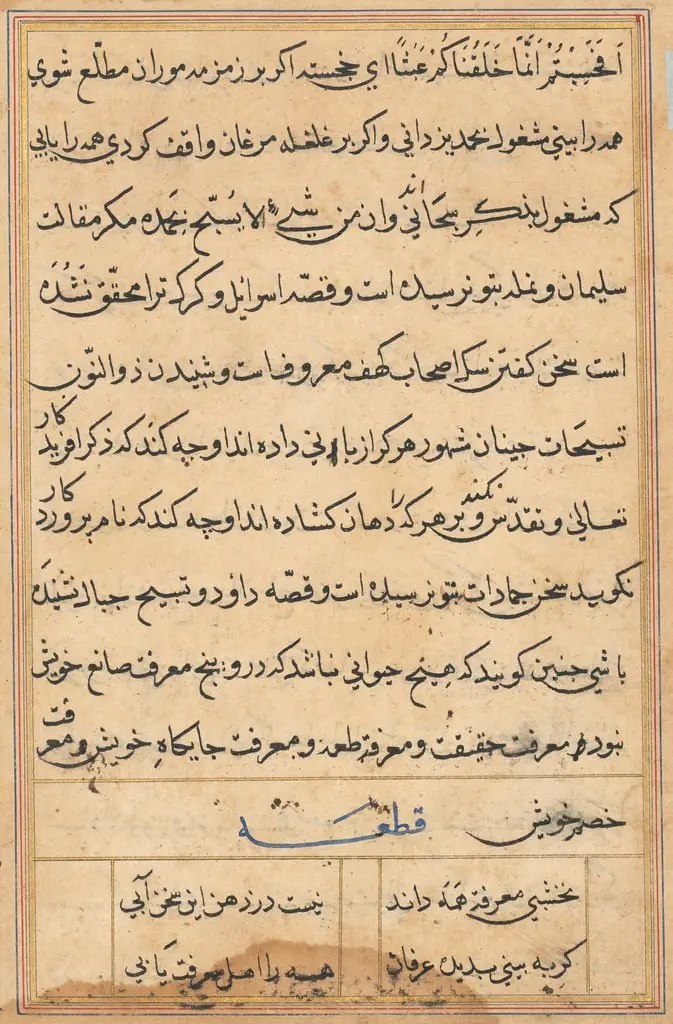
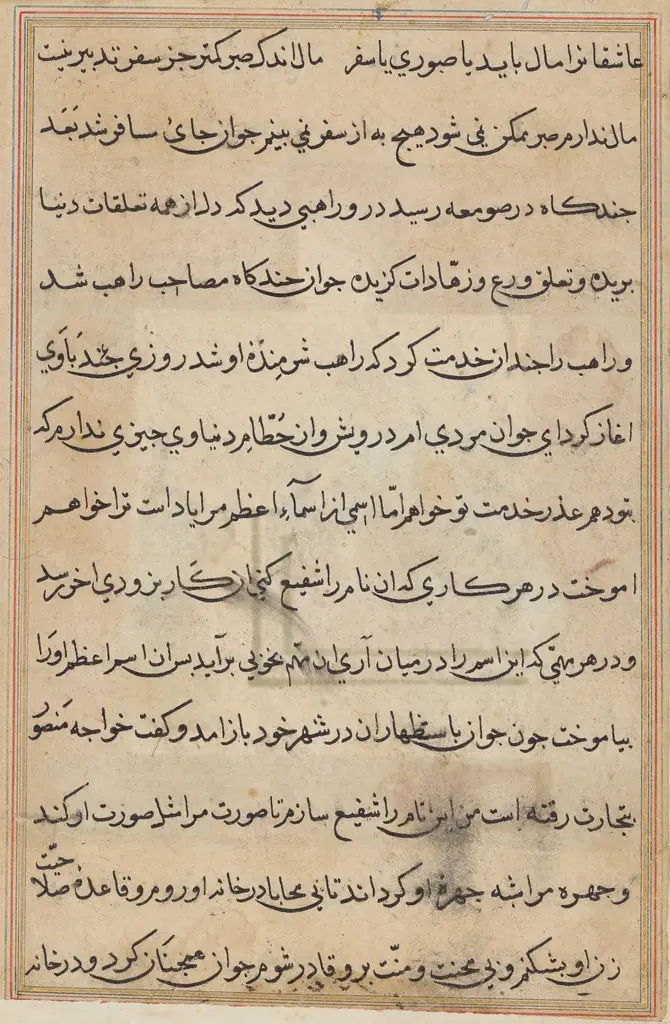
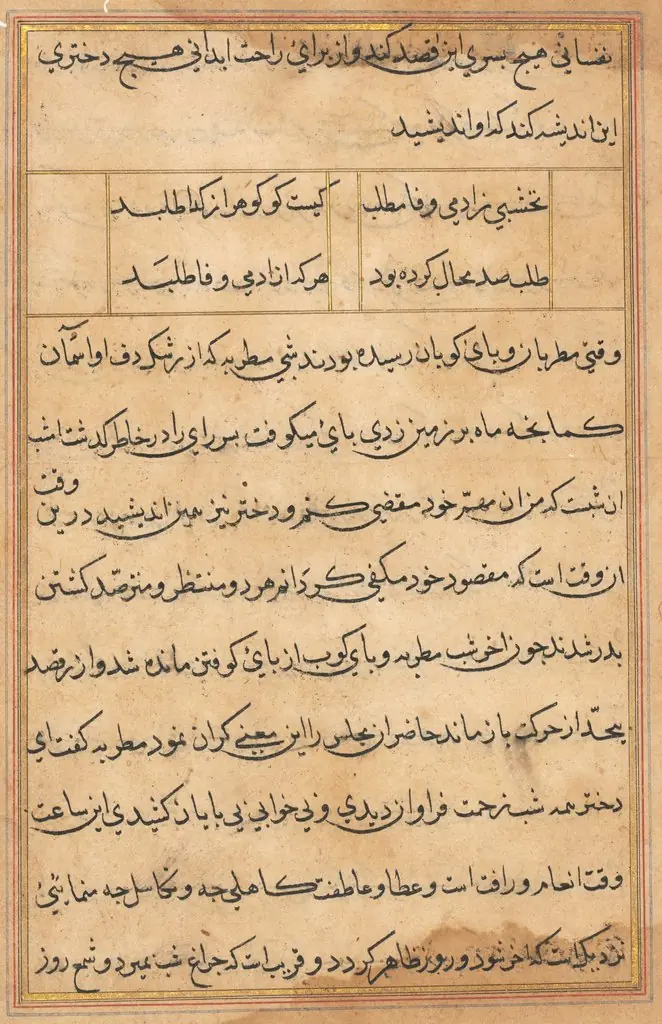
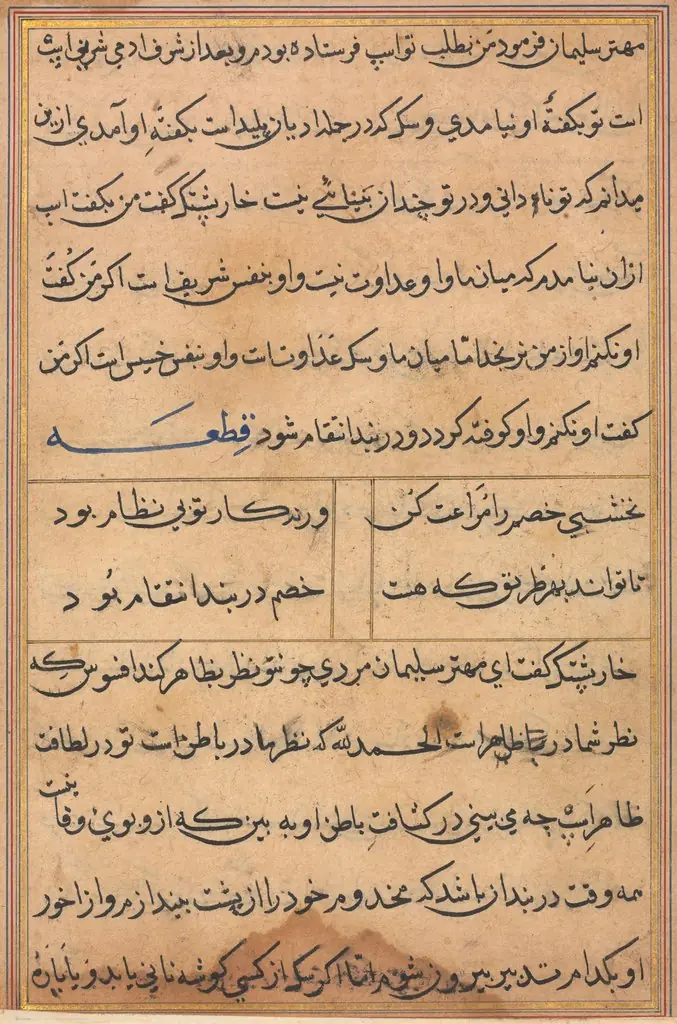
This object is a single folio from the Persian illustrated manuscript known as *Tales of a Parrot* (Tuti‑nama). The page consists of a sheet of paper on which the narrative text is rendered in flowing black calligraphy, surrounded by a thin red border. The sheet shows signs of age, with a yellowed surface that suggests long-term preservation.
Subject & Meaning
The written portion contains a segment of the story, composed in elegant, cursive script intended for oral recitation. The narrative follows the traditional format of the Tuti‑nama, a collection of moral and romantic tales conveyed through the voice of a parrot, serving both entertainment and didactic purposes.
Technique & Style
The calligrapher employed a refined black ink, applying uniform, slanted strokes that create a harmonious line of text across the page. A solitary blue underline near the bottom highlights a specific word, providing visual emphasis within the otherwise monochrome composition. The thin red border frames the text, adding a subtle decorative element.
History & Provenance
The manuscript originates from the Persian cultural sphere, where such illustrated books were produced for elite patrons. The exact date and place of creation are not specified, but the paper’s aging and stylistic traits align with traditional manuscript practices of the region. The folio is now part of the collection at the Cleveland Museum of Art.
Context
*Tales of a Parrot* belongs to a broader tradition of Persian literary works that combine prose, poetry, and illustration to convey moral lessons. Such manuscripts were often read aloud in courtly or scholarly settings, reflecting the educational and entertainment values of the period.
Artist & collection

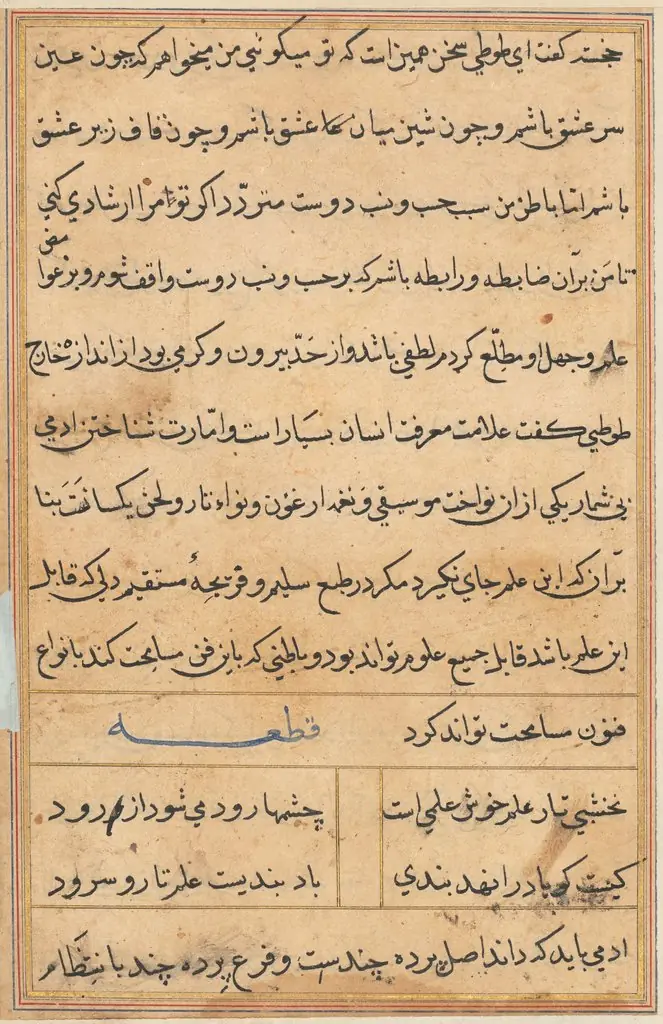 Page from Tales of a Parrot (Tuti-nama): text page
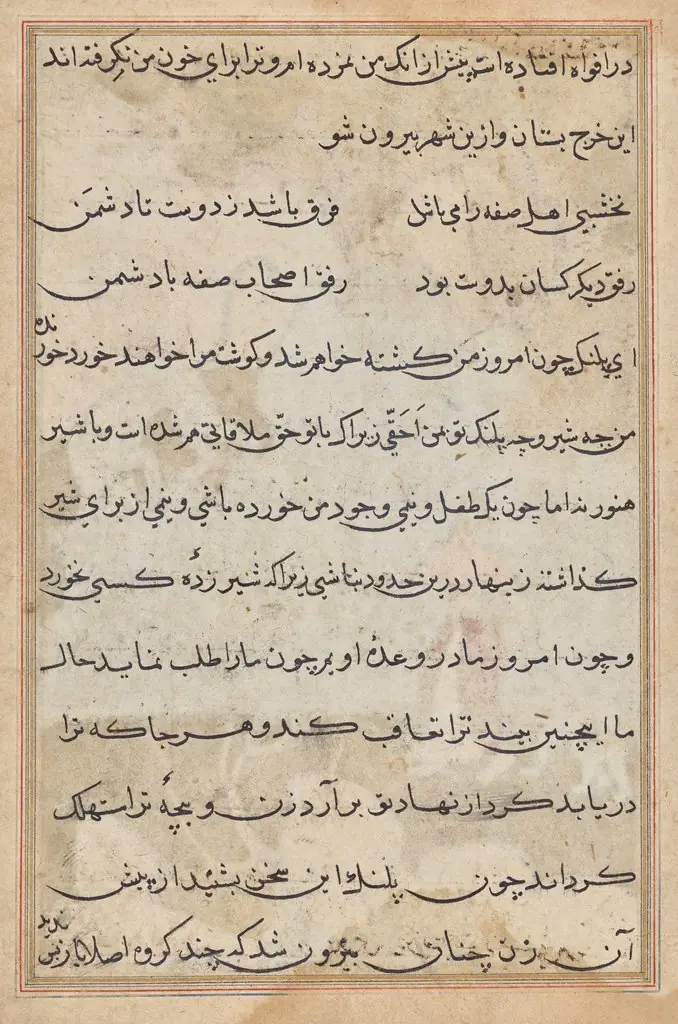 Page from Tales of a Parrot (Tuti-nama): text page
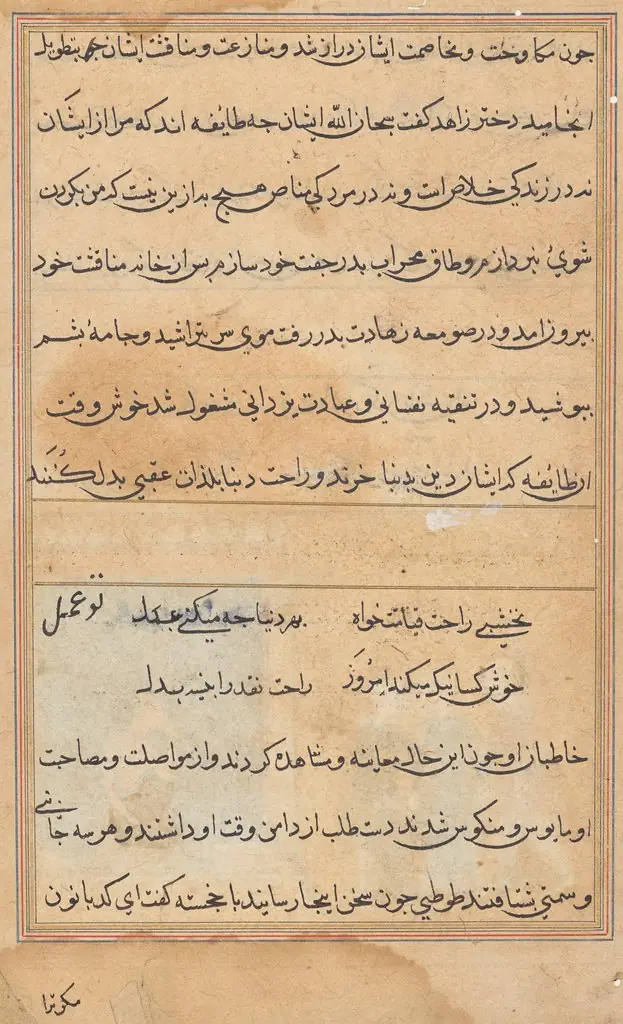 Page from Tales of a Parrot (Tuti-nama): text page
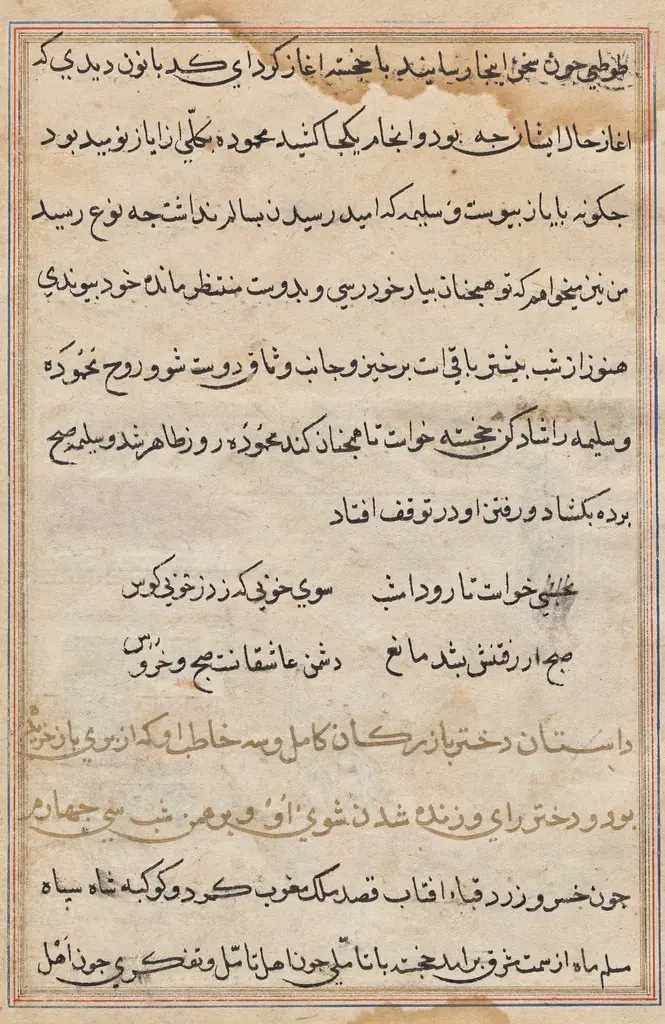 Page from Tales of a Parrot (Tuti-nama): text page
 Page from Tales of a Parrot (Tuti-nama): text page
 Page from Tales of a Parrot (Tuti-nama): text page
 Page from Tales of a Parrot (Tuti-nama): text page
 Page from Tales of a Parrot (Tuti-nama): text page
 Page from Tales of a Parrot (Tuti-nama): text page