Artwork
Page from Tales of a Parrot (Tuti-nama): text page
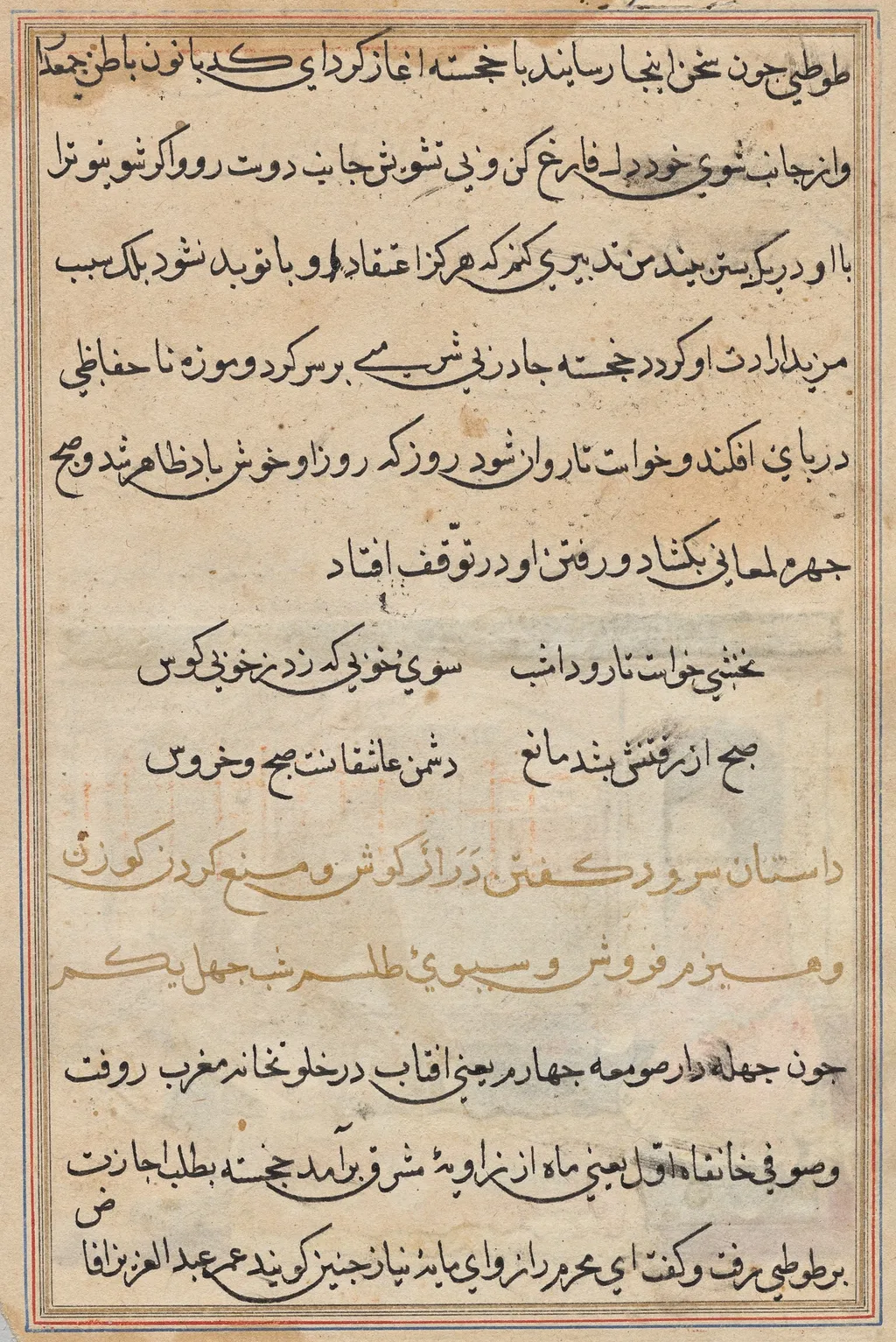
Page from Tales of a Parrot (Tuti-nama): text page is an unspecified painting. It dates from 1560 and is held in the collection of the Cleveland Museum of Art. This object is a single illustrated page from the Persian manuscript known as *Tuti‑nama* (Tales of a Parrot).
About this work
Overview
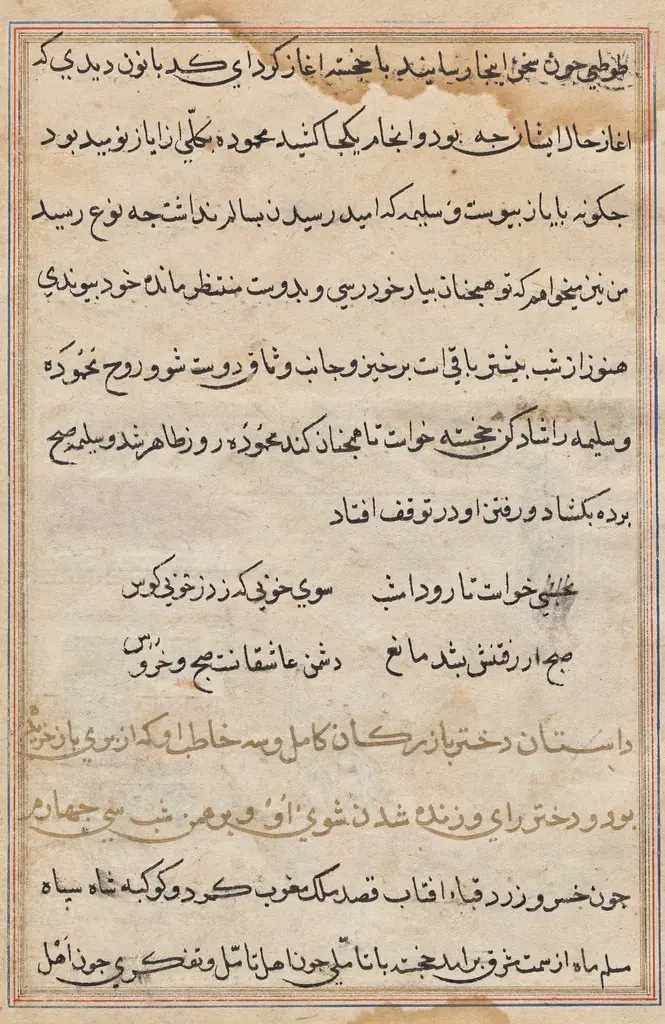
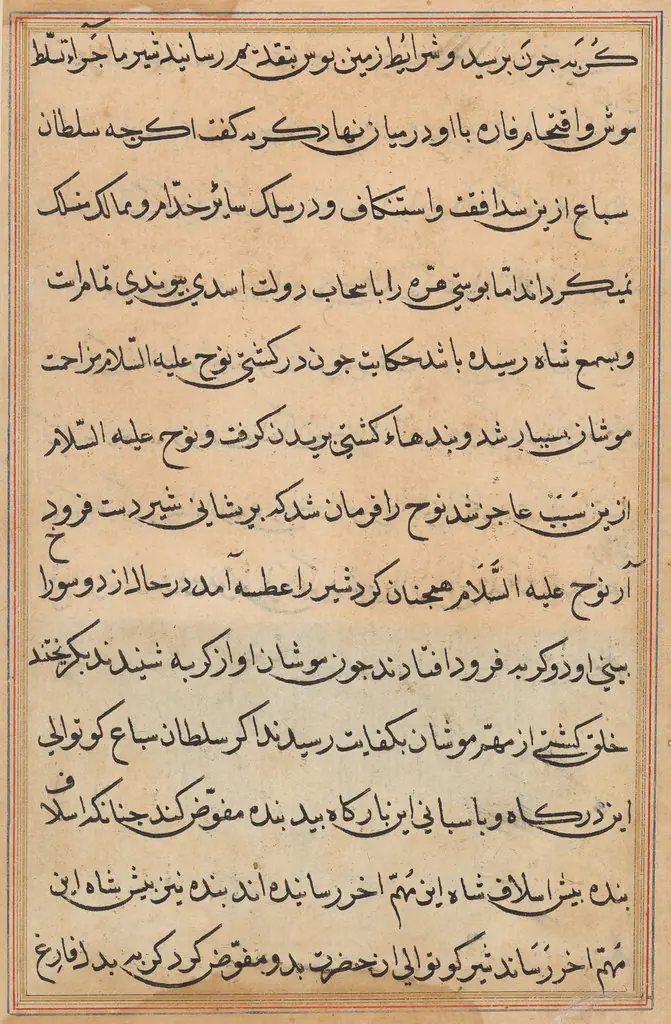
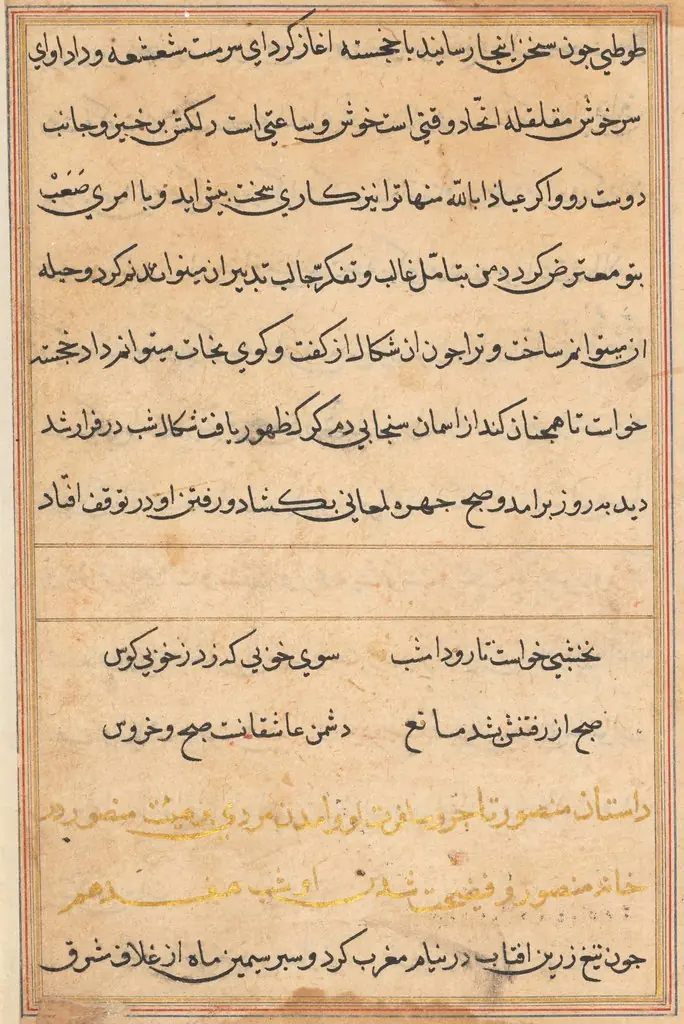
This object is a single illustrated page from the Persian manuscript known as *Tuti‑nama* (Tales of a Parrot). The sheet measures roughly a standard folio and is composed of dense black calligraphy set within thin red and blue ornamental borders. The paper shows signs of age, with a yellowed margin and faint stains, indicating its historic origin.
Subject & Meaning
The page contains a continuous block of text rendered in the elegant nastaʿlīq script, a Persian calligraphic style that blends cursive flow with decorative flair. The narrative is part of a larger collection of moral and philosophical tales, traditionally used to convey ethical instruction to elite audiences.
Technique & Style
The calligrapher employed nastaʿlīq, characterized by its sweeping, wave‑like lines that curve and dip across the surface. The script is tightly arranged in neat rows, maximizing the use of space between the colored borders. The red and blue marginal bands provide a subtle visual framework without detracting from the dominant black ink.
History & Provenance
The page was created for Prince Salim, a member of the Safavid royal household, suggesting a commission for a private library or courtly education. Its survival in a museum collection indicates it was later detached from the original codex and entered the art market before being acquired by the Cleveland Museum of Art.
Context
*Tuti‑nama* manuscripts were popular in early modern Persia, serving both as literary entertainment and as instructional material for the aristocracy. The use of nastaʿlīq reflects the period’s aesthetic preferences for refined, legible script in courtly commissions, while the colored borders echo contemporary decorative trends in manuscript illumination.
Artist & collection

 Page from Tales of a Parrot (Tuti-nama): text page
 Page from Tales of a Parrot (Tuti-nama): text page
 Page from Tales of a Parrot (Tuti-nama): text page
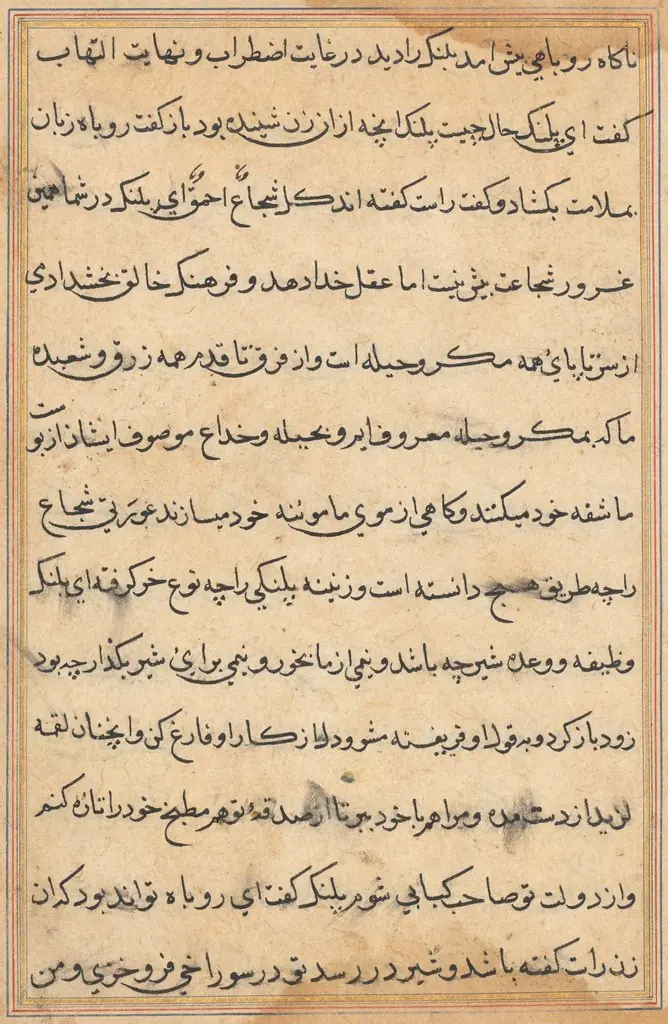 Page from Tales of a Parrot (Tuti-nama): text page
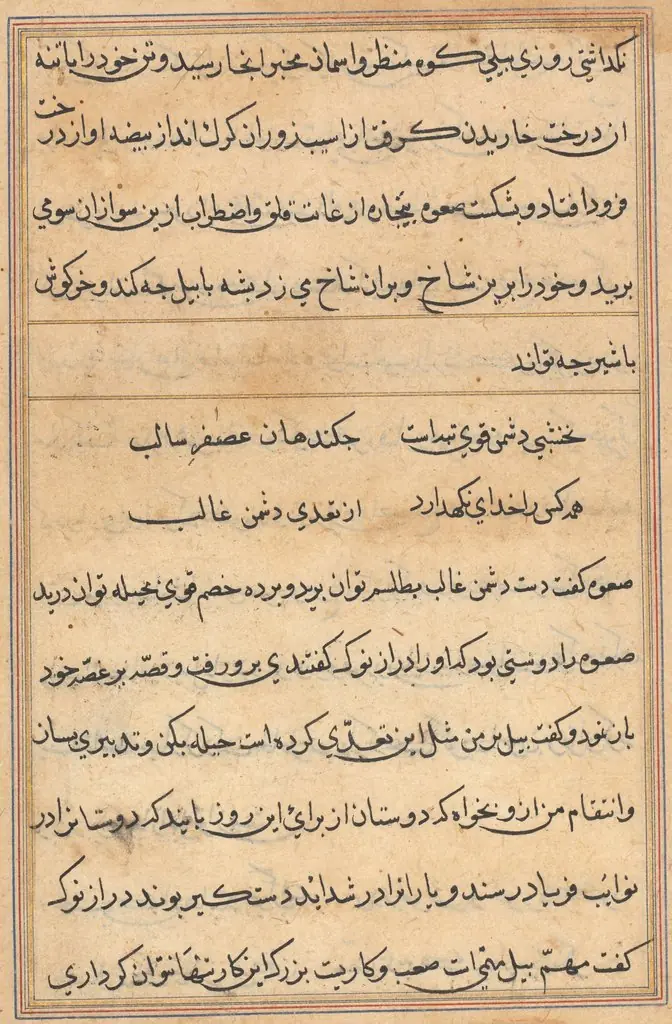 Page from Tales of a Parrot (Tuti-nama): text page
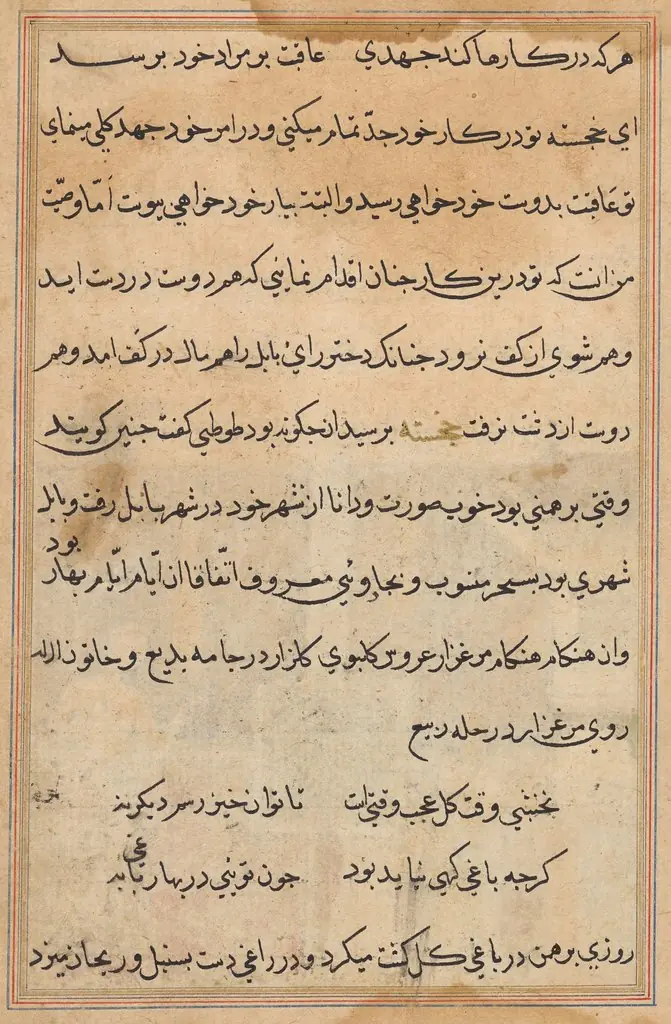 Page from Tales of a Parrot (Tuti-nama): text page
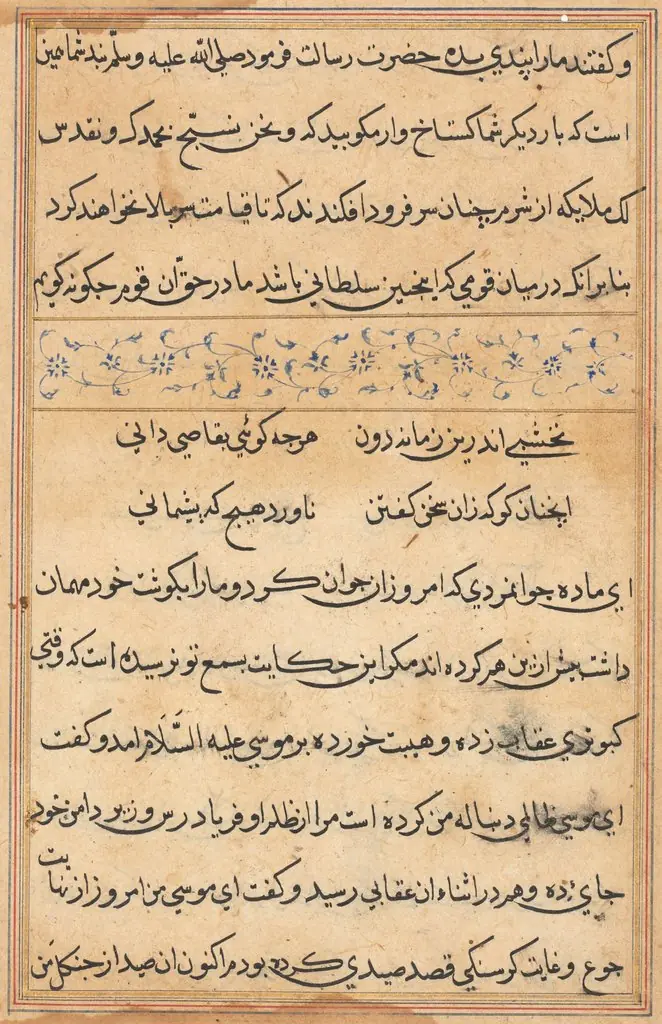 Page from Tales of a Parrot (Tuti-nama): text page
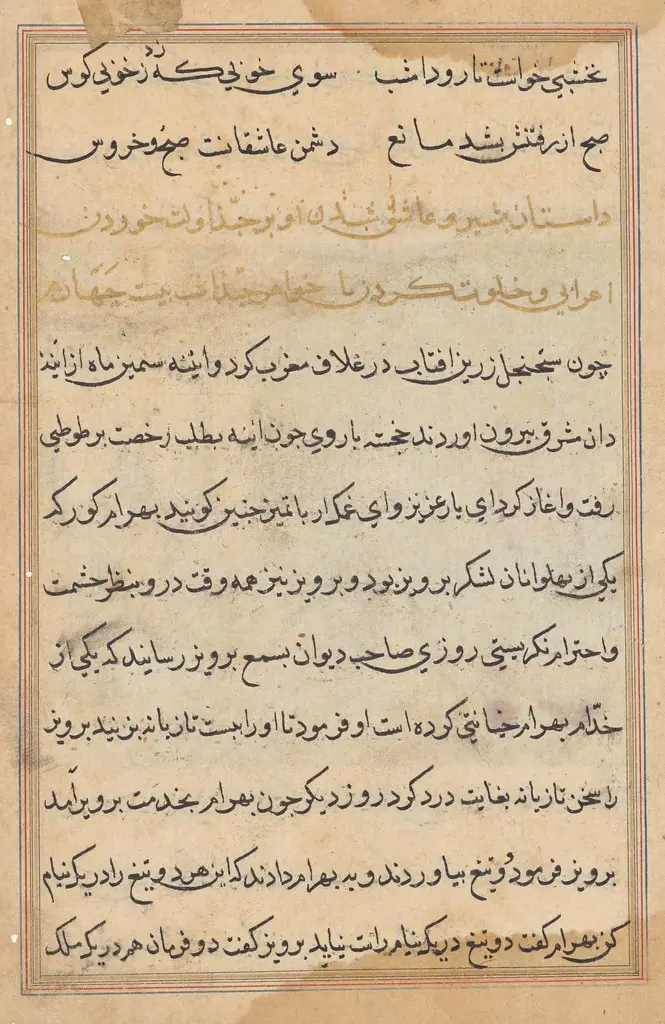 Page from Tales of a Parrot (Tuti-nama): text page
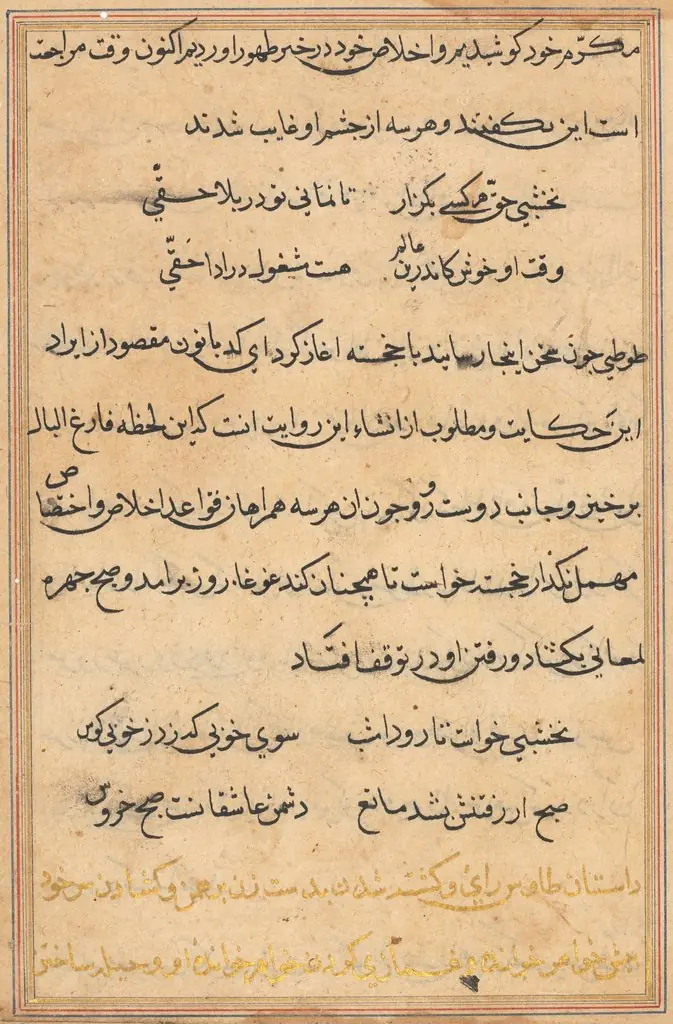 Page from Tales of a Parrot (Tuti-nama): text page
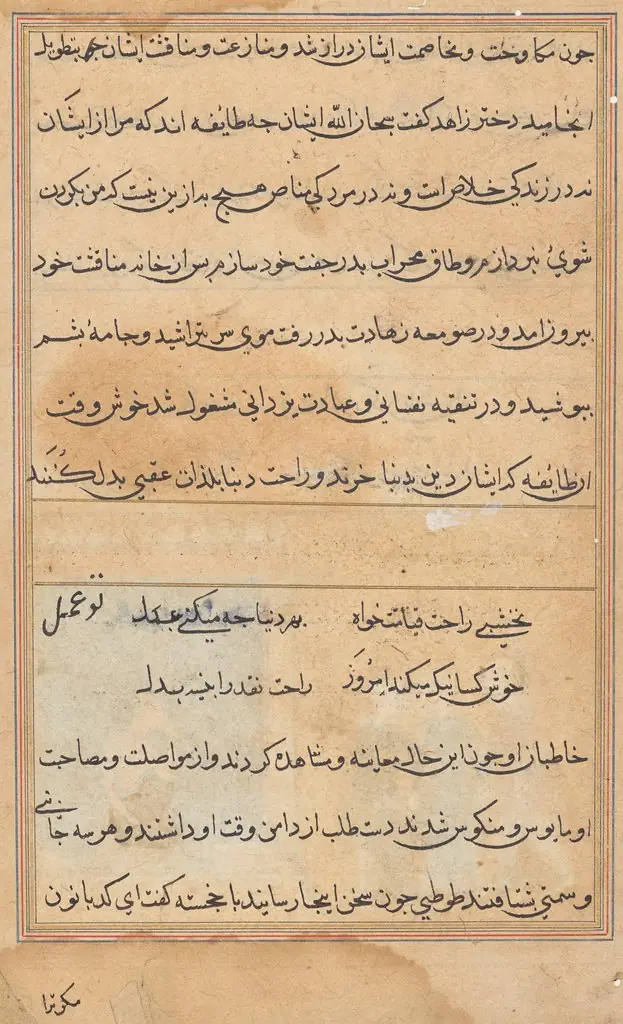 Page from Tales of a Parrot (Tuti-nama): text page