Artwork
Page from Tales of a Parrot (Tuti-nama): text page
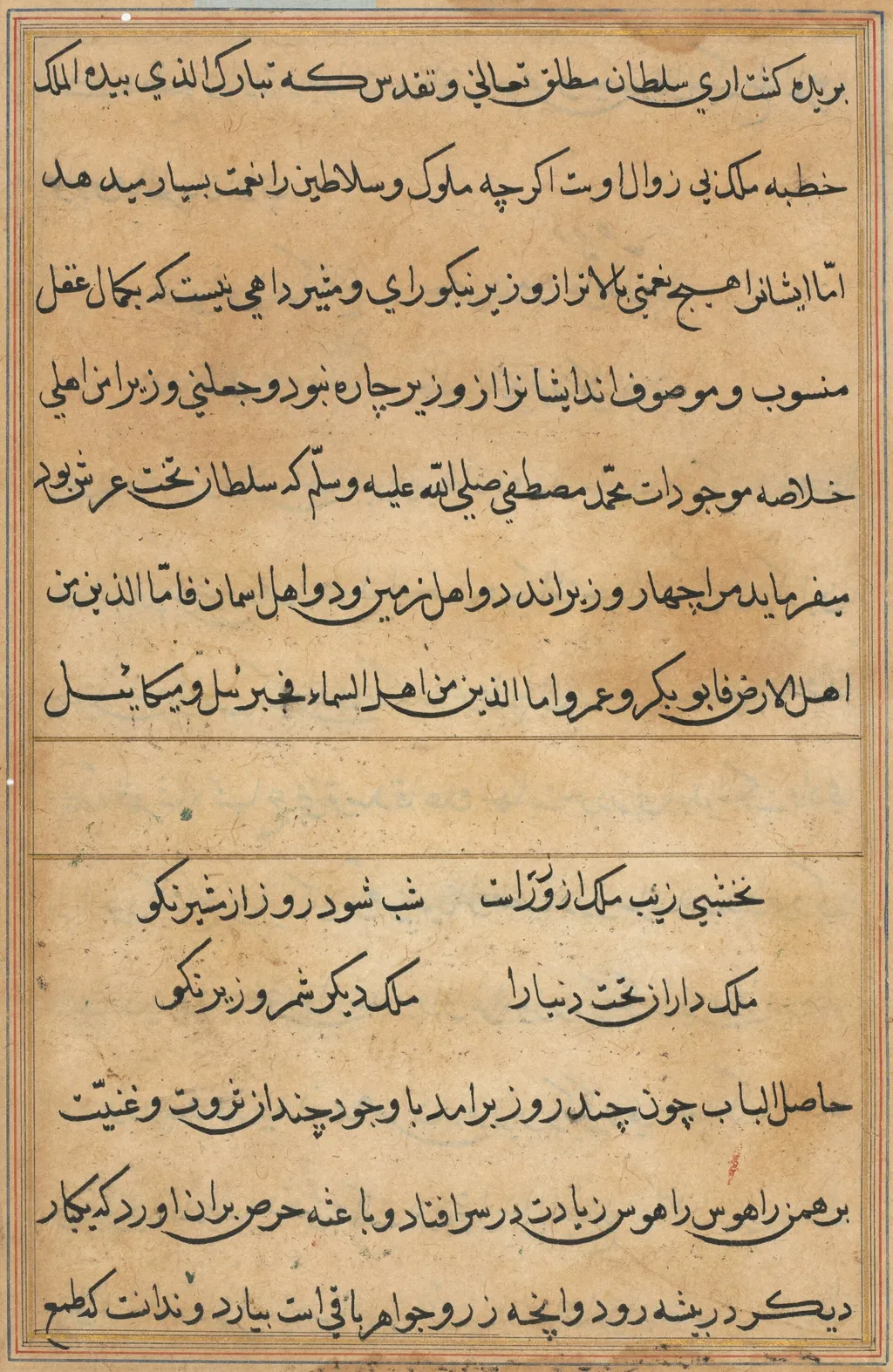
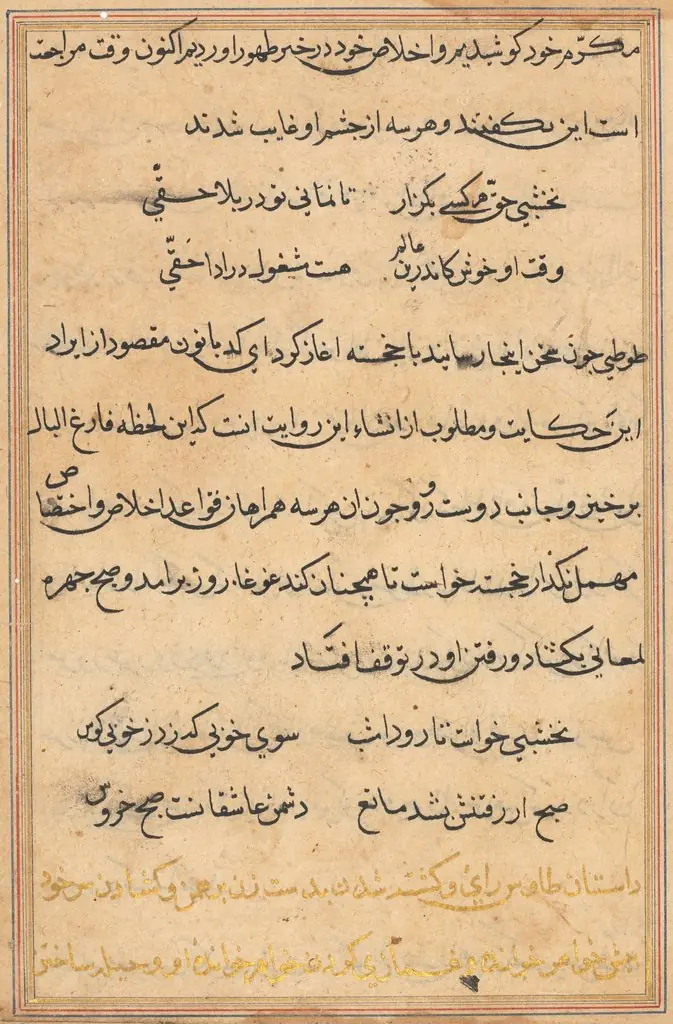
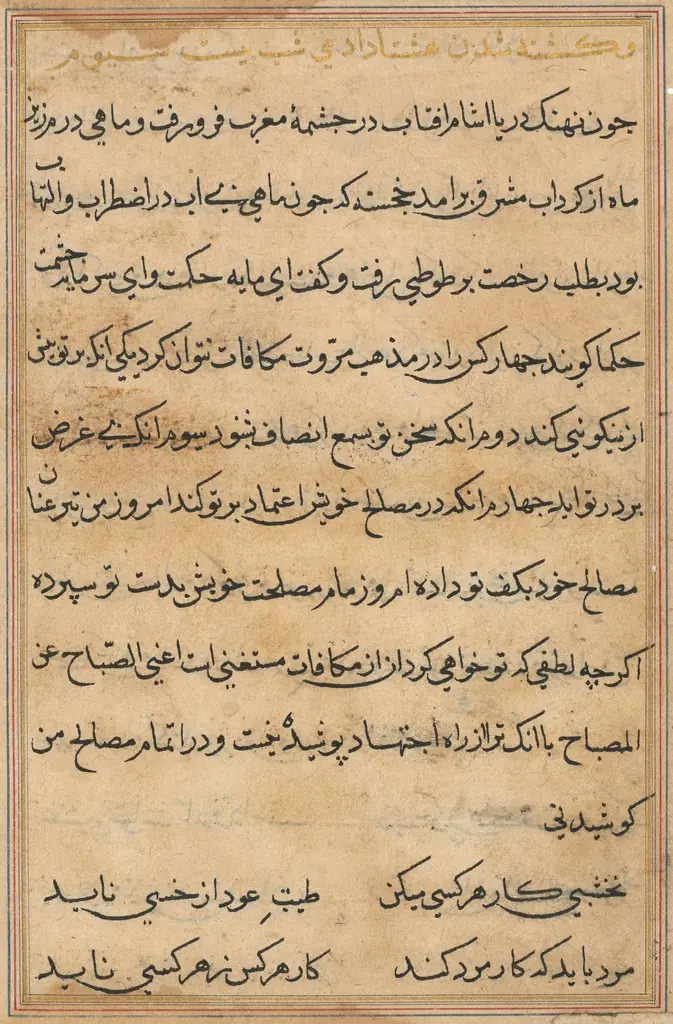
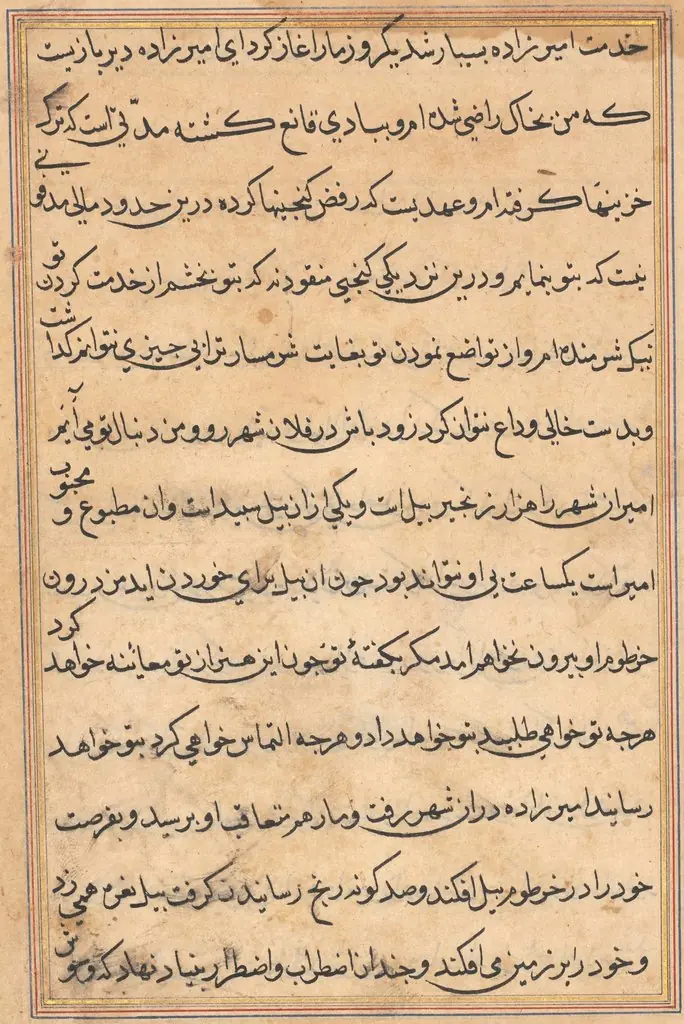
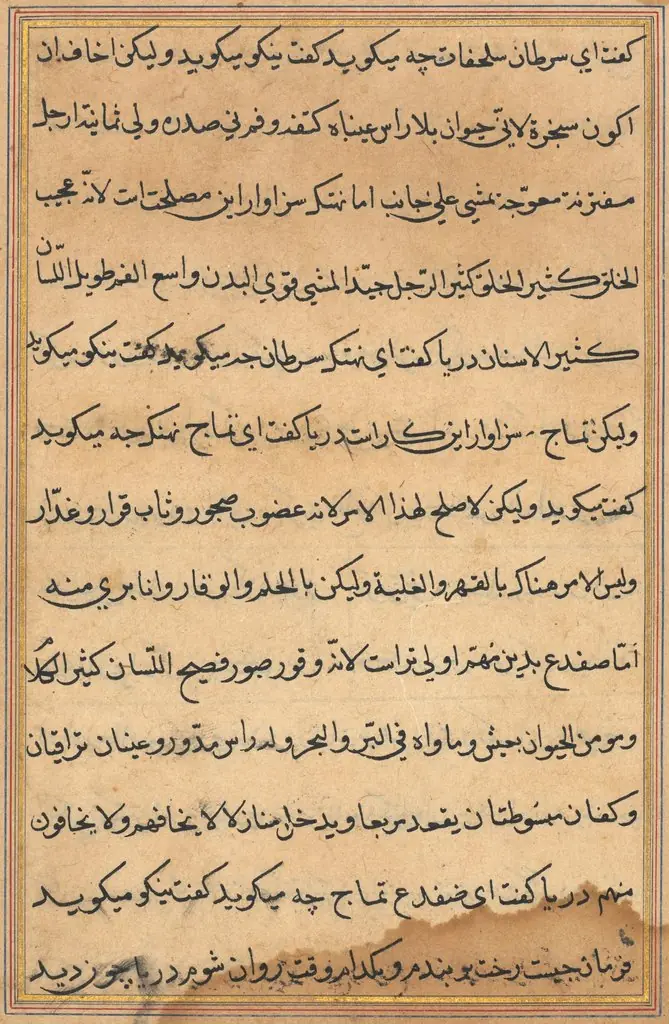
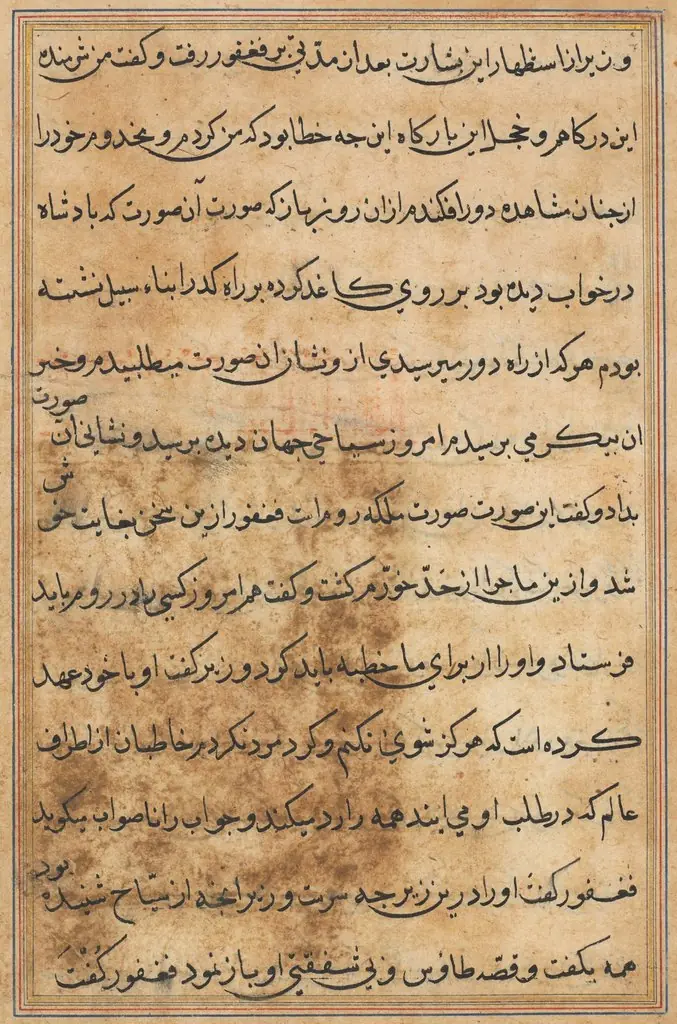
Page from Tales of a Parrot (Tuti-nama): text page is an unspecified painting. It dates from 1560 and is held in the collection of the Cleveland Museum of Art. The object is a single leaf from the illustrated manuscript known as *Tuti‑nama* (Tales of a Parrot).
About this work
Overview
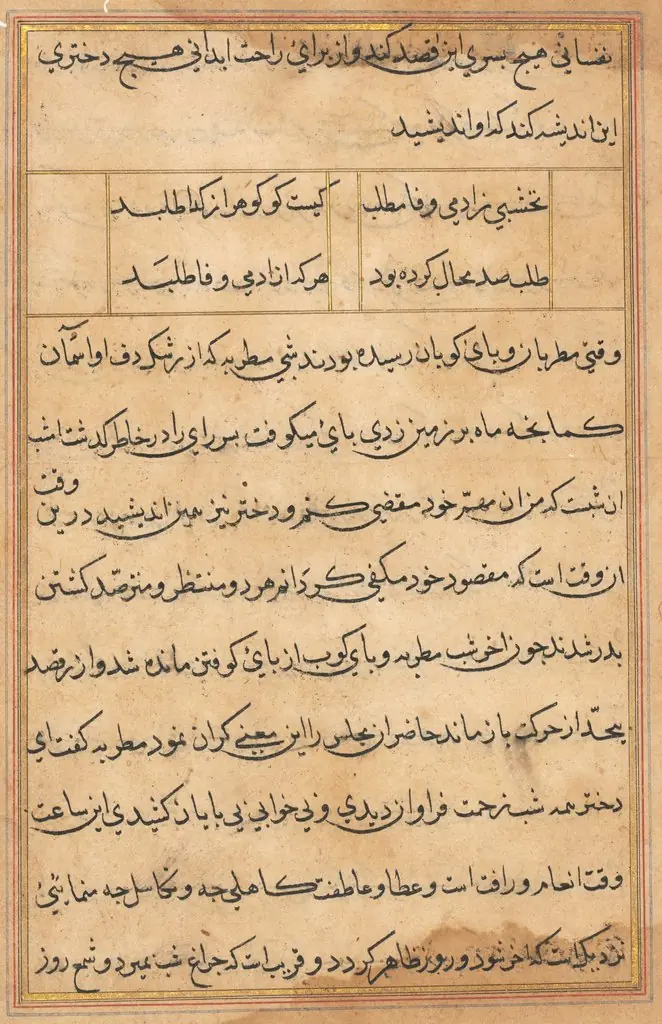
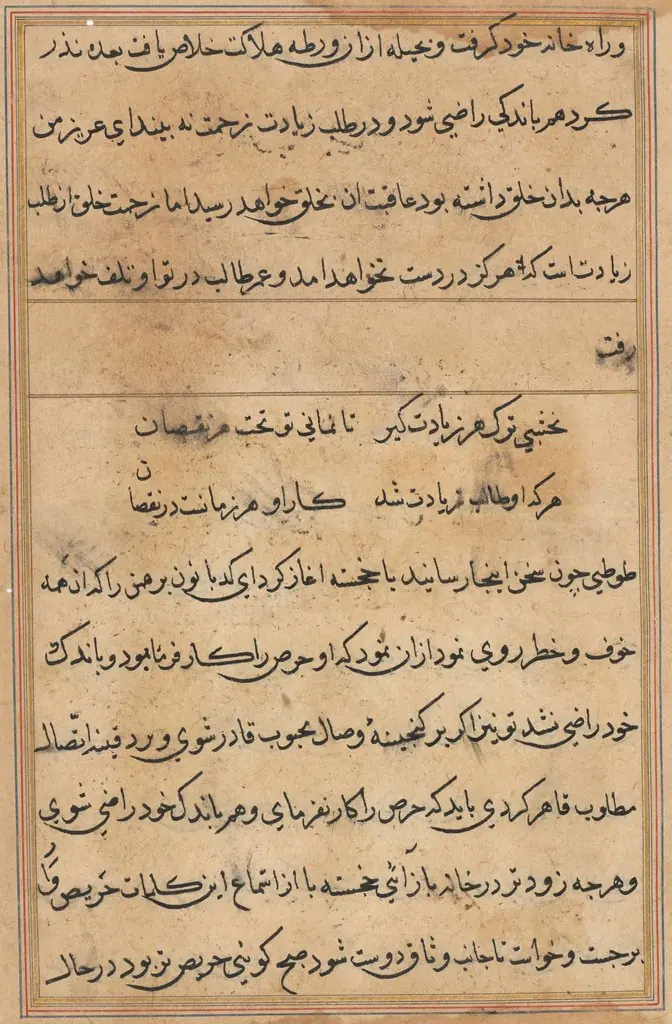
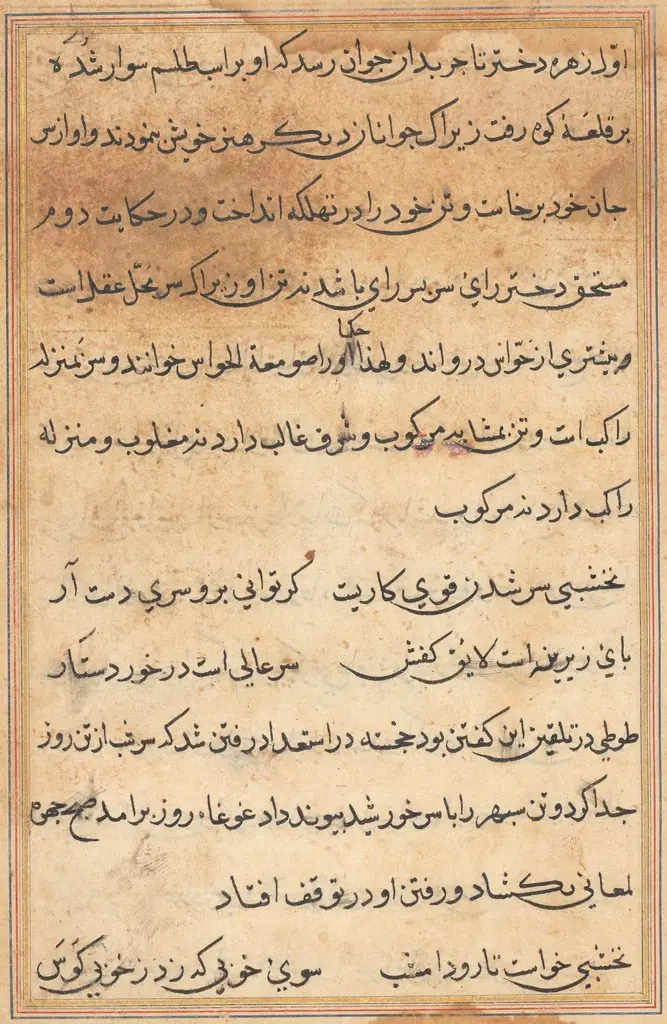
The object is a single leaf from the illustrated manuscript known as *Tuti‑nama* (Tales of a Parrot). It consists of a page of text rendered in black ink on a light‑tan vellum, framed by a narrow decorative border. The script flows in a cursive hand, with occasional words enlarged for emphasis, suggesting a poetic or narrative composition.
Subject & Meaning
The page appears to belong to a literary work that recounts stories involving a parrot, a common motif in Persian and Central Asian folklore. The highlighted passages likely mark key verses or moral points, indicating the text’s function as both entertainment and didactic instruction within its cultural context.
Technique & Style
The calligraphy employs a fluid, semi‑cursive script characteristic of Persian manuscript traditions of the late medieval period. Ink is applied in a uniform black, while the surrounding border is executed with fine linear ornamentation, creating a balanced visual rhythm that integrates text and decorative framing.
History & Provenance
*Tuti‑nama* was produced in the Persianate world, though the precise date and workshop remain uncertain. Surviving examples are scattered among museum and library collections, often acquired through early 20th‑century antiquities markets. This particular leaf entered the present collection via a private donation in the 1990s.
Context
Manuscript culture in the Persianate regions placed high value on the aesthetic presentation of literary works. The integration of calligraphic elegance with modest ornamentation reflects a tradition that balanced readability with visual pleasure, catering to educated patrons and courtly audiences.
Legacy
Pages such as this illustrate the enduring influence of Persian calligraphic standards on later Islamic book arts. Their study informs contemporary understandings of textual transmission, artistic conventions, and the cross‑cultural appeal of animal‑centric storytelling.
Artist & collection

 Page from Tales of a Parrot (Tuti-nama): text page
 Page from Tales of a Parrot (Tuti-nama): text page
 Page from Tales of a Parrot (Tuti-nama): text page
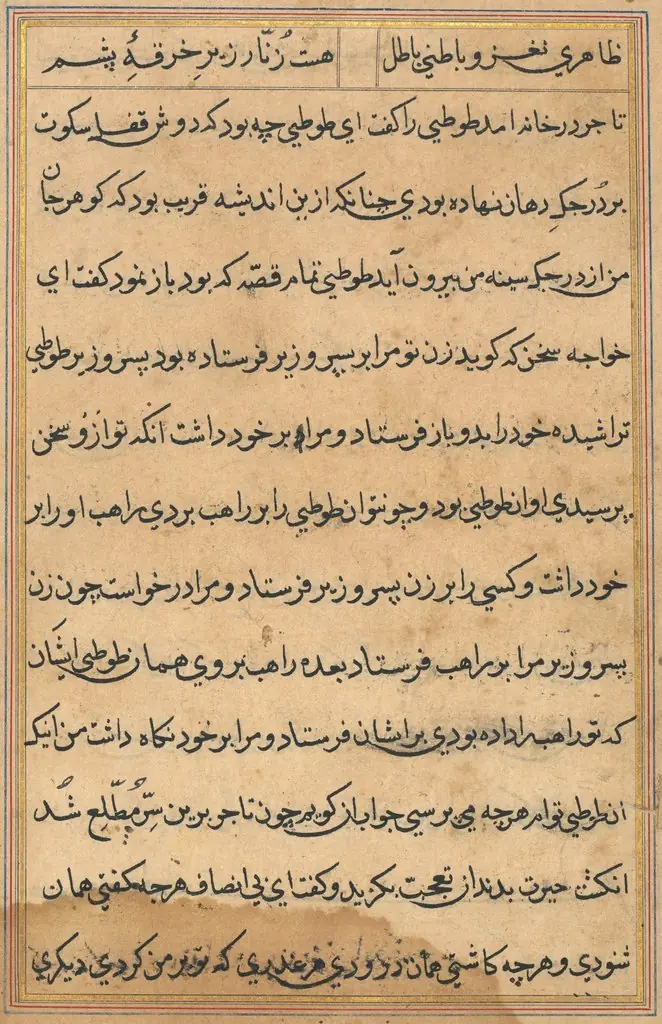 Page from Tales of a Parrot (Tuti-nama): text page
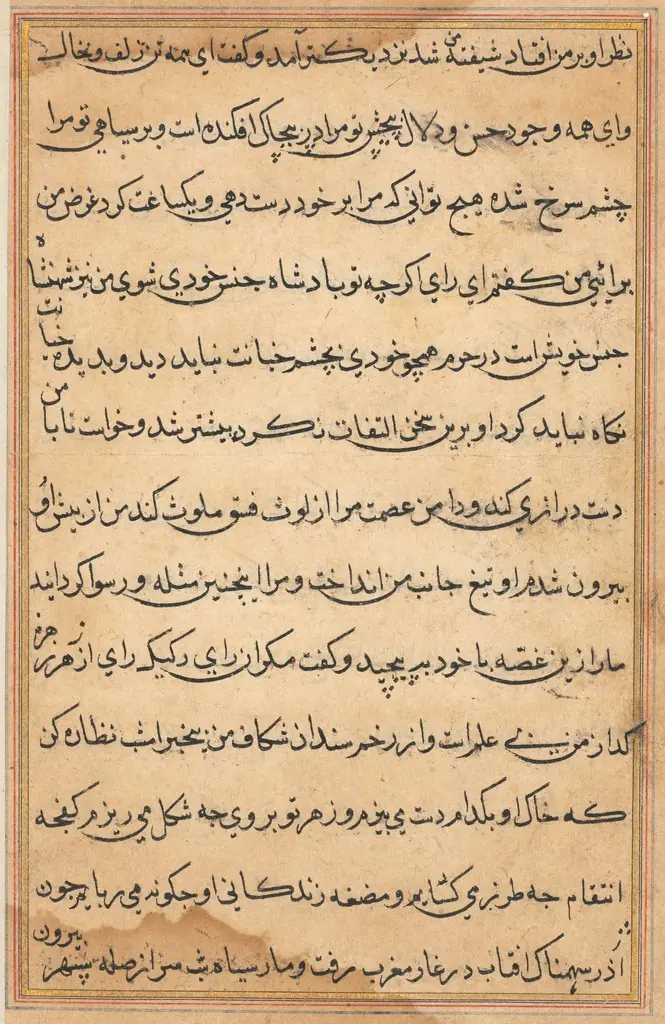 Page from Tales of a Parrot (Tuti-nama): text page
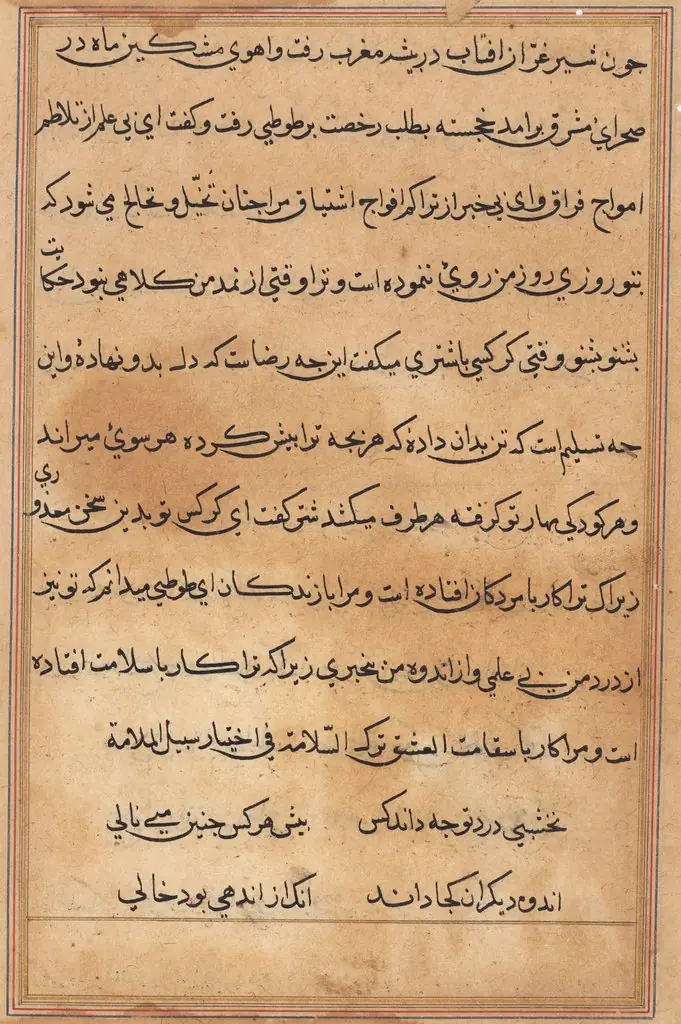 Page from Tales of a Parrot (Tuti-nama): text page
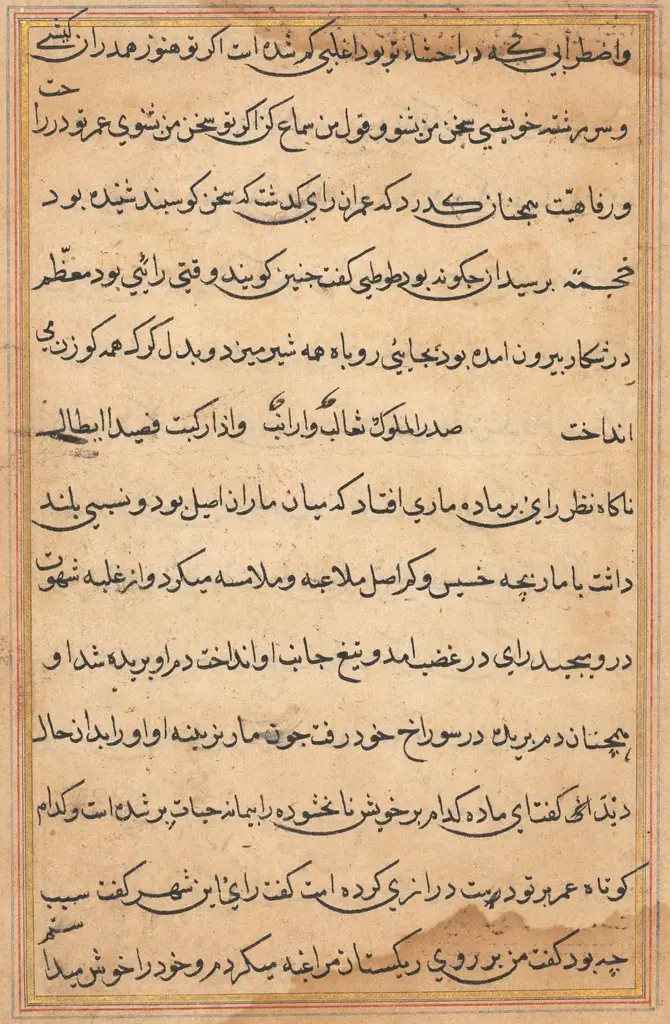 Page from Tales of a Parrot (Tuti-nama): text page
 Page from Tales of a Parrot (Tuti-nama): text page
 Page from Tales of a Parrot (Tuti-nama): text page
 Page from Tales of a Parrot (Tuti-nama): text page
 Page from Tales of a Parrot (Tuti-nama): text page
 Page from Tales of a Parrot (Tuti-nama): text page