Artwork
Ange Laurent de Lalive de Jully
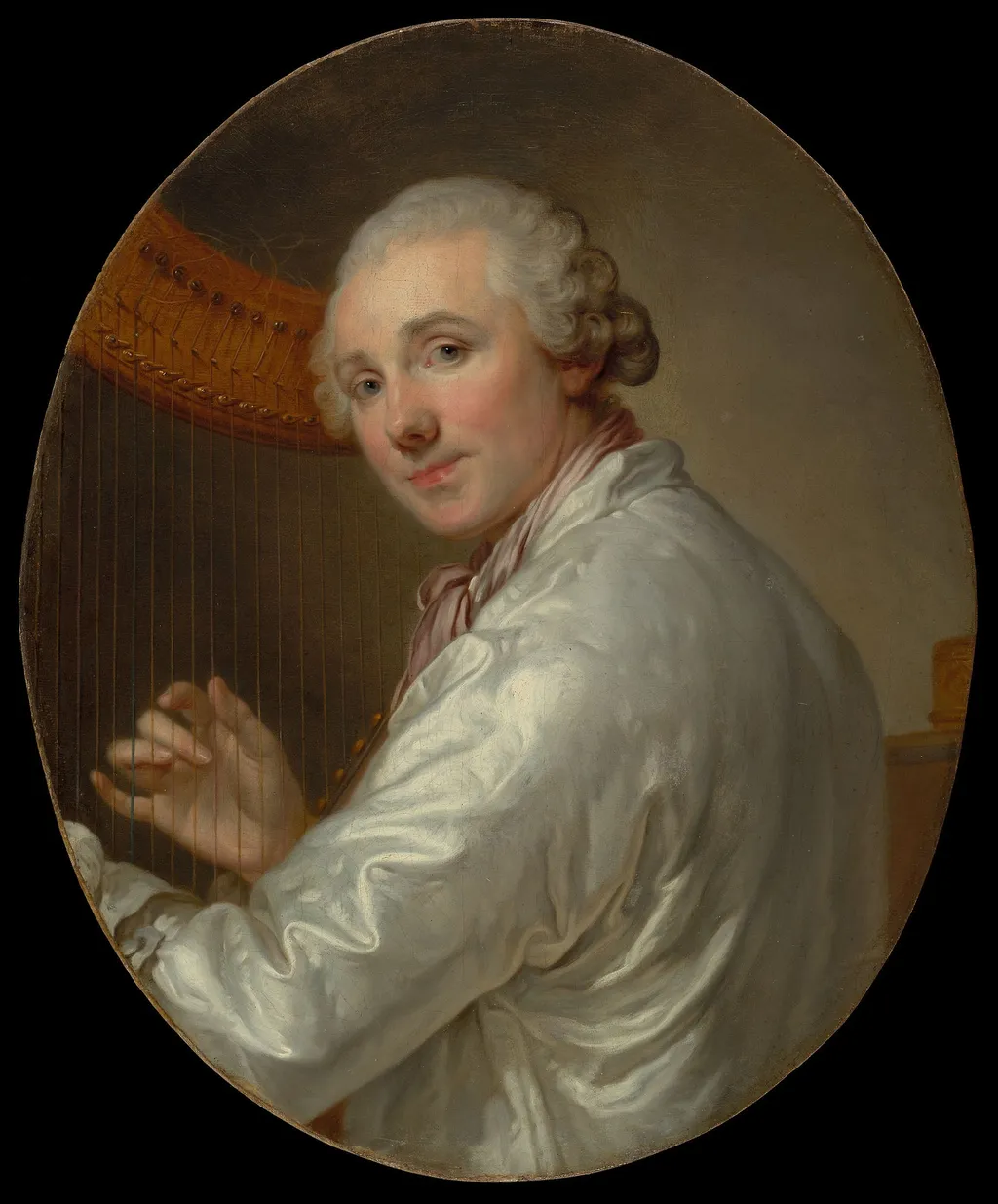
Ange Laurent de Lalive de Jully is an oil painting by the Rococo painting artist Unknown. It dates from 1764 and is held in the collection of the Art Institute of Chicago.
About this work
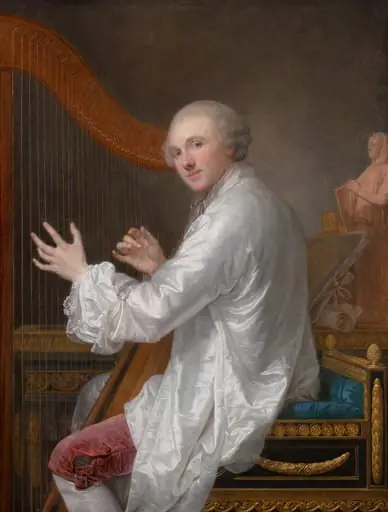
This painting depicts a man with white hair, wearing a white shirt and pink scarf, holding a harp.
This painting depicts a man with white hair, wearing a white shirt and pink scarf, holding a harp. The harp is positioned behind him, and his hands are placed on the strings. The background of the painting is a warm, brown color.
The man's attire and the harp suggest that he is a musician. The painting's style and the subject's clothing indicate that it was created in the 18th century.
If you're interested in learning more about the artist who created this portrait, you can explore the work of Joseph Ducreux, a French painter known for his portraits and pastel drawings.
Overview
The oil painting titled *Ange Laurent de Lalive de Jully* portrays an elderly gentleman with white hair, dressed in a white shirt and a pink scarf. He is shown holding a harp, his hands resting on its strings, against a warm brown backdrop. The composition focuses on the figure and instrument, emphasizing his role as a musician.
Subject & Meaning
The sitter, identified as Ange Laurent de Lalive de Jully, is presented in the attire of a cultured amateur musician, a pastime popular among the French aristocracy of the eighteenth century. The harp, positioned behind him, underscores his musical proficiency and suggests a cultivated, genteel identity associated with courtly leisure.
Technique & Style
Executed in oil on canvas, the work employs a restrained palette of whites, pinks, and earthy browns, characteristic of late‑Baroque portraiture transitioning toward Rococo elegance. The brushwork is smooth, rendering the fabrics and hair with subtle modeling, while the background remains flat, directing attention to the sitter’s expression and the harp’s delicate details.
History & Provenance
The portrait dates to the eighteenth century, a period when French portraiture often celebrated the intellectual and artistic pursuits of the nobility. While the artist is not definitively recorded, stylistic parallels have been noted with the oeuvre of Joseph Ducreux, a contemporary known for refined portraiture and pastel work.
Context
During the Enlightenment, music was regarded as a moral and intellectual exercise, and portraits of musicians served to display both personal refinement and social status. The inclusion of a harp—a symbol of harmony and aristocratic taste—reflects the cultural values of the French elite in the years preceding the Revolution.
Artist & collection

 Domestic Scene
 Giacomo and Cardinal Marco, investing Andrea, Abbot of San Zeno, with his Benefice
 The Nymph of Fontainebleau
 Portrait of a Woman
 Madonna and Child with Saints in the Enclosed Garden
 Venus and Minerva
 Family Group of Four on Sofa
 Wall painting from Room H of the Villa of P. Fannius Synistor at Boscoreale
 Jean Jacques Caffieri (1725–1792)
 Portrait of a Man
 Portrait of Théophile Van Robais
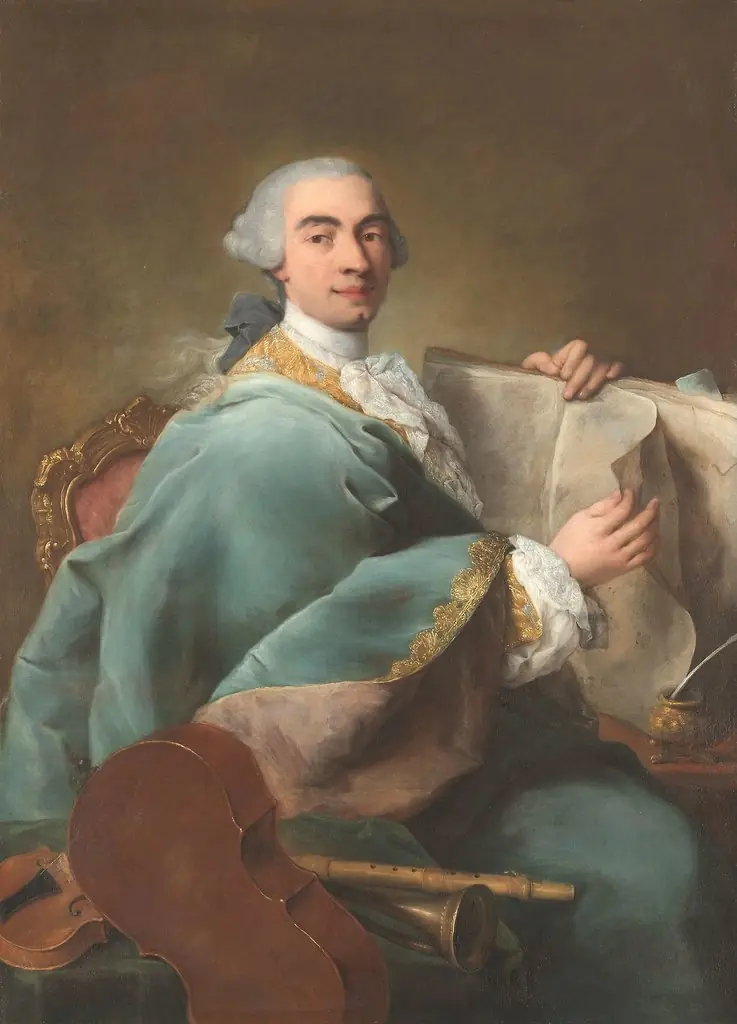 Portrait of a Musician
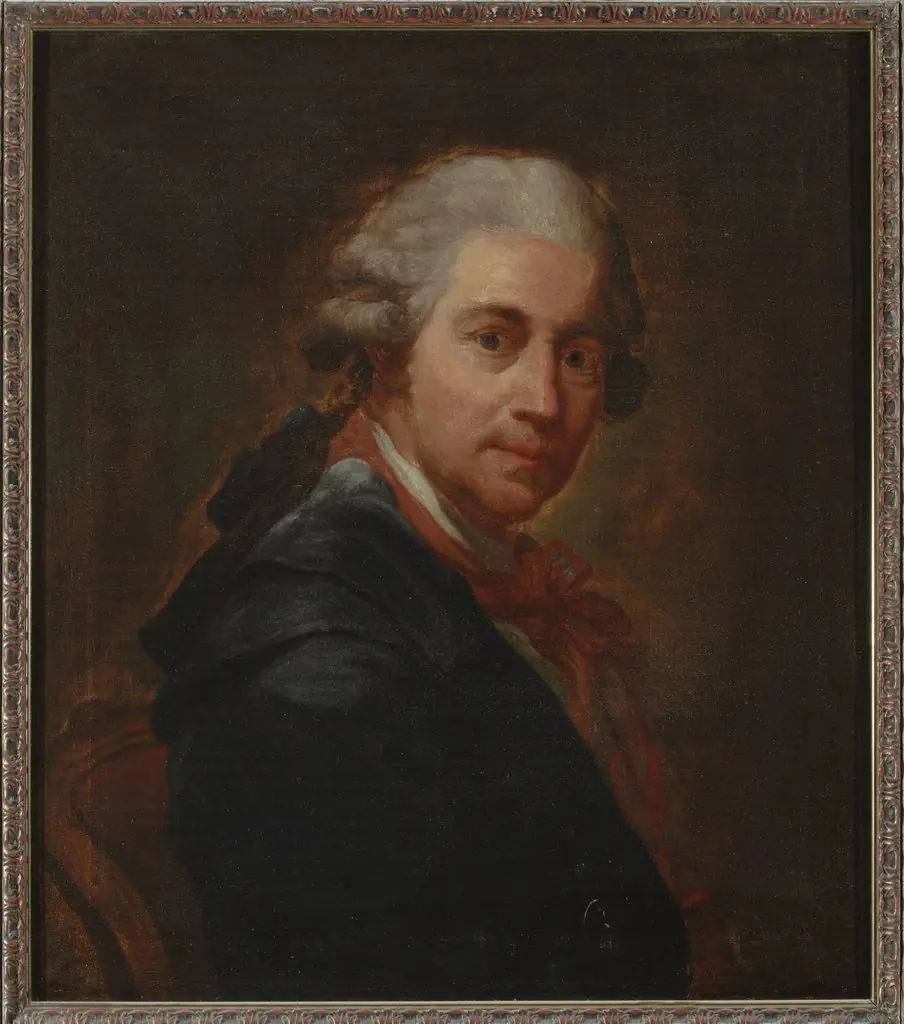 Self-portrait of Bacciarelli in a redingote
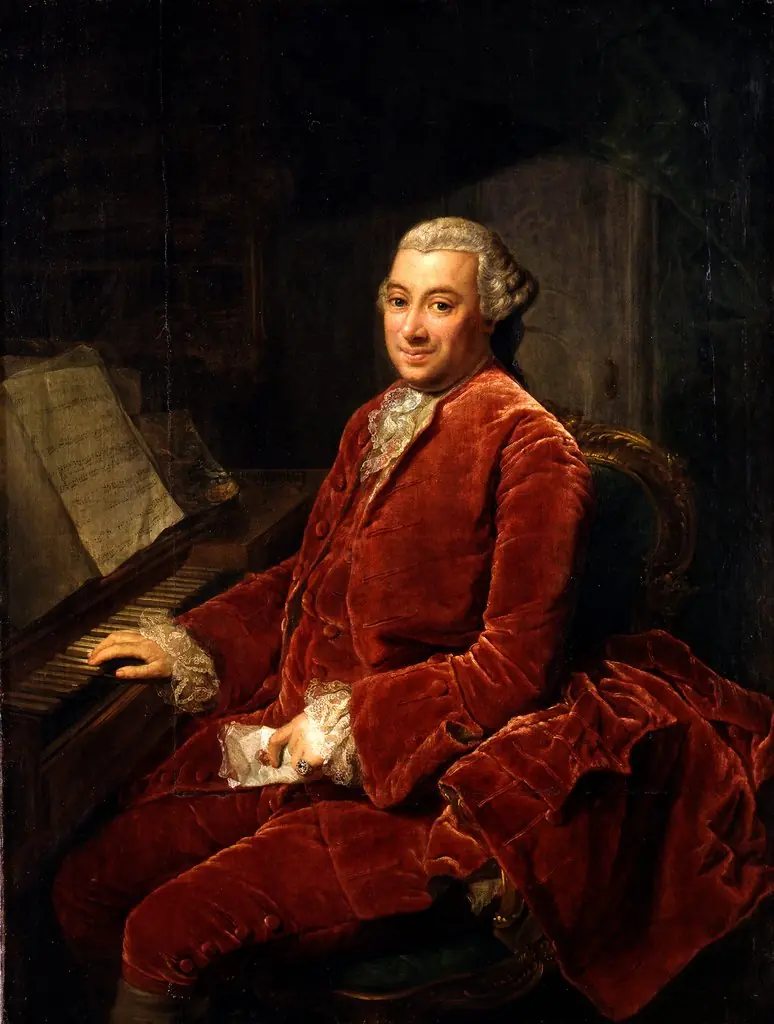 Chamber Councilor Joachim Ulrich Giese
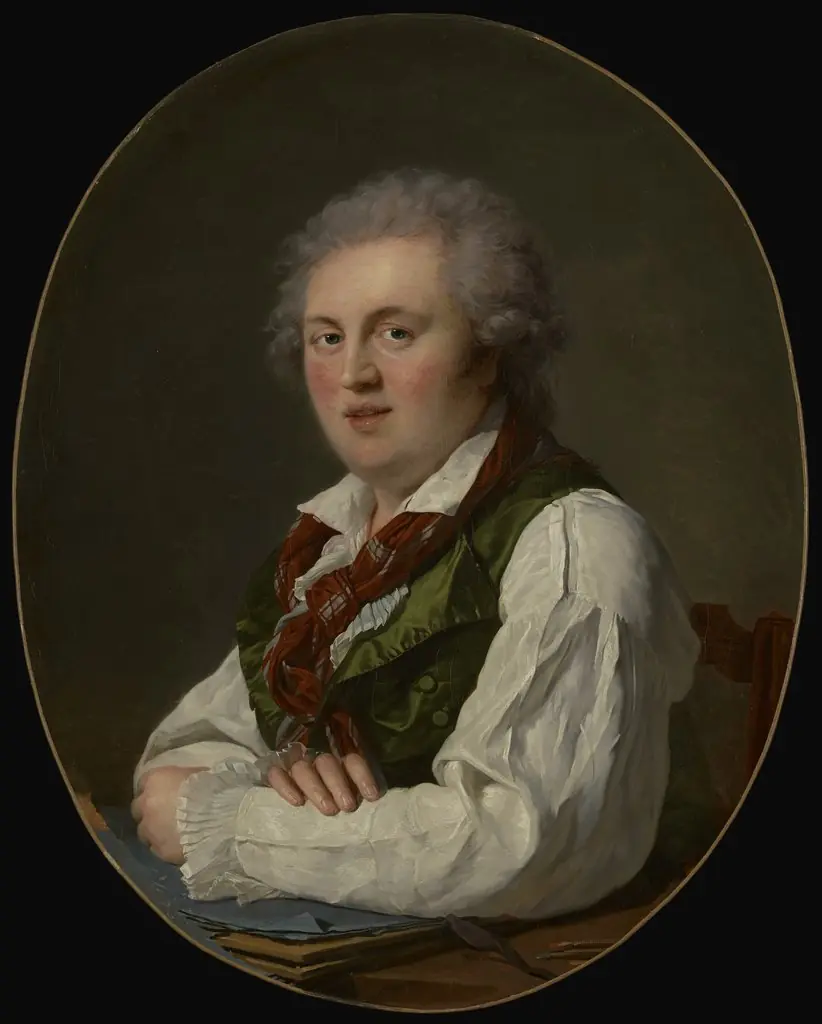 Portrait of Laurent-Nicolas de Joubert
 Self-Portrait
 Seated Man Holding a Snuff Box
 Portrait of Actor as Apollo
 Jean Marc Nattier (1685–1766)
 Ange Laurent de La Live de Jully