Artwork
Episode from the Crimean Wars – Scene in prison
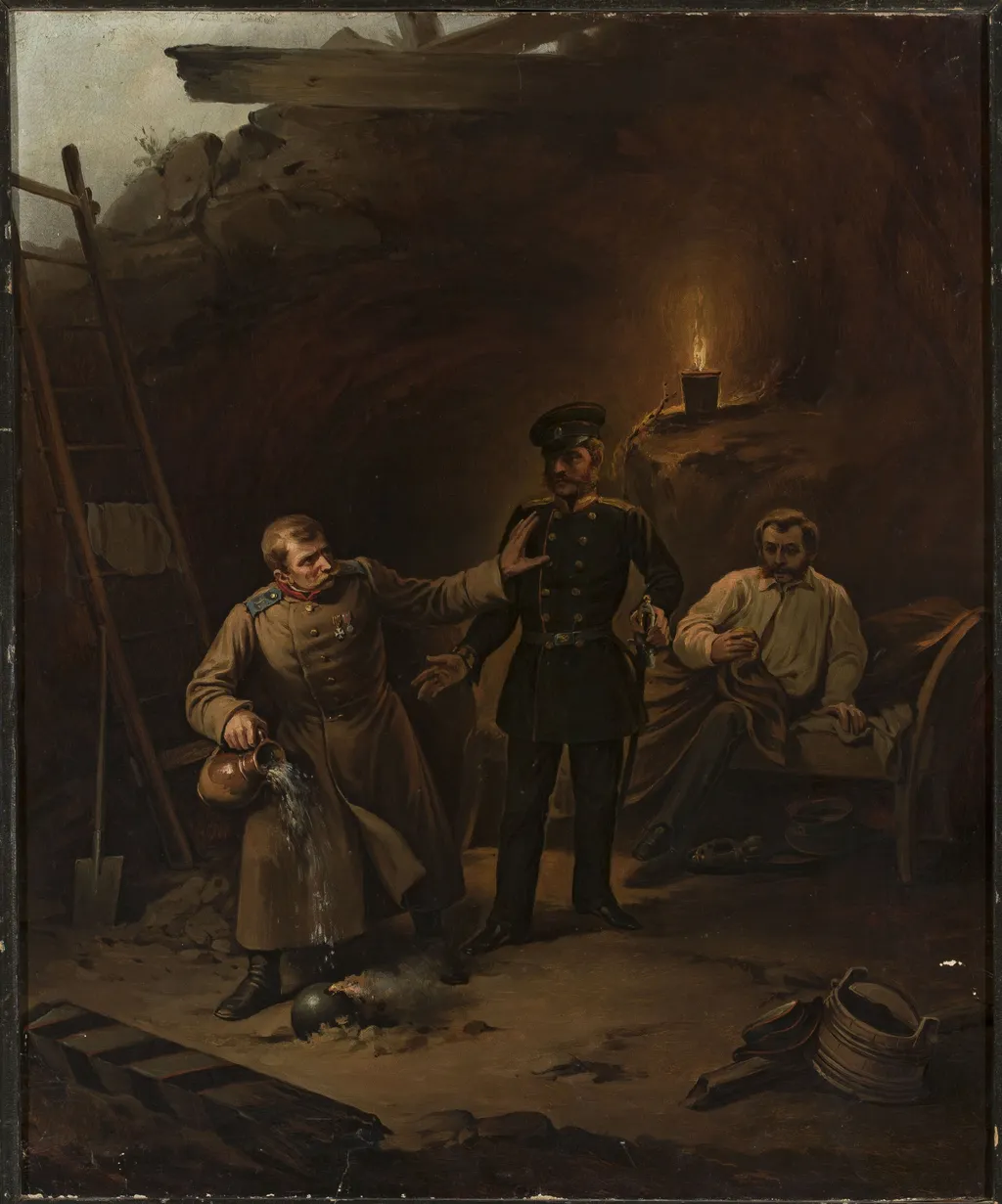
Episode from the Crimean Wars – Scene in prison is an oil painting by the Realist artist Unknown. It dates from 1855 and is held in the collection of the National Museum in Warsaw. This oil painting captures a quiet yet charged moment inside a prison during the Crimean War.
About this work
Overview
The dim, shadowed interior is pierced by a faint light from the upper left, isolating the group in a sphere of tension.
This oil painting captures a quiet yet charged moment inside a prison during the Crimean War. Three figures occupy the foreground: one pours water, another holds a bottle and gestures toward a seated man. The dim, shadowed interior is pierced by a faint light from the upper left, isolating the group in a sphere of tension. The brushwork is deliberate, with textured surfaces enhancing the rawness of the setting.
Subject & Meaning
The scene suggests an intimate exchange among prisoners, possibly soldiers or detainees, amid the war’s aftermath. The gestures and posture imply unspoken conflict or shared distress, with no clear narrative resolution. The absence of guards or external context focuses attention on human interaction under duress, evoking themes of confinement, solidarity, or moral ambiguity.
Technique & Style
The artist employs chiaroscuro to model forms and deepen spatial depth, contrasting the dim walls with the weak light source. Visible brushstrokes lend urgency to the surface, avoiding idealization. The palette is muted—earths and grays—reinforcing the somber tone. Texture in fabric and stone grounds the scene in physical reality, resisting romanticism.
History & Provenance
Created during or shortly after the Crimean War, the work reflects contemporary interest in the war’s human toll beyond battlefields. Its early ownership is undocumented, but it likely circulated among patrons concerned with military and social realism. No major exhibitions or public records confirm its early reception, suggesting limited circulation.
Context
The painting emerges from a period when European artists increasingly turned to contemporary conflict and institutional life as subjects. While official war art often glorified heroism, this work aligns with emerging realism, focusing on the psychological weight of captivity. It echoes broader 19th-century shifts toward depicting ordinary suffering over grand narratives.
Legacy
Though not widely reproduced or studied, the painting contributes to a lesser-known strand of 19th-century war-related art that prioritized interiority over spectacle. Its quiet intensity influenced later realist depictions of incarceration and military detention, serving as a quiet counterpoint to more dramatic wartime imagery.
Artist & collection

 Domestic Scene
 Giacomo and Cardinal Marco, investing Andrea, Abbot of San Zeno, with his Benefice
 The Nymph of Fontainebleau
 Portrait of a Woman
 Madonna and Child with Saints in the Enclosed Garden
 Venus and Minerva
 Family Group of Four on Sofa
 Wall painting from Room H of the Villa of P. Fannius Synistor at Boscoreale
 On the way to exile (Convicts on the way to Siberia)
 Υδατογραφία Βούλγαρων στρατιωτών, αιχμάλωτων του ελληνικού στρατού στην Κρέσνα
 The Case of Sergeant Delaney
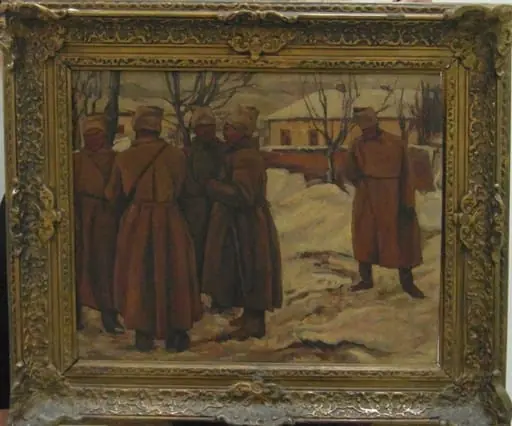 Soldați în 1918
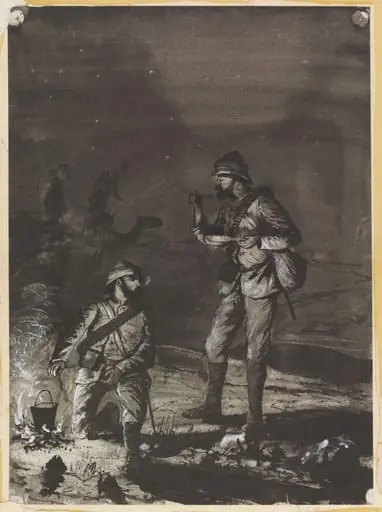 With the Desert Column, 1885 Supper time.
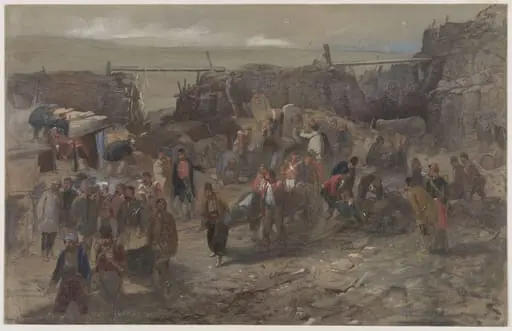 Interior of the Redan Battery after the Fall of Sebastopol, 1855
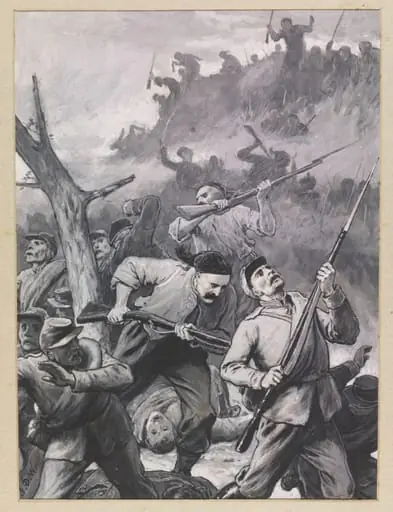 With the Turks at Shipka - Allah! Allah! A Turkish charge after an unsuccessful assault by the Russians
 Marche d'un groupe de prisonniers allemands
 Ostași din armata rusă
 The Flag of Truce