Artwork
The Good Samaritan
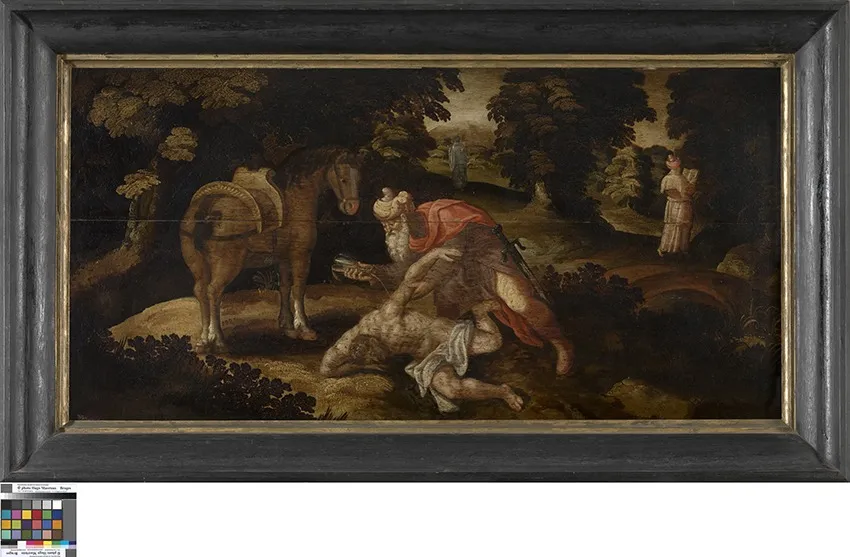
The Good Samaritan is an unspecified painting by the Mannerist artist Unknown. It dates from 1591 and is held in the collection of the Groeningemuseum. The canvas depicts a compassionate encounter set within a serene woodland.
About this work
Overview
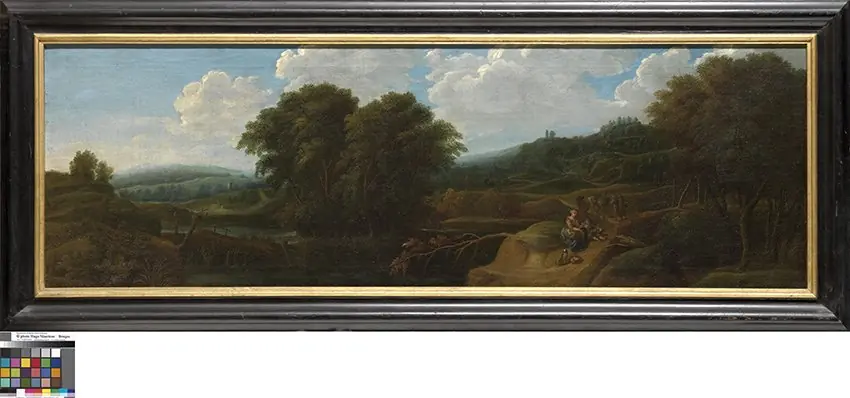
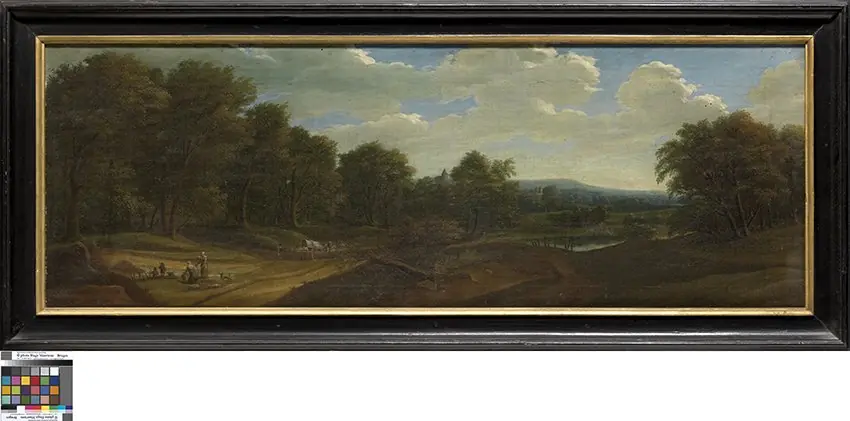
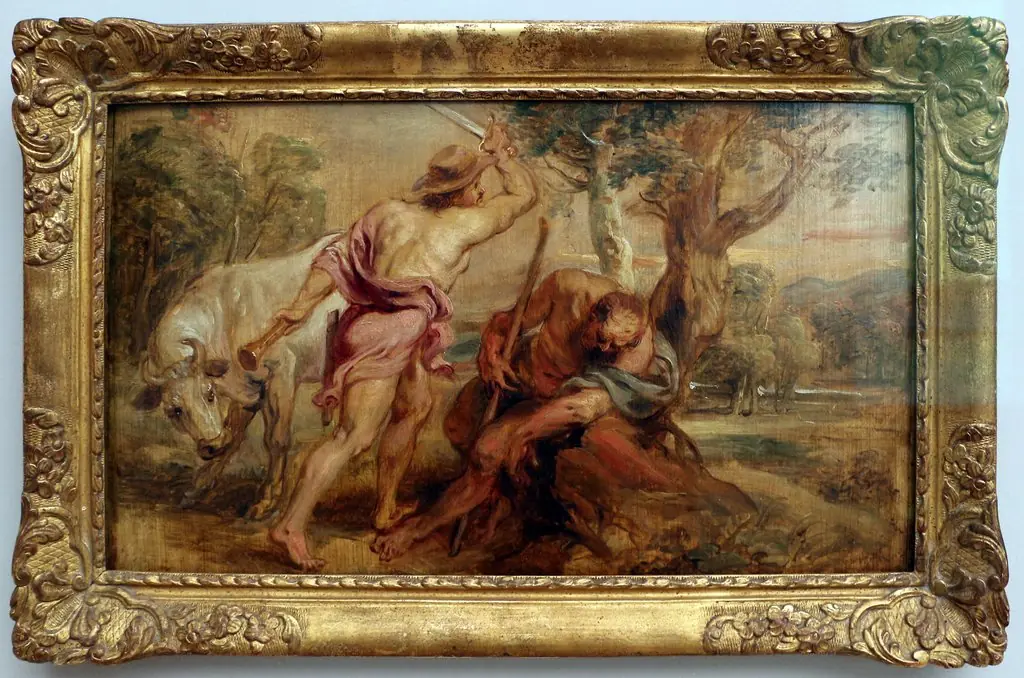
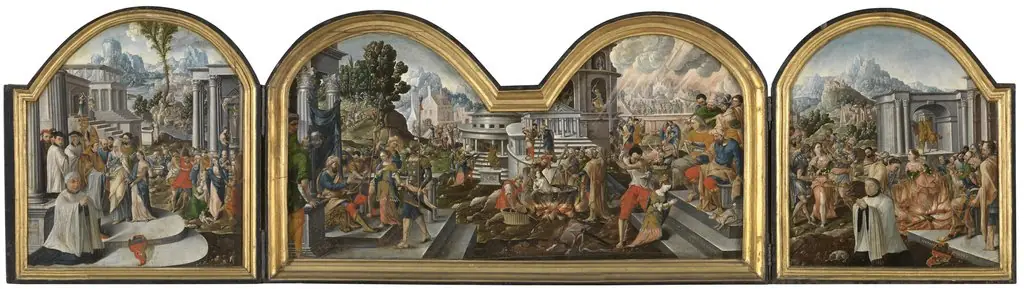
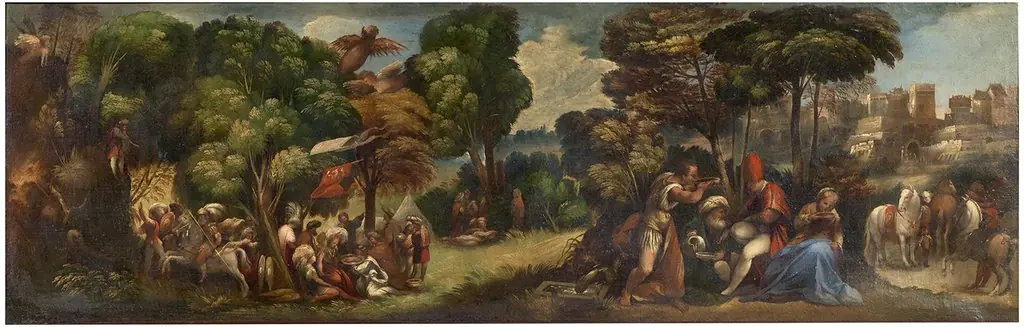
The canvas depicts a compassionate encounter set within a serene woodland. A figure kneels beside a fallen, badly dressed traveler, applying a cloth to his wound, while a saddled horse stands ready nearby. In the distance, a woman walks away along a winding path, underscoring the isolation of the scene.
Subject & Meaning
The composition visualizes the biblical parable of the Good Samaritan, illustrating the moment when the Samaritan offers aid to the injured stranger, contrasting with the earlier indifference of a passing woman. The work emphasizes themes of mercy, responsibility, and the unexpected source of kindness.
Technique & Style
Rendered in a calm, naturalistic palette, the painting balances detailed figuration with a softened landscape. The artist employs careful modeling of light on the cloth and the horse’s tack, while the background foliage is suggested with looser brushwork, creating depth without distracting from the central act of assistance.
History & Provenance
Created as a religious illustration, the piece has circulated among ecclesiastical collections, though specific dates and ownership records remain limited. Its provenance traces through several private devotional holdings before entering a public museum context.
Context
The work reflects the enduring influence of biblical narratives in Western art, particularly during periods when moral instruction was conveyed through visual means. Its setting in a quiet, wooded path aligns with the tradition of situating biblical events in familiar, pastoral environments to enhance relatability.
Artist & collection

 Domestic Scene
 Giacomo and Cardinal Marco, investing Andrea, Abbot of San Zeno, with his Benefice
 The Nymph of Fontainebleau
 Portrait of a Woman
 Madonna and Child with Saints in the Enclosed Garden
 Venus and Minerva
 Family Group of Four on Sofa
 Wall painting from Room H of the Villa of P. Fannius Synistor at Boscoreale