Artwork
The Story of Saint Margaret
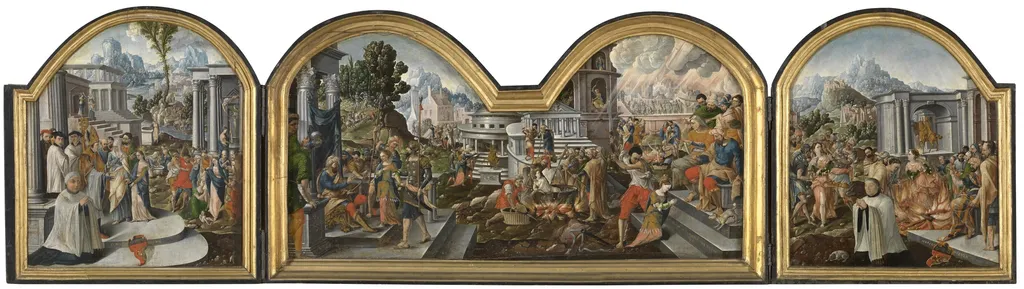
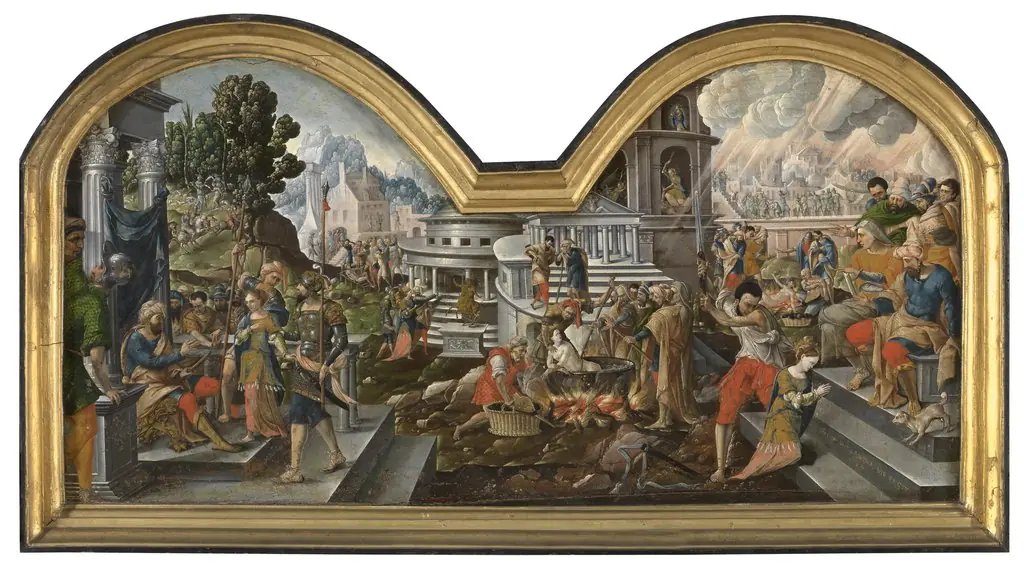
The Story of Saint Margaret is an oil painting by Unknown. It dates from 1544 and is held in the collection of the Royal Museum of Fine Arts Antwerp. This oil painting is a triptych composed of three distinct panels, each contributing to a unified narrative.
About this work
Overview
This oil painting is a triptych composed of three distinct panels, each contributing to a unified narrative.
This oil painting is a triptych composed of three distinct panels, each contributing to a unified narrative. The work employs a restrained palette of browns, grays, and blues, creating a somber, contemplative tone. Despite the muted colors, the precision of brushwork and attention to costume and architecture indicate a high degree of technical refinement, typical of late medieval or early Renaissance devotional art.
Subject & Meaning
The triptych illustrates episodes from the life of Saint Margaret, a Christian martyr. The central panel likely depicts her confrontation with a dragon, a key moment in her legend, with figures surrounding her as witnesses. The left and right panels may show her trial or veneration, framing the central miracle. The inclusion of a columned building and tree suggests a sacred or civic setting, reinforcing the spiritual gravity of the scene.
Technique & Style
The artist applied oil paint with careful layering, achieving subtle transitions in tone and texture. Figures are rendered with attention to drapery and posture, while architectural elements are defined with linear clarity. The muted color scheme avoids dramatic contrast, favoring quiet harmony. The level of detail in clothing and background suggests a workshop trained in Northern European traditions of devotional panel painting.
History & Provenance
The painting’s origins are likely in a religious context, possibly commissioned for a private chapel or convent. Its triptych format was common in devotional settings during the 14th to 16th centuries. While specific early ownership records are unverified, its construction and style align with regional workshops in the Low Countries or southern Germany, where such narratives were frequently produced for contemplative use.
Context
During the late Middle Ages, saints’ lives were commonly depicted in multi-panel formats to guide prayer and instruction. Saint Margaret, revered for her endurance against persecution, was a popular subject among female religious communities. The triptych’s structure allowed for sequential viewing, reinforcing the narrative through physical movement—opening the panels mirrored the unfolding of her story in liturgical memory.
Legacy
The painting reflects a tradition of narrative devotion that persisted into the early Renaissance, before the rise of single-panel altarpieces. Its restrained aesthetic and structured composition influenced later regional works that prioritized spiritual solemnity over theatricality. Though not widely known today, it remains an example of how religious stories were visually encoded for private and communal meditation.
Artist & collection

 Domestic Scene
 Giacomo and Cardinal Marco, investing Andrea, Abbot of San Zeno, with his Benefice
 The Nymph of Fontainebleau
 Portrait of a Woman
 Madonna and Child with Saints in the Enclosed Garden
 Venus and Minerva
 Family Group of Four on Sofa
 Wall painting from Room H of the Villa of P. Fannius Synistor at Boscoreale
 Triptych with the adoration of the magi
 The Calling of James and John
 Lot and His Daughters
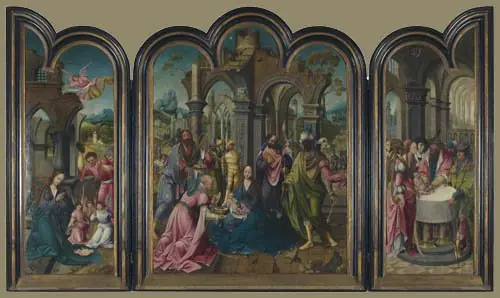 Triptych with adoration by the Magi
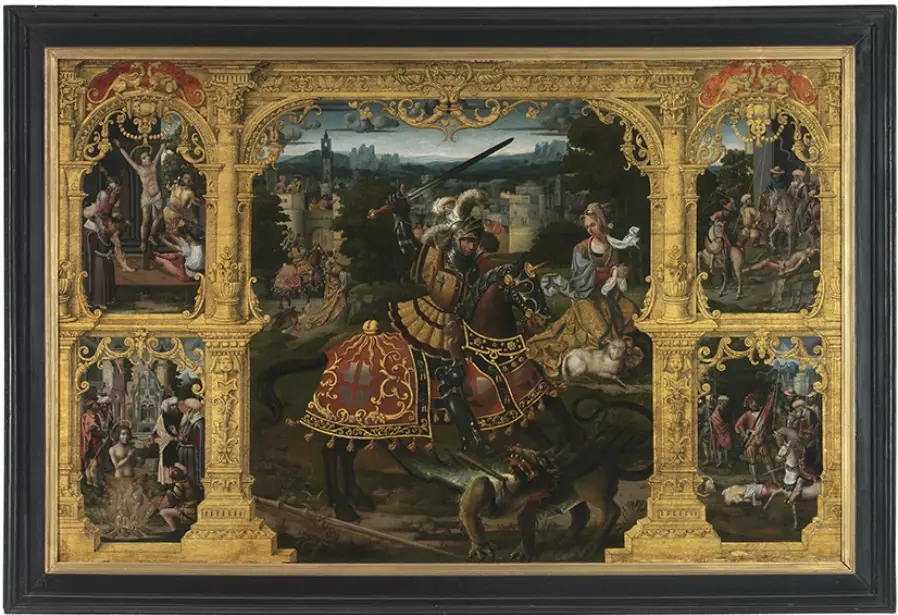 Legend of Saint George
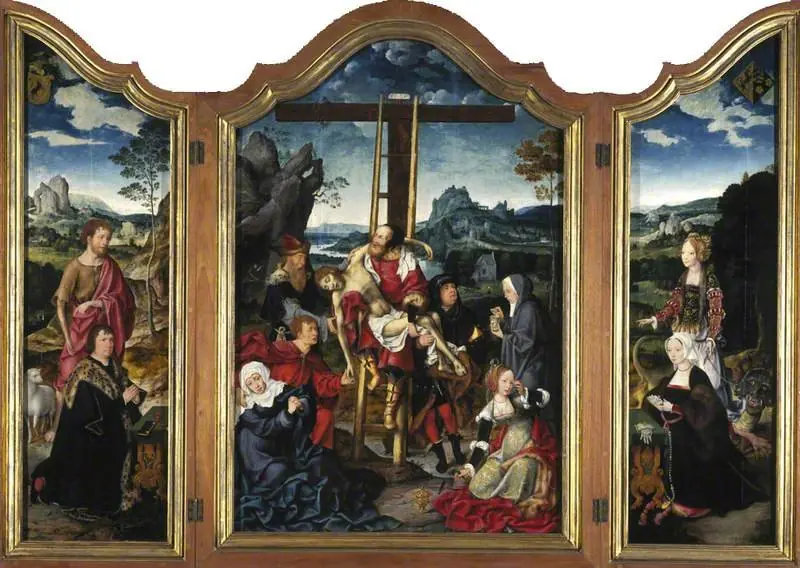 Triptych. Centre: the Deposition from the Cross; Left wing: St John the Baptist with a Donor; Right wing: St Margaret of Antioch with a Donatrix
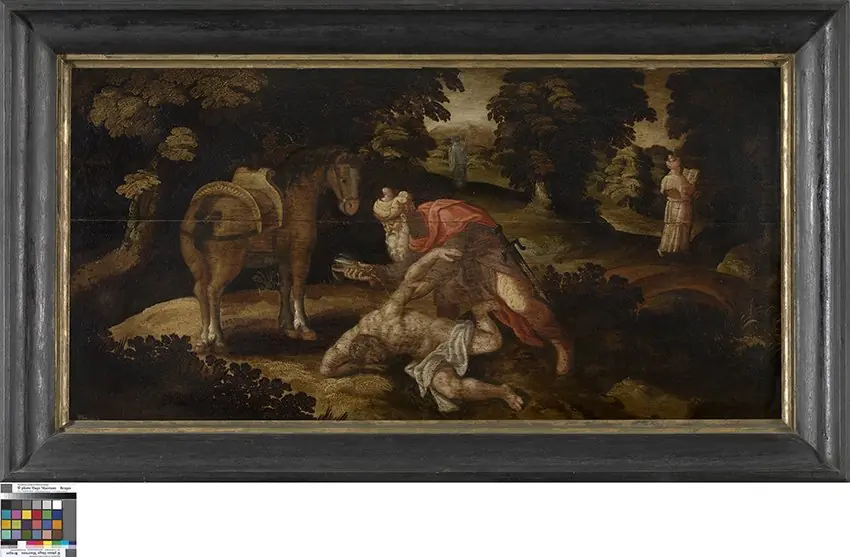 The Good Samaritan
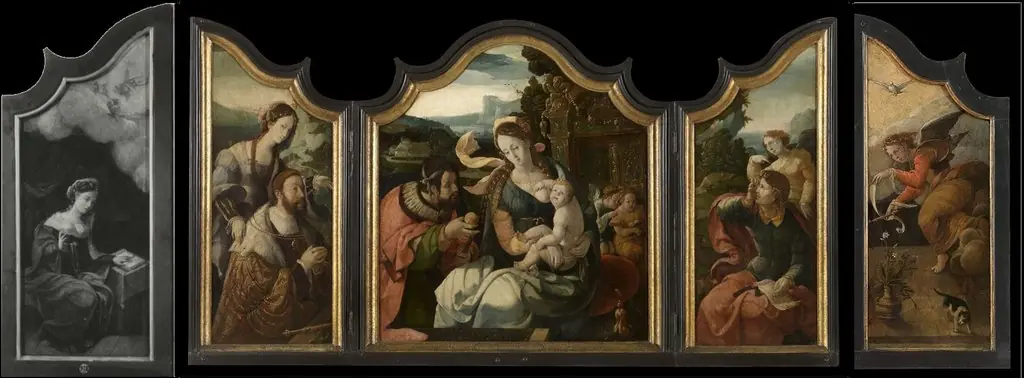 Triptych of Count Henry III of Nassau
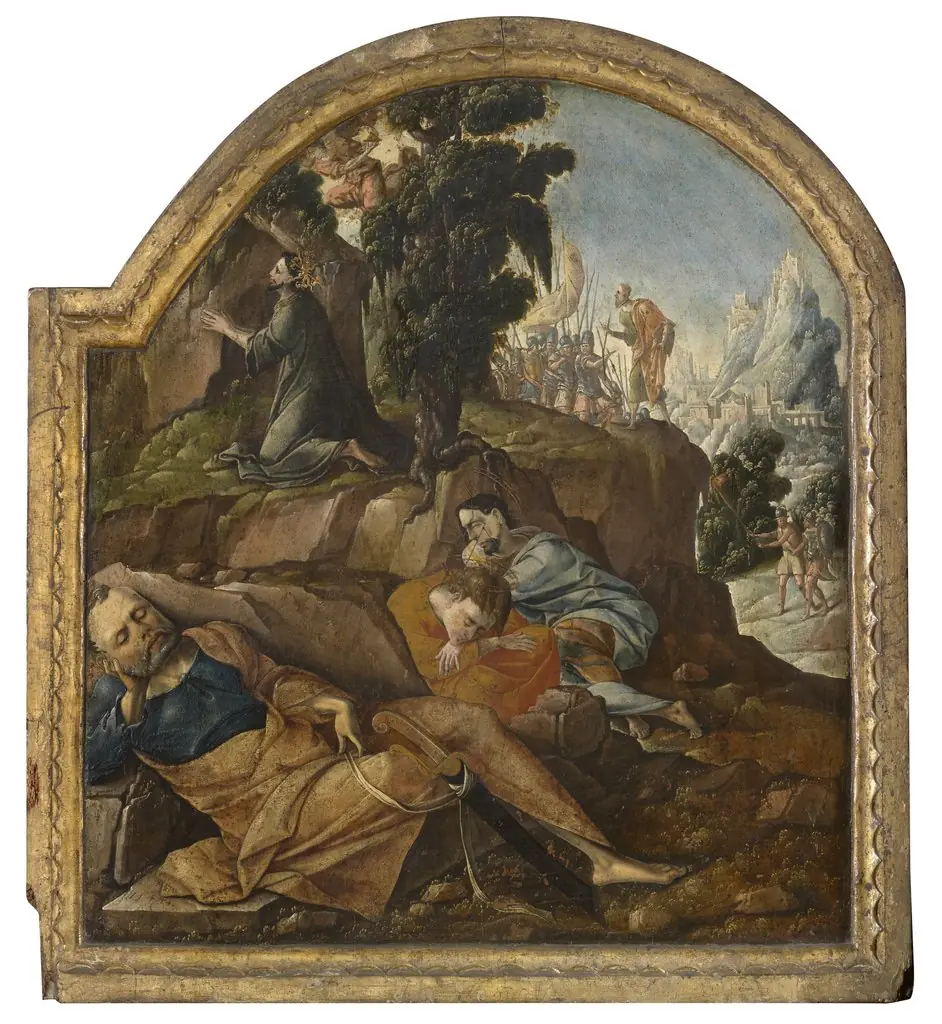 Christ at the Garden of Gethsemane at the Mount of Olives
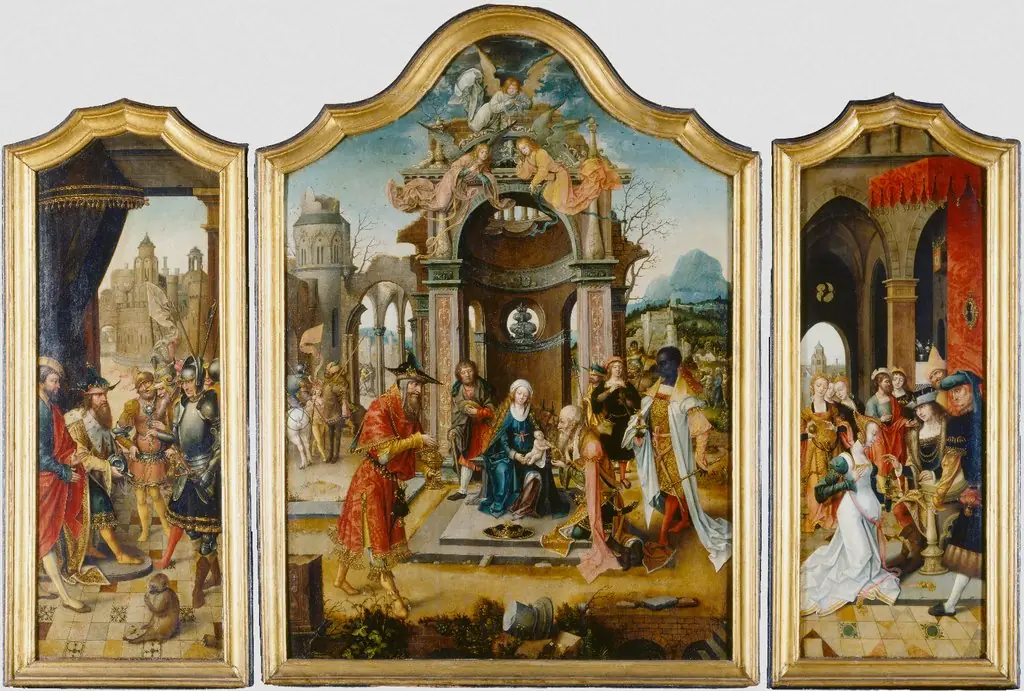 Triptych of the Adoration of the Magi
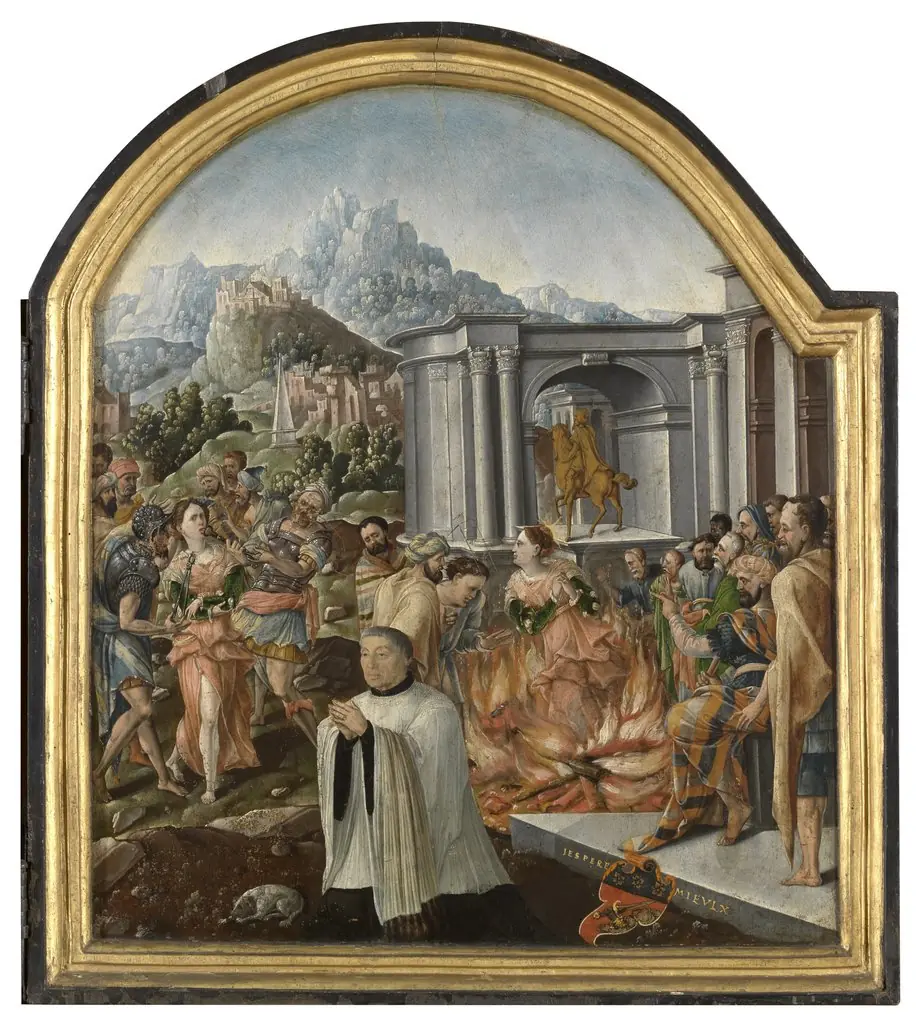 The Life of Saint Apollonia
 The Life of Saint Margaret of Antioch