Artwork
Orpheus
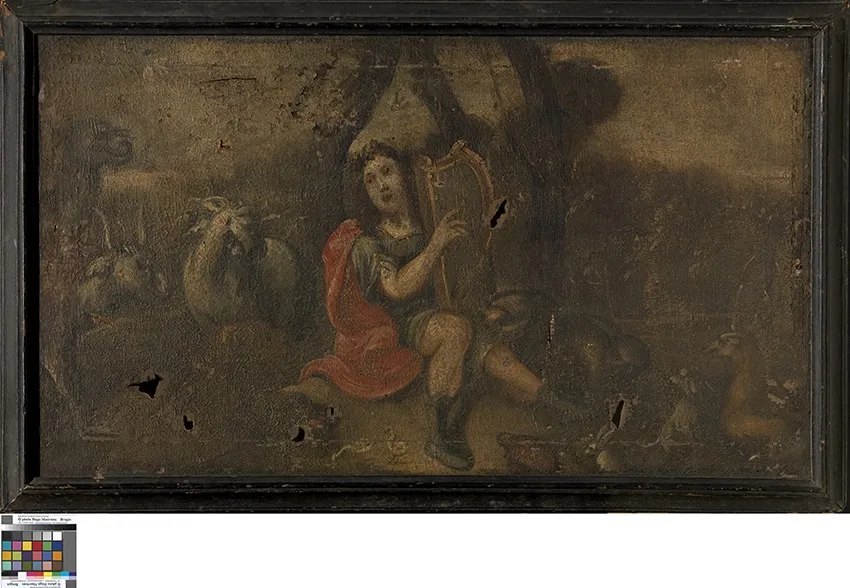
Orpheus is an oil painting by the Early Baroque Italian artist Unknown. It dates from 1601 and is held in the collection of the Groeningemuseum.
About this work
Overview
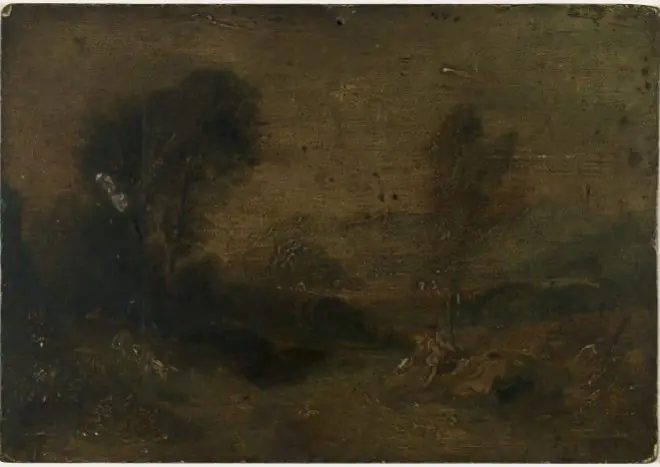
This oil painting portrays Orpheus, the mythological musician, seated with crossed legs as he plays a harp.
This oil painting portrays Orpheus, the mythological musician, seated with crossed legs as he plays a harp. The figure, clad in red and with flowing hair, is encircled by a group of animals, all still and attentive. The background is subdued, rendered in muted browns and grays, enhancing the quiet focus of the scene. The composition avoids dramatic movement, instead emphasizing stillness and harmony.
Subject & Meaning
Orpheus, known in Greek myth for his ability to charm living and dead with his music, is depicted here not in a moment of grand narrative, but in a contemplative pause. The animals gathered around him—likely lions, serpents, and birds—symbolize the power of music to transcend species and instill peace. The scene reflects a classical ideal: art as a force that calms wild nature.
Technique & Style
The artist employs soft transitions between light and shadow, with the figure subtly illuminated against a dark, neutral ground. Brushwork is restrained, favoring smooth surfaces over texture, reinforcing the calm mood. The red garment draws the eye without competing for dominance, while the animals are rendered with gentle precision, their forms blending into the ambient tones of the setting.
History & Provenance
The painting’s origin is not documented in public records, and no known exhibition history or collector lineage has been established. It appears to be a 19th-century interpretation of classical myth, consistent with academic traditions of the period that favored mythological subjects rendered in quiet, introspective tones.
Context
During the 1800s, European artists frequently revisited classical myths as vehicles for expressing ideals of harmony, reason, and emotional restraint. Orpheus, as a symbol of art’s civilizing power, was a popular figure in this context. This painting aligns with a broader trend away from theatricality toward introspective, contemplative depictions of mythological figures.
Legacy
Though not widely exhibited or reproduced, the work contributes to a quieter strand of mythological painting that prioritizes atmosphere over narrative drama. Its enduring quietude reflects a persistent cultural fascination with the idea that art can create stillness—not just in listeners, but in the natural world itself.
Artist & collection

 Domestic Scene
 Giacomo and Cardinal Marco, investing Andrea, Abbot of San Zeno, with his Benefice
 The Nymph of Fontainebleau
 Portrait of a Woman
 Madonna and Child with Saints in the Enclosed Garden
 Venus and Minerva
 Family Group of Four on Sofa
 Wall painting from Room H of the Villa of P. Fannius Synistor at Boscoreale