Artwork
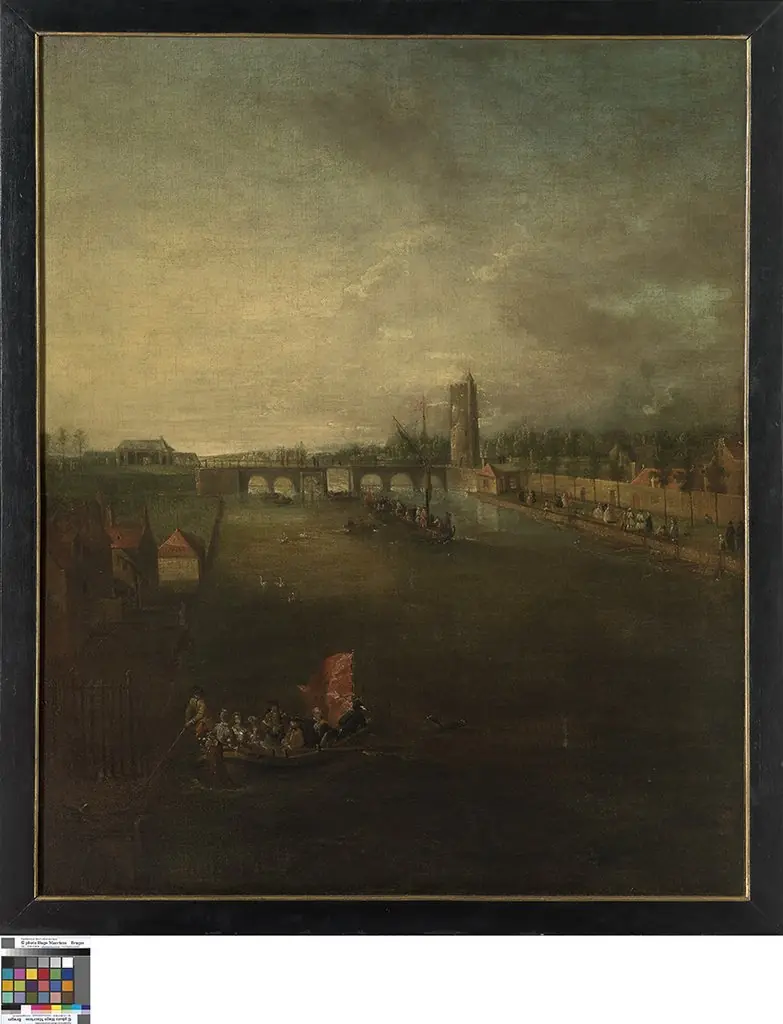
Minnebrug met de Poertoren in Brugge
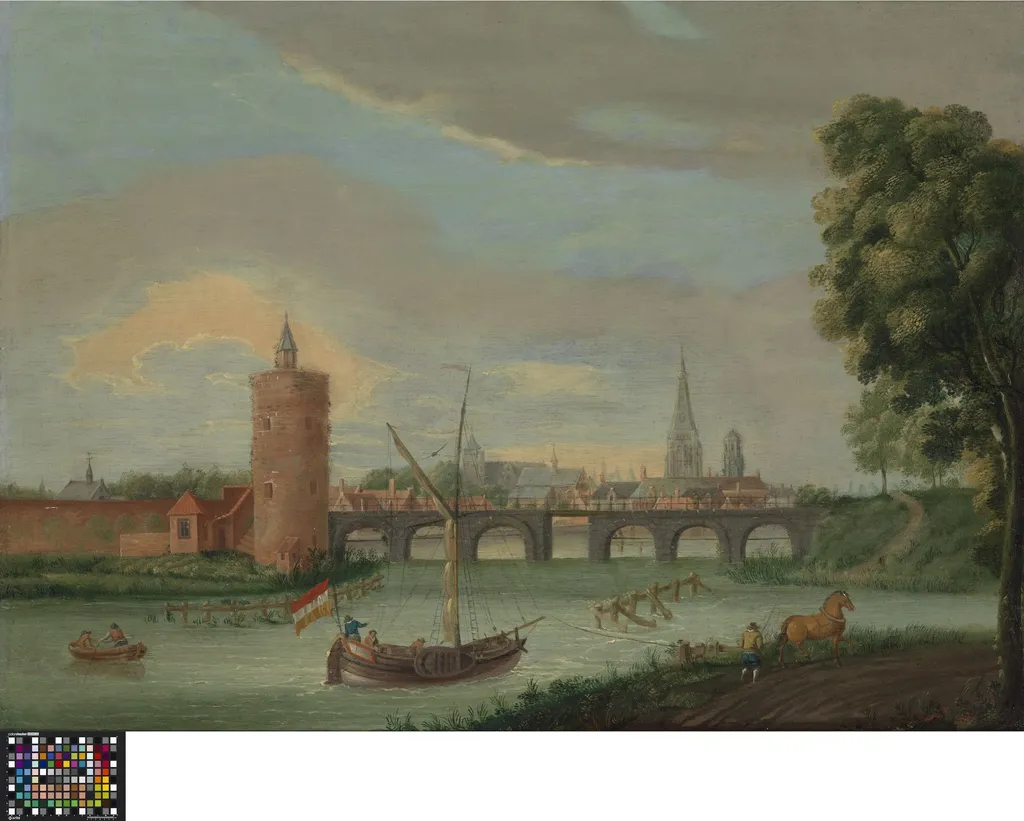
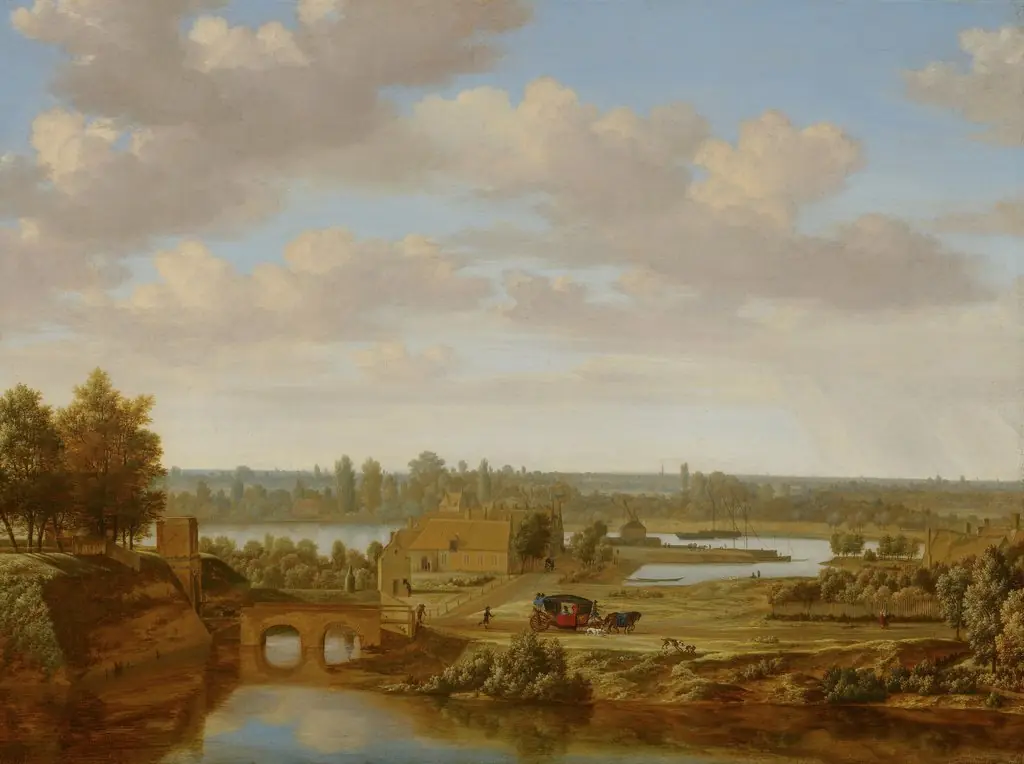
Minnebrug met de Poertoren in Brugge is an unspecified painting by Unknown. It dates from 1800 and is held in the collection of the Groeningemuseum. This painting captures a quiet moment along the river in Bruges, centered on the Minnebrug bridge and the adjacent Poertoren tower.
About this work
Overview
This painting captures a quiet moment along the river in Bruges, centered on the Minnebrug bridge and the adjacent Poertoren tower.
This painting captures a quiet moment along the river in Bruges, centered on the Minnebrug bridge and the adjacent Poertoren tower. The composition balances architectural elements with natural features, creating a calm, observational tone. A moored boat in the foreground and a distant vessel suggest daily river activity, while figures on the bank introduce subtle human presence without disrupting the scene’s stillness.
Subject & Meaning
The scene portrays a recognizable landmark of Bruges, emphasizing its urban-rural interface. The bridge and tower, functional structures of civic life, are rendered without grandeur, suggesting an everyday view rather than a ceremonial one. The presence of a man and horse implies routine labor or transit, grounding the image in the rhythms of medieval urban existence.
Technique & Style
The artist employs soft, muted tones and delicate brushwork to convey atmospheric depth. Layers of translucent pigment build the sky and water, while precise lines define architectural forms. The placement of figures and boats creates spatial rhythm, guiding the eye from foreground to distant horizon without dramatic contrast or heightened emotion.
History & Provenance
The painting has been held by the Groeningemuseum in Bruges since at least the 19th century, likely acquired as part of a regional collection preserving Flemish topographical views. Its origins trace to the late medieval or early Renaissance period, though the exact artist remains unidentified. It was likely painted for local patrons interested in documenting their city’s landscape.
Context
During the 15th century, Bruges was a thriving commercial center, and its waterways were vital to trade and transport. Paintings like this reflect a growing interest in depicting real places with accuracy, separate from religious or allegorical themes. Such works served both as records and as expressions of civic pride among the urban elite.
Legacy
This painting contributes to a body of early Flemish topographical art that prioritized observation over idealization. Though not widely known outside regional collections, it represents an important step toward landscape as a subject in its own right, influencing later generations who sought to capture the physical world with quiet fidelity.
Artist & collection

 Domestic Scene
 Giacomo and Cardinal Marco, investing Andrea, Abbot of San Zeno, with his Benefice
 The Nymph of Fontainebleau
 Portrait of a Woman
 Madonna and Child with Saints in the Enclosed Garden
 Venus and Minerva
 Family Group of Four on Sofa
 Wall painting from Room H of the Villa of P. Fannius Synistor at Boscoreale
 River Landscape with a Church in the Distance
 Schloß Temsch an der Schelde
 Dutch Landscape
 Het Minnewater in Brugge
 Imaginary View of Arnhem
 A View of Haarlem
 Mountain landscape with a bridge
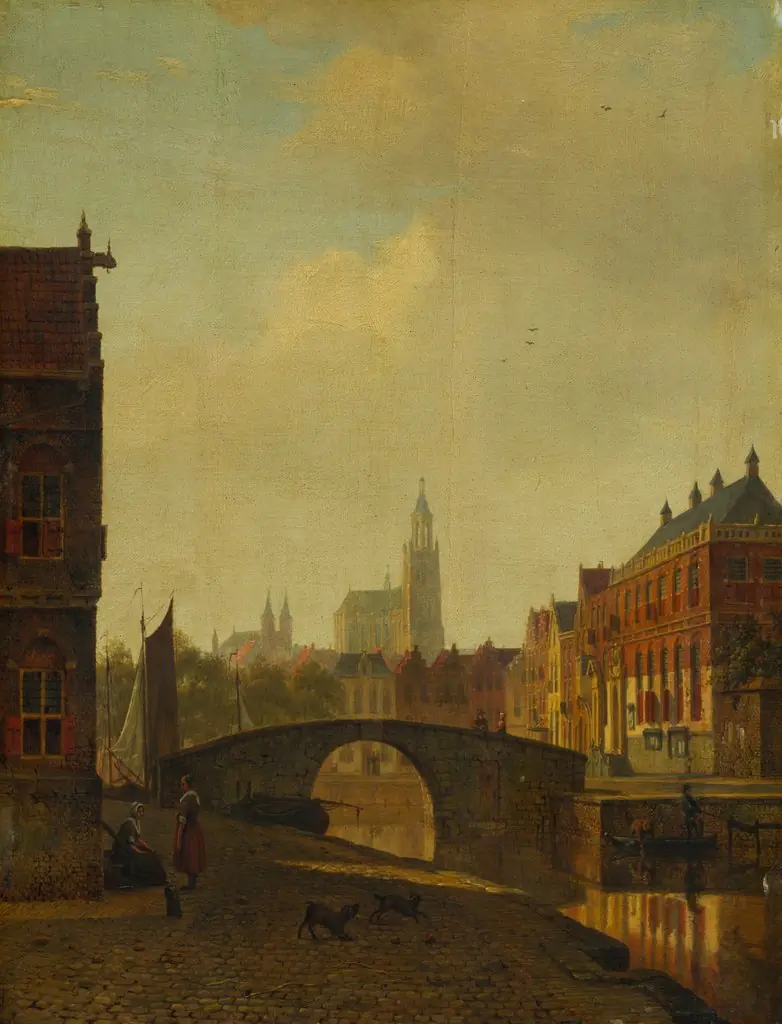 Imaginary View of Arnhem
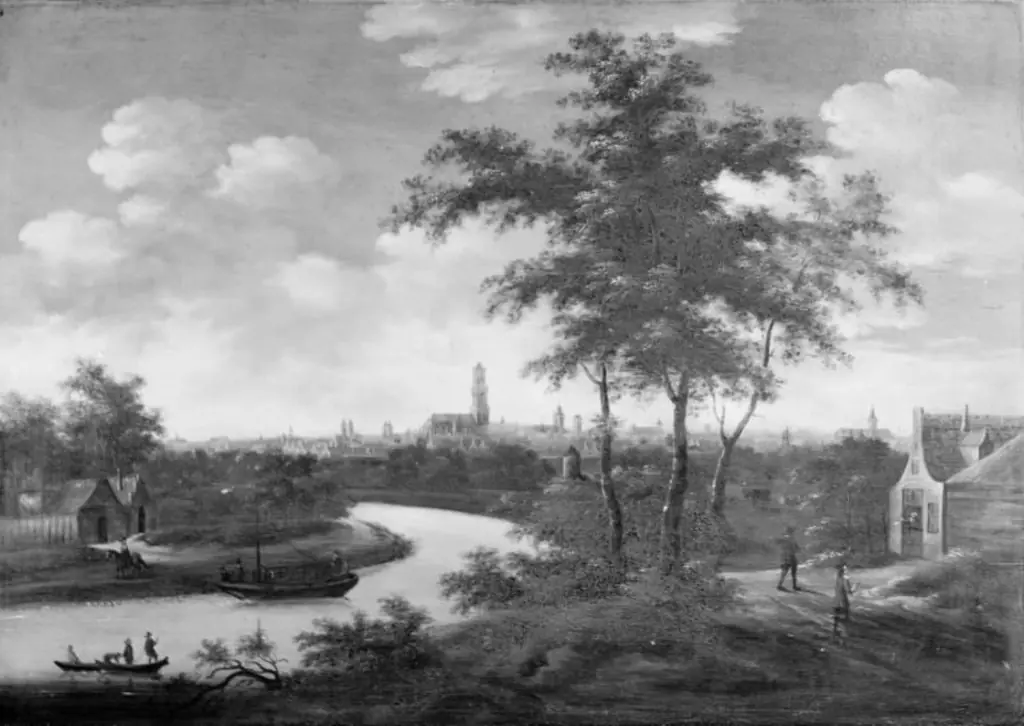 Landskab med flod og by
 Landskab med flod og by
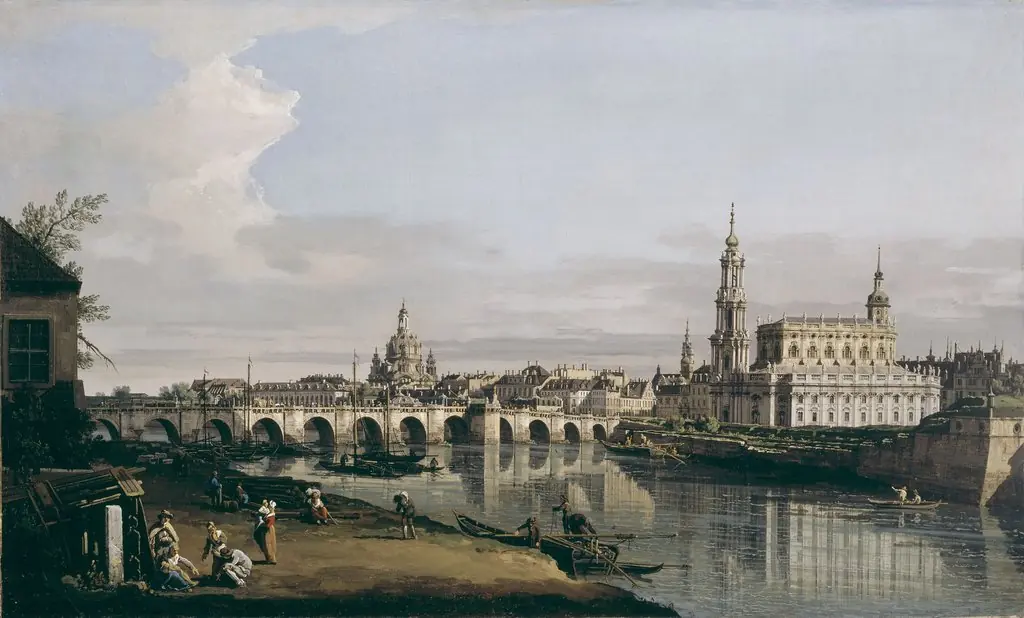 Dresden from the Right Bank of the Elbe, below the Augustus Bridge
 Panorama near Arnhem with the Rhine Gate