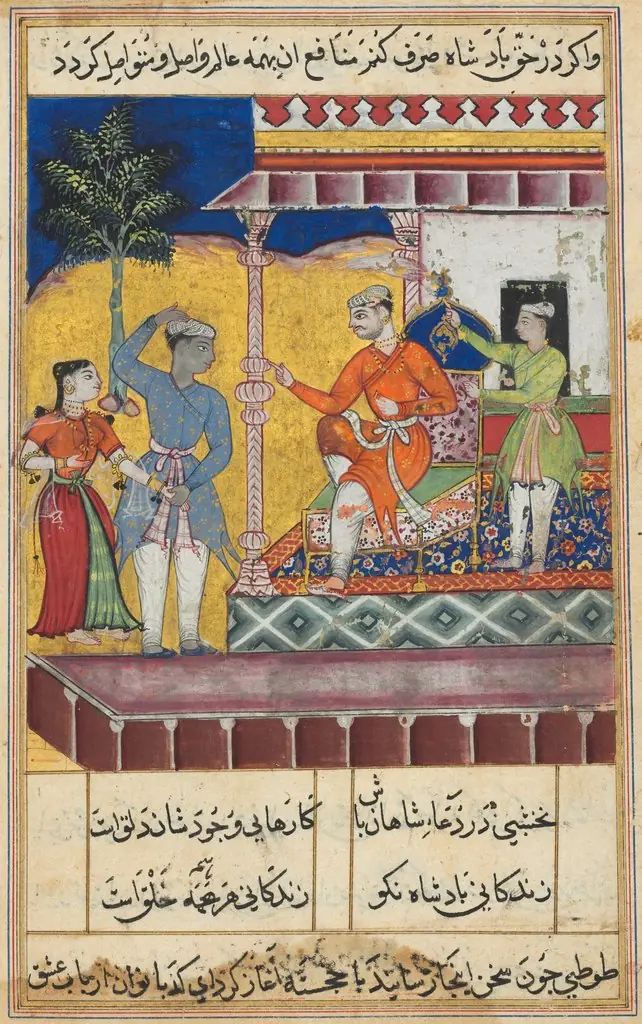
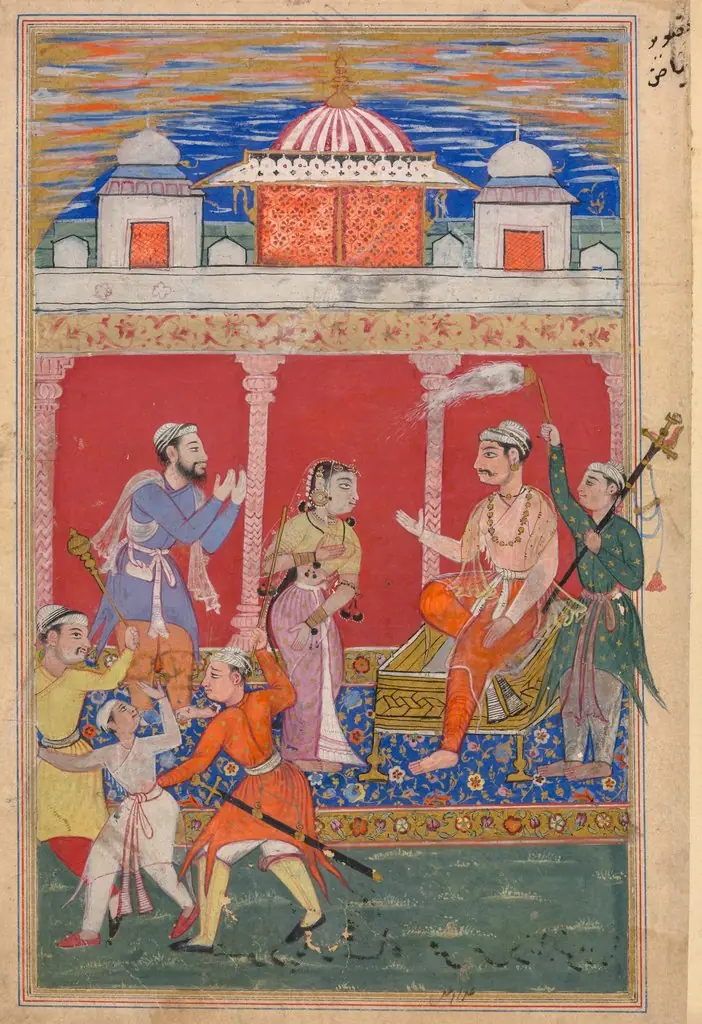
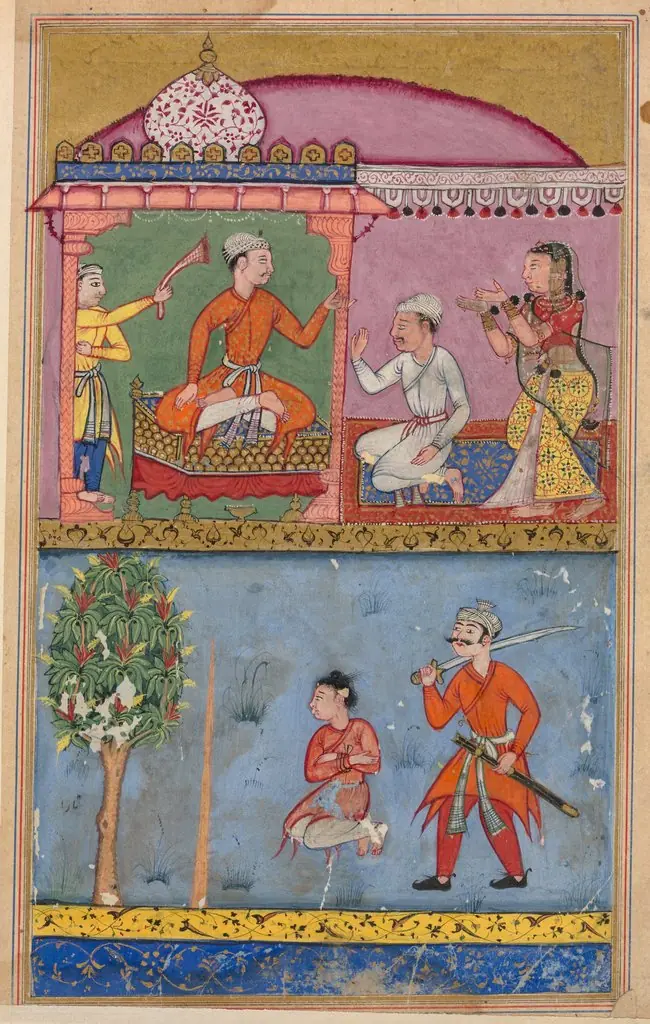
Artwork
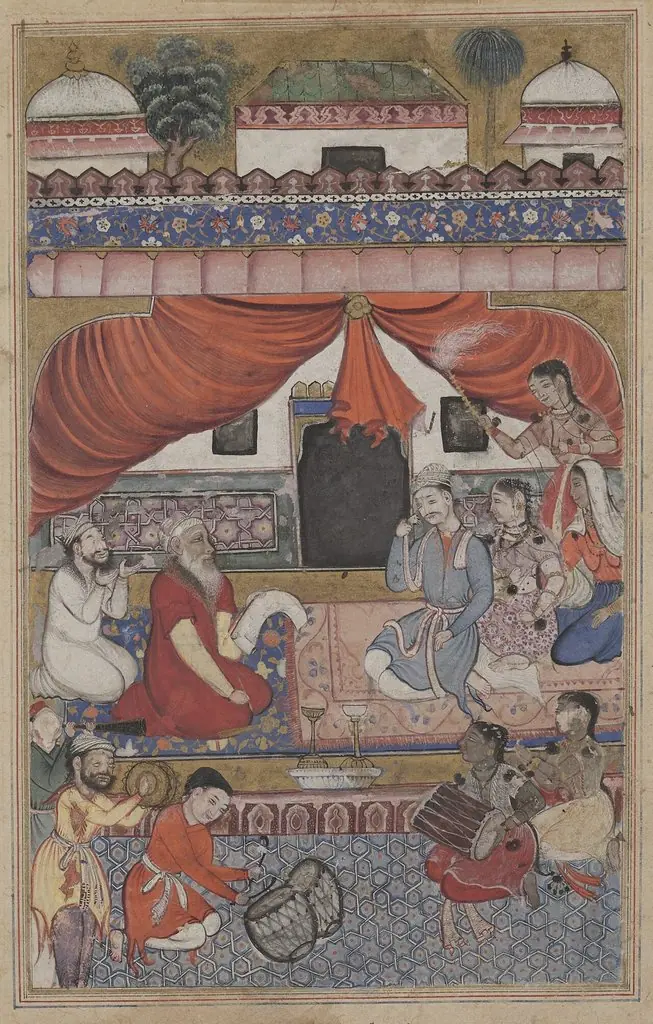
The handmaiden again appeals for justice and the prince is led to the place of execution for the third time, from a Tuti-nama (Tales of a Parrot): Eighth Night
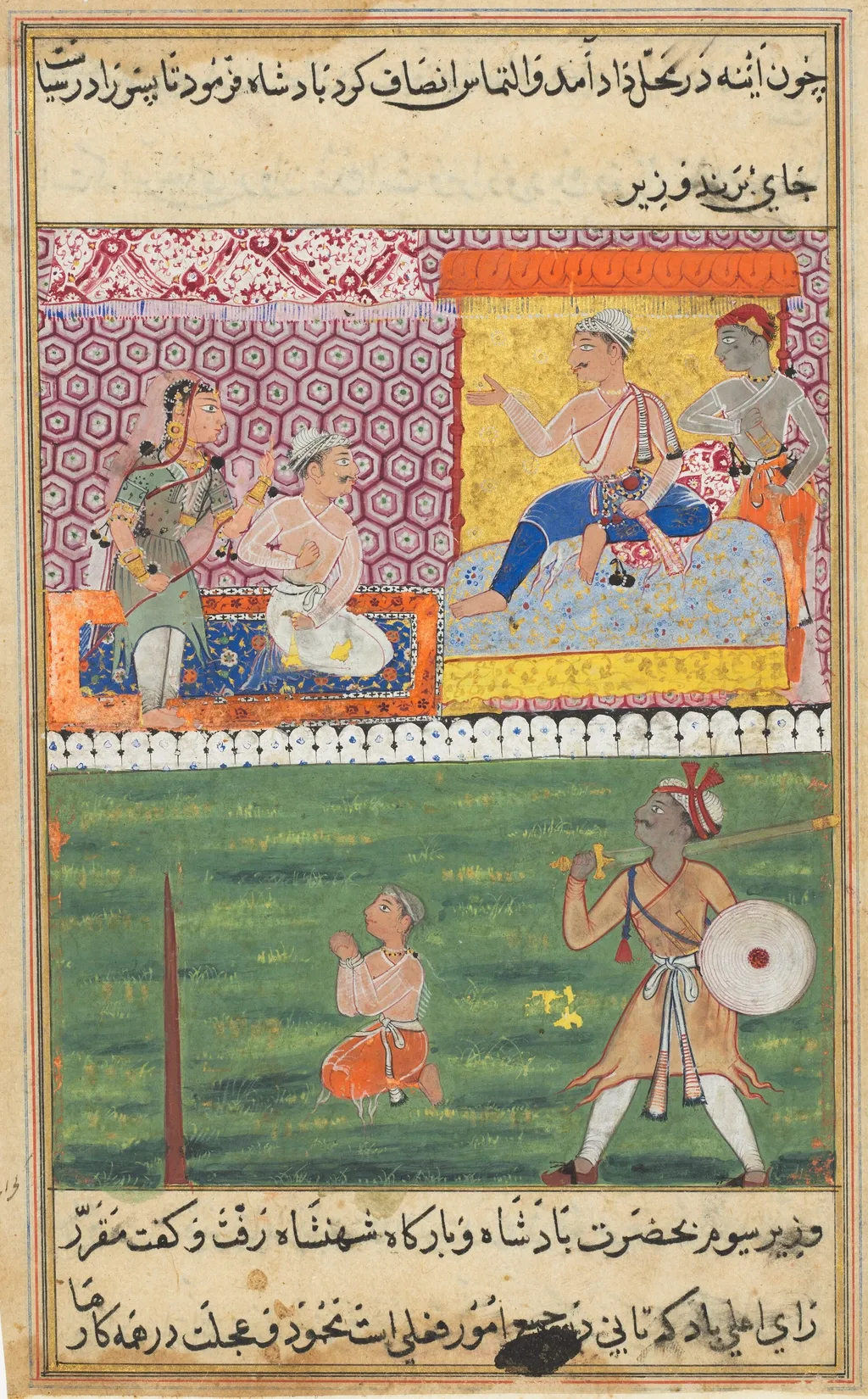
The handmaiden again appeals for justice and the prince is led to the place of execution for the third time, from a Tuti-nama (Tales of a Parrot): Eighth Night is an unspecified painting. It dates from 1560 and is held in the collection of the Cleveland Museum of Art.
About this work
Overview
The work, taken from the eighth night of the medieval Persian manuscript known as the Tuti‑nama (Tales of a Parrot), depicts two juxtaposed scenes.
The work, taken from the eighth night of the medieval Persian manuscript known as the Tuti‑nama (Tales of a Parrot), depicts two juxtaposed scenes. The upper register shows a richly dressed court with a lounging figure and a throne‑seated man attended by a woman, while the lower register presents an outdoor encounter between a shield‑bearing man and a kneeling woman. Vibrant reds, blues and gold dominate the composition, framed by ornate patterned borders and inscribed in an Arabic‑style script.
Subject & Meaning
The narrative illustrates a moment when a handmaiden petitions for justice on behalf of a prince who is being escorted to execution for the third time. The dual scenes contrast the formal, interior setting of royal authority with the more personal, external plea, emphasizing themes of mercy, power, and the tension between courtly protocol and individual supplication.
Technique & Style
Executed in miniature painting technique, the piece employs fine brushwork and a flat, decorative approach typical of Persian manuscript art. The use of intense pigments—particularly vermilion, lapis lazuli and gold leaf—creates a luminous surface, while intricate geometric and vegetal motifs frame the scenes, reinforcing the manuscript’s ornamental aesthetic.
History & Provenance
The painting originates from a copy of the Tuti‑nama, a popular 14th‑century Persian literary work that circulated widely across the Islamic world. Specific details of the manuscript’s creation, patronage or subsequent ownership are not recorded, but the style aligns with courtly productions of the Timurid period.
Context
The Tuti‑nama combines moral tales with courtly romance, often illustrated to accompany readings in elite circles. This particular episode reflects the broader cultural preoccupation with justice and royal virtue, themes that resonated in the political discourse of medieval Persia.
Artist & collection

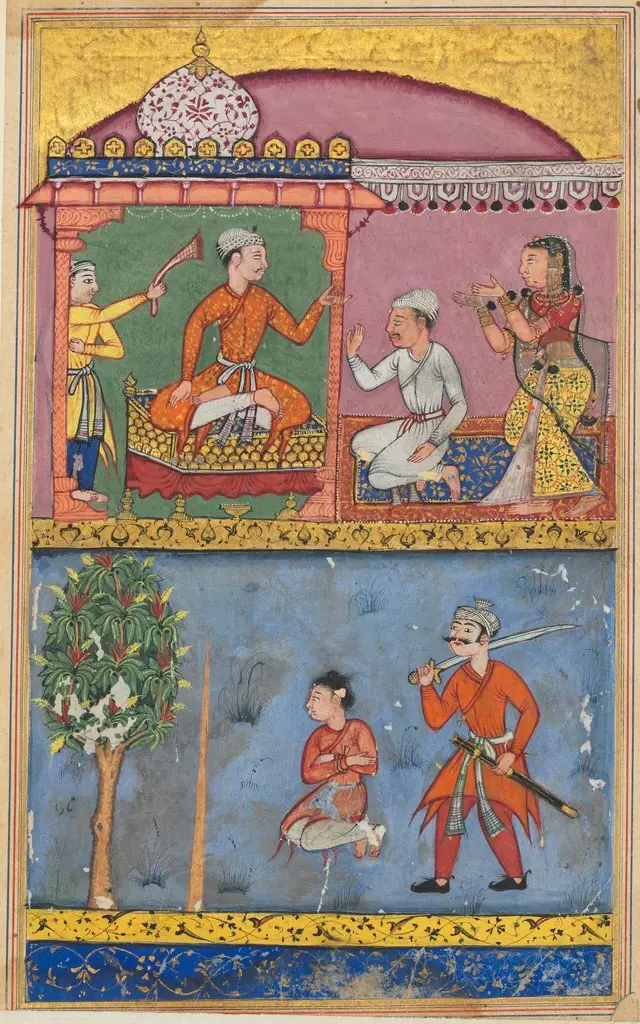 The handmaiden appeals for justice and the prince is taken to the execution site for the fourth time, from a Tuti-nama (Tales of a Parrot): Eighth Night
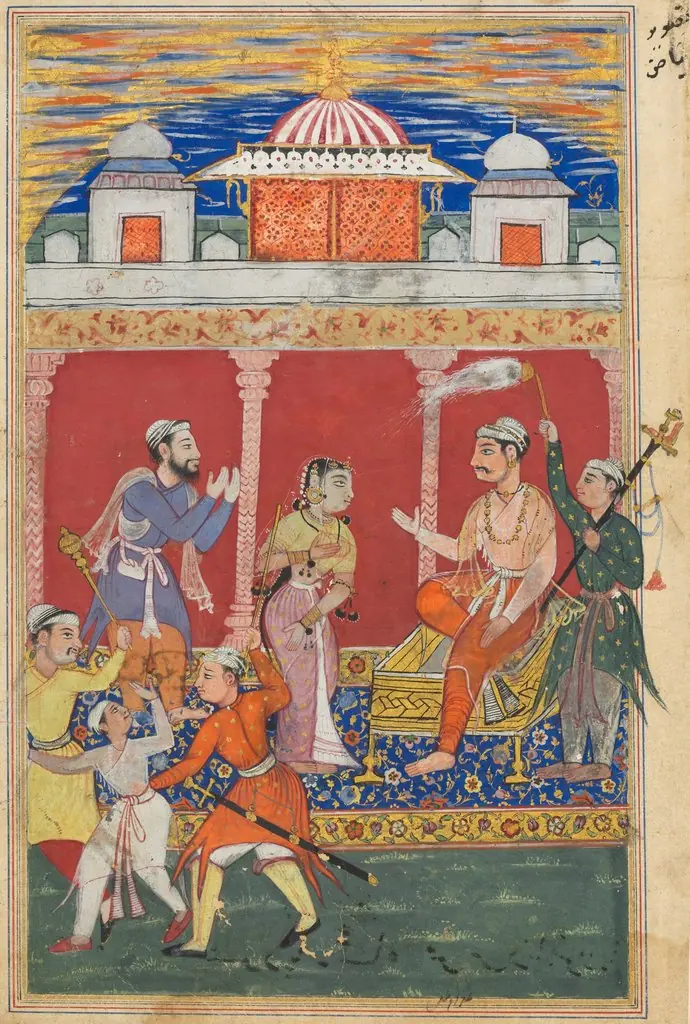 The prince’s ordeal continues, he is ordered away to be executed for the fifth time, from a Tuti-nama (Tales of a Parrot): Eighth Night
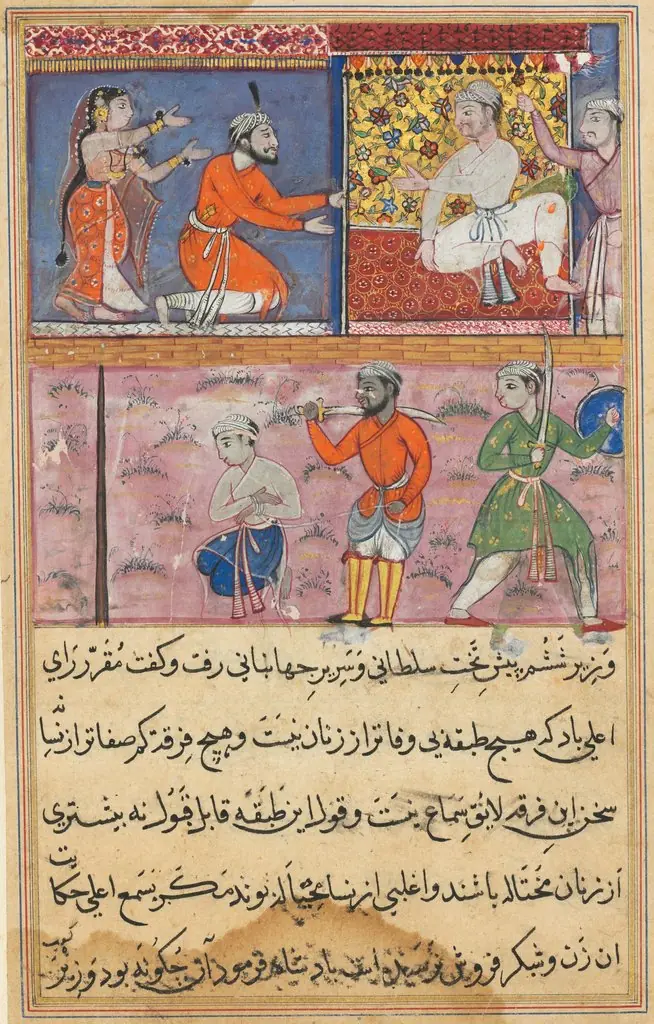 The prince sent back to the place of execution for the sixth time, from a Tuti-nama (Tales of a Parrot): Eighth Night
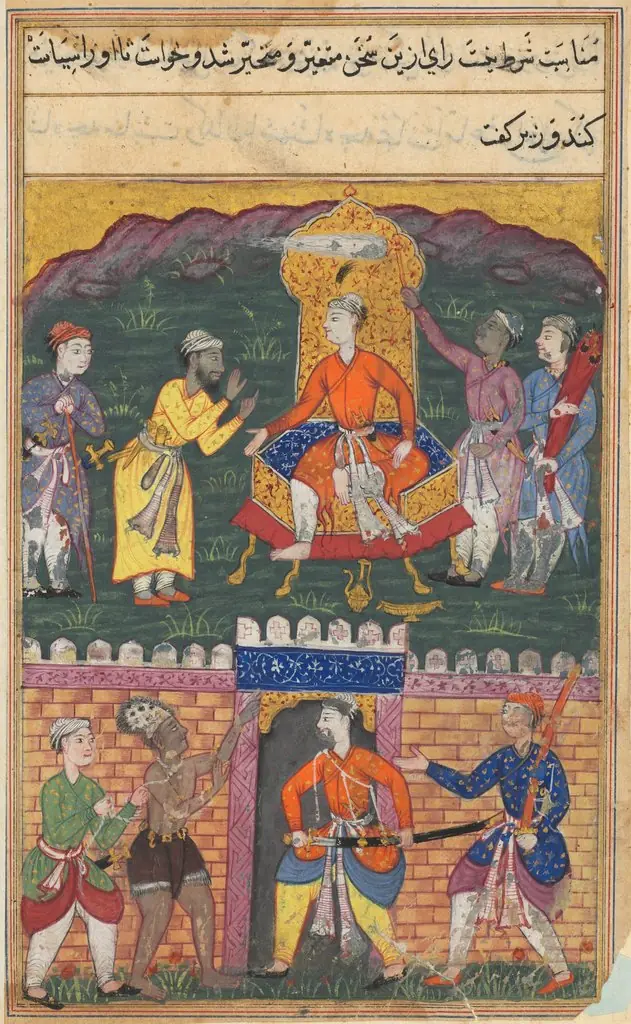 The vizier dissuades the king of Bahilistan from executing the dervish who asks for his daughter’s hand in marriage, from a Tuti-nama (Tales of a Parrot): Seventh Night
 Preparation for the marriage of Mahmuda to the Young Vizier, from a Tuti-nama (Tales of a Parrot): Thirty-third Night