Artwork
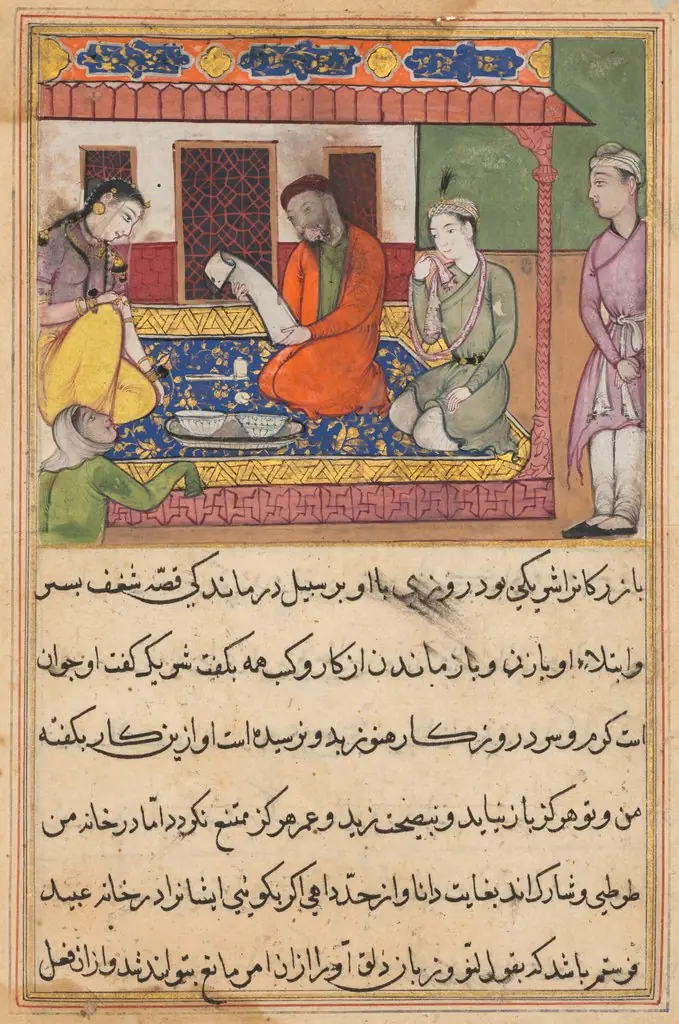
Preparation for the marriage of Mahmuda to the Young Vizier, from a Tuti-nama (Tales of a Parrot): Thirty-third Night
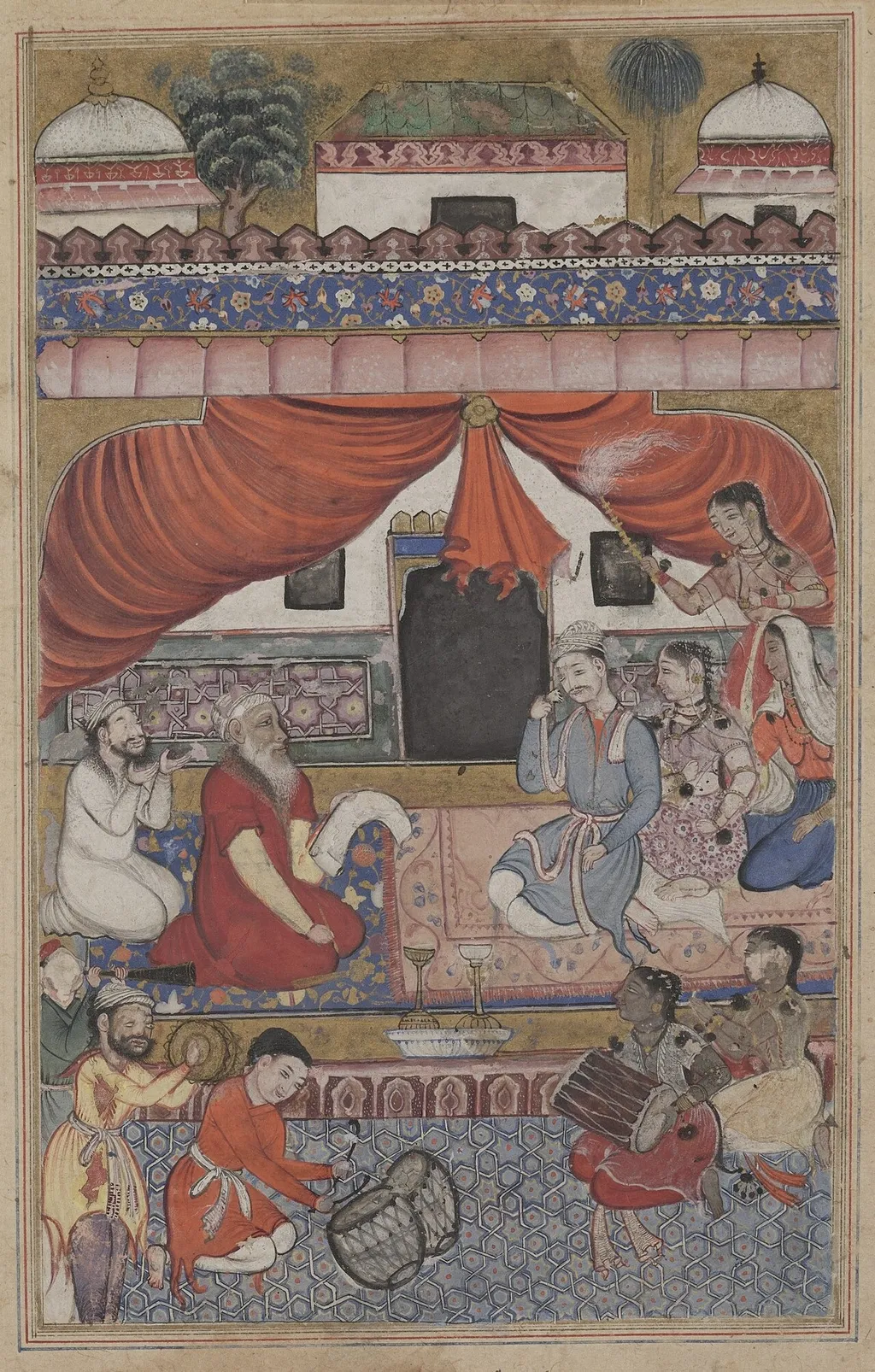
Preparation for the marriage of Mahmuda to the Young Vizier, from a Tuti-nama (Tales of a Parrot): Thirty-third Night is an unspecified painting. It dates from 1560 and is held in the collection of the Cleveland Museum of Art. The work depicts an interior gathering arranged around a low table, rendered in vivid hues.
About this work
Overview
The work depicts an interior gathering arranged around a low table, rendered in vivid hues. Figures recline on cushions while a man in a striking red garment leans back, speaking. Musicians, drinkers, and conversational guests populate the scene, set against tiled walls and a red curtain that frames the background.
Subject & Meaning
The composition illustrates a ceremonial moment described in a Persian illustrated manuscript, specifically the preparation for Mahmuda’s marriage to a young vizier. The gathering reflects the social customs of a festive pre‑wedding celebration, emphasizing hospitality, music, and communal interaction.
Technique & Style
Executed in the miniature painting tradition, the piece employs fine brushwork and a flattened spatial perspective typical of Persian book art. Bright pigments and intricate patterning on tiles and textiles create a decorative surface, while the figures are stylized rather than naturalistically rendered.
History & Provenance
The painting originates from a Tuti‑nama, a 16th‑century Persian illustrated manuscript known as the “Tales of a Parrot.” It forms part of the manuscript’s thirty‑third night narrative. The work entered the Cleveland Museum of Art’s collection through acquisition in the early 20th century, though specific donor details are not recorded in the available data.
Context
Within the broader tradition of Persian courtly literature, the Tuti‑nama combines poetic storytelling with lavish visual accompaniment. Scenes such as this one served both decorative and didactic purposes, illustrating moral or cultural themes associated with marriage and courtly etiquette.
Artist & collection

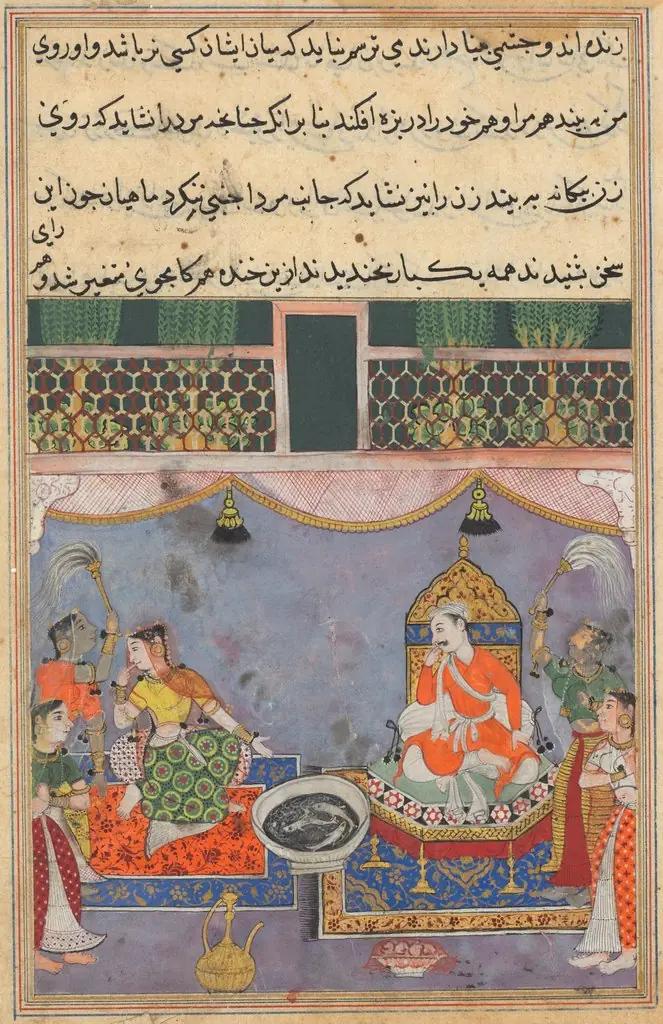 Kamjuy, the wife of the Raja, averts her face from the fishes, from a Tuti-nama (Tales of a Parrot): Twenty-third Night
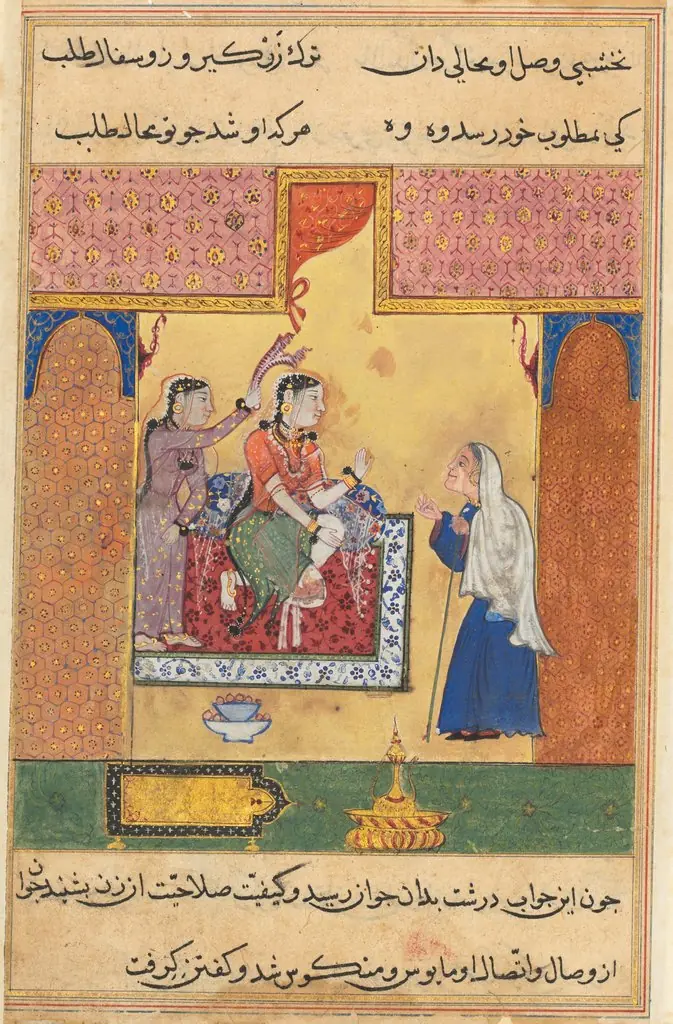 The old procuress conveys the young man’s message of love to Mansur’s wife, from a Tuti-nama (Tales of a Parrot: Seventeenth Night
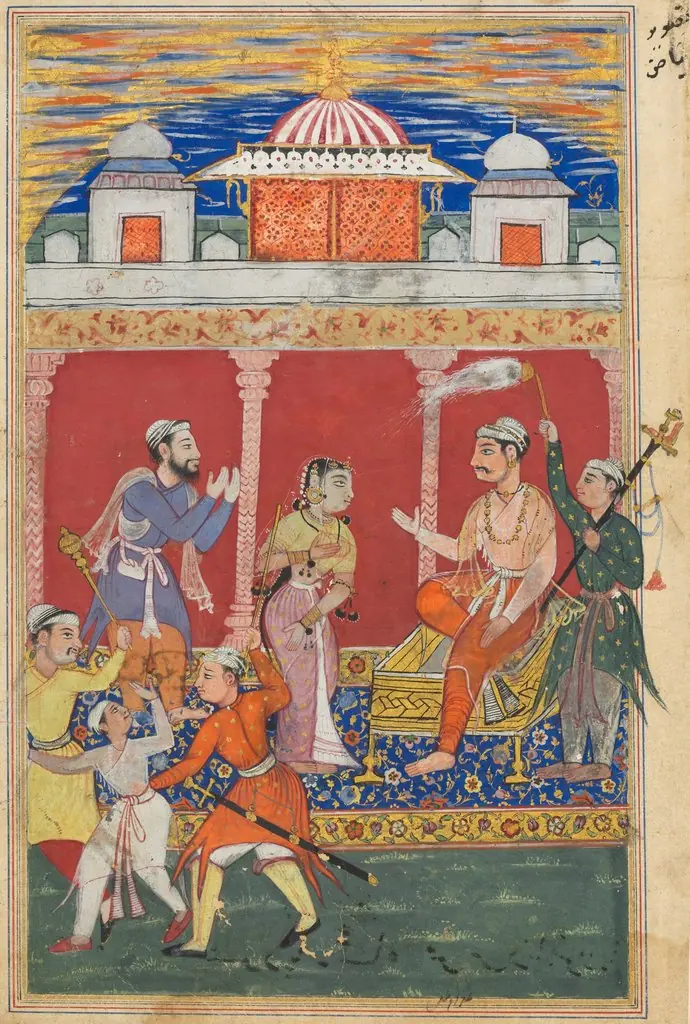 The prince’s ordeal continues, he is ordered away to be executed for the fifth time, from a Tuti-nama (Tales of a Parrot): Eighth Night
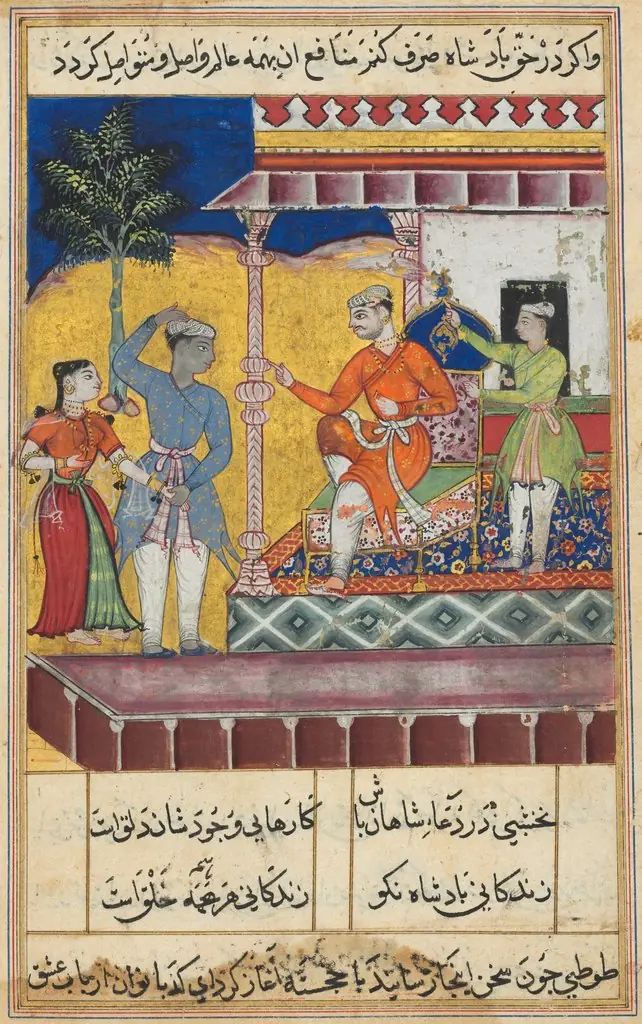 The rejuvenated old man and the daughter of the king of the jinns take leave of the King of Kings, from a Tuti-nama (Tales of a Parrot): Seventh Night
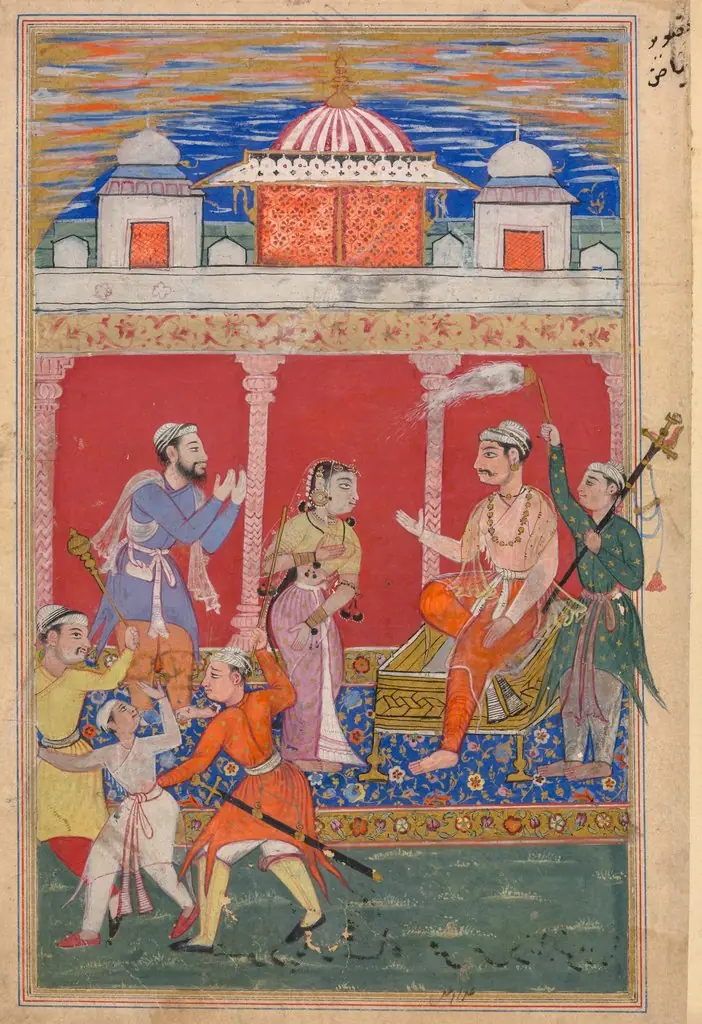 Page from Tales of a Parrot (Tuti-nama): text page
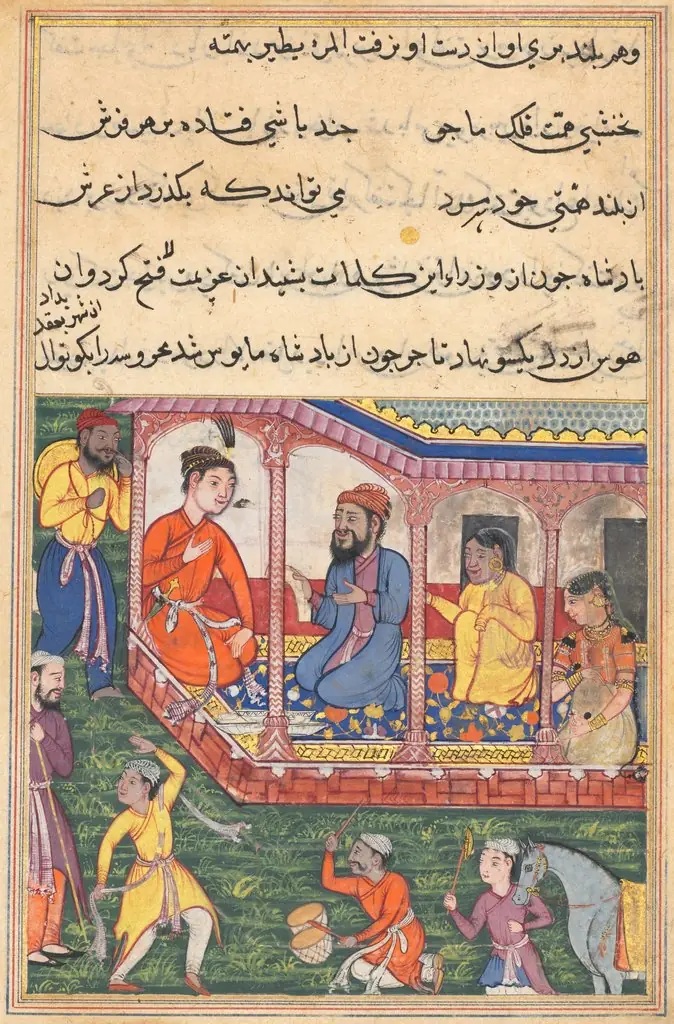 Mahrusa’s marriage to the prefect of the city, from a Tuti-nama (Tales of a Parrot): Thirty-sixth Night
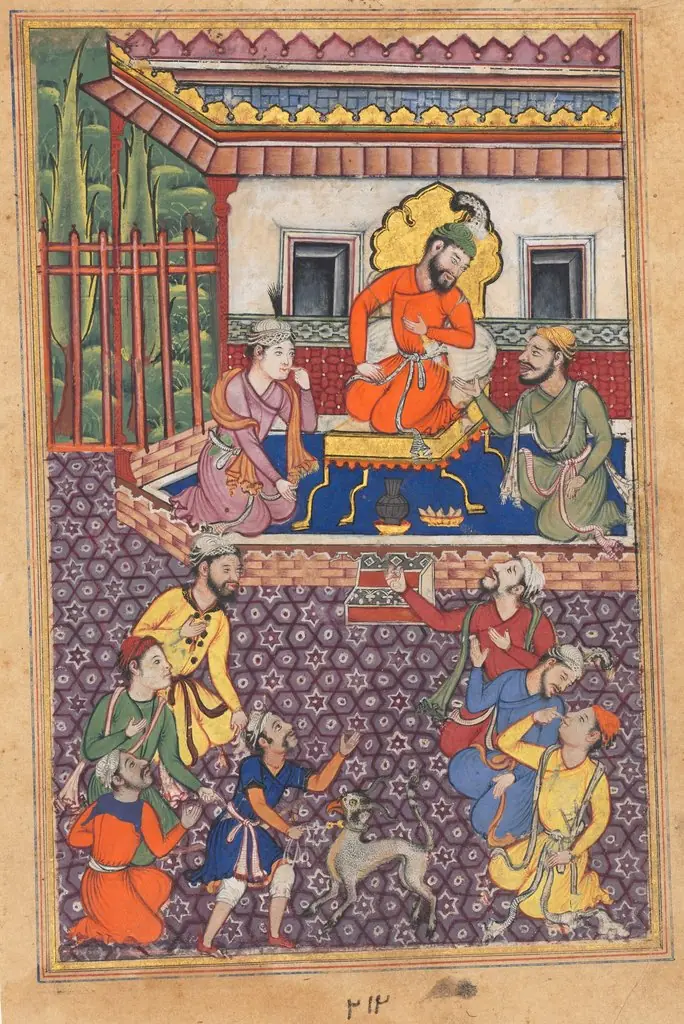 The court of the Raja of Ujjain, from a Tuti-nama (Tales of a Parrot): Forty-sixth Night
 The marriage of ‘Ubaid, son of a merchant of Tirmiz, from a Tuti-nama (Tales of a Parrot): Forty-second Night