Artwork
Amitābha Triad
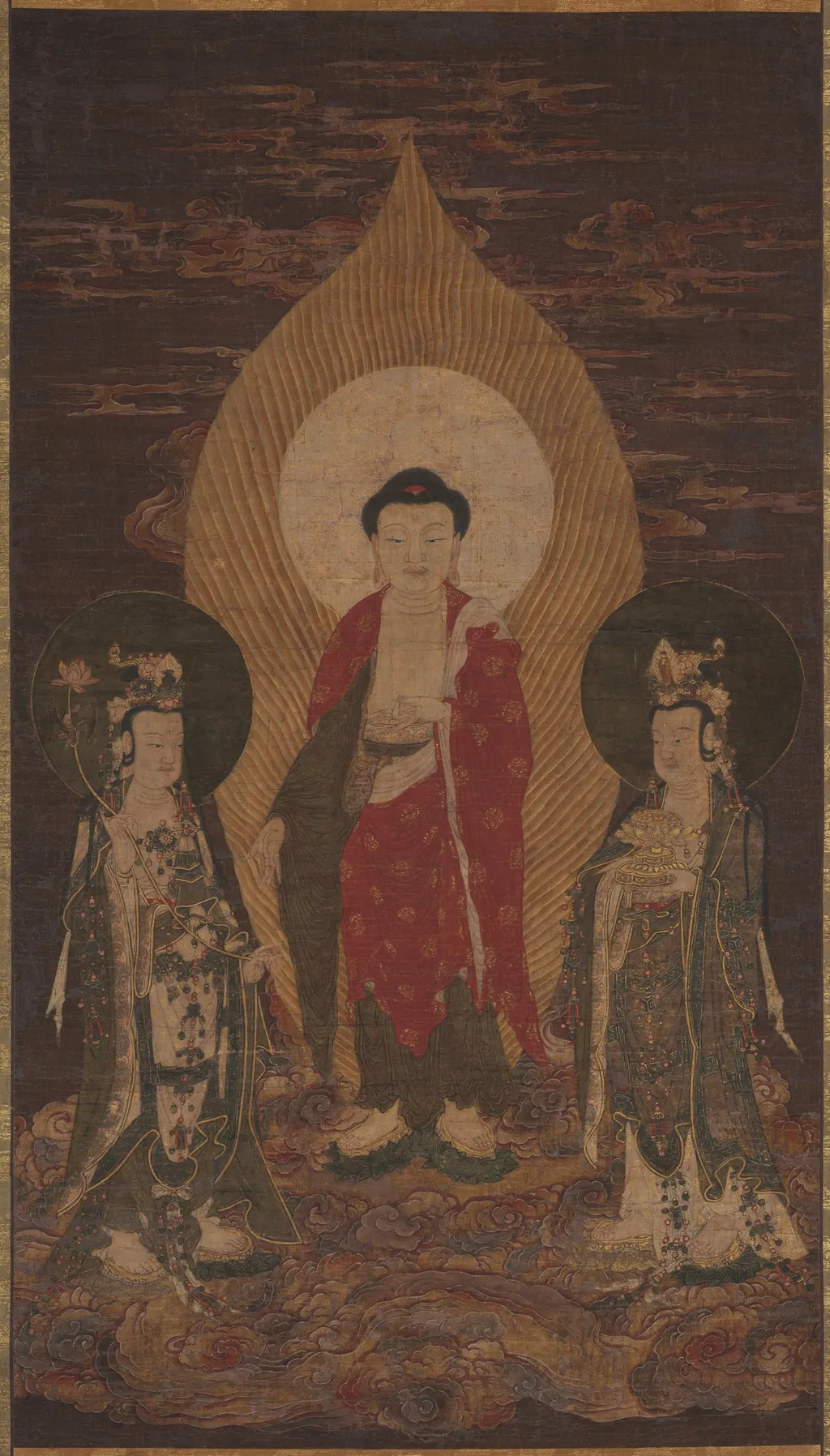
Amitābha Triad is an unspecified painting. It dates from 1449 and is held in the collection of the Cleveland Museum of Art.
About this work
Overview
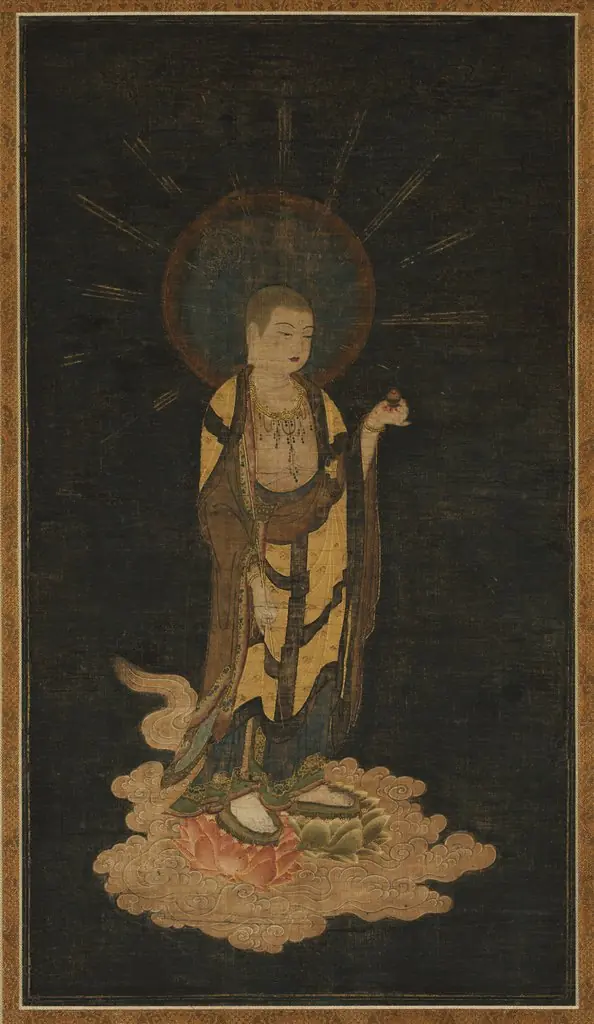
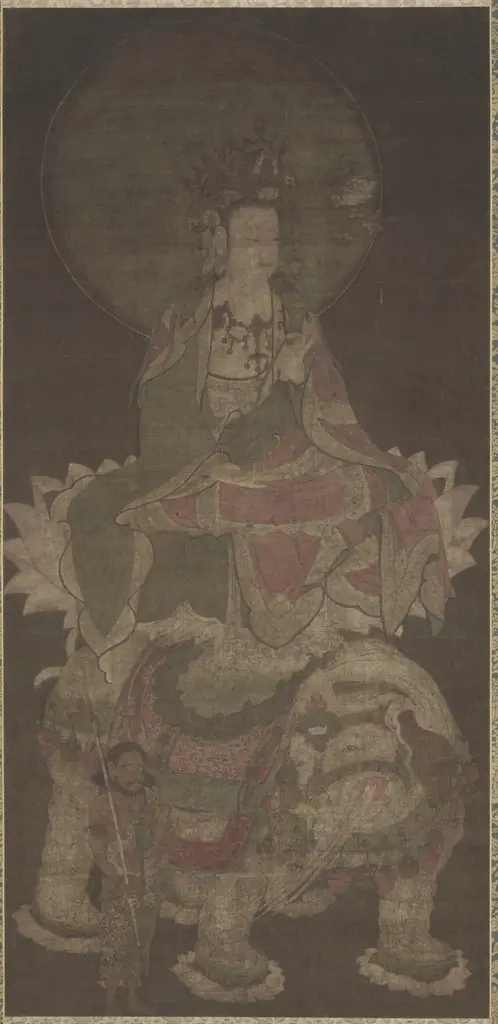
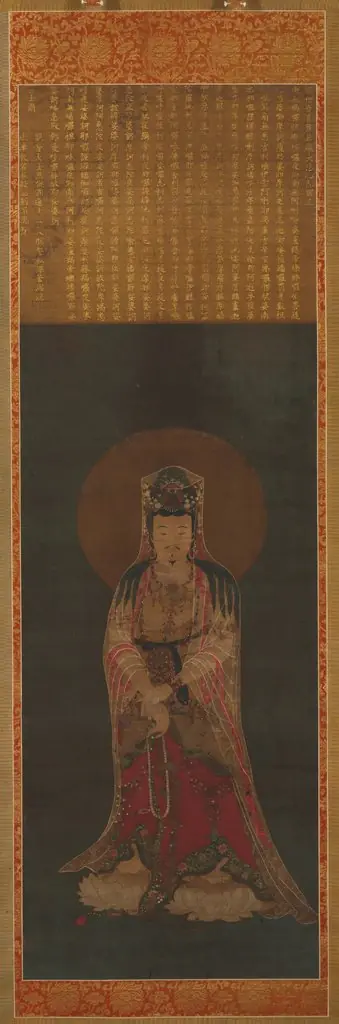
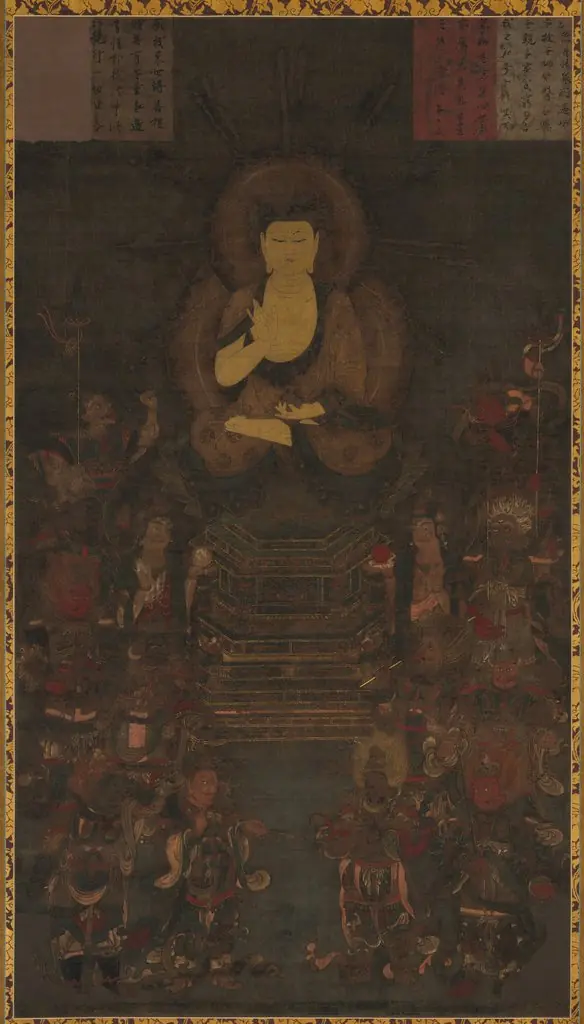
This painting depicts an Amitābha Triad, a common subject in Buddhist art, featuring three standing figures. The central deity is flanked by two attendant bodhisattvas, presented against a dark, atmospheric backdrop. The composition emphasizes the principal figure's serene presence, supported by the slightly smaller, richly adorned companions.
Subject & Meaning
At the center of the composition stands Amitābha Buddha, identifiable by the radiant halo encircling his head and his calm demeanor.
At the center of the composition stands Amitābha Buddha, identifiable by the radiant halo encircling his head and his calm demeanor. He wears a red robe accented with gold. To either side, two bodhisattvas, likely Avalokiteśvara and Mahāsthāmaprāpta, complement the Buddha. These figures are distinguished by their elaborate, patterned robes, crowns, and staffs, signifying their elevated spiritual status and role as compassionate guides within the Pure Land tradition.
Technique & Style
The artwork presents its three subjects standing upright and side-by-side, creating a balanced and formal arrangement. The central figure's prominence is highlighted by its larger scale and central placement. A dark background provides a dramatic contrast, allowing the vibrant colors of the robes and the luminous halo to stand out. Swirling cloud motifs and a sky-like pattern further enhance the ethereal atmosphere surrounding the divine assembly.
Artist & collection

 釈迦三尊像|Shaka (Shakyamuni) Triad
 Shakyamuni Triad: Buddha Attended by Manjushri and Samantabhadra
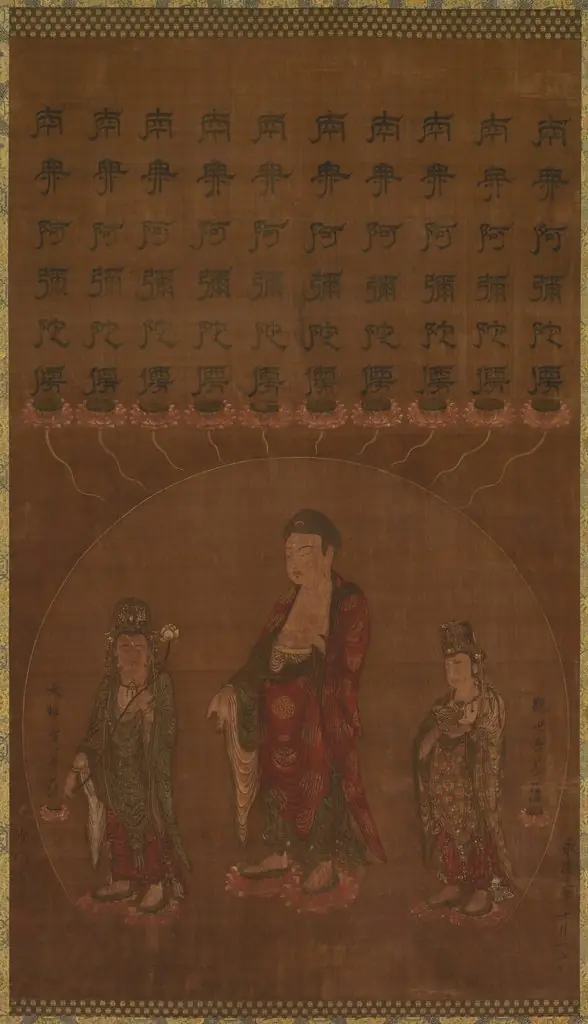 Buddha Amitābha with Two Attending Bodhisattvas
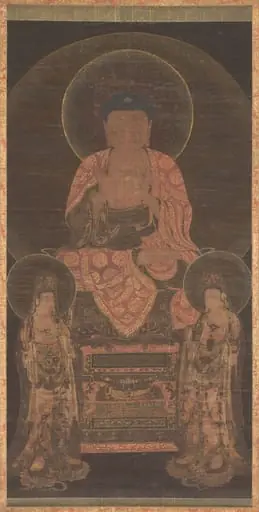 아미타삼존도 고려|阿彌陀三尊圖 高麗|Amitabha triad
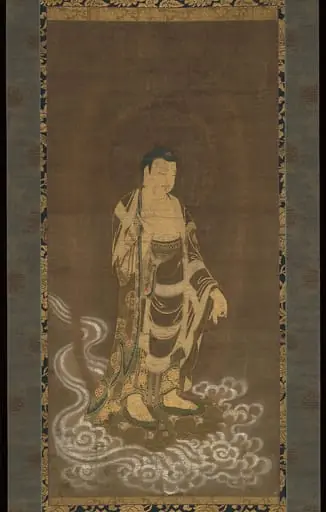 阿弥陀如来像|Welcoming Descent of Amida Buddha
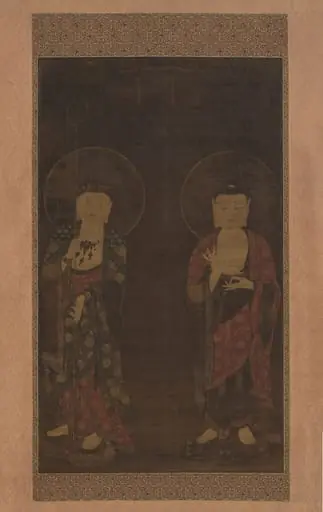 아미타불과 지장보살도 고려|阿彌陀佛・地藏菩薩圖 高麗|Amitabha and Kshitigarba
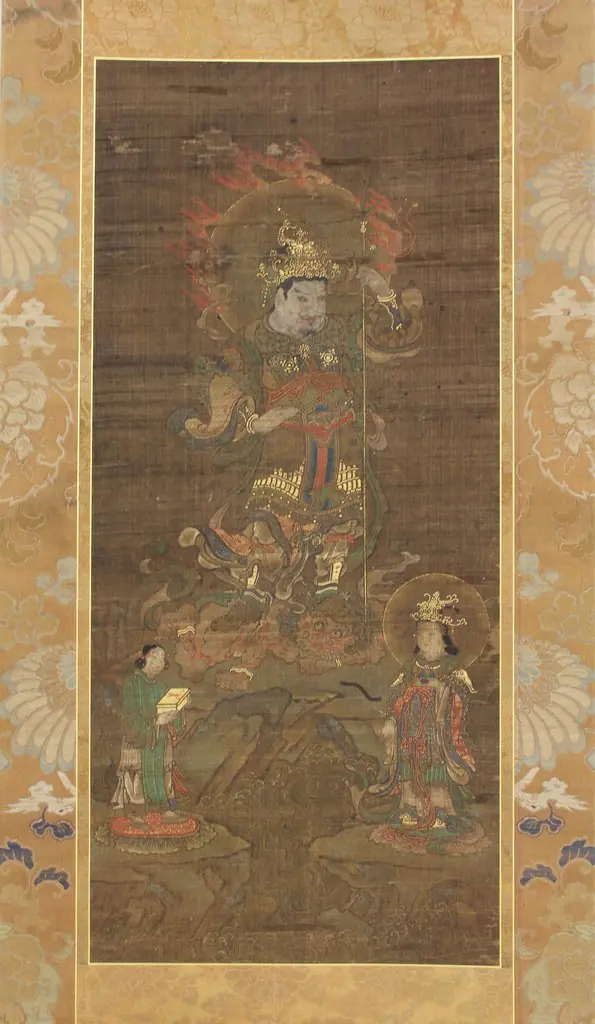 Mount Kurama Mandala: Bishamonten Triad (Kuramayama mandara: Bishamonten sanzonzō)
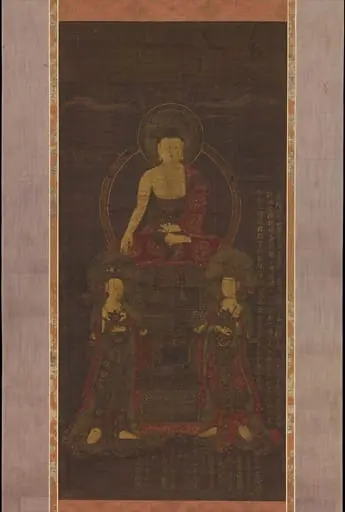 석가삼존도 조선|釋迦三尊圖 朝鮮|Shakyamuni triad
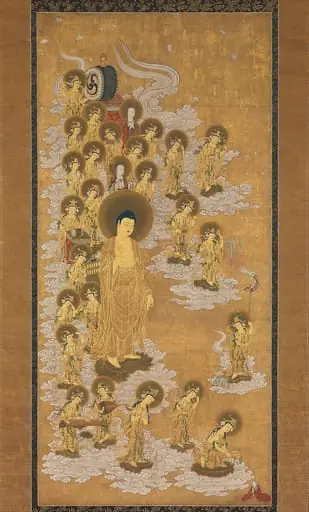 阿弥陀二十五菩薩来迎図|Welcoming Descent of Amida Buddha and Twenty-five Bodhisattvas
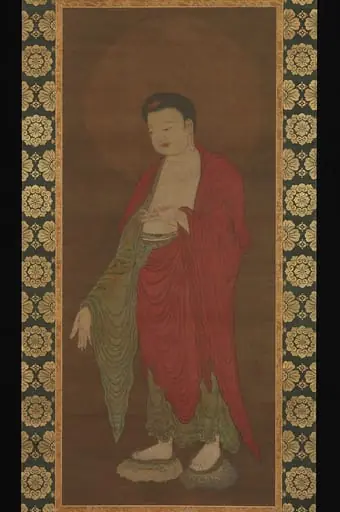 南宋 佚名 阿彌陀佛圖 軸|Buddha Amitabha Descending from his Pure Land