Artwork
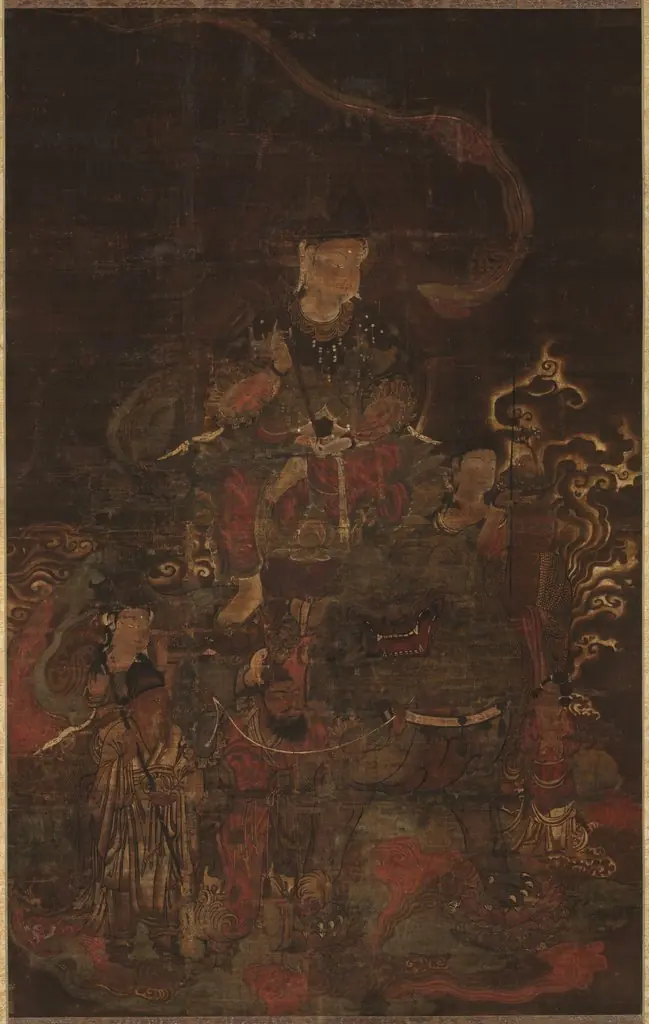
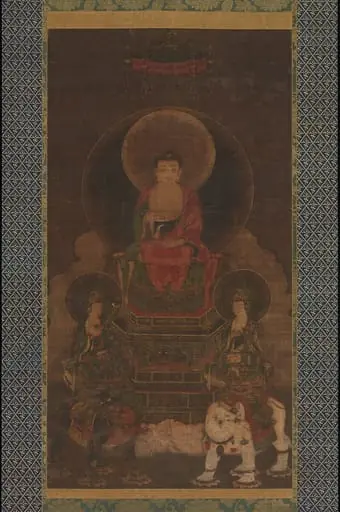
Mount Kurama Mandala: Bishamonten Triad (Kuramayama mandara: Bishamonten sanzonzō)
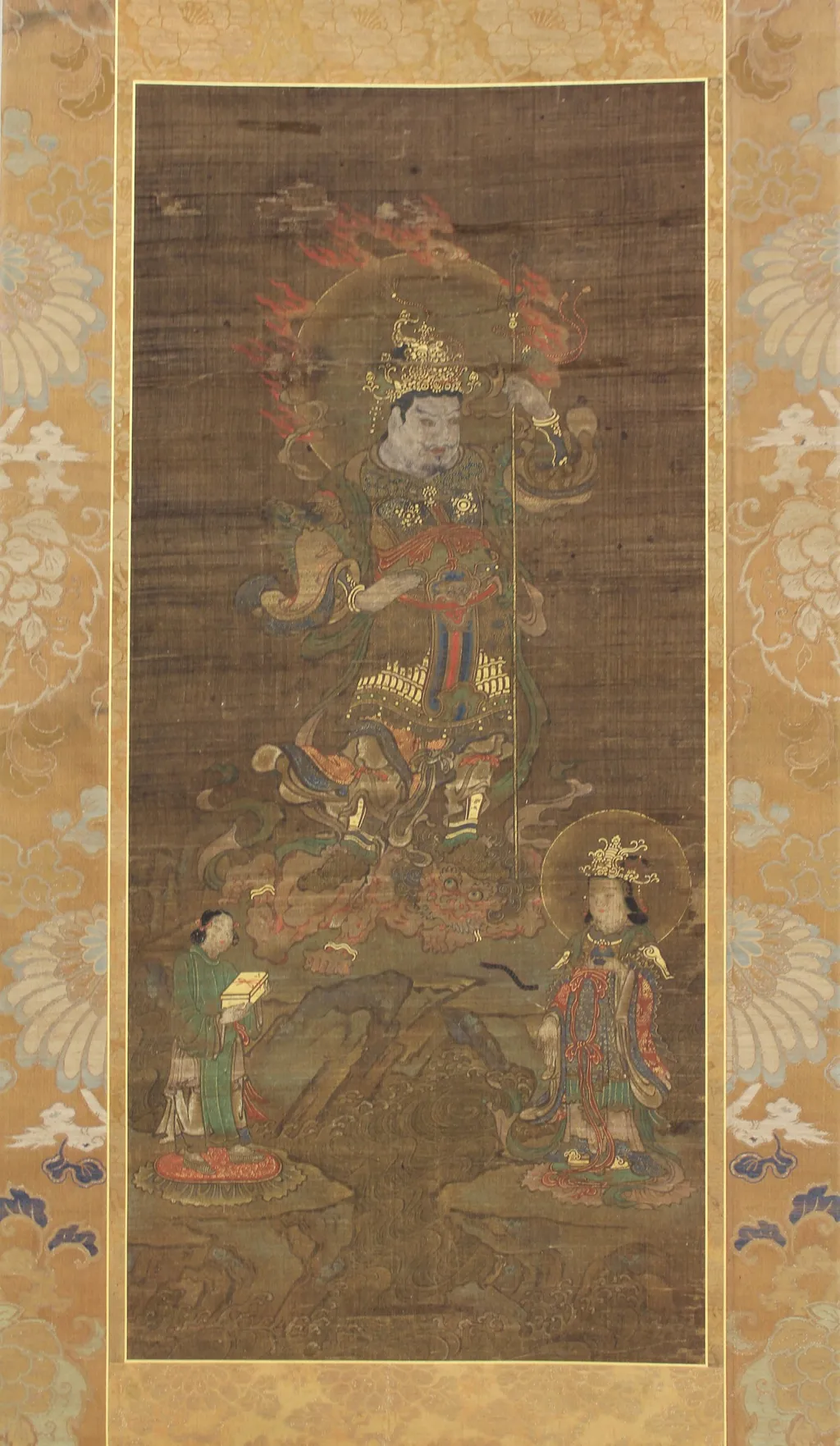
Mount Kurama Mandala: Bishamonten Triad (Kuramayama mandara: Bishamonten sanzonzō) is an unspecified painting. It dates from 1494 and is held in the collection of the Metropolitan Museum of Art. The work depicts a trio of figures suspended above a craggy terrain.
About this work
Overview
The work depicts a trio of figures suspended above a craggy terrain. A dominant central figure, crowned in gold and clad in armor, grasps a spear and a luminous jewel, while two diminutive companions—one in green robes, the other in red and gold—stand below, gazing upward. Dark, swirling clouds dominate the background, and the composition is framed by an ornamental border.
Subject & Meaning
The principal figure is commonly associated with the Buddhist guardian deity Bishamonten, a protector of the Buddhist law. The jewel held aloft is traditionally interpreted as a symbol of wisdom or protective power, reinforcing the deity’s role as a shield against evil.
Technique & Style
Rendered in a flat, decorative manner, the painting employs bold coloration and defined outlines characteristic of Japanese religious iconography. The use of contrasting hues—gold, red, green, and dark background tones—creates a striking visual hierarchy that emphasizes the central deity.
Context
Such mandala compositions were used in devotional settings, serving as visual focal points for meditation on protective deities. The inclusion of a decorative border and stylized clouds reflects conventions of Japanese Buddhist art from the period in which the piece was produced.
Artist & collection