Artwork
Three Putti with Musical Instruments
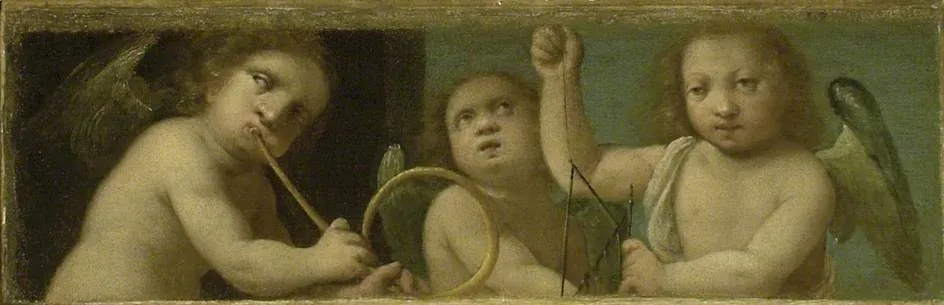
Three Putti with Musical Instruments is an unspecified painting by the Mannerist artist Unknown. It dates from 1525 and is held in the collection of the Ashmolean Museum. This painting presents three cherubic figures engaged with musical instruments, rendered in a classical idiom.
About this work
Overview
This painting presents three cherubic figures engaged with musical instruments, rendered in a classical idiom. Set against a deep, shadowed backdrop, the figures are illuminated with careful attention to light and shadow, enhancing their three-dimensionality. The composition focuses attention on the children’s forms and the objects they hold, minimizing distraction from the environment.
Subject & Meaning
The three figures, traditionally interpreted as putti, are depicted with serene expressions and idealized features. Each holds a distinct object: a stringed instrument, a circular frame, and a bow with arrow. While the first two suggest music and harmony, the third introduces a symbolic contrast—possibly alluding to love’s duality or the interplay of art and desire in Renaissance allegory.
Technique & Style
The artist employs chiaroscuro to model the figures with soft gradations of light, giving volume to their rounded forms and the surfaces of the instruments.
The artist employs chiaroscuro to model the figures with soft gradations of light, giving volume to their rounded forms and the surfaces of the instruments. The dark background isolates the subjects, heightening their presence. Brushwork is smooth and refined, favoring idealized anatomy over realism, consistent with late Renaissance or early Baroque conventions of celestial or mythological imagery.
History & Provenance
The painting’s origin is not definitively documented, but its style aligns with Italian works from the late 16th or early 17th century. It likely emerged from a workshop influenced by Venetian or Bolognese traditions, where putti were commonly used in devotional and secular contexts. Its early ownership remains unrecorded, though it has been preserved in private collections since at least the 19th century.
Context
During the Renaissance and Baroque periods, putti frequently appeared in art as symbols of divine love, musical harmony, or the soul’s ascent. Their presence in secular and religious works alike reflects a broader cultural fascination with classical mythology reinterpreted through Christian humanism. This painting fits within a tradition where music and innocence were linked to spiritual ideals.
Legacy
Though not widely attributed to a major master, the painting exemplifies the enduring appeal of putti in European art. Its use of chiaroscuro and classical form influenced later decorative cycles in palaces and churches. It remains a quiet testament to the period’s fascination with blending myth, music, and the idealized human form in intimate, contemplative compositions.
Artist & collection

 Domestic Scene
 Giacomo and Cardinal Marco, investing Andrea, Abbot of San Zeno, with his Benefice
 The Nymph of Fontainebleau
 Portrait of a Woman
 Madonna and Child with Saints in the Enclosed Garden
 Venus and Minerva
 Family Group of Four on Sofa
 Wall painting from Room H of the Villa of P. Fannius Synistor at Boscoreale
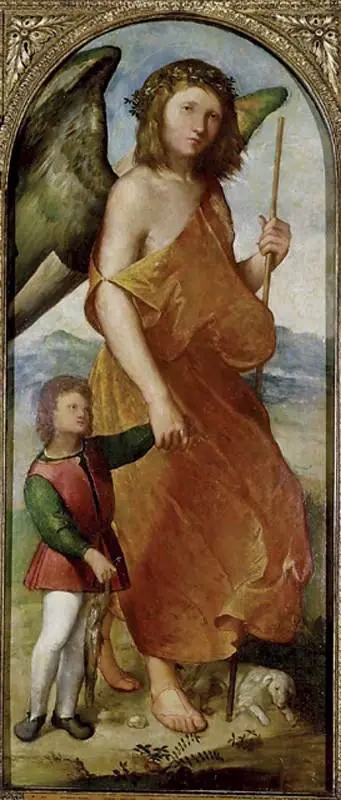 Tobias and the Angel
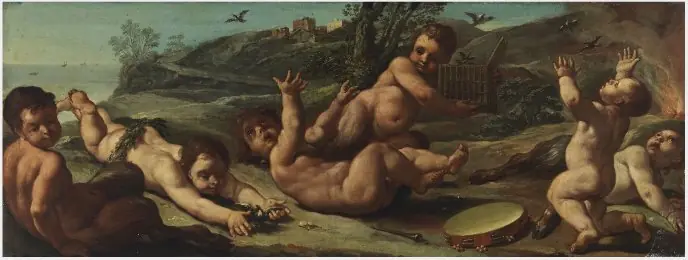 Bacchanalian Boys and Satyrs
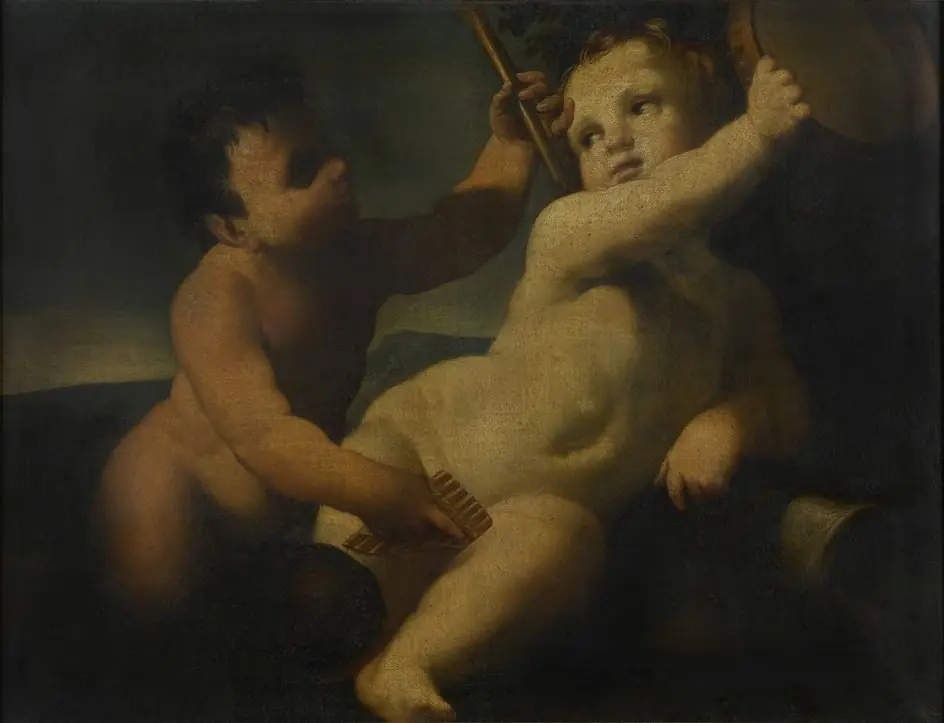 A Putto with a Tambourine and an Infant Satyr with a Panpipe
 Nymph and Hunter
 Venus with Cupid as Honey Thief
 The Judgement of Paris
 Die Verkündigung an Maria
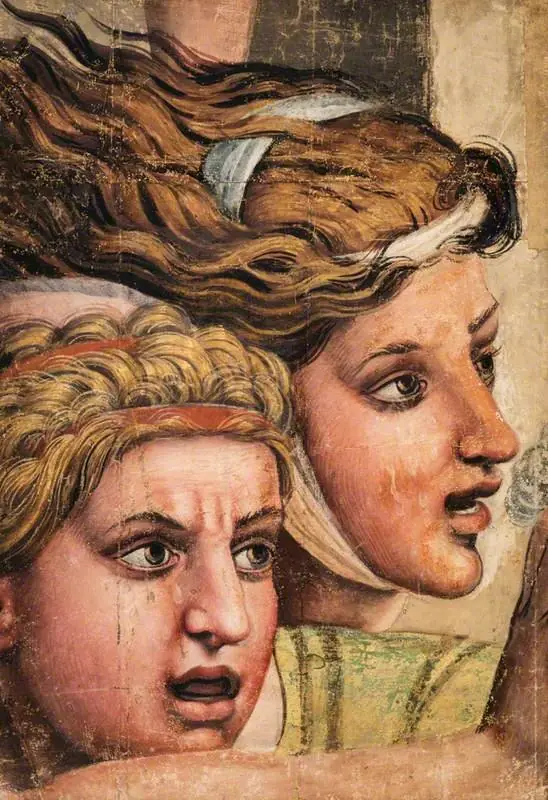 Tapestry Cartoon: Two Heads from the Massacre of the Innocents
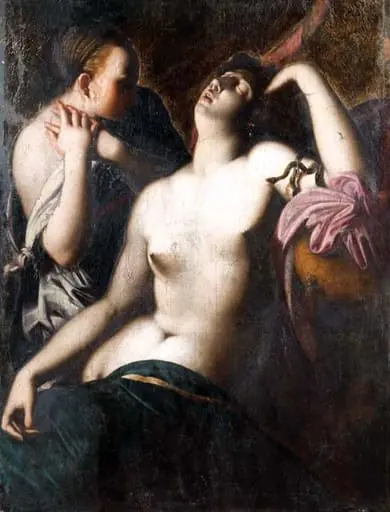 Cleopatra murind
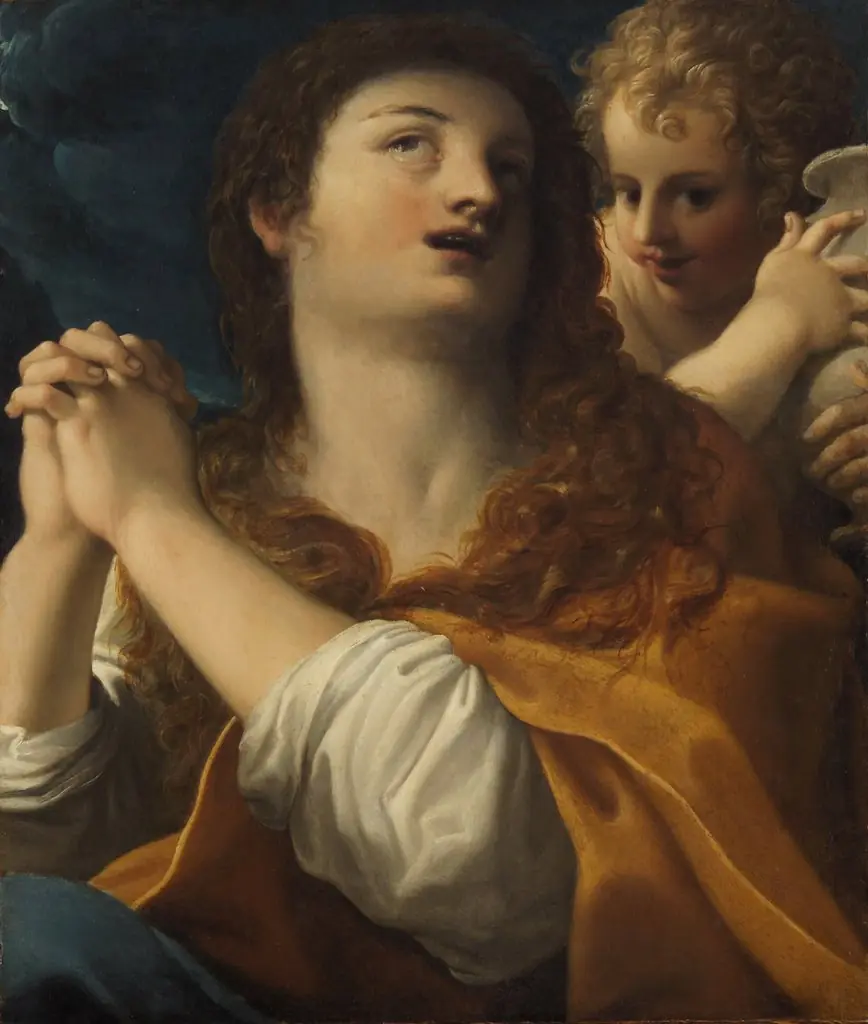 Penitent Mary Magdalene
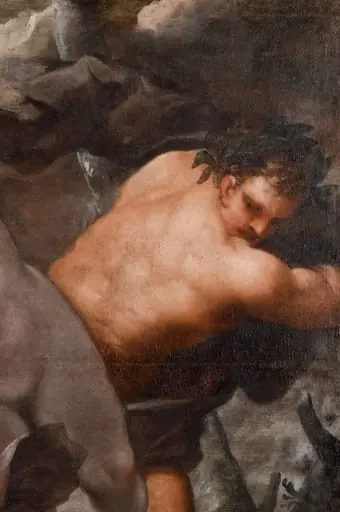 Apolo și Daphne
 Diana and Endymion