Artwork
Altar frontal
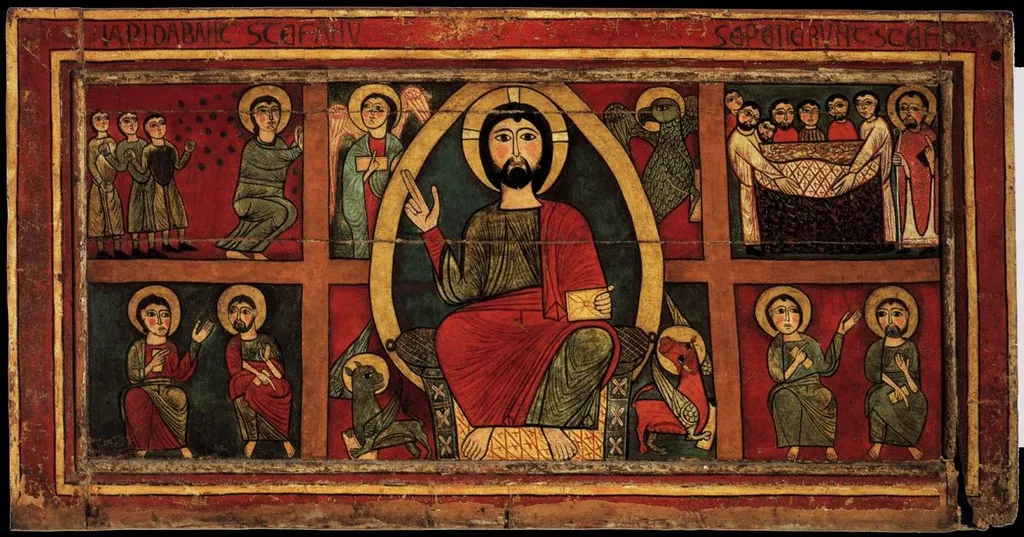
Altar frontal is an unspecified painting by the Byzantine icon painting artist Unknown. It dates from 1250 and is held in the collection of the Museo del Prado.
About this work
Overview
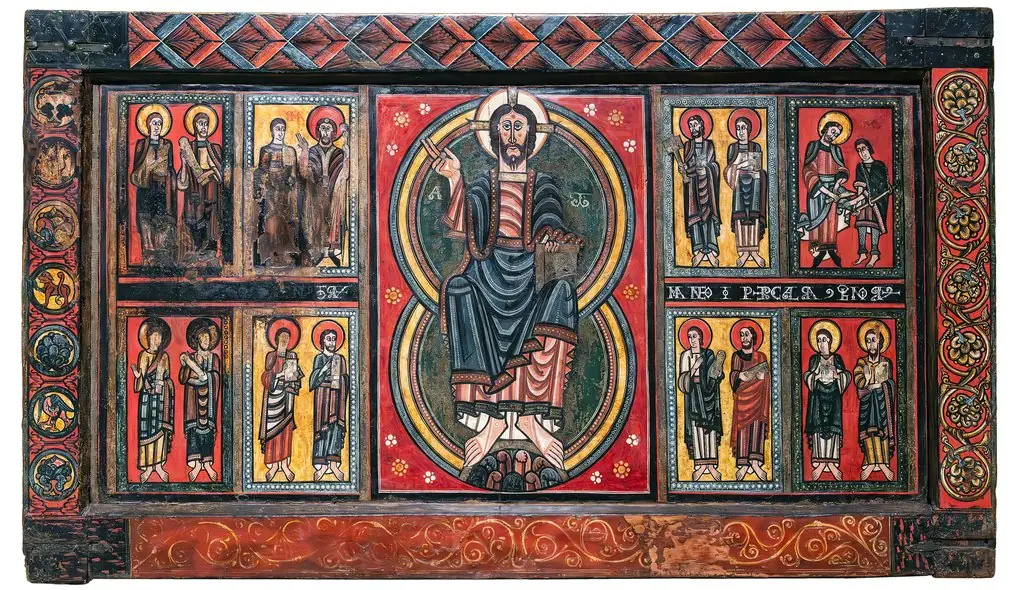
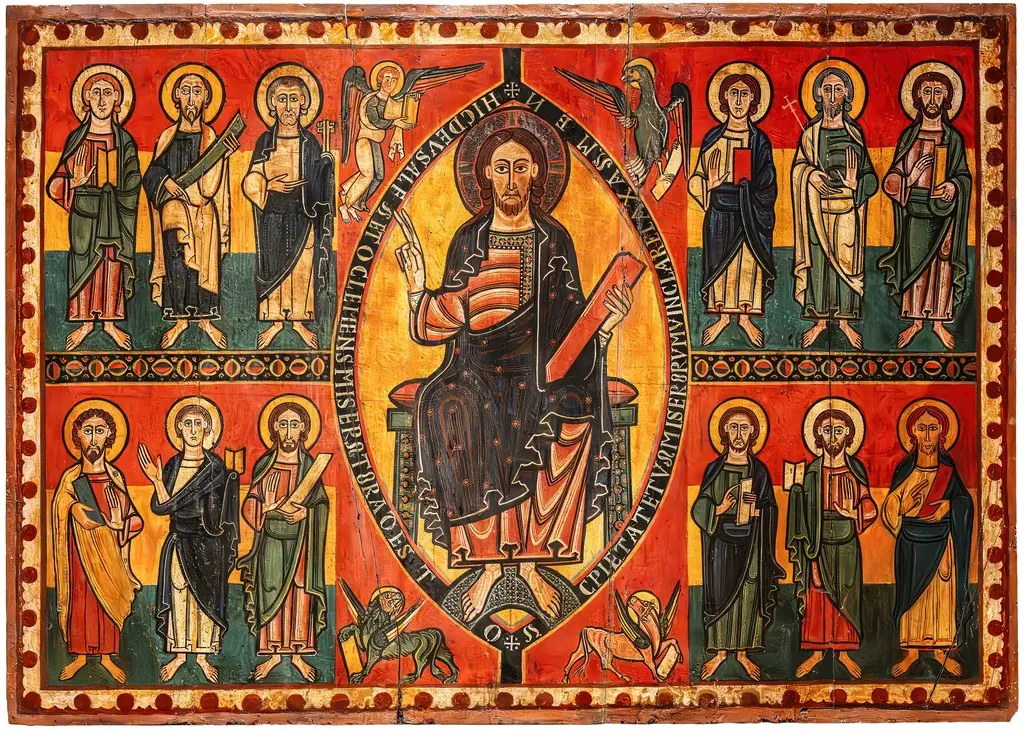
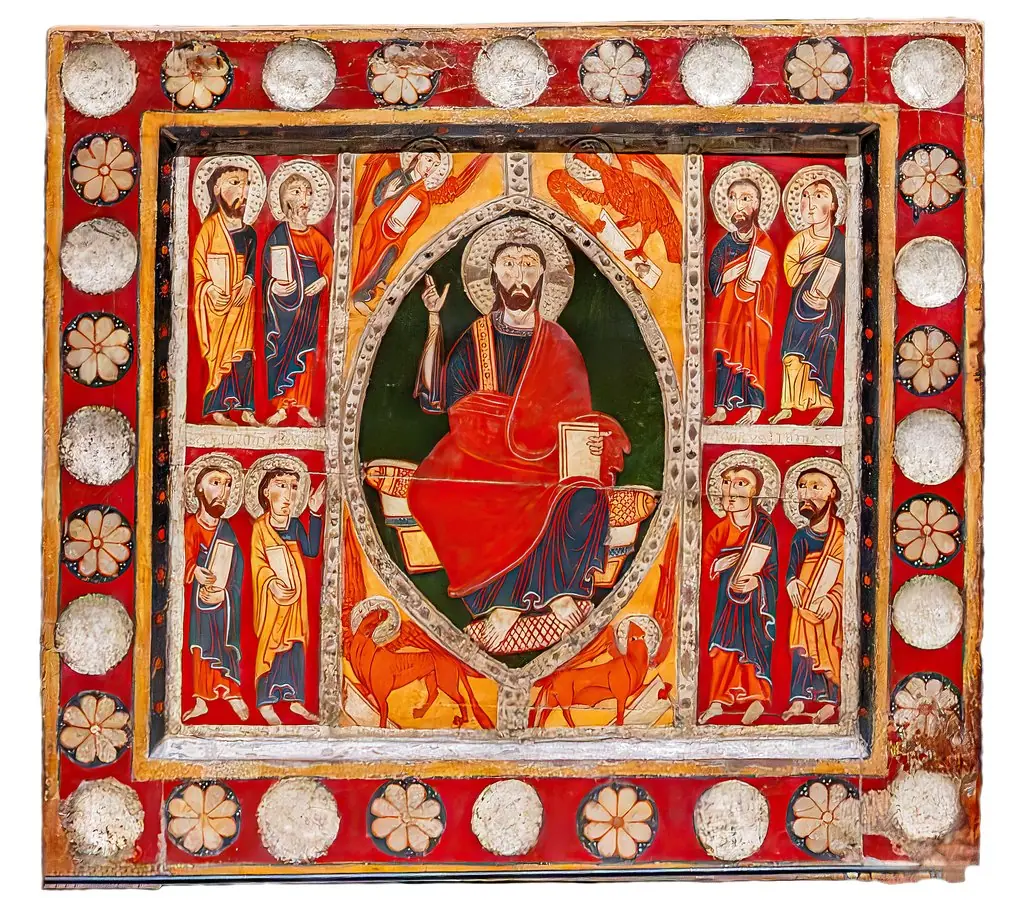
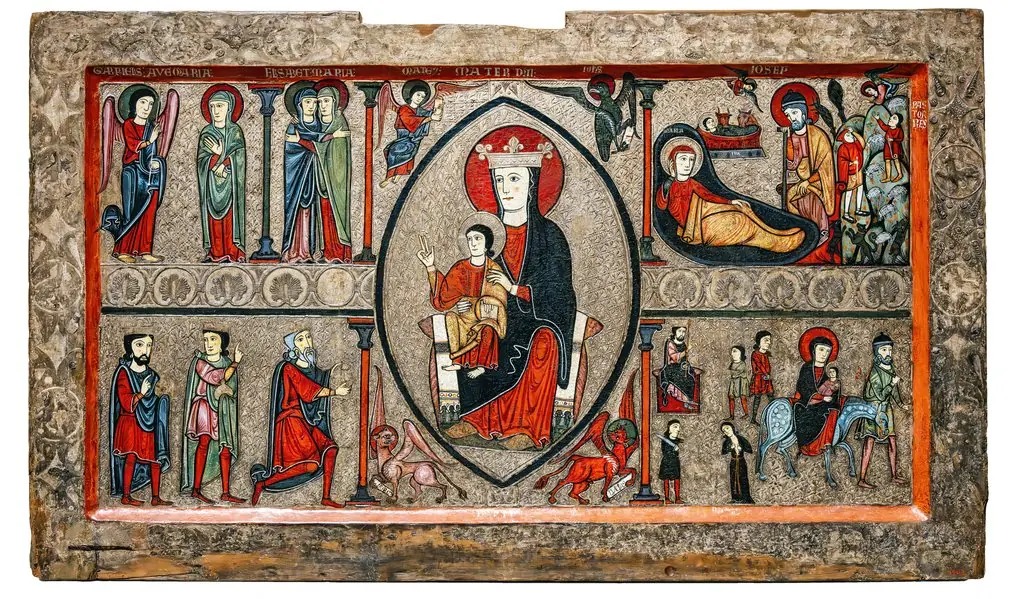
Muted tones of red, green, and gold unify the scene, creating a quiet, contemplative atmosphere suited for liturgical use.
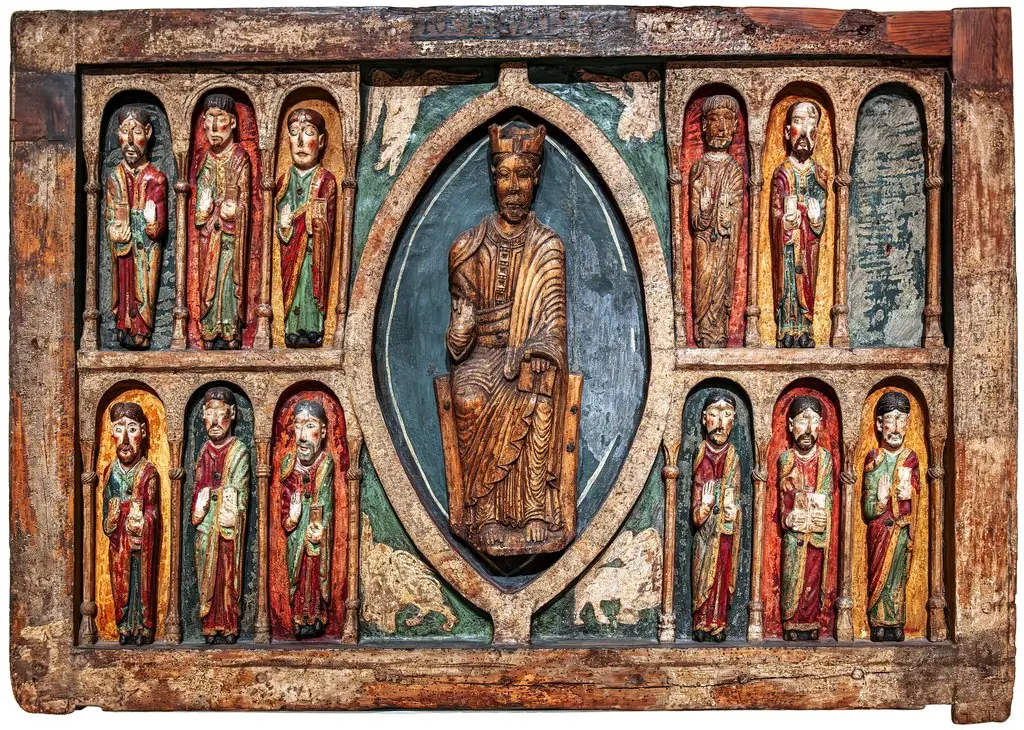
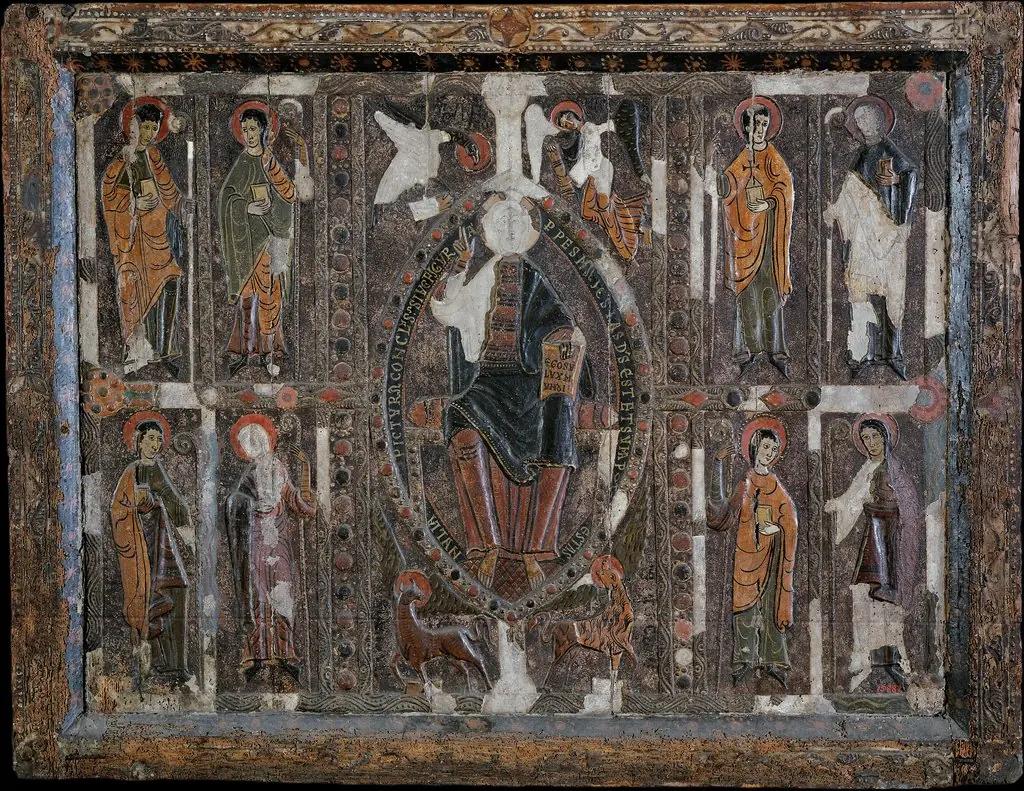
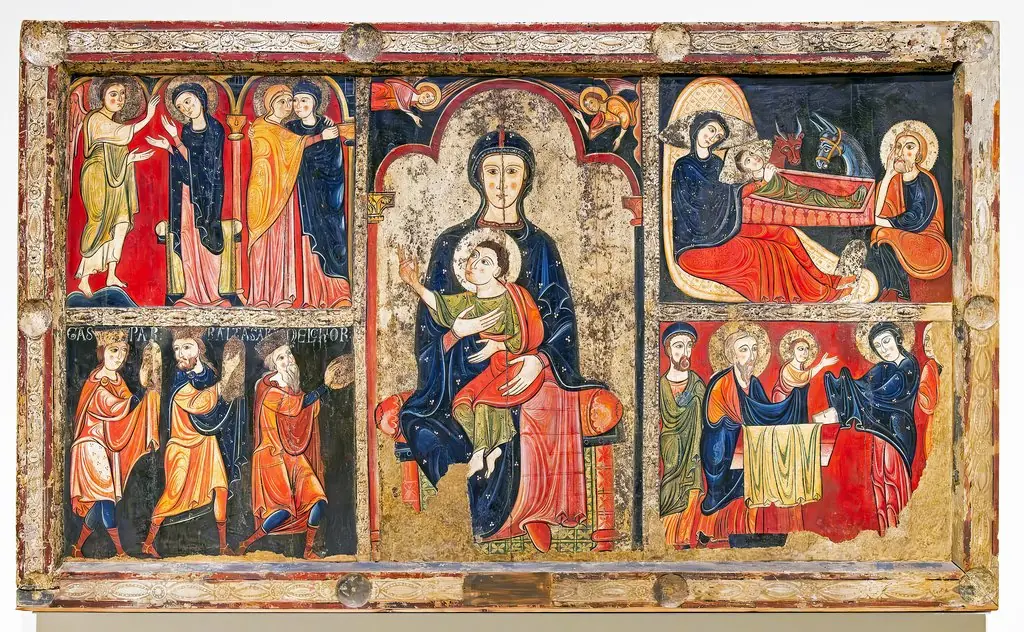
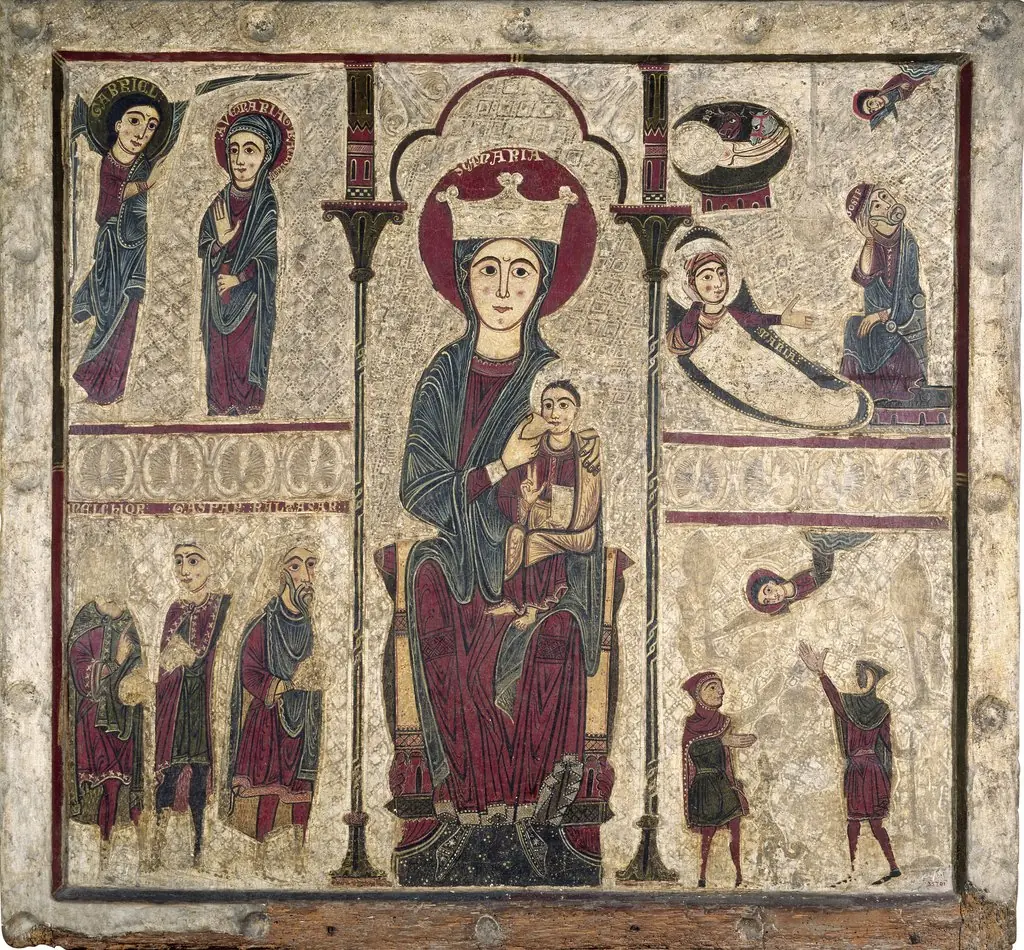
This altar frontal is a painted panel divided into distinct narrative sections, each framed by ornate borders. The central figure, depicted with a halo, is seated on a throne, flanked by other haloed figures and animals. The composition is symmetrical and hierarchical, emphasizing spiritual authority. Muted tones of red, green, and gold unify the scene, creating a quiet, contemplative atmosphere suited for liturgical use.
Subject & Meaning
The central figure likely represents Christ in Majesty or a sainted bishop, surrounded by attendants, possibly apostles or angels. The inclusion of animals—perhaps symbolic creatures like lions or lambs—reinforces theological themes of divine order and harmony. The halos denote sanctity, while the arrangement suggests a celestial court, inviting reverence and meditative focus during worship.
Technique & Style
The painting employs tempera or early oil on wood, with fine brushwork detailing textiles and architectural elements. Patterns on garments are rendered with precision, using gold leaf for highlights. The color palette is restrained, avoiding vivid contrasts in favor of tonal harmony. Figures are stylized rather than naturalistic, reflecting medieval conventions that prioritize symbolic clarity over spatial realism.
History & Provenance
Created for use on an altar, this frontal would have been displayed during religious services, likely in a monastery or cathedral. Its survival suggests it was carefully preserved, possibly due to the importance of the institution that commissioned it. Though its exact origin is unrecorded, stylistic elements point to a production center in southern Europe during the late medieval period.
Context
This work belongs to a tradition of liturgical panels that adorned church altars in the 12th to 14th centuries. Such objects served both devotional and didactic purposes, visually reinforcing doctrine for congregations with limited literacy. The emphasis on hierarchy, halos, and symbolic animals aligns with broader ecclesiastical imagery of the time, reflecting the Church’s role as mediator between earthly and divine realms.
Legacy
Though no longer in active liturgical use, the frontal remains a testament to medieval craftsmanship and devotional aesthetics. Its preservation offers insight into how religious communities visualized sacred narratives. It contributes to the understanding of how art functioned within worship, bridging ritual, symbolism, and material culture in pre-modern Europe.
Artist & collection

 Domestic Scene
 Giacomo and Cardinal Marco, investing Andrea, Abbot of San Zeno, with his Benefice
 The Nymph of Fontainebleau
 Portrait of a Woman
 Madonna and Child with Saints in the Enclosed Garden
 Venus and Minerva
 Family Group of Four on Sofa
 Wall painting from Room H of the Villa of P. Fannius Synistor at Boscoreale