Artwork
Altar frontal from Esquius
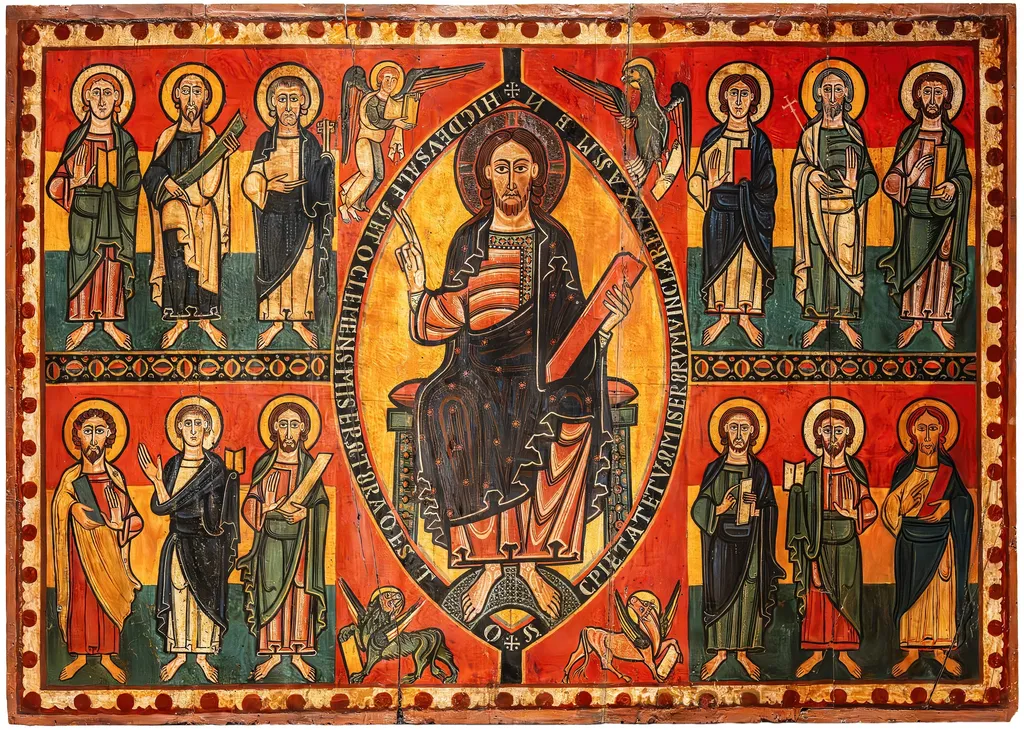
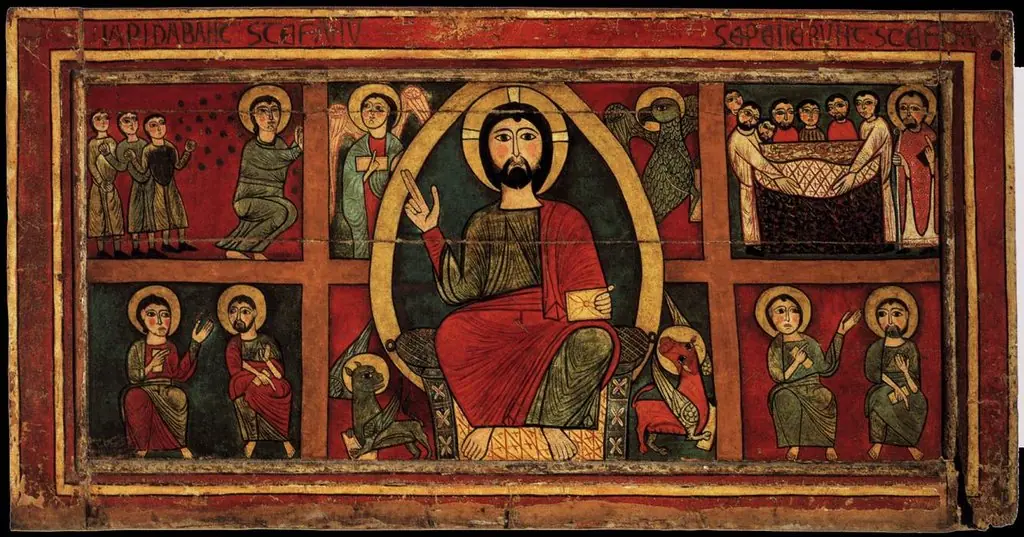
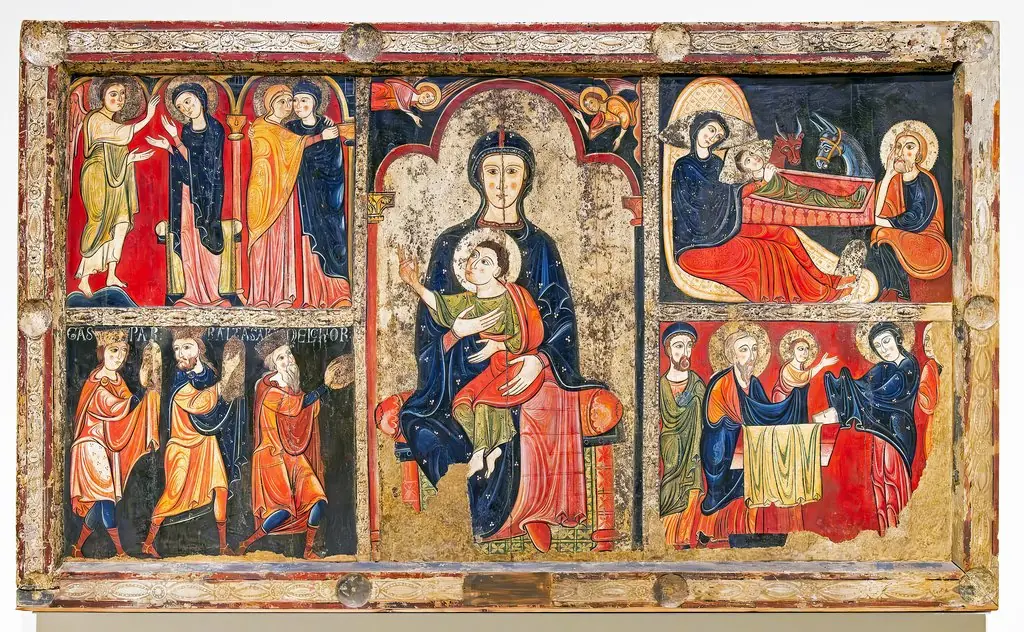
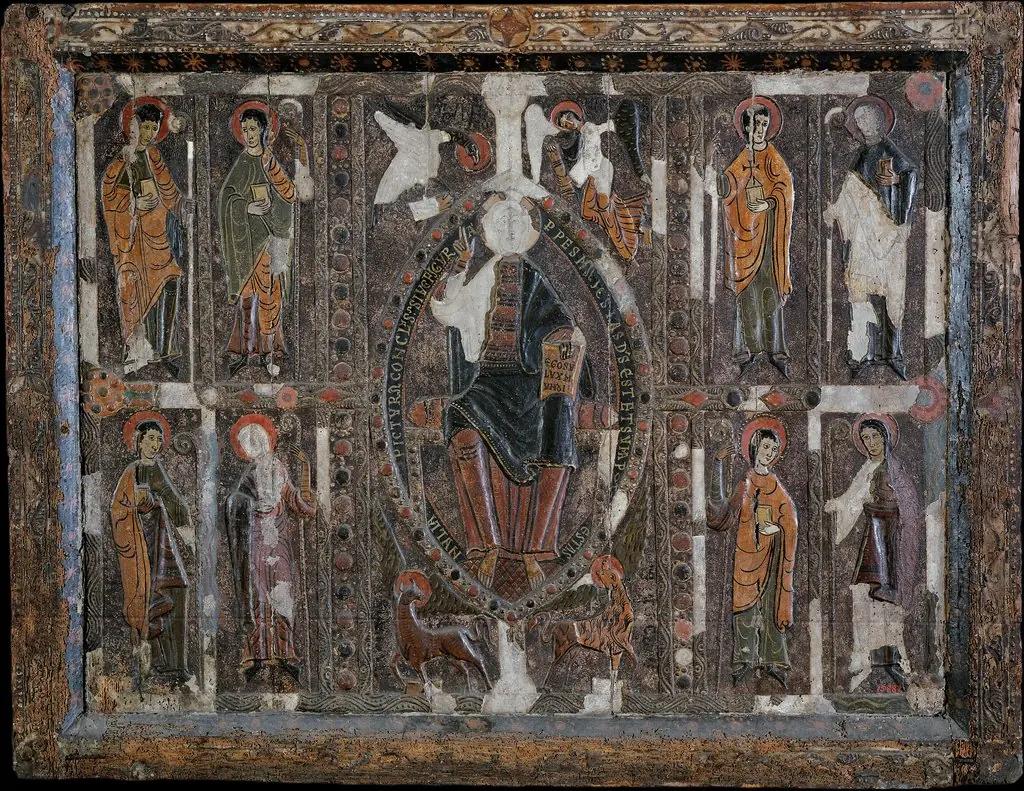
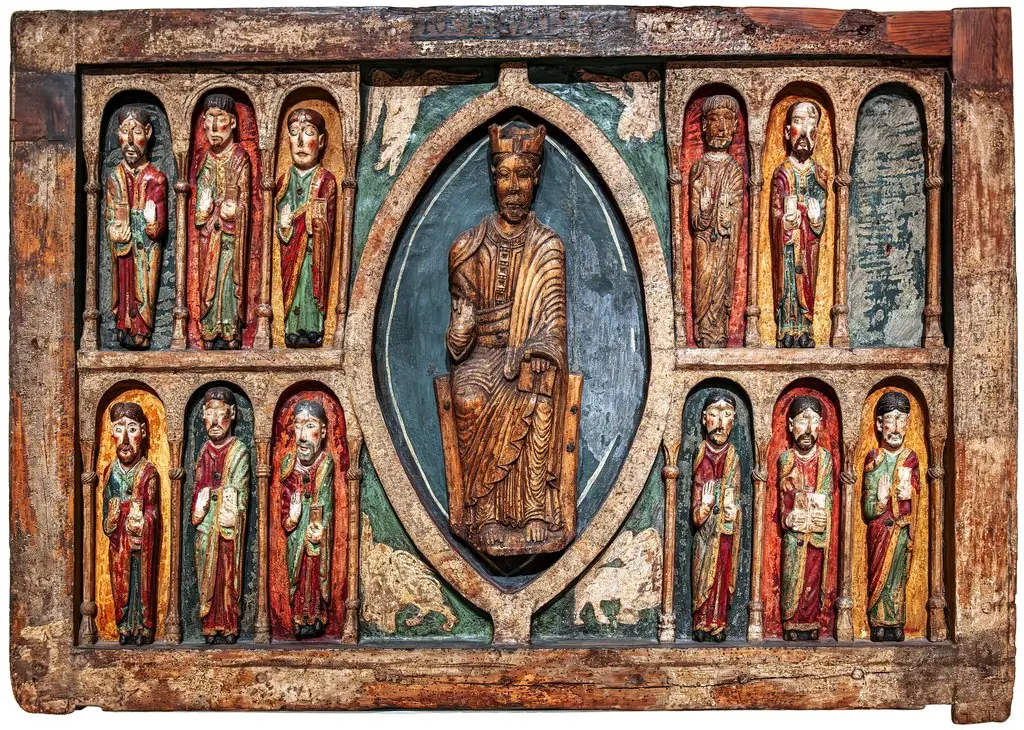
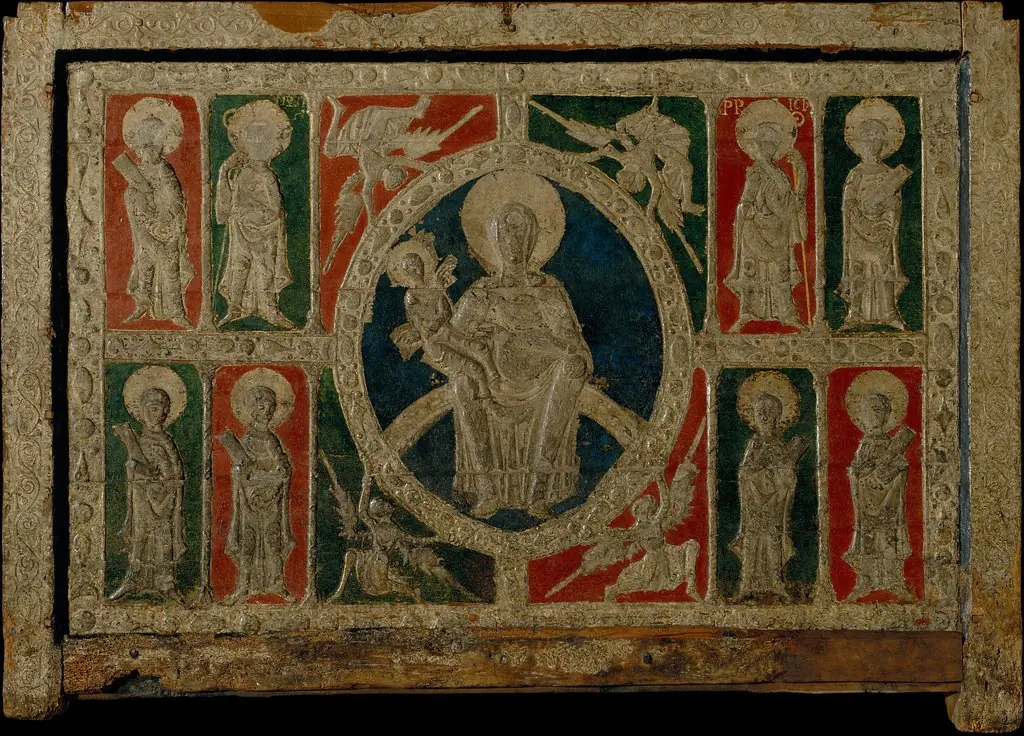
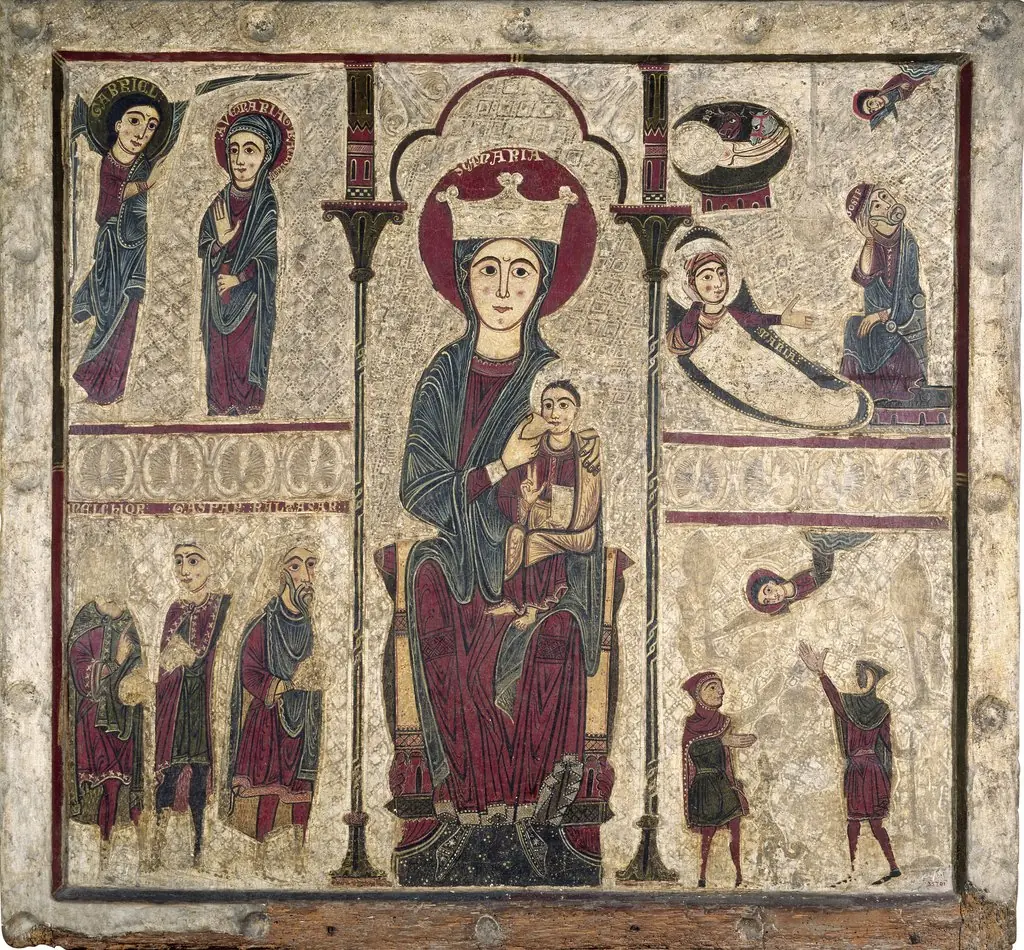
Altar frontal from Esquius is a tempera painting by the Byzantine icon painting artist Unknown. It dates from 1200 and is held in the collection of the Museu Nacional d'Art de Catalunya. This tempera painting originates from Esquius and functions as an altar frontal, designed to adorn the front of a church altar.
About this work
Overview
Its composition centers on a solemn, haloed figure seated on a throne, flanked symmetrically by smaller haloed figures arranged in horizontal rows.
This tempera painting originates from Esquius and functions as an altar frontal, designed to adorn the front of a church altar. Its composition centers on a solemn, haloed figure seated on a throne, flanked symmetrically by smaller haloed figures arranged in horizontal rows. The golden background, adorned with detailed patterns, enhances the sacred atmosphere, characteristic of liturgical art from its period.
Subject & Meaning
The central figure, holding a book and seated in majesty, likely represents Christ in Majesty or a saintly ruler, surrounded by apostles or angels. The halos and identical robes signify divine status, while the books suggest teachings or scripture. The arrangement reflects theological hierarchy, emphasizing order and reverence, common in medieval Christian iconography to inspire devotion during worship.
Technique & Style
Executed in tempera, the painting employs egg-based pigment applied in fine layers to achieve luminous, durable color. Lines are precise, forms stylized, and perspective flattened to prioritize spiritual symbolism over naturalism. The golden background, richly patterned, avoids depth, focusing attention on the figures and their sacred roles, typical of Romanesque and early Gothic devotional art.
History & Provenance
The work comes from Esquius, a small community in the Pyrenees, likely created for a local parish church in the 11th or 12th century. Its survival suggests it was preserved through centuries, possibly due to the region’s relative isolation. It was later removed from its original setting, likely during secularization or collection efforts in the 19th century.
Context
Created during a period when liturgical art served as visual scripture for largely illiterate congregations, this frontal would have been viewed during Mass, reinforcing doctrinal themes. Its style aligns with regional Romanesque traditions in the Pyrenees, where monastic centers influenced local craftsmanship and religious imagery.
Legacy
As a preserved example of medieval Catalan tempera work, it offers insight into devotional practices and artistic conventions of rural ecclesiastical communities. Though not widely known, it contributes to understanding how regional styles adapted broader Christian iconography, preserving a quiet but enduring visual language of faith.
Artist & collection

 Domestic Scene
 Giacomo and Cardinal Marco, investing Andrea, Abbot of San Zeno, with his Benefice
 The Nymph of Fontainebleau
 Portrait of a Woman
 Madonna and Child with Saints in the Enclosed Garden
 Venus and Minerva
 Family Group of Four on Sofa
 Wall painting from Room H of the Villa of P. Fannius Synistor at Boscoreale