Artwork
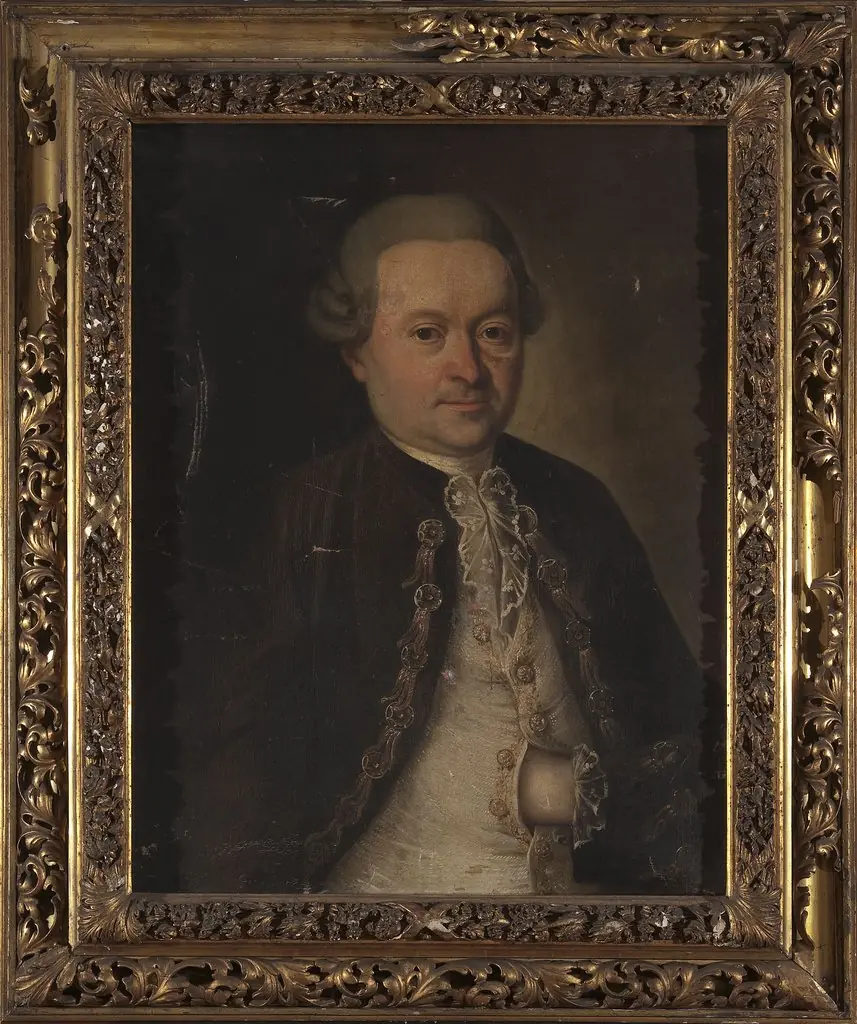
Portrait of Franciszek Dembiński (?–1776), the last starost of Wolbrom
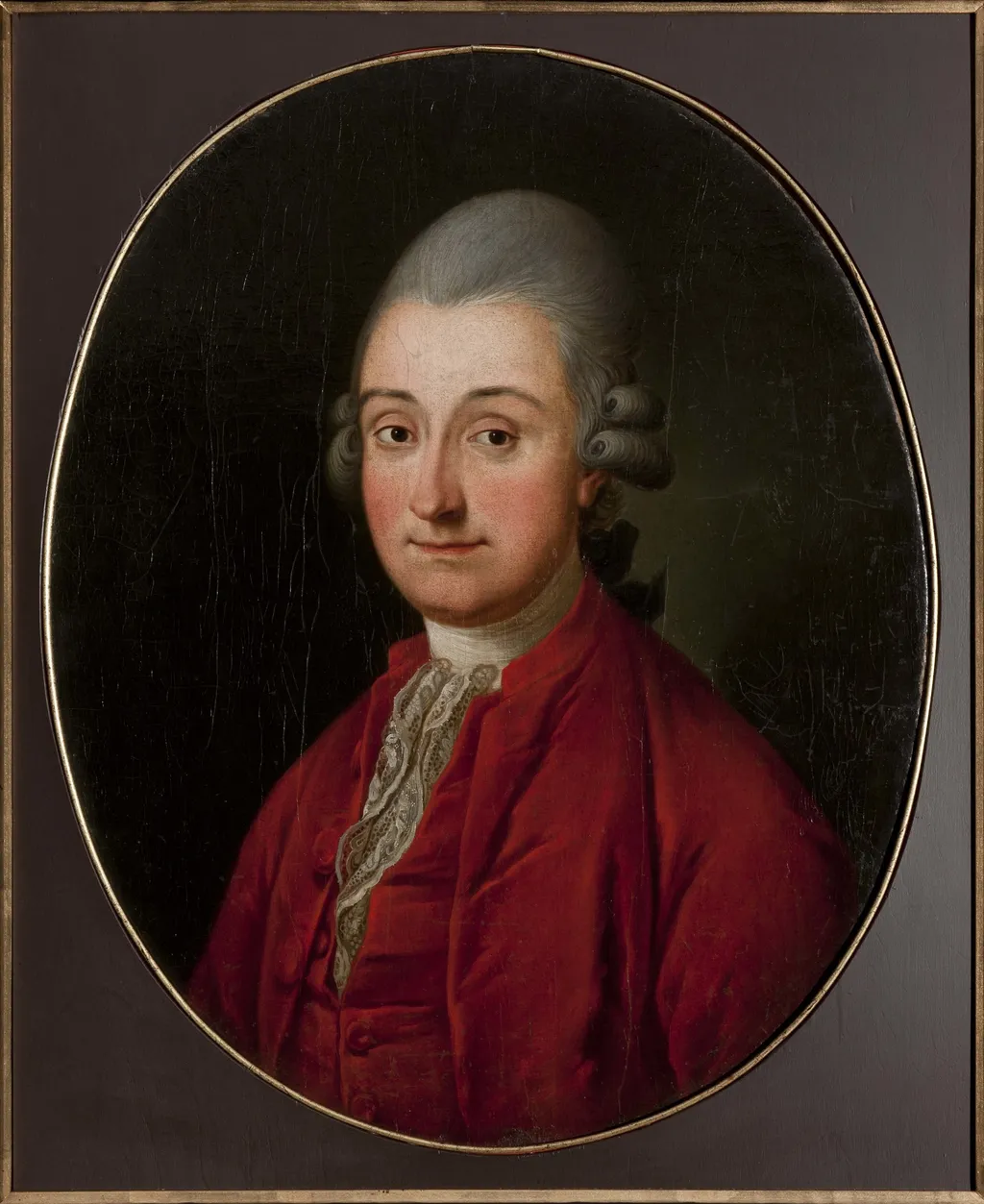
Portrait of Franciszek Dembiński (?–1776), the last starost of Wolbrom is an oil painting by the Rococo painting artist Unknown. It dates from 1762 and is held in the collection of the National Museum in Warsaw. The oil painting depicts Franciszek Dembiński, the final starost of Wolbrom, rendered in a formal 18th‑century portrait style.
About this work
The background of the painting is dark, which helps to draw attention to the subject's face and clothing.
This painting is a portrait of a man, likely from the 18th century. He is depicted wearing a red jacket with a white lace collar and a white cravat. His hair is styled in a powdered wig, which was a common fashion during that time period.
The man's facial expression is neutral, and he appears to be looking directly at the viewer. The background of the painting is dark, which helps to draw attention to the subject's face and clothing.
The painting is an example of a formal portrait, which was a popular genre during the 18th century. It is held at the National Museum in Warsaw.
Overview
The oil painting depicts Franciszek Dembiński, the final starost of Wolbrom, rendered in a formal 18th‑century portrait style. He is shown in a red jacket trimmed with a white lace collar and a white cravat, his powdered wig framing a neutral, direct gaze. A dark backdrop isolates the figure, emphasizing his attire and facial features.
Subject & Meaning
Franciszek Dembiński (d. 1776) served as the last administrative head of the Wolbrom region, a role reflected in the dignified pose and attire. The portrait’s restrained expression and sober lighting convey both the authority of his office and the personal modesty expected of a provincial official in the late Polish‑Lithuanian Commonwealth.
Technique & Style
Executed in oil on canvas, the work employs a limited palette of deep reds, whites, and muted shadows. The artist renders the lace collar and cravat with fine brushwork, while the powdered wig is modeled through subtle tonal shifts. The dark background, a common device in 18th‑century portraiture, heightens the three‑dimensionality of the figure.
History & Provenance
The portrait is part of the collection of the National Museum in Warsaw. It entered the museum’s holdings through a donation of private estates in the early 20th century, reflecting the institution’s effort to preserve representations of Poland’s regional nobility.
Context
In the Polish‑Lithuanian Commonwealth, starosts acted as royal appointees overseeing local administration. Portraits of such officials were typically commissioned to affirm their status and loyalty to the crown. This painting aligns with contemporary European conventions, where formal attire and a dark backdrop signaled rank and propriety.
Artist & collection

 Domestic Scene
 Giacomo and Cardinal Marco, investing Andrea, Abbot of San Zeno, with his Benefice
 The Nymph of Fontainebleau
 Portrait of a Woman
 Madonna and Child with Saints in the Enclosed Garden
 Venus and Minerva
 Family Group of Four on Sofa
 Wall painting from Room H of the Villa of P. Fannius Synistor at Boscoreale
 Portrait of a young man in a wig en catogan
 Anders de Bruce (1723-1787)
 Gustaf Borgström
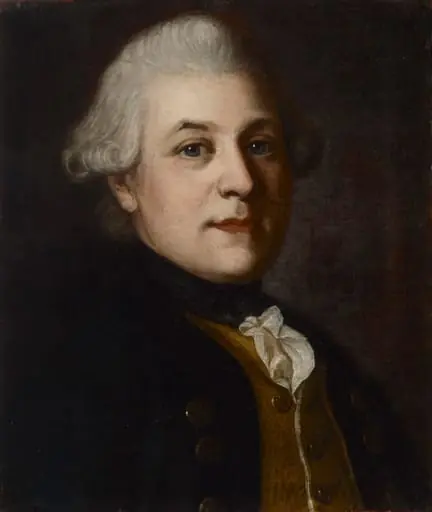 Herr Dristel
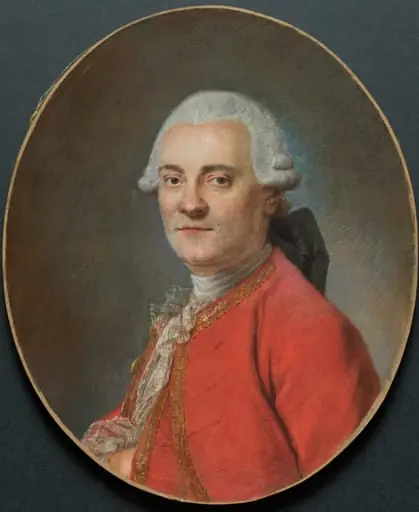 Portrait of a Man
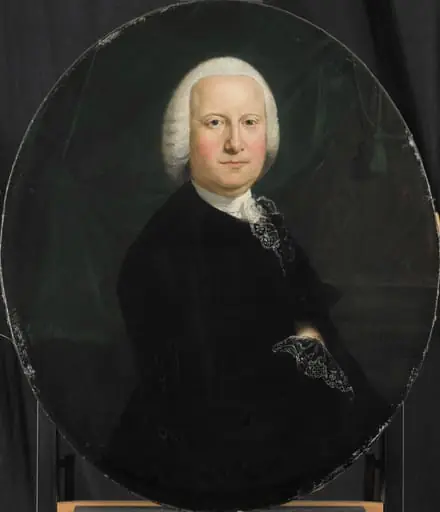 Portrait of Adriaan du Bois, Director of the Rotterdam Chamber of the Dutch East India Company, elected 1742
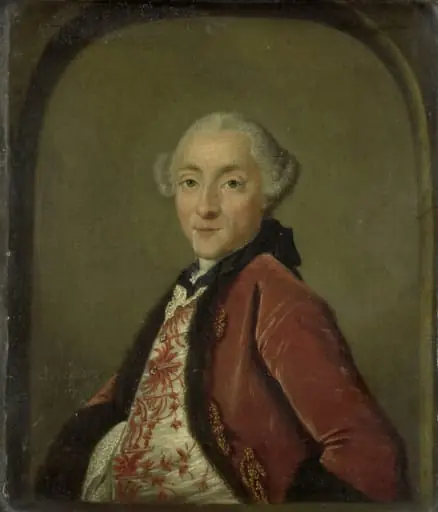 Portrait of Pieter Nicolaas Rendorp, Amsterdam Brewer
 The Artist's Father
 Portrait of Johann Heinrich Muyschel (1755–1825)
 Portrait of Joannes Badon, Poet from Vlaardingen
 Vapaaherra Johan Wilhelm Sprengtporten
 Portrait of Franciszek Halka-Ledóchowski