Artwork
Triad of the Medicine Master Buddha Yakushi (Bhaisajya Buddha)
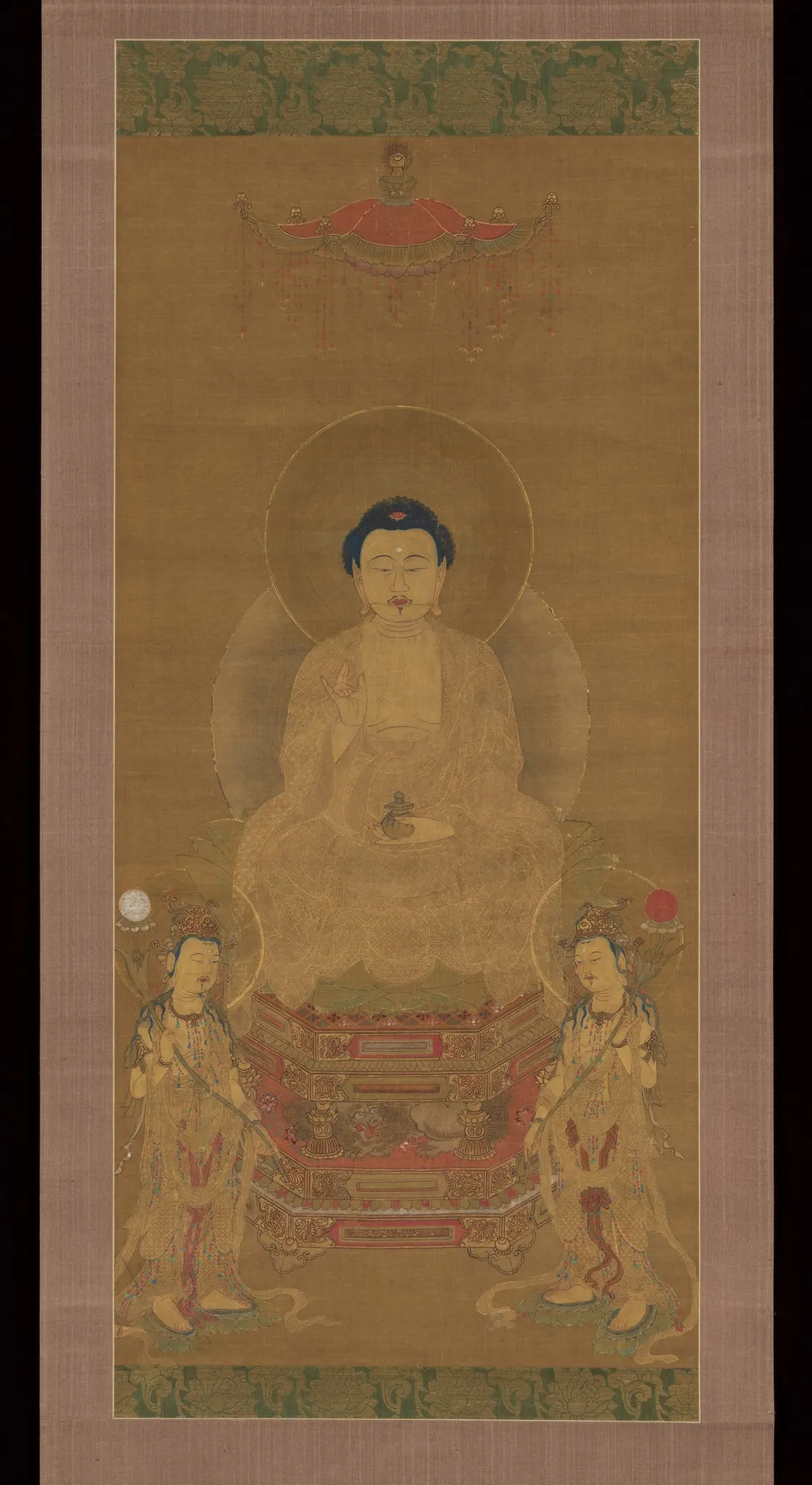
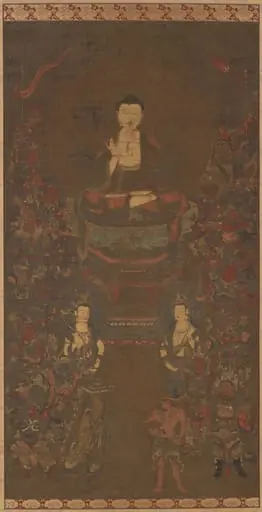
Triad of the Medicine Master Buddha Yakushi (Bhaisajya Buddha) is an unspecified painting by Unknown. It dates from 1700 and is held in the collection of the Metropolitan Museum of Art. The work presents a central figure of the Medicine Buddha seated beneath a luminous halo, flanked by two attendant figures.
About this work
Overview
The work presents a central figure of the Medicine Buddha seated beneath a luminous halo, flanked by two attendant figures. The composition is set against a warm brown ground, and the central Buddha holds an object in his right hand while the attendants each clutch their own items. The serene, closed-eyed expressions of all three figures convey a tranquil atmosphere.
Subject & Meaning
The central deity is Yakushi, the Buddha of healing, traditionally depicted with a medicine jar or plant. The accompanying figures likely represent his disciples or protective bodhisattvas, reinforcing the theme of spiritual and physical restoration. The calm demeanor and harmonious grouping emphasize the Buddhist ideal of compassionate relief from suffering.
Technique & Style
Rendered in a muted palette of earth tones, the painting relies on gentle, flowing lines to define form and drapery. The halo behind the Buddha’s head is suggested with a soft glow, while the figures’ faces are rendered with minimal detail, focusing on expression rather than realism. The overall effect is one of subdued elegance and meditative stillness.
Context
Triadic depictions of Yakushi were common in East Asian Buddhist art, especially in temple settings where the image served as a focal point for prayers of health. The use of warm colors and a simplified visual language aligns the piece with devotional works intended to inspire contemplation rather than display technical virtuosity.
Artist & collection

 Domestic Scene
 Giacomo and Cardinal Marco, investing Andrea, Abbot of San Zeno, with his Benefice
 The Nymph of Fontainebleau
 Portrait of a Woman
 Madonna and Child with Saints in the Enclosed Garden
 Venus and Minerva
 Family Group of Four on Sofa
 Wall painting from Room H of the Villa of P. Fannius Synistor at Boscoreale
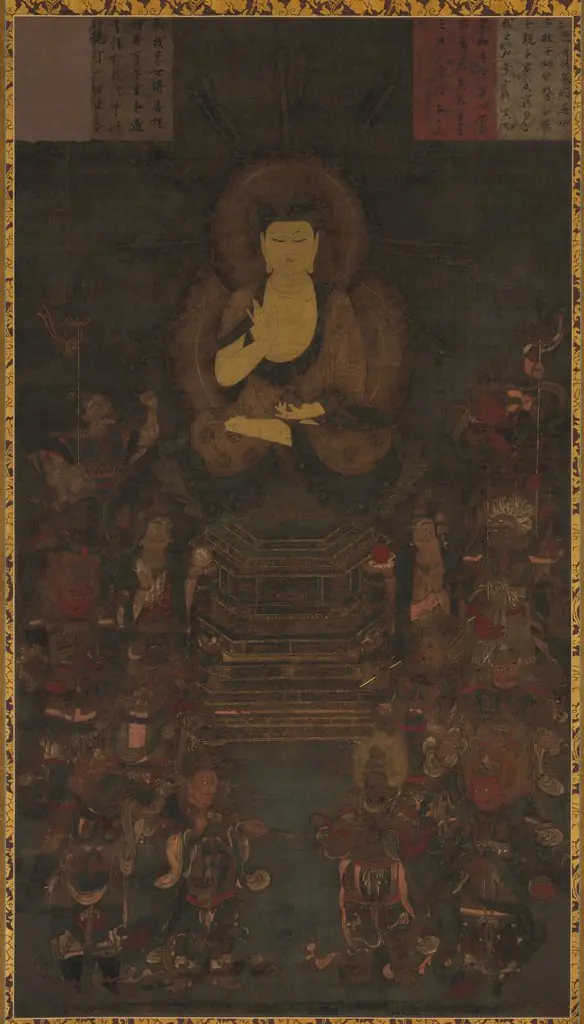 Medicine Master Buddha and the Twelve Divine Generals
 釈迦三尊像|Shaka (Shakyamuni) Triad
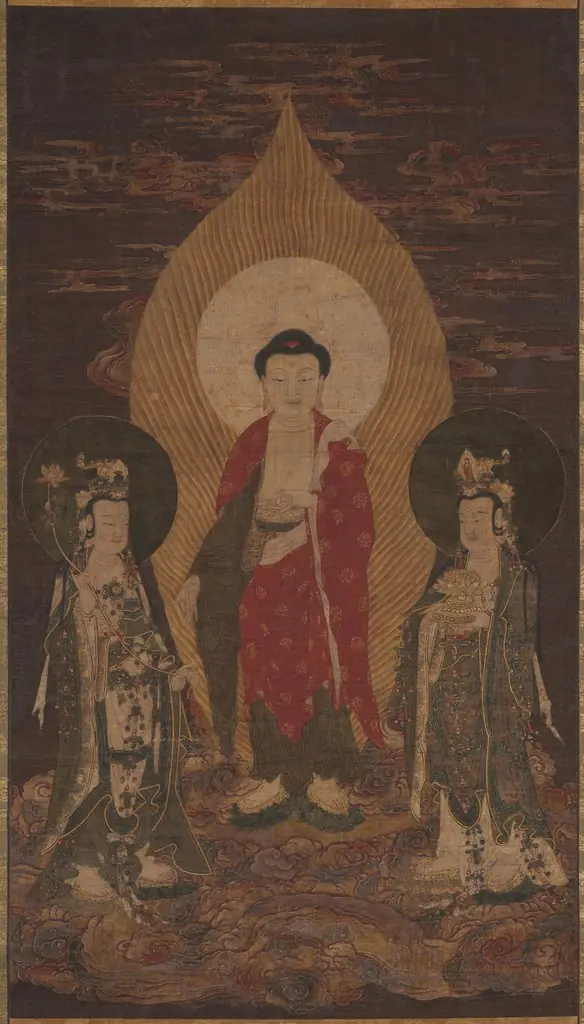 Amitābha Triad
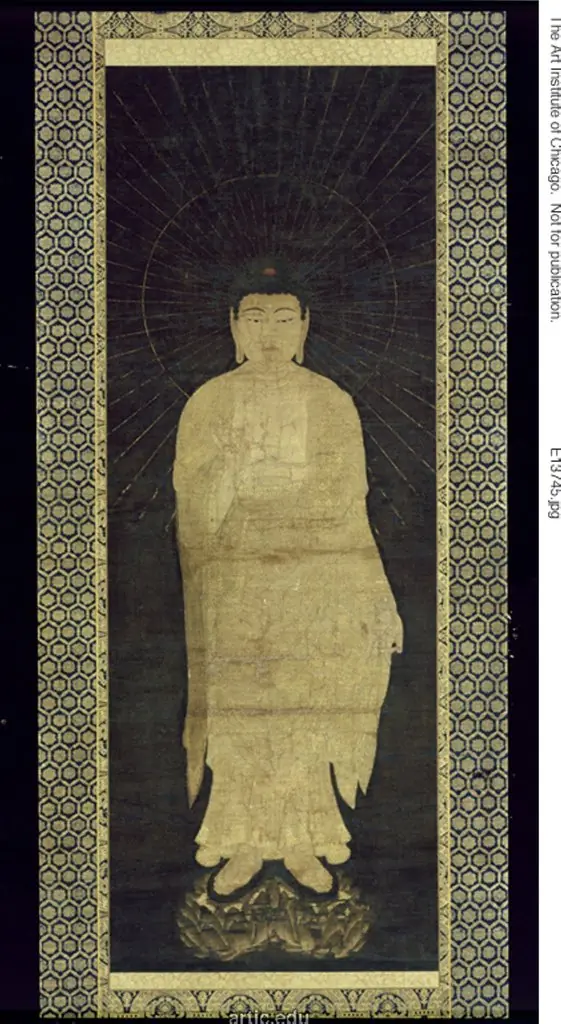 The Buddha Amida, from the triptych Approach of the Amida Trinity
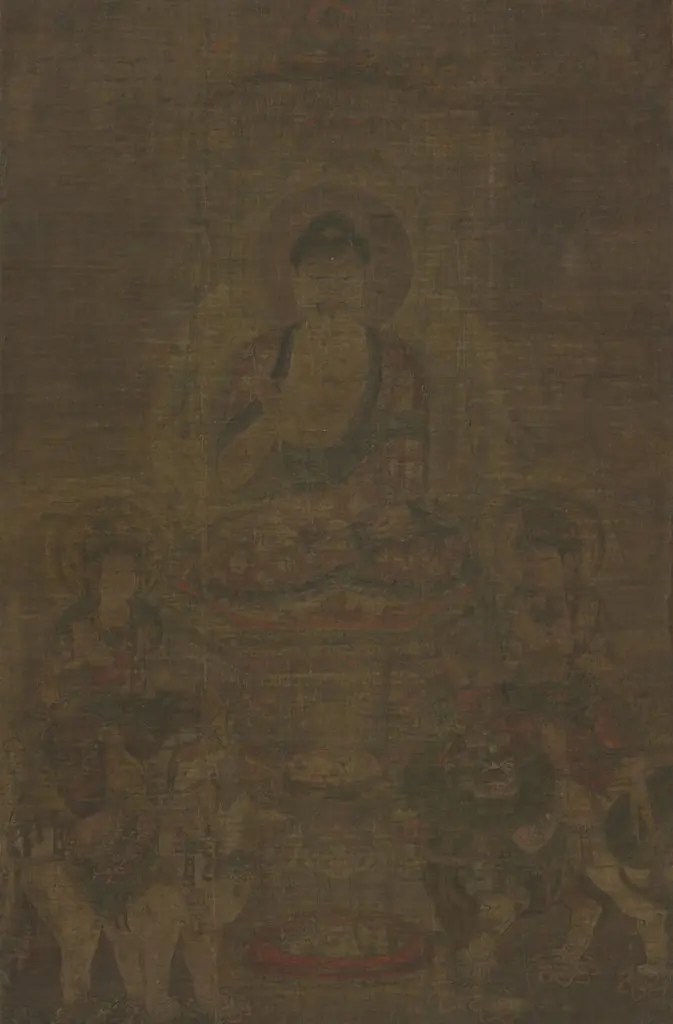 Shakyamuni Triad: Buddha Attended by Manjushri and Samantabhadra
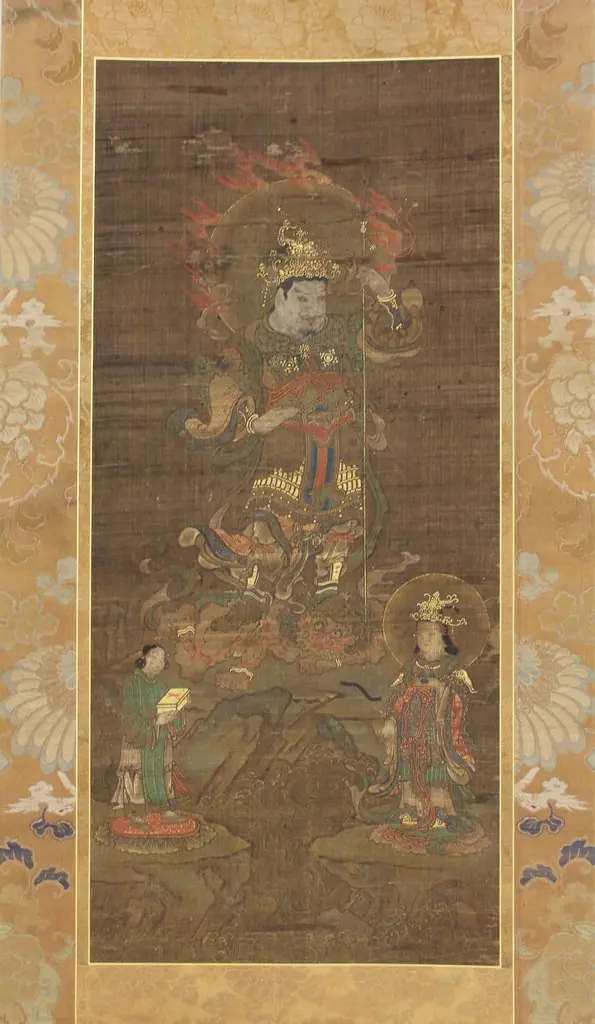 Mount Kurama Mandala: Bishamonten Triad (Kuramayama mandara: Bishamonten sanzonzō)
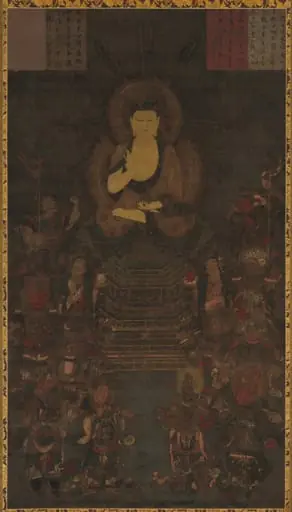 Medicine Master Buddha and the Twelve Divine Generals
 Shakyamuni with the Sixteen Benevolent Deities
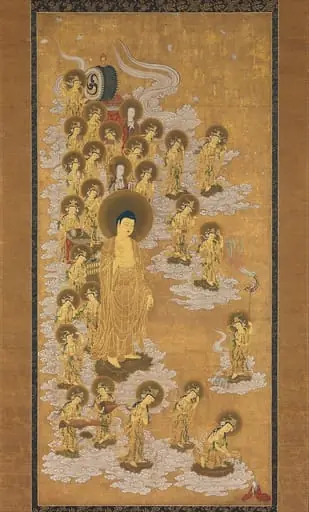 阿弥陀二十五菩薩来迎図|Welcoming Descent of Amida Buddha and Twenty-five Bodhisattvas