Artwork
The young man of Baghdad solicits advice from a friend as his slave girl, who is adept at music, awaits, from a Tuti-nama (Tales of a Parrot): Forty-eighth Night
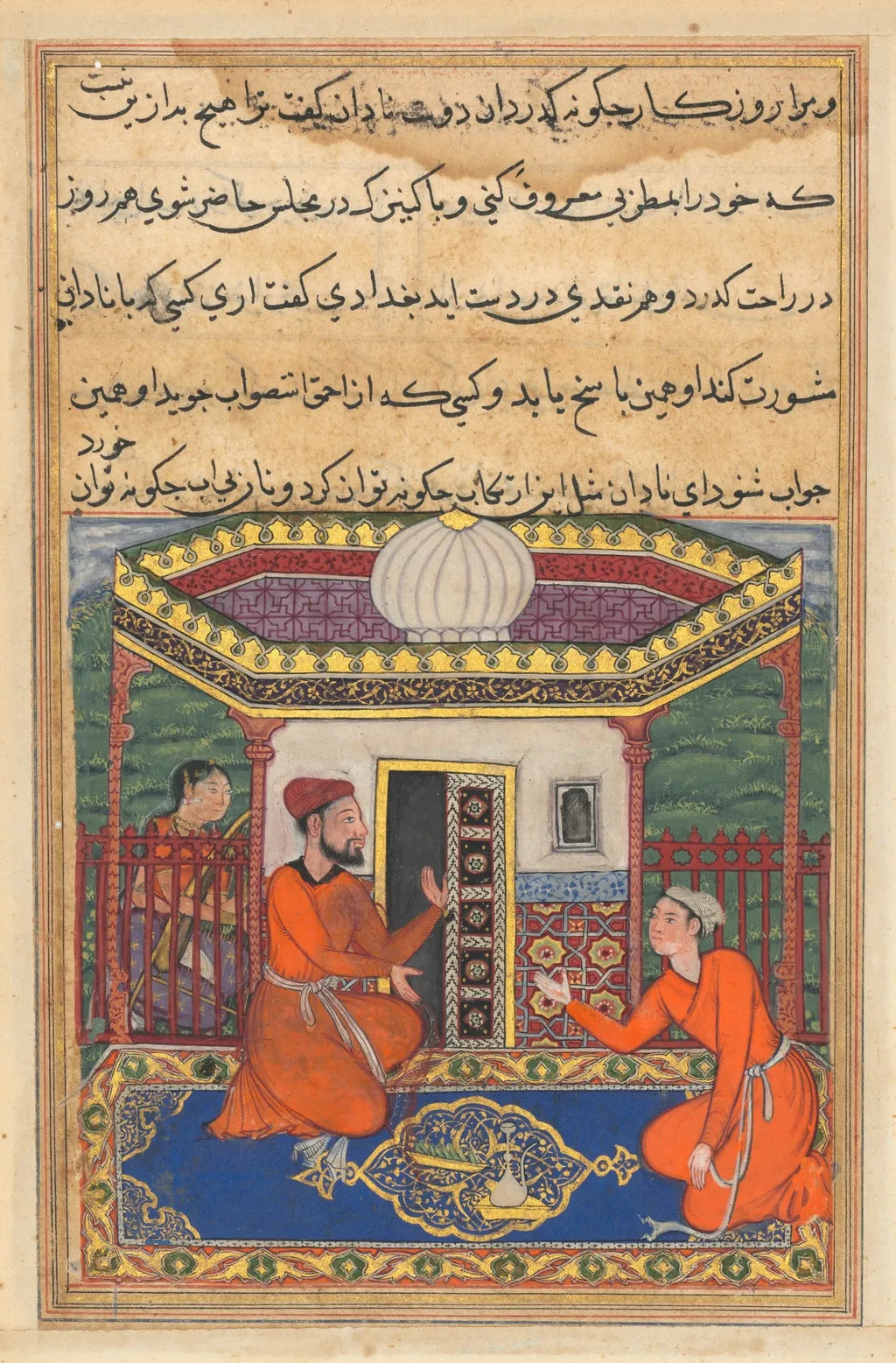
The young man of Baghdad solicits advice from a friend as his slave girl, who is adept at music, awaits, from a Tuti-nama (Tales of a Parrot): Forty-eighth Night is an unspecified painting by Unknown. It dates from 1560 and is held in the collection of the Cleveland Museum of Art. The miniature illustrates a scene from the forty‑eighth night of the Persian narrative collection *Tuti‑nama* (Tales of a Parrot).
About this work
Overview
The miniature illustrates a scene from the forty‑eighth night of the Persian narrative collection *Tuti‑nama* (Tales of a Parrot). Two men in vivid orange garments sit on a blue carpet; one kneels and gestures while the other leans forward to listen. A third figure stands near a fence in the background, and a richly patterned border filled with gold motifs and Arabic calligraphy frames the image.
Subject & Meaning
The composition depicts a young man from Baghdad seeking counsel from a friend, while his slave girl, noted for her musical skill, waits nearby. The dialogue suggests a moment of private advice‑giving, reflecting themes of mentorship and the social dynamics of courtly life in the story’s moral framework.
Technique & Style
Executed in the miniature tradition of Persian manuscripts, the work employs flat, saturated colors and strong, black outlines that define forms without modeling. Gold leaf and intricate geometric patterns adorn the border and ceiling, while the interior space is rendered with stylized perspective, emphasizing narrative clarity over realistic depth.
History & Provenance
The piece originates from a hand‑illuminated copy of the *Tuti‑nama*, likely produced in the Safavid period when such illustrated books were commissioned for elite patrons. The manuscript later entered Western collections, and the miniature now resides in the Cleveland Museum of Art’s Asian art holdings.
Artist & collection

 Domestic Scene
 Giacomo and Cardinal Marco, investing Andrea, Abbot of San Zeno, with his Benefice
 The Nymph of Fontainebleau
 Portrait of a Woman
 Madonna and Child with Saints in the Enclosed Garden
 Venus and Minerva
 Family Group of Four on Sofa
 Wall painting from Room H of the Villa of P. Fannius Synistor at Boscoreale
 The young man of Baghdad solicits advice from a friend as his slave girl, who is adept at music, awaits, from a Tuti-nama (Tales of a Parrot): Forty-eighth Night
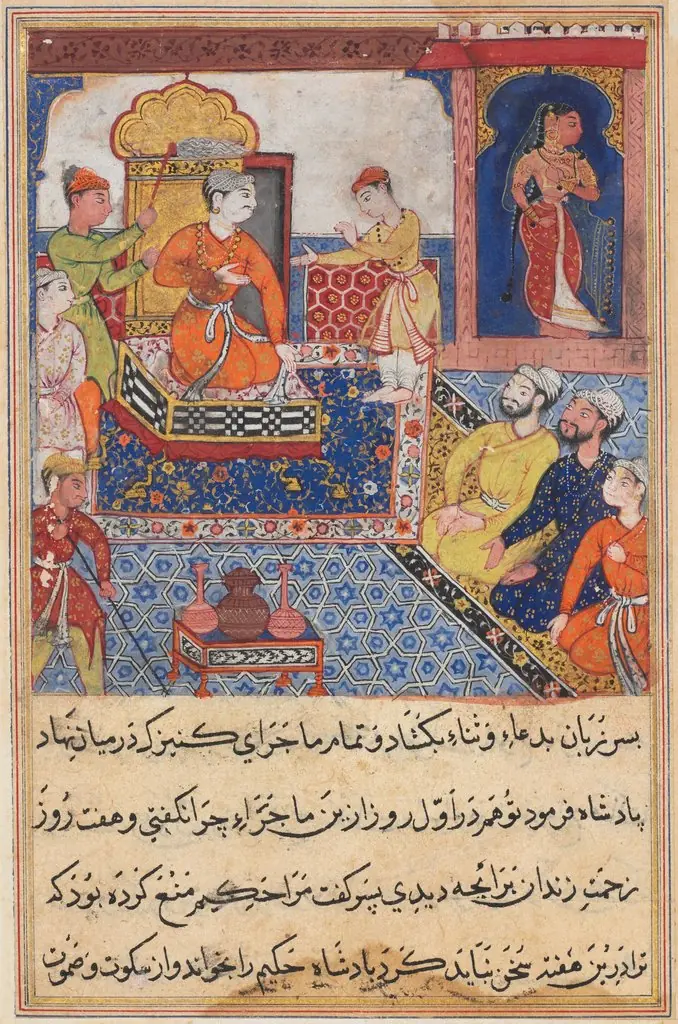 The young prince recounts his experiences to his father, the king, from a Tuti-nama (Tales of a Parrot): Eighth Night
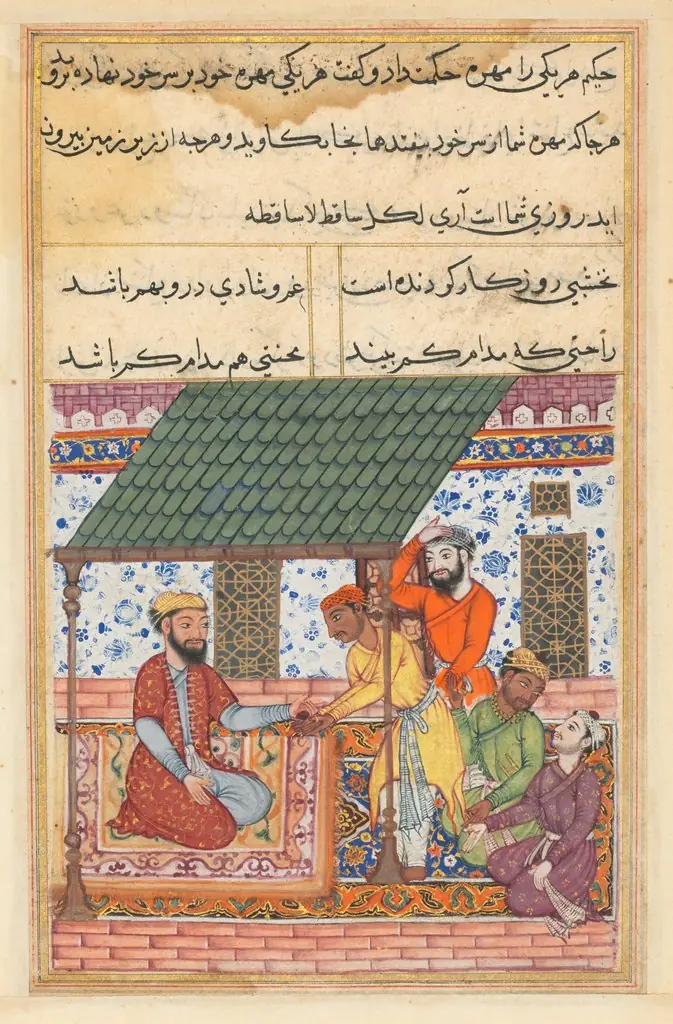 The four destitute friends go to a wise man who gives each one of them a magic shell to be placed on top of the turban, from a Tuti-nama (Tales of a Parrot): Forty-seventh Night
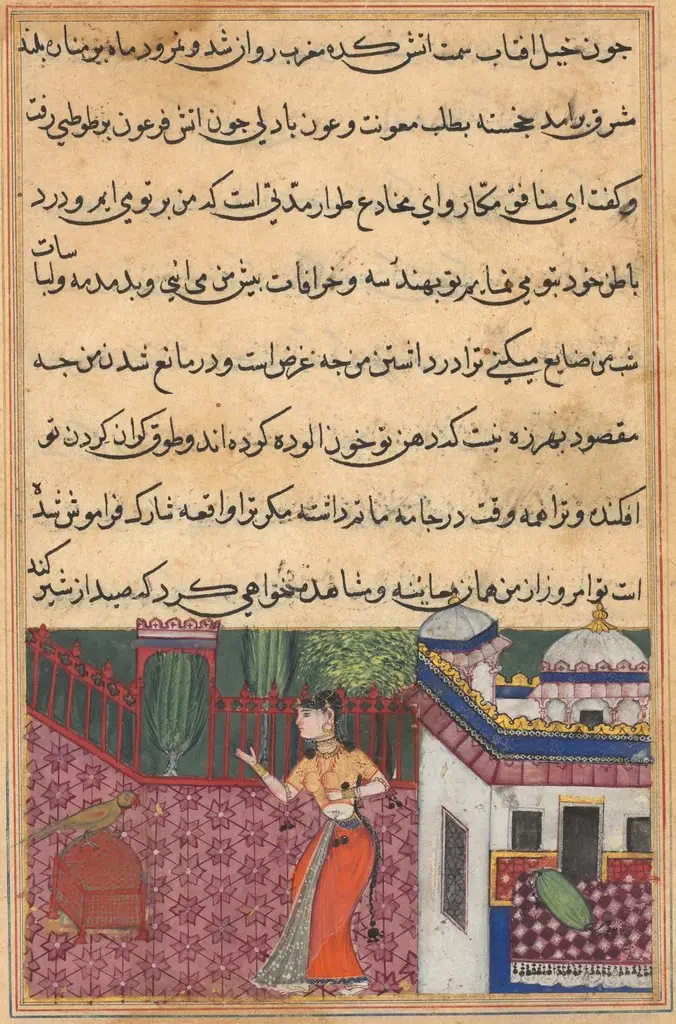 The parrot addresses Khujasta at the beginning of the thirty-third night, from a Tuti-nama (Tales of a Parrot)
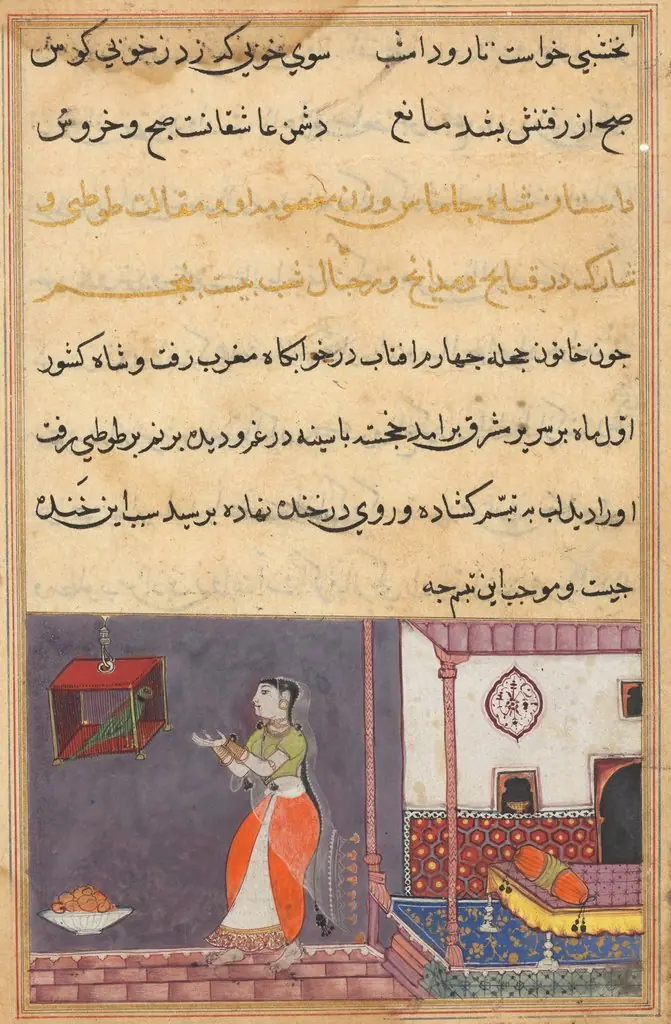 The Parrot Addresses Khujasta at the Beginning of the Twenty-fifth Night, from a Tuti-nama (Tales of a Parrot)
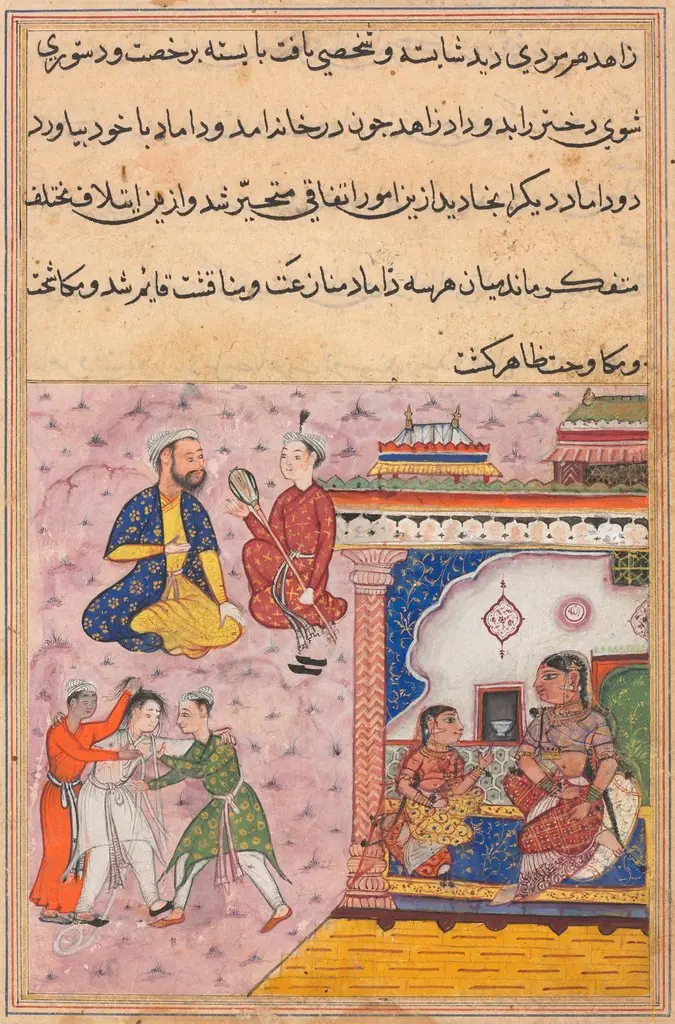 Three suitors fight amongst themselves for the hand of the devotee’s daughter, from a Tuti-nama (Tales of a Parrot): Twentieth Night
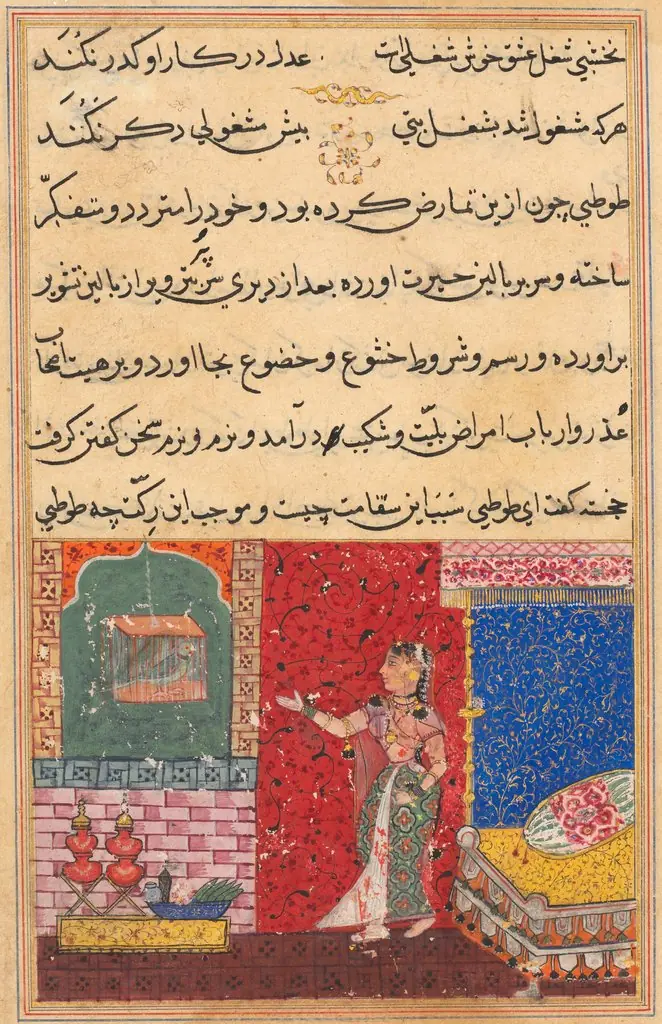 The Parrot Addresses Khujasta at the Beginning of the Fifteenth Night, from a Tuti-nama (Tales of a Parrot)