Artwork
The four destitute friends go to a wise man who gives each one of them a magic shell to be placed on top of the turban, from a Tuti-nama (Tales of a Parrot): Forty-seventh Night
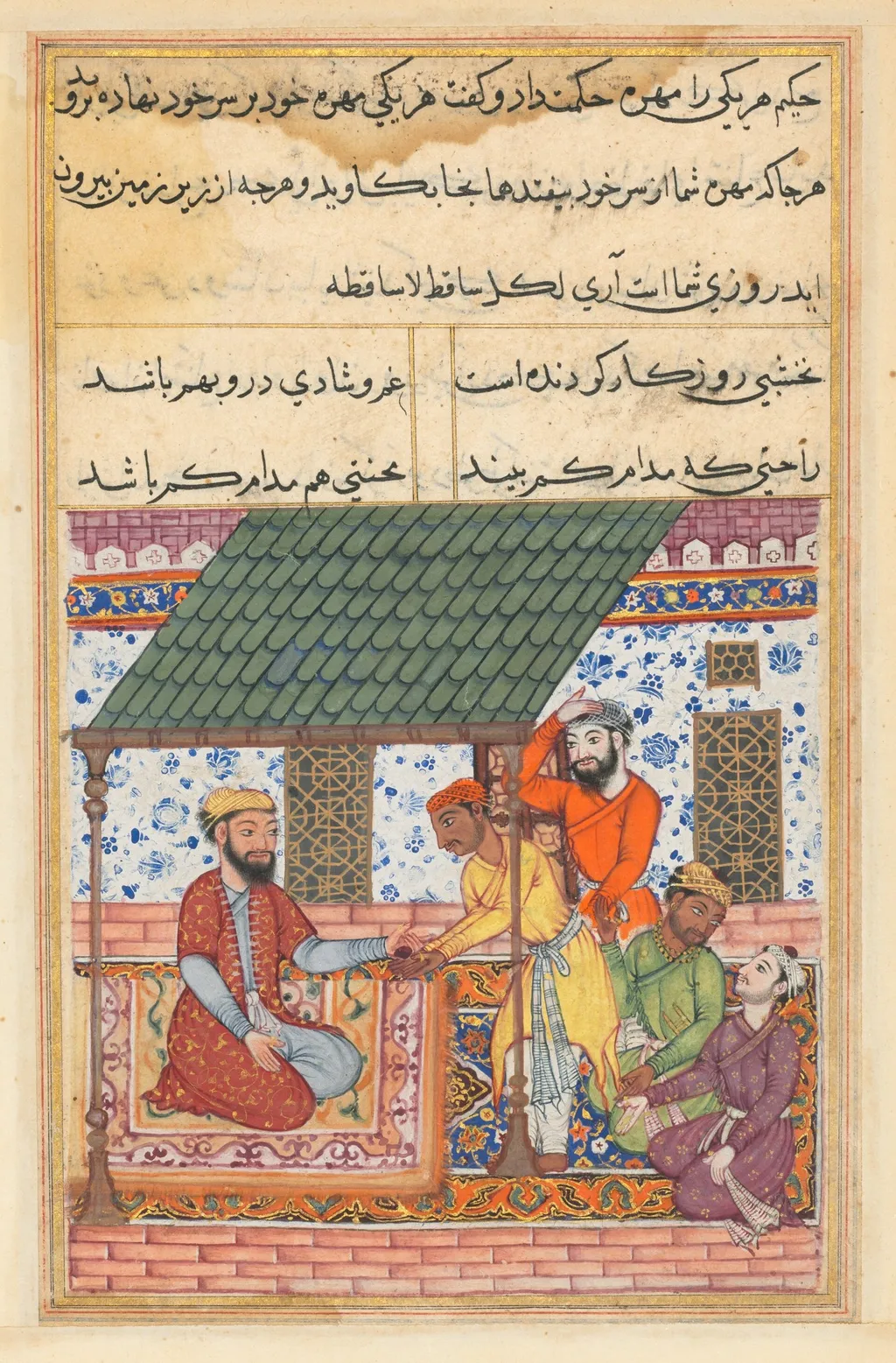
The four destitute friends go to a wise man who gives each one of them a magic shell to be placed on top of the turban, from a Tuti-nama (Tales of a Parrot): Forty-seventh Night is an unspecified painting. It dates from 1560 and is held in the collection of the Cleveland Museum of Art. The work depicts a domestic interior where five figures are gathered amid a richly patterned setting.
About this work
Overview
The surrounding walls are adorned with blue floral motifs, while the ceiling features a green expanse punctuated by red brickwork.
The work depicts a domestic interior where five figures are gathered amid a richly patterned setting. One seated individual extends his hand toward a standing companion, suggesting an exchange. The surrounding walls are adorned with blue floral motifs, while the ceiling features a green expanse punctuated by red brickwork. The participants wear vivid robes in reds, yellows and purples, creating a lively yet composed atmosphere.
Subject & Meaning
The scene illustrates a moment from a narrative known as the Forty‑seventh Night of the Tuti‑nama, a collection of parrot‑told tales. In the story, four impoverished friends consult a wise man who provides each with a magical shell to be placed on a turban. The painting captures the moment of distribution, emphasizing the act of gifting a solution to the protagonists' plight.
Technique & Style
Executed in a detailed, flat decorative manner, the artist employs bright, saturated pigments to delineate clothing and architectural elements. The patterned background and stylized figures reflect a Persian miniature tradition, where narrative is conveyed through clear outlines and ornamental surfaces rather than naturalistic modeling.
History & Provenance
The canvas is part of the collection of the Cleveland Museum of Art, where it is displayed for public viewing. Its provenance traces back to a manuscript illustration tradition, later transferred to a standalone panel format for exhibition purposes.
Context
The painting belongs to a broader visual culture that illustrated literary works, particularly those involving moral or didactic tales. Such images served both decorative and instructional functions, reinforcing the story’s themes of wisdom and resourcefulness within a domestic setting.
Artist & collection

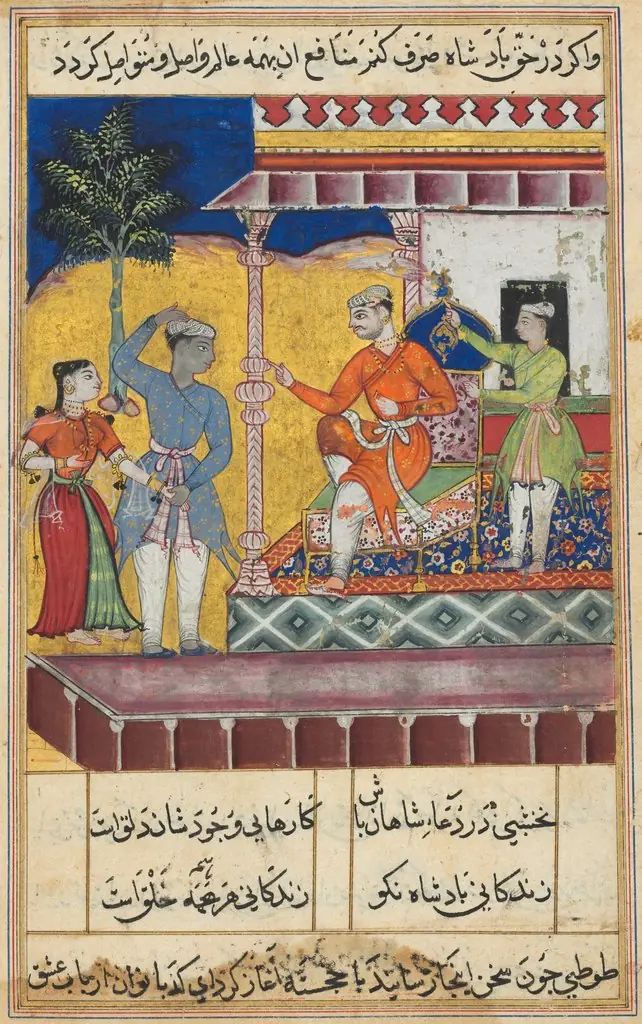 The rejuvenated old man and the daughter of the king of the jinns take leave of the King of Kings, from a Tuti-nama (Tales of a Parrot): Seventh Night
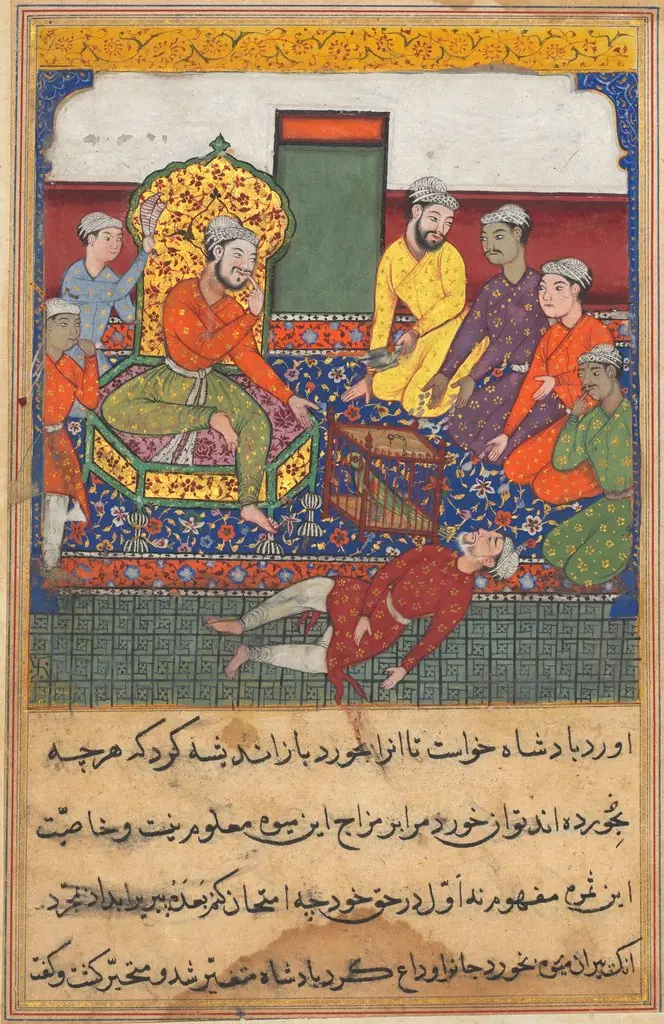 The old man eats of the fruit of the Tree of Life, but drops dead, from a Tuti-nama (Tales of a Parrot): Ninth Night
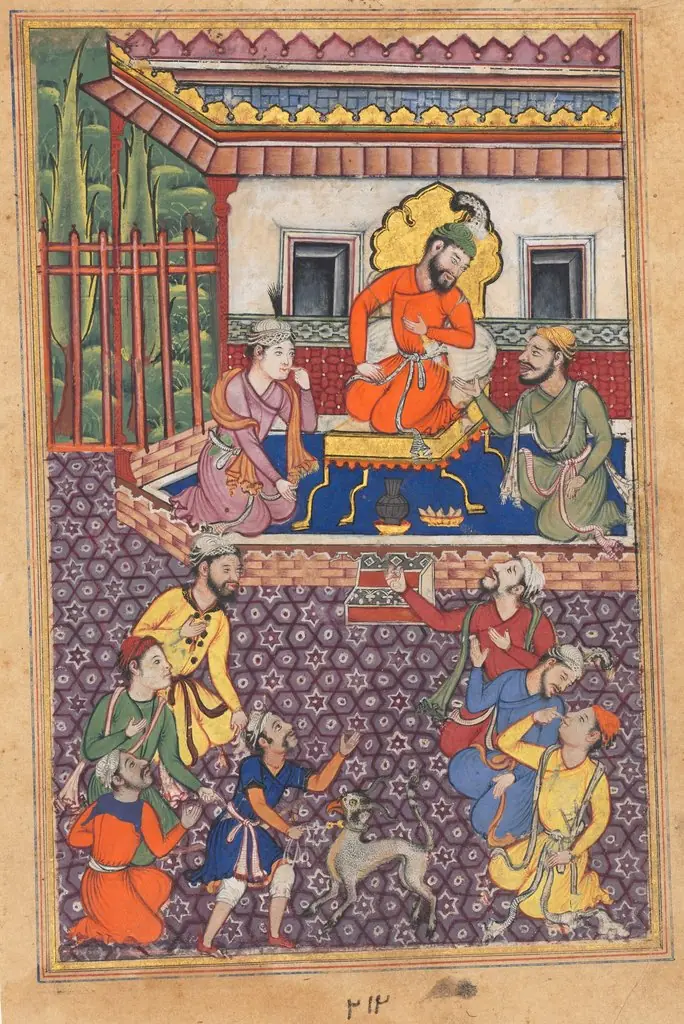 The court of the Raja of Ujjain, from a Tuti-nama (Tales of a Parrot): Forty-sixth Night
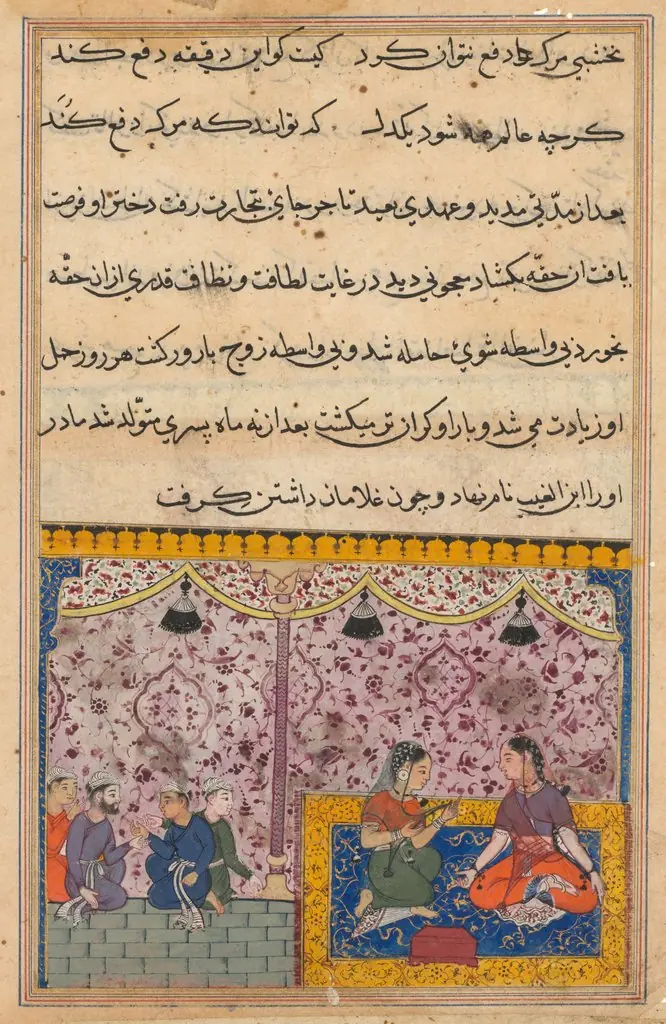 The merchant’s daughter gives birth to a son as a result of eating out of the box. The clever child recognizes the false gems from true, from a Tuti-nama (Tales of a Parrot): Twenty-third Night
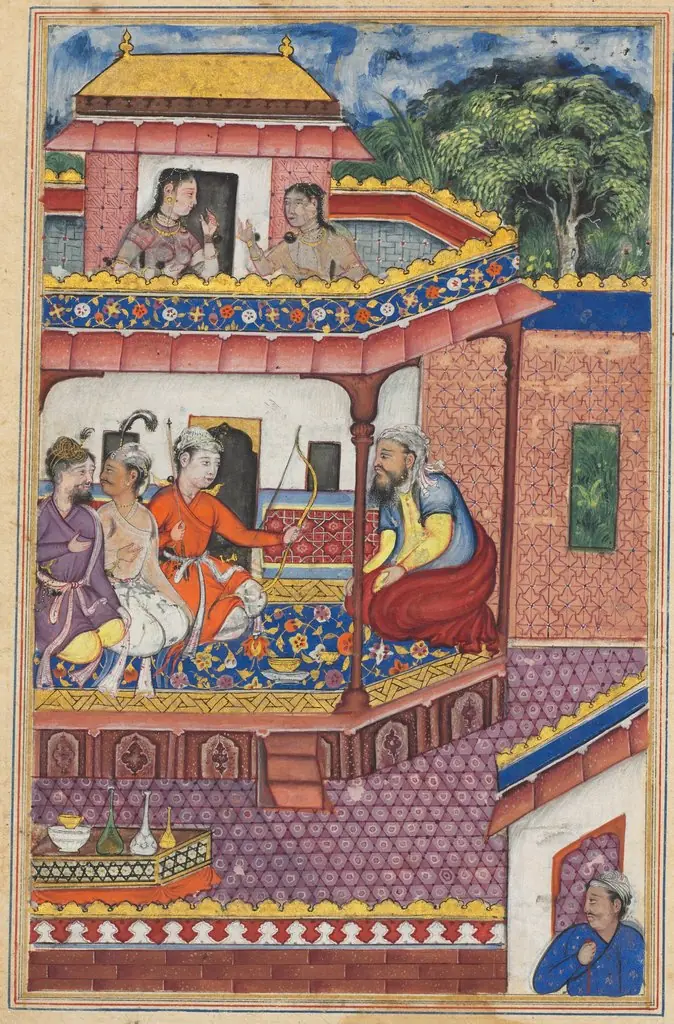 The three young men present themselves as suitors for the hand of Zuhra, the daughter of the merchant of Kabul, from a Tuti-nama (Tales of a Parrot): Thirty-fourth Night
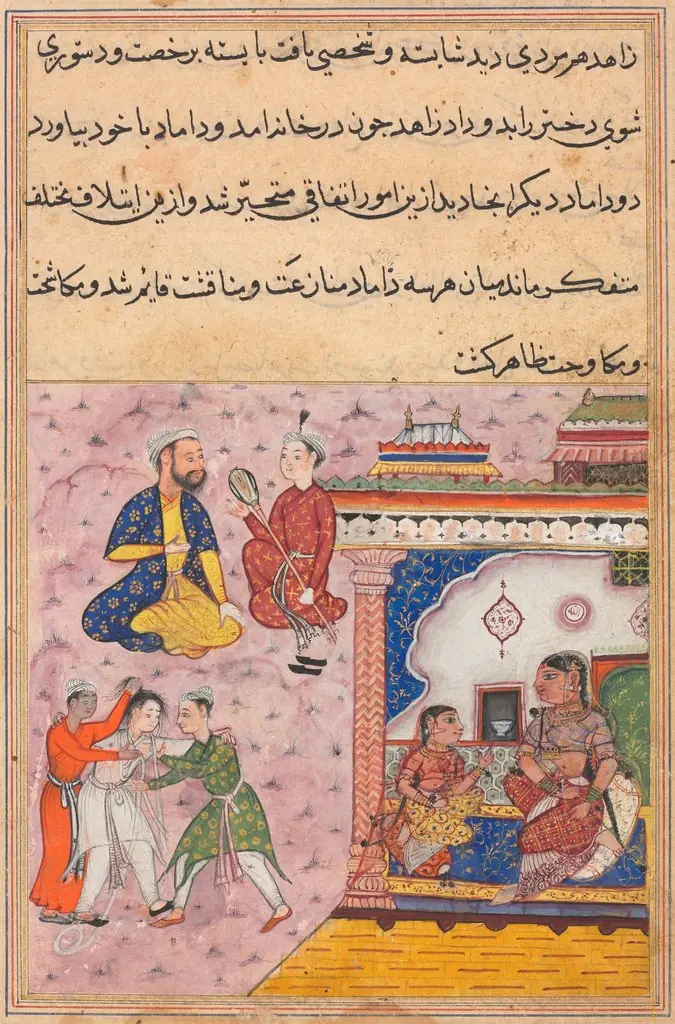 Three suitors fight amongst themselves for the hand of the devotee’s daughter, from a Tuti-nama (Tales of a Parrot): Twentieth Night
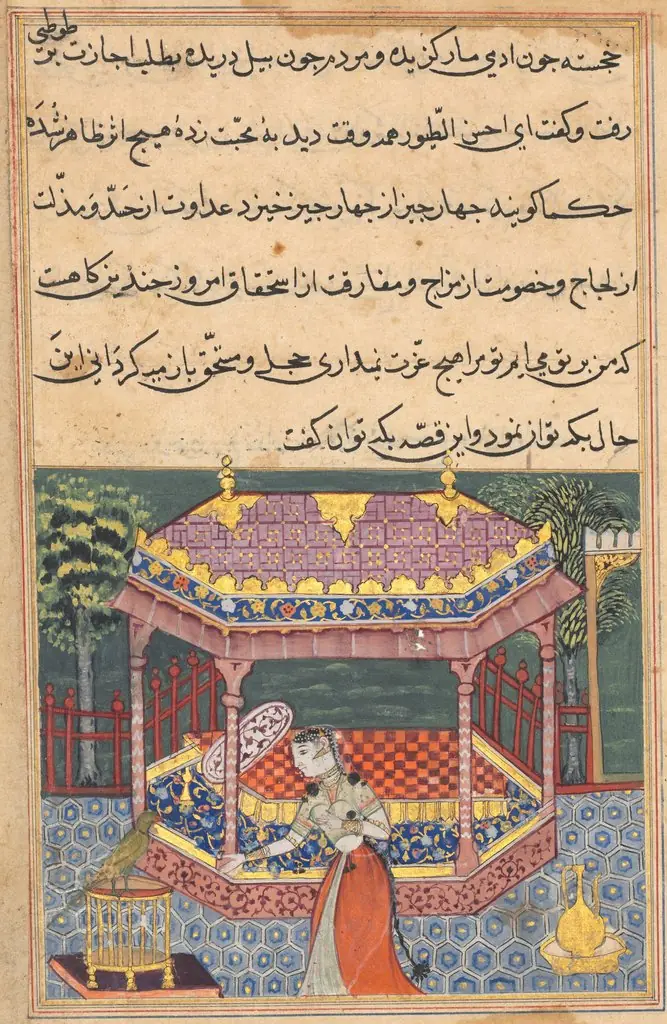 The parrot addresses Khujasta at the beginning of the thirty-seventh night, from a Tuti-nama (Tales of a Parrot)