Artwork
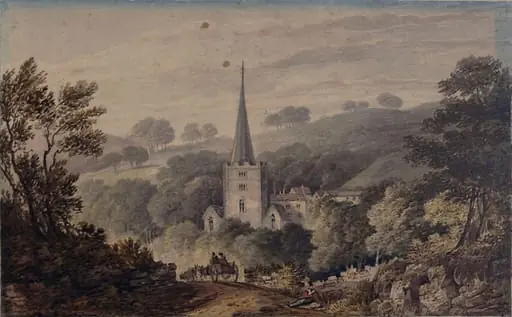
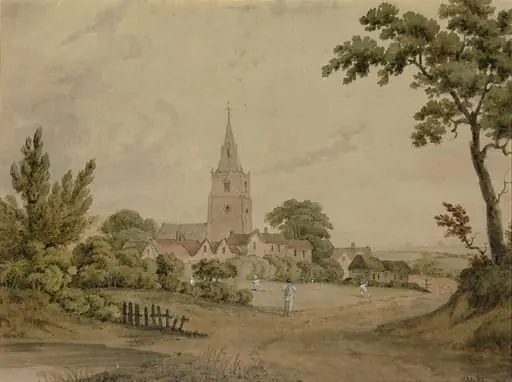
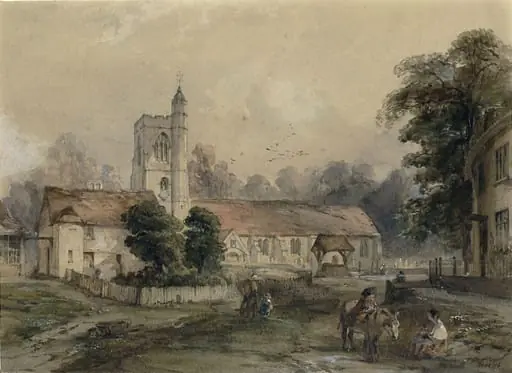
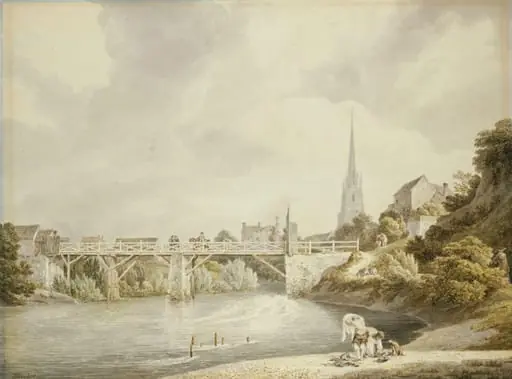
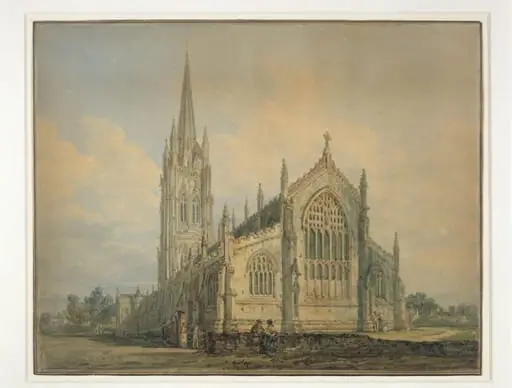
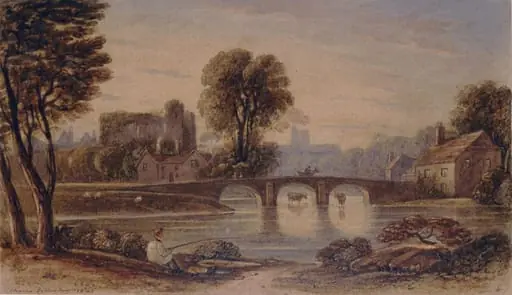
View of Stratford-upon-Avon Cathedral
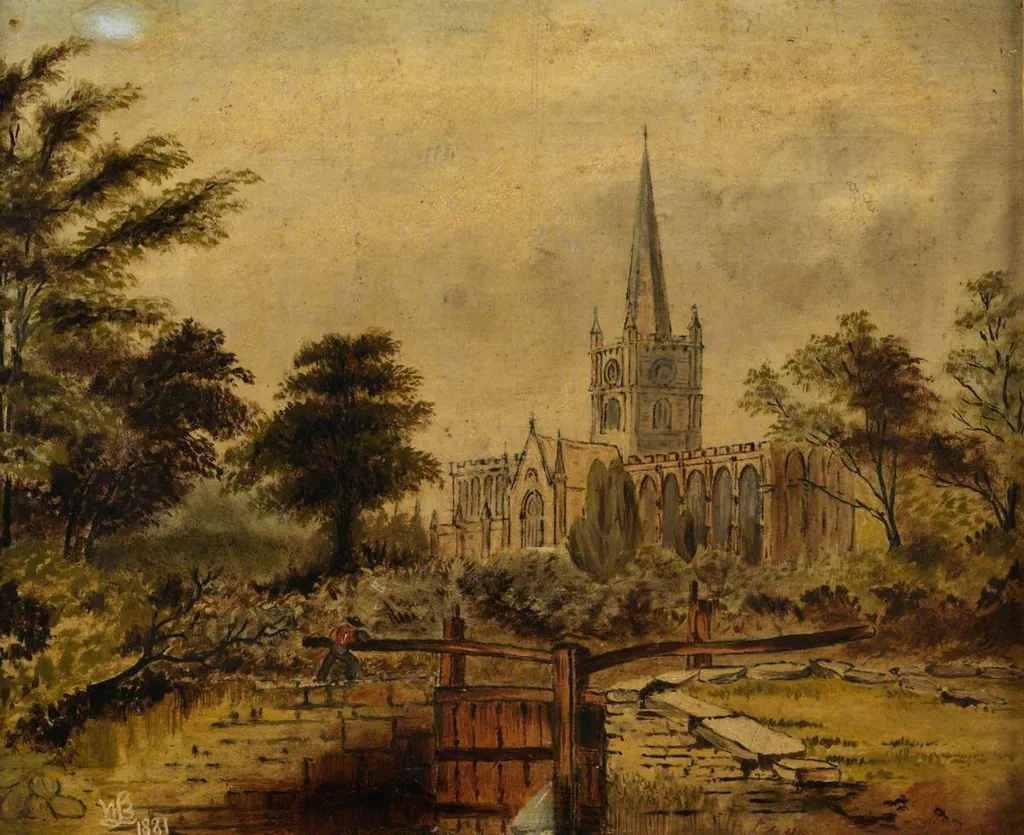
View of Stratford-upon-Avon Cathedral is an oil painting by the Impressionist artist Unknown. It dates from 1891 and is held in the collection of the National Library of Wales.
About this work
Overview
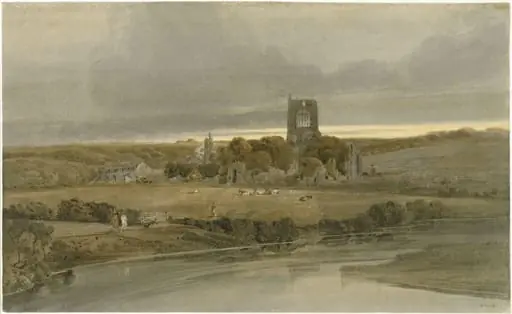
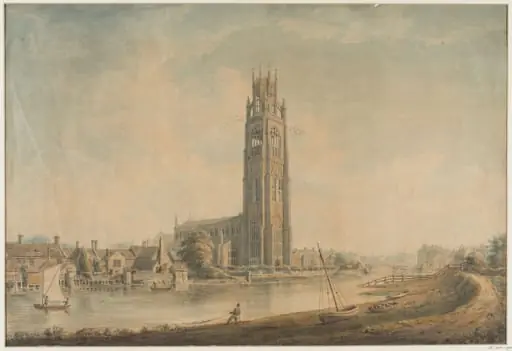
This oil painting depicts a quiet rural landscape centered on Stratford-upon-Avon Cathedral, seen from a distance across a still body of water. Trees and undergrowth frame the composition, while a solitary figure stands on the riverbank, gazing toward the church. The mood is tranquil, rendered through soft light and muted tones characteristic of 19th-century British landscape traditions.
Subject & Meaning
The cathedral, as the dominant architectural element, anchors the scene as a symbol of spiritual and communal continuity. The lone figure, neither interacting with nor disrupting the environment, suggests contemplation or quiet reverence. The absence of human activity emphasizes solitude and the enduring presence of sacred architecture within the natural world.
Technique & Style
Oil paint is applied with subtle gradations to convey atmospheric depth and the reflective surface of water. The brushwork is restrained, favoring soft edges and muted color harmonies over dramatic contrast. The composition follows a classical landscape structure, with the cathedral placed along a receding axis to guide the viewer’s eye into the distance.
History & Provenance
The painting is held in the collection of the National Library of Wales, suggesting it may have been acquired through regional patronage or donation. Its origin is tied to 19th-century British artists who documented local landmarks, though the specific artist remains unconfirmed in available records.
Context
Created during a period when English artists increasingly turned to regional sites for subject matter, this work reflects a broader interest in vernacular landscapes and ecclesiastical architecture. Stratford-upon-Avon, associated with Shakespeare, was a destination for cultural pilgrimage, yet the painting avoids literary reference, focusing instead on quiet observation.
Legacy
The painting contributes to a modest but persistent tradition of topographical art that valued accuracy and serenity over grandeur. It remains a quiet record of a specific place at a particular moment, valued for its unembellished observation rather than its artistic innovation.
Artist & collection

 Domestic Scene
 Giacomo and Cardinal Marco, investing Andrea, Abbot of San Zeno, with his Benefice
 The Nymph of Fontainebleau
 Portrait of a Woman
 Madonna and Child with Saints in the Enclosed Garden
 Venus and Minerva
 Family Group of Four on Sofa
 Wall painting from Room H of the Villa of P. Fannius Synistor at Boscoreale