Artwork
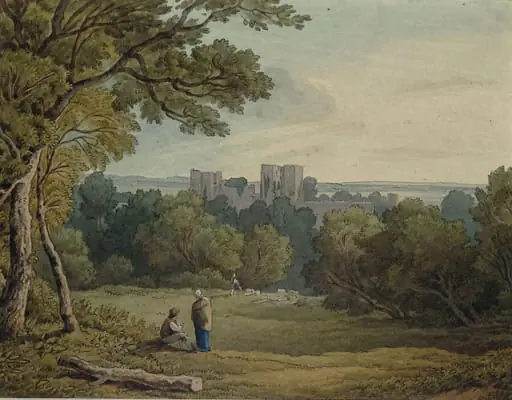
Kirkstall Abbey, Yorkshire: Evening
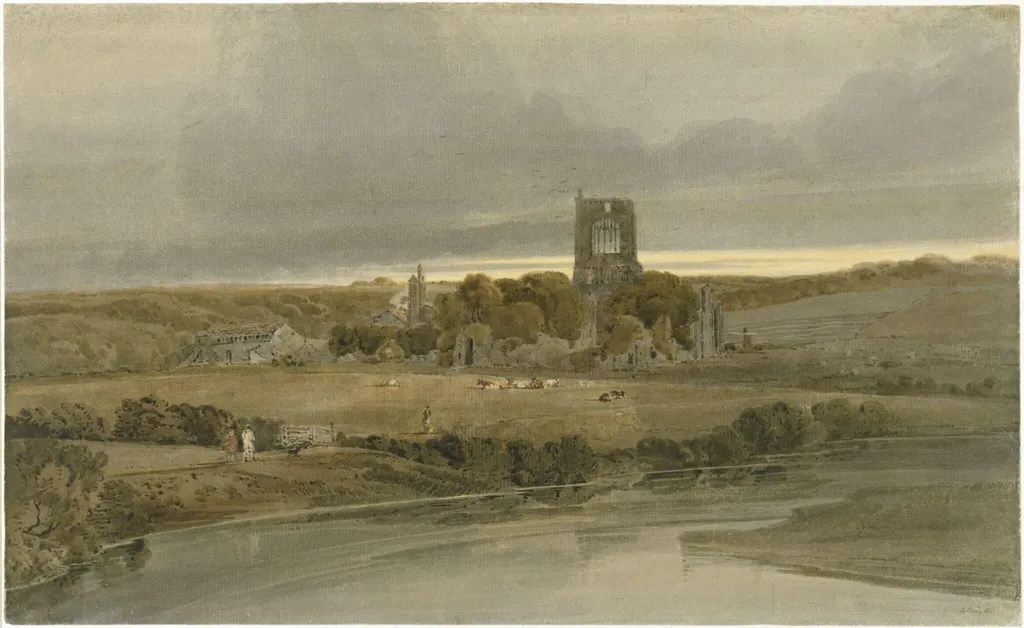
Kirkstall Abbey, Yorkshire: Evening is a watercolor work on paper by the Romanticist artist Thomas Girtin. It dates from 1800 and is held in the collection of the Victoria and Albert Museum.
About this work
Overview
Thomas Girtin created this watercolour of Kirkstall Abbey in the late 18th century, capturing the ruins at twilight. The work exemplifies his mastery of the medium, using subtle washes to convey atmosphere and light. Though brief, his career produced some of the most evocative British landscape watercolours of the period, with Kirkstall among his most recurrent themes.
Subject & Meaning
The scene depicts the abbey ruins at dusk, framed by quiet fields and a distant village. Small figures approach the gate, their presence suggesting quiet contemplation rather than narrative action. Girtin’s choice of evening light emphasizes solitude and decay, transforming the architectural remains into a meditation on time and memory rather than a mere topographical record.
Technique & Style
Girtin employed thin, layered watercolour washes to build depth and mood, allowing the paper’s white to suggest ambient light. His loose, confident brushwork defines form without detail, particularly in the sky and distant trees. The human figures are rendered with minimal strokes, integrating them seamlessly into the landscape rather than dominating it.
History & Provenance
Girtin visited Kirkstall Abbey multiple times between 1797 and 1800, producing several studies and finished works of the site. This particular version likely dates to around 1798–99, during his most productive phase. The painting remained in private hands after his death, eventually entering public collections where it is now recognized as a key example of early Romantic landscape.
Context
In the 1790s, interest in ruins and the picturesque was growing among British artists and patrons. Girtin’s treatment of Kirkstall aligned with this trend but distinguished itself through emotional restraint and atmospheric precision. Unlike contemporaries who emphasized drama, he favored quietude, reflecting a shift toward introspective landscape painting.
Legacy
Girtin’s watercolours of Kirkstall Abbey influenced later artists, including J.M.W. Turner, who admired his ability to convey mood through light and tone. The series helped elevate watercolour from a sketching tool to a medium capable of serious artistic expression. Today, these works are studied for their technical innovation and poetic sensitivity to place.
Artist & collection


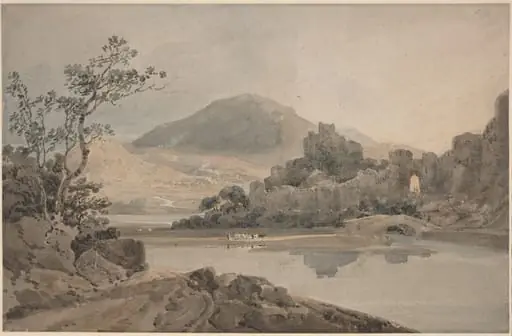 Conwy Castle, North Wales
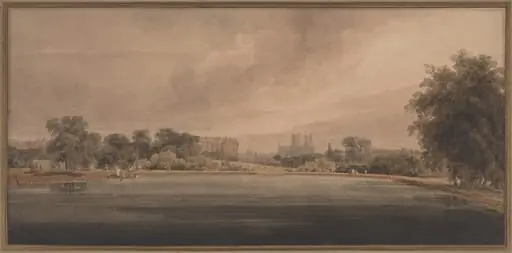 St. James' Park with a View of Westminster Abbey
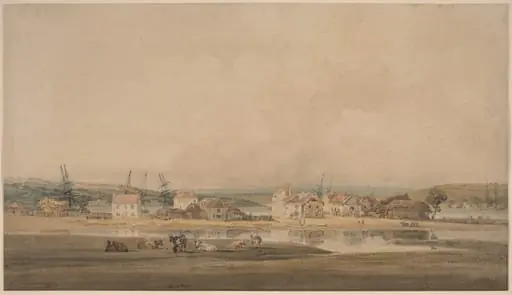 Village along a River Estuary in Devon
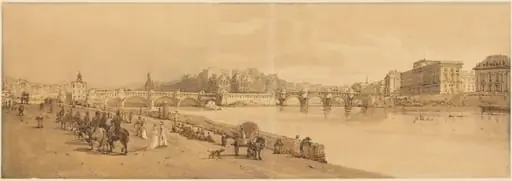 A View of the Pont Neuf, the Mint, etc.: pl.8
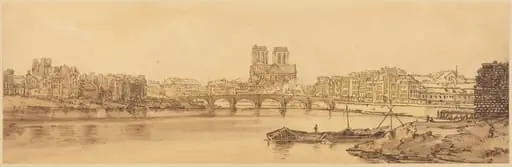 View of Pont de la Tournelle and Notre Dame Taken from the Arsnel: pl.11
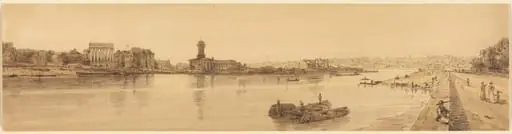 View of the Village of Chaillot from the Pont de la Concorde: pl.17
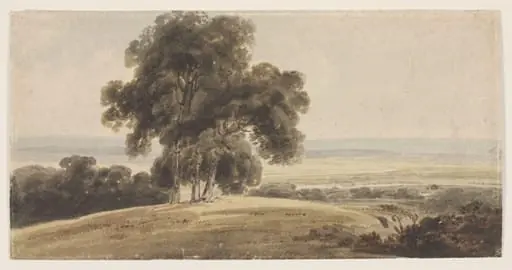 Untitled
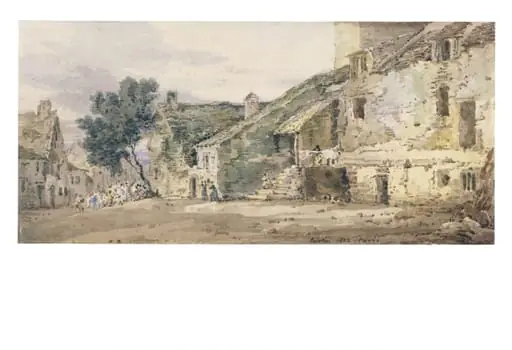 Street Scene, Near Paris
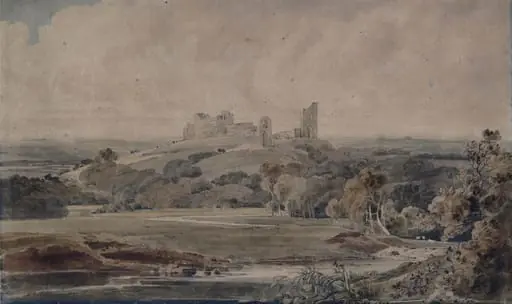 Tutbury Castle, Staffordshire
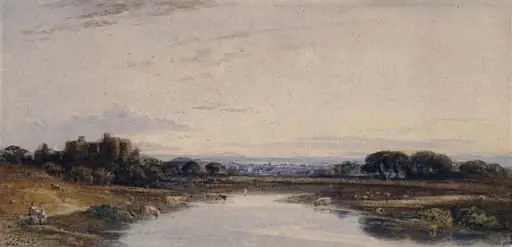 Landscape
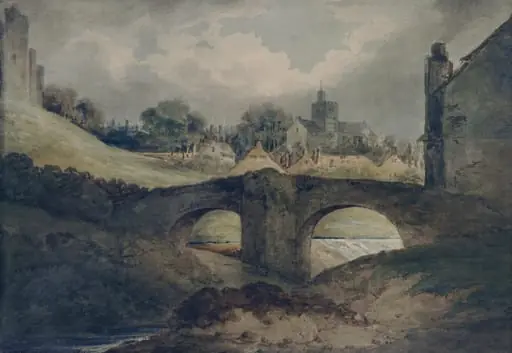 Brecon Town and Bridge
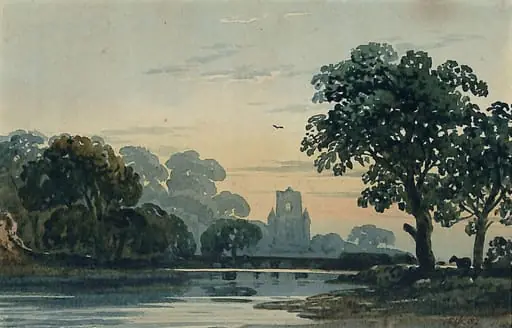 River scene with church in the background
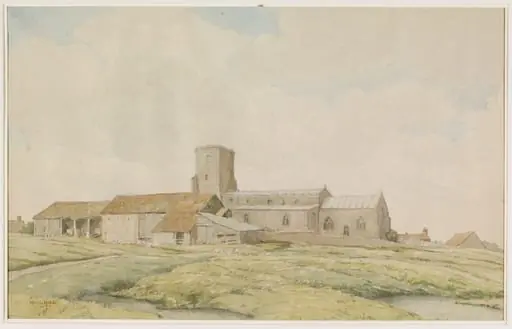 All Saints' Church, Morston
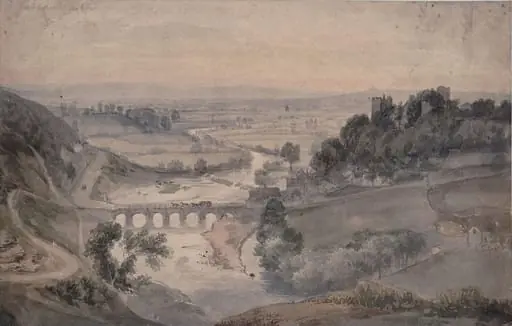 Ludlow Castle, overlooking the River Teme
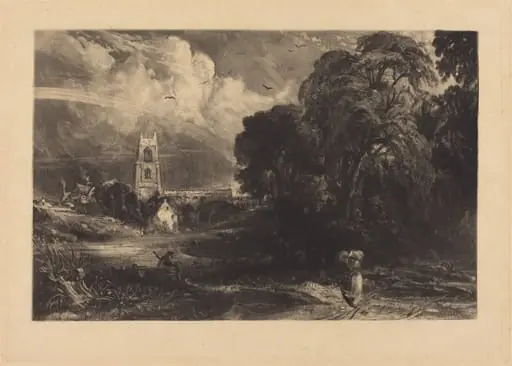 Stoke-by-Neyland
 South Weald Church, Essex
 watercolour from the Ionides Album
 On the Avon
 Landscape with winding river
 Kenilworth Castle