Artwork
Portrait of Rembrandt with a gorget
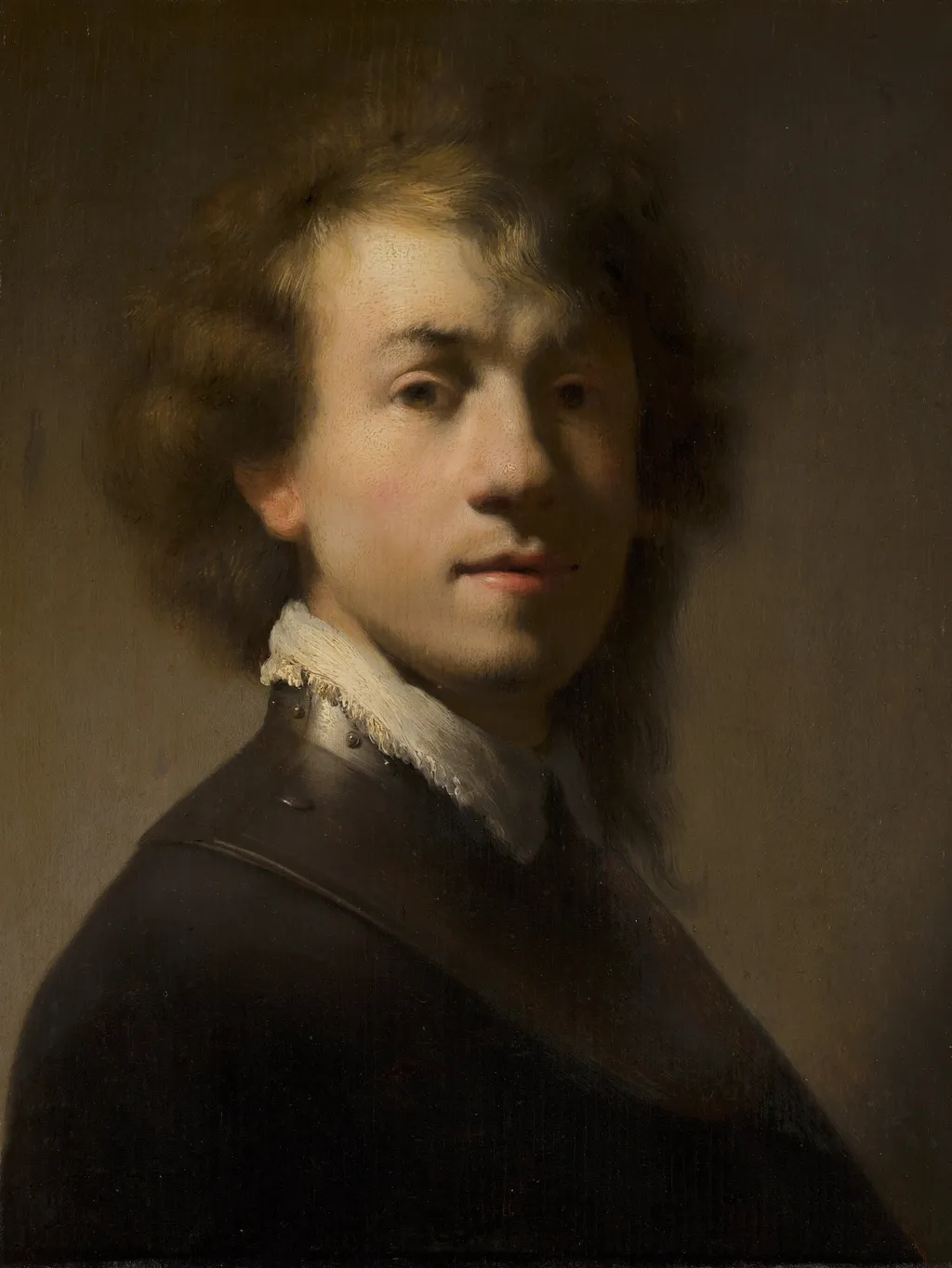
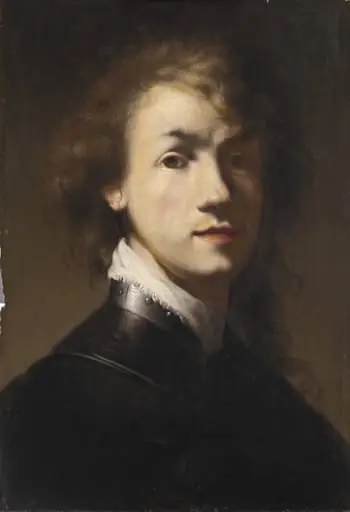
Portrait of Rembrandt with a gorget is an oil painting by the Dutch Golden Age artist Unknown. It dates from 1629 and is held in the collection of the Mauritshuis. This oil painting depicts a young man in a dark jacket, wearing a gorget—a piece of armor protecting the throat—and a crisp white collar.
About this work
Overview
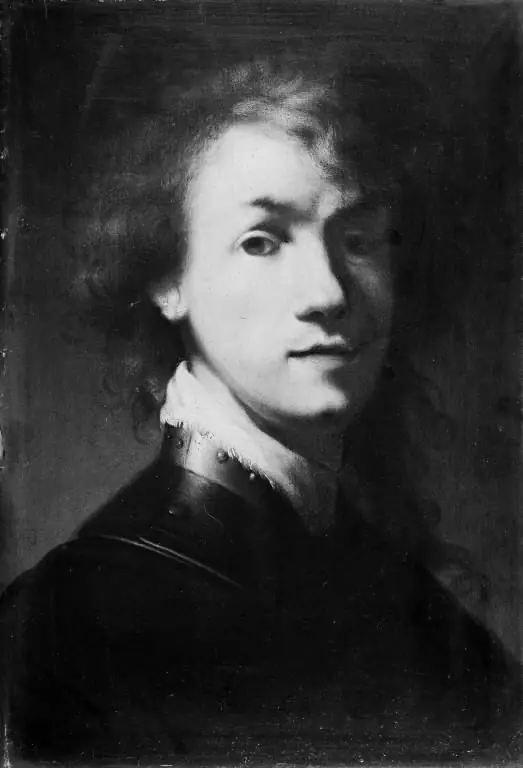
This oil painting depicts a young man in a dark jacket, wearing a gorget—a piece of armor protecting the throat—and a crisp white collar. His wavy hair and solemn gaze draw attention to his face, which is sharply lit against a deep, shadowed background. The composition emphasizes volume and presence through focused illumination and textured brushwork, creating an intimate yet imposing figure.
Subject & Meaning
The gorget, typically worn by military officers, suggests a deliberate assertion of status or identity, perhaps reflecting personal ambition or societal role.
The subject is likely a self-portrait, given the artist’s known practice of portraying himself in various guises. The gorget, typically worn by military officers, suggests a deliberate assertion of status or identity, perhaps reflecting personal ambition or societal role. The serious expression and restrained attire convey introspection rather than grandeur, inviting contemplation of the sitter’s inner state.
Technique & Style
The artist employs chiaroscuro to model the face with dramatic light, isolating it from the dark surroundings. Thick applications of paint, or impasto, are visible in the highlights of the collar and gorget, adding tactile dimension. Loose, expressive brushstrokes in the background contrast with the refined rendering of the face, enhancing the sense of depth and psychological focus.
History & Provenance
The painting is attributed to Rembrandt van Rijn, dating to his early career in the 1630s. It entered a public collection in the 19th century after passing through private European hands. Its attribution has been consistently supported by stylistic analysis and technical examination, though its exact commission context remains undocumented.
Context
In 17th-century Holland, portraits often conveyed social standing through attire and pose. The gorget, though outdated in practical use, persisted as a symbolic accessory among burghers and officers. Rembrandt’s choice to include it reflects a broader trend of blending personal identity with historical or martial references, even in civilian portraits.
Legacy
The painting exemplifies Rembrandt’s early mastery of psychological depth and material texture. Its use of light and impasto influenced later generations of portraitists seeking emotional resonance over idealization. Though not widely exhibited, it remains a key example of his formative years and the evolution of Dutch portraiture.
Artist & collection

 Domestic Scene
 Giacomo and Cardinal Marco, investing Andrea, Abbot of San Zeno, with his Benefice
 The Nymph of Fontainebleau
 Portrait of a Woman
 Madonna and Child with Saints in the Enclosed Garden
 Venus and Minerva
 Family Group of Four on Sofa
 Wall painting from Room H of the Villa of P. Fannius Synistor at Boscoreale