Artwork
Saint Jame's Vision of the Virgin of the Pillar
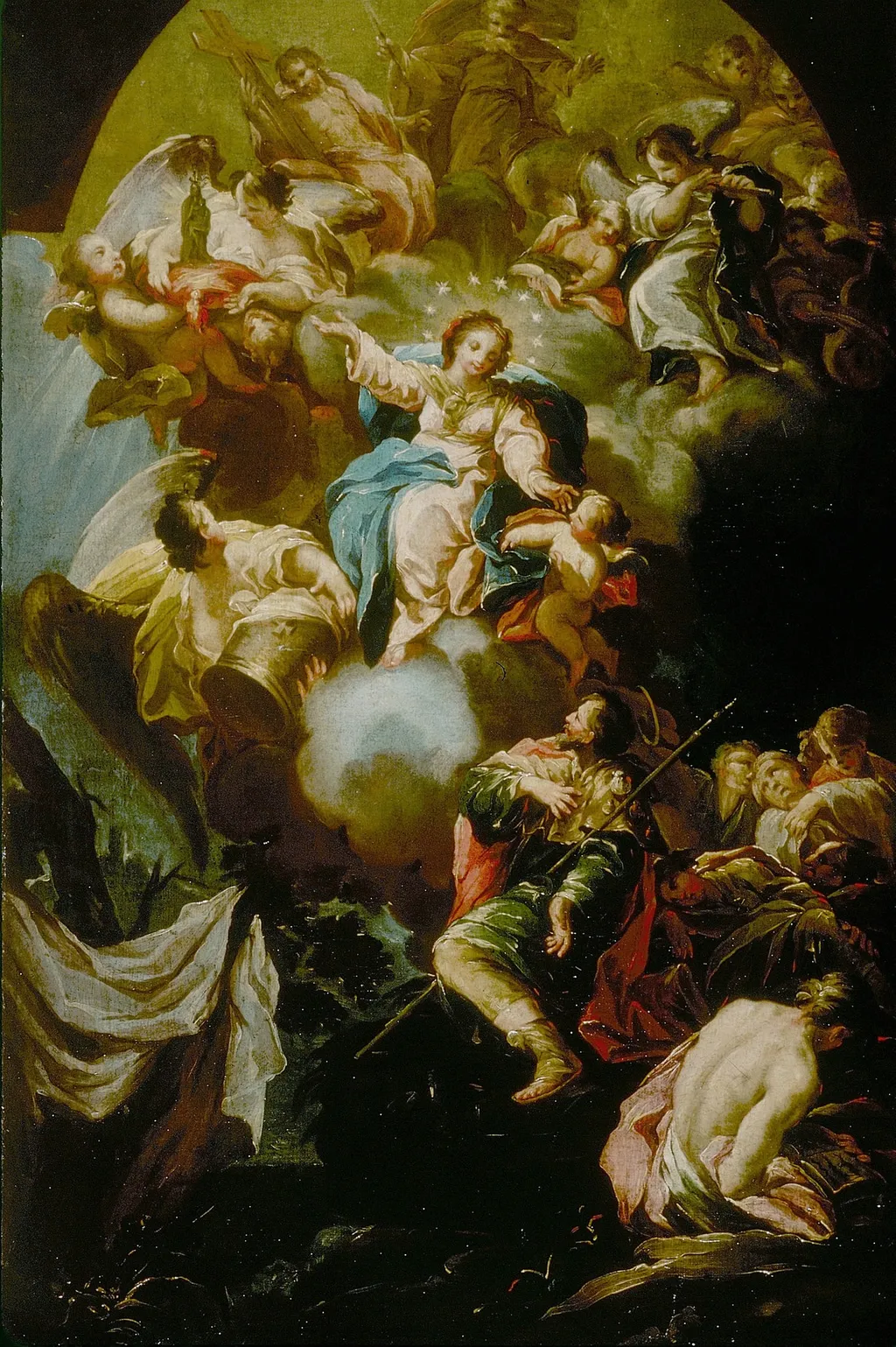
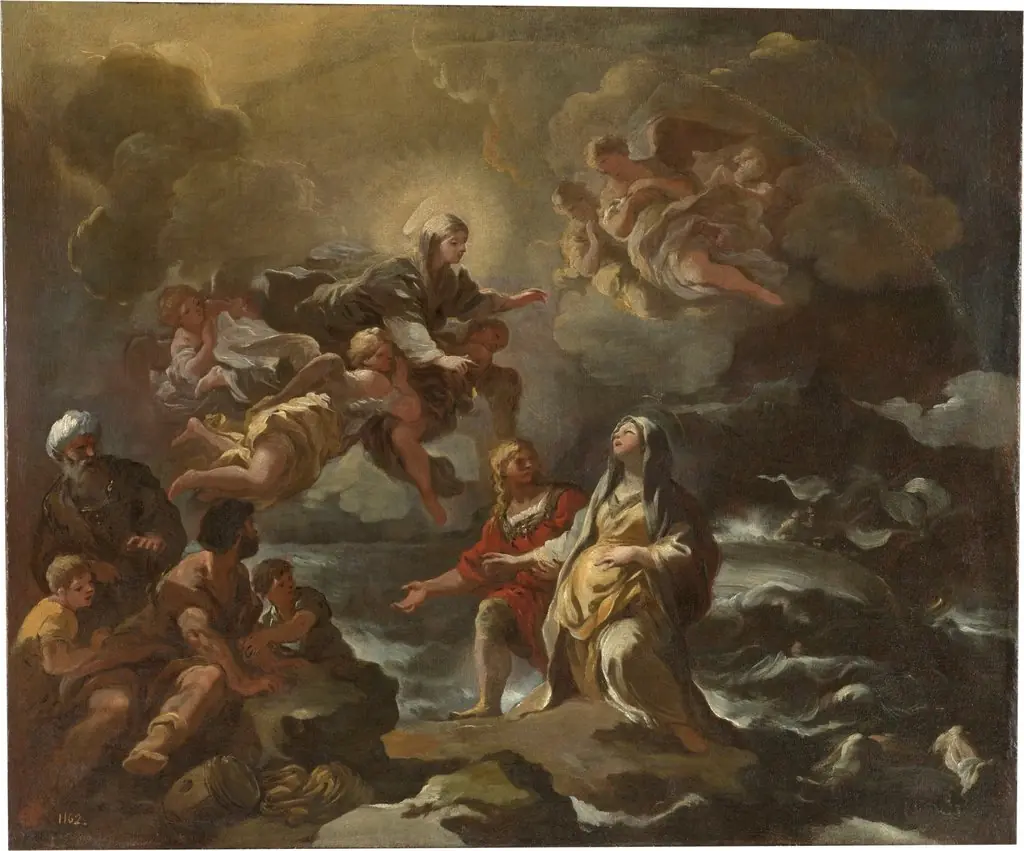
Saint Jame's Vision of the Virgin of the Pillar is an oil painting by the Rococo painting artist Unknown. It dates from 1752 and is held in the collection of the Art Institute of Chicago. This oil painting captures a moment of divine revelation involving Saint James and the Virgin Mary.
About this work
Overview
Light and shadow are carefully modulated to create volume and emotional weight, guiding the viewer’s eye toward the central interaction between the figures.
This oil painting captures a moment of divine revelation involving Saint James and the Virgin Mary. The scene is rendered with visible brushwork and a restrained palette dominated by earth tones, punctuated by the Virgin’s blue robe and white garments. Light and shadow are carefully modulated to create volume and emotional weight, guiding the viewer’s eye toward the central interaction between the figures.
Subject & Meaning
The painting illustrates the legend of Saint James the Greater encountering the Virgin Mary atop a pillar in Zaragoza, Spain, as she appeared to him in a vision to encourage his missionary work. She reaches down to him as he kneels in awe, surrounded by celestial beings. The moment signifies divine reassurance and the founding of Marian devotion in Spain, blending spiritual authority with human vulnerability.
Technique & Style
The artist employs chiaroscuro to model forms and heighten the drama of the vision. Brushstrokes remain deliberately visible, lending texture and immediacy to the figures and surroundings. The color scheme favors muted earth tones, with selective use of vivid blues and whites to isolate the Virgin and emphasize her celestial nature against a grounded, earthly setting.
History & Provenance
The painting originates from a Spanish devotional tradition tied to the cult of Our Lady of the Pillar. Though the exact date and artist remain unconfirmed, its style aligns with late medieval or early Renaissance Spanish religious art. It likely served as an altarpiece or private devotional image, commissioned to honor the Virgin’s apparition at the site of the future Basilica of Our Lady of the Pillar.
Context
Created during a period when Marian devotion was central to Spanish religious identity, the image reflects the fusion of local legend with broader Christian iconography. The presence of angelic musicians echoes liturgical traditions, reinforcing the sacredness of the moment. Such works were instrumental in reinforcing faith among the faithful, especially in regions where pilgrimage and visual devotion were deeply intertwined.
Legacy
The painting contributes to a visual lineage of Marian apparitions in Iberian art, influencing later depictions of the Virgin of the Pillar in both religious and civic contexts. Its emphasis on intimate divine encounter over grandeur helped shape a more personal mode of spiritual representation, resonating in regional altarpieces and devotional practices well into the Baroque era.
Artist & collection

 Domestic Scene
 Giacomo and Cardinal Marco, investing Andrea, Abbot of San Zeno, with his Benefice
 The Nymph of Fontainebleau
 Portrait of a Woman
 Madonna and Child with Saints in the Enclosed Garden
 Venus and Minerva
 Family Group of Four on Sofa
 Wall painting from Room H of the Villa of P. Fannius Synistor at Boscoreale
 Allegorical Religious Scene with the Virgin Mary II
 The Assumption of the Virgin
 The Glorification of Saint Dominic
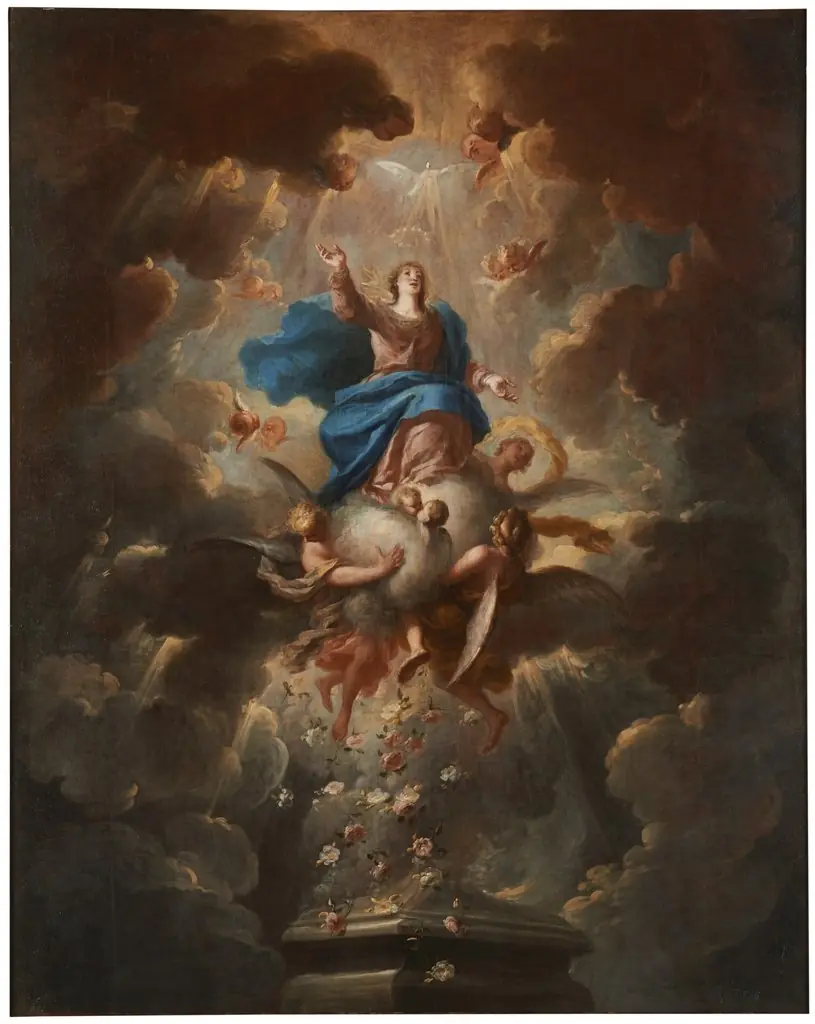 The Assumption of the Virgin
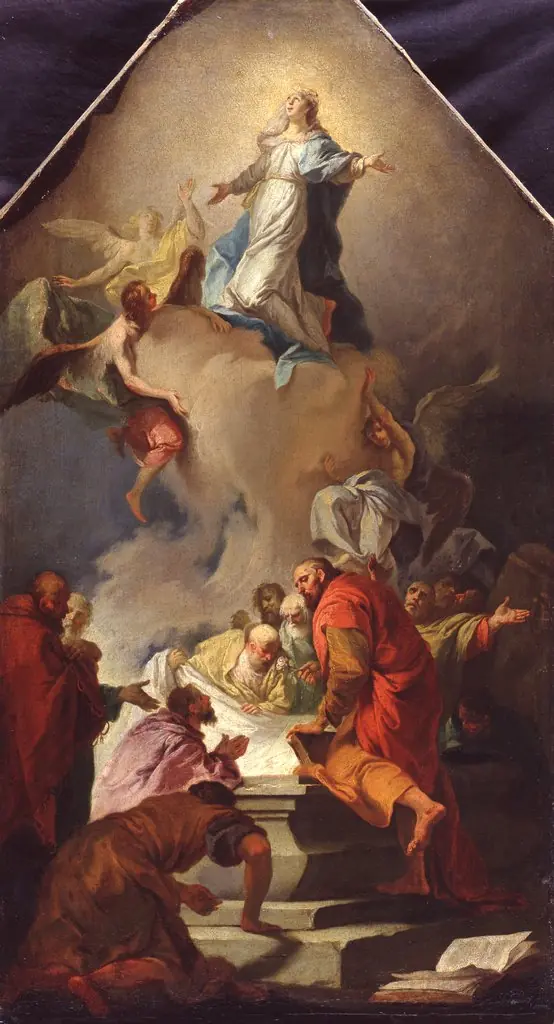 The Assumption of Mary
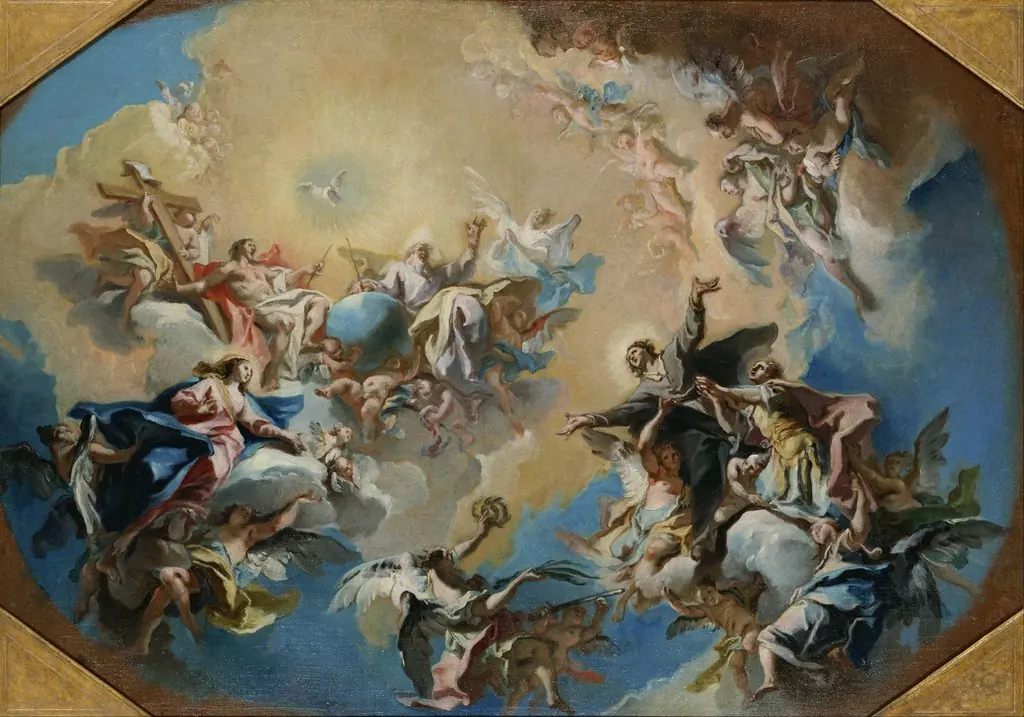 The Glorification of St. Felix and St. Adauctus
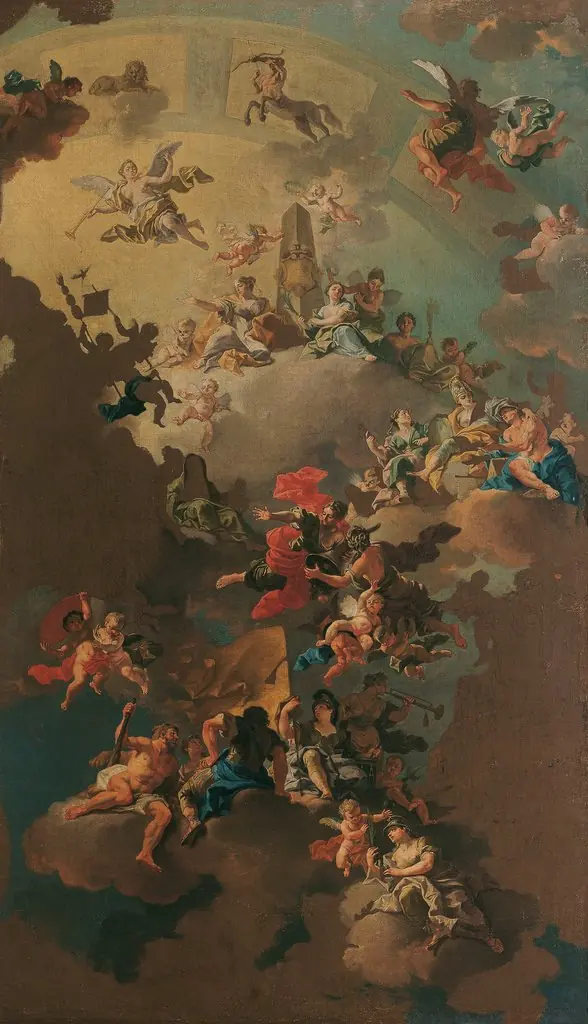 Allegorie auf die glückliche Regierung Mährens
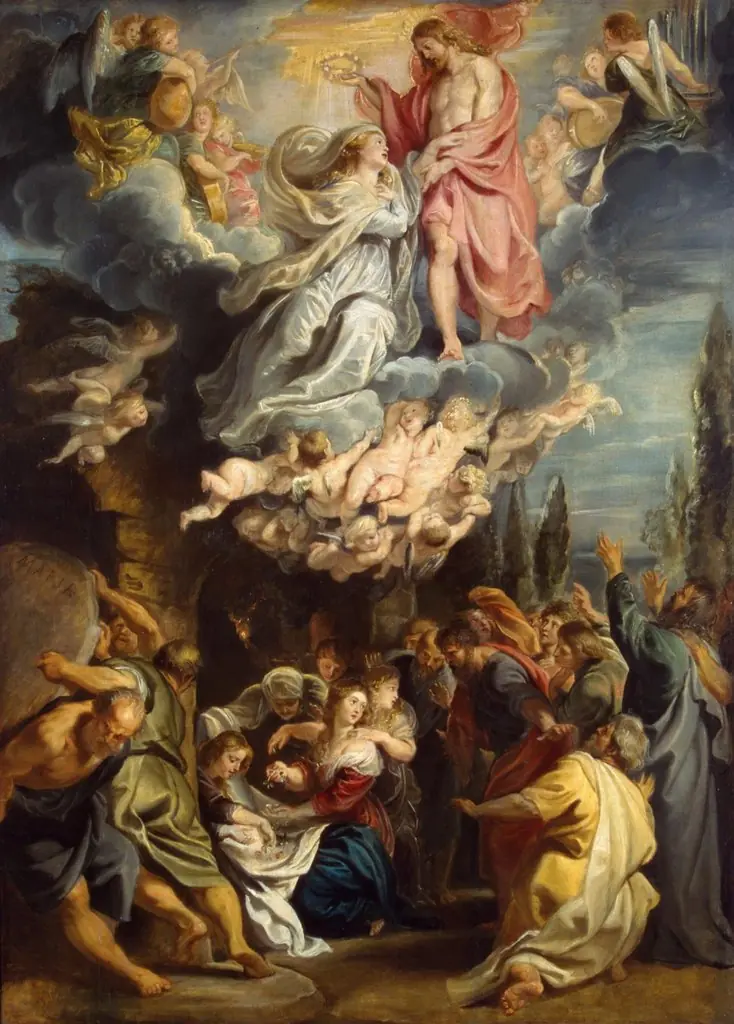 Coronation and Assumption of the Virgin
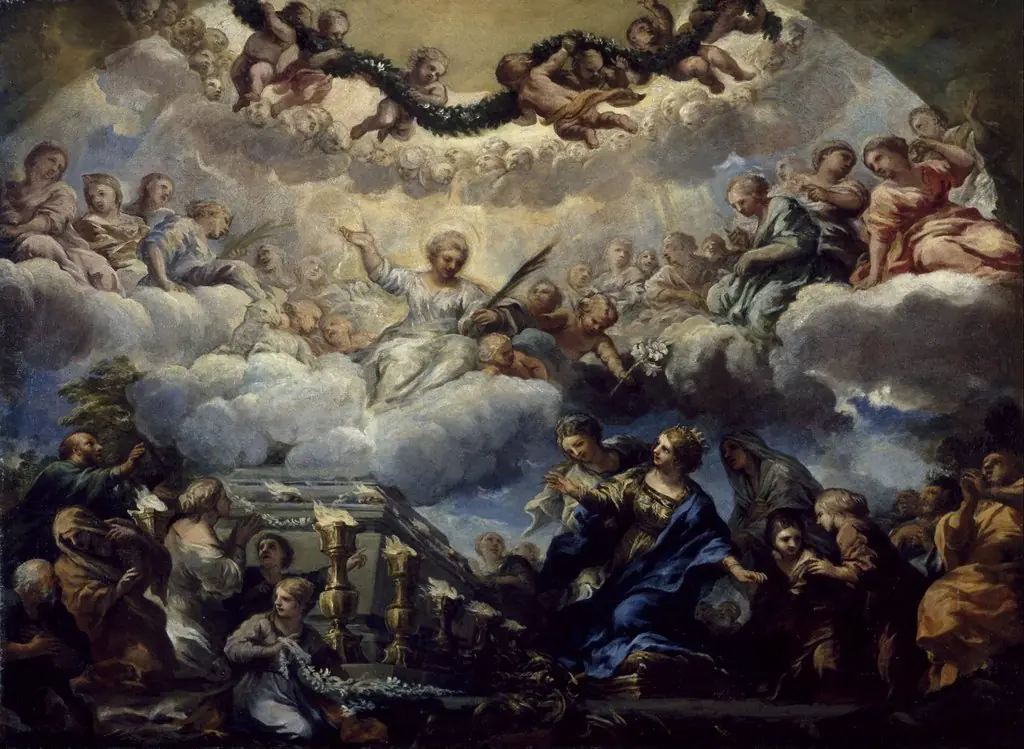 Saint Constantia's Vision before the Tomb of Saints Agnes and Emerentiana
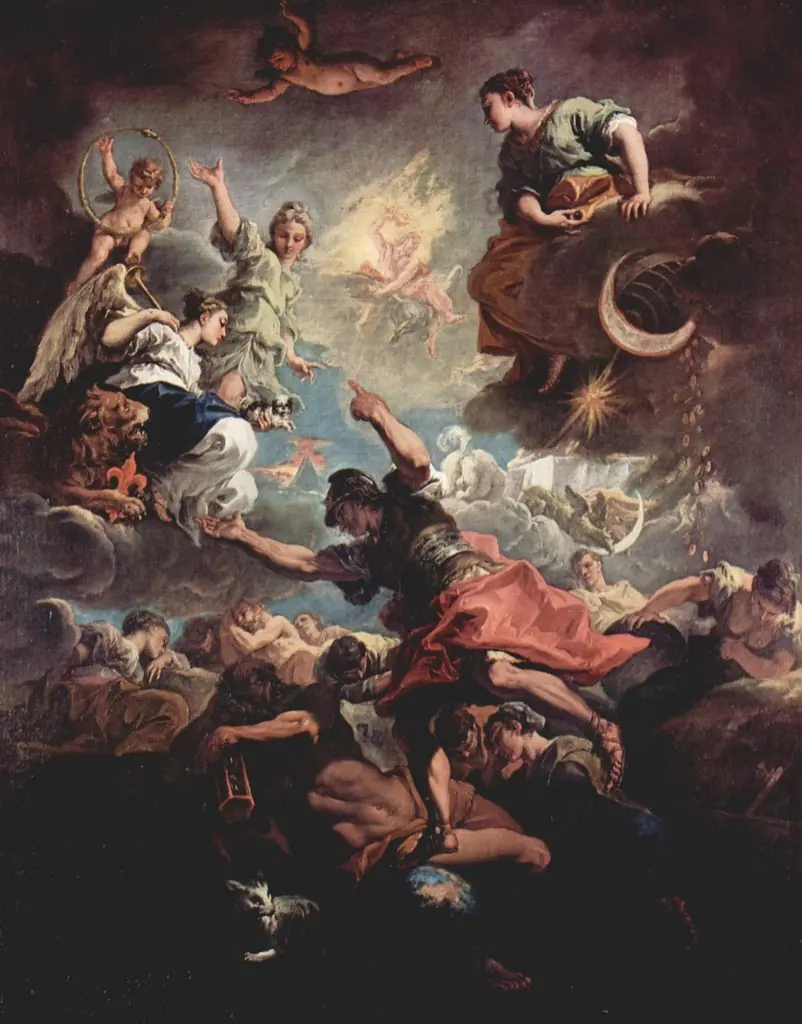 Allegory of Tuscany
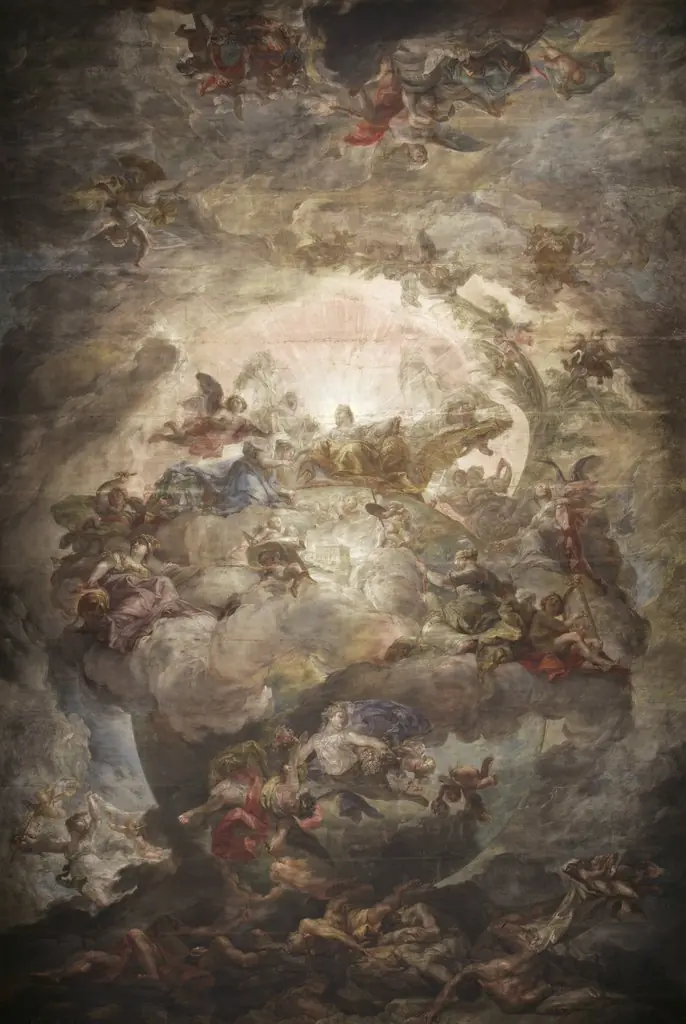 Allegory of the donation of the Casino to Queen María Isabel de Braganza by the Municipality of Madrid
 Saint Bridget saved from a shipwreck by the Virgin Mary