Artwork
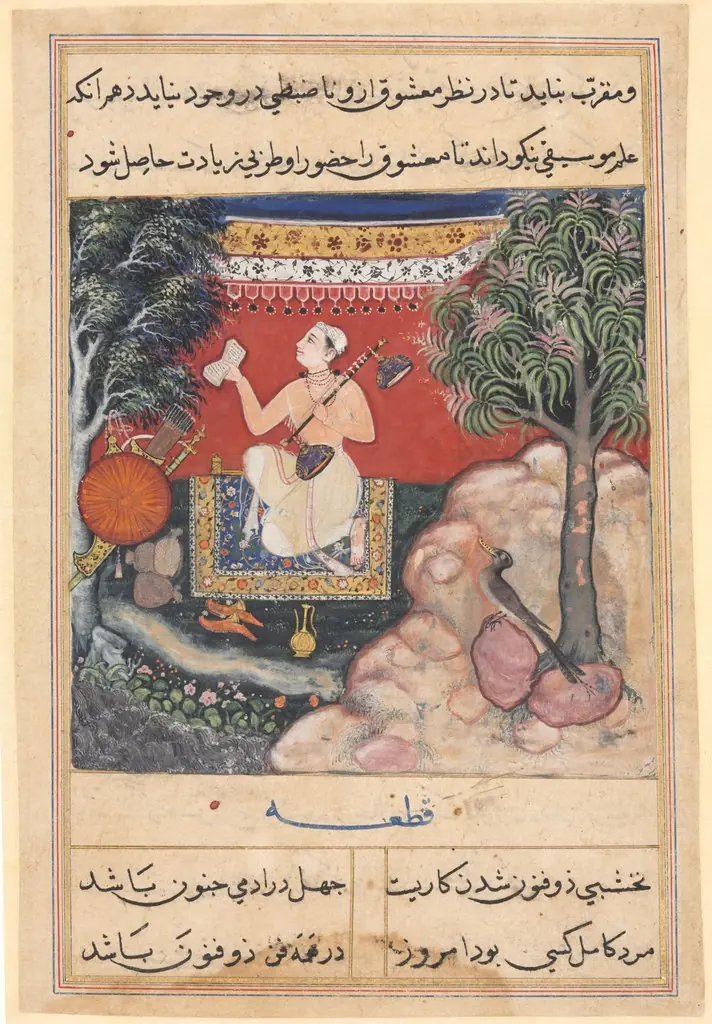
The invention of musical instruments from the intestines of a monkey, from a Tuti-nama (Tales of a Parrot): Fourteenth Night
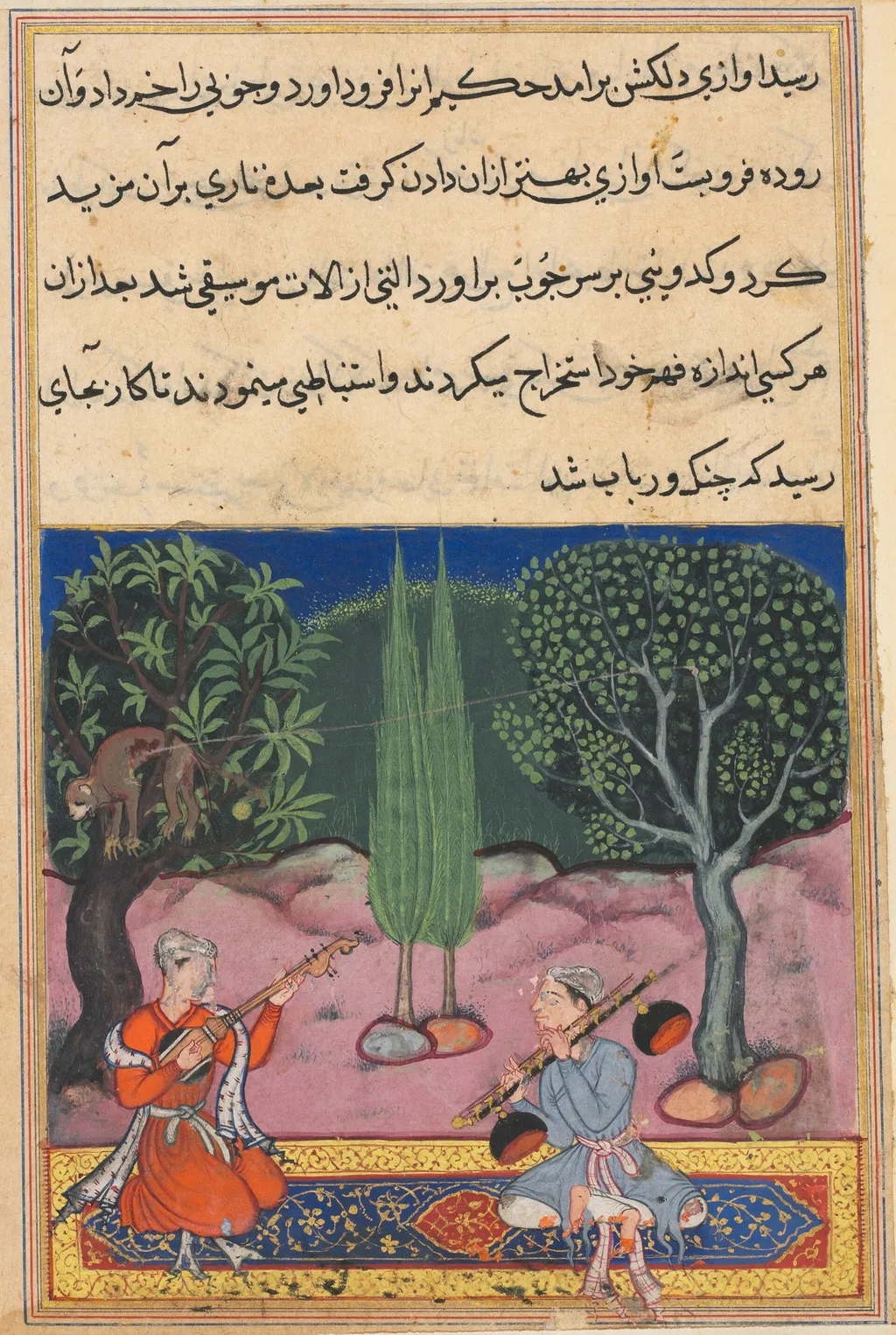
The invention of musical instruments from the intestines of a monkey, from a Tuti-nama (Tales of a Parrot): Fourteenth Night is an unspecified painting. It dates from 1560 and is held in the collection of the Cleveland Museum of Art.
About this work
Overview
The work depicts a garden setting where two figures engage in music-making: one holds a stringed instrument while the other blows a wind instrument. A monkey perches in a tree behind them, and the ground is rendered in pink tones amid stylised trees and rocks. A decorative gold border frames the scene, and an Arabic inscription crowns the composition, linking it to a narrative about a parrot.
Subject & Meaning
The painting illustrates a moment from a tale in the Tuti‑nama, a collection of stories featuring a parrot. The inclusion of the monkey and the musical activity suggests a whimsical exploration of invention, specifically the creation of instruments from a monkey’s intestines, as referenced in the accompanying text.
Technique & Style
Executed in a miniature painting tradition, the piece combines delicate brushwork with vivid pink ground and gold ornamental motifs. The figures are rendered with fine linear detail, while the surrounding foliage and rocks are stylised rather than naturalistic, reflecting the decorative aesthetics of Persian‑influenced manuscript art.
History & Provenance
The painting forms part of a manuscript of the Tuti‑nama, a medieval Persian literary work. It is now held by the Cleveland Museum of Art, where it is displayed as an example of narrative illustration from the period.
Context
The scene belongs to a broader tradition of illustrated manuscripts that blend literary storytelling with visual allegory. Musical invention, animal characters, and garden settings are common motifs in such texts, used to convey moral or entertaining anecdotes.
Artist & collection

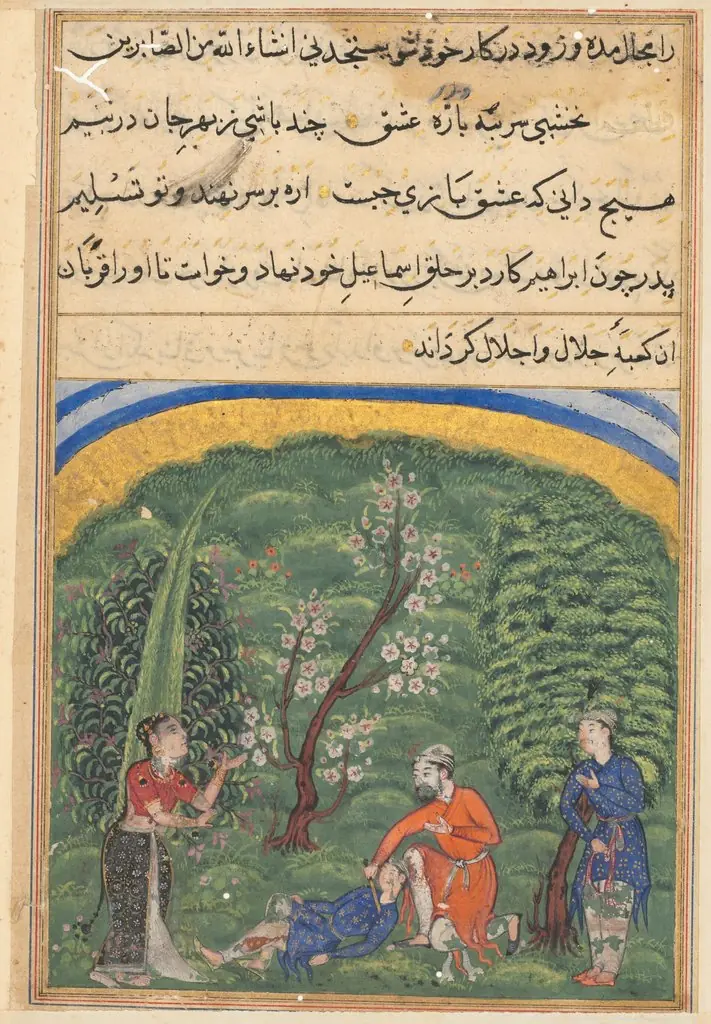 The sentinel in the employ of the Shah of Tabaristan prepares to sacrifice his son to the ghost of the Shah’s soul, from a Tuti-nama (Tales of a Parrot): Second Night
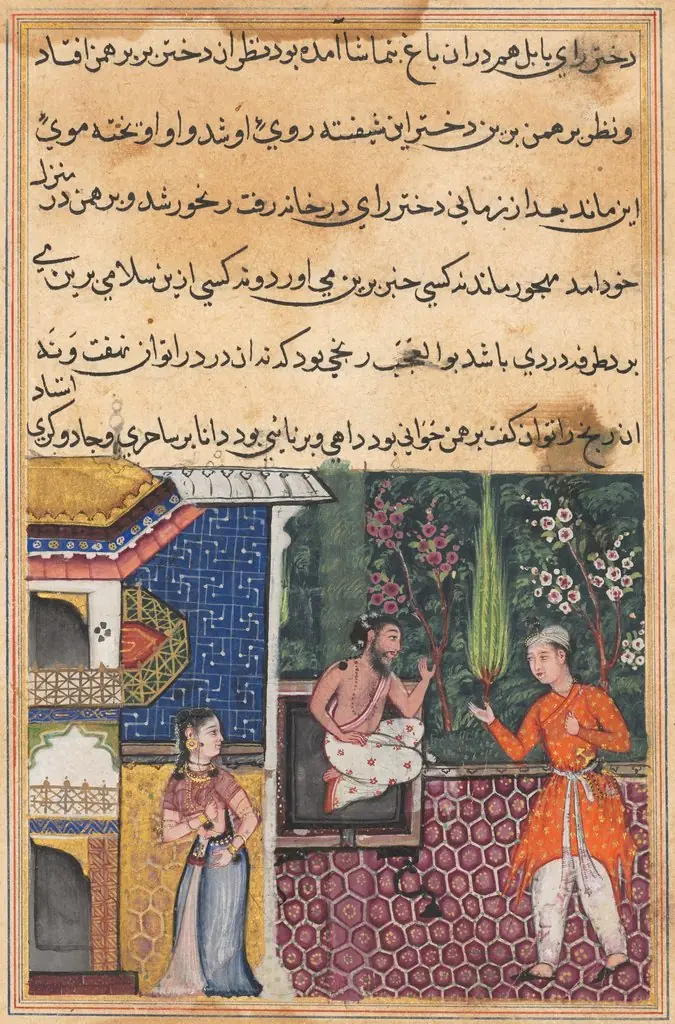 The Brahman gives an account of his falling in love with the king of Babylon’s daughter to his friend, the magician, from a Tuti-nama (Tales of a Parrot): Thirty-fifth Night
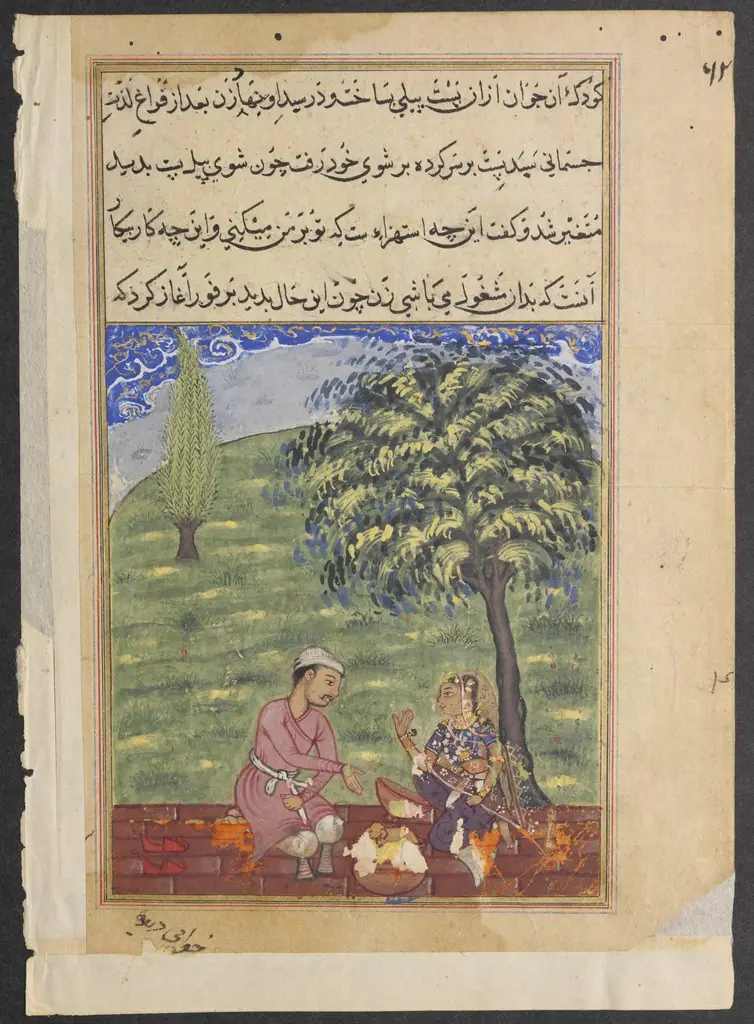 The unfaithful wife explaining away the presence of the dough elephant, from a Tuti-nama (Tales of a Parrot): Eighth Night
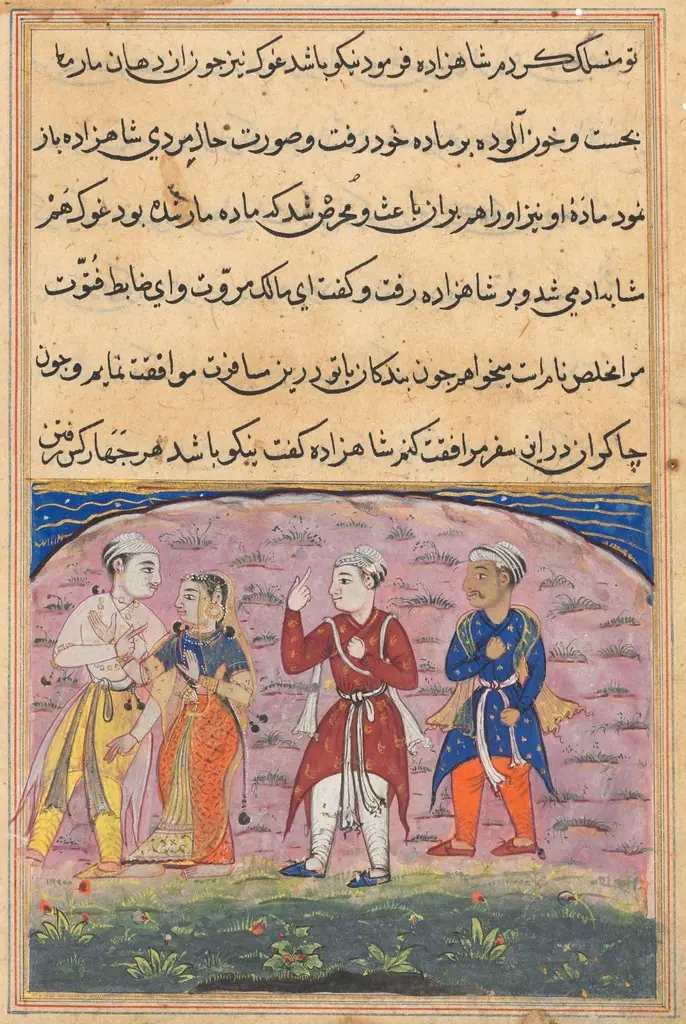 The prince and Nikfal are joined by Khalis and the Mukhlis who are the grateful snake and frog in human form, from a Tuti-nama (Tales of a Parrot): Eighteenth Night
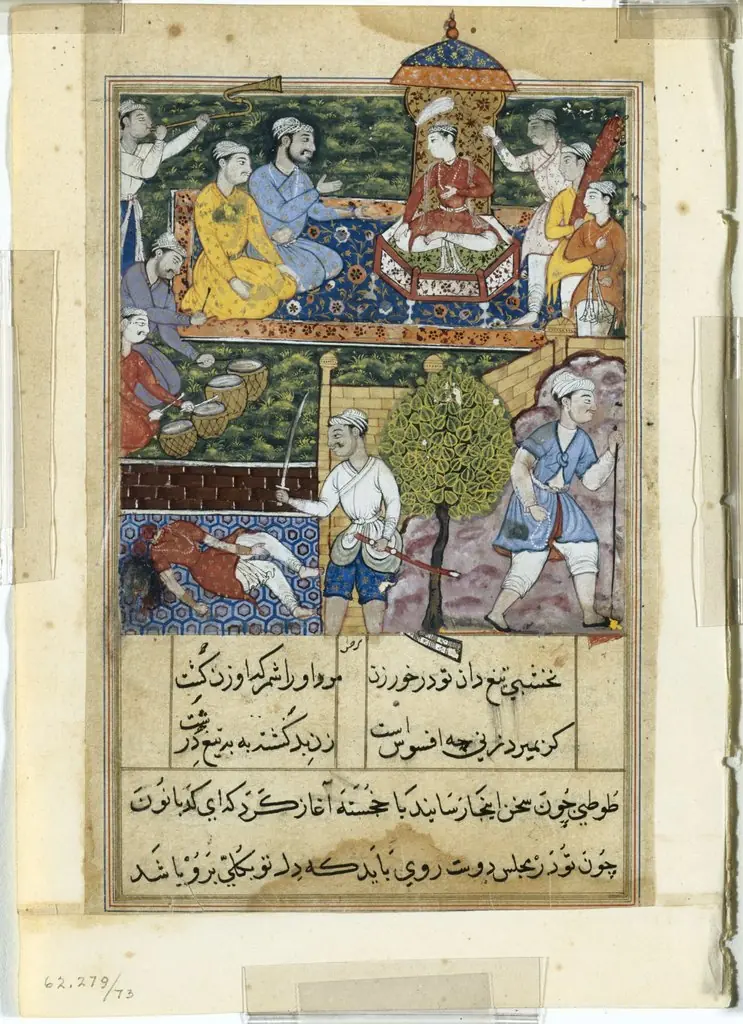 The young prince is crowned and the wicked handmaiden is executed, from a Tuti-nama (Tales of a Parrot): Eighth Night
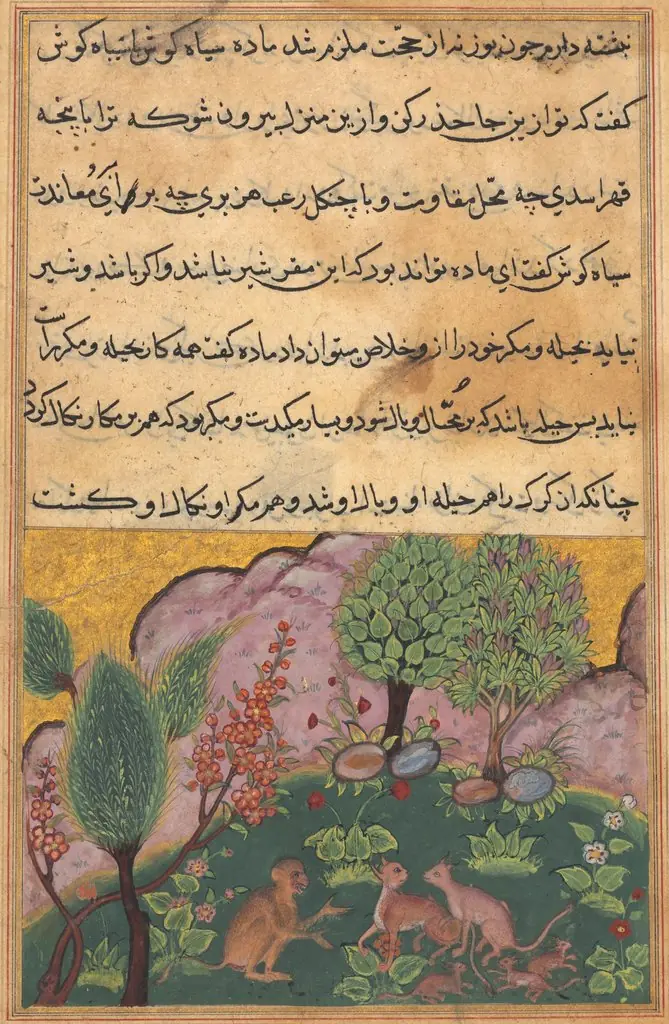 The monkey, serving as the lion’s chamberlain, converses with the lynx and its mate who have arrived with their cubs to settle in the lion’s domain, from a Tuti-nama (Tales of a Parrot): Twenty-ninth Night
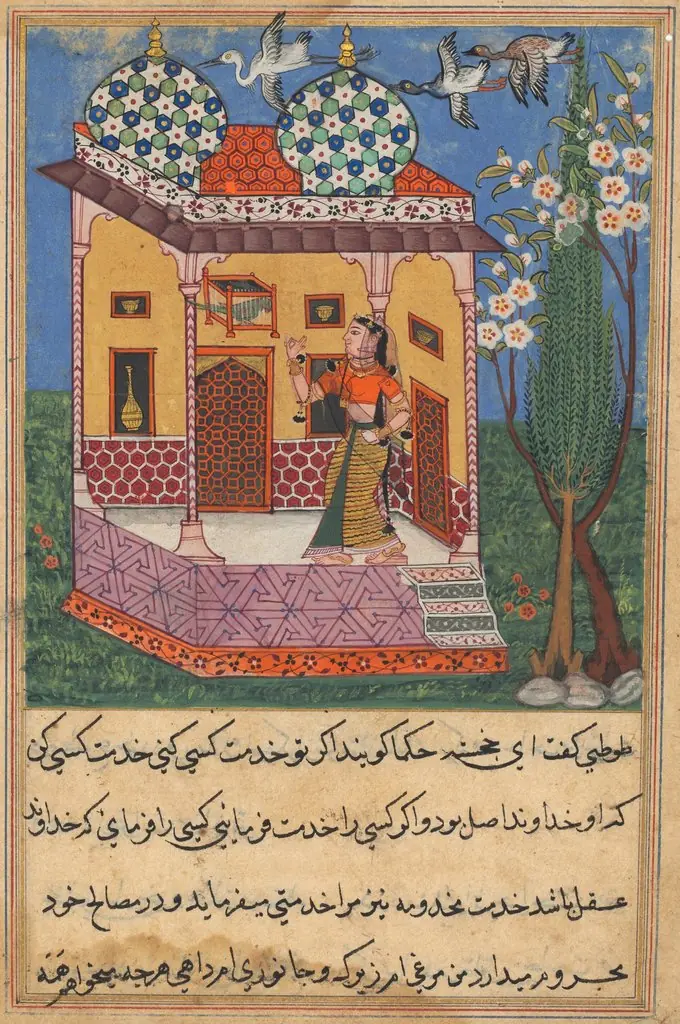 The Parrot Addresses Khujasta at the Beginning of the Twenty-sixth Night, from a Tuti-nama (Tales of a Parrot)
 The origin of music from a fabulous bird of India which had seven holes in its beak, from a Tuti-nama (Tales of a Parrot): Fourteenth Night