Artwork
The daughter of the merchant of Mazanderan asks the gardener for the rose, from a Tuti-nama (Tales of a Parrot): Twelfth Night
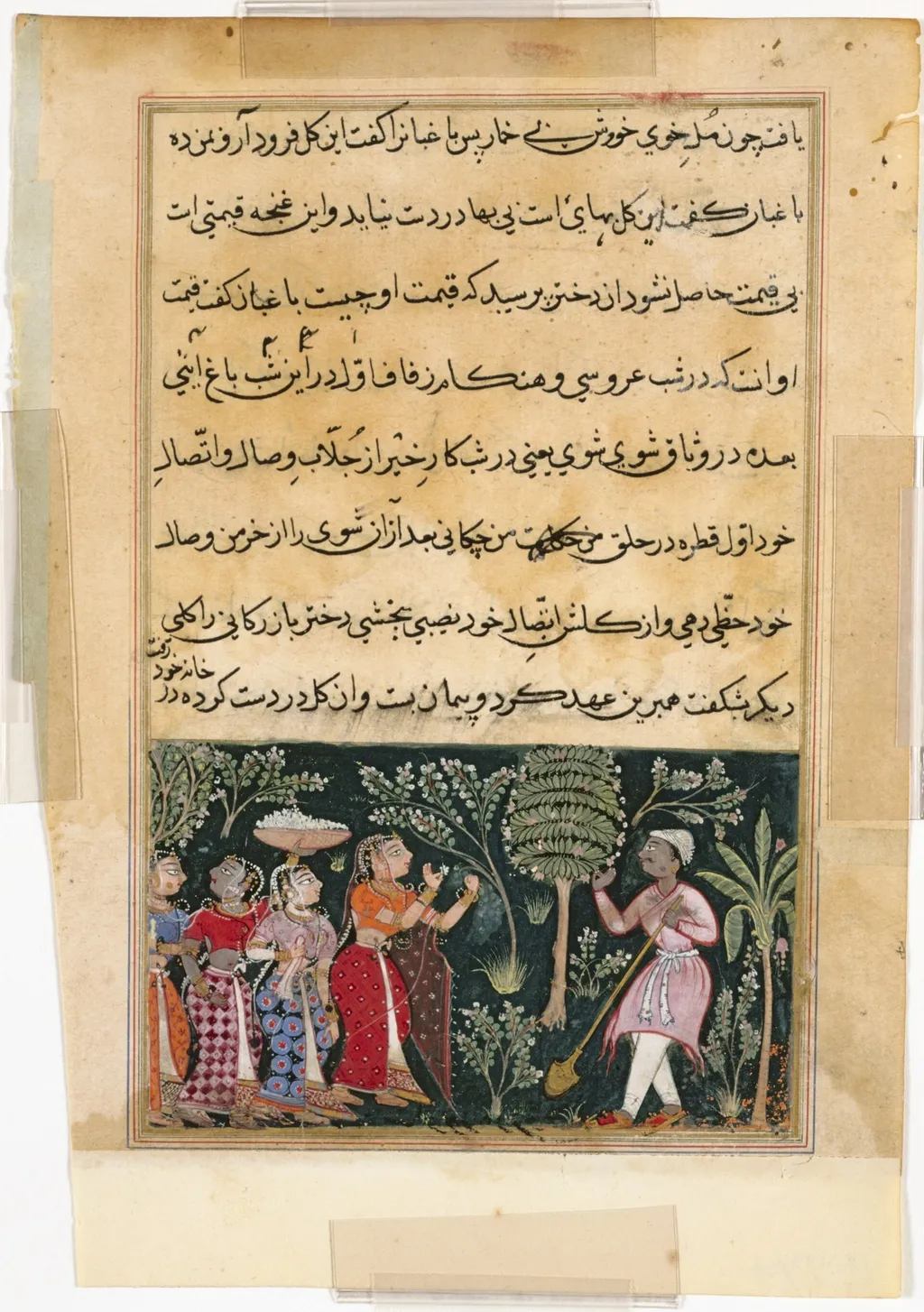
The daughter of the merchant of Mazanderan asks the gardener for the rose, from a Tuti-nama (Tales of a Parrot): Twelfth Night is an unspecified painting. It dates from 1560 and is held in the collection of the Cleveland Museum of Art. The miniature illustrates a brief episode from the Persian collection *Tuti‑nama* (Tales of a Parrot).
About this work
Overview
The miniature illustrates a brief episode from the Persian collection *Tuti‑nama* (Tales of a Parrot). In the lower register a woman in a vivid red garment extends her hand toward a gardener who is gathering blossoms, while other female figures observe. The setting is a dimly lit garden populated by tall foliage and white flowers, suggesting an intimate, narrative moment.
Subject & Meaning
The scene depicts the daughter of a Mazandaran merchant requesting a rose from a gardener, a motif drawn from the *Twelfth Night* episode of the *Tuti‑nama*. The interaction emphasizes themes of desire and courtship common in Persian fable literature, where a modest request for a flower can symbolize broader social or romantic negotiations.
Technique & Style
Executed in the miniature tradition, the work employs delicate brushwork and a limited palette dominated by red, green, and white. The figures are rendered with stylized proportions and fine linear detailing, while the background foliage is suggested through washes and ornamental patterns, characteristic of Safavid‑era manuscript illumination.
History & Provenance
The page originates from a hand‑copied manuscript of the *Tuti‑nama*, a popular 15th‑century Persian anthology of moral tales. The specific copy dates to the early modern period, though the exact date and place of production are not recorded. The miniature entered the Cleveland Museum of Art’s collection through a mid‑20th‑century acquisition of Persian manuscripts.
Context
The *Tuti‑nama* served both as entertainment and moral instruction, compiling stories that blended courtly romance with didactic lessons. Garden scenes like this one reflect the Persian literary tradition of using cultivated spaces as settings for dialogue and symbolic exchange, linking the natural world to human emotion.
Artist & collection

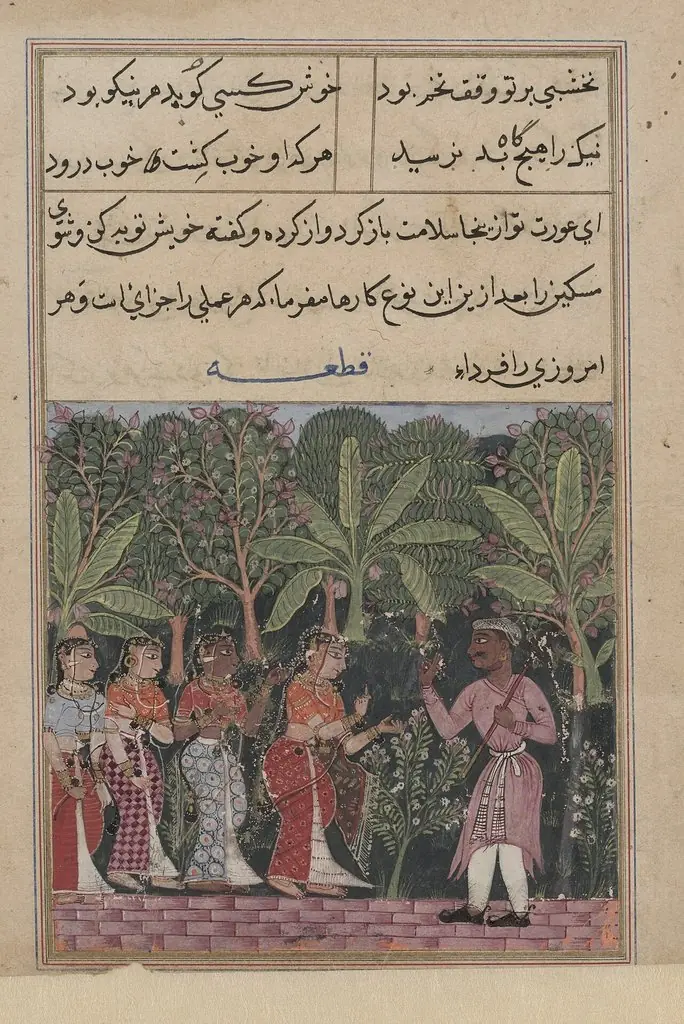 The merchant’s daughter meets the gardener, from a Tuti-nama (Tales of a Parrot): Twelfth Night
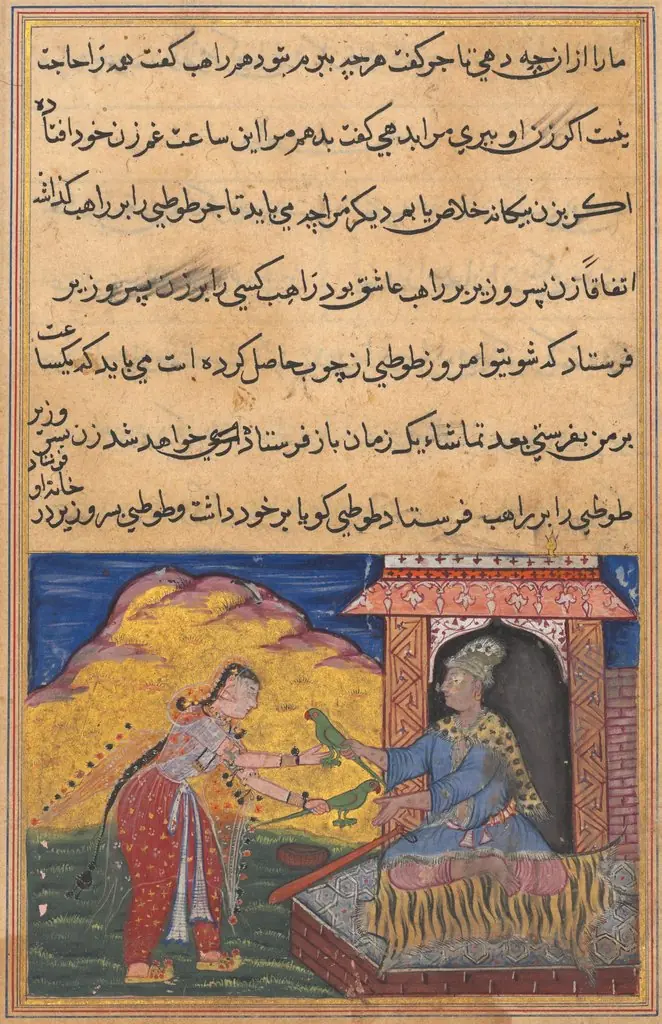 The wife of the son of the vizier brings the magic wooden parrot to her lover, the monk, who exchanges it for the replica, from a Tuti-nama (Tales of a Parrot): Tenth Night
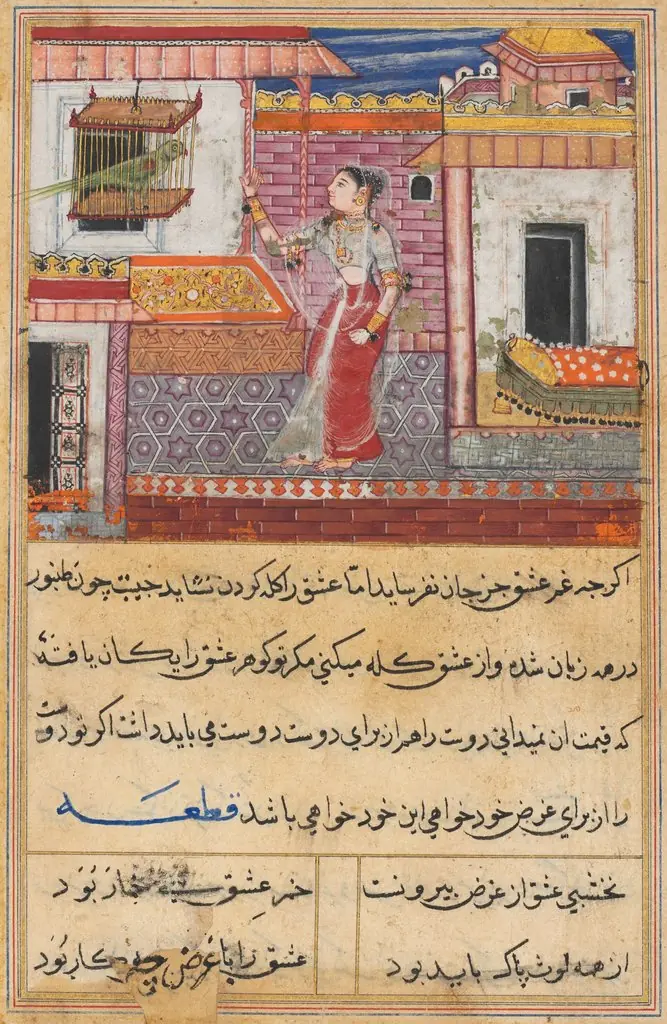 The Parrot Addresses Khujasta at the Beginning of the Thirteenth Night, from a Tuti-nama (Tales of a Parrot)
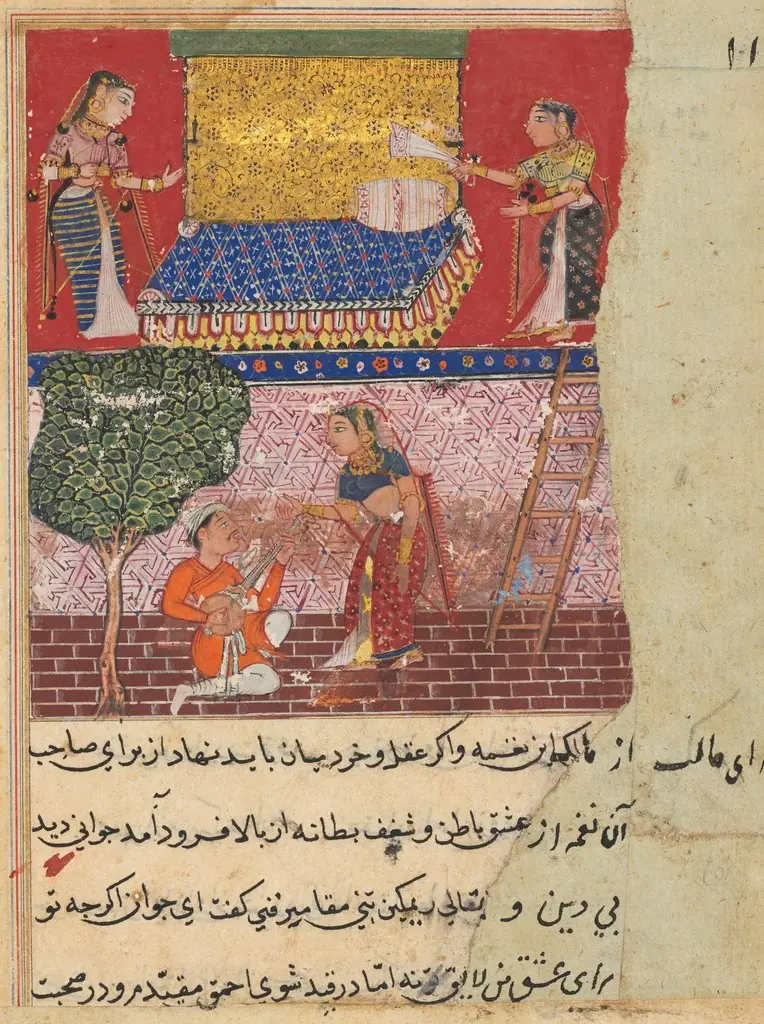 The daughter-in-law of the king of Banaras, charmed by the music of a vagabond, comes down to meet him, from a Tuti-nama (Tales of a Parrot): Sixteenth Night
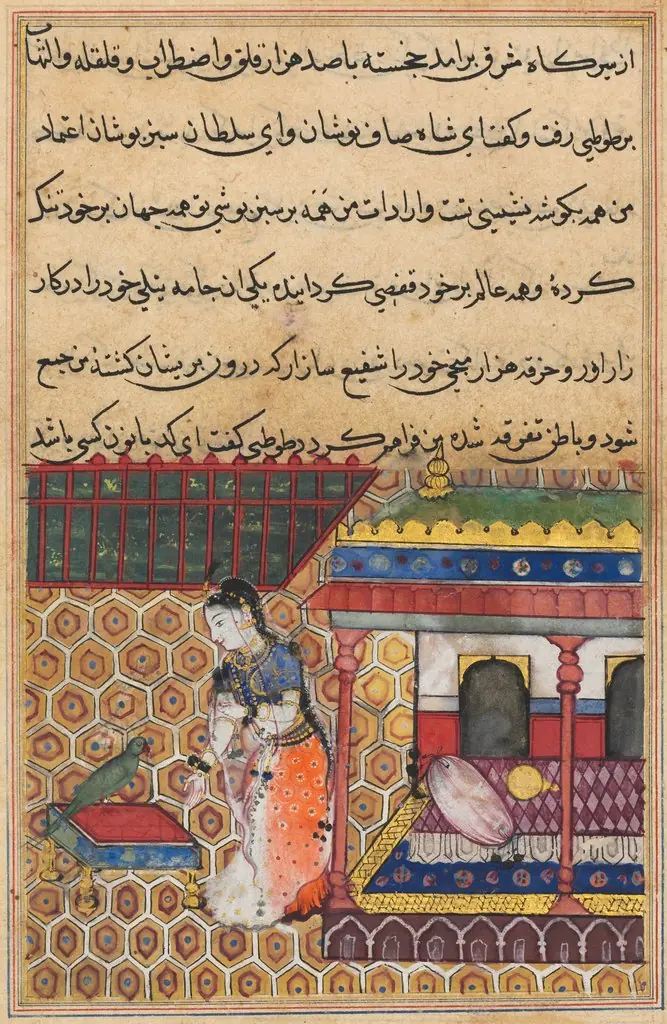 The parrot addresses Khujasta at the beginning of the thirty-eighth night, from a Tuti-nama (Tales of a Parrot)
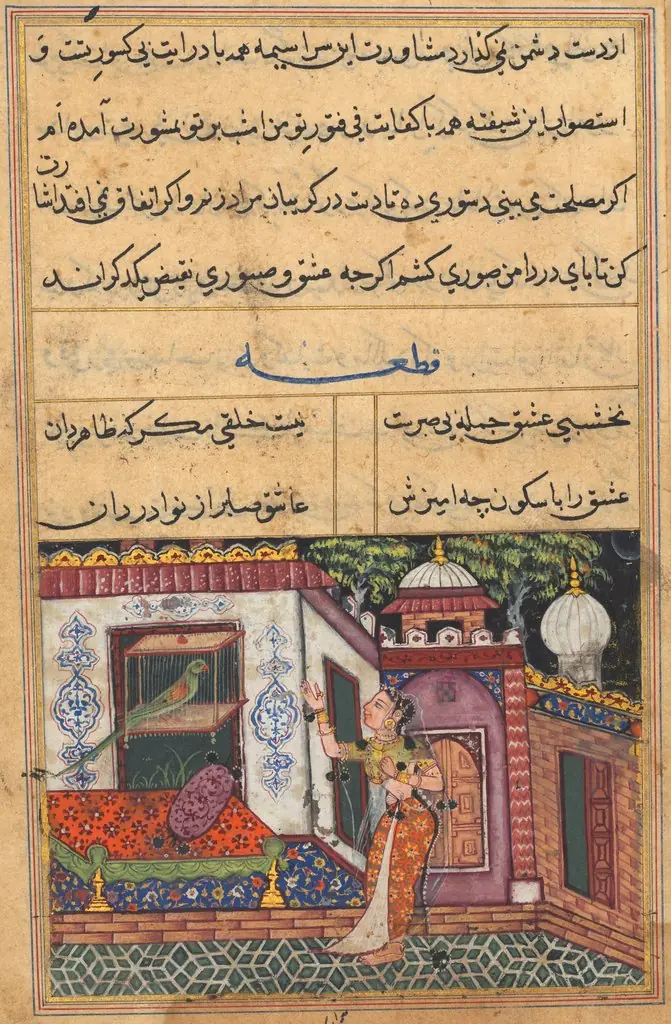 The Parrot Addresses Khujasta at the Beginning of the Eleventh Night, from a Tuti-nama (Tales of a Parrot)
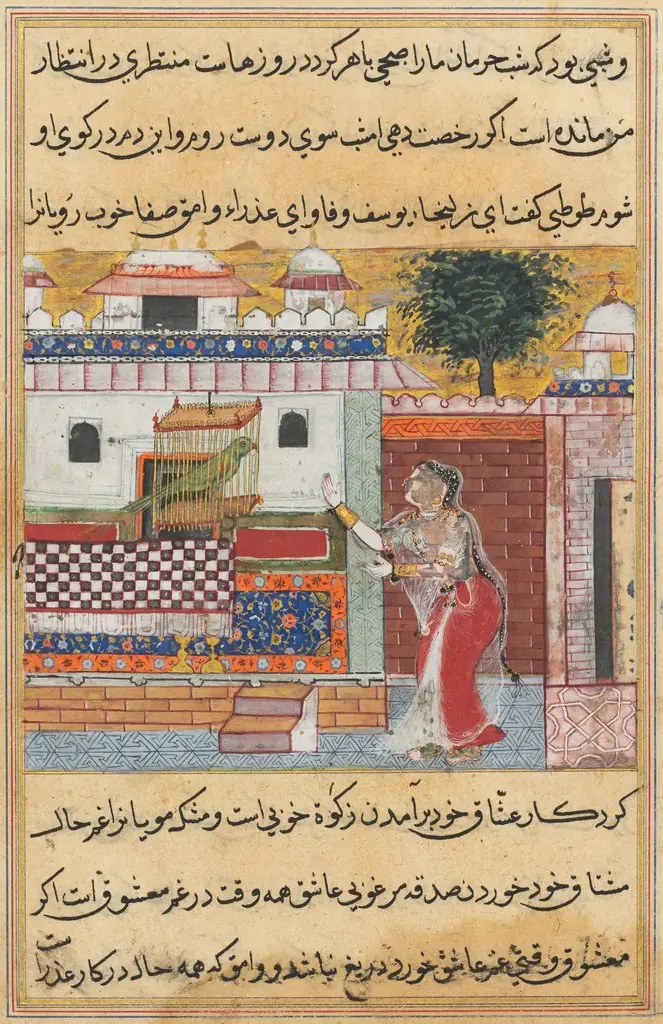 The Parrot Addresses Khujasta at the Beginning of the Twelfth Night, from a Tuti-nama (Tales of a Parrot)
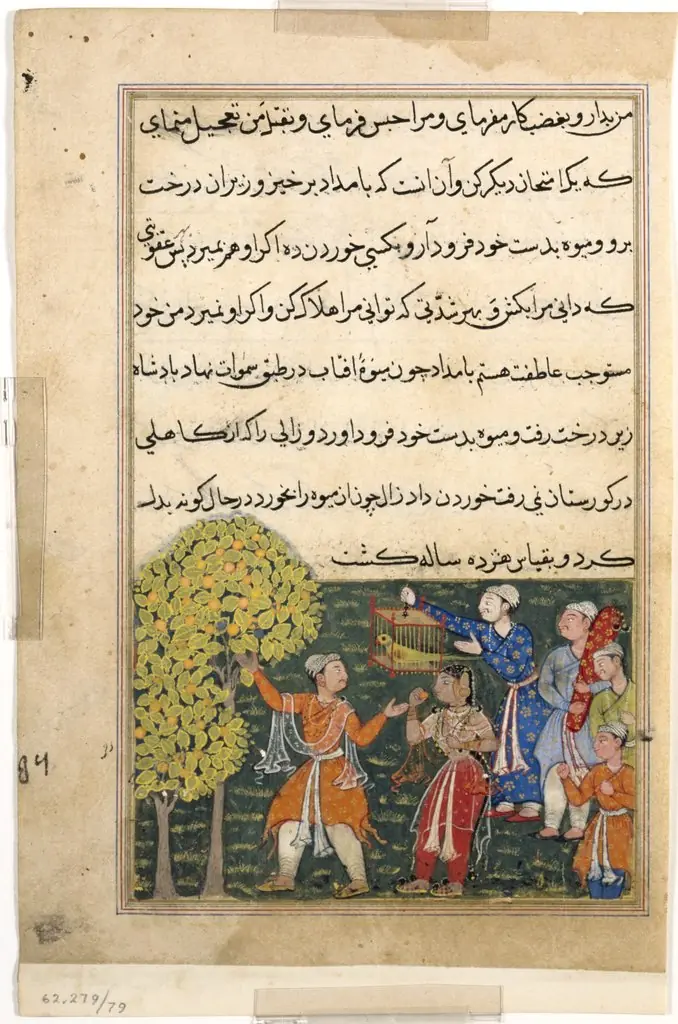 The king plucks fruit from the Tree of Life with his own hands and feeds it to a lady, from a Tuti-nama (Tales of a Parrot): Ninth Night
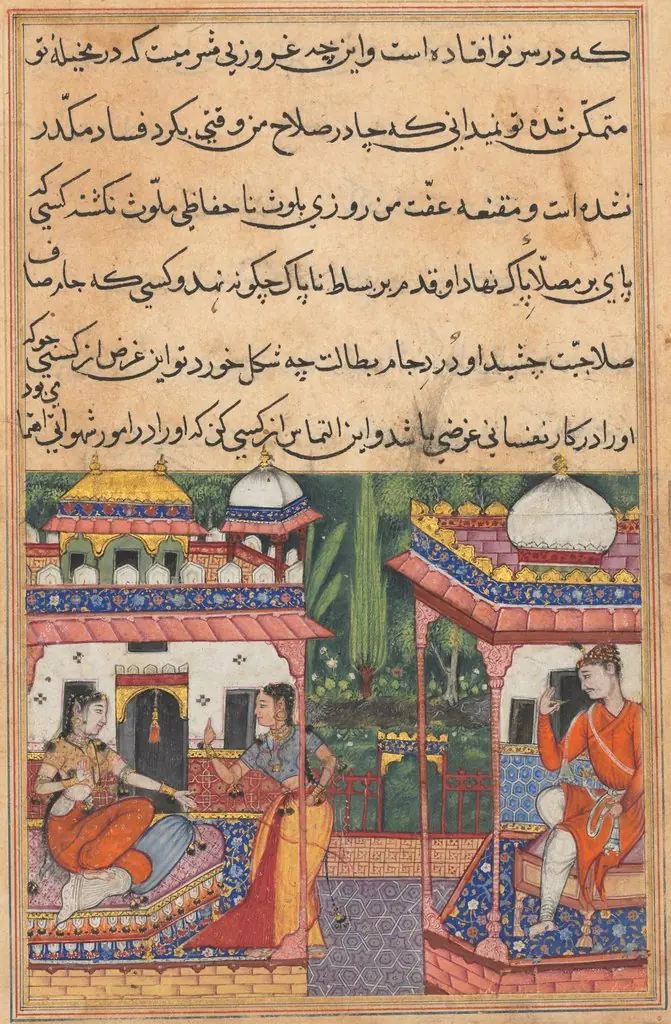 Kaiwan sends a message of love to Khurshid, wife of his brother Utarid who is away on a journey, from a Tuti-nama (Tales of a Parrot): Thirty-second Night
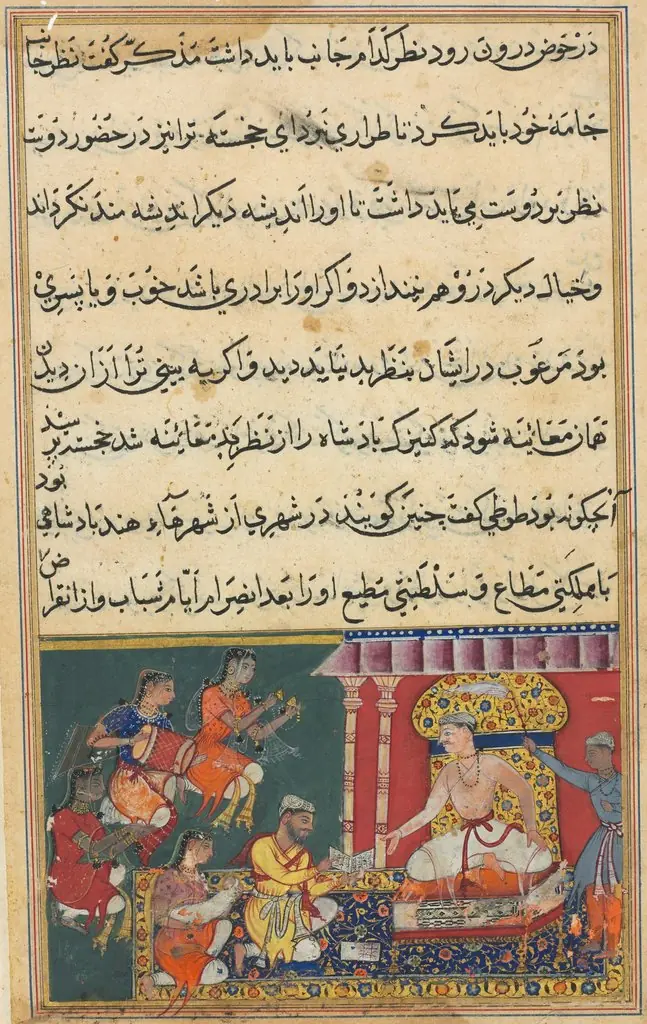 The astrologer predicts a calamity for the newly born prince in his thirteenth year, but one which he would be able to overcome, from a Tuti-nama (Tales of a Parrot): Eighth Night
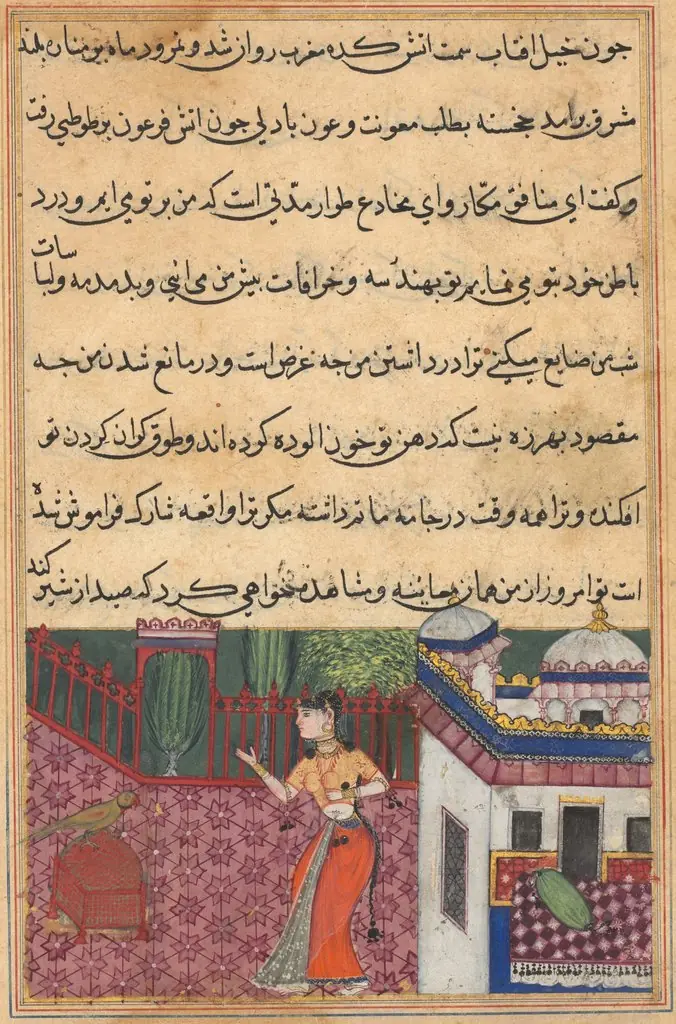 The parrot addresses Khujasta at the beginning of the thirty-third night, from a Tuti-nama (Tales of a Parrot)
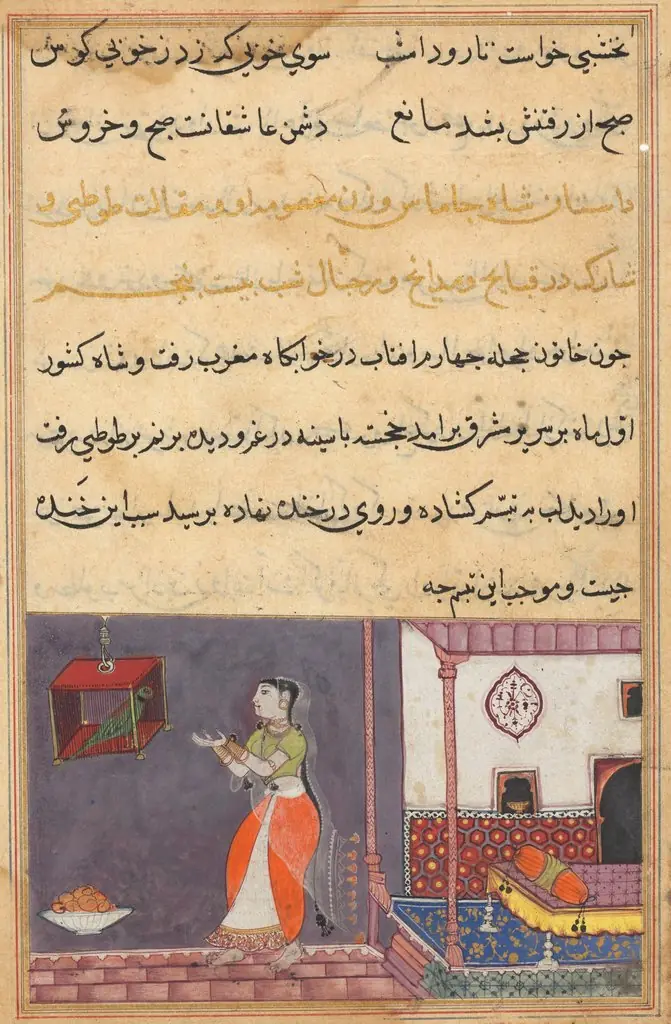 The Parrot Addresses Khujasta at the Beginning of the Twenty-fifth Night, from a Tuti-nama (Tales of a Parrot)
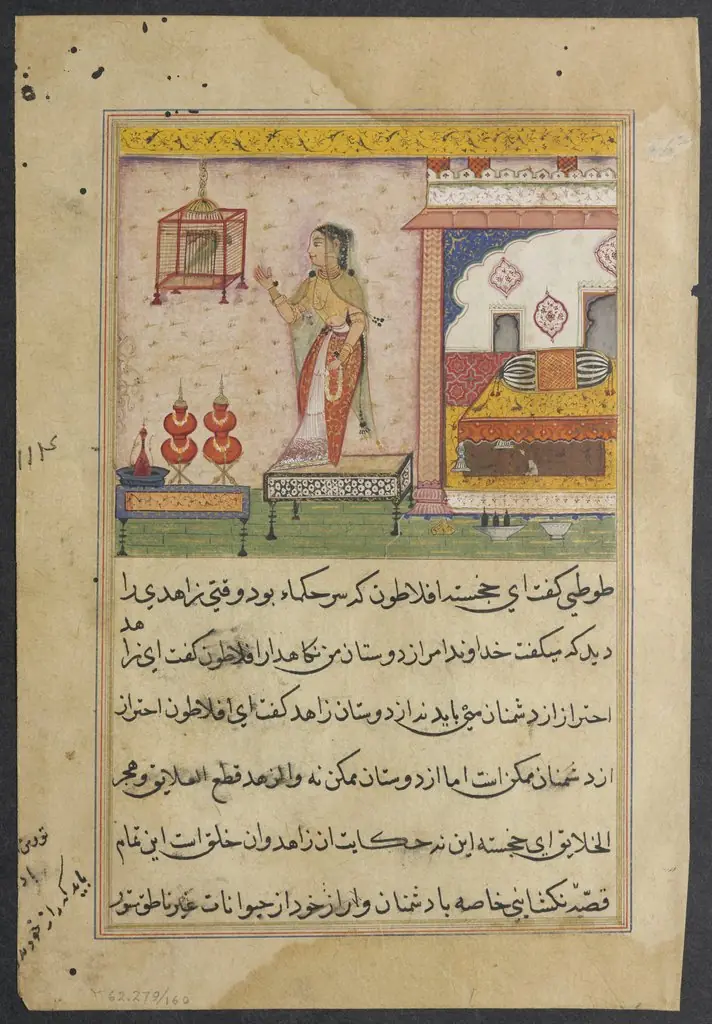 The Parrot Addresses Khujasta at the Beginning of the Twenty-third Night, from a Tuti-nama (Tales of a Parrot)