Artwork
The Good Thief (Saint Dismas)
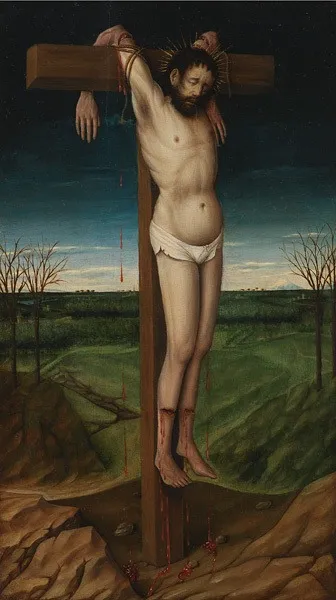
The Good Thief (Saint Dismas) is an oil painting by the Northern Renaissance artist Unknown. It dates from 1455 and is held in the collection of the Statens Museum for Kunst. The work depicts a crucified figure whose torso leans forward, his limbs bearing the marks of nails and a thorny crown encircling his head.
About this work
Overview
The work depicts a crucified figure whose torso leans forward, his limbs bearing the marks of nails and a thorny crown encircling his head. He stands against a bleak, rocky slope populated by skeletal trees under a muted sky, creating a stark, somber atmosphere.
Subject & Meaning
The composition represents the repentant thief traditionally known as Saint Dismas, the “good thief” who, according to Christian legend, asked for forgiveness beside Christ on the cross. The portrayal emphasizes his suffering and redemption, inviting contemplation of penitence and grace.
Technique & Style
The painter employs chiaroscuro, contrasting deep shadows with a focused illumination that sweeps across the figure’s face and chest. Layered oil applications build a subtle modeling of flesh, giving the skin a palpable volume against the dark background.
Context
Executed in oil on canvas, the piece aligns with Baroque sensibilities that favored dramatic lighting and emotional intensity. Its rugged landscape and stark lighting echo the period’s interest in evoking spiritual drama through naturalistic detail.
Artist & collection

 Domestic Scene
 Giacomo and Cardinal Marco, investing Andrea, Abbot of San Zeno, with his Benefice
 The Nymph of Fontainebleau
 Portrait of a Woman
 Madonna and Child with Saints in the Enclosed Garden
 Venus and Minerva
 Family Group of Four on Sofa
 Wall painting from Room H of the Villa of P. Fannius Synistor at Boscoreale
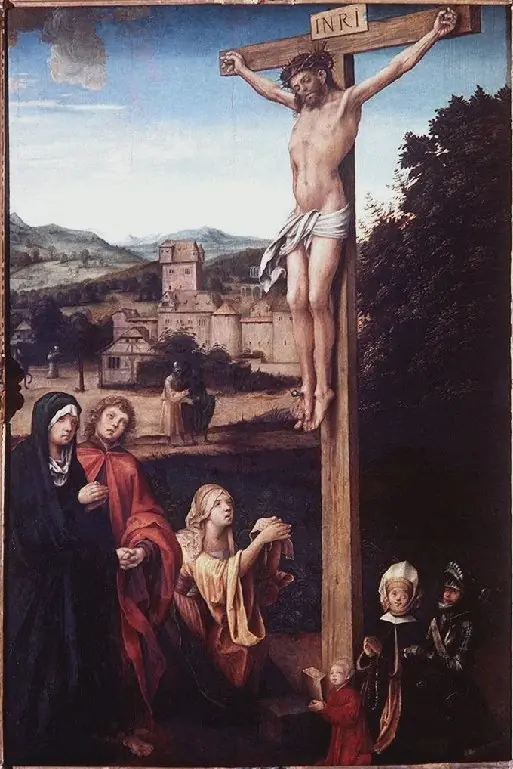 Crucifixion of Christ
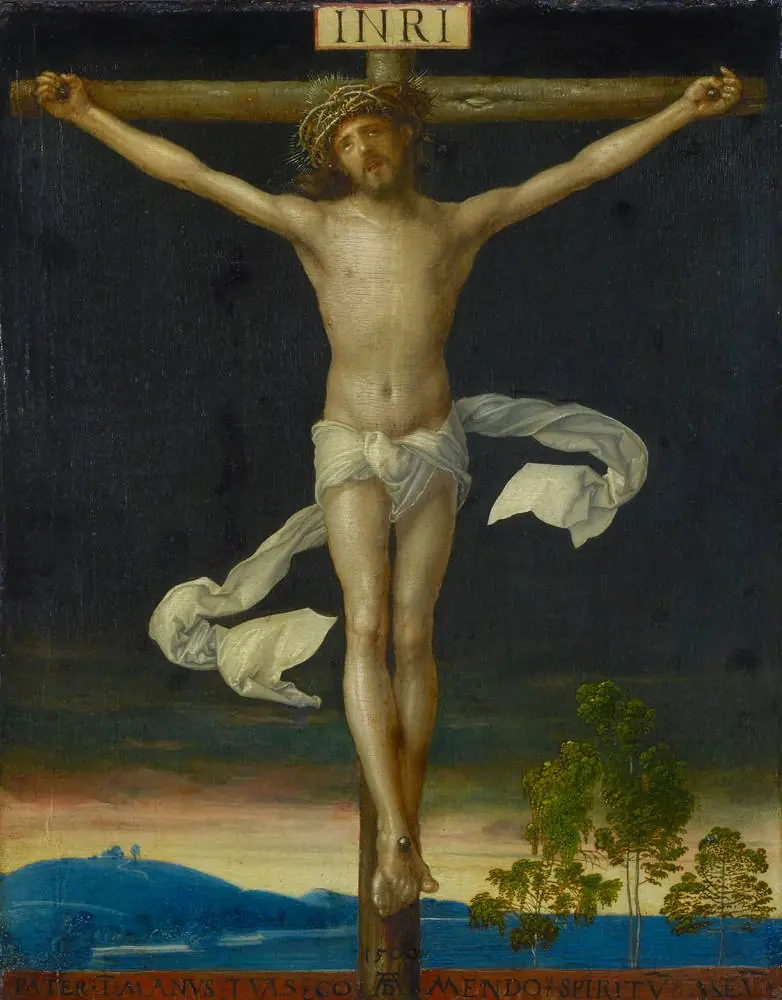 Crucifixion
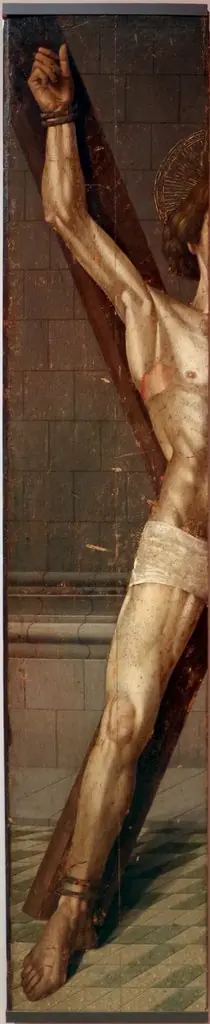 São Vicente na Cruz em Aspa
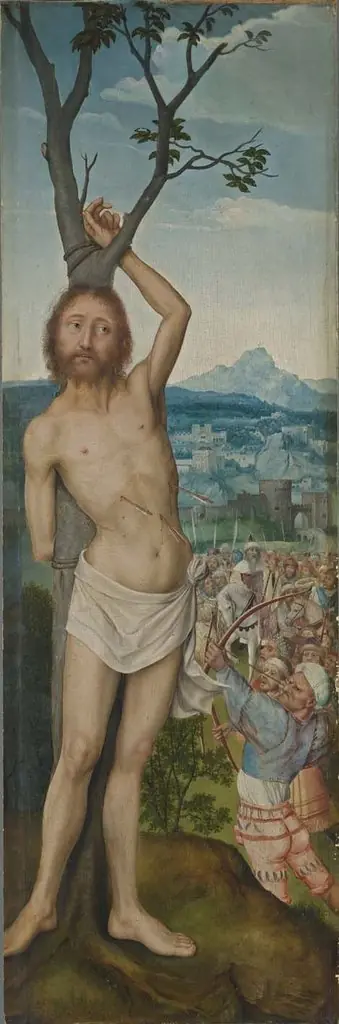 Rem-Altar: Martyrium des hl. Sebastian (Rückseite: Hl. Lukas)
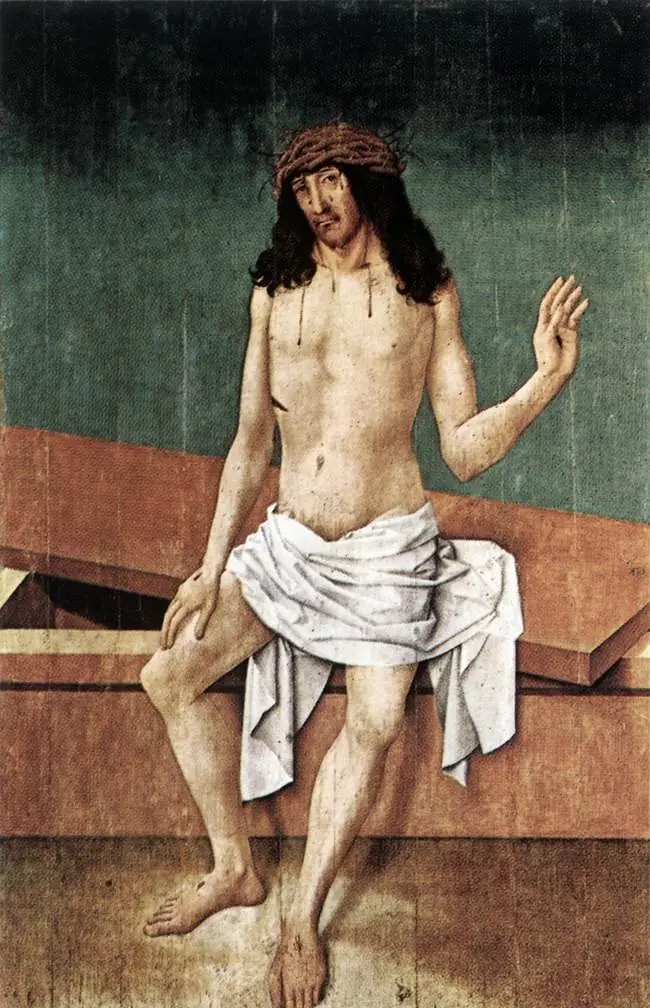 Christ as Man of Sorows
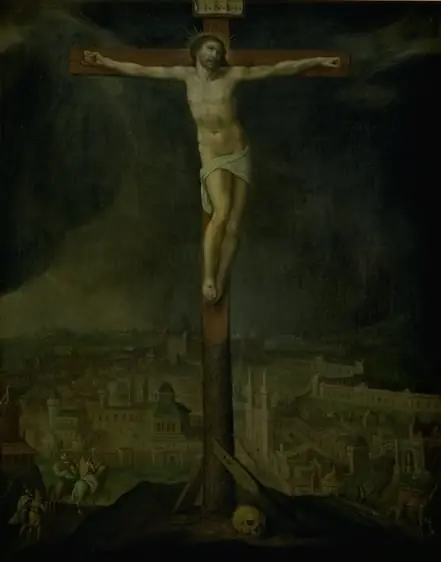 Christ on the Cross
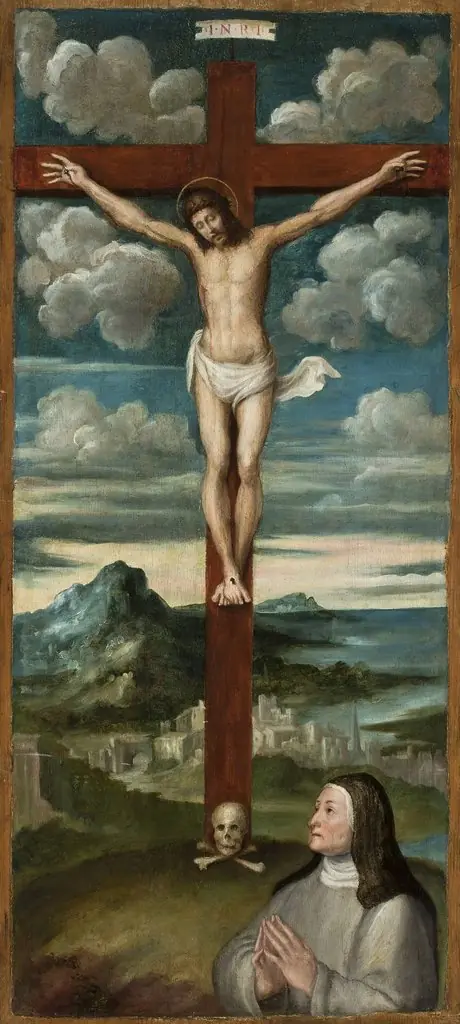 Crucifixion with the bust of a praying nun
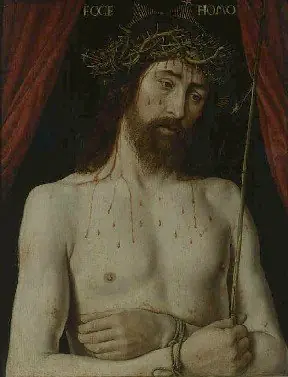 Christ with Crown of Thorns (Ecce Homo)
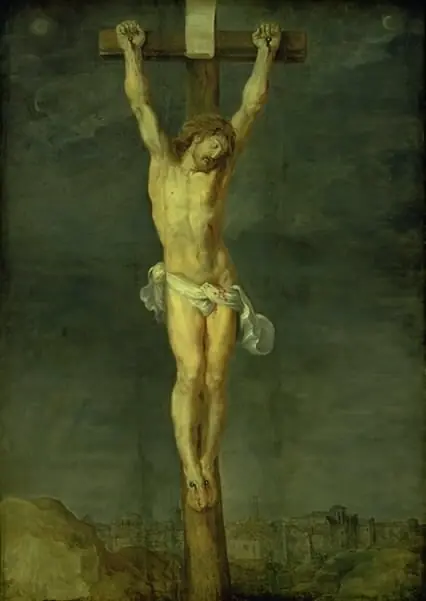 Christ on the Cross
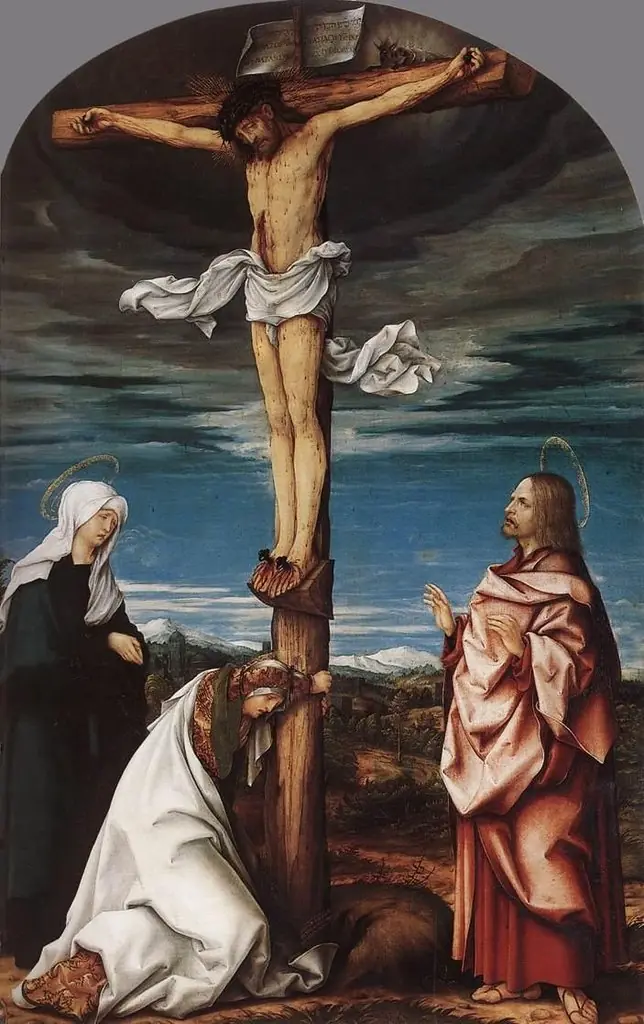 Crucifix with Mary, Mary Magdalen and St John the Evangelist