Artwork
Regina von Stetten (1499-1562), Gemahlin des Peter Honold
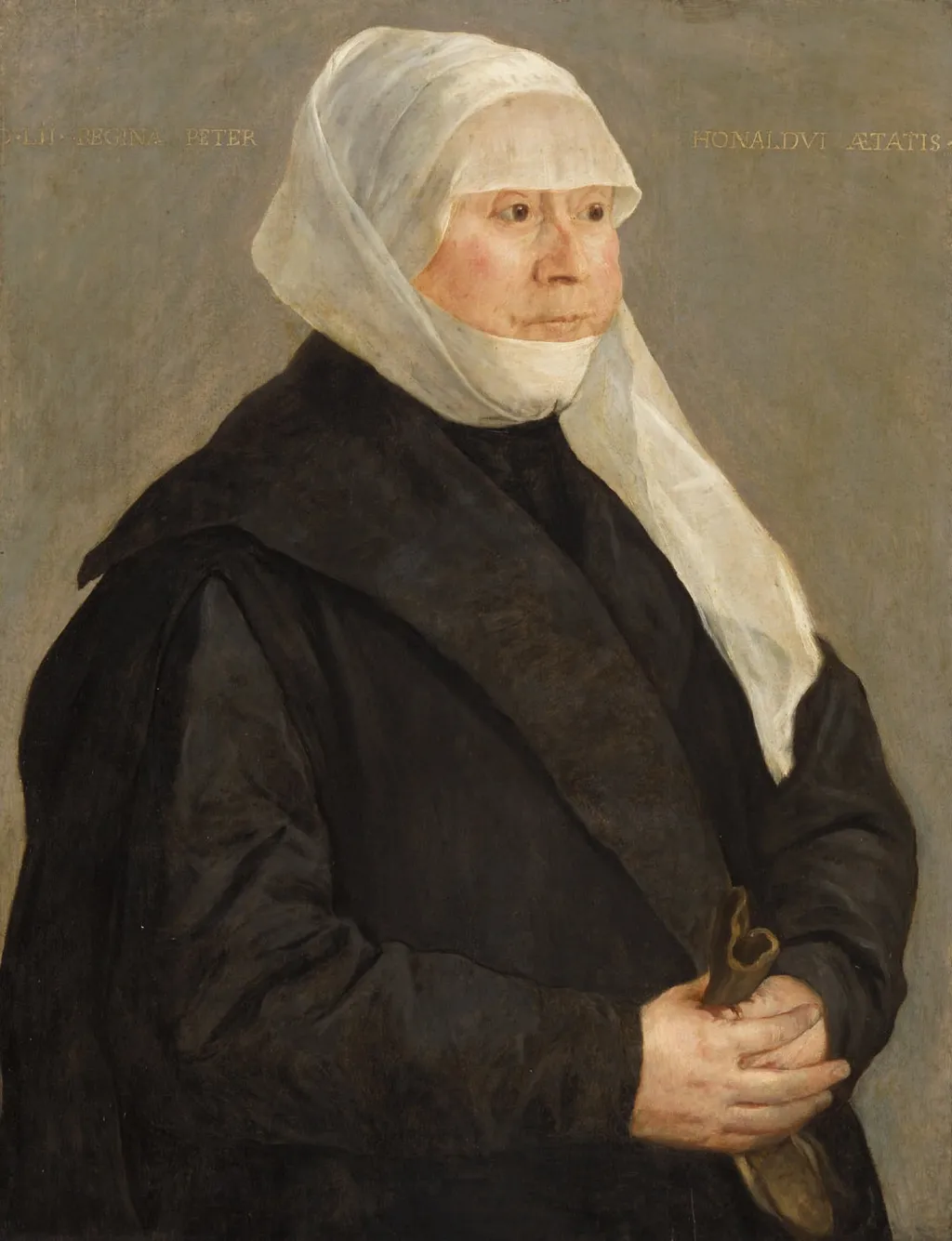
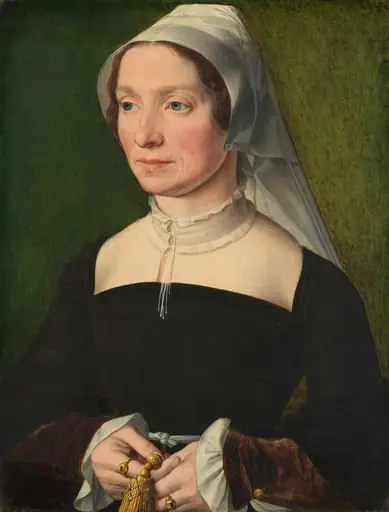
Regina von Stetten (1499-1562), Gemahlin des Peter Honold is an unspecified painting by the Early Baroque Italian artist Unknown. It dates from 1552 and is held in the collection of the Kunsthistorisches Museum. This portrait depicts Regina von Stetten, wife of Peter Honold, painted in the late 15th or early 16th century.
About this work
Overview
She is shown in modest attire, wearing a dark gown and a white head covering, with a neutral expression and minimal ornamentation.
This portrait depicts Regina von Stetten, wife of Peter Honold, painted in the late 15th or early 16th century. She is shown in modest attire, wearing a dark gown and a white head covering, with a neutral expression and minimal ornamentation. The background is muted, drawing focus to her figure. The composition emphasizes stillness and restraint, typical of Northern European portraiture of the period.
Subject & Meaning
Regina von Stetten is portrayed not as a figure of grandeur but as a member of the urban elite, her identity tied to marriage and social standing. The small object in her hands—possibly a glove or folded cloth—suggests domestic propriety. Her serious demeanor reflects contemporary ideals of female virtue: quiet dignity, modesty, and moral gravity over display.
Technique & Style
The painting employs chiaroscuro to define form through subtle shifts in light and shadow, particularly on the face and fabric folds. Brushwork is precise but unadorned, avoiding idealization. The muted palette and flat background reflect regional conventions, prioritizing psychological presence over decorative context. Latin inscription at the top serves as a formal identifier, not a narrative device.
History & Provenance
The painting’s origins are tied to the Honold family of southern Germany, likely commissioned to mark Regina’s status after marriage. It remained in private hands for centuries, documented in regional inventories. Its survival through religious upheavals and wars suggests it was valued as a family relic rather than a public monument.
Context
Created during the transition from late Gothic to early Renaissance styles in German-speaking regions, the portrait aligns with civic portraiture trends that emphasized individual identity within a moral framework. Unlike Italian counterparts, it avoids classical references, instead grounding the subject in everyday piety and social role.
Legacy
The work contributes to the corpus of early modern German portraiture that prioritized authenticity over grandeur. It offers insight into how women of the urban middle class were visually represented—not as symbols of power, but as embodiments of domestic and spiritual order. Its preservation aids scholarly study of non-noble identity in Reformation-era Europe.
Artist & collection

 Domestic Scene
 Giacomo and Cardinal Marco, investing Andrea, Abbot of San Zeno, with his Benefice
 The Nymph of Fontainebleau
 Portrait of a Woman
 Madonna and Child with Saints in the Enclosed Garden
 Venus and Minerva
 Family Group of Four on Sofa
 Wall painting from Room H of the Villa of P. Fannius Synistor at Boscoreale
 Portrait of Sabina of Bavaria
 Portrait of a Woman
 Kunigunde of Austria, wife of Duke Albrecht IV of Bavaria
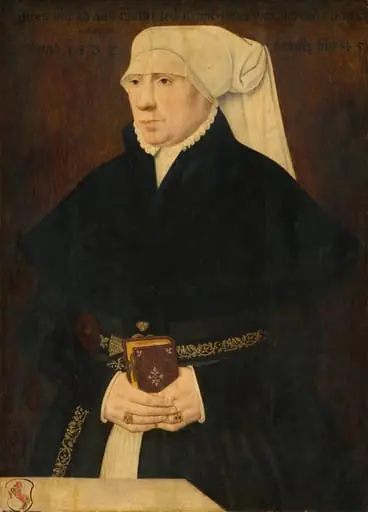 Portrait of a Lady
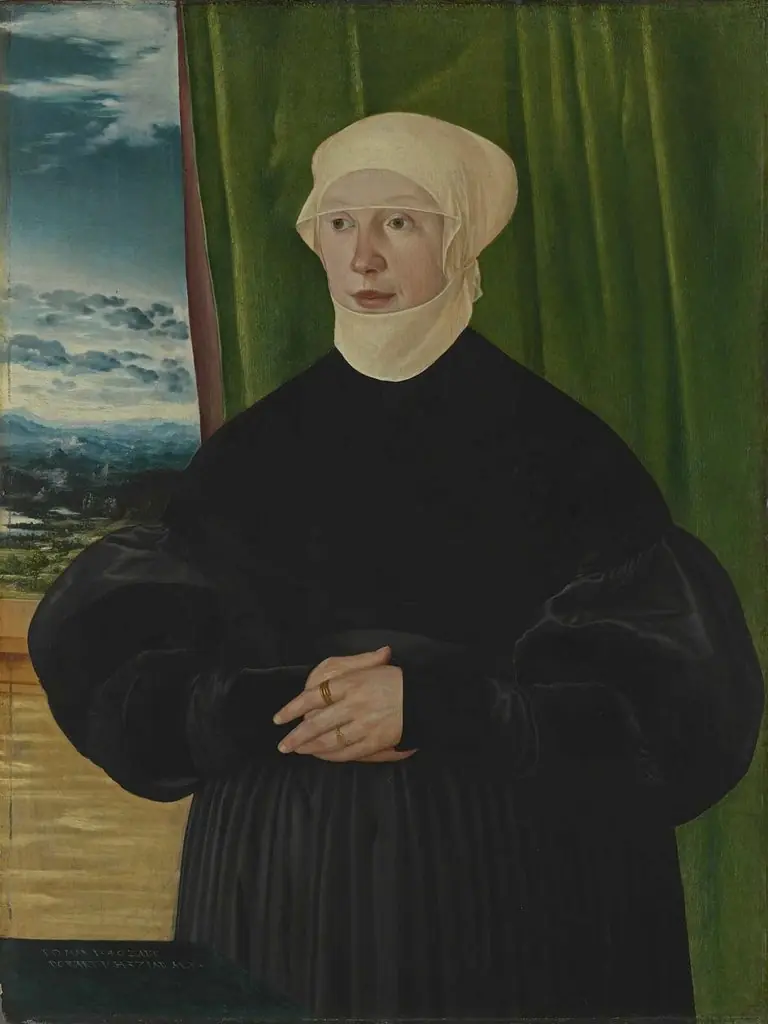 Ligsalz-Bildnisdiptychon: Apollonia Ligsalz, geb. Ridler
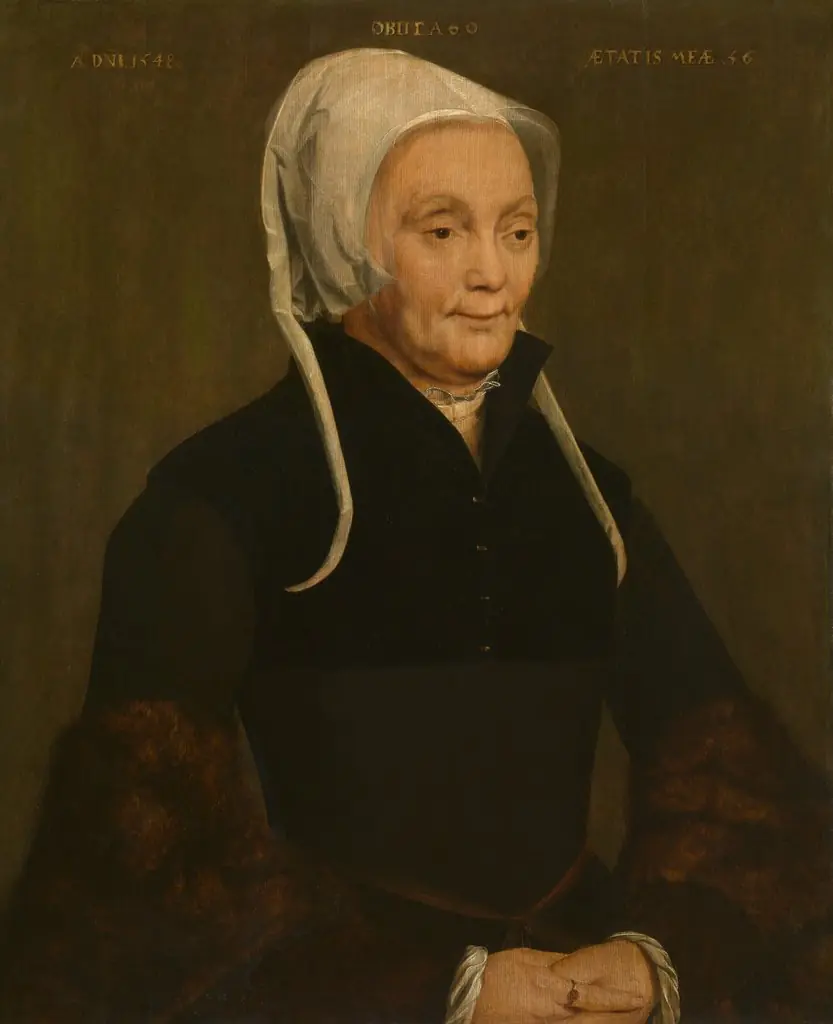 Portrait of a Woman
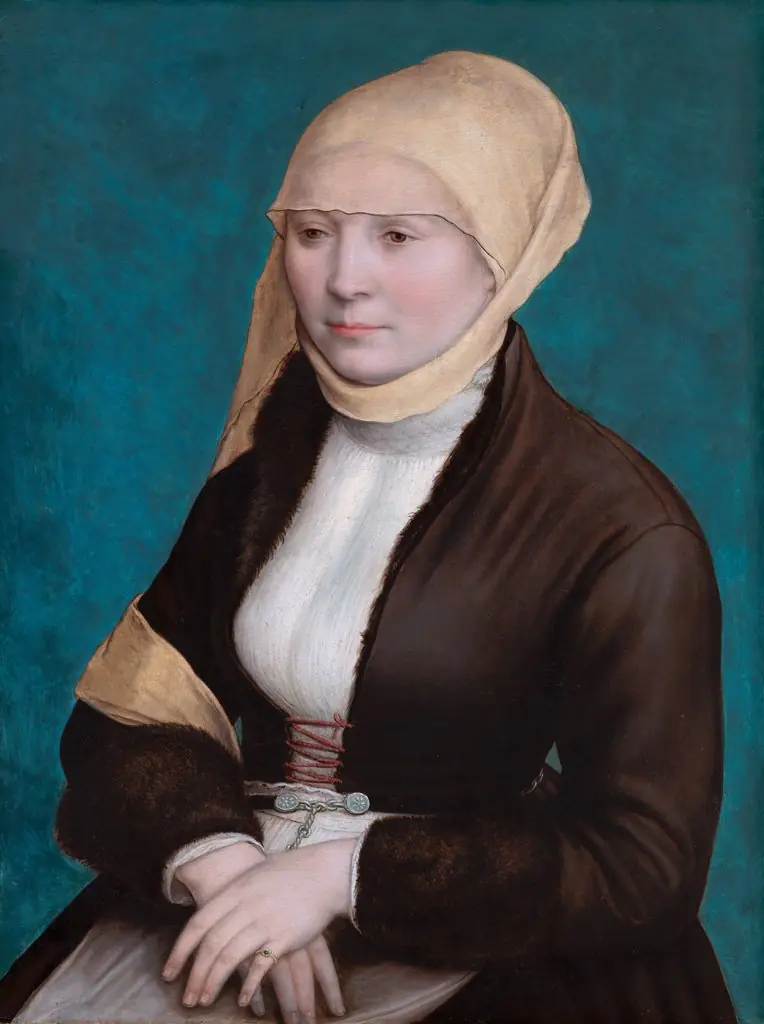 Portrait of a woman from southern Germany
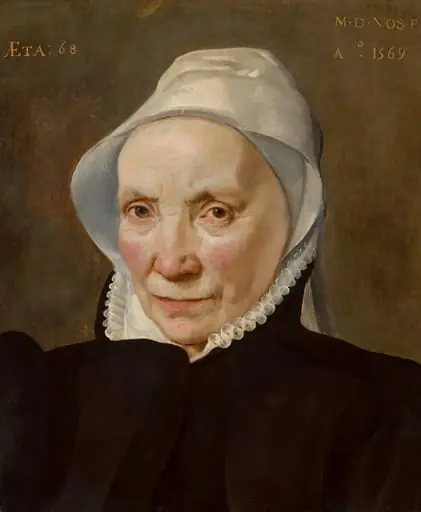 Portrait of a Woman Aged Sixty-Eight
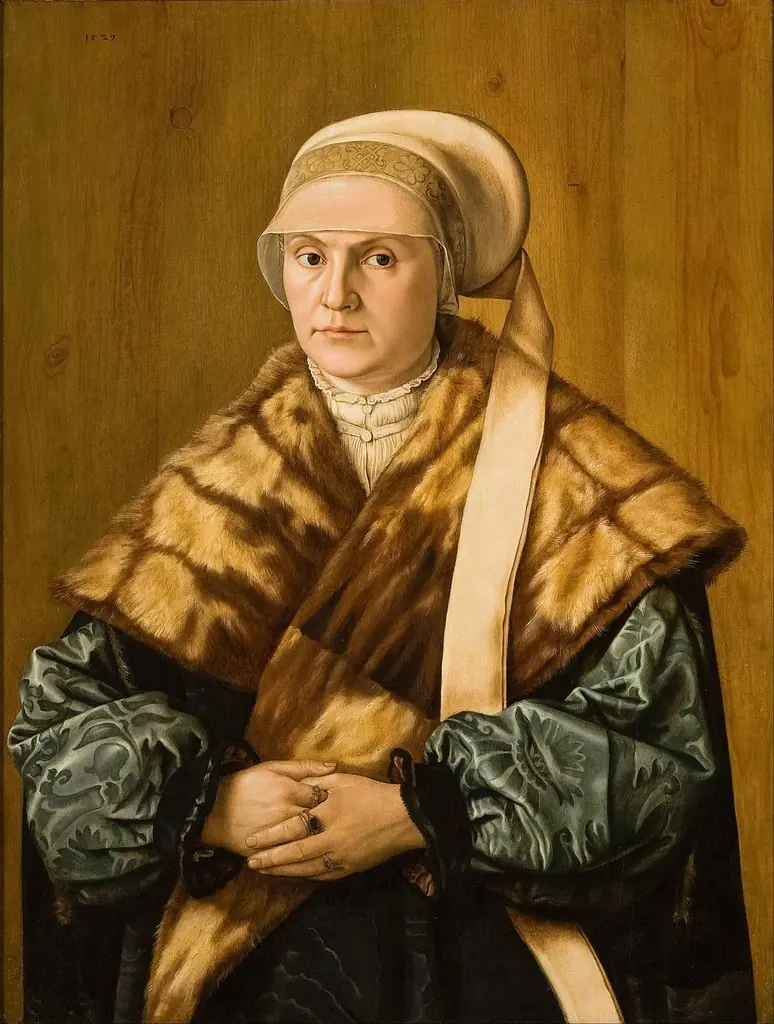 Portrait of a Woman
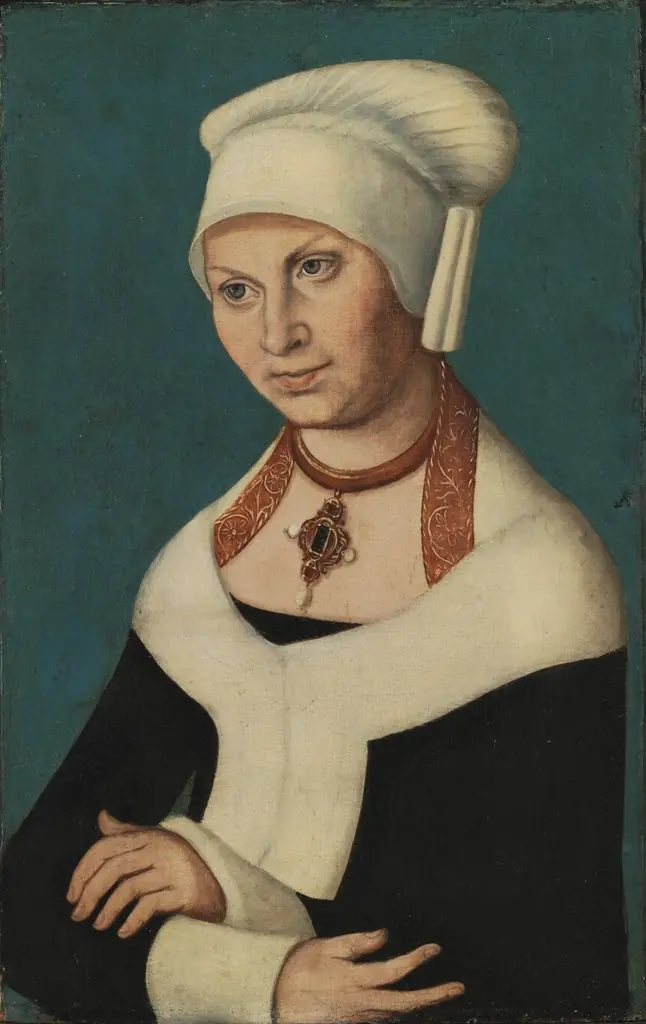 Portrait of the Duchess Barbara of Saxony, 1478-1534 (wife of George the Bearded)
 Portrait of the Duchess Barbara of Saxony, 1478-1534 (wife of George the Bearded)
 Wife of a Member of the de Hondecoeter Family