Artwork
An Illuminated Folio from the Royal Manuscript of the Farhang-i Jahangiri (recto)
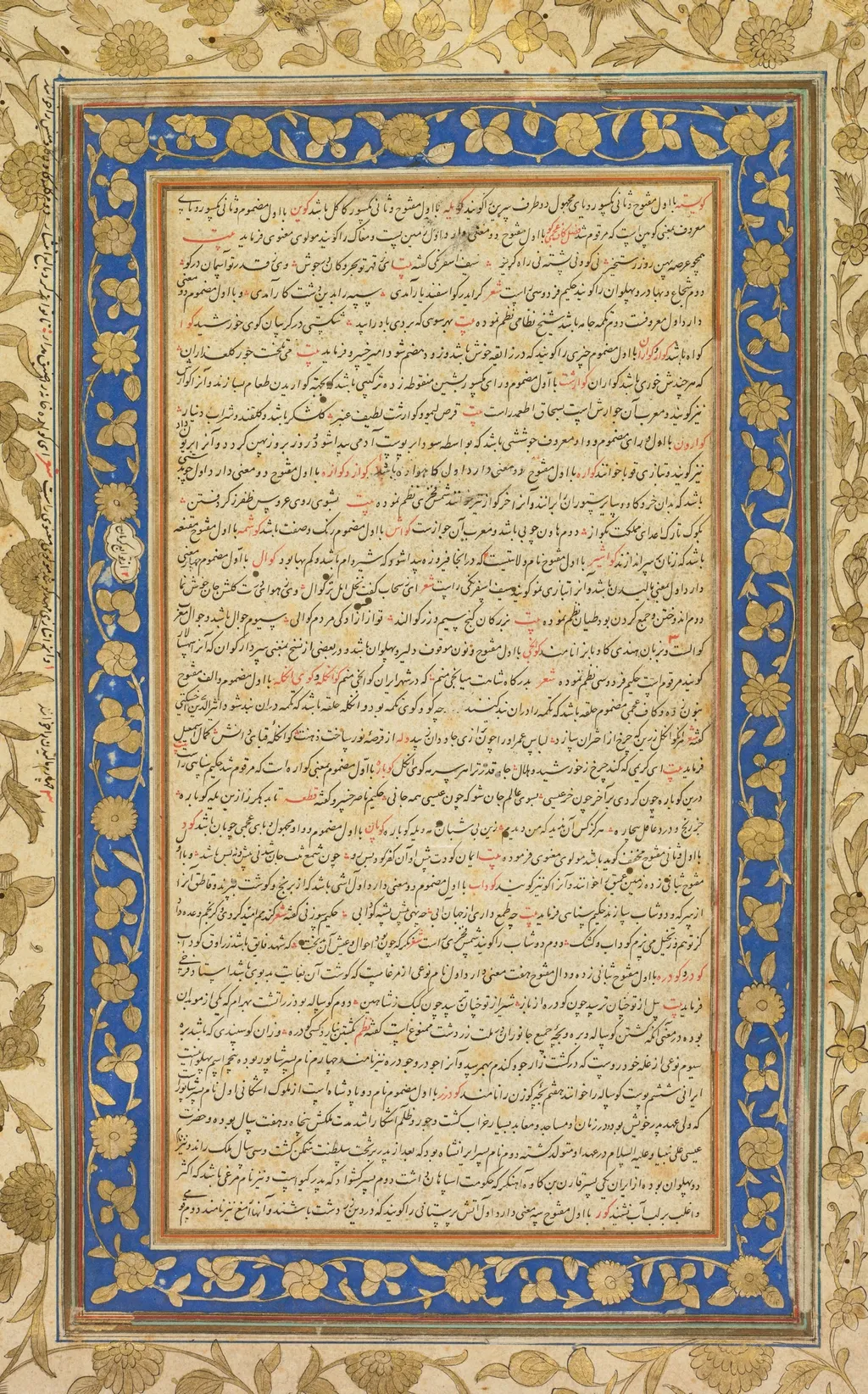
An Illuminated Folio from the Royal Manuscript of the Farhang-i Jahangiri (recto) is an unspecified painting. It dates from 1607 and is held in the collection of the Cleveland Museum of Art. The illuminated folio belongs to the Royal Manuscript of the Farhang-i Jahangiri, a Persian work of reference.
About this work
Overview
The illuminated folio belongs to the Royal Manuscript of the Farhang-i Jahangiri, a Persian work of reference. The page presents densely set black Arabic script framed by a decorative border of blue and gold, with a creamy parchment background that highlights the text. Small red punctuations appear beside selected words, adding visual emphasis within the manuscript.
Subject & Meaning
The central content consists of lexical entries or definitions rendered in Arabic, serving the encyclopedic purpose of the Farhang-i Jahangiri. The surrounding ornamental motifs—golden floral designs—function both as aesthetic enhancers and as visual separators that guide the reader’s eye across the dense textual field.
Technique & Style
Calligraphers employed a precise, uniform hand, shaping each letter with meticulous proportion. The gold floral borders were applied with fine brushwork, their linear patterns echoing traditional Persian illumination. Red ink dots, likely added after the main script, act as diacritical markers, while the blue edging provides a chromatic contrast to the gold and cream tones.
History & Provenance
The folio originates from a royal commission, indicating patronage by the Safavid court that produced the Farhang-i Jahangiri in the early 17th century. It has survived in a bound manuscript that later entered a private collection before being acquired by a museum, where it is now displayed as part of a broader corpus of Persian illustrated books.
Context
During the Safavid era, encyclopedic works such as the Farhang-i Jahangiri combined scholarly content with lavish decoration, reflecting the period’s emphasis on cultural prestige. The integration of calligraphy, illumination, and marginalia exemplifies the collaborative workshop practices typical of Persian courtly book production.
Artist & collection

 From the Farhang-i Jahangiri (Persian-language Dictionary) compiled by Mir Jamal al-Din Husayn Inju of Shiraz (Persian, d. 1626)
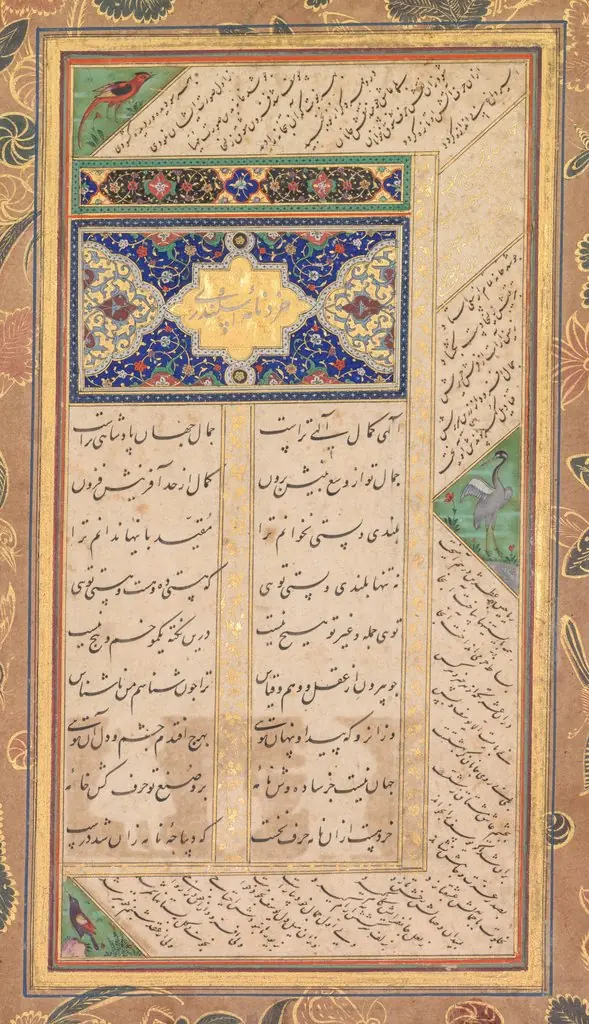 Illuminated page (verso), from a Panj Ganj (Five Treasures) of Abd al- Rahman Jami (Persian, 1414–1492) with two Persian masnavis: Yusuf va Zulaykha (Joseph and Zulaykha) and Khirad-nama-i Iskandari (Alexander’s Book of Wisdom)
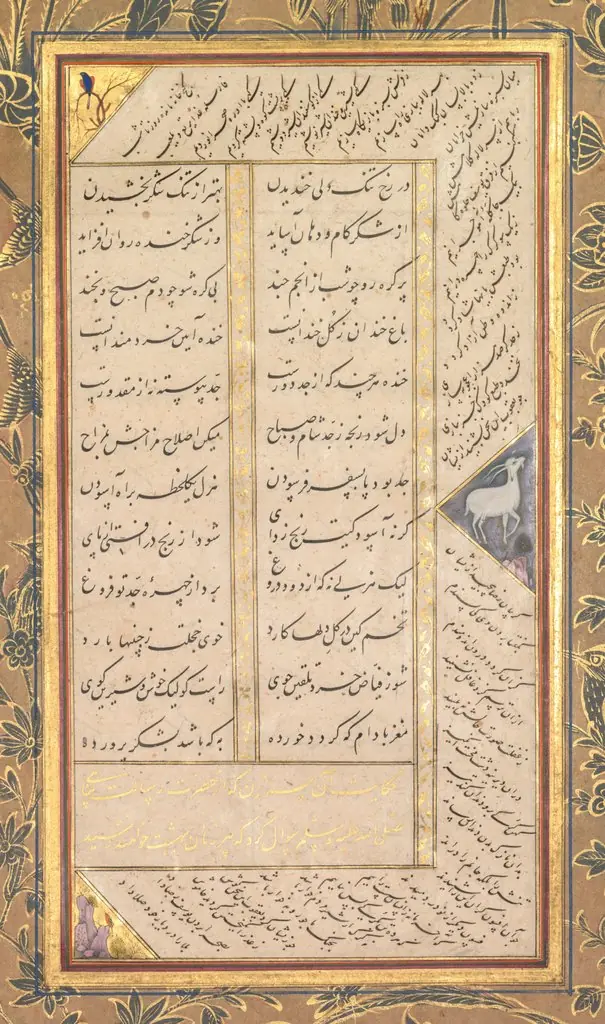 Page from a Panj Ganj (Five Treasures) of Abd al-Rahman Jami (Persian, 1414–1492), with two Persian masnavis: Yusuf va Zulaykha (Joseph and Zulaykha) and Subhat al-abrar (Rosary of the Righteous) (verso)
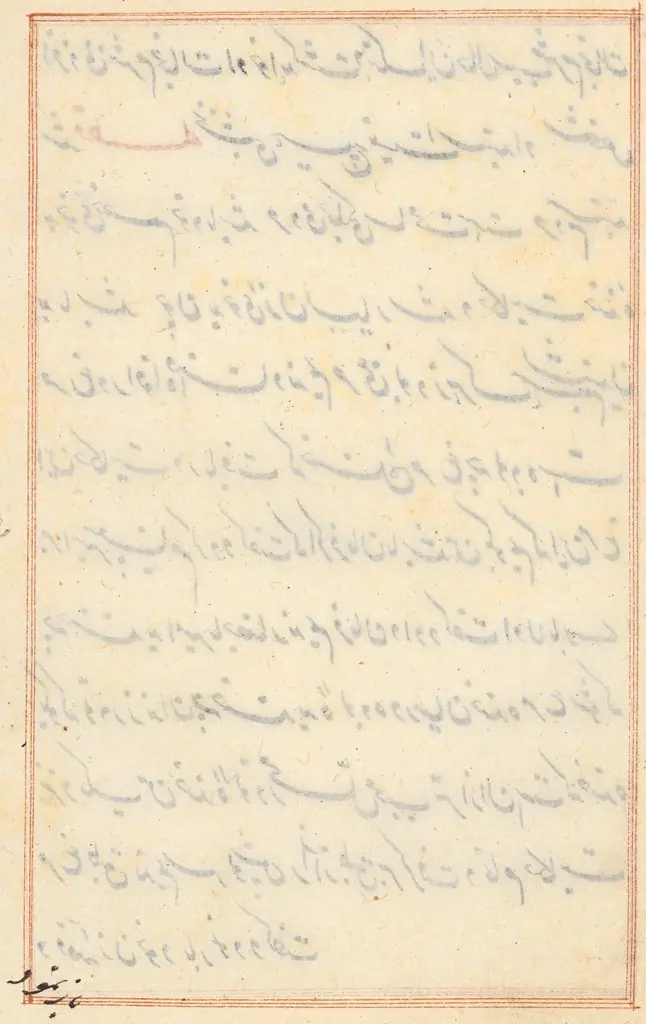 Page from Tales of a Parrot (Tuti-nama): text page
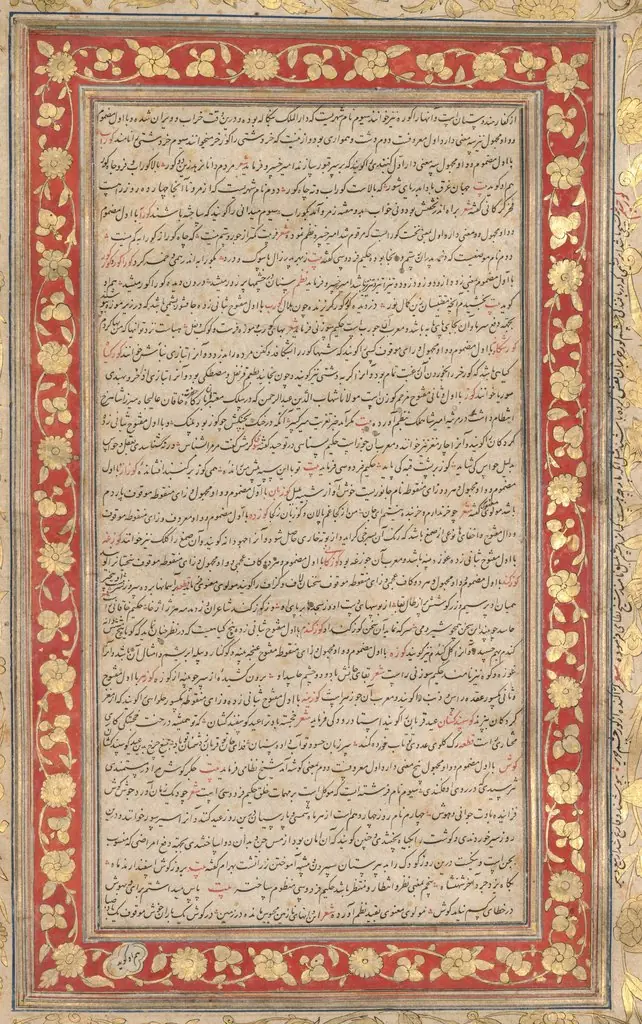 An Illuminated Folio from the Royal Manuscript of the Farhang-i Jahangiri (verso)