Artwork
Page from Tales of a Parrot (Tuti-nama): text page
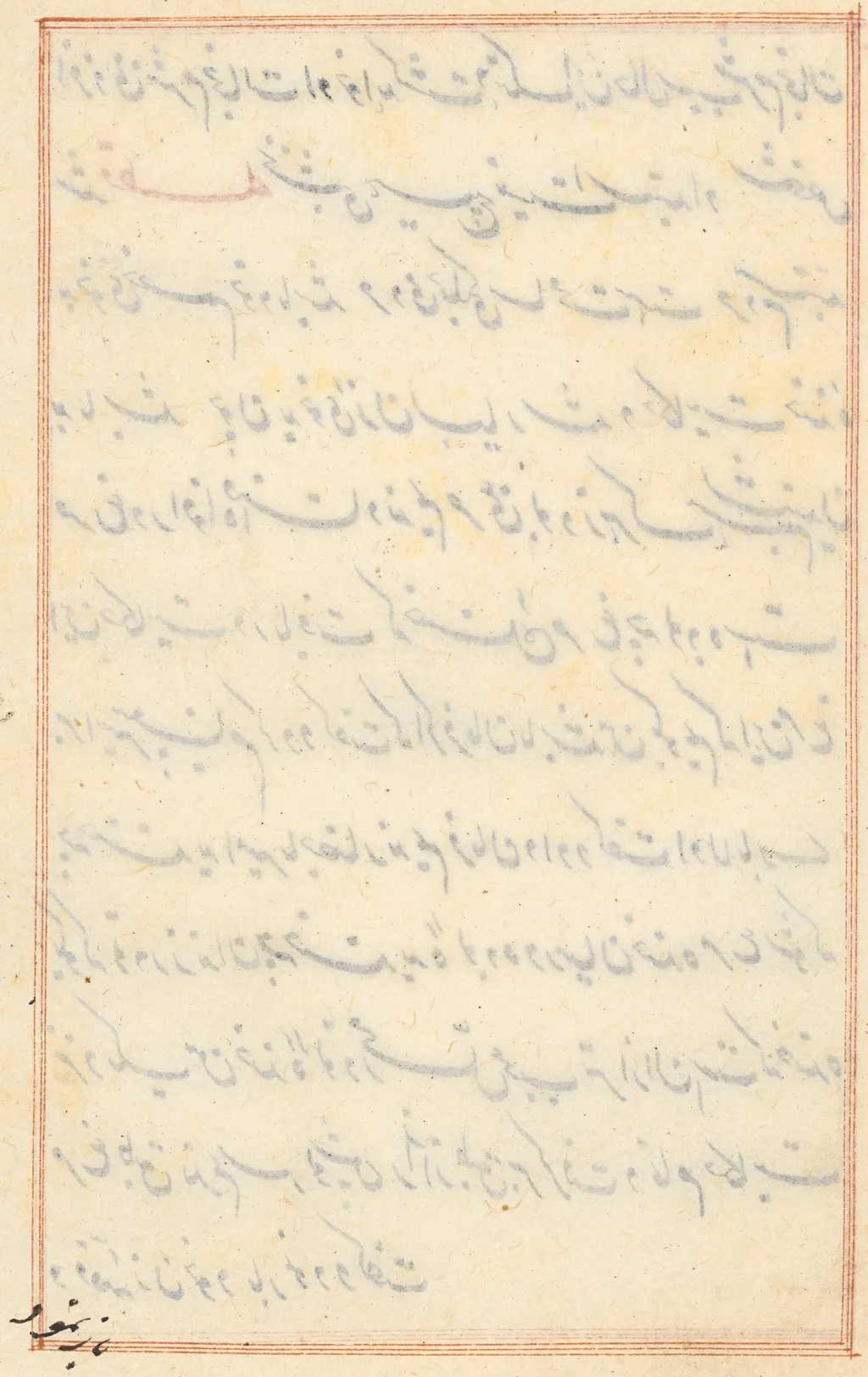
Page from Tales of a Parrot (Tuti-nama): text page is an unspecified painting. It dates from 1517 and is held in the collection of the Cleveland Museum of Art. The object is a single folio from the narrative work *Tales of a Parrot* (Tuti‑nama).
About this work
Overview
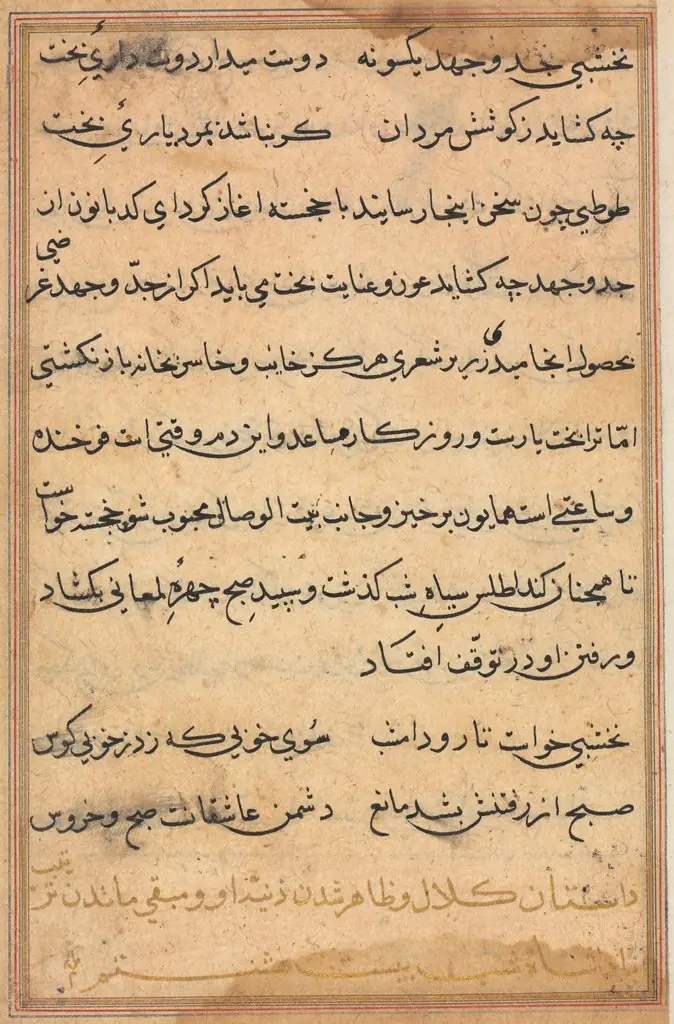
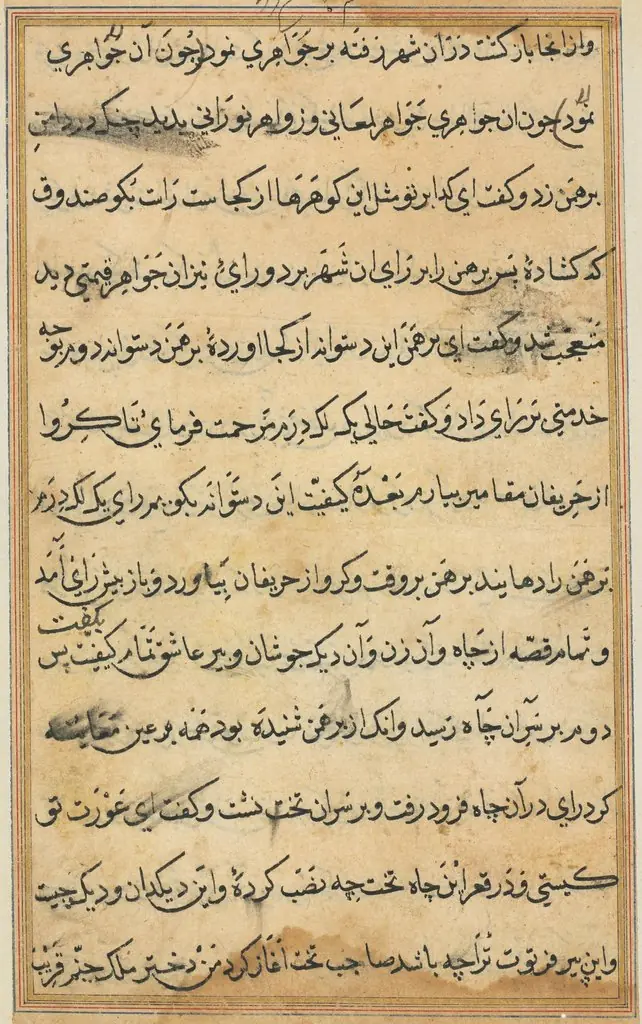
The object is a single folio from the narrative work *Tales of a Parrot* (Tuti‑nama). Rendered as a painted page, it features continuous lines of blue ink script that occupy the entire surface of a light‑coloured paper. The hand is neat and flowing, with small diacritical dots indicating word endings, suggesting a careful, formal copying process.
Subject & Meaning
*Tales of a Parrot* is a collection of moral and didactic stories traditionally told in South Asian cultures, often using a talking parrot as a narrative device. The page likely contains a segment of one such tale, intended to convey ethical instruction or entertainment to a literate audience familiar with the genre.
Technique & Style
The scribe employed a fine brush or pen to apply blue pigment, achieving a uniform, densely packed script. The use of blue ink on light paper creates a subtle contrast, while the consistent spacing and the presence of terminal dots reflect conventions of the particular South Asian script used, possibly a variant of Persian‑Arabic calligraphy adapted for local languages.
History & Provenance
The folio is part of the Cleveland Museum of Art’s collection, acquired through the museum’s acquisitions program for South Asian manuscripts. Its exact origin—date, place of production, and original patron—remains unspecified, but the material and script point to a manuscript tradition that flourished across the Indian subcontinent from the medieval period onward.
Context
Manuscript culture in South Asia prized the visual harmony of text and page, integrating calligraphic elegance with narrative content. Pages such as this one were often produced in workshops attached to courts or religious institutions, where scribes copied literary works for dissemination among elite and scholarly circles.
Artist & collection

 Page from Tales of a Parrot (Tuti-nama): text page
 Page from Tales of a Parrot (Tuti-nama): text page
 Page from Tales of a Parrot (Tuti-nama): text page (blank)
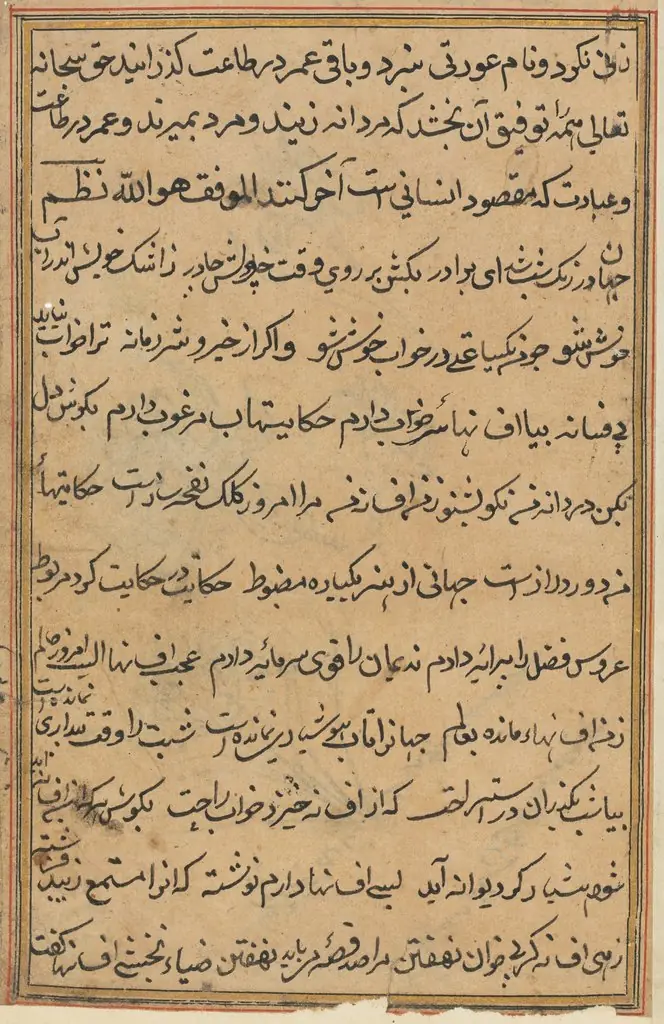 Page from Tales of a Parrot (Tuti-nama): text page
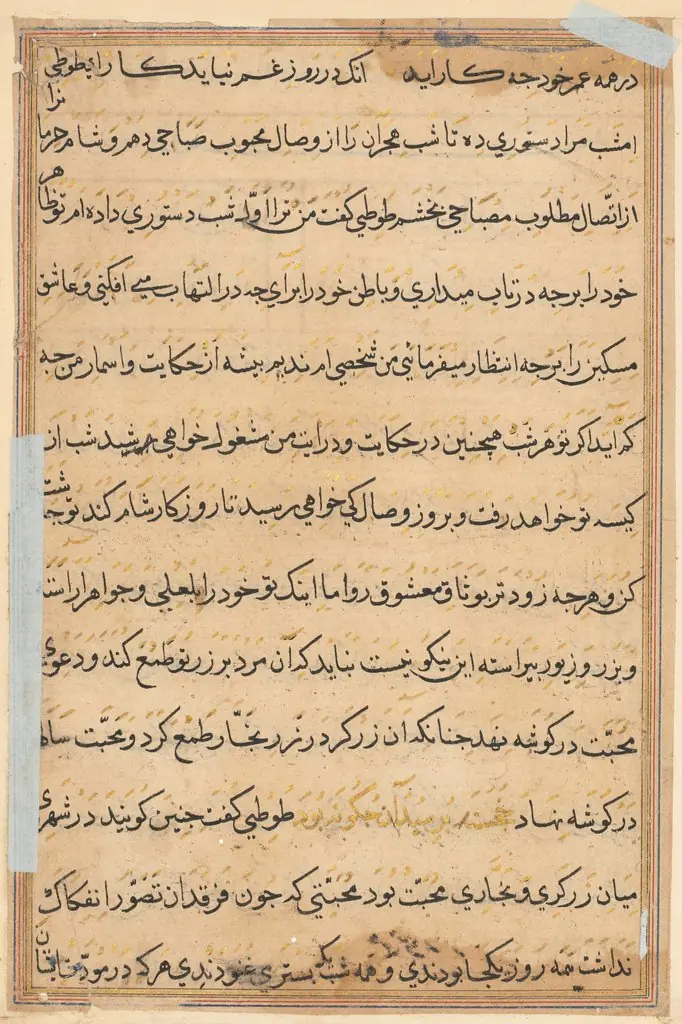 Page from Tales of a Parrot (Tuti-nama): text page
 Page from Tales of a Parrot (Tuti-nama): text page (blank)
 Page from Tales of a Parrot (Tuti-nama): text page
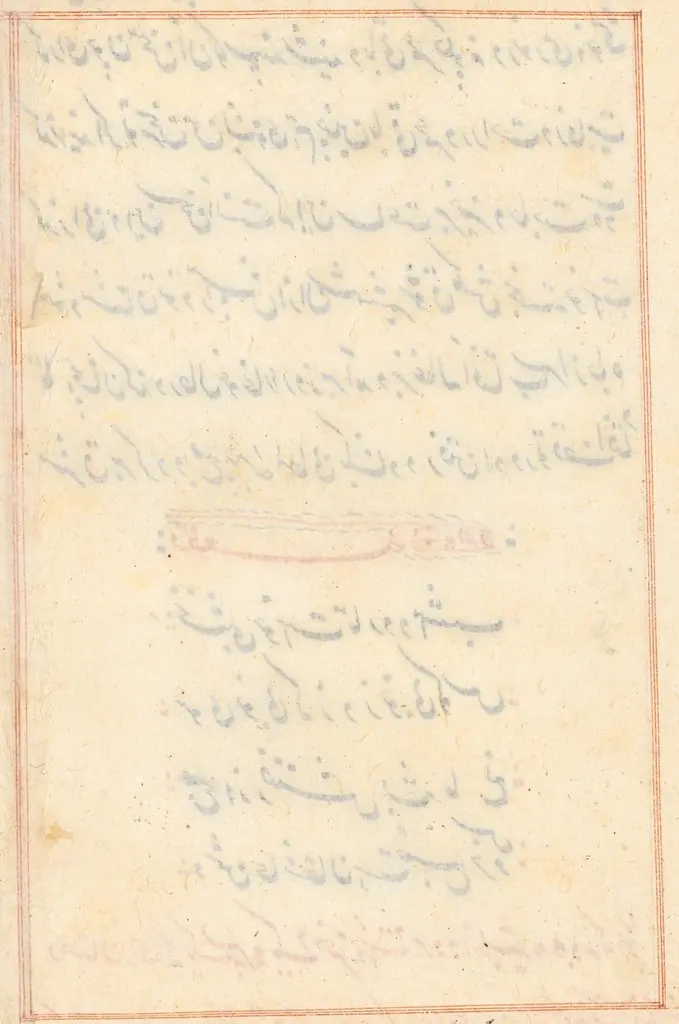 Page from Tales of a Parrot (Tuti-nama): text page (blank)
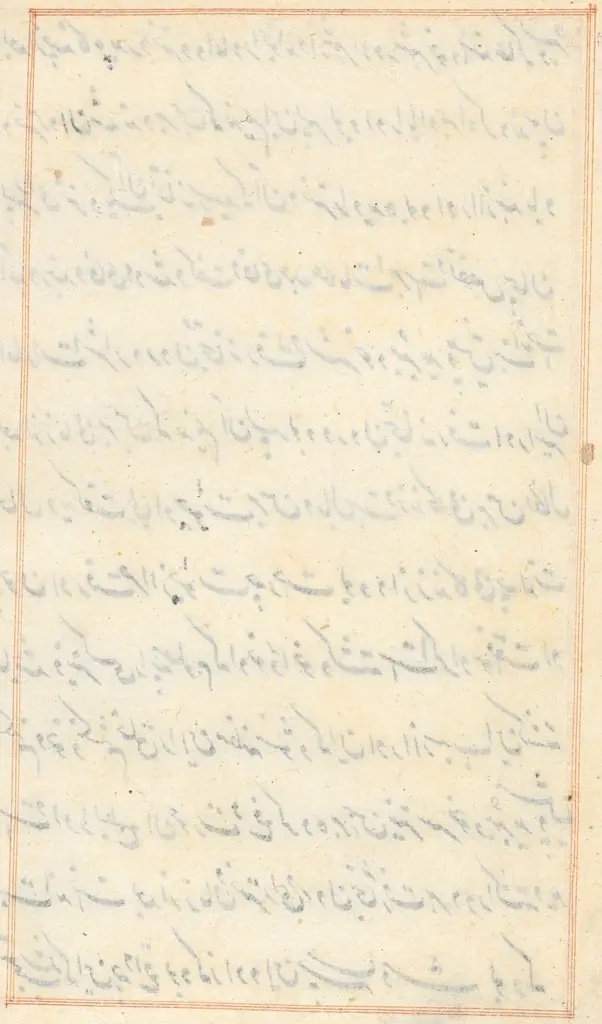 Page from Tales of a Parrot (Tuti-nama): text page (blank)
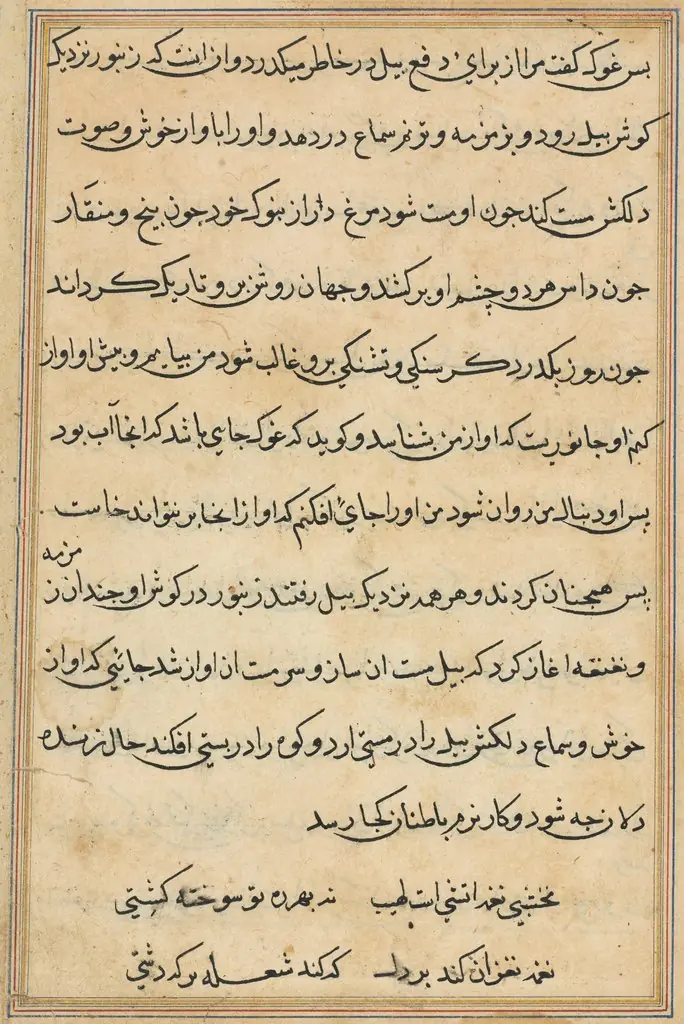 Page from Tales of a Parrot (Tuti-nama): text page
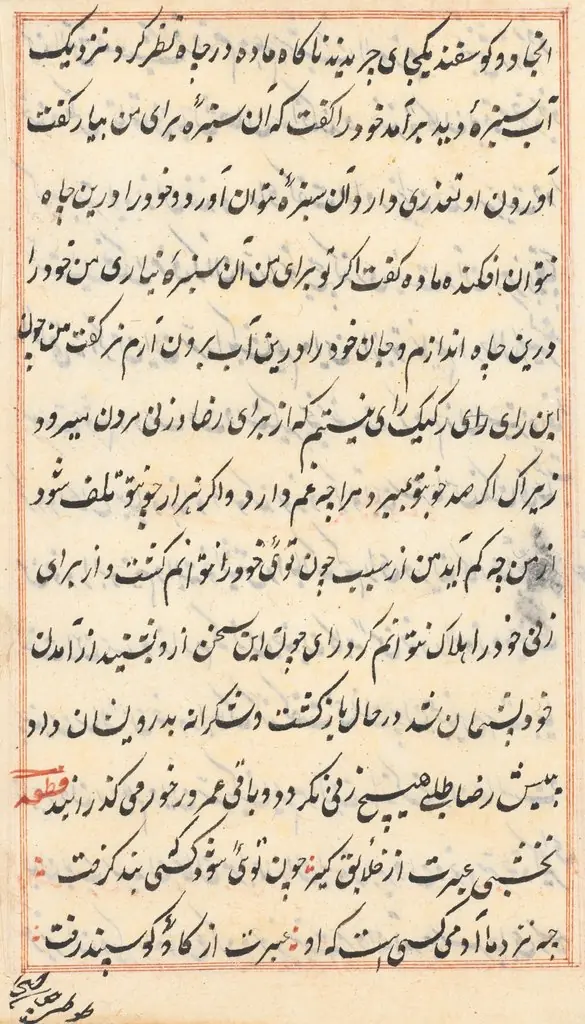 Page from Tales of a Parrot (Tuti-nama): text page