Artwork
The Dying Seneca (copy)
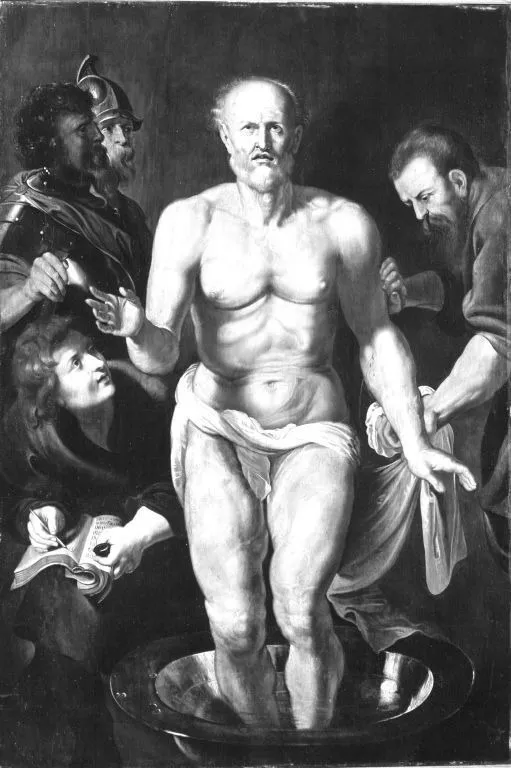
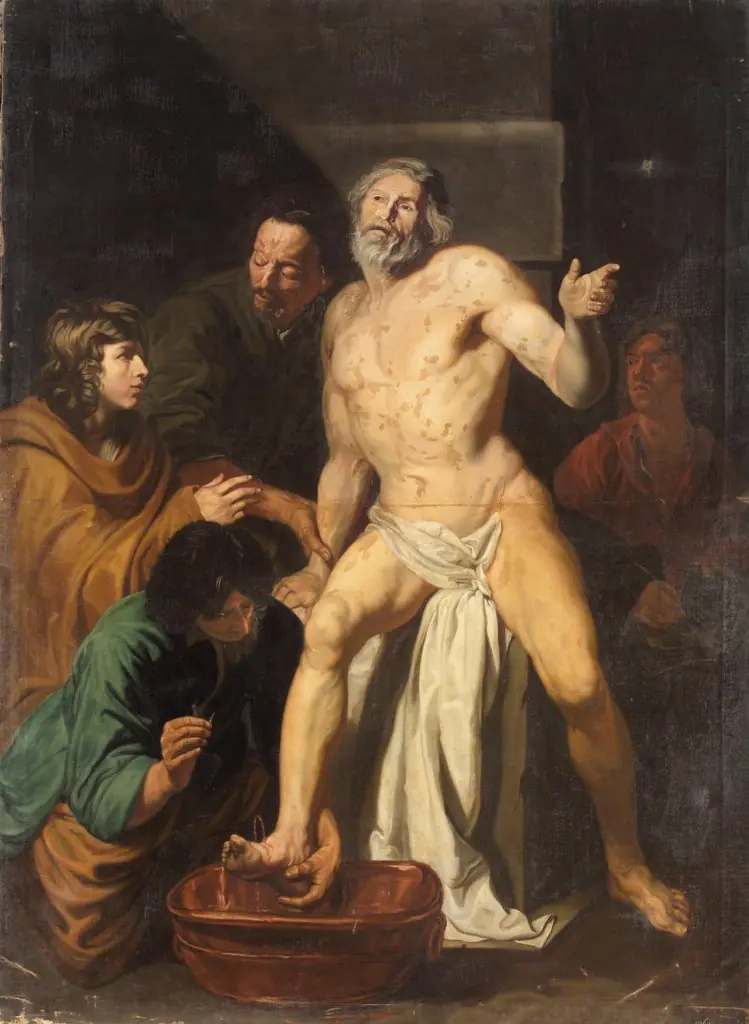
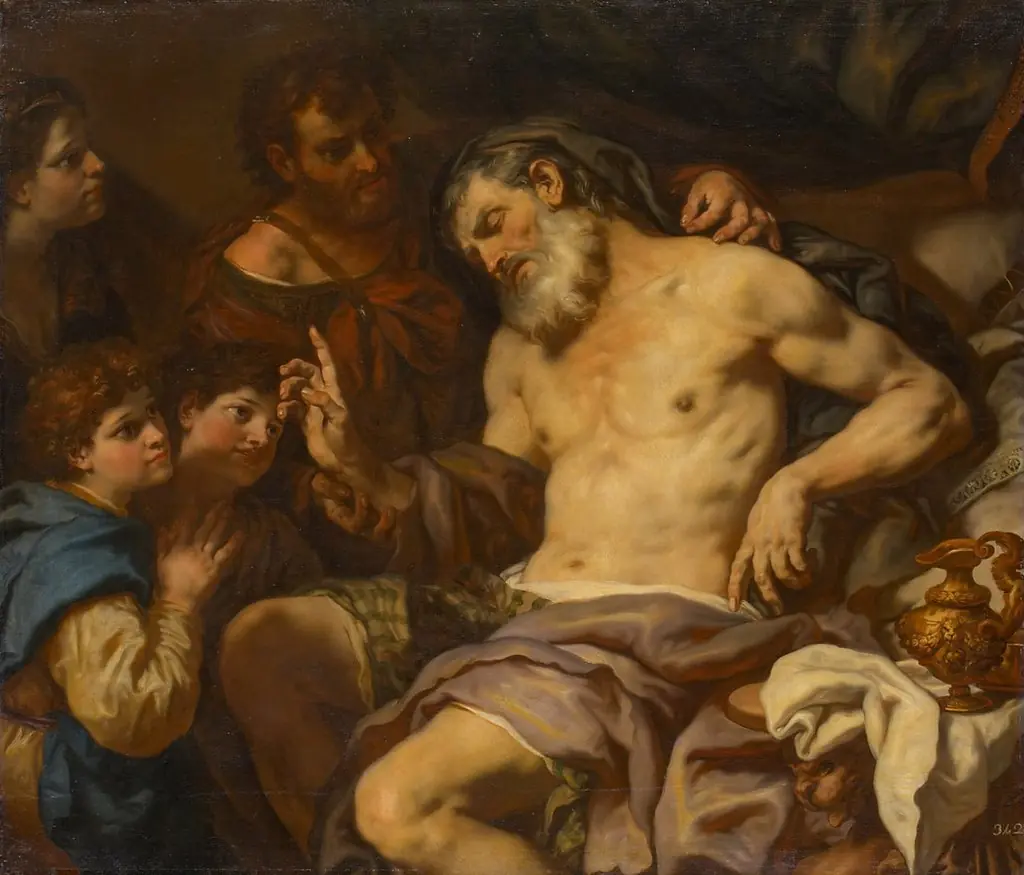
The Dying Seneca (copy) is an oil painting by the Early Baroque Italian artist Unknown. It dates from 1608 and is held in the collection of the Bavarian State Painting Collections. The work, titled *The Dying Seneca*, is an oil painting that presents a reclining, nude elderly figure.
About this work
Overview
The work, titled *The Dying Seneca*, is an oil painting that presents a reclining, nude elderly figure. He lies in a state of quiet exhaustion, surrounded by three attendants who engage with objects—a helmet, a book, and a gentle touch on the arm—against a stark, dark backdrop that isolates the scene.
Subject & Meaning
The central figure is identified as the Roman philosopher Seneca, depicted at the moment of his death. The presence of the helmet may allude to his political involvement, while the book underscores his intellectual legacy; the comforting hand suggests compassion or the final act of assistance.
Technique & Style
The composition relies on a pronounced chiaroscuro, with a focused light source illuminating Seneca’s flesh and face, creating a contrast of bright highlights and deep shadows. This dramatic lighting heightens the emotional intensity and gives the figures a three‑dimensional presence against the dark background.
History & Provenance
The painting is a copy of an earlier work, though details of its original source, date, or creator are not provided. Its status as a reproduction indicates the continued interest in Seneca’s narrative within artistic circles.
Context
Depictions of Seneca’s death were popular in the Baroque period, reflecting contemporary fascination with stoic virtue and martyrdom. The inclusion of symbolic objects aligns with the era’s tendency to embed moral messages within historical scenes.
Artist & collection

 Domestic Scene
 Giacomo and Cardinal Marco, investing Andrea, Abbot of San Zeno, with his Benefice
 The Nymph of Fontainebleau
 Portrait of a Woman
 Madonna and Child with Saints in the Enclosed Garden
 Venus and Minerva
 Family Group of Four on Sofa
 Wall painting from Room H of the Villa of P. Fannius Synistor at Boscoreale