Artwork
Jacob Blesses Ephraim and Manasseh
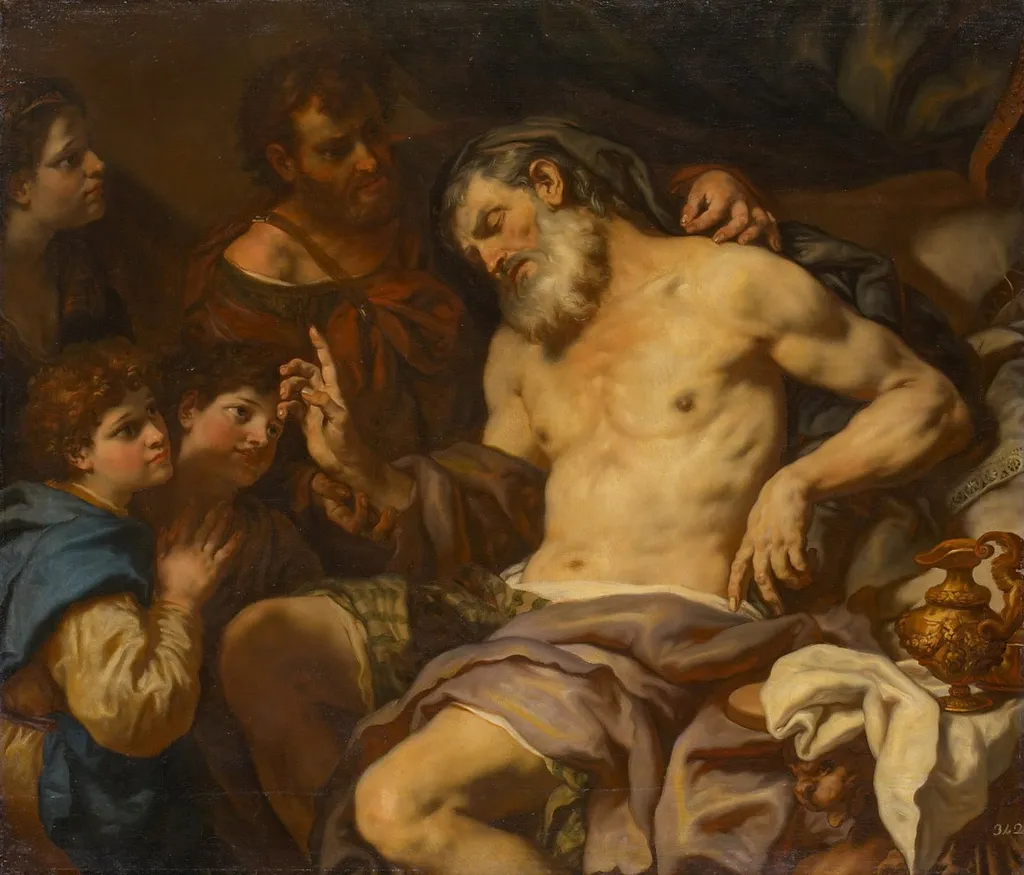
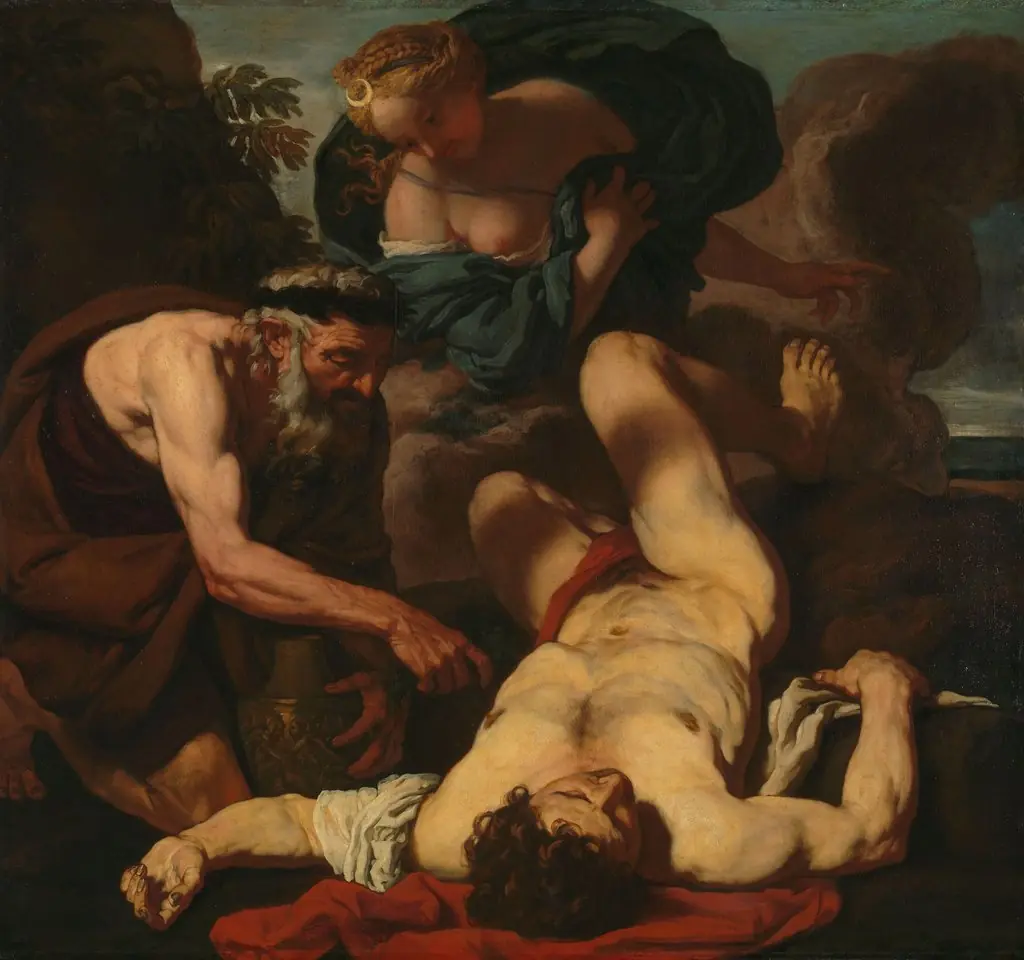
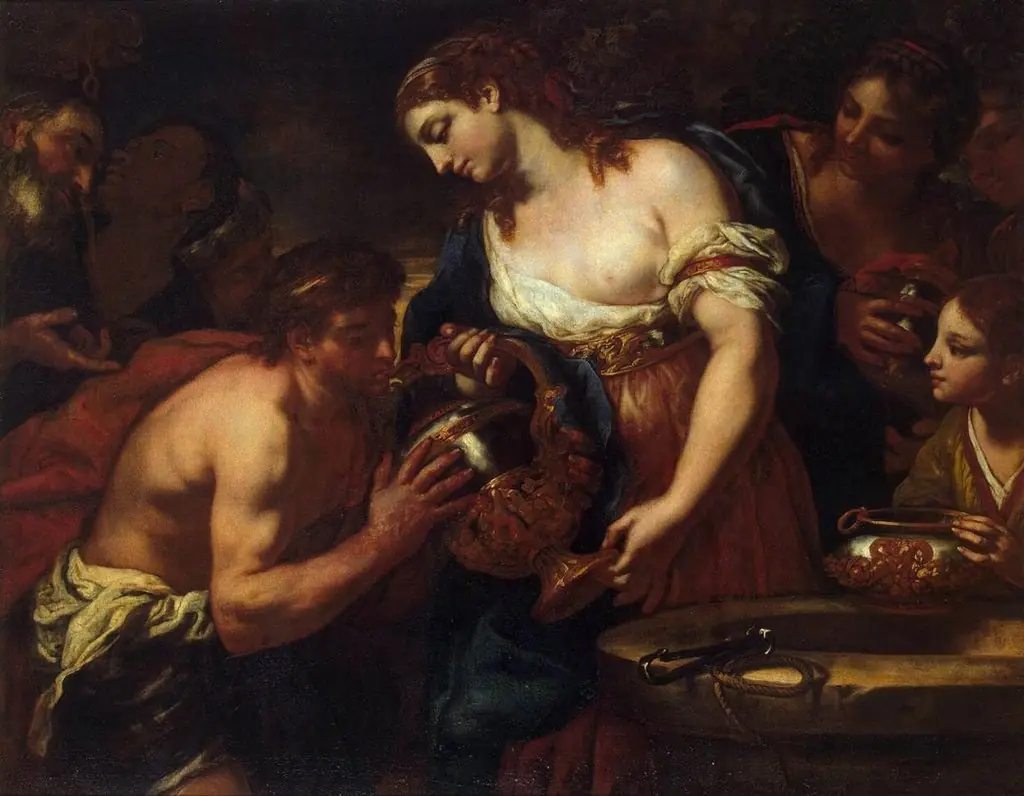
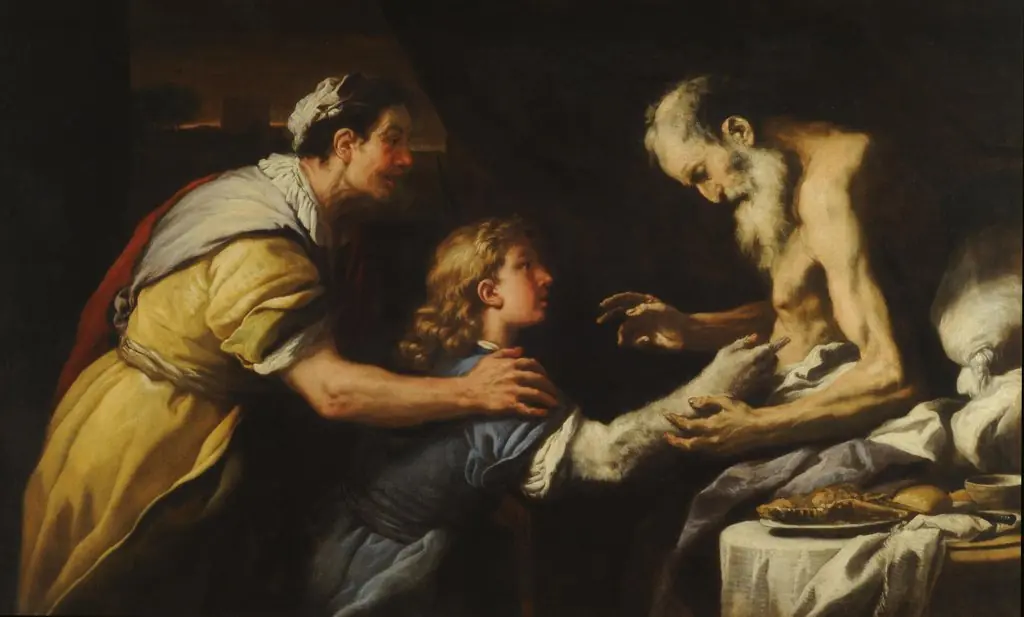
Jacob Blesses Ephraim and Manasseh is an oil painting by the Barbizon school artist Johann Carl Loth. It dates from 1696 and is held in the collection of the Kunsthistorisches Museum.
About this work
Overview
Created in 1696 by the German‑Italian Baroque painter Johann Carl Loth, this oil on canvas depicts the biblical episode in which Jacob blesses his grandsons Ephraim and Manasseh. The work is part of the collection of Vienna’s Kunsthistorisches Museum and exemplifies the artist’s mature style.
Subject & Meaning
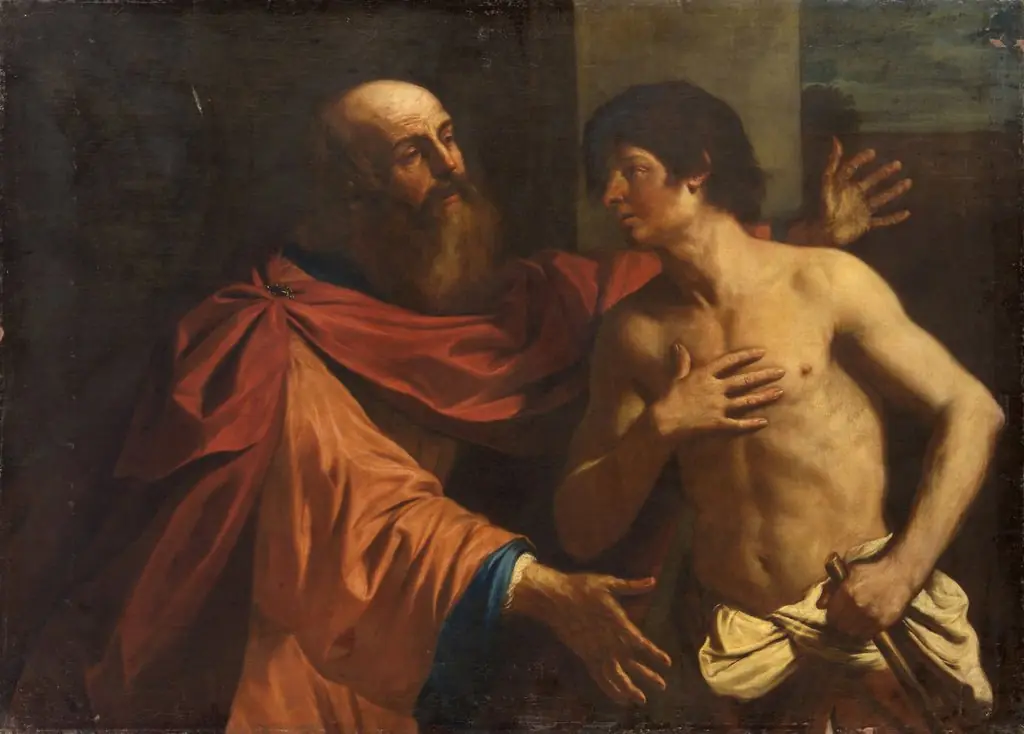
The surrounding attendants, clad in flowing robes, observe the blessing with solemn attention, underscoring the ritual’s familial and prophetic significance.
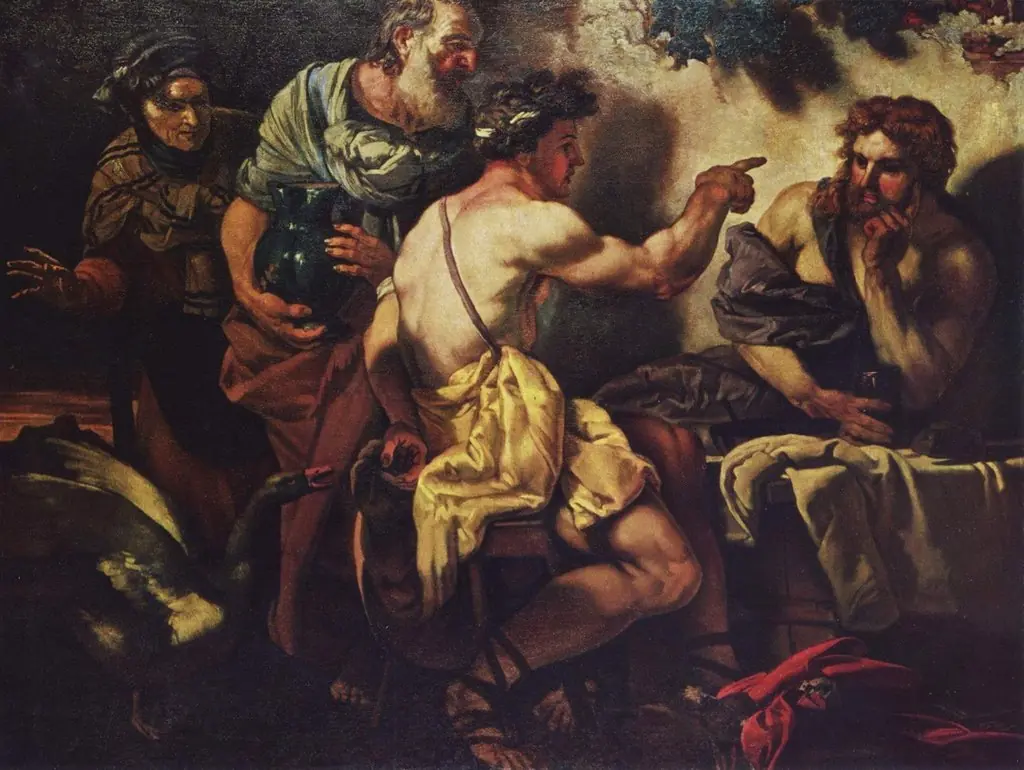
At the center sits an elderly Jacob, his long white beard and bare torso rendered with luminous skin tones. He rests his arm on the shoulders of the two youthful figures, representing Ephraim and Manasseh, whose gestures convey both reverence and anticipation. The surrounding attendants, clad in flowing robes, observe the blessing with solemn attention, underscoring the ritual’s familial and prophetic significance.
Technique & Style
Loth employs a pronounced chiaroscuro, allowing the central figure to emerge from a darkened background through a focused light that caresses Jacob’s chest and arms. The contrast between the smooth, almost glowing flesh and the softer, shadowed drapery creates a three‑dimensional effect, while the delicate handling of the boys’ expressions adds emotional immediacy.
History & Provenance
The painting entered the Kunsthistorisches Museum’s holdings during the 18th‑century acquisition of the Habsburg court’s collection, where it has remained on public display. Its provenance traces back to Loth’s workshop in Venice, where he produced many religious commissions for Central European patrons.
Context
Loth’s career bridged the Venetian coloristic tradition and the dramatic intensity of Northern Baroque. This work reflects the period’s fascination with biblical narratives rendered in a theatrical manner, aligning with contemporary devotional art intended for private chapels and aristocratic collections.
Legacy
While not as widely reproduced as some of his contemporaries, the painting illustrates Loth’s skill in combining narrative clarity with sophisticated lighting. It continues to serve as a reference point for scholars studying the transmission of Baroque aesthetics from Italy to Central Europe.
Artist & collection