Artwork
Krishna and Balarama with Various Nobles
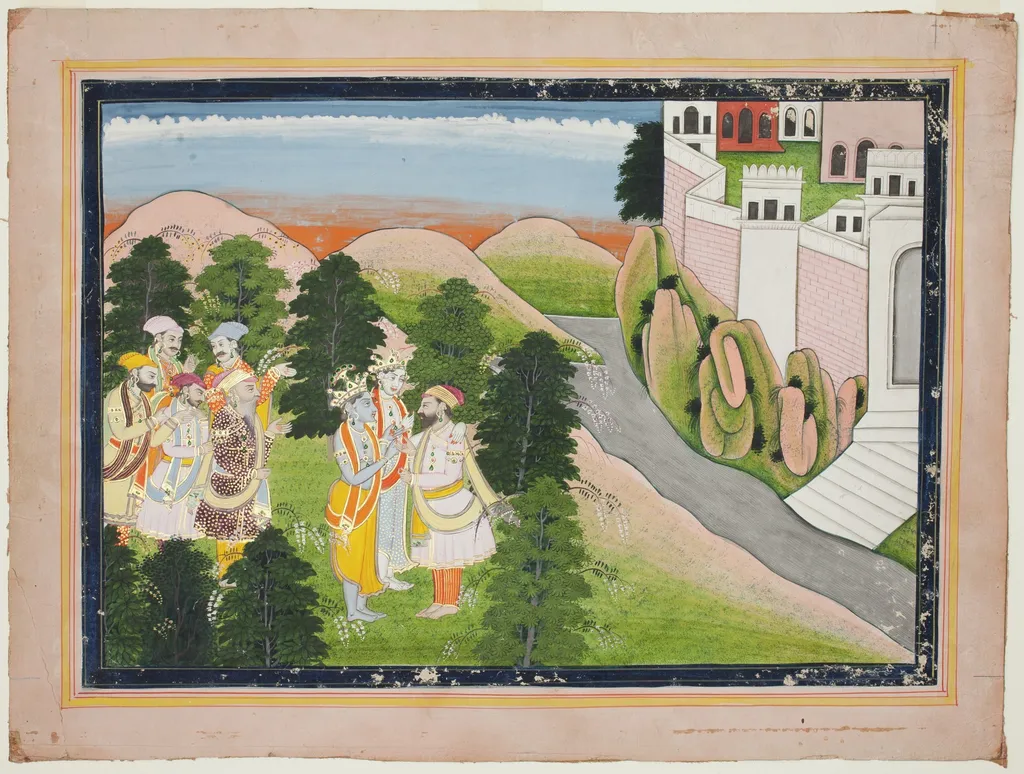
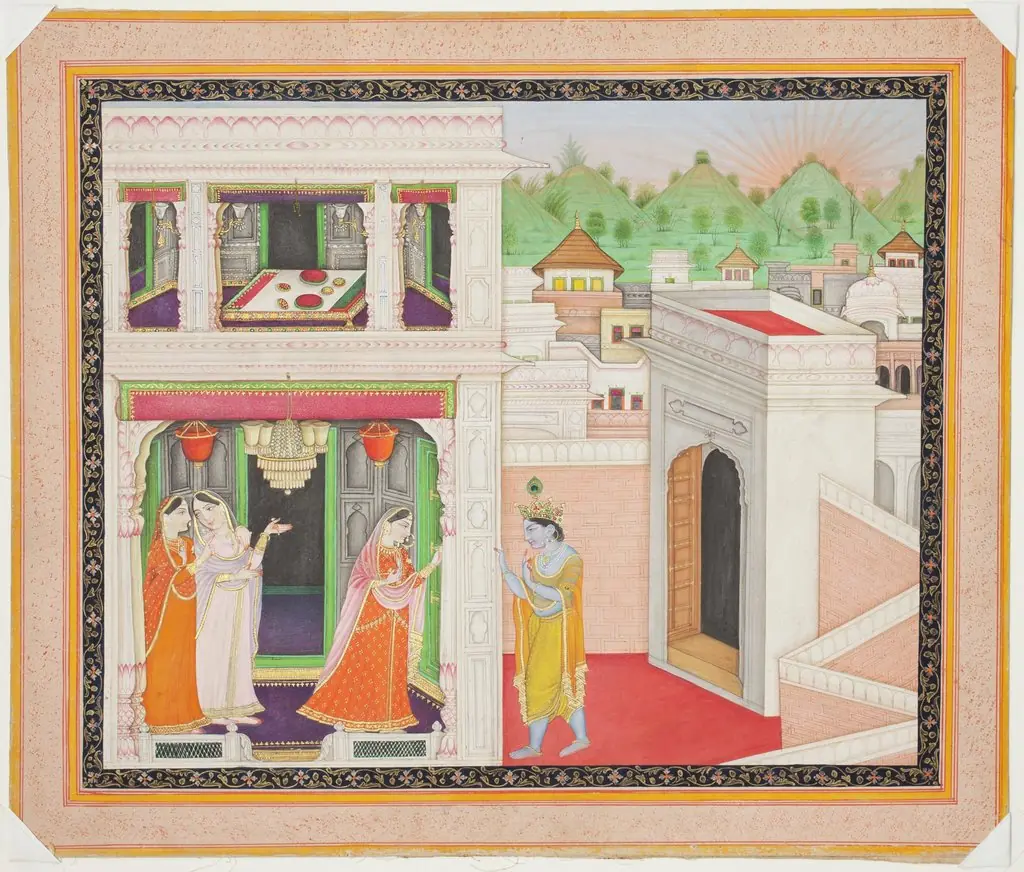
Krishna and Balarama with Various Nobles is an unspecified painting by the Mughal Painting artist Unknown. It dates from 1840 and is held in the collection of the Detroit Institute of Arts. The work is a painted composition that arranges a group of figures within an open landscape.
About this work
Overview
The work is a painted composition that arranges a group of figures within an open landscape.
The work is a painted composition that arranges a group of figures within an open landscape. To the left, a cluster of men in bright garments and headgear converse, while the central focus rests on two standing individuals—one with the characteristic blue hue associated with a divine figure, the other distinguished by a white turban. Distant trees, rolling hills, and architectural forms frame the scene, and a striking oversized hand emerges from the right margin, introducing a dramatic visual element.
Subject & Meaning
The central pair likely represent the Hindu deities Krishna and his brother Balarama, identifiable by Krishna’s blue skin and Balarama’s traditional head covering. Their presence among a gathering of nobles suggests a narrative of divine interaction with earthly elites, a common motif in devotional art that underscores the gods’ accessibility and patronage of royal or aristocratic circles.
Technique & Style
Executed in a narrative painting style, the piece combines detailed costume rendering with a stylized landscape. The use of vivid colors for clothing contrasts with the more muted natural background, while the exaggerated hand employs a dramatic, almost theatrical gesture, a device found in certain regional schools to emphasize divine intervention or supernatural presence.
History & Provenance
The painting’s provenance is not documented in the supplied information, and no specific date, artist, or collection history is provided. Consequently, its chronological placement and ownership trail remain uncertain, limiting scholarly assessment of its original context.
Context
Works portraying Krishna and Balarama alongside courtly figures were popular in devotional and courtly settings across northern India from the 16th to 19th centuries. Such compositions reinforced the legitimacy of rulers by aligning them with divine favor, and the inclusion of an oversized hand may reflect a localized iconographic convention intended to dramatize the gods’ protective role.
Legacy
While specific influence of this particular painting is unrecorded, its visual vocabulary—bright court attire, mythic protagonists, and dramatic gestures—continues to inform contemporary representations of Hindu deities in both traditional and modern artistic practices.
Artist & collection

 Domestic Scene
 Giacomo and Cardinal Marco, investing Andrea, Abbot of San Zeno, with his Benefice
 The Nymph of Fontainebleau
 Portrait of a Woman
 Madonna and Child with Saints in the Enclosed Garden
 Venus and Minerva
 Family Group of Four on Sofa
 Wall painting from Room H of the Villa of P. Fannius Synistor at Boscoreale
 Krishna and Radha
 Krishna and Radha
 Sita Imprisoned at Ravana's Palace, Ravana Holding Court (Illustration to the Ramayana)
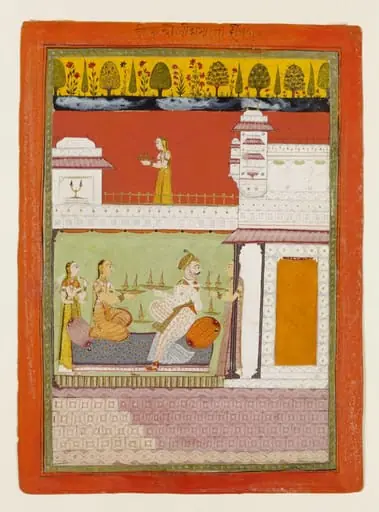 Dipak ragini
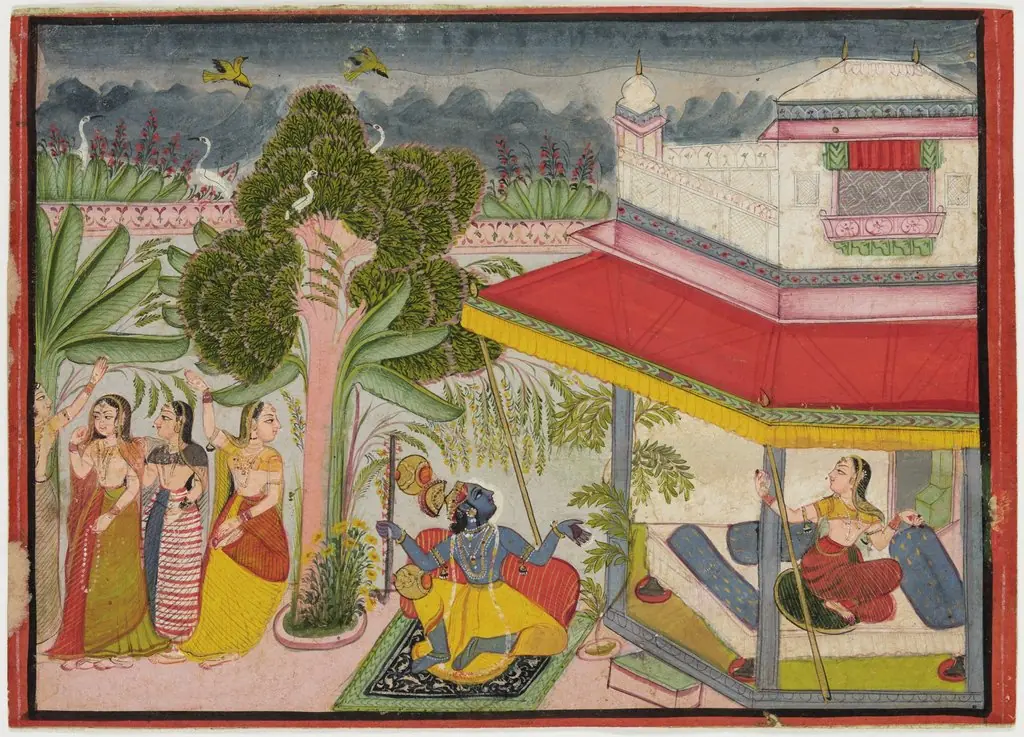 Krishna, Radha and Gopis
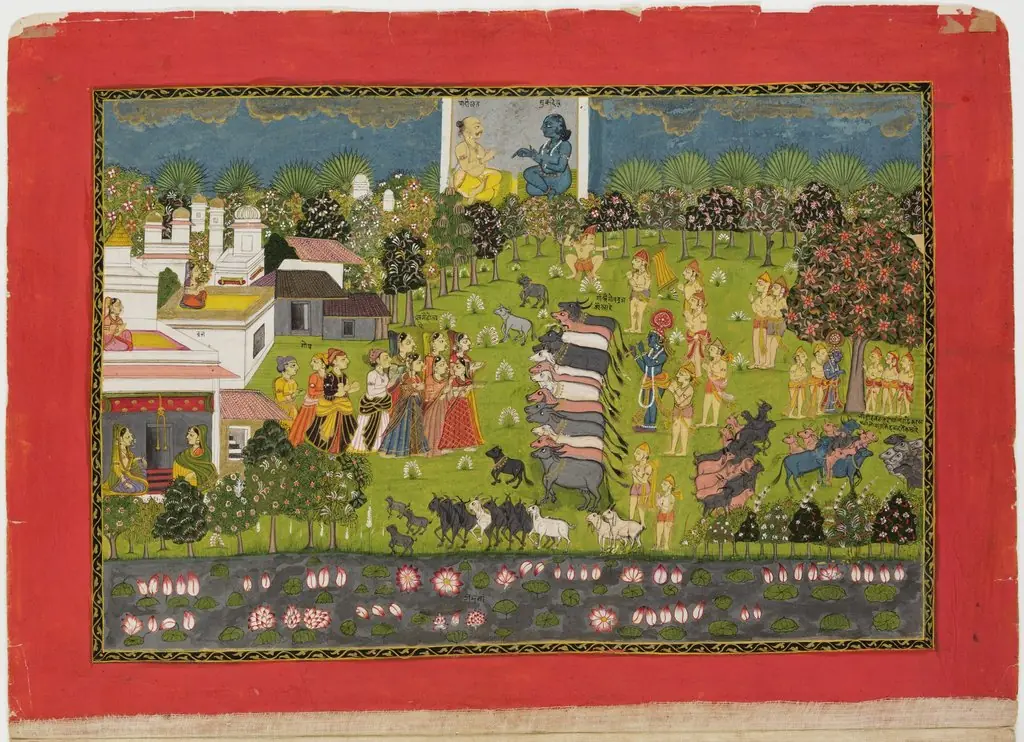 Cow Worship
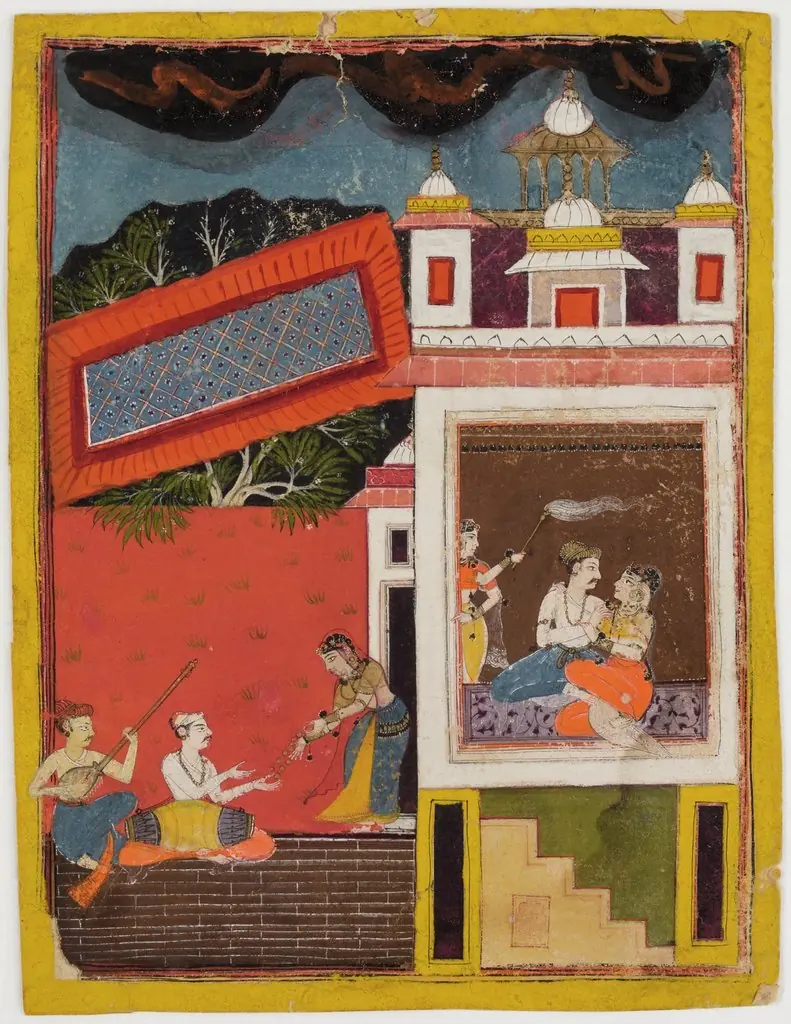 Prince and Lady in Palace Scene with Musicians
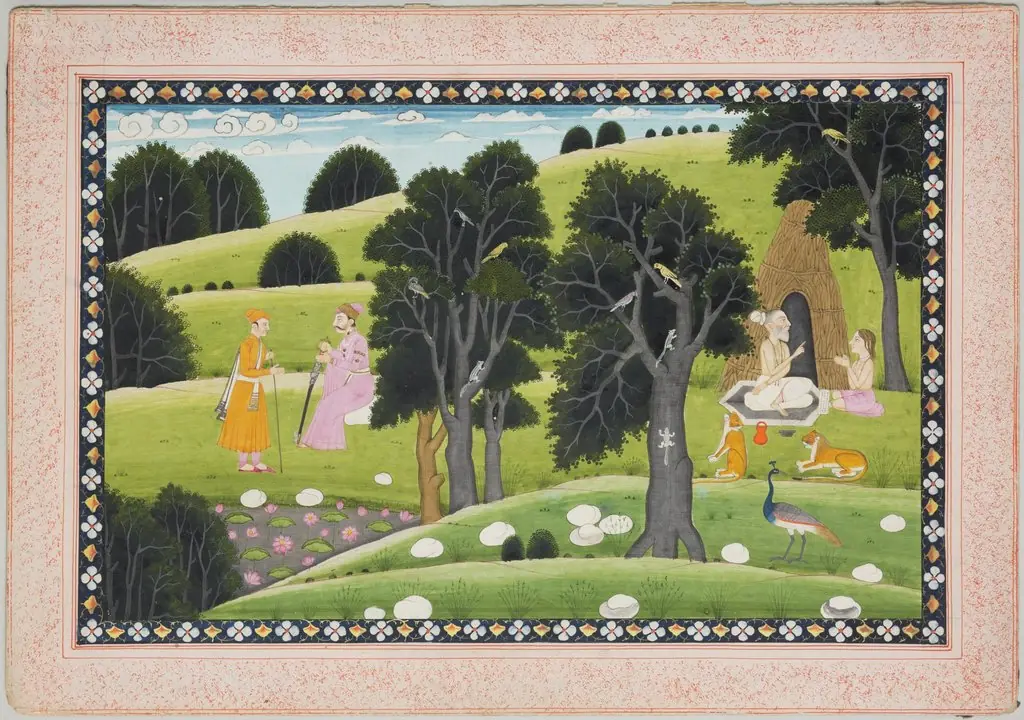 The Guru Discourses While Noblemen Wait
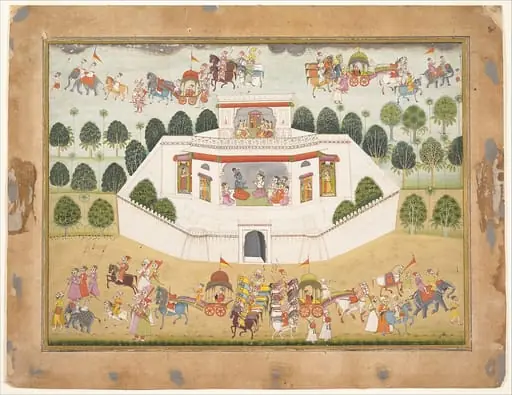 Untitled
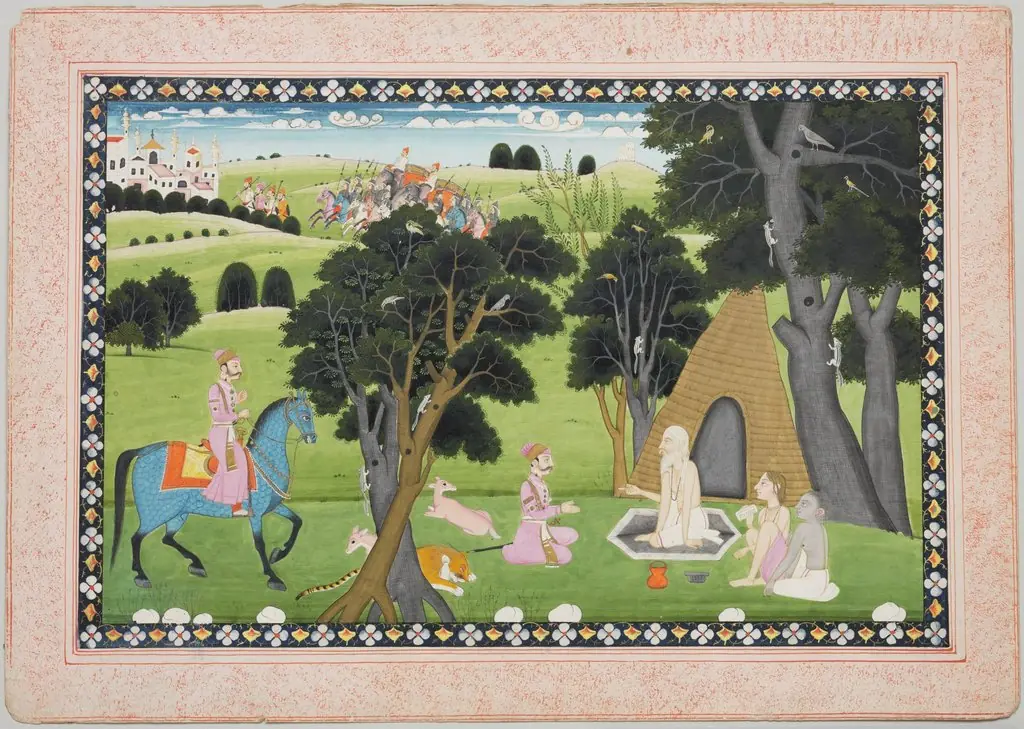 Consultation with a Hermit Guru
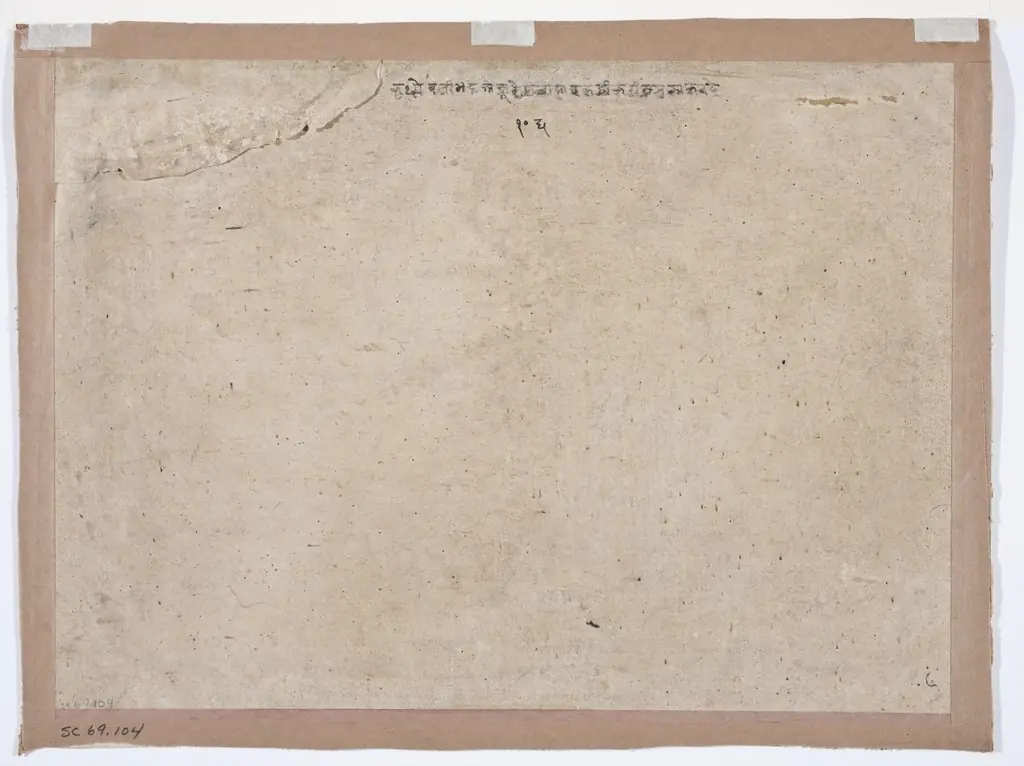 Krishna and Balarama with Various Nobles
 Radha and Krishna: The Exchange of Glances