Artwork
Consultation with a Hermit Guru
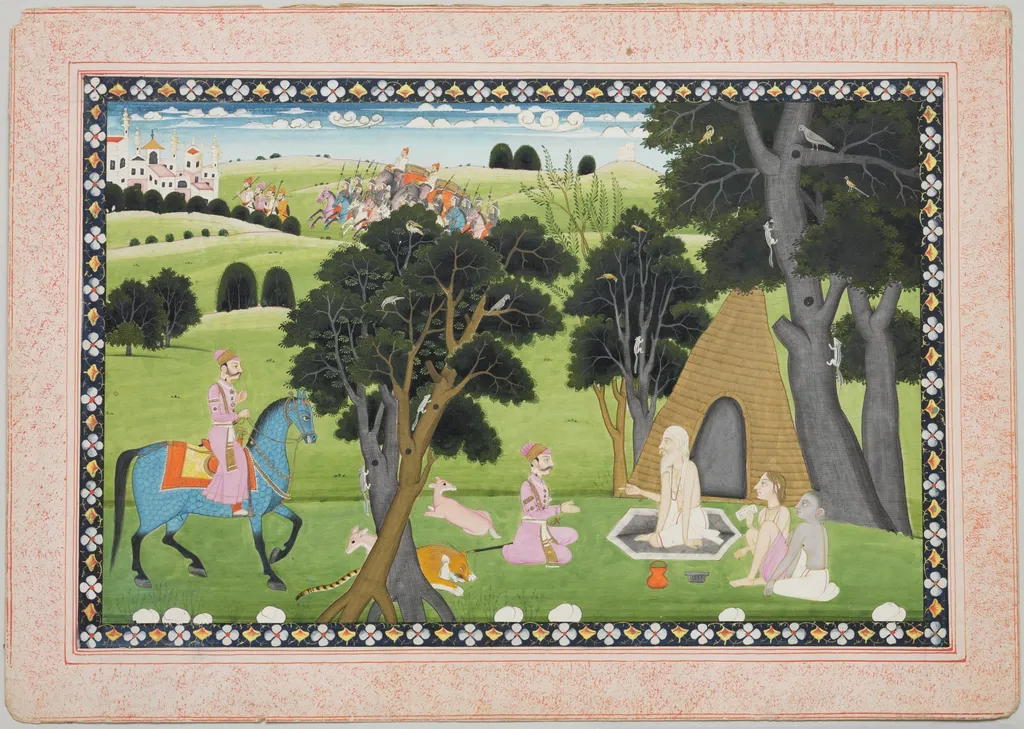
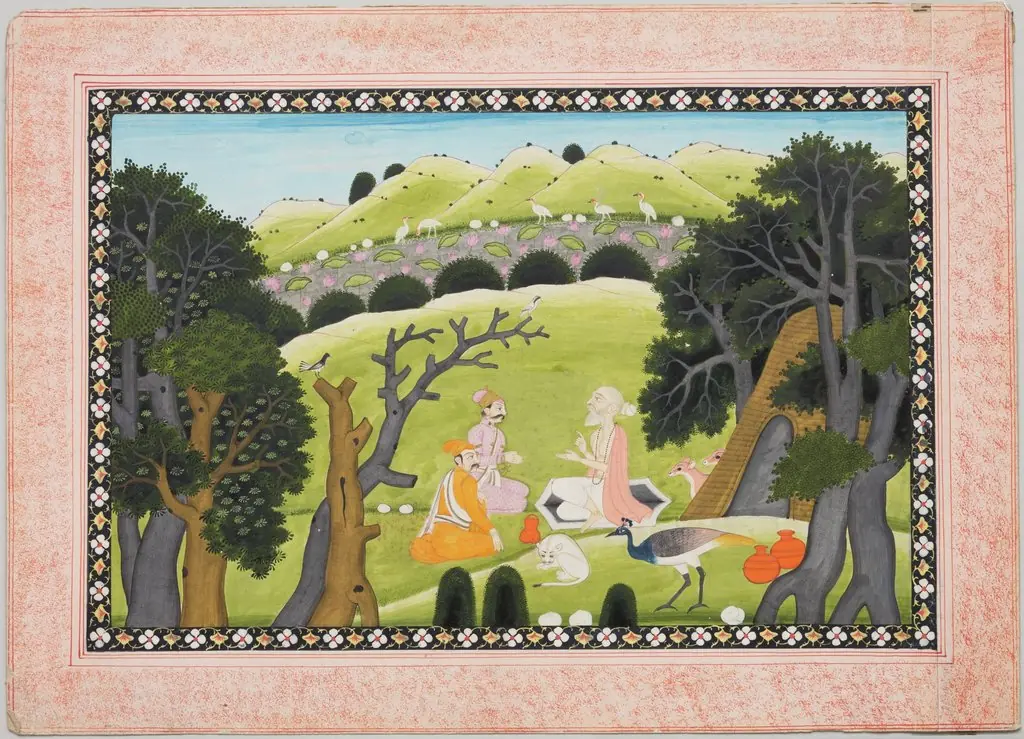
Consultation with a Hermit Guru is an unspecified painting by Unknown. It dates from 1800 and is held in the collection of the Detroit Institute of Arts. This painting presents a quiet moment of spiritual encounter in a verdant landscape.
About this work
Overview
A man seated in meditation on a mat is approached by a figure on a blue horse, accompanied by a dog, while others gather nearby beneath a tree.
This painting presents a quiet moment of spiritual encounter in a verdant landscape. A man seated in meditation on a mat is approached by a figure on a blue horse, accompanied by a dog, while others gather nearby beneath a tree. The composition balances stillness and movement, with the horse’s arrival suggesting an arrival of guidance or insight. The scene unfolds under a calm sky, framed by distant architecture and dense foliage.
Subject & Meaning
The central figure, seated in meditation, represents a seeker in contemplation. The man on the blue horse, dressed in pink, may symbolize a spiritual guide or messenger. The surrounding group, attentive yet composed, reflects a community receptive to wisdom. The tree, a common emblem of life and connection, anchors the gathering, reinforcing themes of inner reflection and external guidance.
Technique & Style
The artist employs fine brushwork to render textures of fabric, foliage, and animal form with precision. Color is used expressively: the vivid blue of the horse contrasts with the soft pinks and greens of the figures and landscape. Perspective is flattened, emphasizing pattern and symbolic arrangement over realism. Details like the dog’s posture and the folds of clothing suggest careful observation and deliberate composition.
History & Provenance
The painting’s origins trace to a regional tradition of devotional art, likely produced in the 18th or early 19th century. It was likely commissioned for a private collector or religious setting, where such imagery supported meditative practice. Its survival through multiple generations suggests it was valued as an object of quiet reverence rather than public display.
Context
This work reflects a broader cultural milieu in which spiritual guidance was sought through personal encounter rather than institutional ritual. Depictions of hermits, mounted travelers, and sacred trees appear in regional manuscripts and murals, often illustrating Sufi or ascetic traditions. The blue horse, though unusual, may derive from local folklore or symbolic color associations tied to transcendence.
Legacy
Though not widely exhibited, the painting remains a quiet example of how spiritual themes were rendered in intimate, non-didactic forms. Its preservation in private collections underscores its role as a personal aid to contemplation. Scholars note its subtle departure from mainstream iconography, offering insight into localized expressions of mysticism in pre-modern South Asia.
Artist & collection

 Domestic Scene
 Giacomo and Cardinal Marco, investing Andrea, Abbot of San Zeno, with his Benefice
 The Nymph of Fontainebleau
 Portrait of a Woman
 Madonna and Child with Saints in the Enclosed Garden
 Venus and Minerva
 Family Group of Four on Sofa
 Wall painting from Room H of the Villa of P. Fannius Synistor at Boscoreale
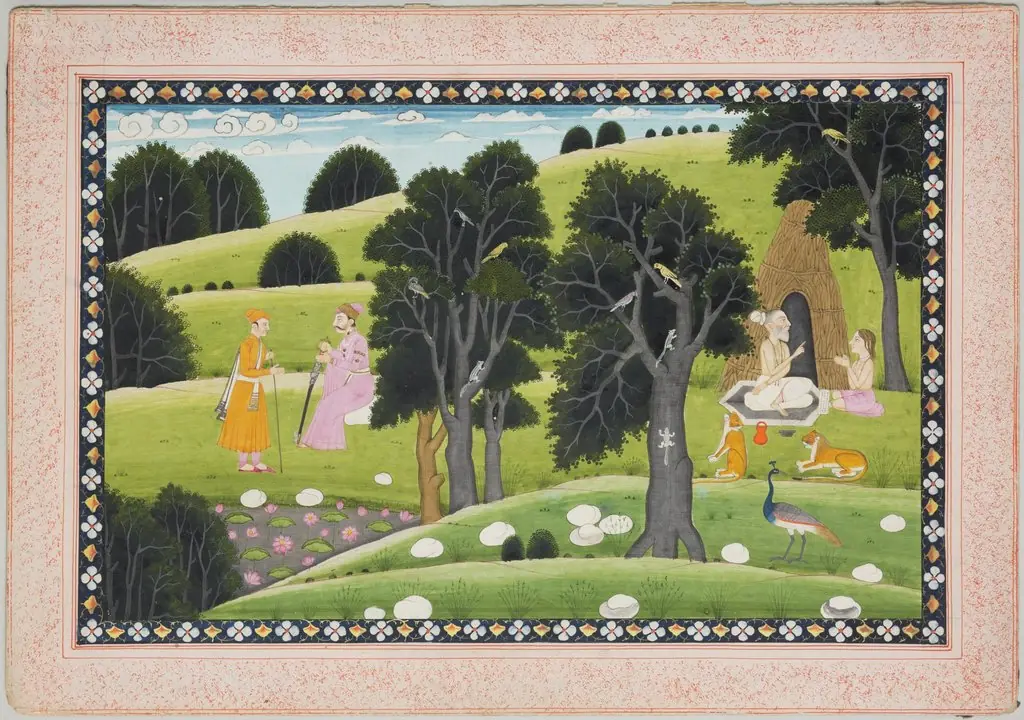 The Guru Discourses While Noblemen Wait
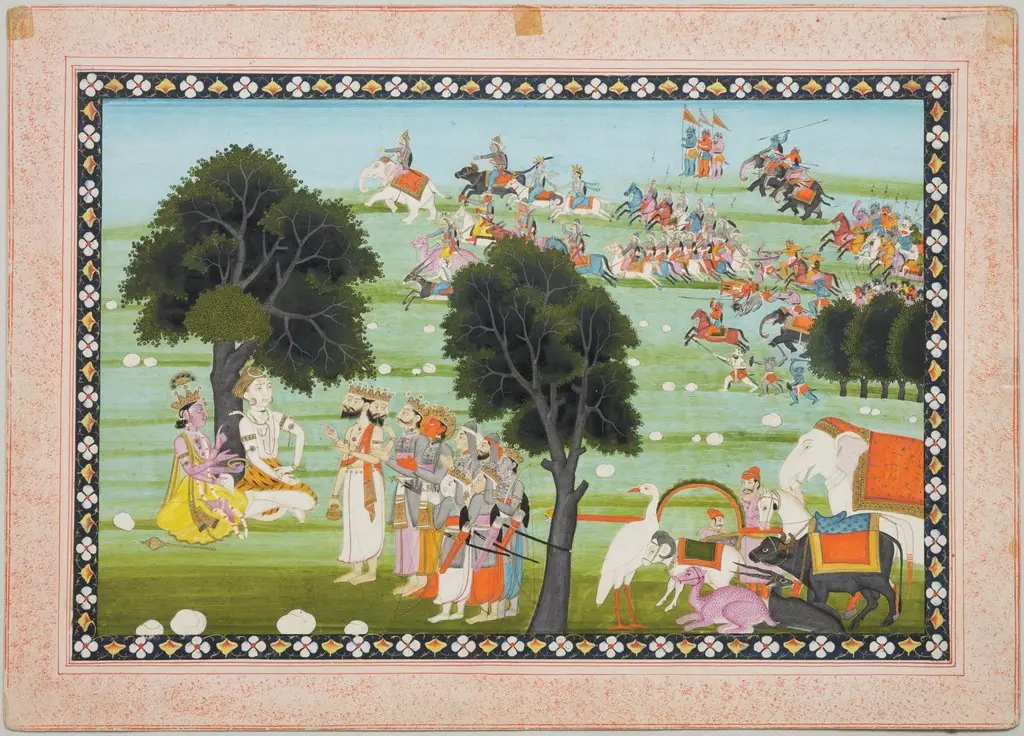 Gods Discussing Their Defeat by Demons, led by Mahishasura in Background
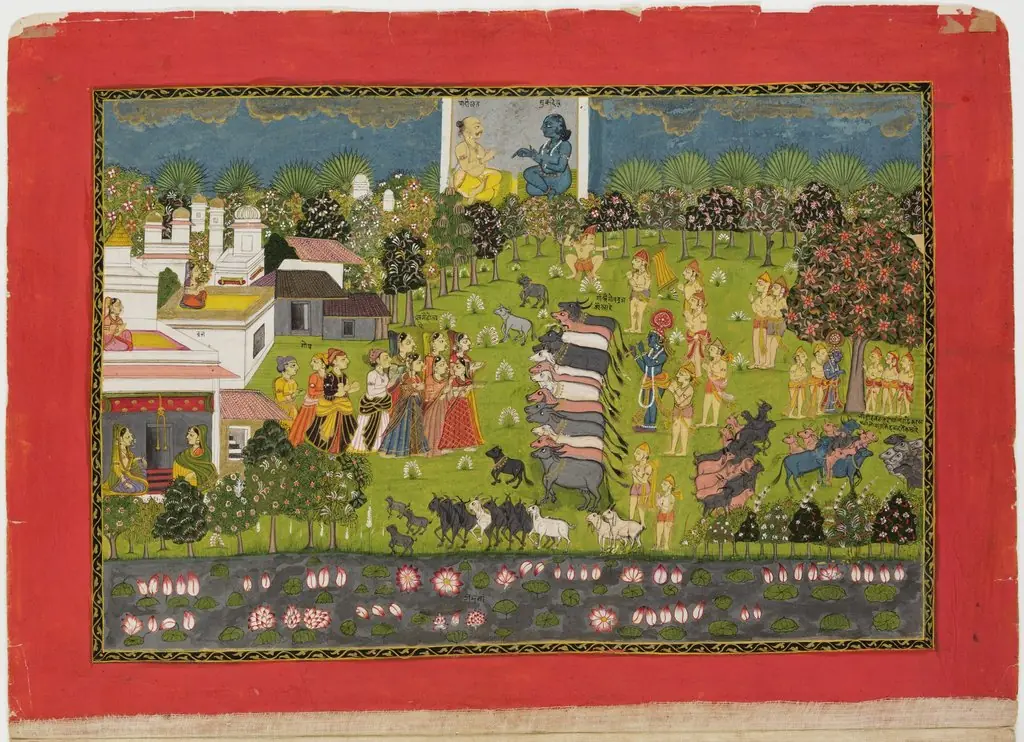 Cow Worship
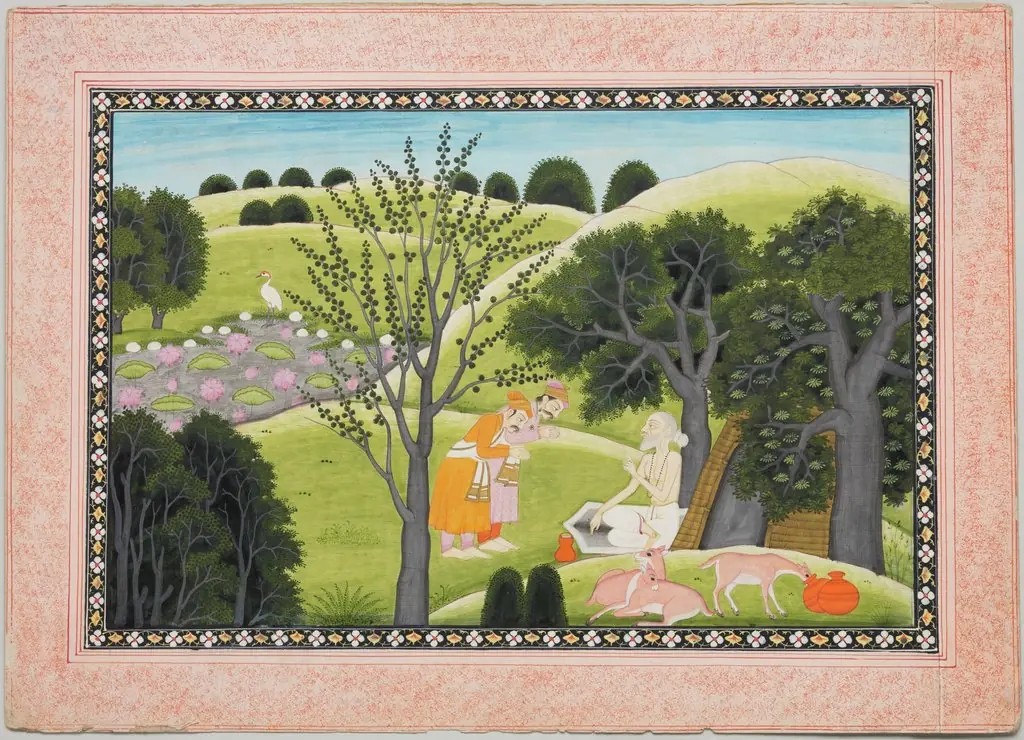 Noblemen Making Obeisance to the Guru
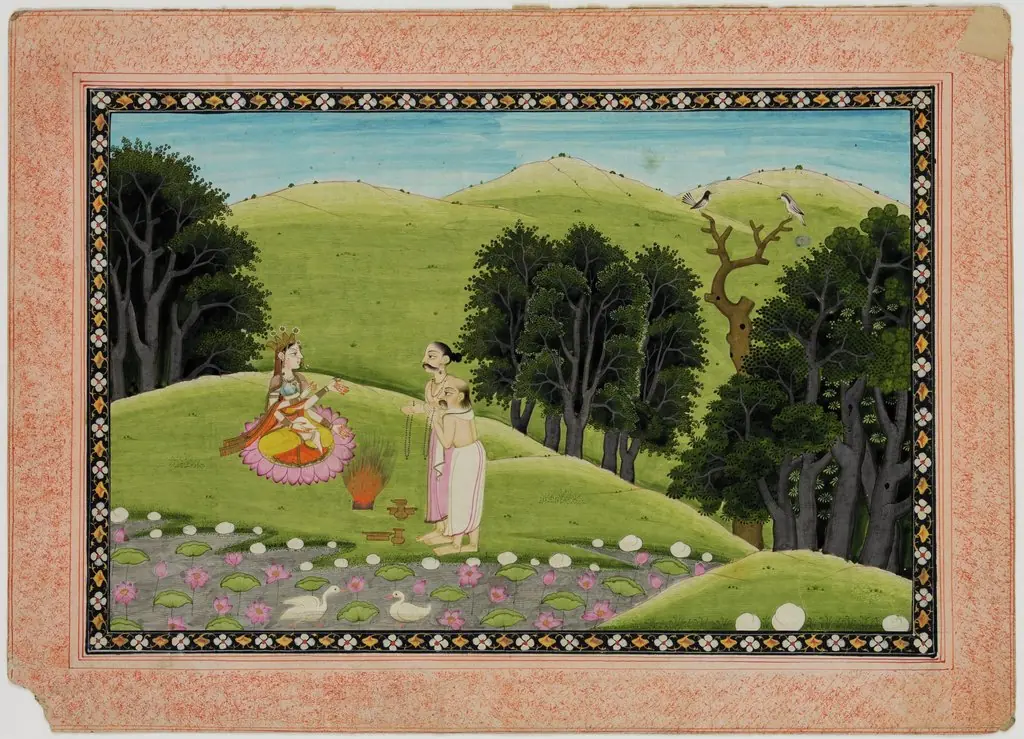 Lakshmi and Devotees
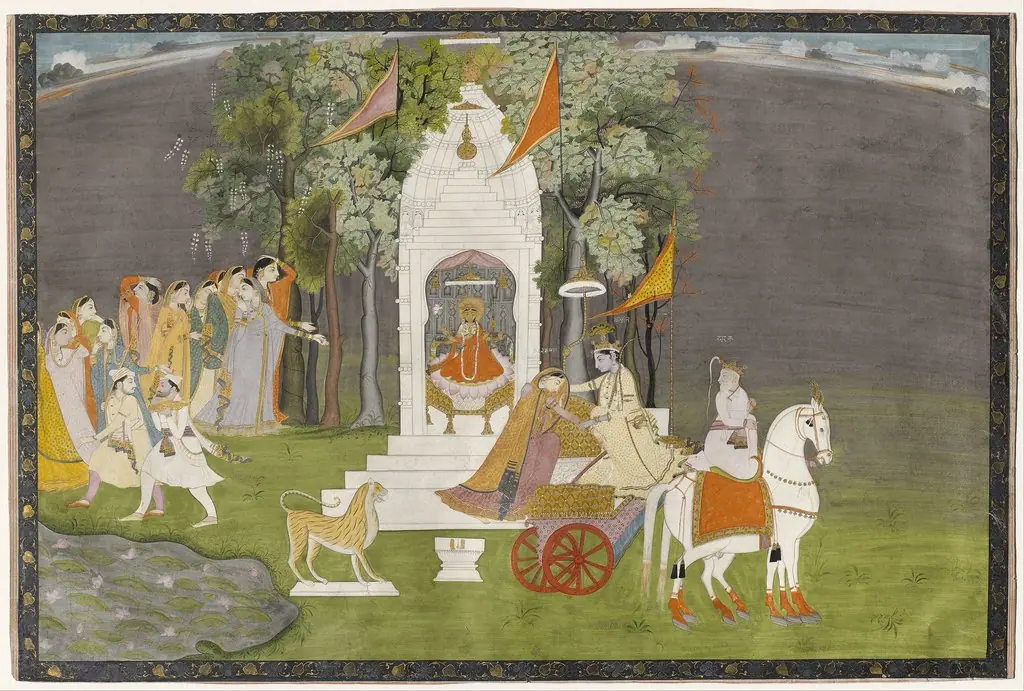 Krishna Abducting Rukmani from the Temple
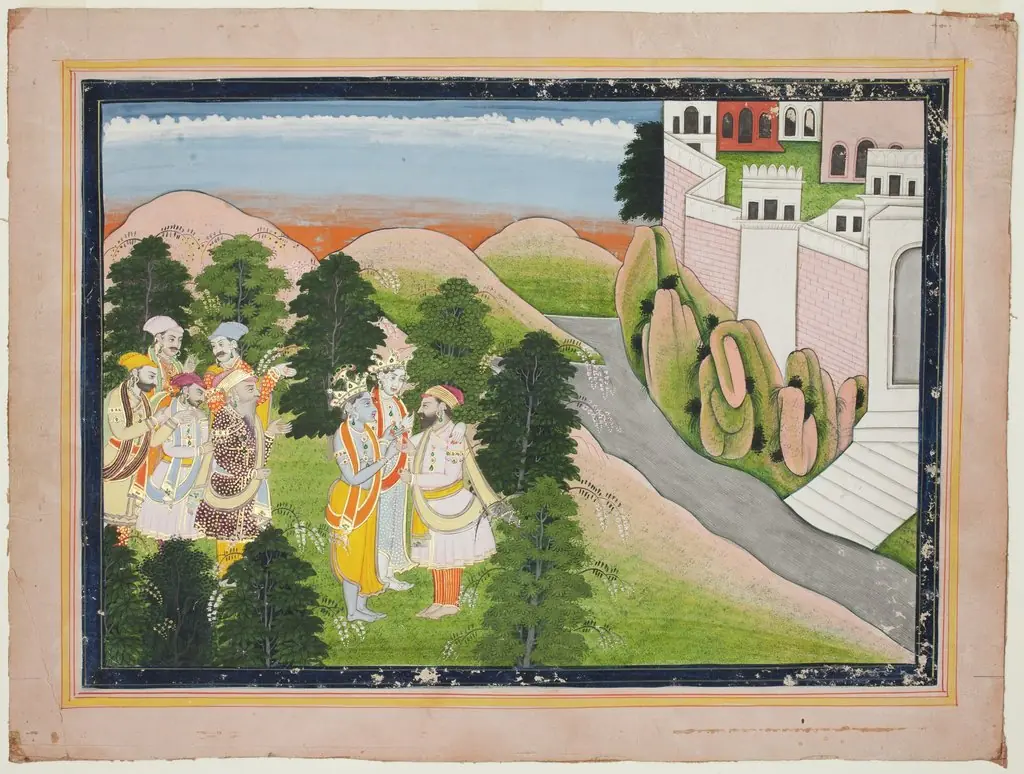 Krishna and Balarama with Various Nobles
 Untitled
 Sudama
 Fainted Laila and Majnun-Based on the Khamsa of Persian poet Nizami
 Sassi and Punun
 The Guru Giving Advice