Artwork
Tantric Manuscript, "Sangrahani Sutra"
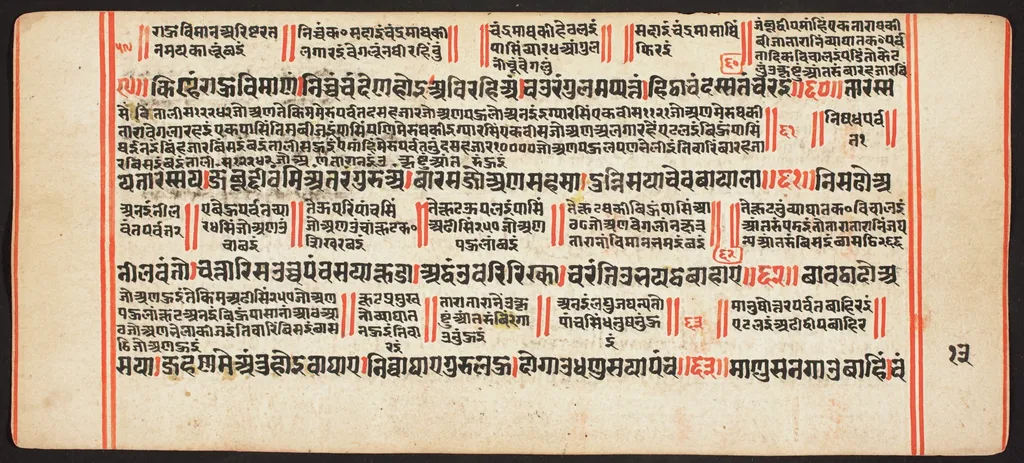
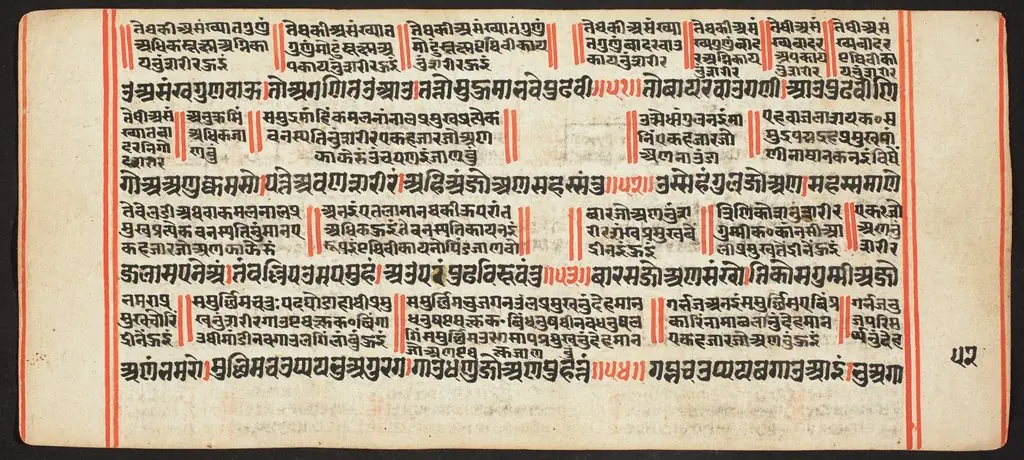
Tantric Manuscript, "Sangrahani Sutra" is an unspecified painting by Unknown. It is held in the collection of the Detroit Institute of Arts.
About this work
Overview
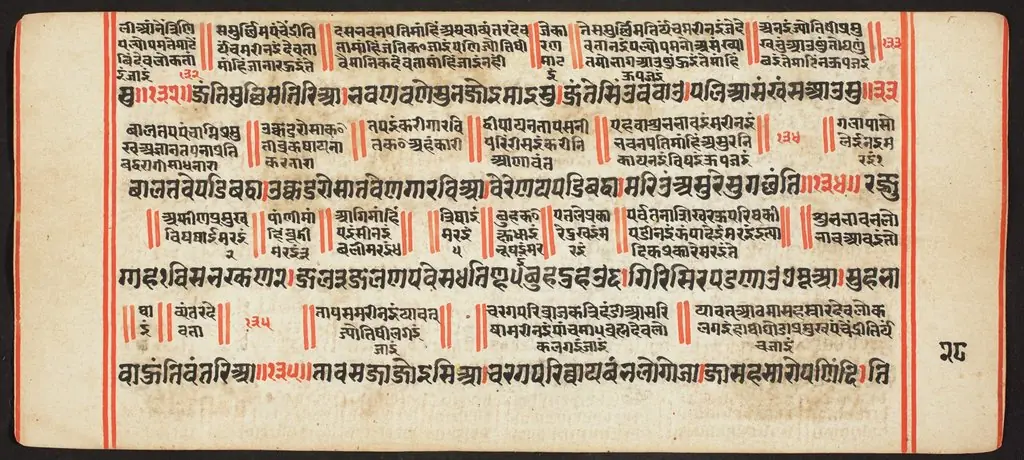
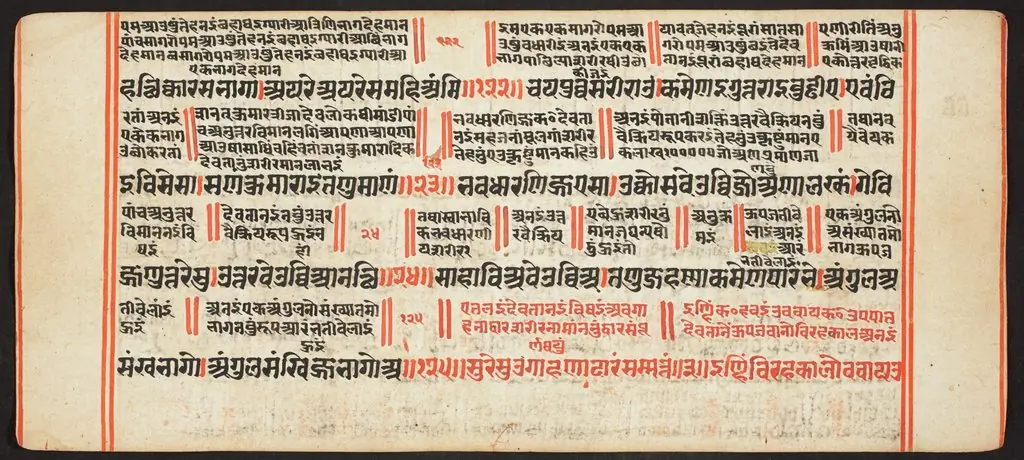
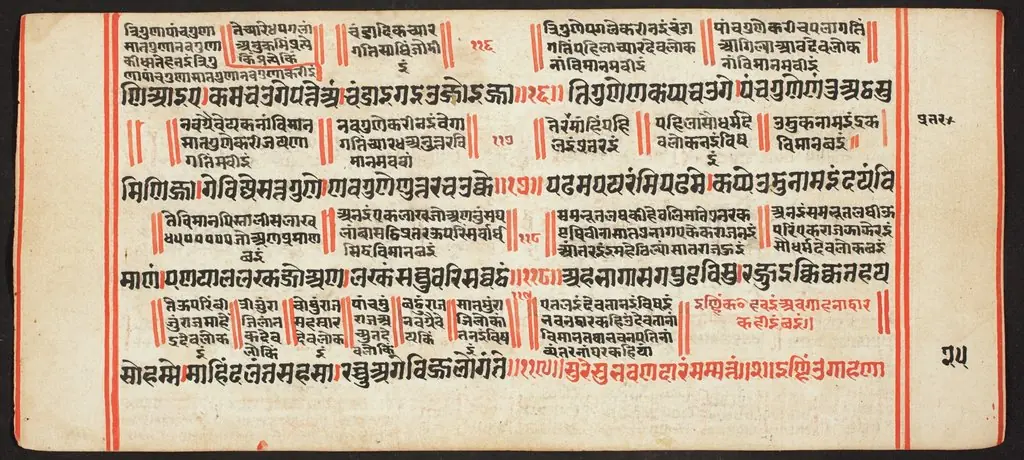
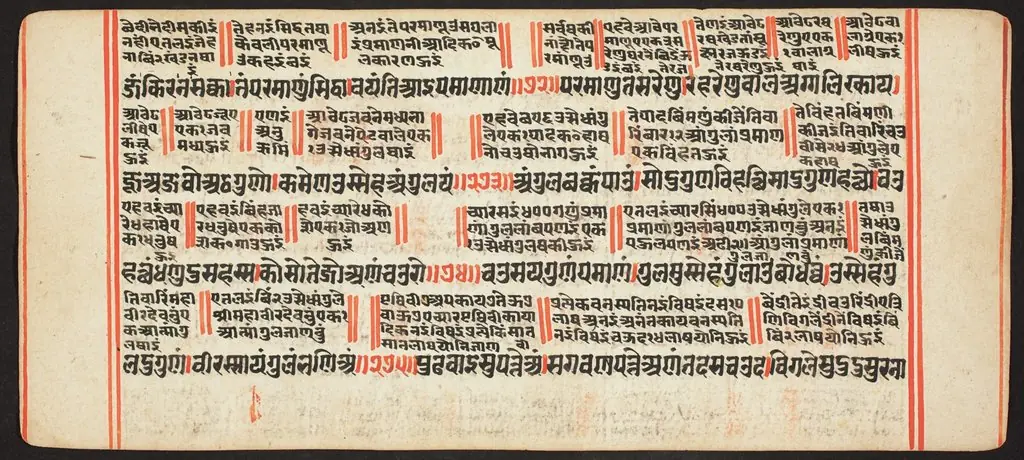
This manuscript page originates from a Buddhist tantric text, the Sangrahani Sutra, produced in a region where esoteric Buddhist traditions flourished.
This manuscript page originates from a Buddhist tantric text, the Sangrahani Sutra, produced in a region where esoteric Buddhist traditions flourished. The surface shows signs of age, with a yellowed substrate and faint wear consistent with centuries of handling. The script, though not immediately legible to modern readers, follows a precise, cursive tradition used in liturgical manuscripts. Red horizontal rules separate each line of text, a deliberate design choice enhancing readability and visual rhythm.
Subject & Meaning
The Sangrahani Sutra is a doctrinal compilation used in tantric Buddhist practice, often recited during rituals or meditative study. Its content outlines principles of spiritual discipline and metaphysical insight. The page itself functions not as an illustration but as a vessel of sacred speech—its value lies in the precise transmission of words, not imagery. The absence of figures underscores the text’s role as a direct conduit of teaching, not ornamentation.
Technique & Style
The script is executed in ink with fine, controlled strokes, suggesting the work of a trained scribe using a reed or bamboo pen. The red lines, drawn with mineral pigment, are uniformly thin and consistent, indicating the use of a ruling tool. The paper or palm leaf substrate has been prepared with a sizing agent to prevent ink bleed. The overall aesthetic is restrained, prioritizing clarity and durability over decorative flourish.
History & Provenance
Manuscripts of this type were typically produced in monastic scriptoria across the Himalayan region, possibly in Nepal or Tibet, between the 12th and 16th centuries. This particular page entered the collection of the Detroit Institute of Arts through documented acquisition, likely from a private collector or religious institution that dispersed its holdings in the 20th century. Its survival reflects careful preservation in dry, stable environments.
Context
During the medieval period, tantric Buddhist communities placed high value on the physical preservation of sacred texts. Scribes were often monks who treated transcription as an act of devotion. Manuscripts like this were stored in temple libraries, handled with ritual care, and occasionally recopied when damaged. The use of red dividers was common in South Asian and Himalayan traditions to aid in oral recitation and textual navigation.
Legacy
This page represents a continuity of textual transmission that spans centuries, linking contemporary practitioners to medieval monastic traditions. Its preservation in a museum setting shifts its function from liturgical object to historical artifact, yet its formal qualities—precision, restraint, and material integrity—still reflect the values of its original creators. It remains a testament to the discipline of handwritten sacred literature.
Artist & collection

 Domestic Scene
 Giacomo and Cardinal Marco, investing Andrea, Abbot of San Zeno, with his Benefice
 The Nymph of Fontainebleau
 Portrait of a Woman
 Madonna and Child with Saints in the Enclosed Garden
 Venus and Minerva
 Family Group of Four on Sofa
 Wall painting from Room H of the Villa of P. Fannius Synistor at Boscoreale
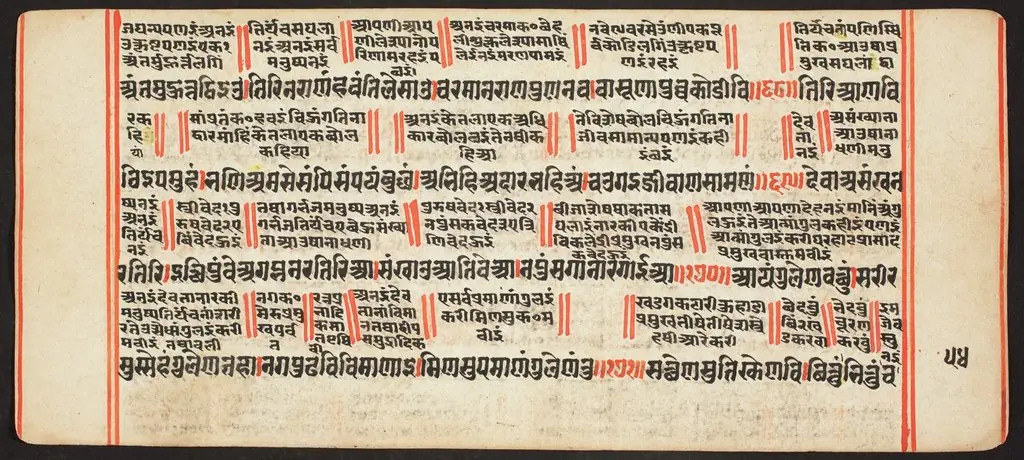 Tantric Manuscript, "Sangrahani Sutra"
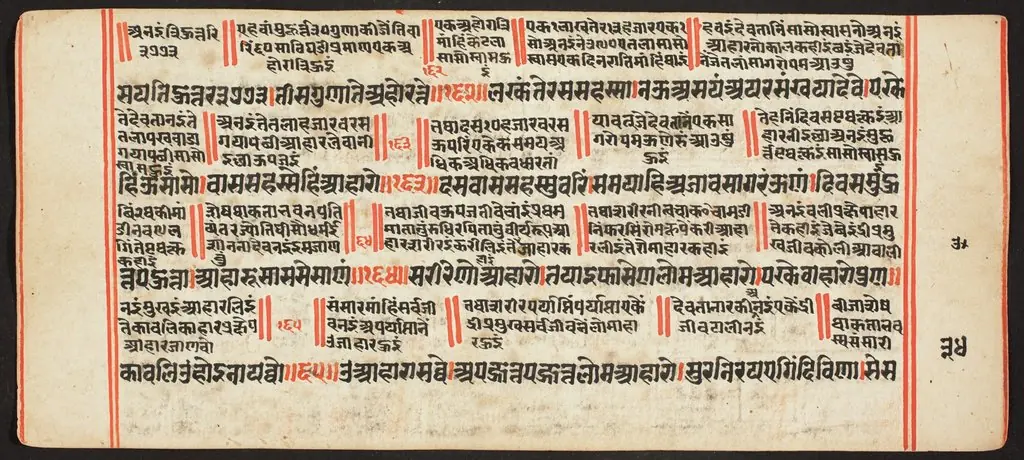 Tantric Manuscript, "Sangrahani Sutra"
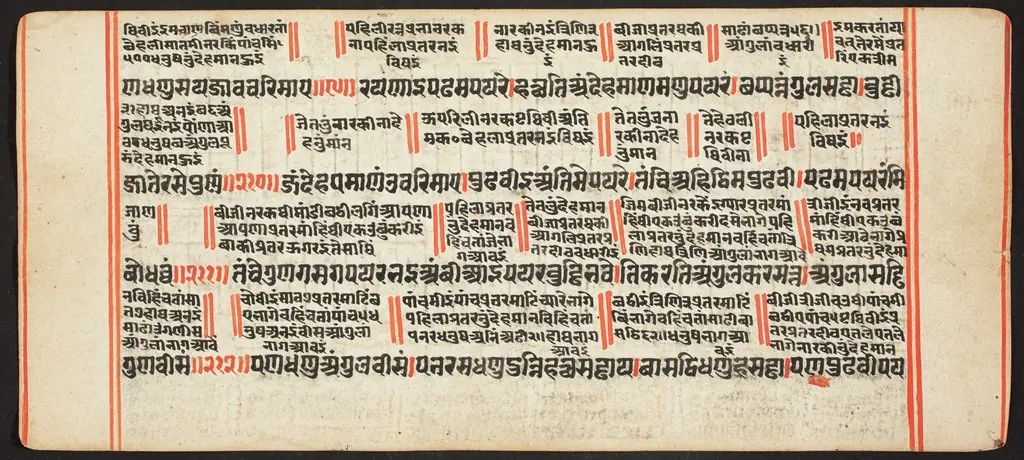 Tantric Manuscript, "Sangrahani Sutra"
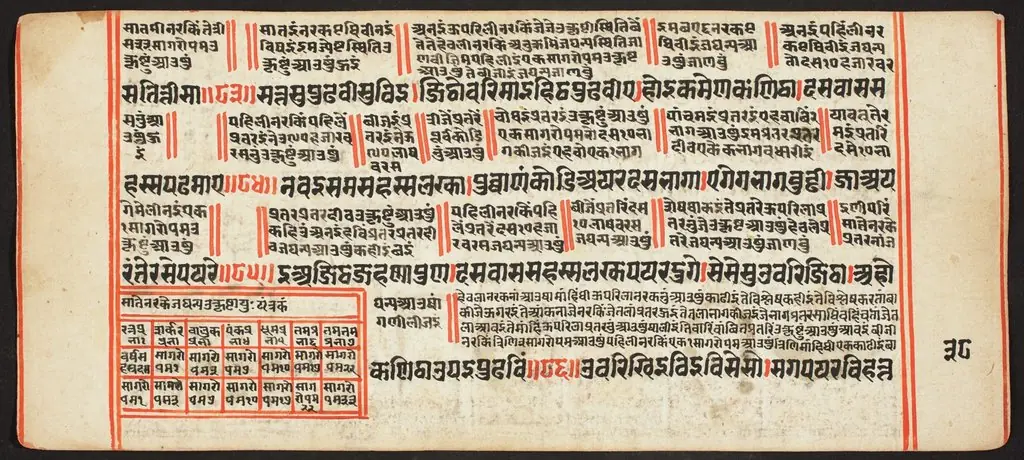 Tantric Manuscript, "Sangrahani Sutra"
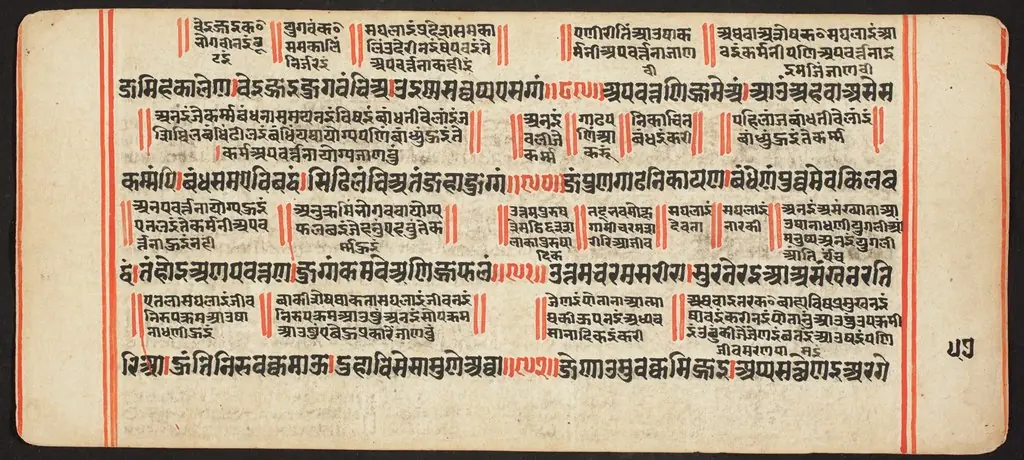 Tantric Manuscript, "Sangrahani Sutra"
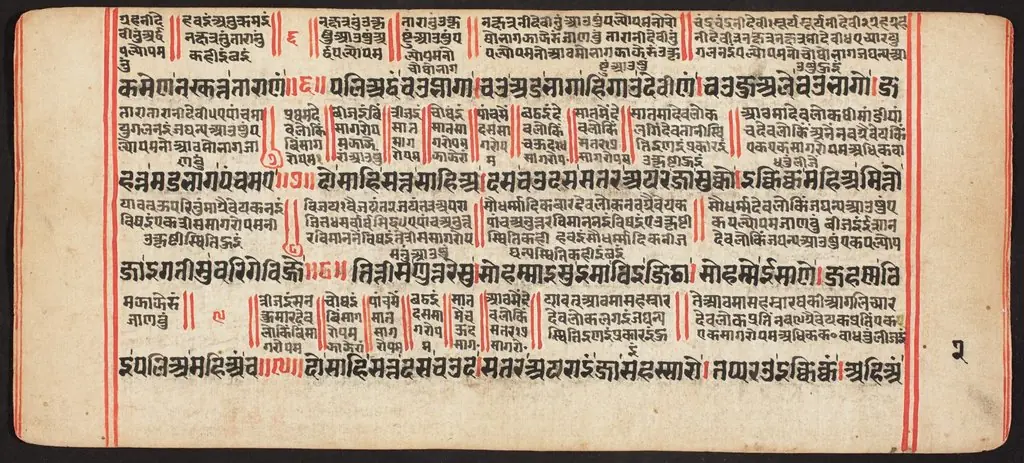 Tantric Manuscript, "Sangrahani Sutra"
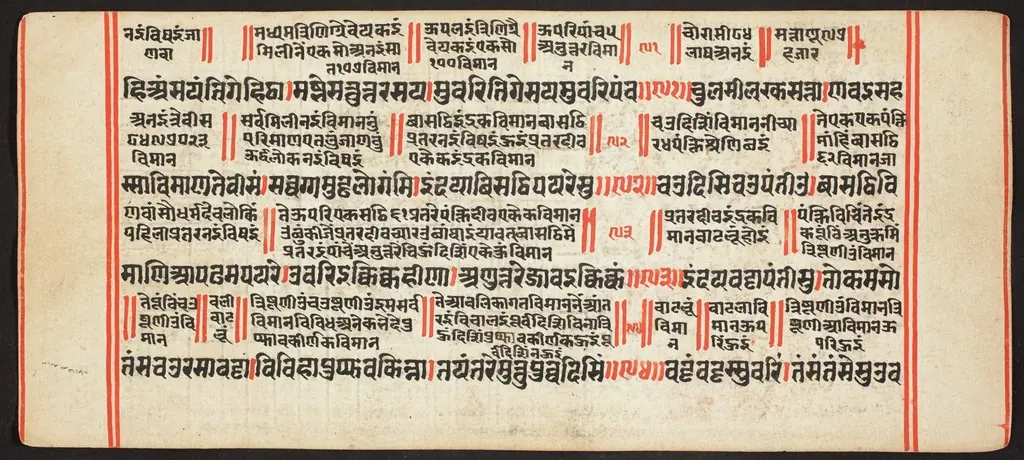 Tantric Manuscript, "Sangrahani Sutra"
 Tantric Manuscript, "Sangrahani Sutra"
 Tantric Manuscript, "Sangrahani Sutra"
 Tantric Manuscript, "Sangrahani Sutra"
 Tantric Manuscript, "Sangrahani Sutra"
 Tantric Manuscript, "Sangrahani Sutra"