Artwork
宋宣祖后坐像
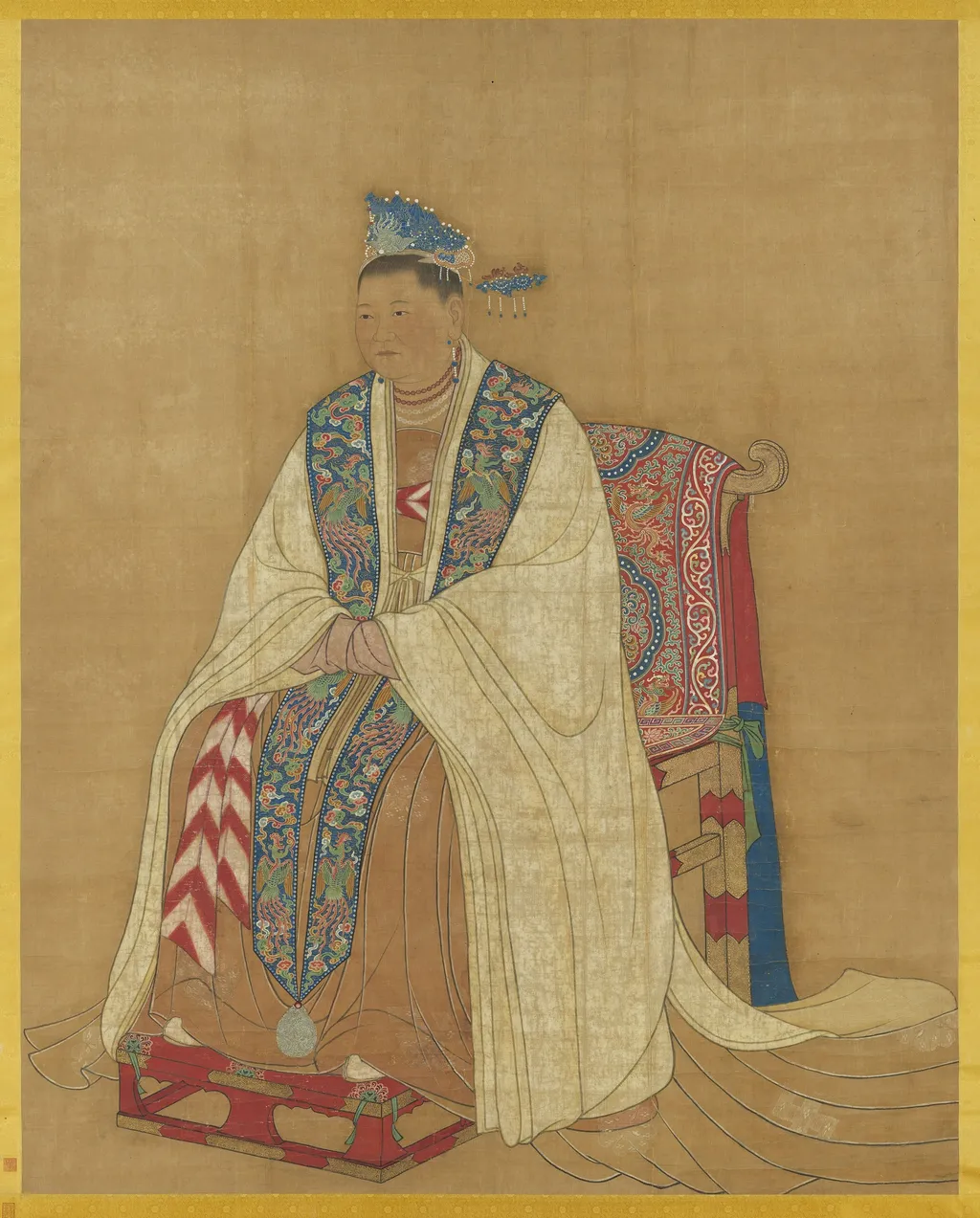
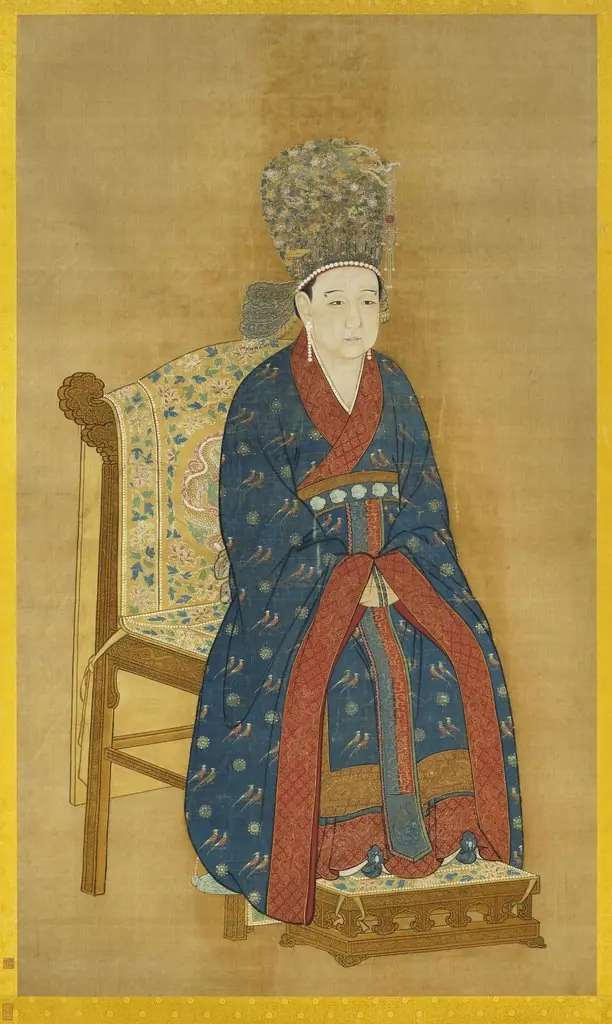
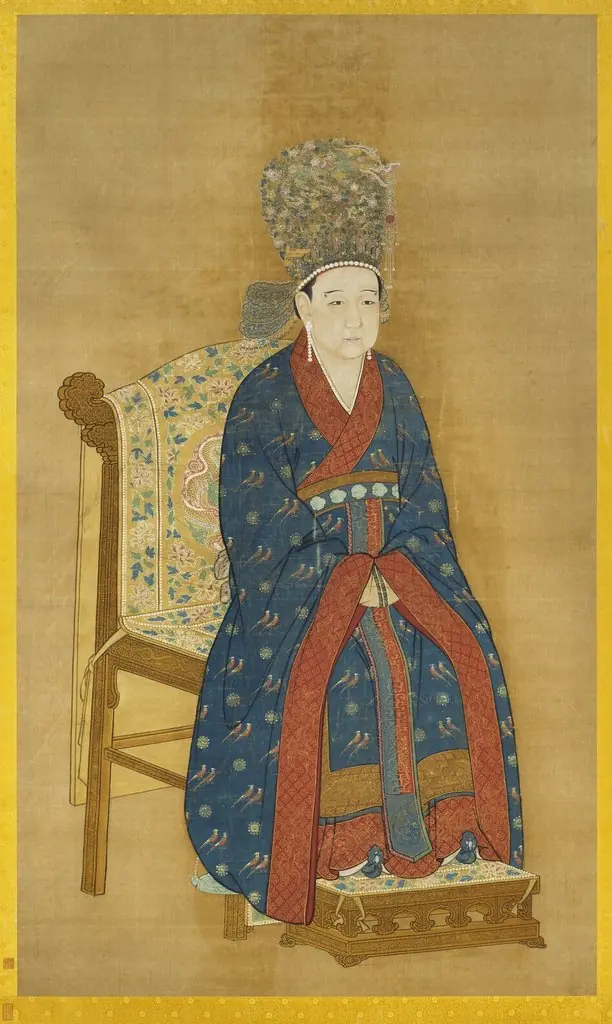
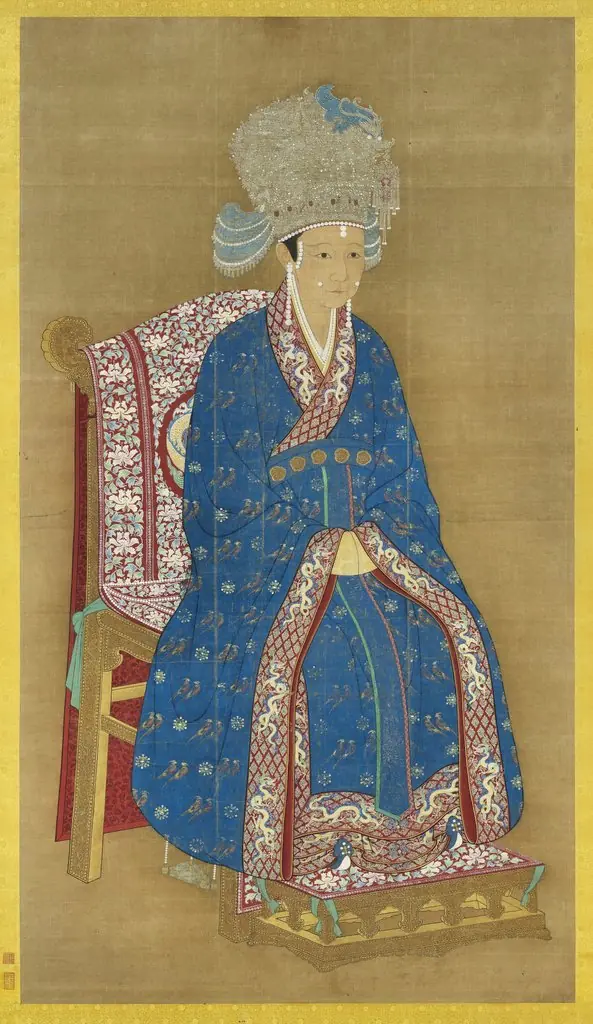
宋宣祖后坐像 is an unspecified painting by Unknown. It is held in the collection of the National Palace Museum. The work is a painted portrait of a seated woman, rendered in a dignified pose on an elaborately patterned chair.
About this work
Overview
Her garments are primarily white, accented with blue, red and green motifs, and she wears a crown‑like headdress that emphasizes her elevated status.
The work is a painted portrait of a seated woman, rendered in a dignified pose on an elaborately patterned chair. Her garments are primarily white, accented with blue, red and green motifs, and she wears a crown‑like headdress that emphasizes her elevated status. The composition is set against a muted, light‑brown background, allowing the intricate details of costume and furniture to dominate the visual field.
Subject & Meaning
The figure is identified as an imperial consort or empress from the Song dynasty, suggested by the ceremonial headpiece and the luxurious fabrics. The posture, with hands folded and gaze directed forward, conveys authority and composure, reflecting the Confucian ideals of propriety and the role of the royal woman as a moral exemplar within the court.
Technique & Style
Executed with fine brushwork, the painting employs delicate line work to delineate the folds of the robe and the ornamental patterns on the chair. A restrained palette of whites, blues, reds and greens is balanced by the subdued earth tone of the background, a characteristic approach in Song court portraiture that emphasizes subtlety over flamboyance.
History & Provenance
The portrait originates from the Song period, likely commissioned for a palace setting or as a commemorative piece for the empress. It has survived through successive collections, eventually entering a museum repository where it is displayed as a representative example of imperial portraiture from the era.
Context
During the Song dynasty, portraiture of royal women served both political and ritual functions, reinforcing dynastic legitimacy. The elaborate attire and throne-like chair reflect the heightened emphasis on courtly ceremony, while the restrained artistic style aligns with the broader aesthetic preferences of the period, which favored refined elegance over ostentatious display.
Artist & collection

 Domestic Scene
 Giacomo and Cardinal Marco, investing Andrea, Abbot of San Zeno, with his Benefice
 The Nymph of Fontainebleau
 Portrait of a Woman
 Madonna and Child with Saints in the Enclosed Garden
 Venus and Minerva
 Family Group of Four on Sofa
 Wall painting from Room H of the Villa of P. Fannius Synistor at Boscoreale