Artwork
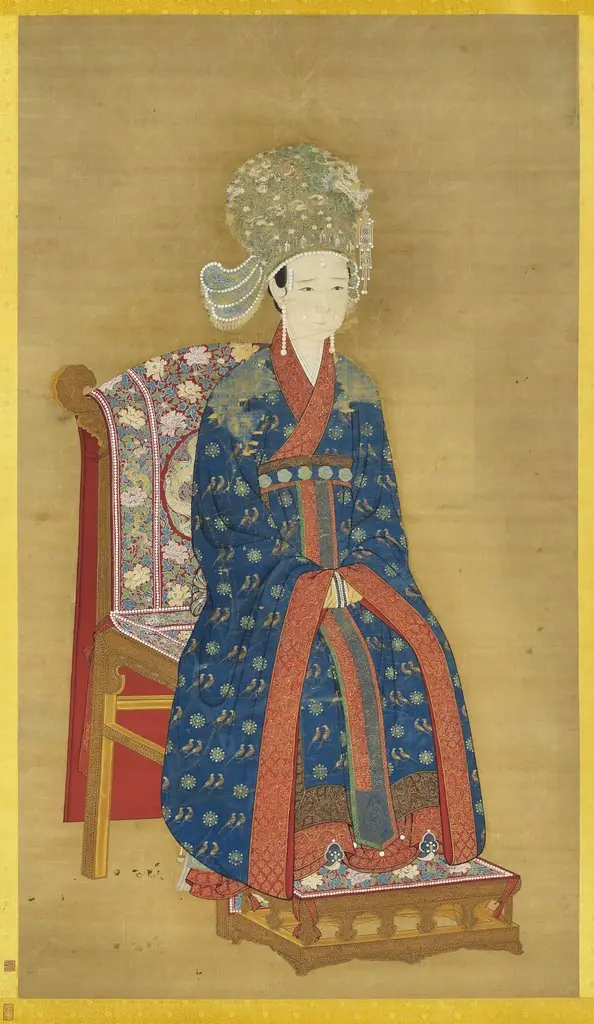
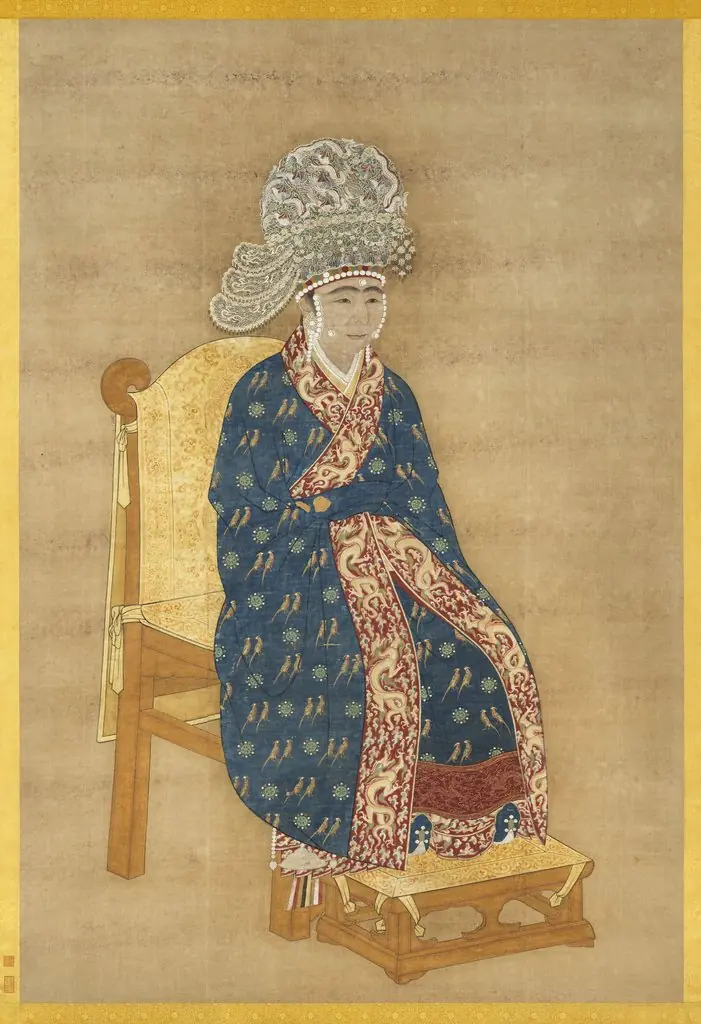
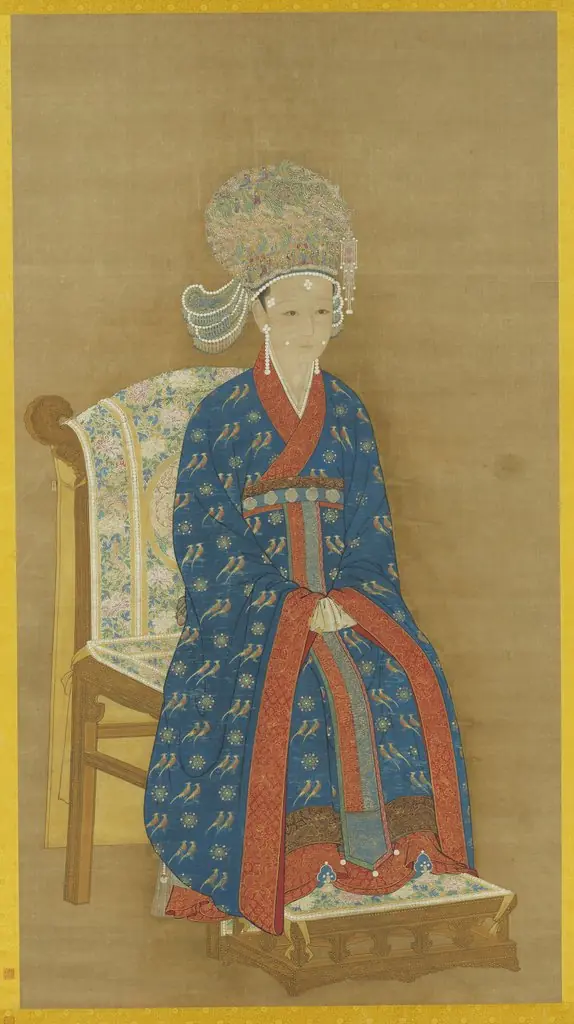
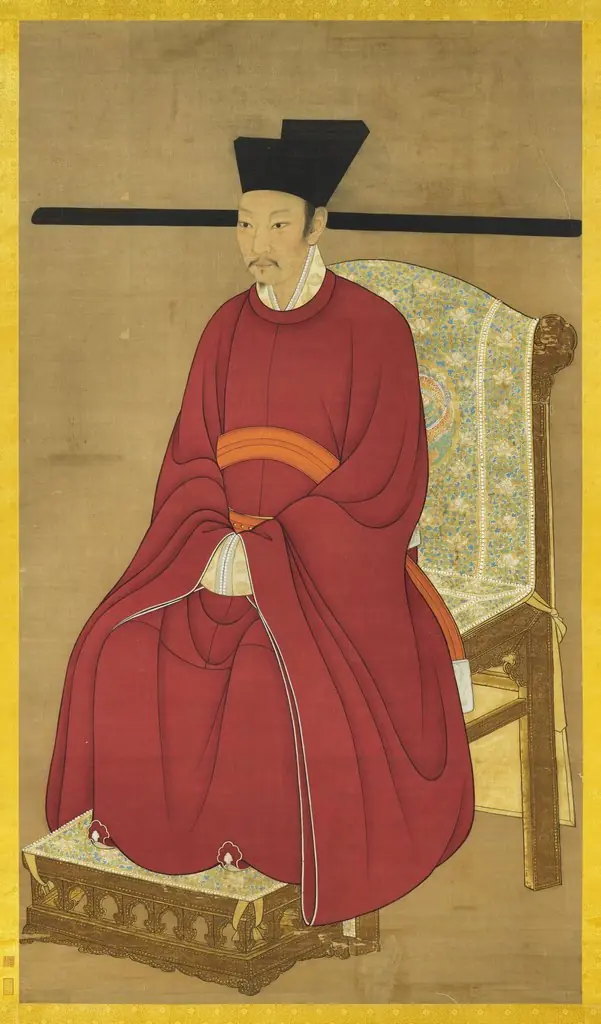
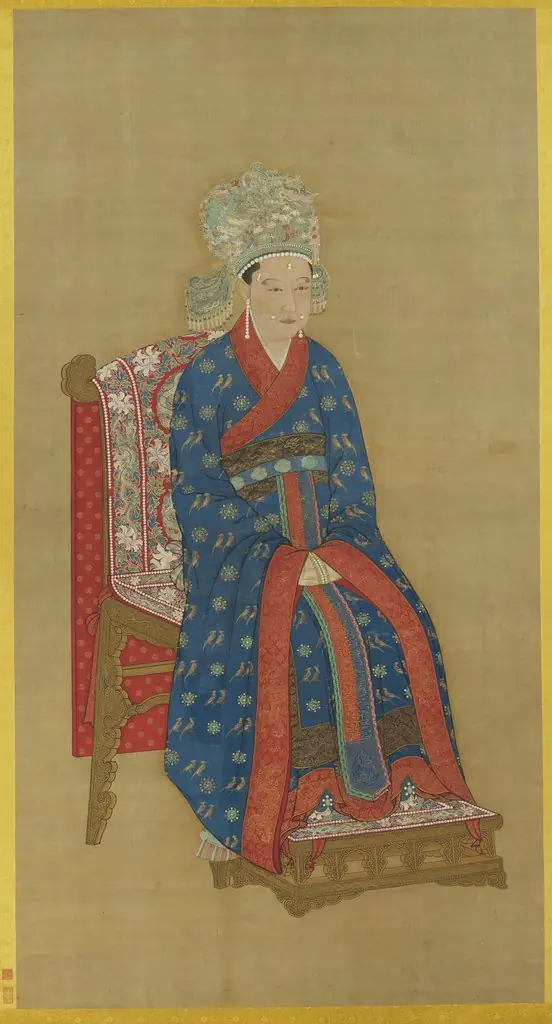
宋徽宗后坐像 軸
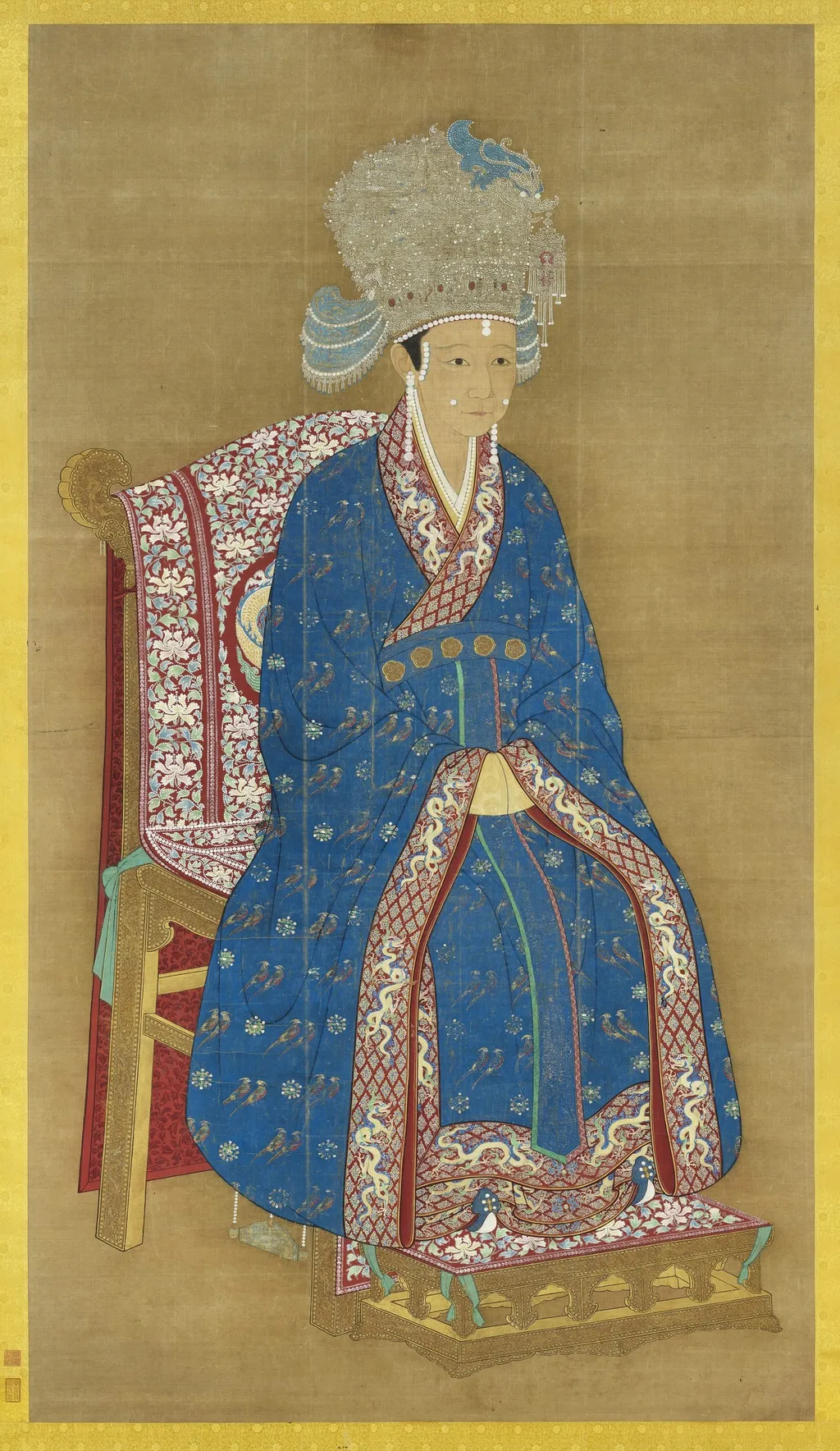
宋徽宗后坐像 軸 is an unspecified painting by Unknown. It is held in the collection of the National Palace Museum.
About this work
Overview
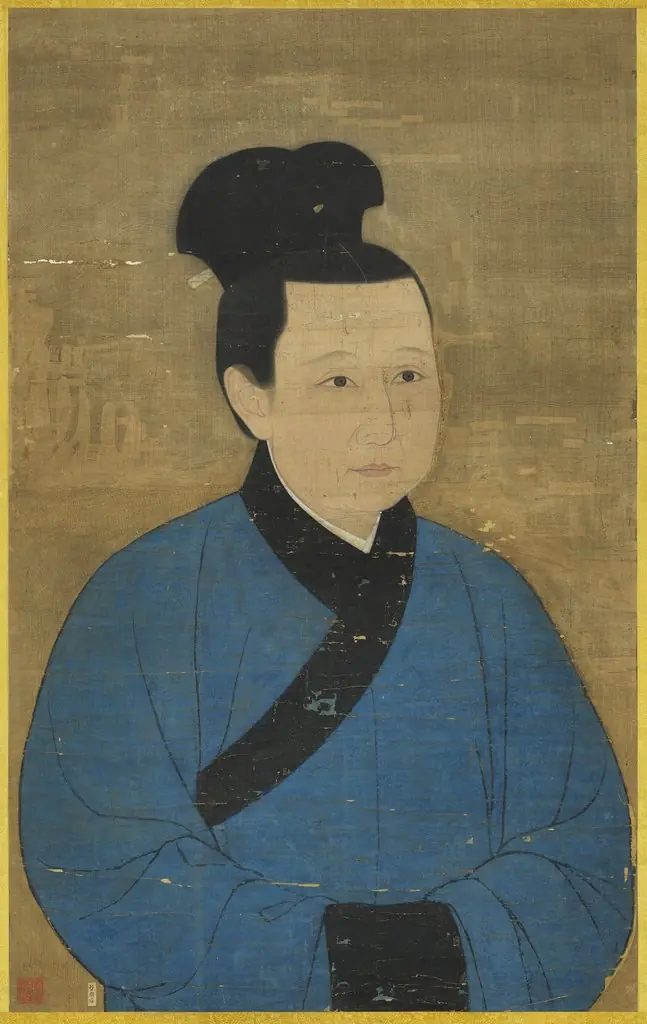
The work, titled 宋徽宗后坐像 軸, is a painted portrait of a seated woman rendered in a restrained composition. She is dressed in a blue robe edged with a red‑and‑white patterned border and occupies a chair whose back bears a matching decorative motif. The figure’s pale complexion, elaborate headdress, and earrings convey a sense of courtly refinement, while the plain background isolates her presence.
Subject & Meaning
The portrait likely represents a high‑ranking female member of the Song court, possibly an empress dowager, as suggested by the luxurious attire and ceremonial accessories. The subdued setting and dignified pose emphasize status and decorum rather than narrative action, focusing the viewer’s attention on the figure’s embodiment of aristocratic poise.
Technique & Style
Executed with fine brushwork, the painting employs a limited palette dominated by blue, red, and white, allowing the intricate border patterns to stand out against the solid background. The delicate rendering of the headdress and facial features reflects the refined aesthetic associated with Song court painting, where attention to textile detail and subtle tonal gradations were prized.
History & Provenance
The piece is attributed to the period of Emperor Huizong (r. 1100–1126), a time noted for its patronage of the arts. While specific ownership records are scarce, the work’s title and stylistic attributes align it with imperial workshop productions that documented members of the royal family.
Context
During the Song dynasty, portraiture served both documentary and ceremonial functions, often produced for ancestral halls or court archives. This painting fits within that tradition, illustrating the visual language of rank through clothing, accessories, and compositional restraint, typical of elite portraiture of the era.
Legacy
The portrait contributes to the corpus of Song court imagery that informs contemporary understandings of gender, status, and aesthetic values in early medieval China. Its preservation offers scholars a tangible reference for the material culture and artistic conventions of the imperial household.
Artist & collection

 Domestic Scene
 Giacomo and Cardinal Marco, investing Andrea, Abbot of San Zeno, with his Benefice
 The Nymph of Fontainebleau
 Portrait of a Woman
 Madonna and Child with Saints in the Enclosed Garden
 Venus and Minerva
 Family Group of Four on Sofa
 Wall painting from Room H of the Villa of P. Fannius Synistor at Boscoreale