Artwork
明神宗坐像 軸
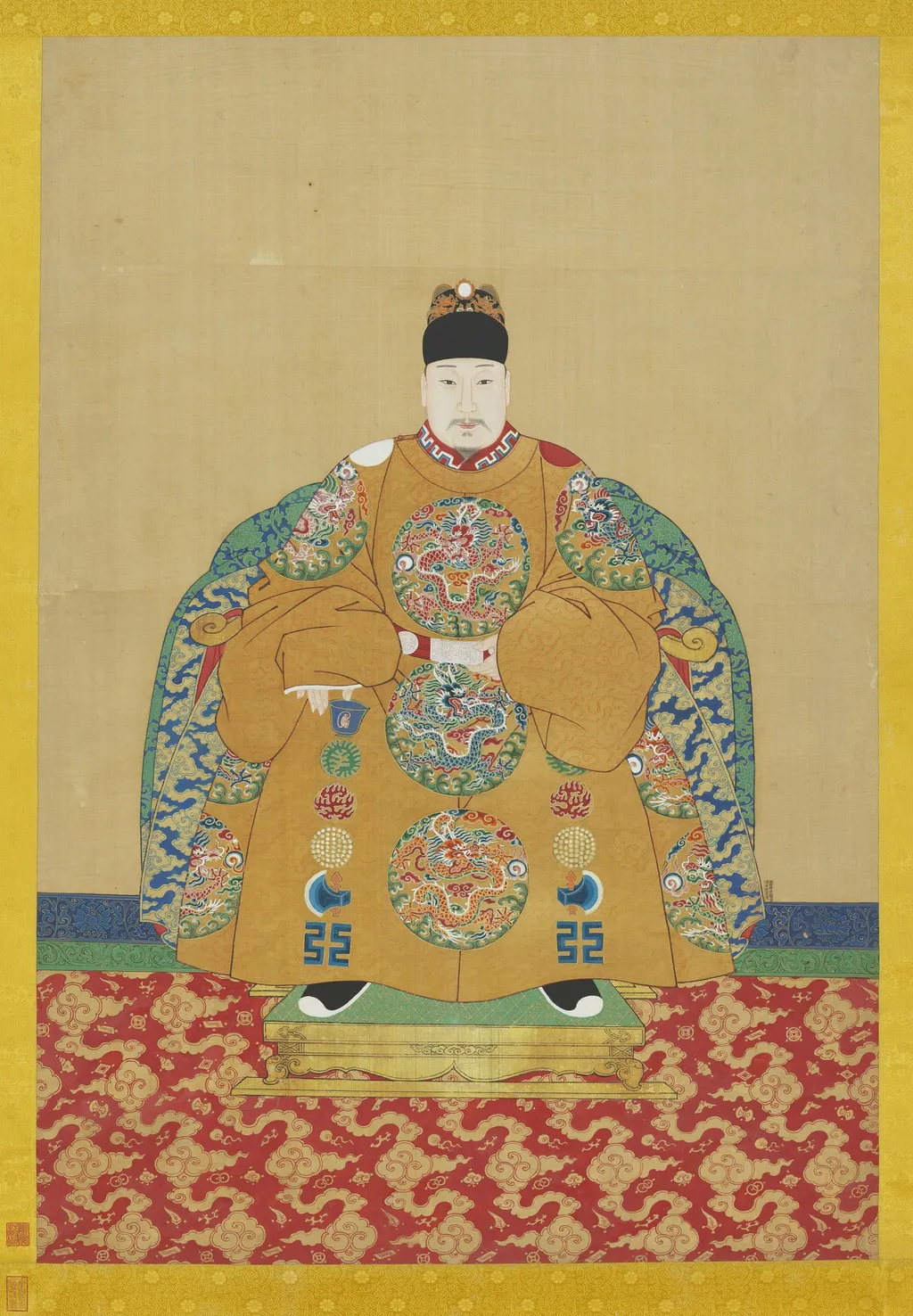
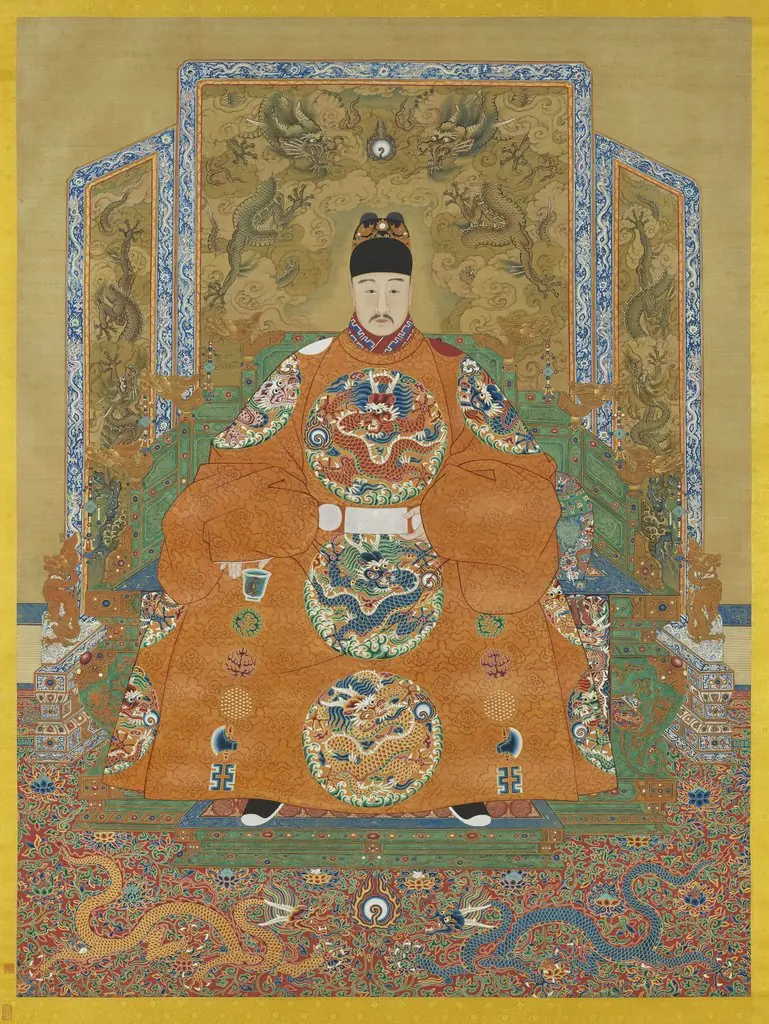
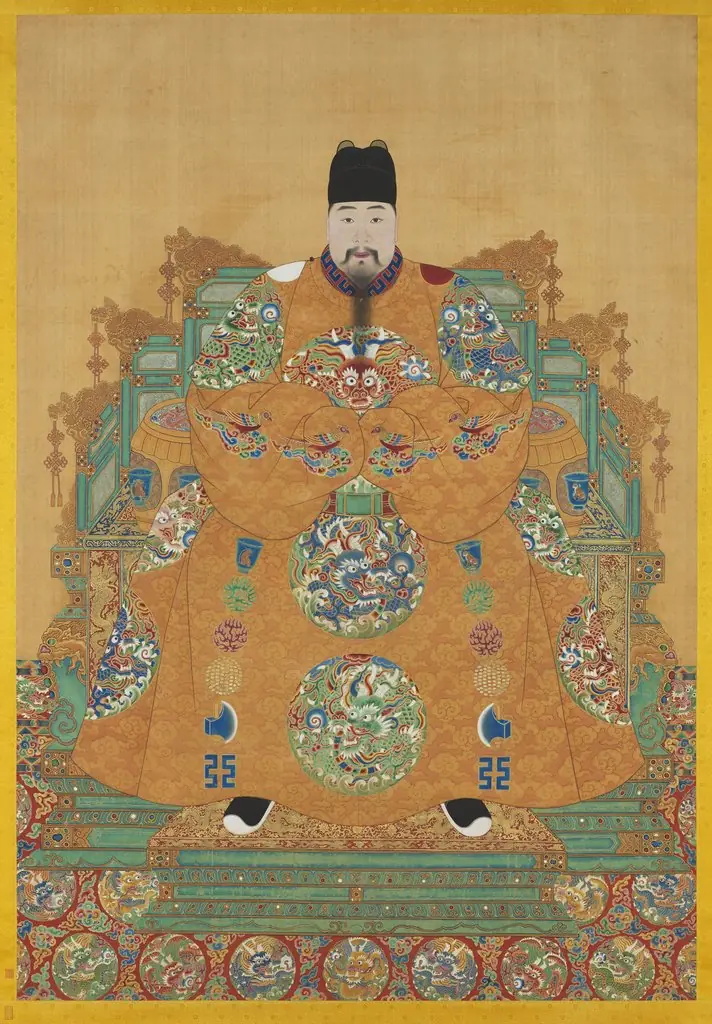
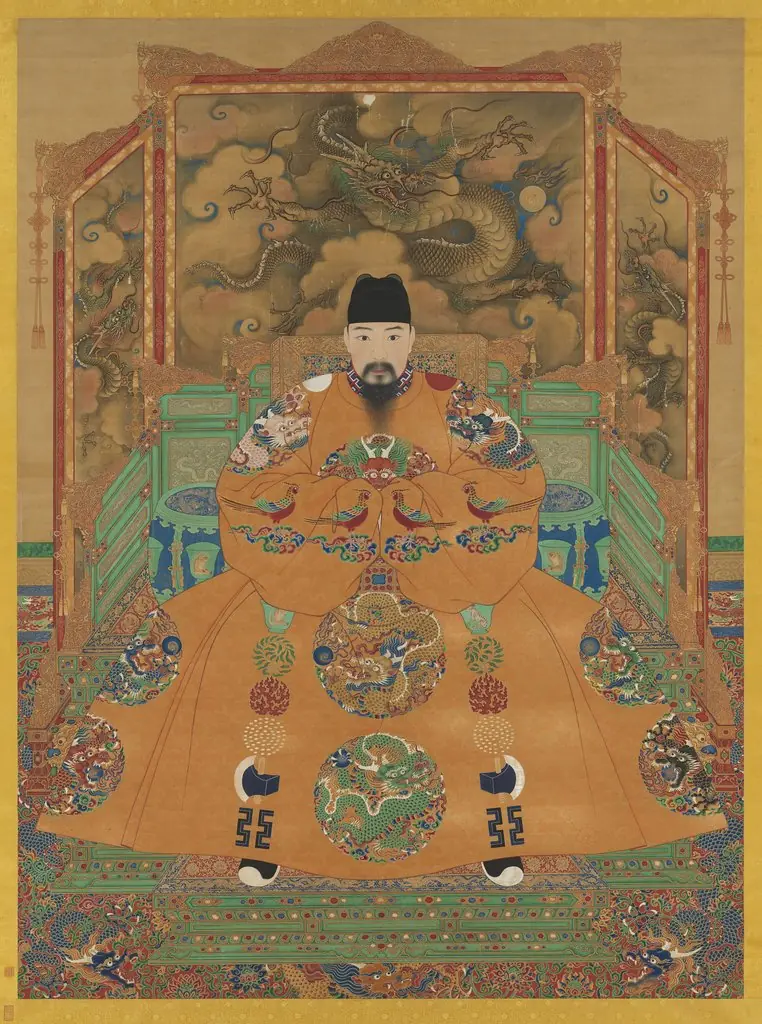
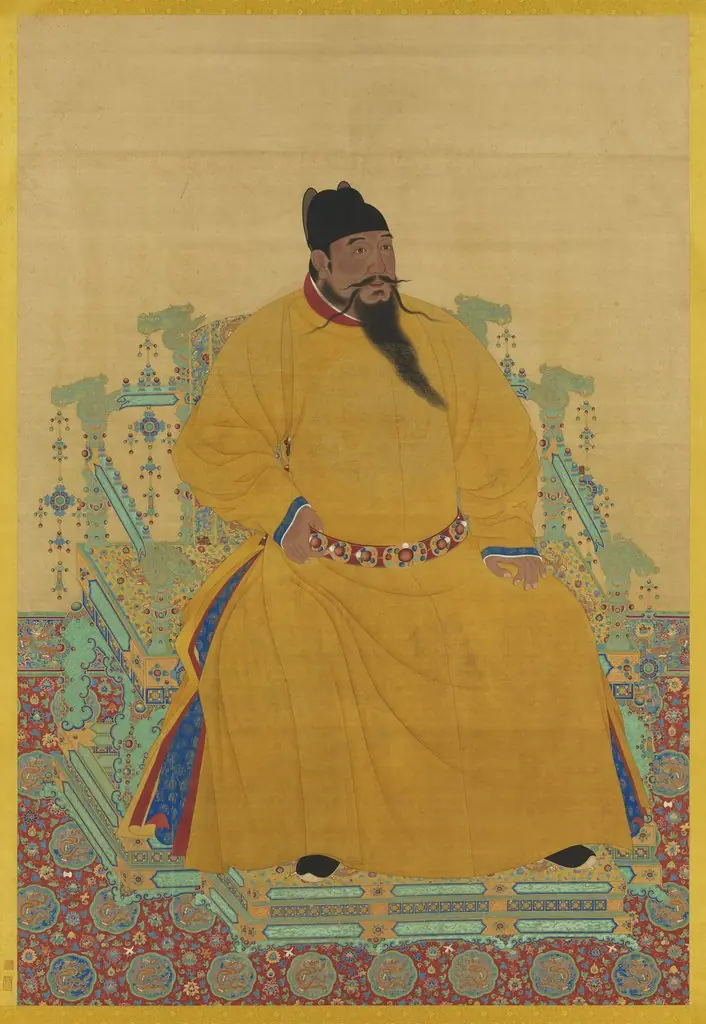
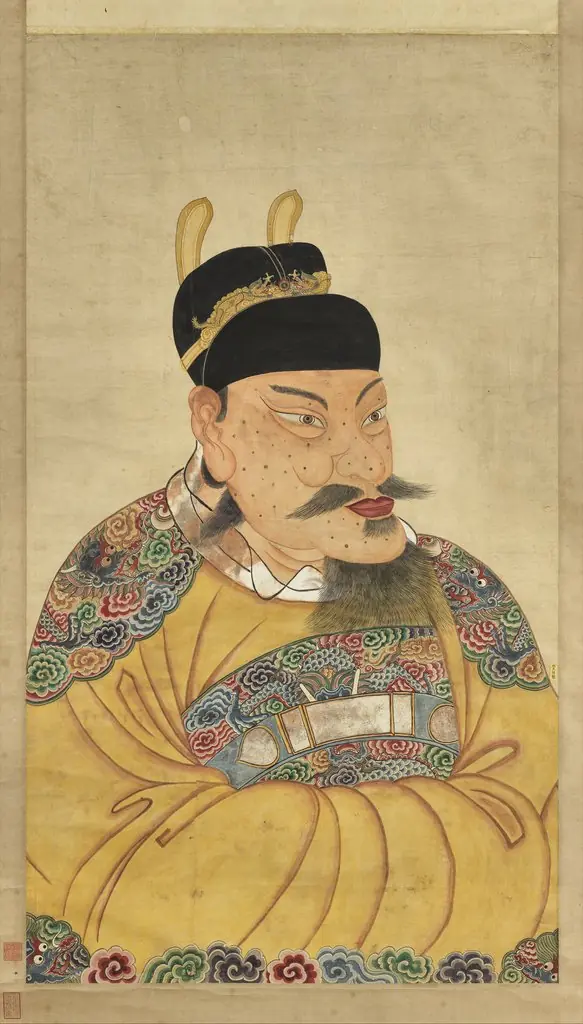
明神宗坐像 軸 is an unspecified painting by Unknown. It is held in the collection of the National Palace Museum. The work is a portrait of the Wanli Emperor, depicted seated on a green cushion.
About this work
Overview
The work is a portrait of the Wanli Emperor, depicted seated on a green cushion. He wears an elaborate, multicoloured robe and holds a small cup in his right hand, his expression solemn. The background is rendered in a warm, beige tone with a subtle textured surface typical of traditional Chinese painting media.
Subject & Meaning
The figure represents the Wanli Emperor, the long‑reigning ruler of the Ming dynasty, whose portraiture was used to convey imperial authority and ritual propriety. The serious demeanor and formal pose underscore the emperor’s role as a moral and political exemplar.
Technique & Style
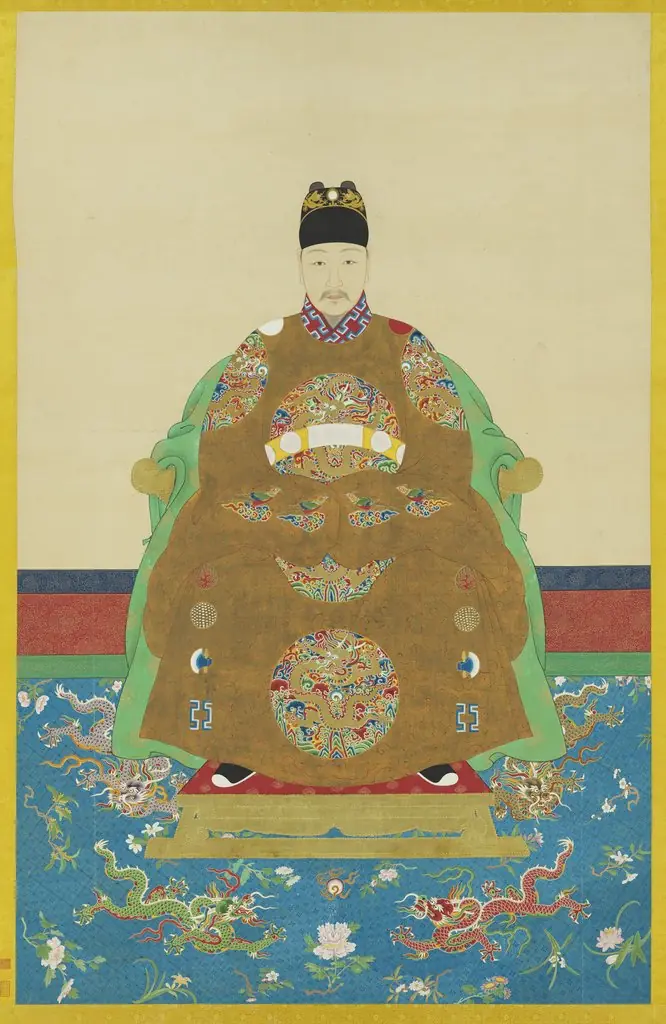
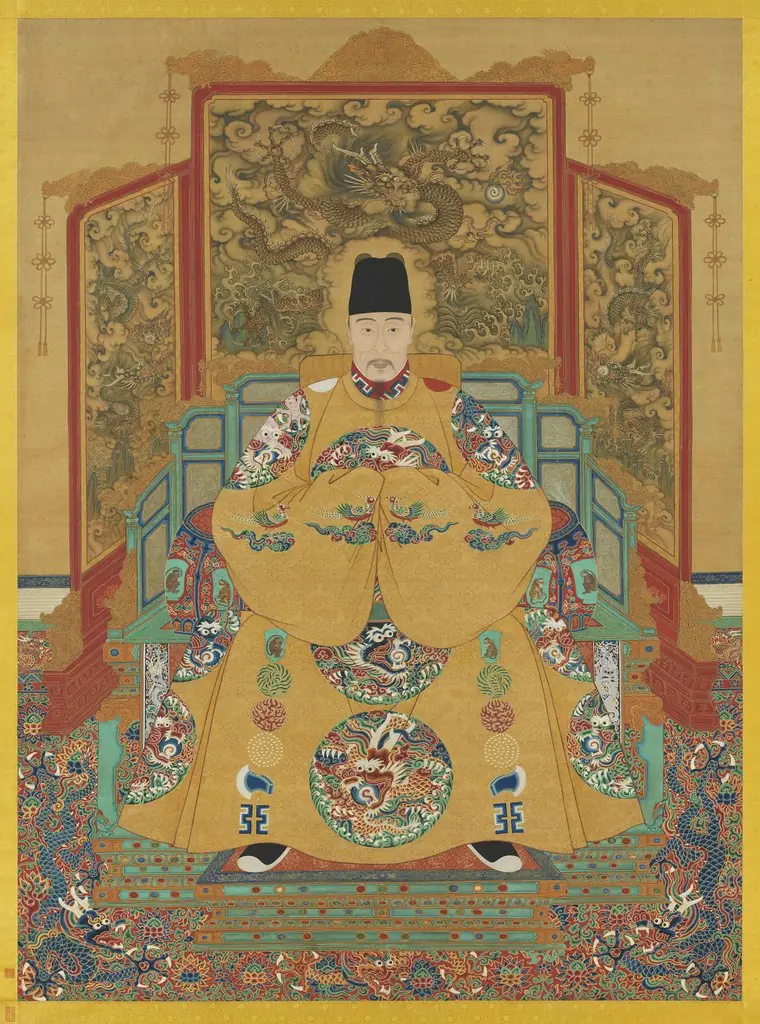
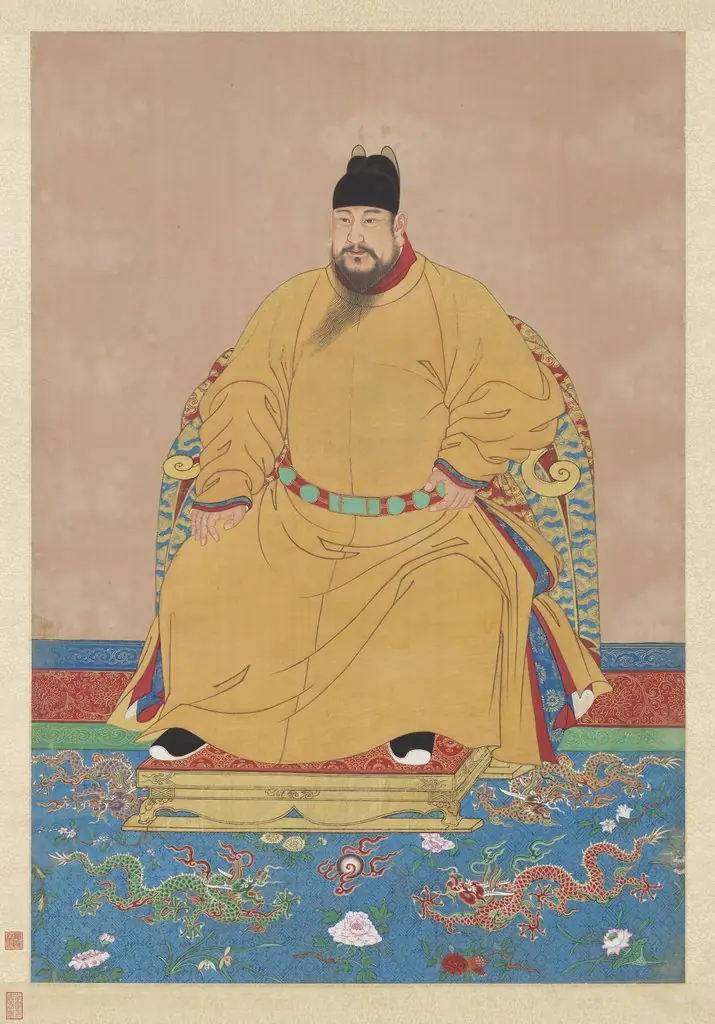
Executed in the brushwork and pigment application characteristic of Chinese court painting, the piece combines fine line work for the intricate patterns on the robe with broader washes for the background. The robe’s decorative motifs—dragons, phoenixes, and other auspicious symbols—are rendered with precise detailing, while the overall composition balances realism with symbolic embellishment.
History & Provenance
The painting is an example of Ming‑period portraiture, likely produced for an official or ceremonial context during the Wanli reign (1572–1620). Its survival in a scroll format suggests it was kept within an archival or temple collection before entering a modern museum setting.
Context
During the Wanli era, imperial portraits served both as records of the sovereign’s likeness and as visual affirmations of the Mandate of Heaven. The inclusion of dragons and phoenixes aligns with contemporary iconography that linked the emperor to cosmic order and dynastic legitimacy.
Legacy
Portraits such as this inform contemporary understandings of Ming court aesthetics and the visual language of power. They continue to be studied for insights into material culture, textile design, and the political symbolism embedded in imperial art.
Artist & collection

 Domestic Scene
 Giacomo and Cardinal Marco, investing Andrea, Abbot of San Zeno, with his Benefice
 The Nymph of Fontainebleau
 Portrait of a Woman
 Madonna and Child with Saints in the Enclosed Garden
 Venus and Minerva
 Family Group of Four on Sofa
 Wall painting from Room H of the Villa of P. Fannius Synistor at Boscoreale